The Cutting Table · compared on the table
Is the cushion foam wrapped in Dacron, or is it just a bare block?
Also asked as:Are your cushions Dacron wrapped?Do you wrap the foam with anything?
Buyers squint at a cushion photo and ask what's under the fabric. Fair question, partner. Here is the cross-section, layer by layer.

 Save
The quick answer
No, the cushion foam is not a bare block: it is wrapped in polyester fiber (Dacron) wadding before it goes into the cover. The wrap fills the cover out, softens the surface and rounds the edges, while the firm high-resilience core, about 2.0 lb/ft³ (32 kg/m³), does the supporting. Daybed set cushions and pillows are built the same way.
Get a quote for a bench cushion
Bare block vs wrapped core
| Bare foam block | Dacron-wrapped foam (standard) | |
|---|---|---|
| Edges | Hard, square corners | Fuller, rounded edges |
| Surface | Foam right under the fabric | A softer layer of polyester fiber |
| Support | Set by the foam | The same firm core |
| Made this way? | No Not supplied | Yes Bench, seat and daybed set cushions |
Key facts
- The foam core is wrapped in polyester fiber (Dacron) wadding; it is not a bare block.
- The wrap goes on before the foam enters the cover.
- The wrap fills out the cover, softens the surface and rounds the edges.
- The core is high-resilience foam at about 2.0 lb/ft³ (32 kg/m³), firm to medium-hard.
- Daybed set cushions and pillows use the same wrapped foam.
- A softer 28-density foam, about 1.75 lb/ft³ (28 kg/m³), can be asked for instead.

Have it made
Have Nate’s workshop cut this for you
Send the numbers in inches: length × depth × thickness, plus any angle. The workshop checks them with you, because foam has no undo button. — Nate
Leave your details and the workshop will call you to confirm measurements, fabric, foam and piping. No prices, dates or payment on this page: it is a request, not an order.
Dacron wrap and foam core: two layers, two jobs
A block of foam off the cutter has flat faces and hard 90° corners. Wrap it in Dacron before it goes into the cover and three things change: the cover fills out, the surface softens, the edge rounds over.
What the wrap doesn't do is hold you up. The wadding decides how the cushion feels at the surface; the foam decides how it feels an hour into a long dinner.
The same build goes into bench cushions and daybed sets, and the foam firmness finder compares the densities. The Pattern on why cushion foam is wrapped goes deeper.
If you want a softer feel
| You want | Ask for | What changes |
|---|---|---|
| A plusher, slight sink-in | 28-density foam | About 1.75 lb/ft³ (28 kg/m³) core |
| A softer top only | Extra wadding | About 3/4 in (2 cm) more on top |
| Feather-wrapped foam | — | No Not offered |
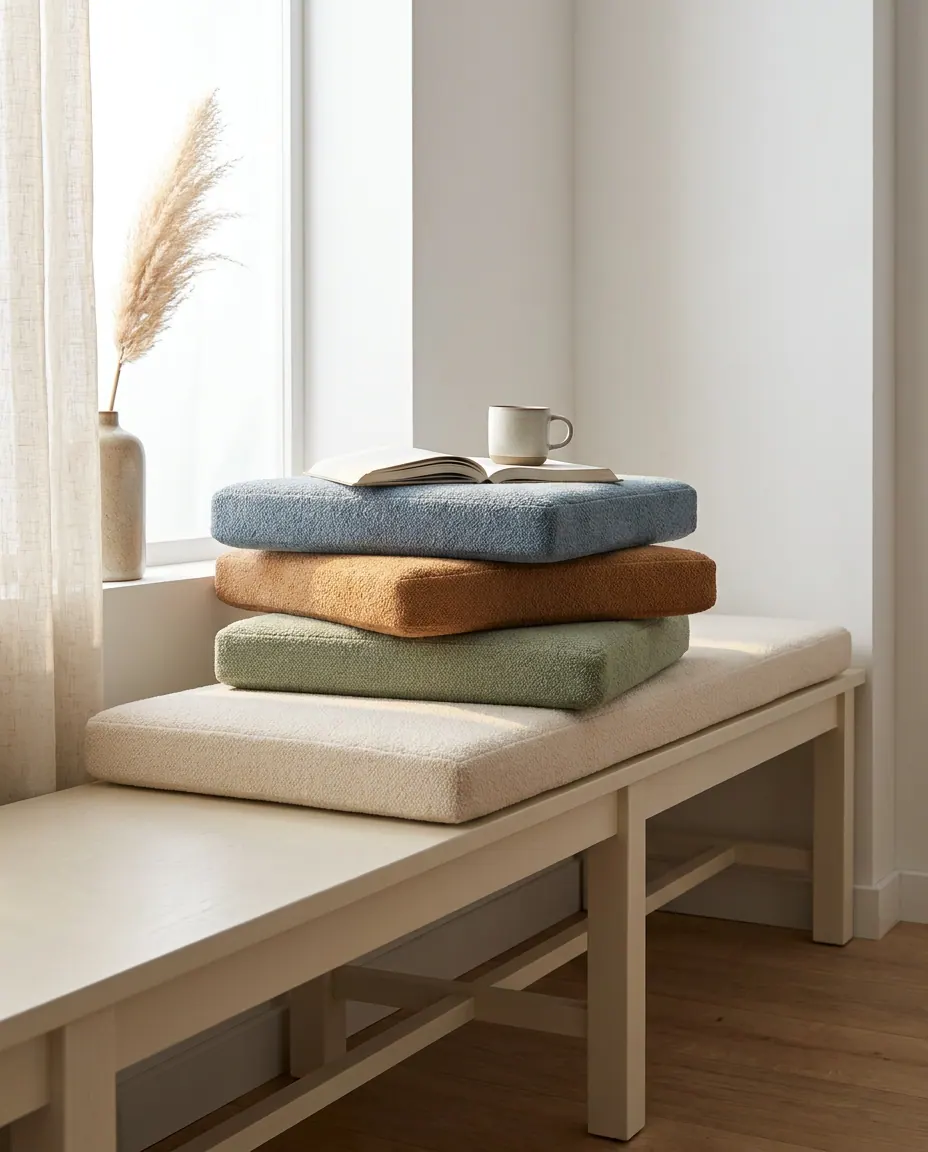
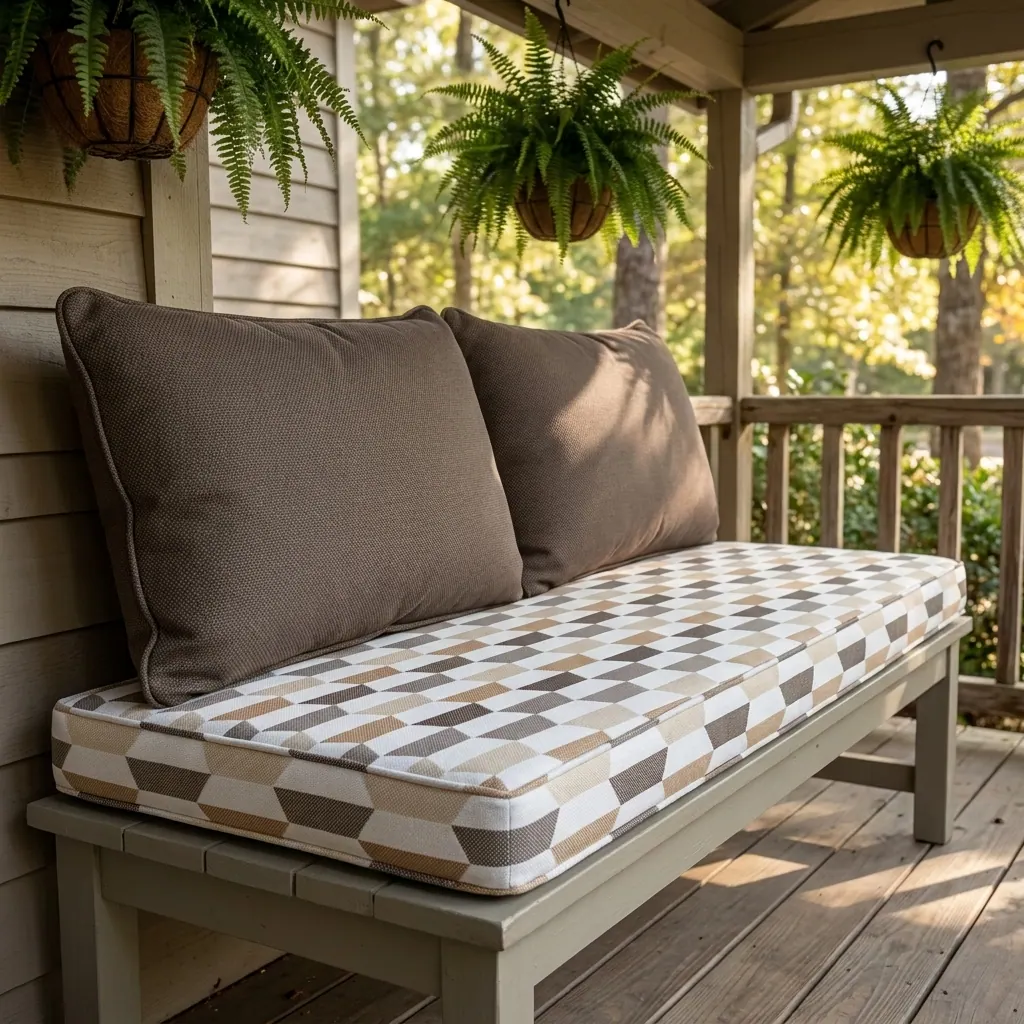
A foam cushion with no wrap has hard square corners. Wrapped in polyester fiber first, the same 32-density core comes out full and rounded.
Nate
Buyer questions
- A common question
Which foam do you use, how firm is it, and is it wrapped?
The workshop's answerHigh-resilience foam at about 2.0 lb/ft³ (32 kg/m³), firm to medium-hard, so you don't sink in. It is wrapped in polyester fiber (Dacron) before going into the cover, which gives fuller, softer edges.
- A common question
What's inside the daybed set cushions and the pillows?
The workshop's answerFirm high-resilience foam wrapped in polyester wadding (Dacron). It supports well, holds its shape and gives a softer surface.
- A common question
Could I have a plusher cushion instead of the firm one?
The workshop's answerYes. Ask for 28-density foam instead of the standard 32, or add a 3/4 in (2 cm) wadding layer. Feather-wrapped foam and soft draped pads aren't offered.
Questions buyers ask next
What is Dacron on a foam cushion?
Dacron is a polyester fiber wadding. Here it is wrapped around the foam core before the cover goes on, so the surface is a little softer and the edges come out rounded rather than sharp.
Does the Dacron wrap make a firm cushion soft?
Only at the surface. The wrap takes the hard edge off the top and corners, but support still comes from the firm core. For a genuinely softer seat, ask for 28-density foam instead.
Can a thick backrest or bolster use the same foam?
Thick backrests of about 12-14 in (30-35 cm) without tufting use foam, often cut as a wedge. Round arm bolsters suit silicone balls; neck rolls do well with shredded foam.