The Cutting Table · a checklist answer
Can you make my cushion thinner or thicker than the standard 4 inches?
Also asked as:4 in (10 cm) is a little too much for our bench.Can I get one made 2 inches thick?
Four inches is where the foam starts, not where it has to stay. Right, then: here's what has been cut, and what to write.

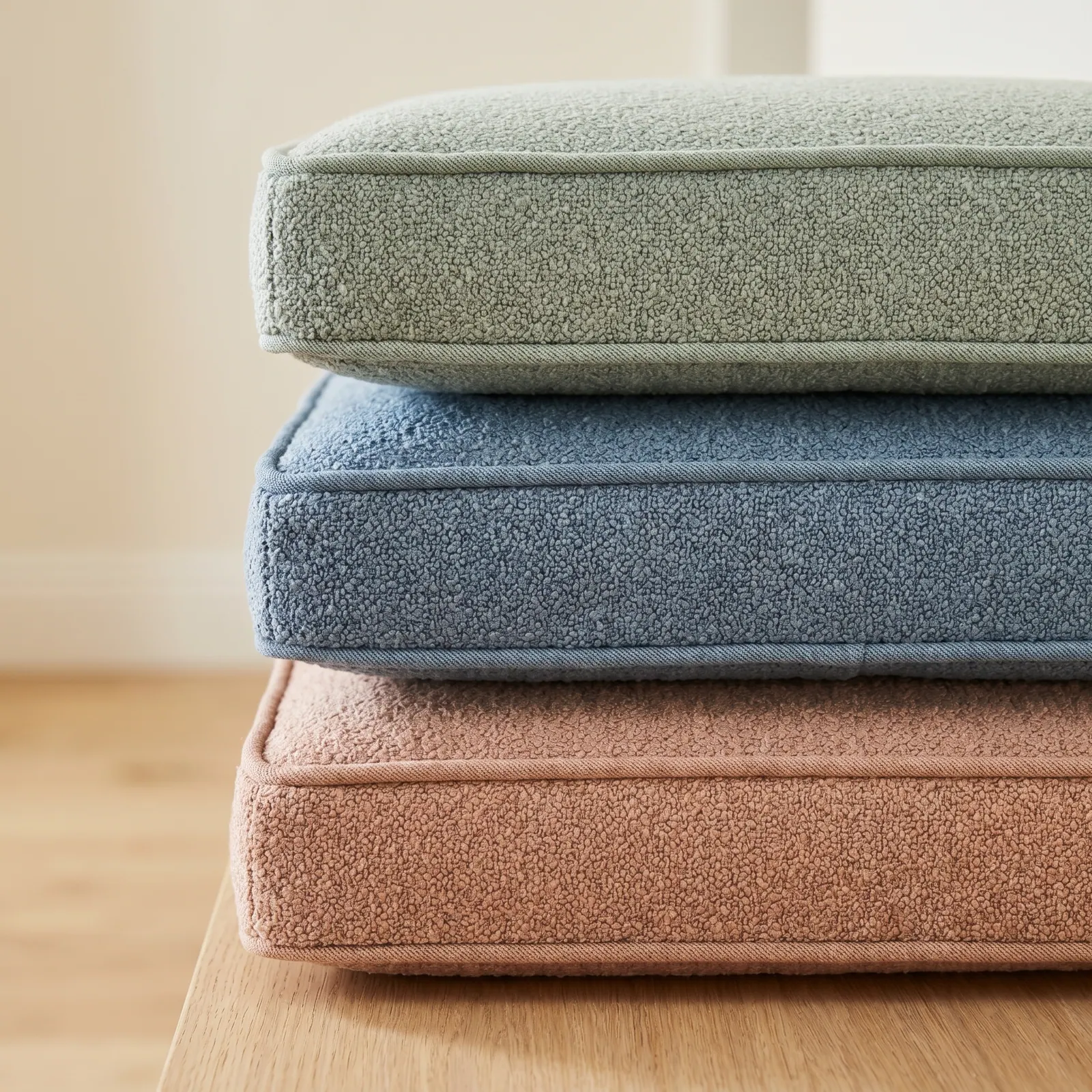 Save
The quick answer
Yes, cushion thickness is fully custom: the standard is 4 in (10 cm), but cushions have been made from about 3/4 in (2 cm) up to 9 in (23 cm), and floor cushions up to 10 in (25 cm). Pick the nearest thickness option and write the exact figure in the personalization box. Thinner usually costs the same; thicker foam raises the quote.
Get a quote for a bench cushion
Key facts
- Standard production thickness is 4 in; an order written as 3.9 in (100 mm) gets the same standard.
- Thinner cushions made include 3/4 in (2 cm), 1 in, 1.5 in, 2 in, 2.5 in, 3 in and 3.5 in.
- Thicker cushions made include 5 in (12.5 cm), 6 in (15 cm), 8 in (20 cm) and 9 in (23 cm).
- Floor cushions have been made 6, 8 and 10 in (15, 20 and 25 cm) thick.
- Select the nearest option, then write the exact thickness in the personalization box or order note.
- Thinner usually costs the same as standard; thicker foam raises the price.

Have it made
Have Maggie’s workshop cut this for you
Numbers first, fabric second, piping last. Jot down what you have, and the workshop will go down the list with you, item by item. — Maggie
Leave your details and the workshop will call you to confirm measurements, fabric, foam and piping. No prices, dates or payment on this page: it is a request, not an order.
Before you type a thickness
- Pick the thickness option closest to what you want.
- Write the exact figure in the personalization box or order note, for example '3 inches' on a trapezoid order.
- Give a number in inches or centimeters, never just 'a bit thinner'.
- Going to 6 in (15 cm) or more? Expect a surcharge for the extra foam; the quote shows it, and past buyers settled it with a small extra payment link.
- Going under about 1 1/4 in (3 cm)? Very thin pads are made without piping.
- Check the new seat height in the seat height calculator before you commit.
Thicknesses that have actually been cut
| Range | Made for real orders | Where it showed up |
|---|---|---|
| Slim | 3/4 in (2 cm), 1 in (2.5 cm), 1.5 in (4 cm), 2 in (5 cm) | Thin pads; no piping under about 1 1/4 in |
| Below standard | 2.5 in (6.5 cm), 3 in (7.5 cm), 3.5 in (9 cm) | Dining bench pads, a lower seat |
| Standard | 4 in, also written 3.9 in (100 mm) | Standard production thickness |
| Thicker | 5 in (12.5 cm), 6 in (15 cm), 8 in (20 cm), 9 in (23 cm) | 6 in daybed cushions, an 8 in banquette seat |
| Floor cushions | 6, 8 and 10 in (15, 20 and 25 cm) | Floor seating |
What one inch actually changes
Thickness is mostly a question of look and height. A 2 in cushion is a slim pad, 3 in a neat middle ground, 4 in plumper and 5 in the deepest of the everyday four. They're cut from the same firm 32-density foam, so 4 and 5 in feel alike; you're choosing a silhouette, not a softness.
Height is the part people forget. '4 in (10 cm) is a little too much for our bench' is a sentence I understand completely. Run your bench cushion and table through the thickness and seat height Pattern before you pick a number; window seats have their own rules in the window seat thickness Pattern.
How high does your bench sit before the cushion goes on, dear?
Thickness mistakes I'd rather you skipped
- Choosing 4 in from the menu and hoping the workshop guesses you meant 3.
- Writing 'thinner' without a number.
- Expecting 5 in to feel firmer than 4 in: it's the same foam.
- Asking for thicker floor sofa mattresses: they come in one thickness, about 7.5 in each, so add a stacked cushion for height instead.
Standard cushion thickness is 4 in (10 cm), but custom cushions have been cut from 3/4 in (2 cm) up to 10 in (25 cm) for floor seating.
Maggie
Buyer questions
- A common question
Do your made-to-measure bench cushions come in other thicknesses?
The workshop's answerYes. Standard is 4 in (10 cm), and real orders have gone to 1.5 in, 3 in, 1½-3 in (4-7.5 cm), 3½ in (9 cm), 5 in and 6 in. Add the thickness you want in the personalization box when you order.
- A common question
Is 3.9 in (100 mm) the same as your standard, and can I go thinner?
The workshop's answerYes, 3.9 in (100 mm) is treated as the 4 in standard. Thinner cushions have been made at 3.5 in, 3 in, 2 in and even 1 in (2.5 cm), and thicker ones at 6 in (15 cm) or 8 in (20 cm). Write it in personalization, for example '3 inches' on a trapezoid order.
- A common question
Could you make a 2-inch cushion instead of the usual 4?
The workshop's answerYes. 2 in and even ¾ in (2 cm) cushions have been made, along with 2.5 in dining bench pads, 6 in daybed cushions and an 8 in (20 cm) deep banquette seat. Thicker foam raises the price.
- A common question
What's the thickest cushion you can make?
The workshop's answerRequests have run as high as 10-12 in, and floor cushions have been made at 6, 8 and 10 in (15, 20 and 25 cm). Tell the workshop the figure you want and it will quote it.
- A common question
Can a bench cushion be 6 inches thick?
The workshop's answerYes. 6, 7 and 8 in (15, 18 and 20 cm) cushions are made. Thicker foam from 6 in up costs more, and past buyers paid the difference through a small extra payment link; send length and width for a quote.
Questions buyers ask next
Does a thinner cushion cost less than the standard?
Usually not. A thinner cushion generally costs the same as the 4 in (10 cm) standard. It is thicker foam, especially from 6 in (15 cm) up, that raises the quote.
Will a 5 in cushion feel softer or firmer than a 4 in one?
Neither, really. Both use the same firm 32-density foam, so 4 and 5 in feel alike; the extra inch mostly changes the look and the seat height. A 2 in pad is slim, and 3 in is a neat middle ground.
Can a very thin cushion still have piping?
Pads under about 1 1/4 in (3 cm) thick are made without piping. If you want piping, stay above that and write both the thickness and the piping code in the personalization box.