 Save
A Reading by MaggieBench Cushions
Turquoise and rust striped bench cushion: a sunroom makeover on reclaimed wood
Maggie on a loud stripe calmed by stone, wood and clay, and the day a cushion came up 15 inches short and nobody had to start over.
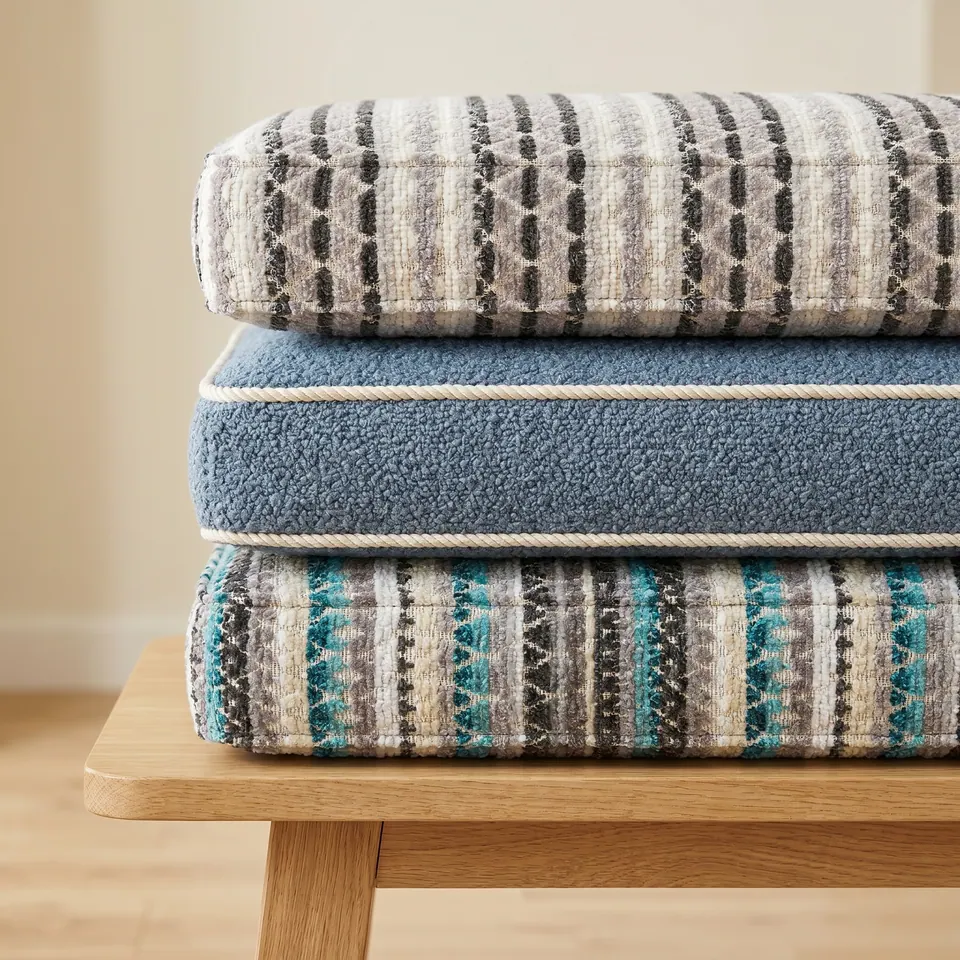
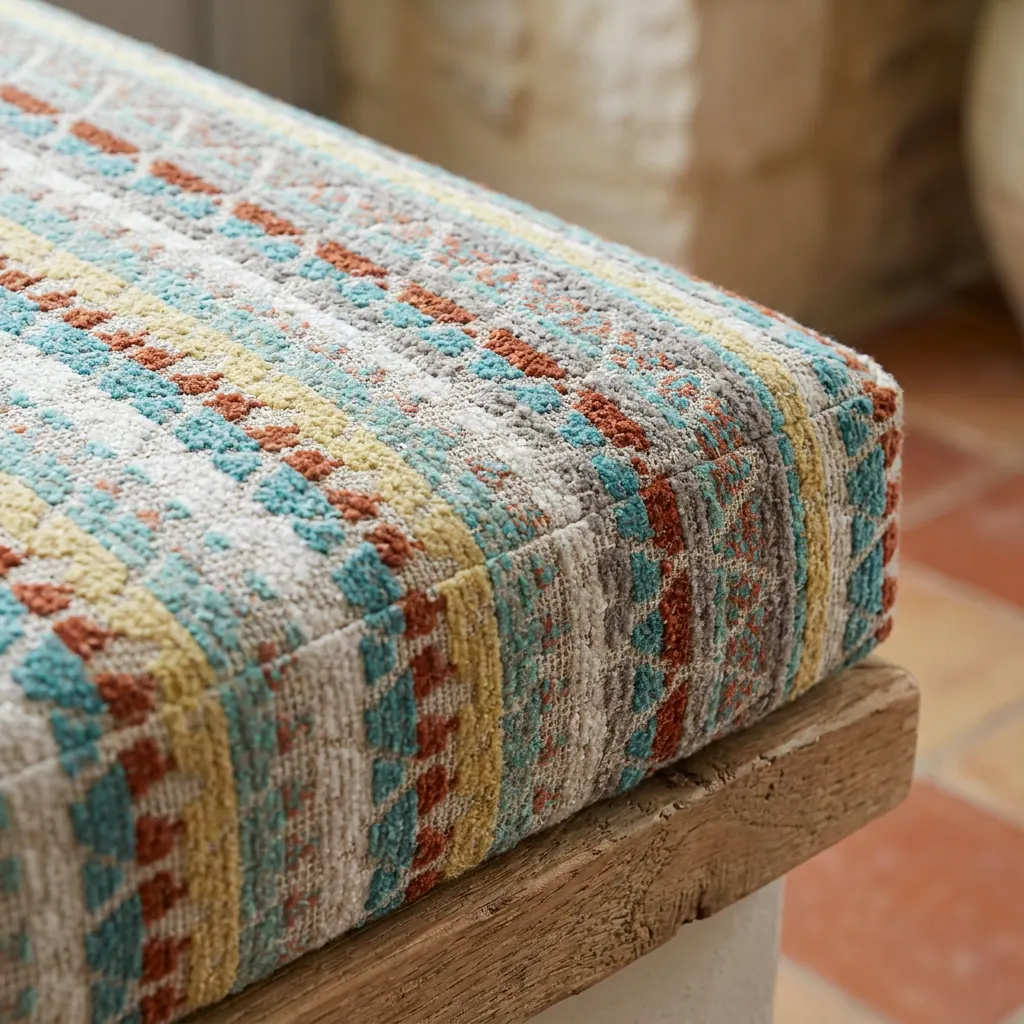
A lively woven stripe on weathered wood and terracotta, matched carefully over the corner.

The quick answer
A custom bench cushion in a busy woven stripe works best on weathered materials that calm it down. This turquoise, rust and mustard chenille stripe sits on reclaimed timber over terracotta tiles against rough limestone, matched over the corner with no piping to break it. If a cushion arrives short, matching end pieces on both sides can fill the gap.
Take the cushion away and you have a plank
Take the cushion off this bench and you have a handsome plank of reclaimed timber on terracotta tiles against rough limestone. Warm, textured, and all one family of browns and sand. Lovely for about a week, and then it's just beige with splinters.
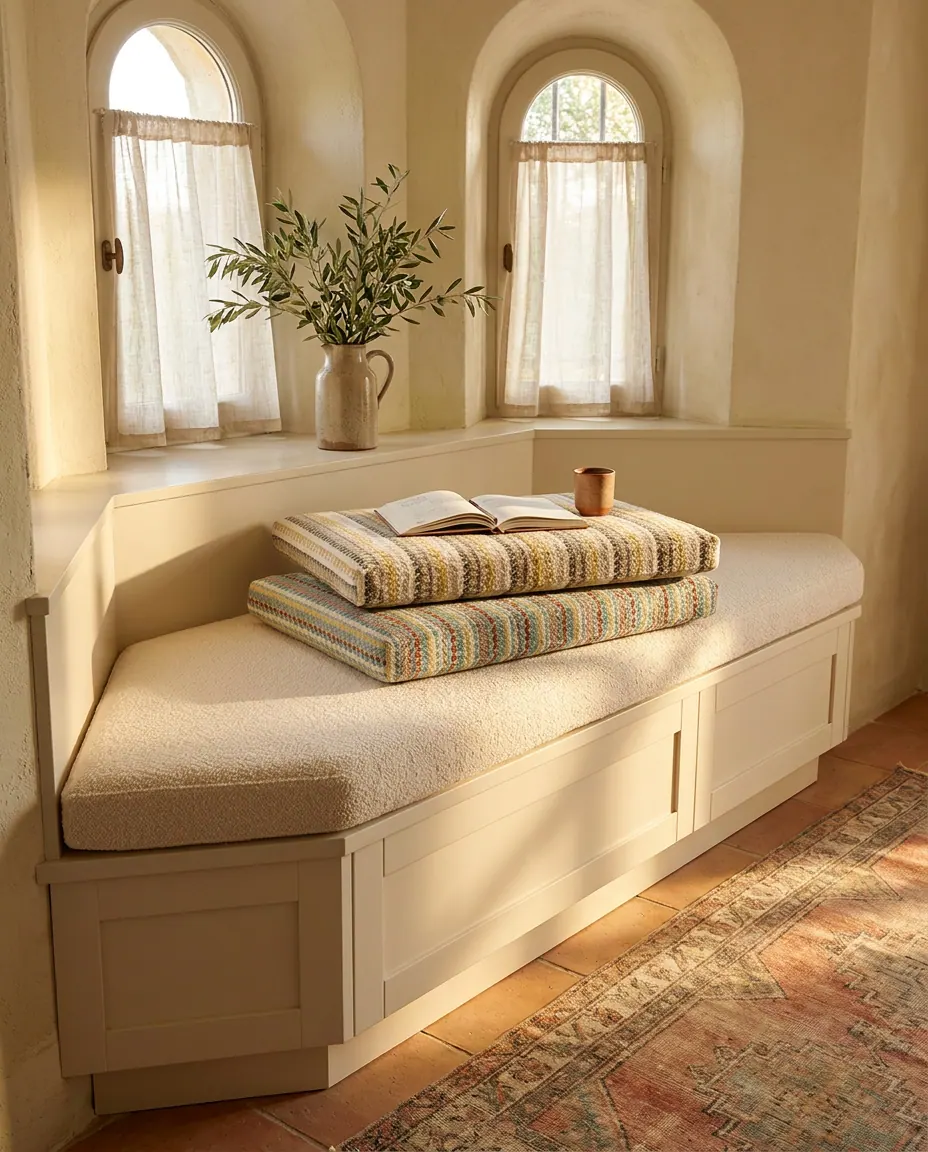
Now put back one fabric. A custom bench cushion in a woven chenille stripe, turquoise, rust, mustard, gray and cream, and the sunroom suddenly has a point of view. The rust dashes pick up the terracotta floor. The turquoise gives the whole thing lift. Mustard and gray tie it back to the stone. One cushion did the work of a shopping trip.
The trick is that the loud part is new and everything quiet is old. Weathered wood and rough limestone calm a busy fabric far better than a polished frame would; shiny surfaces just bounce the noise back. What would your room look like with one bold fabric and everything else a little worn, dear?
Pinned by Maggie: the stripe at the corner
Four pins, from the stripe-matched corner to the reclaimed timber underneath.
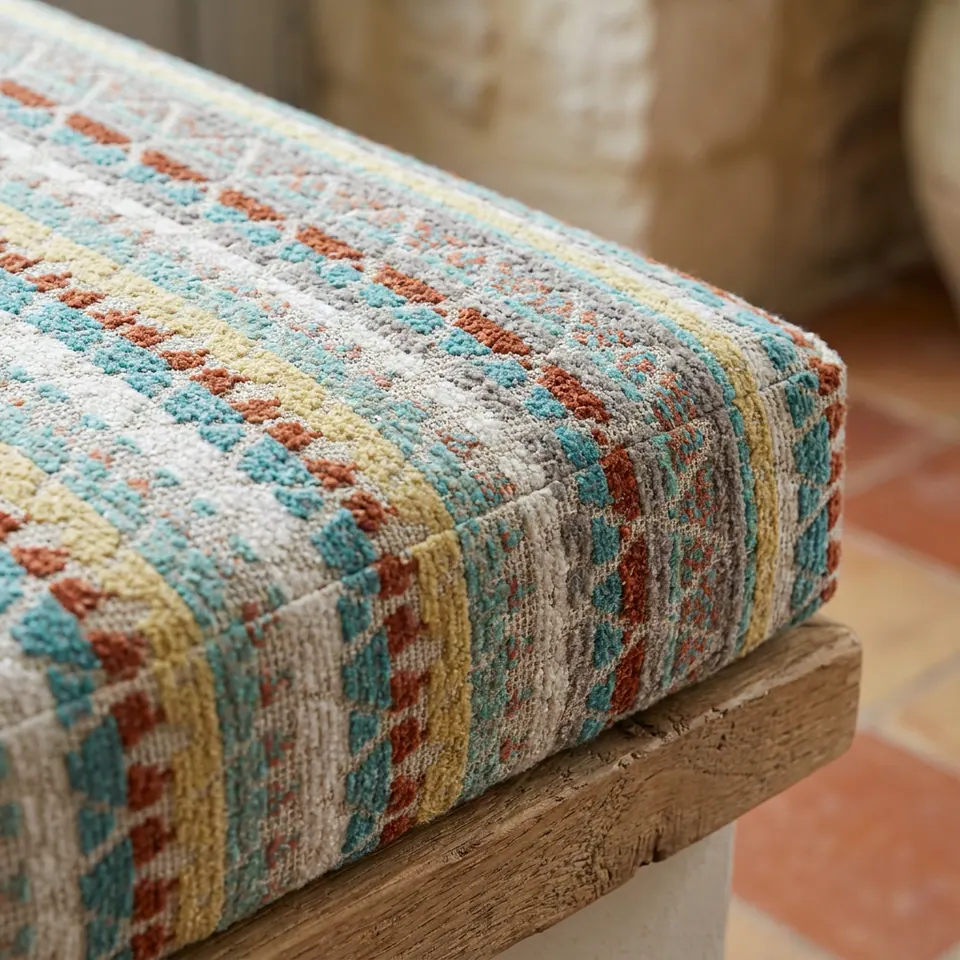
- Stripe-matched corner
The stripes run over the corner and down the side panel, which takes careful cutting on a pattern like this.
- Rust and turquoise motif
Rust dashes pick up the terracotta floor while turquoise gives the fabric its lift.
- Patterned boxing
The side panel continues the stripe instead of switching to a plain fabric.
- Reclaimed timber
Weathered wood calms a busy fabric better than a polished frame would.
- Stripe-matched cornerThe stripes run over the corner and down the side panel, which takes careful cutting on a pattern like this.
- Rust and turquoise motifRust dashes pick up the terracotta floor while turquoise gives the fabric its lift.
- Patterned boxingThe side panel continues the stripe instead of switching to a plain fabric.
- Reclaimed timberWeathered wood calms a busy fabric better than a polished frame would.
No welt, and I say that as the piping lady
You'll notice there's no piping. From me, that's quite an admission. But a welt at the top seam would chop every stripe off at the edge, and the charm of this cushion is that the stripes run over the corner and straight down the side panel. The boxing continues the pattern instead of switching to a plain fabric.
That takes careful cutting, stripe by stripe, and it's what separates a considered patterned cushion from a quick one. My rule, for what it's worth: when the fabric carries a strong stripe, match it over the corner and skip the welt. When the fabric is plain, pipe it.
Woven stripes like this one sit with our jacquard and damask cloths, more benches live among our bench cushions, and bright rooms get their own shelf under sunroom cushions.
Fifteen inches short on a 70 in bench
A buyer in the US measured a built-in bench with a backrest, 70 in (178 cm) wide, and measured it wrong. The space needed about 69 1/2 x 20 in (176.5 x 51 cm); the gorgeous tufted cushion that arrived was about 15 in (38 cm) short. Sending it back would have cost a lot, and a remake meant starting from scratch.
The workshop suggested something tidier: filler pieces in the matching fabric. Two 7 1/2 in (19 cm) seat pieces and two 7 1/2 in back pieces, one of each on either side of the main cushion. The original stays centered, and the ends look planned instead of patched.
Measure the bench, not the cushion you used to have. And if the numbers still go wrong, split the gap and fill it on both sides. Our remake Pattern covers the other fixes, and the bench measuring Pattern helps you avoid needing them.
Buyer questions: cats, washing and corner benches
- A common question
We have two cats. Which fabric are they least likely to scratch?
The workshop's answerLook at the pet-friendly fabric chart, the G series. Those fabrics are tightly woven, less tempting to claws and more durable against them.
- A common question
Do the covers come off, and can I wash them?
The workshop's answerYes. Every cover has a zipper on the underside, where it stays hidden, and machine washes at 86°F (30°C) on a delicate cycle, whichever fabric you choose.
- A common question
Can our corner kitchen bench get one L-shaped cushion?
The workshop's answerAn L is usually made as two or more cushions meeting at the corner, which fits more cleanly and ships far more safely. A common layout is a square corner cushion with a long one on each arm, such as 20 3/4 x 65 1/8 in, 20 3/4 x 20 3/4 in and 20 3/4 x 65 in. For a small L, one piece can be considered: the workshop redraws your sketch as a lettered template and asks you to confirm every edge and the thickness.
On the cutting table: the woven stripe bench
| Cushion | Box-edge bench cushion, stripe matched over the corner |
|---|---|
| Fabric | Woven chenille stripe in turquoise, rust, mustard, gray and cream, code 4256 |
| Piping | None, so the stripe runs unbroken down the side |
| Boxing | Patterned, continuing the stripe |
| Bench | Reclaimed timber on terracotta tiles |
| Wall | Rough limestone |
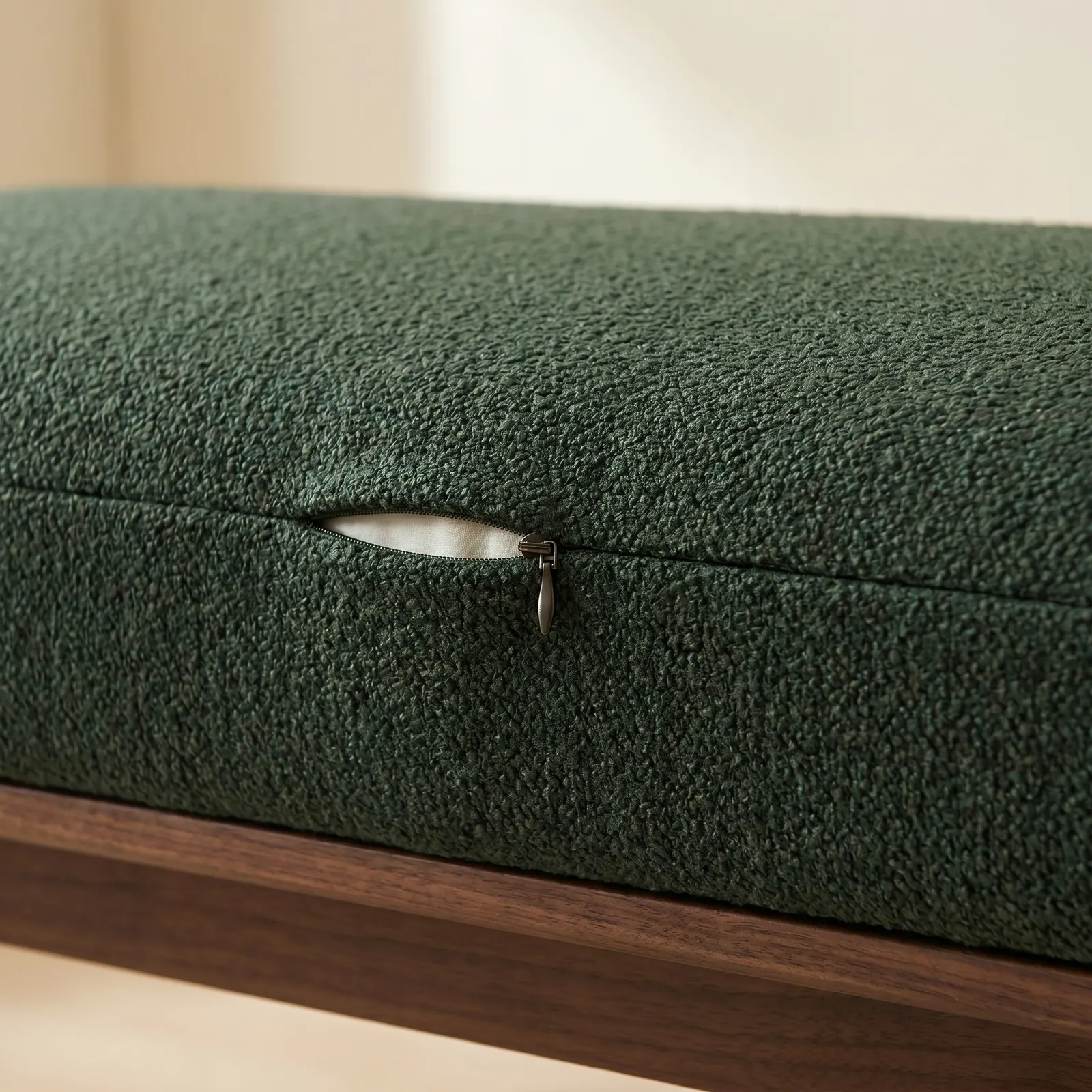
| Care | Zippered cover, machine wash at 86°F (30°C) on delicate |
| Best for | Sunrooms and rustic benches that want one bold fabric |

Have it made
Have this made — ask Maggie’s workshop
Numbers first, fabric second, piping last. Jot down what you have, and the workshop will go down the list with you, item by item. — Maggie
Leave your details and the workshop will call you to confirm measurements, fabric, foam and piping. No prices, dates or payment on this page: it is a request, not an order.
A woven stripe on a bench cushion looks best matched over the corner with no piping, since a welt at the top seam would cut every stripe off.
Maggie
Questions buyers ask next
Why is there no piping on this striped cushion?
Because the stripe runs over the corner and down the side panel. A welt at the seam would interrupt it, so on a strong stripe the matched corner does the finishing a welt would do on a plain cloth.
What materials calm a busy striped fabric?
Weathered, textured ones: reclaimed wood, rough stone, terracotta. They share the fabric's warmth without adding shine, so the stripe reads as the room's one bold note rather than one of many.
What can I do if my bench cushion is too short?
Ask about matching end pieces before a remake. One buyer 15 in short on a 70 in bench got two 7 1/2 in seat pieces and two 7 1/2 in back pieces, one of each per side, so the main cushion stayed centered.
Stitch straight — Maggie
More photographs to read
 Save
 Save
 Save
 Save
 Save
 Save