A Reading by MaggieBench Cushions
How thick should a custom bench cushion be? A knotted stripe corner answers
One regret that keeps turning up is a cushion that sits too high because the thickness was chosen before anyone measured the bench. I have done it myself, dear, so take the arithmetic seriously.

 Save
The quick answer
A custom bench cushion should fill the gap between your bench top and a finished seat height of about 18 in (46 cm) for dining and everyday sitting. Add bench height and cushion thickness, then allow for settling: a 3 in cushion may ride about 2 1/2 in under you. Standard thicknesses are 2, 3, 4 and 5 in.
Four pins, all about proportion
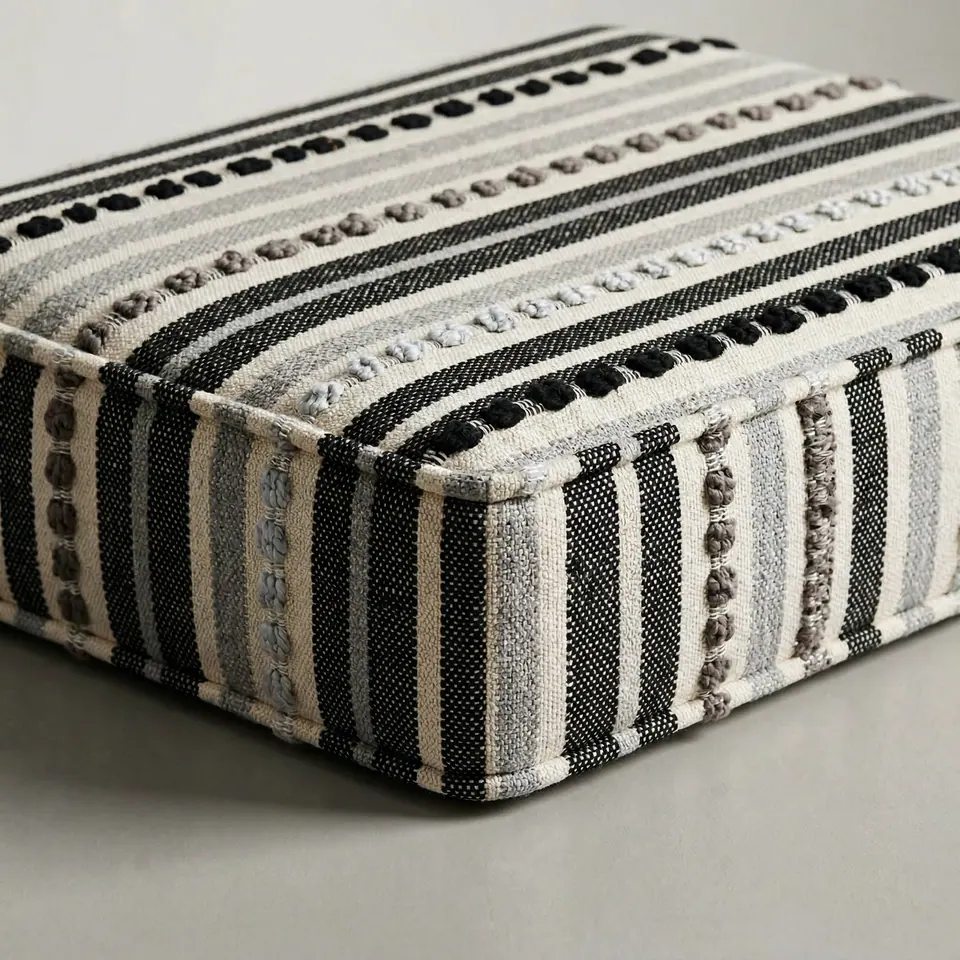
Four pins on a single corner, and every one is about shape, not color.
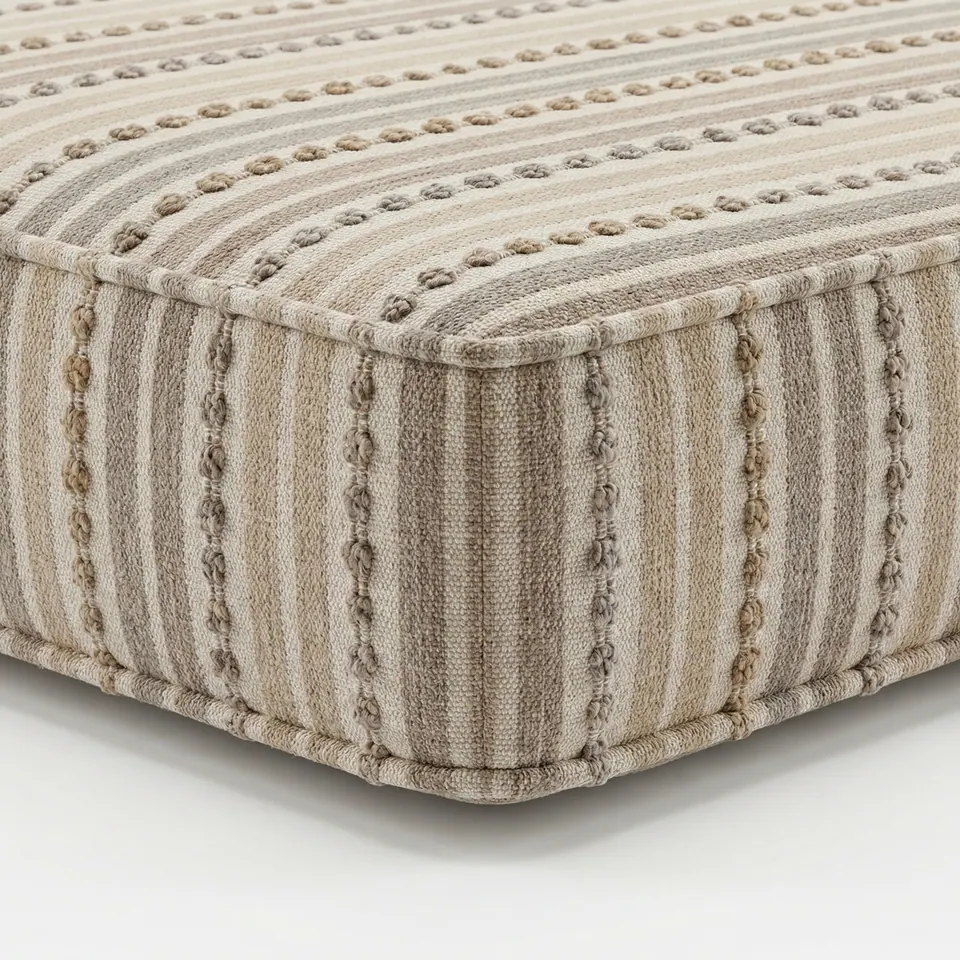
- Tonal knot rows
The knots are barely darker than the ground, so the texture shows more than the color.
- Rounded piped corner
A softly rounded corner shows well-packed foam that holds its shape without looking hard.
- Taupe knot column
On the side panel the knots line up in neat columns, giving a quiet vertical rhythm.
- Lower seam
Self piping at the base almost disappears in a tone-on-tone weave like this.
- Tonal knot rowsThe knots are barely darker than the ground, so the texture shows more than the color.
- Rounded piped cornerA softly rounded corner shows well-packed foam that holds its shape without looking hard.
- Taupe knot columnOn the side panel the knots line up in neat columns, giving a quiet vertical rhythm.
- Lower seamSelf piping at the base almost disappears in a tone-on-tone weave like this.
Work back from 18 inches
| Bench top | Cushion | Finished height | How it sits |
|---|---|---|---|
| 16 in (41 cm) | 2 in (5 cm) | 18 in (46 cm) | Slim and firm, table-friendly |
| 15 in (38 cm) | 3 in (7.5 cm) | 18 in (46 cm) | Trim; the usual kitchen-nook pick |
| 14 in (36 cm) | 4 in (10 cm) | 18 in (46 cm) | The standard, plusher |
| 13 in (33 cm) | 5 in (12.5 cm) | 18 in (46 cm) | Deep, with soft edges |
Before settling. Leave 10 to 12 in (25 to 30 cm) from the cushion top to a tabletop.
Why the side band is where proportion lives
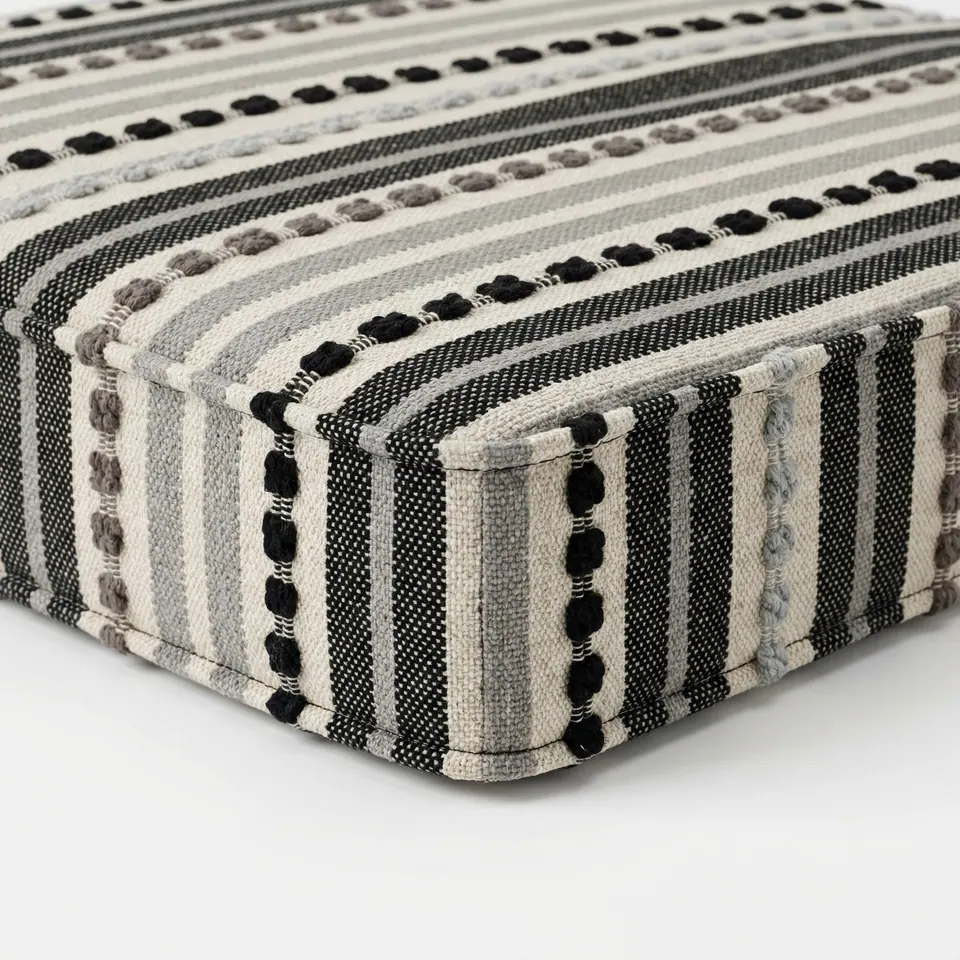
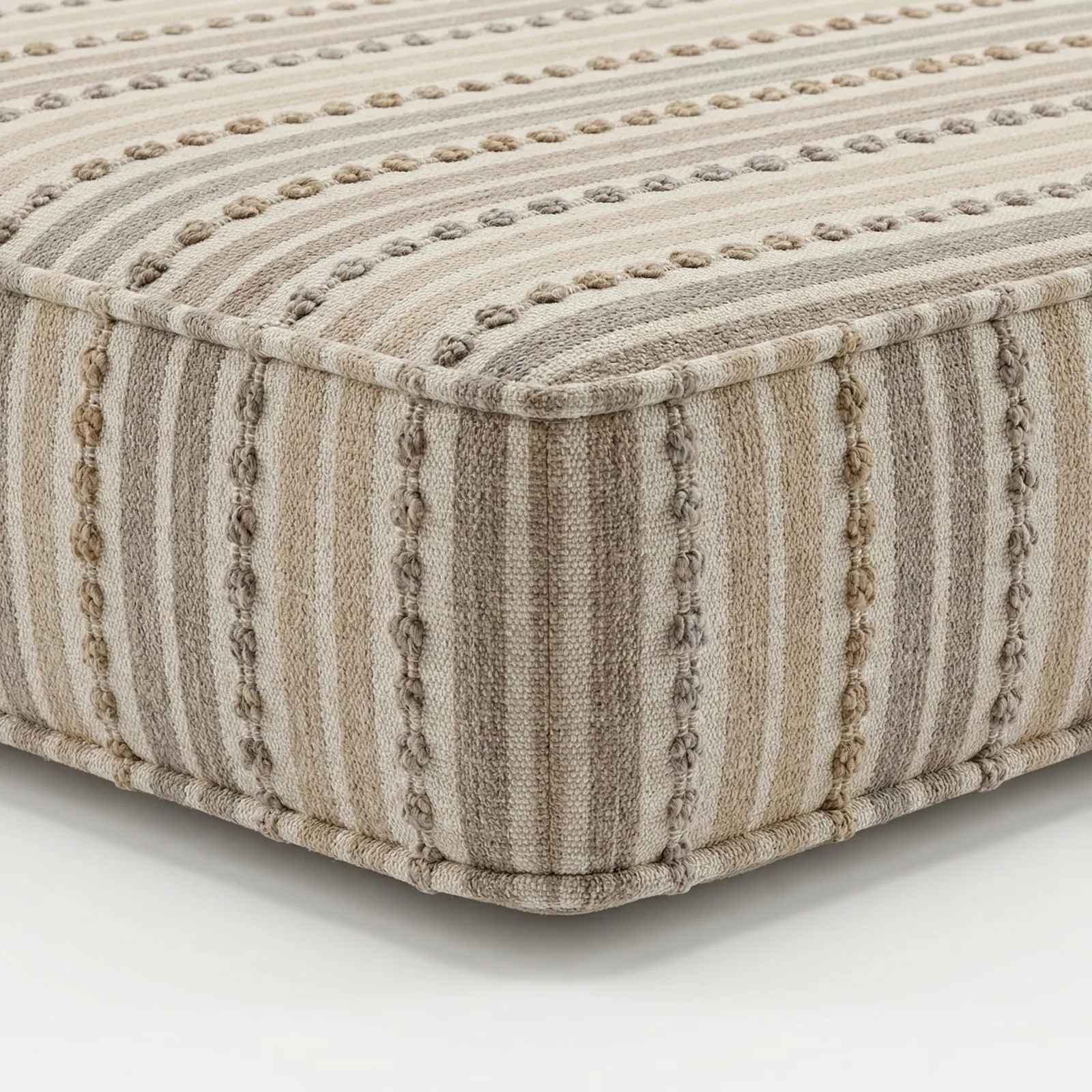
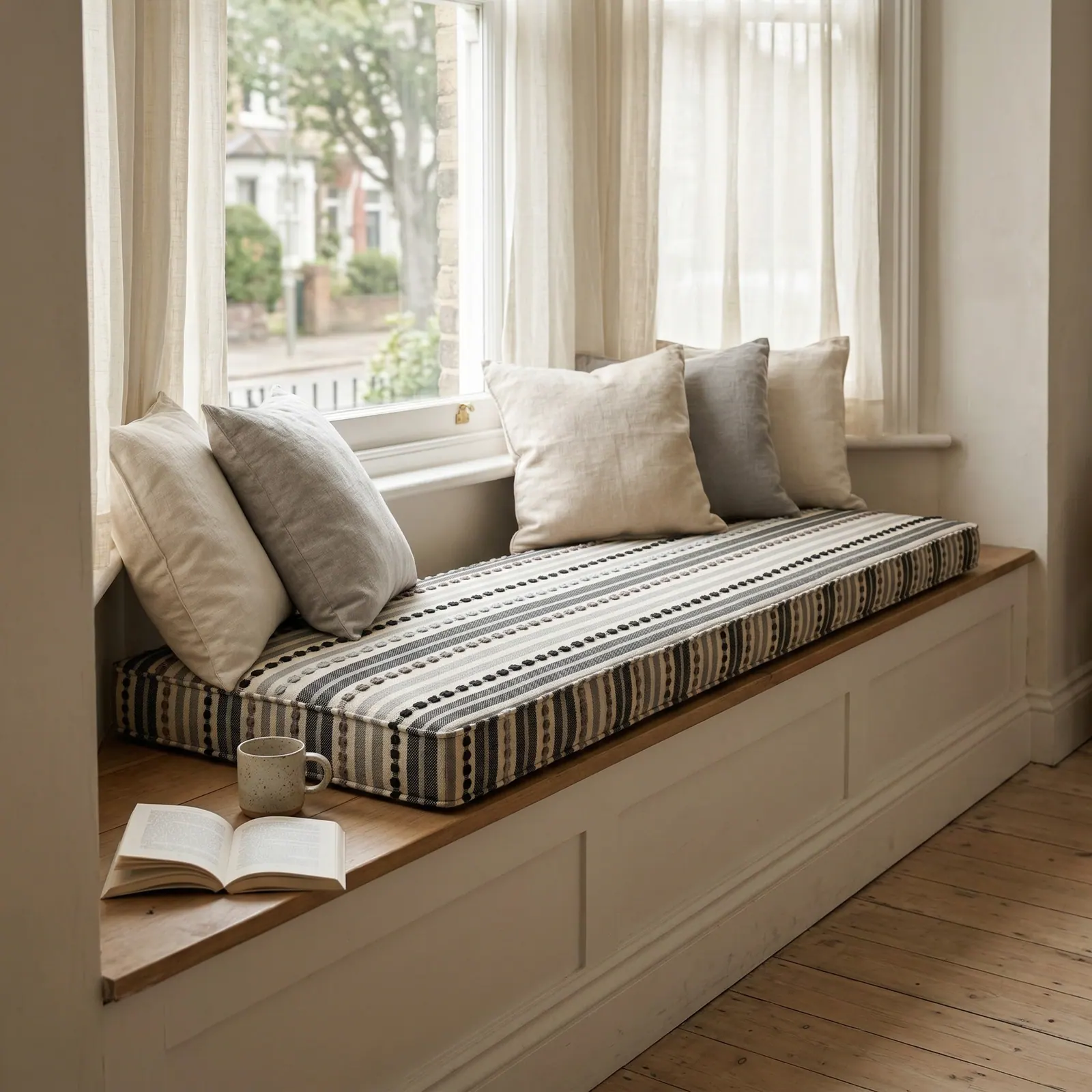
This is the quietest of the knotted stripes: sand, taupe and stone gray, with knots barely darker than the ground. Texture shows more than color, so your eye goes to shape.
Look at the side band. On a box cushion that strip, the gusset, is the thickness you ordered, and here the knots line up in neat columns down it, a quiet vertical rhythm. That rhythm makes the band read as a height, which is why a gusset should suit the bench below it: a thin cushion on a tall frame looks like a pad, and a fat one on a low frame looks like a mattress.
The corner is softly rounded and well filled, so the foam holds its shape without looking hard. The self piping at the base nearly disappears in a tone-on-tone weave. For a busy entryway bench, a mottled neutral like this hides crumbs and dog hair far better than flat cream. What does your bench top measure from the floor?
Three numbers before you pick a thickness
Measure the bench top
Floor to the top of the seat board, typed out rather than photographed. Measure the bench, not the cushion you used to have.
Subtract from 18 in
The gap is your cushion, and the thickness and seat height Pattern works the sum. Dining sits well at 17 to 19 in; a perching window seat can go higher.
Check the table and the depth
Leave 10 to 12 in to the tabletop, and remember a back cushion takes about 3 in (7.5 cm) off the seat depth.
A 33 by 20 inch bench with one rounded end
A buyer in the US had a custom bench, 33 x 20 in (84 x 51 cm), with one end rounded, and sent the shop drawings that showed the exact curve. The workshop asked for exact dimensions, worked out the pattern from the drawing and quoted it.
In the end the buyer chose a cheaper option elsewhere, and nobody minds a person shopping around. But note what made the quote possible: a scaled drawing of the curve. A shaped cushion costs more than a rectangle, because someone has to draw it before anyone cuts it.
- Sizes
- 33 x 20 in, one rounded end
The lesson: A scaled drawing of the curve is what makes a shaped cushion quotable; expect a curved piece to cost more than a rectangle.
Piping, color and ties: what came with the questions
- A common question
Can the piping be a different fabric type from the cushion, like a soft fabric body with linen piping?
The workshop's answerYes. You can mix fabric types and colors, for example an ice-blue soft fabric #126 body with tan linen L-20 piping. Write both in the order note, like: Cushion: soft fabric #126 / Piping: L-20.
- A common question
My linen cushion looks darker blue than the photo. Did I get the wrong fabric?
The workshop's answerPhotos taken in bright light can make fabric look paler online. L-41 is the palest blue in the linen range, and lighter blues sit on other charts. Even when the right fabric was used, the workshop asks what fix you'd like; close-ups or swatches are the safest check.
- A common question
Can you add ties so the cushion stays on my bench, and what do they cost?
The workshop's answerOn this order the ties were added free of charge. Ask for them in the personalization note and say where you want them, for example 6 in (15 cm) in from each short end.
Pick a bench cushion's thickness with arithmetic: bench height plus cushion should land near 18 in. A 3 in cushion settles to about 2 1/2 in once you sit.
Maggie
On the cutting table: the knotted stripe
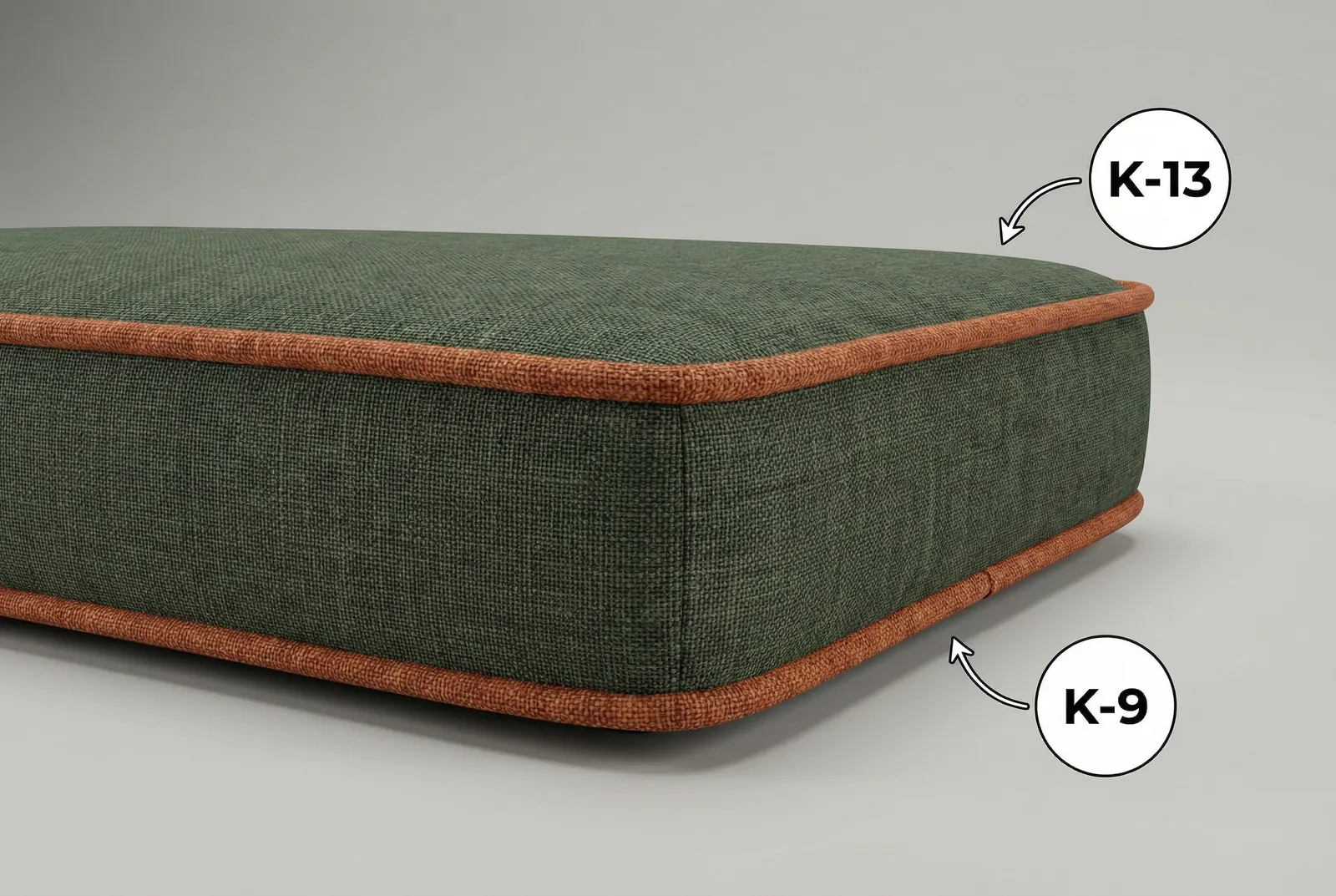
| Cushion | Box bench cushion, rounded piped corner |
|---|---|
| Fabric | Sand, taupe and stone gray woven stripe, tonal knots |
| Piping | Self piping, almost invisible |
| Side band | Knots set in vertical columns |
| Thickness options | 2, 3, 4 or 5 in (5 to 12.5 cm) |
| Target | About 18 in (46 cm) finished seat height |
| Best for | Entryway benches, pets, busy family seats |

Have it made
Have this made — ask Maggie’s workshop
Numbers first, fabric second, piping last. Jot down what you have, and the workshop will go down the list with you, item by item. — Maggie
Leave your details and the workshop will call you to confirm measurements, fabric, foam and piping. No prices, dates or payment on this page: it is a request, not an order.
Questions buyers ask next
Is 2 in thick enough for a bench cushion?
It can be, on a bench already close to seat height. Firm foam keeps a 2 in cushion supportive, and 2 in is the thinnest standard foam thickness the workshop cuts.
How much does a back cushion change seat depth?
About 3 in (7.5 cm). On an 18 in deep bench with a backrest, you sit on roughly 15 in, so plan the seat depth with the backrest in mind.
Does cushion thickness change how I sit at a table?
Yes, inch for inch. Leave 10 to 12 in (25 to 30 cm) between the top of the cushion and the tabletop, and remember foam settles a little once you sit.
Stitch straight — Maggie
More photographs to read
 Save
 Save
 Save
 Save
 Save
 Save