The Cutting Table · a common question
Should a chair seat cushion be 2 in (5 cm) or 3 in (7.5 cm) thick?
Also asked as:Deciding between 2 in (5 cm) or 3 in (7.5 cm)Do they collapse a lot when sitting?
An inch sounds small until it moves your knees. Here is how chair pads get sized, compression math included.

The quick answer
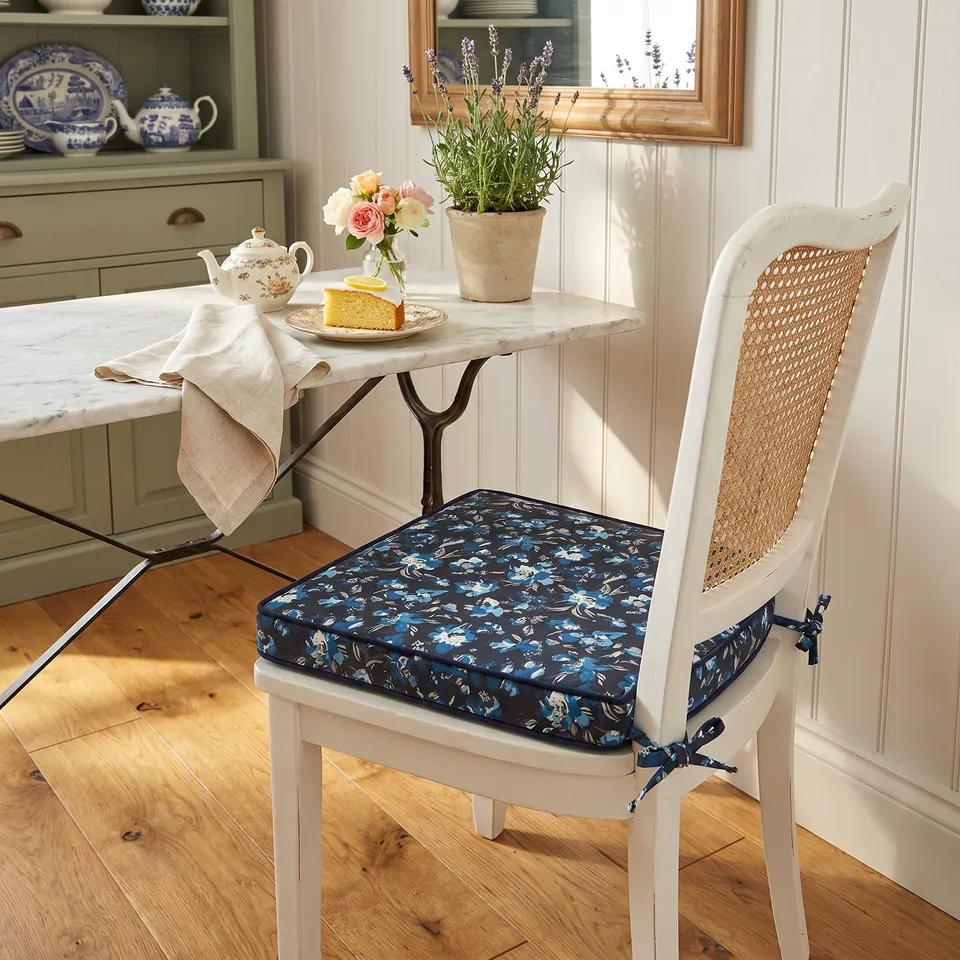
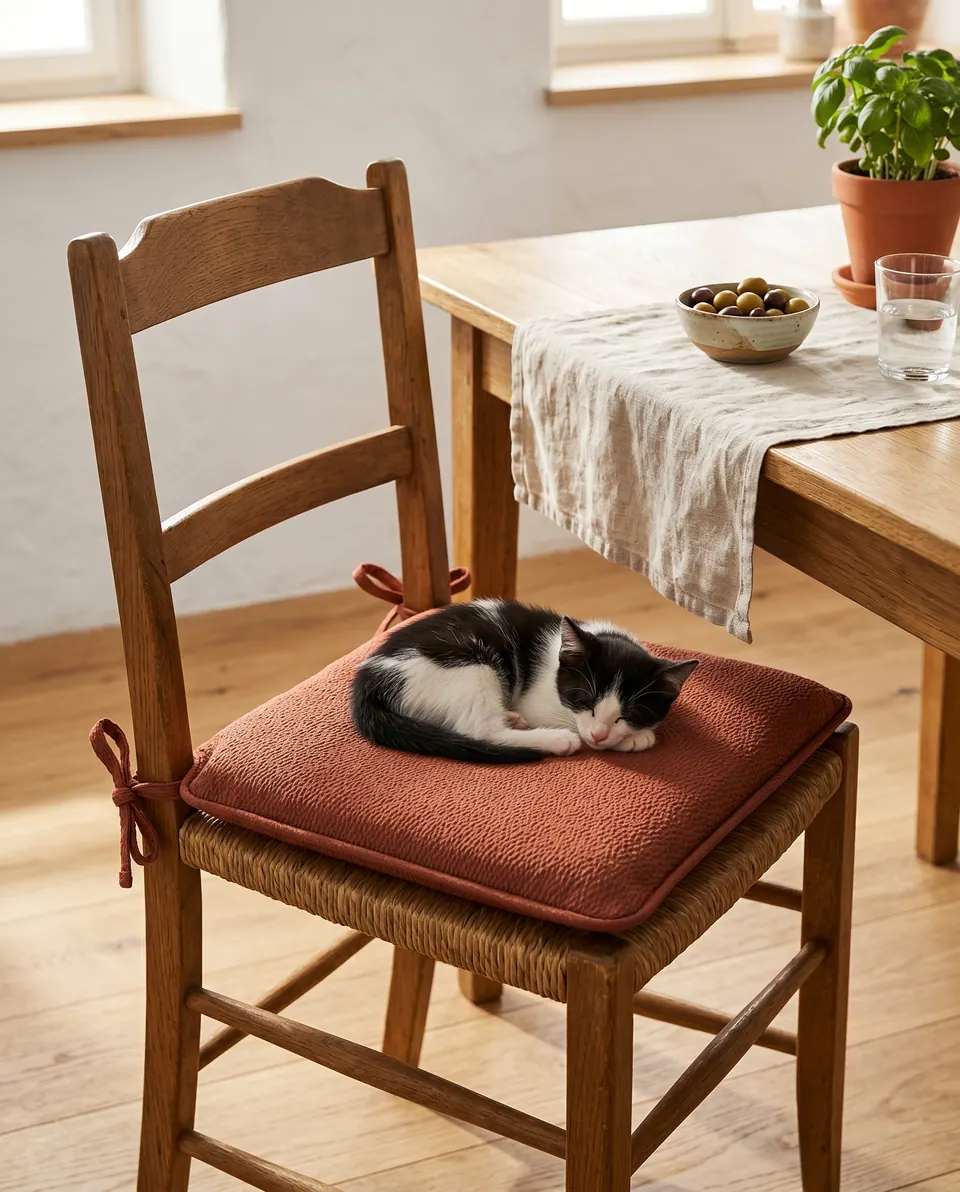
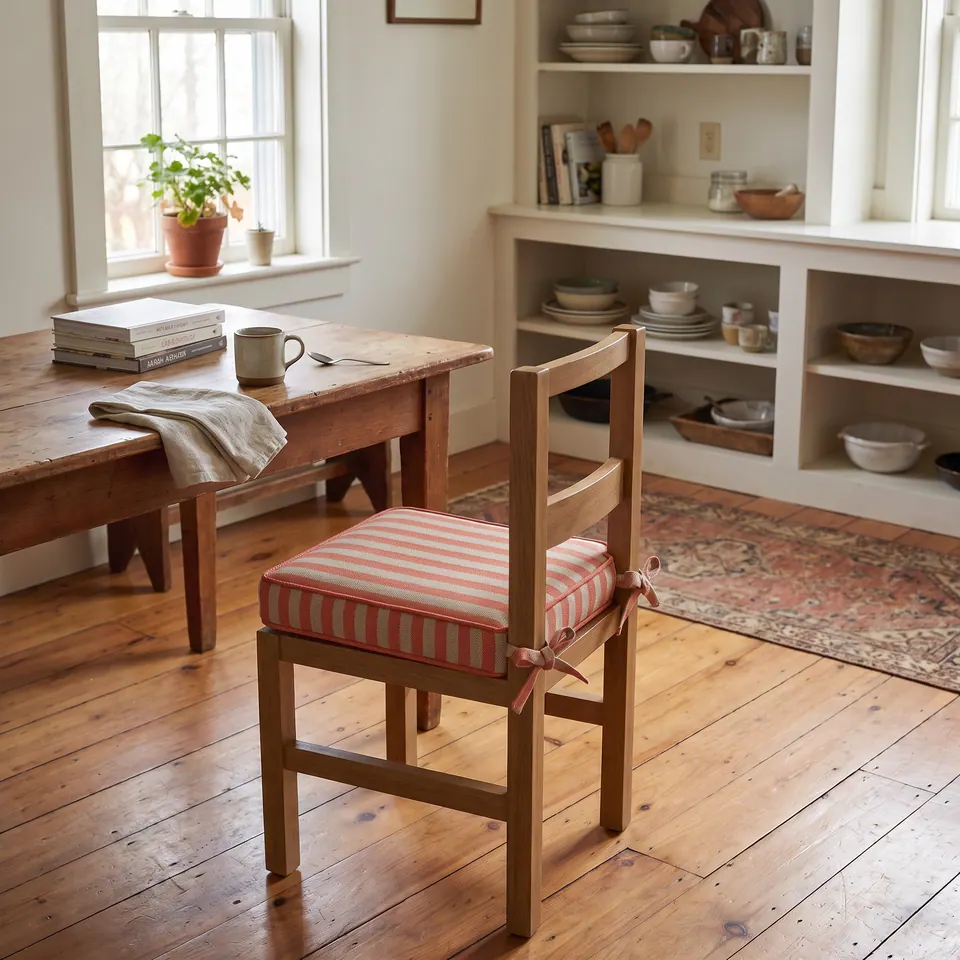
For most chair pads, 2 in (5 cm) is the right thickness, with 3 in (7.5 cm) or 4 in (10 cm) available for more cushion. The firm 32-density foam won't collapse, but a 2 in pad compresses slightly, so a 15⅜ in (39 cm) chair lands near 16½–17 in (42–43 cm). For long sitting on a bench, choose 4 in (10 cm).
 Save
Key facts
- 2 in (5 cm) is recommended for chair pads; 3 in (7.5 cm) or 4 in (10 cm) are possible.
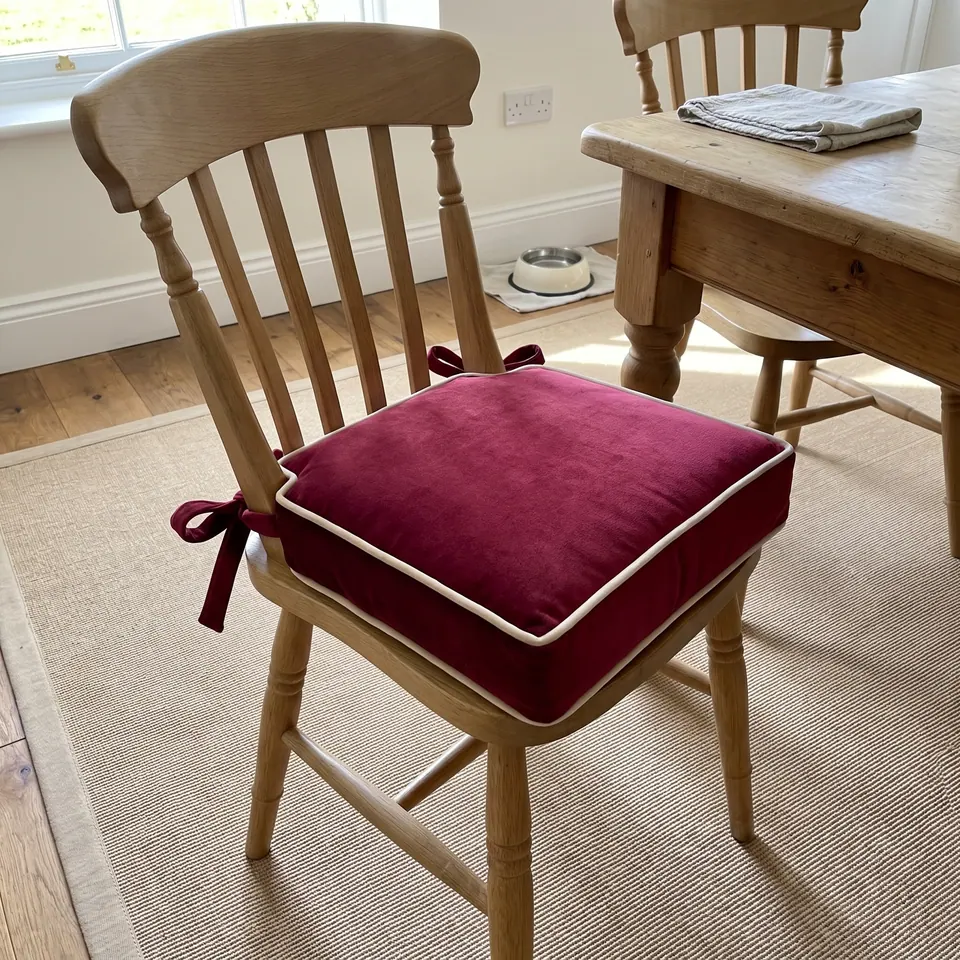
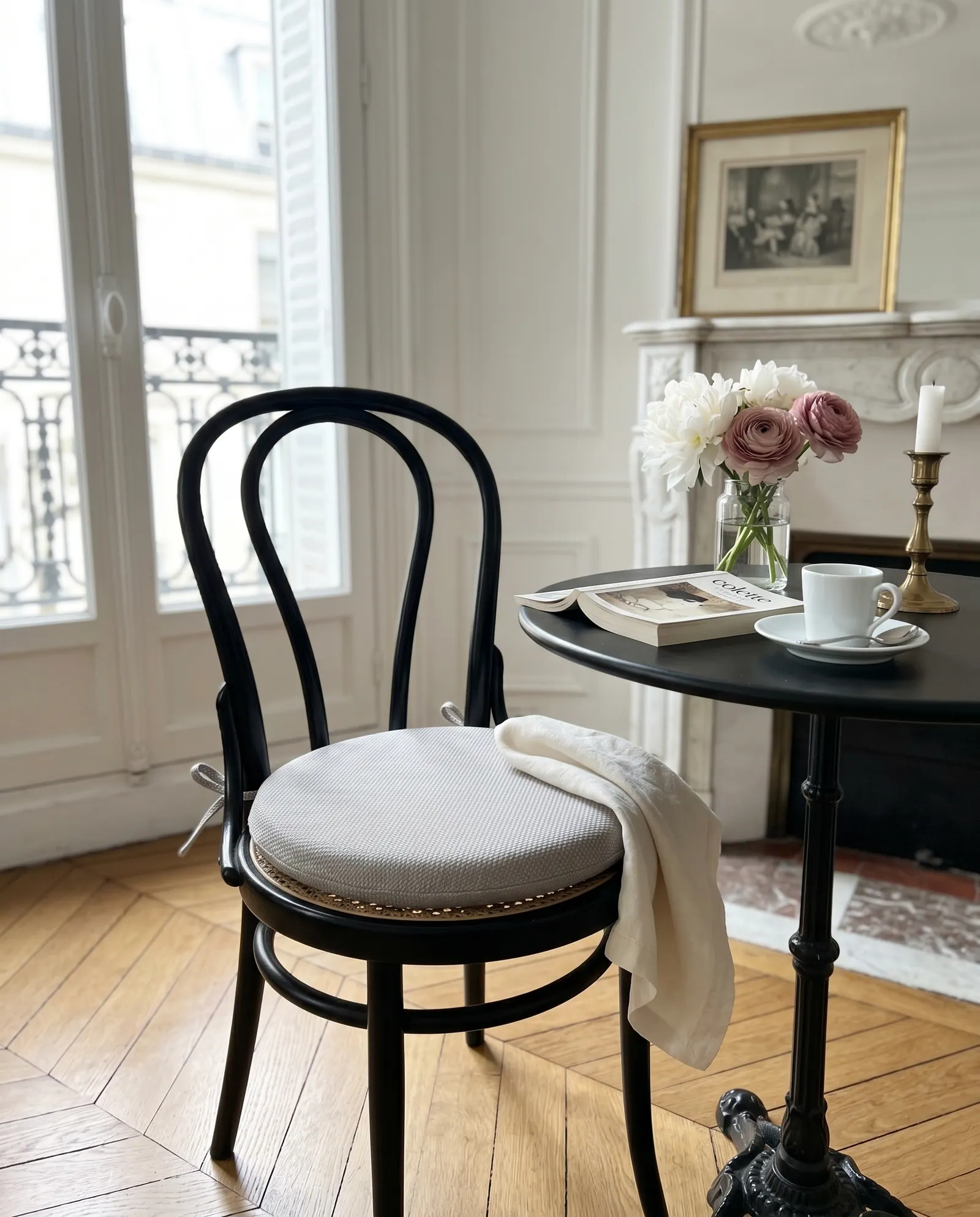
- The velvet seat cushion comes 4 in (10 cm) thick as standard.
- 32-density foam (32 kg/m³, about 2 lb/ft³) is dense and firm and does not collapse.
- A 2 in (5 cm) cushion compresses slightly under body weight.
- For benches used for long sitting, 4 in (10 cm) gives the best support; 3 in (7.5 cm) is the alternative.
- Back cushions can be thinner, around 2 in (5 cm).
- Nursery armchair seat and back cushions have been made 5 in (13 cm) thick, filled with fiber and silicone balls.

Have it made
Have Nate’s workshop cut this for you
Send the numbers in inches: length × depth × thickness, plus any angle. The workshop checks them with you, because foam has no undo button. — Nate
Leave your details and the workshop will call you to confirm measurements, fabric, foam and piping. No prices, dates or payment on this page: it is a request, not an order.
Thickness by seat, from the workshop's own answers
| Seat | Thickness | Note |
|---|---|---|
| Chair pad, everyday | 2 in (5 cm) | The usual recommendation |
| Chair pad, more cushion | 3 or 4 in (7.5 or 10 cm) | Made on request |
| Velvet seat cushion | 4 in (10 cm) | Standard thickness |
| Bench for long sitting | 4 in (10 cm) | 3 in is the alternative |
| Back cushion | about 2 in (5 cm) | Thinner than the seat |
| Nursery armchair | 5 in (13 cm) | Fiber and silicone-ball fill |
The compression math on a 15⅜ in chair
The case that comes up most: a chair seat at 15⅜ in (39 cm), a target seat height of 16½–17 in (42–43 cm), and the question, 2 in or 3 in?
On paper, 15¼ in (39 cm) plus a 2 in (5 cm) pad is 17¼ in (44 cm). Sit down and it is not. The 32-density foam (32 kg/m³, about 2 lb/ft³) is dense and firm, so it holds its shape, but a pad that thin still gives a little. Budget roughly ½–¾ in (1–2 cm) of give and 2 in lands inside the 16½–17 in (42–43 cm) window; 3 in would overshoot it. The workshop asks first whether the cushion is for a chair, bench or floor seating, because each carries you differently.
That give is called compressed height; the foam density Pattern explains why denser foam gives less, and the seat height calculator runs your own numbers.
A bench for a father who sits a long while
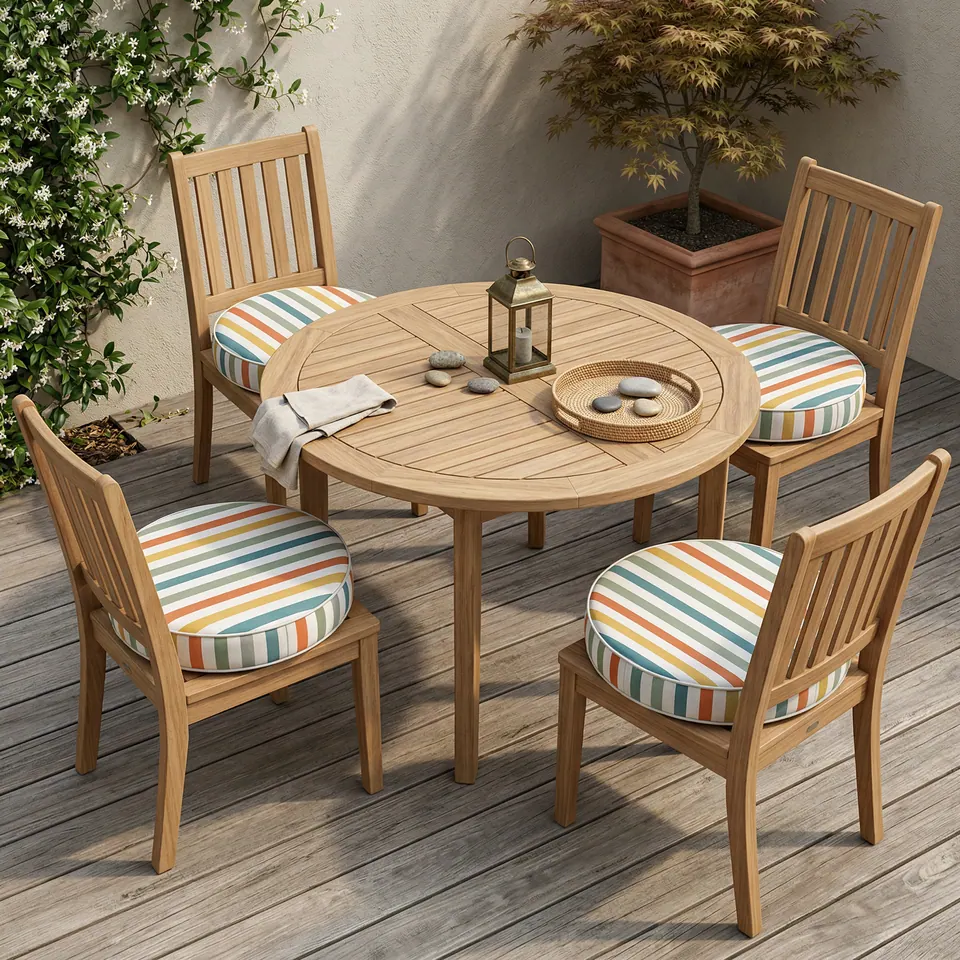
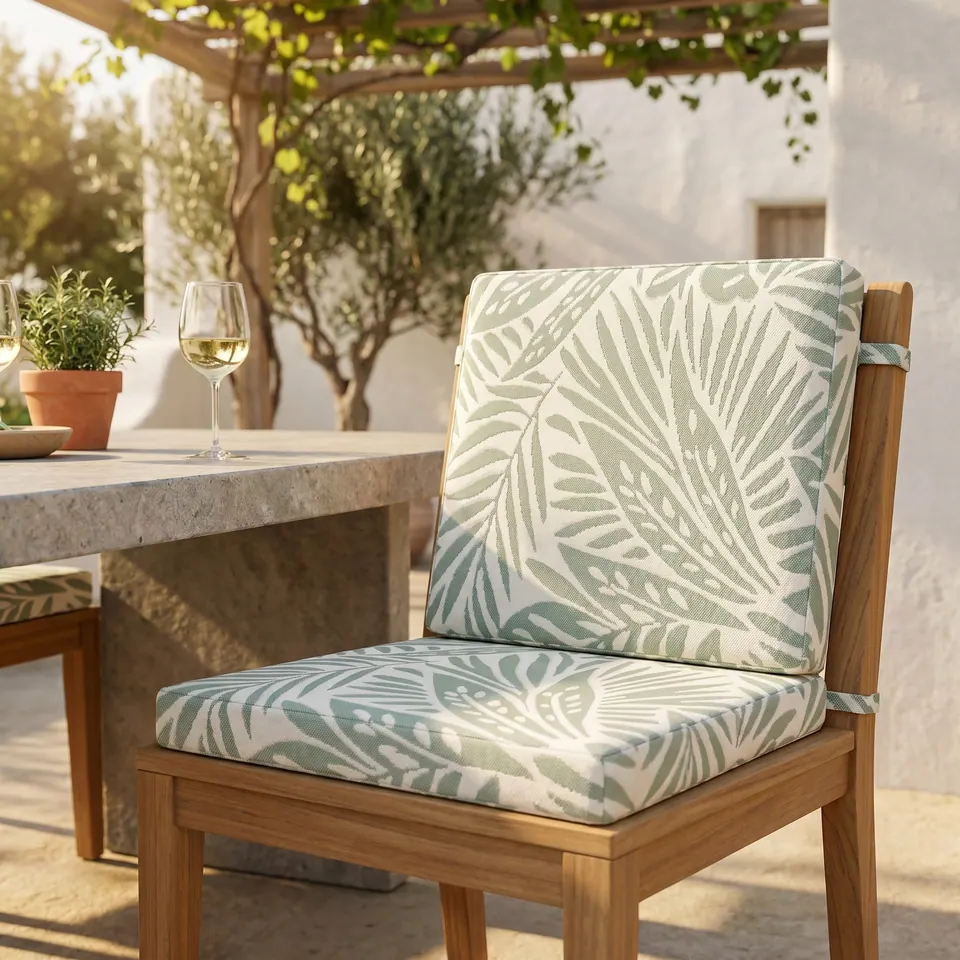
A buyer wrote to the workshop wanting outdoor chair pads and a bench cushion that would be really comfortable for an elderly father. The chairs got 2 in (5 cm), with 3 or 4 in available. The bench got 4 in (10 cm) for long sitting, 3 in as the fallback, and back cushions of about 2 in. Different seats, different hours, different thickness. Partner, that is the whole method.
Chair pads: 2 in (5 cm). Benches you sit on for hours: 4 in (10 cm). Back cushions: about 2 in. Firm 32-density foam holds all three.
Nate
Buyer questions
- A common question
Will a 2 in (5 cm) seat cushion flatten when I sit? Should I go 2 in or 3 in for a chair?
The workshop's answerThe 32-density foam is dense and firm, so it keeps its shape, but 2 in is on the thin side and compresses slightly. On a 15¼ in (39 cm) chair aiming for 16½–17 in (42–43 cm), 2 in lands close to the target. The shop first asks whether it's for a chair, bench or floor seating.
- A common question
How thick should outdoor chair pads be, and a bench cushion for an older person?
The workshop's answerChairs: 2 in (5 cm), with 3 or 4 in possible. A bench for long sitting gets the best support at 4 in (10 cm), 3 in as the alternative, with back cushions around 2 in.
- A common question
How thick are your velvet seat cushions? I need four small ones.
The workshop's answerThe standard velvet seat cushion is 4 in (10 cm) thick, sized to order. Four 14½ x 16½ in (37 x 42 cm) cushions were quoted together in any chart fabric.
- A common question
Can you remake the seat and back cushions on a nursery armchair, 5 in thick?
The workshop's answerYes. A 20 x 22 x 5 in seat and a 21 x 27 x 5 in back were quoted as a pair, filled with fiber and silicone balls. Thicker than 5 in is possible.
Questions buyers ask next
How much does a firm foam chair pad squash when you sit on it?
Only slightly. On the workshop's numbers, a 2 in (5 cm) pad of 32-density foam on a 15⅜ in (39 cm) chair sits at about 16½–17 in (42–43 cm): roughly ½–¾ in of give.
Is a 4 in cushion too thick for a dining chair?
It can be made, but it lifts you more than most chairs need. The workshop recommends 2 in (5 cm) for everyday chair pads, makes 3 and 4 in on request, and saves 4 in for benches people sit on for hours.
Should the back cushion match the seat cushion's thickness?
Not necessarily. In the workshop's advice for a bench used for long sitting, the seat goes 4 in (10 cm) while the back cushions stay around 2 in (5 cm), so the backrest doesn't crowd the seat.