A Reading by MaggieDining Chair Cushions & Pads
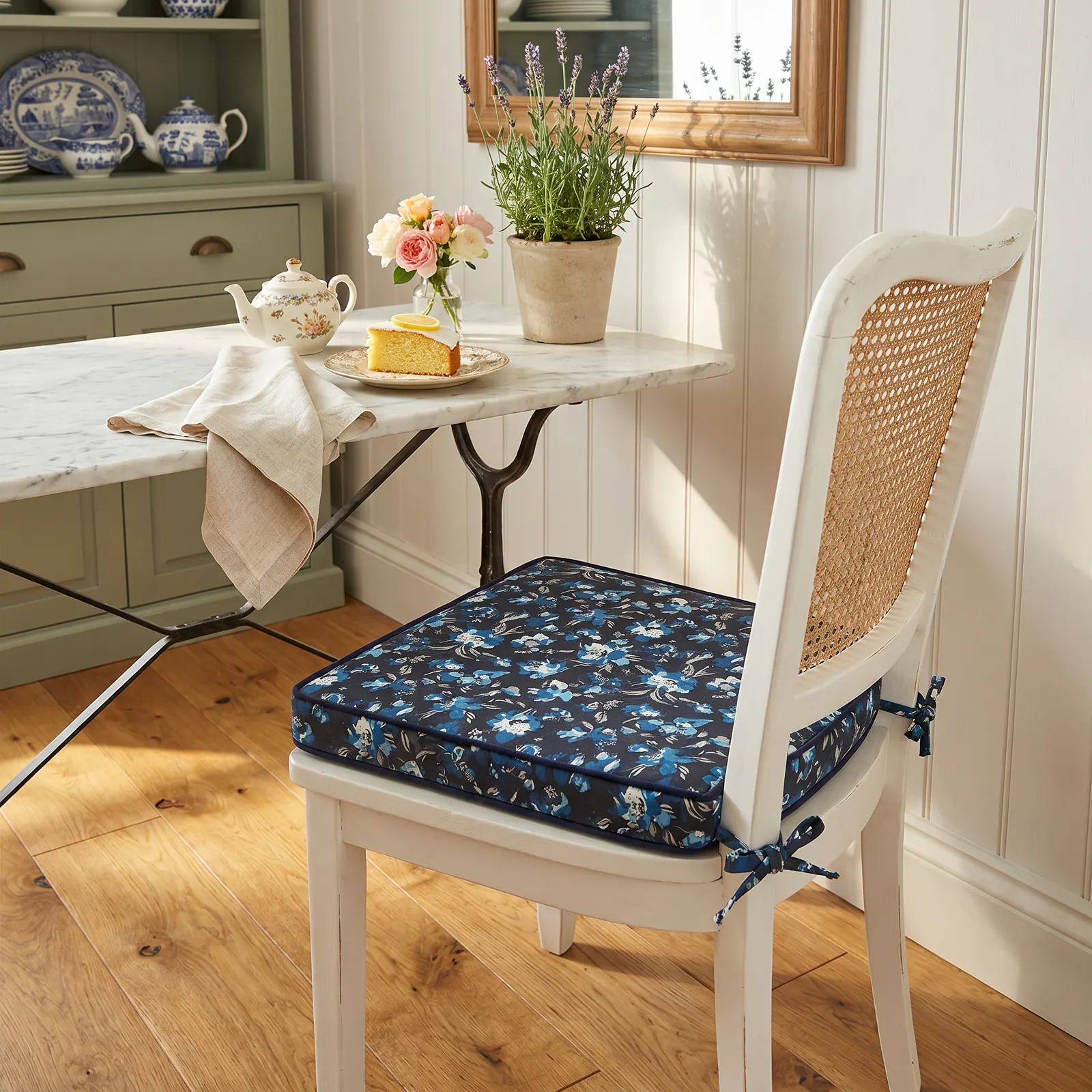
A navy floral chair cushion with ties, and the mistakes it dodges
Pretty chair pads fail in dull ways: they slide, they flatten, they arrive without ties. This one on a cane-back chair gets the dull parts right, which is exactly why I like it.
The quick answer
A chair cushion with ties stays put only if you ask for the ties when you order, put them at the back legs and send a drawing for any shaped seat. This navy floral boxed pad gets all three right: matching fabric ties bowed at the back legs, navy piping on the box, and enough thickness to soften a hard seat without lifting you from the table.

 Save
 Save
 Save
 Save
Pinned by Maggie: five spots on the tea-table chair
Five pins on the tea-table chair, from the bow at the back leg up to the blue and white china that set the navy.
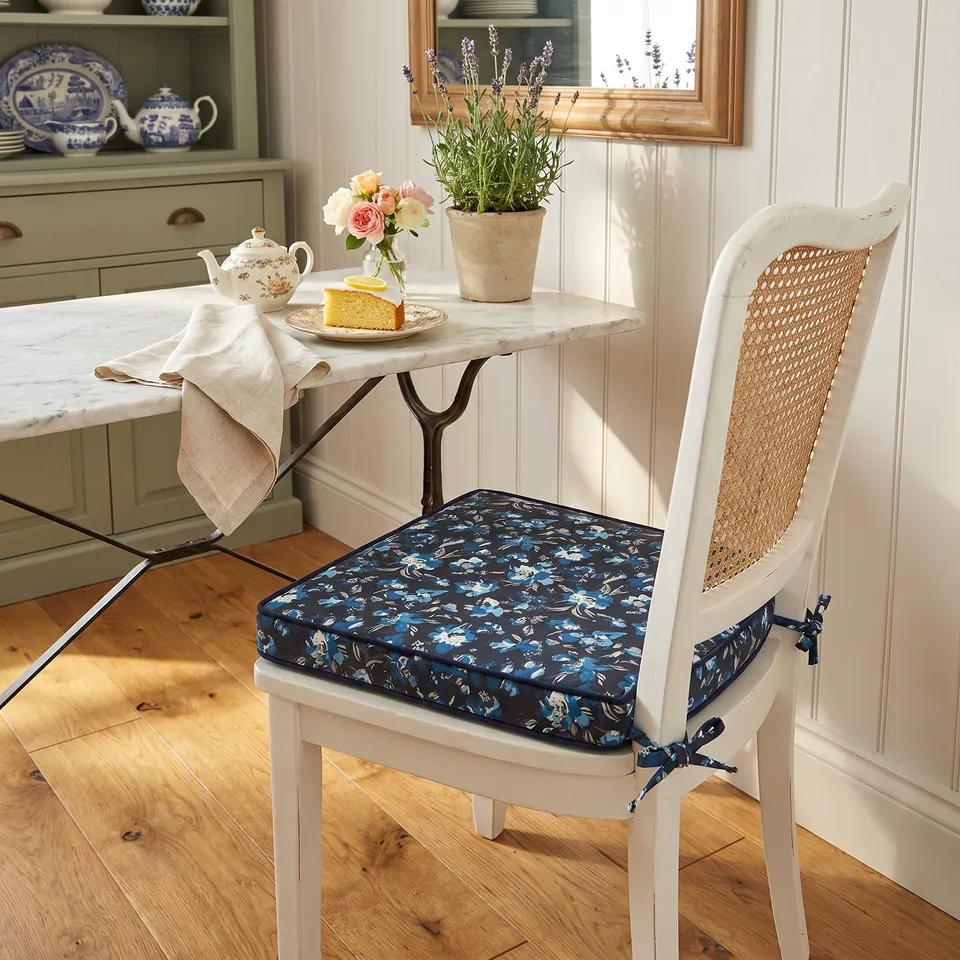
- Navy floral chair pad
A boxed pad thick enough to soften a hard seat without raising the sitter much.
- Fabric tie bow
Ties cut from the same print knot around the back legs so the pad cannot slide.
- Cane chair back
Natural cane warms the blue print and matches the honey floor.
- Tea and cake
The floral teapot repeats the pad's flowers on the table.
- Blue and white china
The pad's navy was matched to the china already on display.
- Navy floral chair padA boxed pad thick enough to soften a hard seat without raising the sitter much.
- Fabric tie bowTies cut from the same print knot around the back legs so the pad cannot slide.
- Cane chair backNatural cane warms the blue print and matches the honey floor.
- Tea and cakeThe floral teapot repeats the pad's flowers on the table.
- Blue and white chinaThe pad's navy was matched to the china already on display.
What the tea table gets right
The ties are the first thing I check on any chair cushion with ties, and these pass. They are cut from the same navy floral as the pad and knotted into small bows around the back legs, so the pad cannot creep forward every time someone pushes back from the table. Matching ties look planned. Ribbon from the craft drawer looks like a rescue.
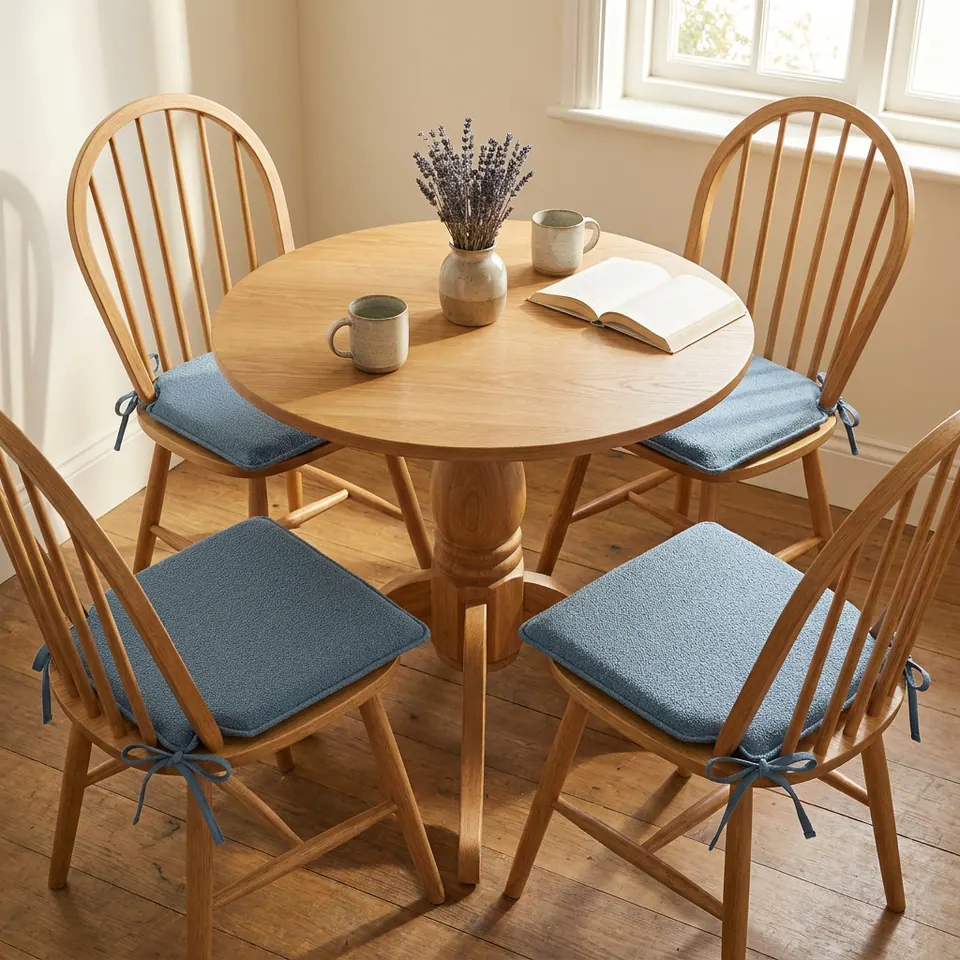
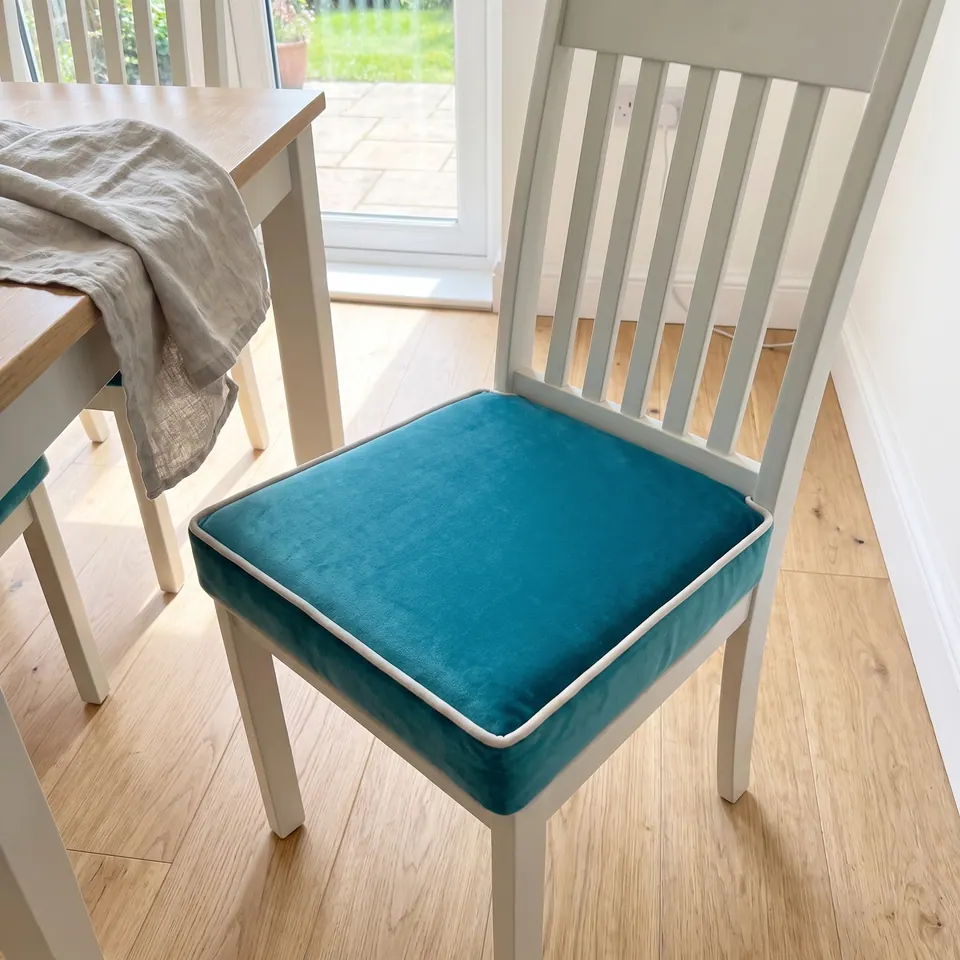
Next, proportion. The pad is boxed rather than a flat knife-edge, and thick enough to take the bite out of a hard seat without lifting the sitter much at the table. On dining chair cushions that balance beats plushness, because every inch added to the seat is an inch taken from under the tabletop.
The navy piping traces the box and repeats the darkest ground of the print. No accident there: look up at the sage green dresser, where the blue and white china carries the same navy. The floral teapot on the marble top repeats the flowers once more. Peach roses in glass and a slice of lemon sponge cake bring the only warm notes, so all that blue never turns chilly in the morning light.
The rest is supporting cast. White paint and a cane back keep the chair light against the tongue-and-groove paneling, and the cane nudges the print toward the honey floor. The iron-legged marble table, the linen napkin, the potted lavender and the gilt mirror say cottage kitchen without adding one more pattern to argue with the pad.
The idea to copy: match a pad print to the china or ceramics you already display. What's on your open shelves, dear? Start there. More ideas sit with our kitchen nook cushions.
Five chair pad mistakes, and the fix for each
- Assuming ties come standard. They are added only when you ask for them at the time of ordering, so write it in the order.
- Choosing a thin, flat pad for a hard seat. A boxed pad holds its shape, and 2 in (5 cm) with piping is a common request.
- Sending numbers without a drawing. A tapered seat with curved sides needs a sketch that shows each curve and every tie position.
- Forgetting the back posts. Ties go at the back, and tapered pads often need small cut-outs there to sit flat around the posts.
- Choosing the print on its own. Match its darkest color to something already in the room, the way this navy matches the china.

Have it made
Have this made — ask Maggie’s workshop
I once cut a lovely cushion two inches short, and I have not forgotten it. That is why the workshop goes over your measurements with you on the phone. — Maggie
Leave your details and the workshop will call you to confirm measurements, fabric, foam and piping. No prices, dates or payment on this page: it is a request, not an order.
Stitch straight — Maggie