Across the Map · Europe
Custom cushions for Swiss chalets, apartments and corner benches
Davos sits at 5,230 ft (1,594 m) and averages about 178 in (452 cm) of snowfall a year. Zurich averages 28 in (71 cm). Same country, same order form, two very different cushions.
- Sun & UVStrong
- HumidityModerate
- WinterCold
- SettingInland
- Typical seatsStube corner bench (eckbank), chalet balcony bench, apartment balcony chairs

 Save
The quick answer
Custom cushions in Switzerland start with measuring every side of a Stube corner bench, short corner ends included, to the nearest 1/4 in (6 mm), with a finished tolerance of about ±3/8 in (1 cm). At altitude, choose UV-resistant outdoor fabric for balconies, since UV rises roughly 10% per 3,280 ft (1,000 m). Ski-boot benches need washable covers and a non-slip base.
Field notes
Weather and light in Switzerland
- Sun & UVStrong (level 3 of 4)About 1,694 hours a year in Zurich, 2,158 in Sion; UV rises with altitude
- HumidityModerate (level 2 of 4)About 76% on average in Zurich
- Rain & stormsFrequent (level 3 of 4)About 44 in (1,108 mm) a year in Zurich, 23 in (583 mm) in Sion
- Snow & freezeLong winters (level 4 of 4)About 178 in (452 cm) of snowfall a year in Davos, 28 in (71 cm) in Zurich
Watch for
- Altitude UV on balcony cushions
- Wet ski boots at the door
- Bise wind and winter icing around Geneva
Plain-language levels from general climate patterns, not measurements. Your own porch, shade and window exposure matter more.
1,694 sunshine hours in Zurich, 178 in of snow in Davos
MeteoSwiss normals (1991–2020), three stations, three different cushions:
- Zurich: 44 in (1,108 mm) of precipitation, 76% average humidity, 1,694 sunshine hours, about 28 in (71 cm) of snowfall.
- Davos, at 5,230 ft (1,594 m): a January mean of 24°F (−4.7°C) and about 178 in (452 cm) of snowfall.
- Sion, in the Valais: 2,158 sunshine hours and only 23 in (583 mm) of precipitation.
Now the number that matters outdoors. The WHO puts the UV increase at about 10% per 3,280 ft (1,000 m) of altitude, and fresh snow almost doubles exposure. Run the arithmetic for Davos: roughly 16% more UV than at sea level, before the snow joins in. So a balcony cushion at a ski resort fades faster than its twin in Zurich. Choose outdoor acrylic up there; our Colorado page runs the same logic.
Geneva adds wind. The bise, a north-easterly, can bring severe icing in winter. Balcony cushions go inside before it does.
The Stube, its corner bench, and the chalet balcony
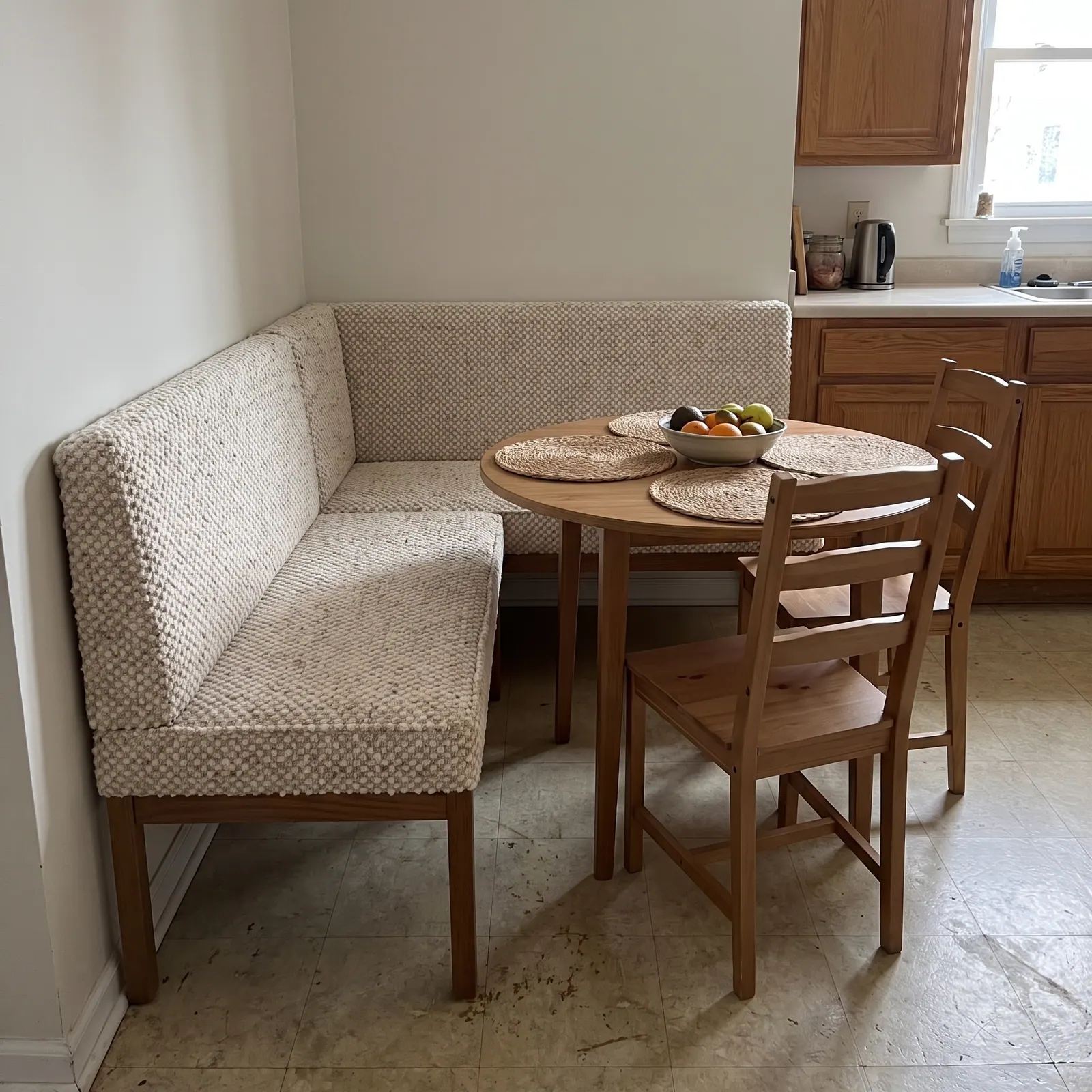
A Stube is, by the word's origin, a heated living room. For centuries it was often the only heated room in the house, warmed by a tile stove. The corner bench lives there: two benches at right angles, joined by a corner connection. Eckbank in Zurich, banquette d'angle around Geneva, panca ad angolo in Ticino. The tape measure doesn't care which. Our Germany page covers the kitchen version.
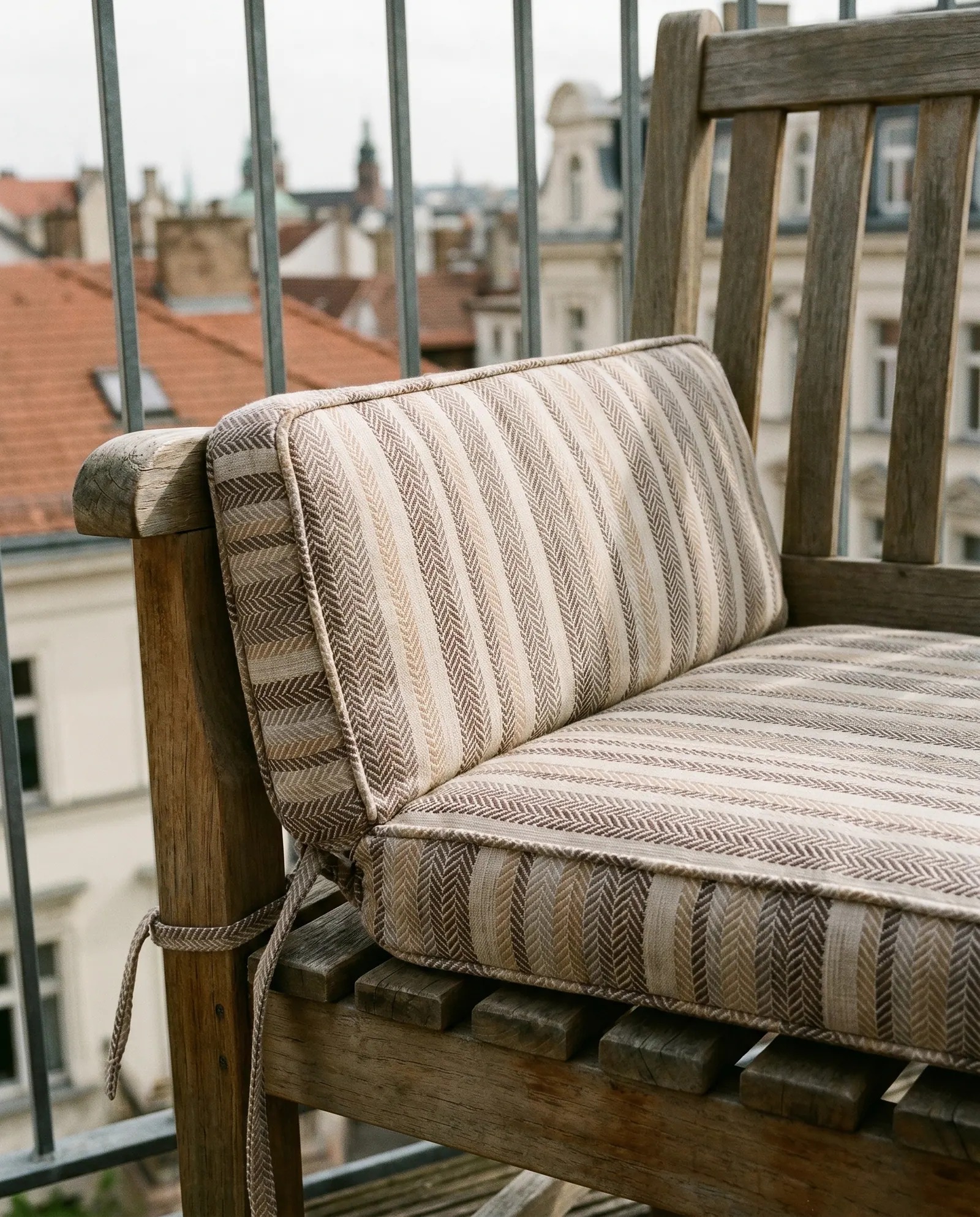
The chalet is wood under a heavy, gently sloping roof with wide eaves. Under the eaves, a wooden balcony and usually a bench. Covered, yes. Dry, not when snow blows in sideways.
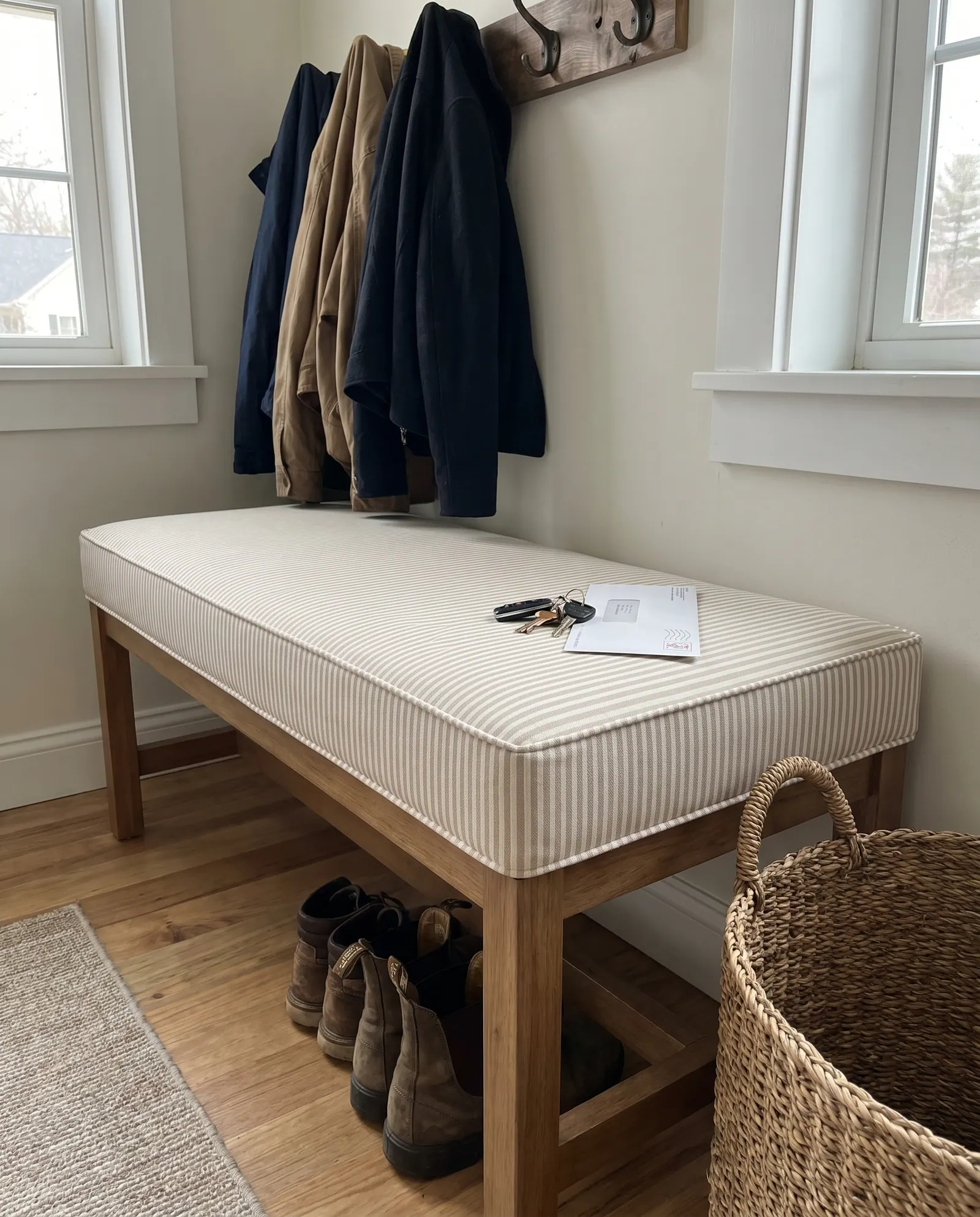
In the cities the seat is an apartment balcony or a windowsill. In a ski rental it is the bench by the door, with new wet boots every week. See mudroom and entry benches.
Six measurements and one tolerance for a corner bench
- Leg A: wall to open end, at seat height, to the nearest 1/4 in (6 mm).
- Leg B: the same. Inside lengths only; the outside of the frame is a different number.
- Depth at the corner and at each open end. If the readings differ, send all of them.
- The corner: which cushion runs through, which stops against it. See the corner joint Pattern.
- Backrest height from the seat board, minus the seat cushion's thickness. A 4 in (10 cm) seat takes 4 in (10 cm) off the back.
- Every side of any angled piece, short end sides included. The trapezoid calculator checks that your numbers close.
- Tolerance: handmade cushions finish within about ±3/8 in (1 cm), and the workshop sets the fit allowance.
Stube, balcony, boot bench: the Swiss cutting list
| Seat | Fabric | Thickness | Detail |
|---|---|---|---|
| Stube corner bench seat | Velvet, corduroy or performance fabric | 2 to 4 in (5 to 10 cm) | Non-slip base; zipper on the side you choose |
| Corner bench backrest | Same as the seat | 1.25 to 2 in (3 to 5 cm) | Height = back minus seat thickness |
| Apartment windowsill | Corduroy or linen blend | 2 in (5 cm) | Thin enough for the window to close |
| Chalet balcony under the eaves | Soft indoor fabric if fully covered; outdoor acrylic where snow reaches | 2 to 3 in (5 to 7.5 cm) | Indoor fabric is not water-repellent |
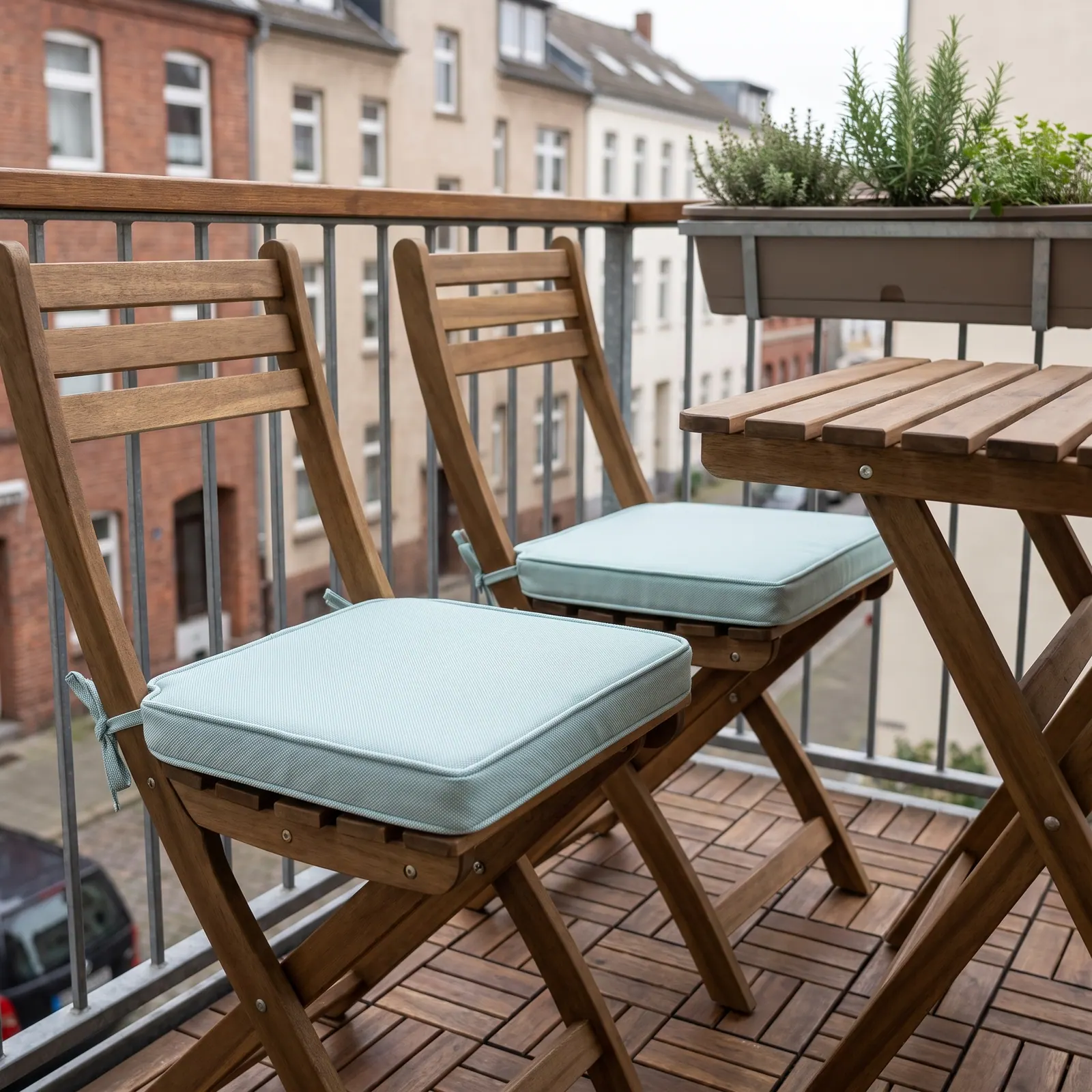
| Alpine balcony in full sun | Outdoor acrylic | 2 to 3 in (5 to 7.5 cm) | Ties; indoors between seasons |
| Ski-boot entry bench | Performance fabric | 2 in (5 cm) | Zippered cover, non-slip base |
Outdoor acrylic is UV-resistant and water-repellent. It sheds a shower; it is not waterproof.
Picked for Switzerland
Seats to start from
Fabric families
Try it in the Studio
L-shaped backrests, 2 to 3 in (5 to 8 cm) too long
A buyer in Switzerland ordered covers for two existing mattresses, a floor-level daybed sofa in an apartment, plus L-shaped backrest cushions. The backrests arrived 2 to 3 in (5 to 8 cm) too long, and the armrests didn't line up.
Turning them around didn't help; the extra length was at both ends. The cause: the buyer had measured the outside of the frame, not the inside length each cushion has to fill.
The workshop remade the backrests at the corrected size, free of charge: each L with a 35.5 in (90 cm) arm and a 37.5 in (95 cm) back, 74.75 in (190 cm) across the pair. The buyer then added a mustard mattress cover, bolster covers and small corduroy cushions.
Tolerance is kindness to your future self. So is measuring the inside.
Inside or outside: which number did you write down, partner?
- Measured
- L-backrests: 35.5 in (90 cm) arm, 37.5 in (95 cm) back each (74.75 in or 190 cm across the pair); bolster covers 7.75 x 24 in (20 x 61 cm) and 4.75 x 22 in (12 x 56 cm)
- What it taught
- Measure the inside length each cushion has to fill, not the outside of the frame; a few centimeters of overhang shows.
An alpine year for cushions
- Spring: measure balcony and chalet benches while they're bare, to 1/4 in (6 mm).
- Summer at altitude: rotate and flip balcony cushions every few weeks. UV climbs with you.
- Autumn: bring balcony cushions in before the first frost, or the bise. Water already in foam freezes, thaws and never quite dries.
- Ski season: take boot-bench covers off and wash at 86°F (30°C), gentle cycle, no bleach, air dry.
- Snowmelt on a cushion: stand it on edge and get it dry within 24 to 48 hours, the EPA's window for stopping mold.
- Chalet closed between seasons: cushions off the floor, in breathable bags, never sealed plastic.
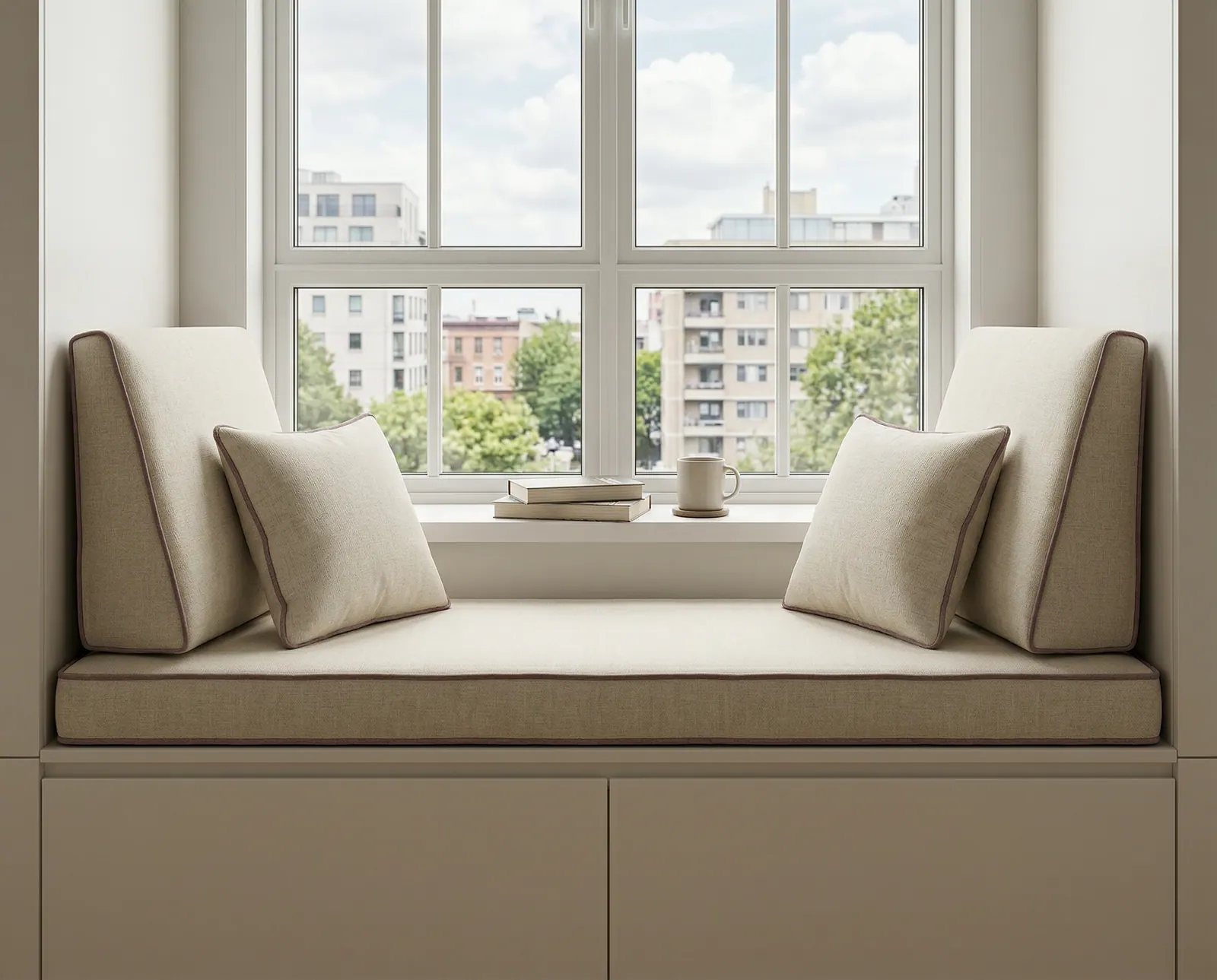
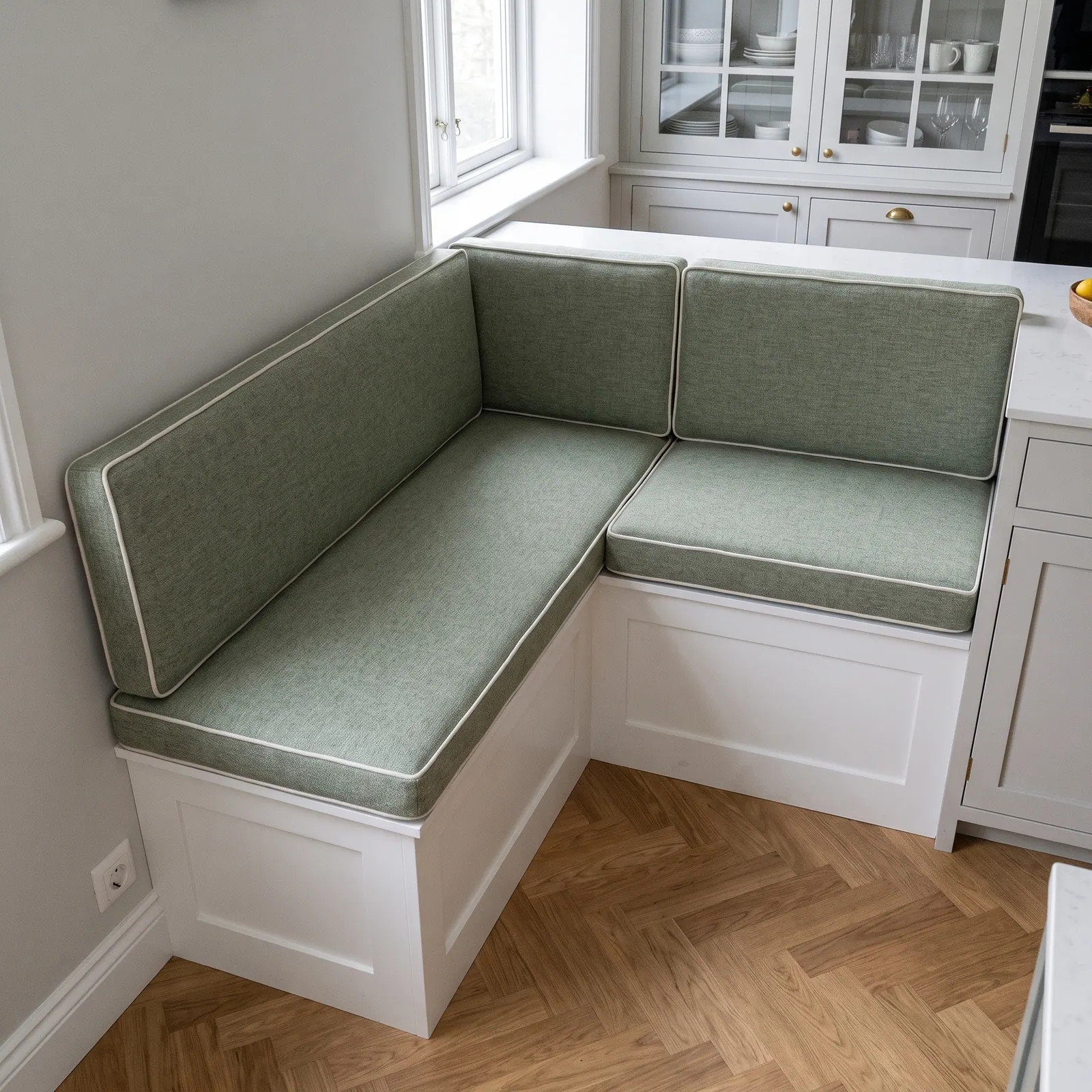
Photographs for homes like these
Open any photograph large; each one has its own link and a Save button.
 Save
 Save
 Save
 Save
 Save
Three languages, one fabric code
Red is rot, rouge and rosso, and each word covers a hundred shades. A fabric code needs no translation. Write the body code and the piping code on the order, and see swatches before ordering.
A Stube is mostly wood, and wood is warm. Against it, a stone gray, cream or deep green body reads calm. Keep the strong color in the piping, where it traces the bench's outline.
On a sunny balcony, pick a color you won't mind a shade lighter by September. At altitude, that is the honest spec.
A corner bench is two rectangles and one argument about the corner. Settle the argument on paper.
Nate
Buyer questions: corner benches, tolerances and thin sills
- A common question
Can you make trapezoid cushions for a large corner bench?
The workshop's answerYes, but every side of each trapezoid is needed, including the short end sides at the corners, and a plan drawing helps. One set of three trapezoid cushions for a corner bench was about 26.75 in (68 cm) deep.
- A common question
How exact will the finished size be?
The workshop's answerHandmade custom cushions can vary by about ±3/8 in (1 cm) in the final dimensions. Fully handmade tufted cushions can differ by 1 to 2 in (2.5 to 5 cm).
- A common question
Can you make a thin cushion for a windowsill, around 2 in (5 cm)?
The workshop's answerYes. A windowsill cushion was made exactly 2 in (5 cm) high so the window above could still close.
- A common question
Is the regular fabric all right on a covered balcony?
The workshop's answerYes, if the area is covered, but the standard fabric is not made to shed rain. Water-repellent outdoor fabrics are available for spots that get wet; if you don't need that, the soft indoor fabric is the nicer choice.
- A common question
Can you make cushions for two IKEA BESTA benches?
The workshop's answerYes. A buyer in Switzerland ordered cushions of 70.75 x 16.5 in (180 x 42 cm) and 47.25 x 16.5 in (120 x 42 cm), 2.75 in (7 cm) thick, in matching colors with piping, so the pair reads as one built-in seat.

Have it made
Have it made for your home — ask Nate’s workshop
Every edge and both diagonals, to the nearest 1/4 in. If the numbers do not close, the workshop will say so on the call. — Nate
Leave your details and the workshop will call you to confirm measurements, fabric, foam and piping. No prices, dates or payment on this page: it is a request, not an order.
Questions buyers ask next
How do I measure a Stube corner bench for cushions?
Measure each leg from the wall to the open end at seat height, the depth at the corner and at each end, and the back height minus the seat thickness. Decide which cushion runs into the corner, and give every side of any angled piece.
Do balcony cushions fade faster in the Alps?
They can. The WHO puts the UV increase at about 10% per 3,280 ft (1,000 m) of altitude, and fresh snow almost doubles exposure. Use UV-resistant outdoor acrylic on sunny alpine balconies, and store cushions indoors between seasons.
What cushion works on a bench where ski boots dry?
A 2 in (5 cm) cushion in performance fabric, with a zippered cover you can wash at 86°F (30°C) and a non-slip base. Stand a wet cushion on edge and get it dry within 24 to 48 hours.
Which fabric suits a corner bench in a family Stube?
Velvet or corduroy for warmth, performance fabric where spills happen. Every cover has a zipper, so it comes off to wash at 86°F (30°C), and a non-slip underside keeps seat and backrest cushions from sliding.
± 1/4 in — Nate
Concept Sketches
Sketches for homes like these
Real projects, drawn up as ideas you can borrow.
The atelier
Keep going
Across the Map
Nearby places
Close by on the map