A Reading by NateL-Shaped Corner Bench Cushions
Chocolate brown L-shaped bench cushions, and where stripes, plains and texture belong
Nate works the corner bench like a drawing: the plain seat as the constant, stripe and texture as variables, and a buyer's four-piece L set checked to the centimeter.

 Save
The quick answer
On an L-shaped bench cushion set, keep the large seat and back pieces plain and let pattern arrive in smaller pieces: a striped lumbar, contrast piping or a textured rug. A dark plain such as chocolate brown suede-look velvet shows far fewer marks on a family corner bench, and beige piping ties it to pale floors and bases.
Field notes: a brown corner that forgives
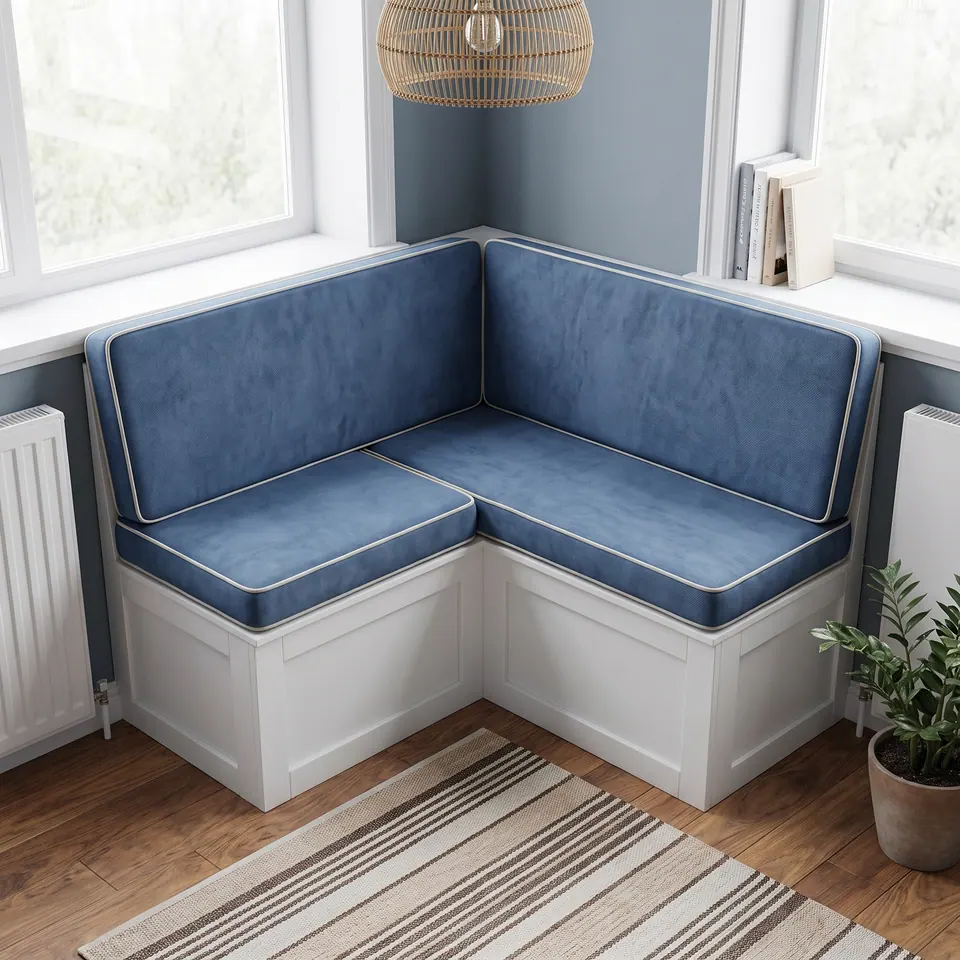
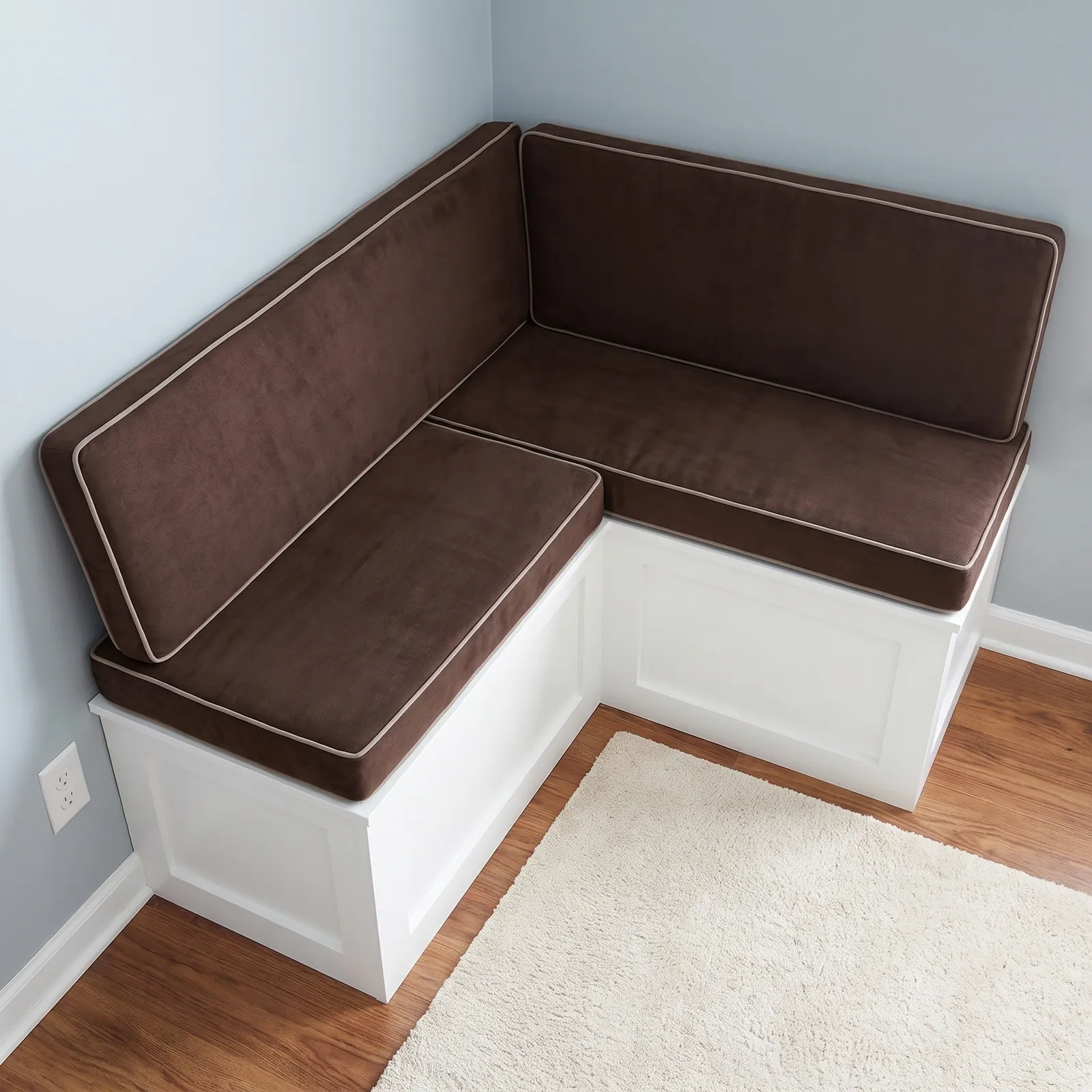
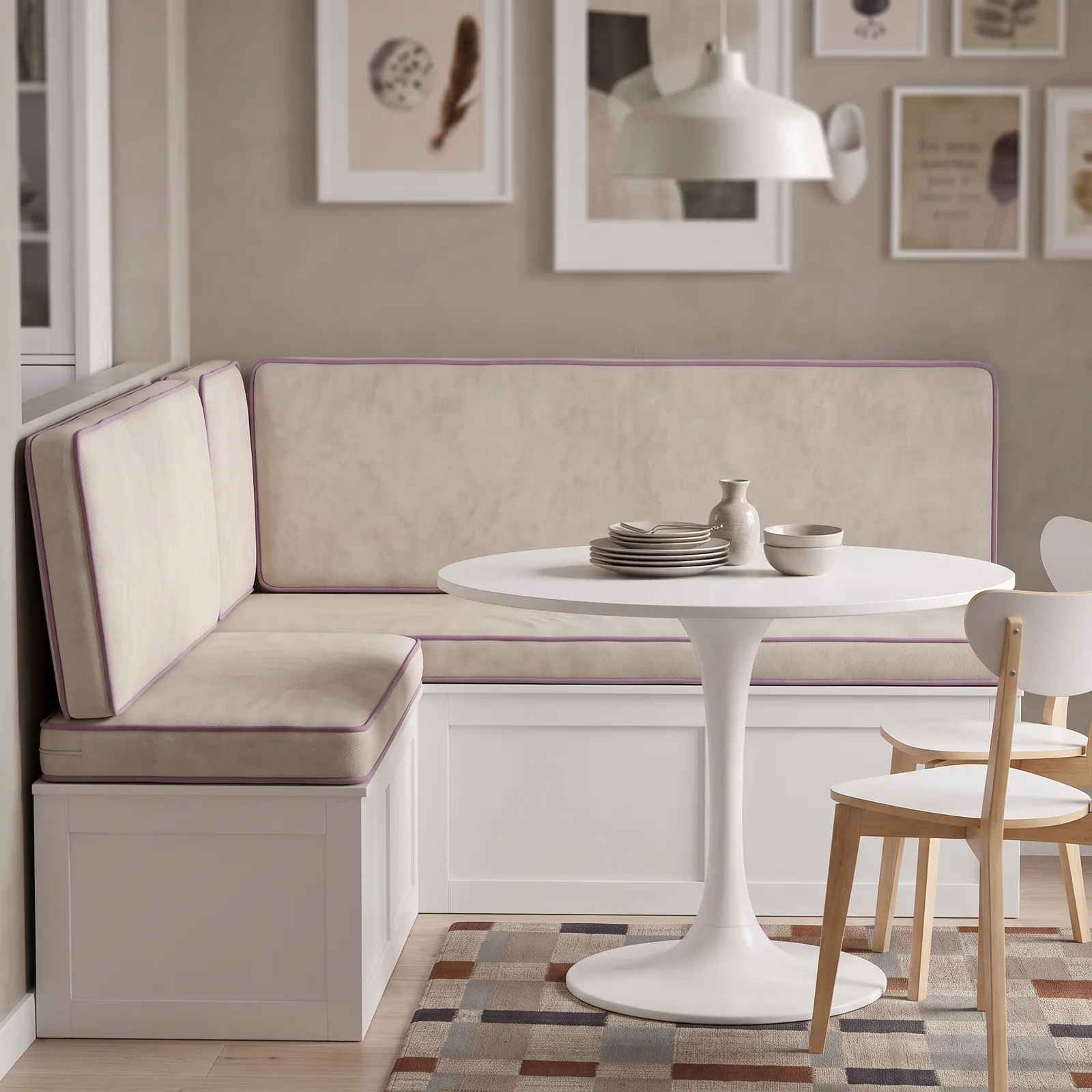
First observation, partner: the darkest thing in this dining corner is also the most forgiving. Chocolate brown suede-look velvet on a white paneled storage bench shows far fewer marks than a pale velvet would. For a family seat in a kitchen nook, that is engineering, not taste.
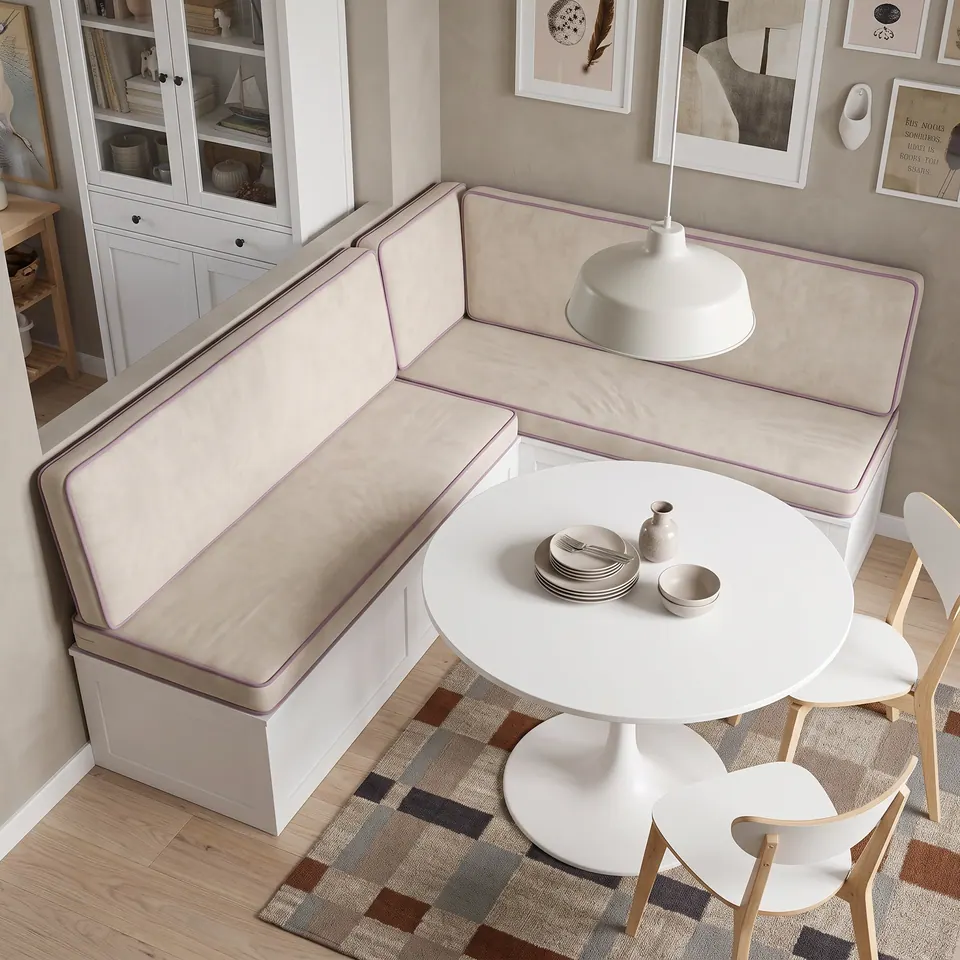
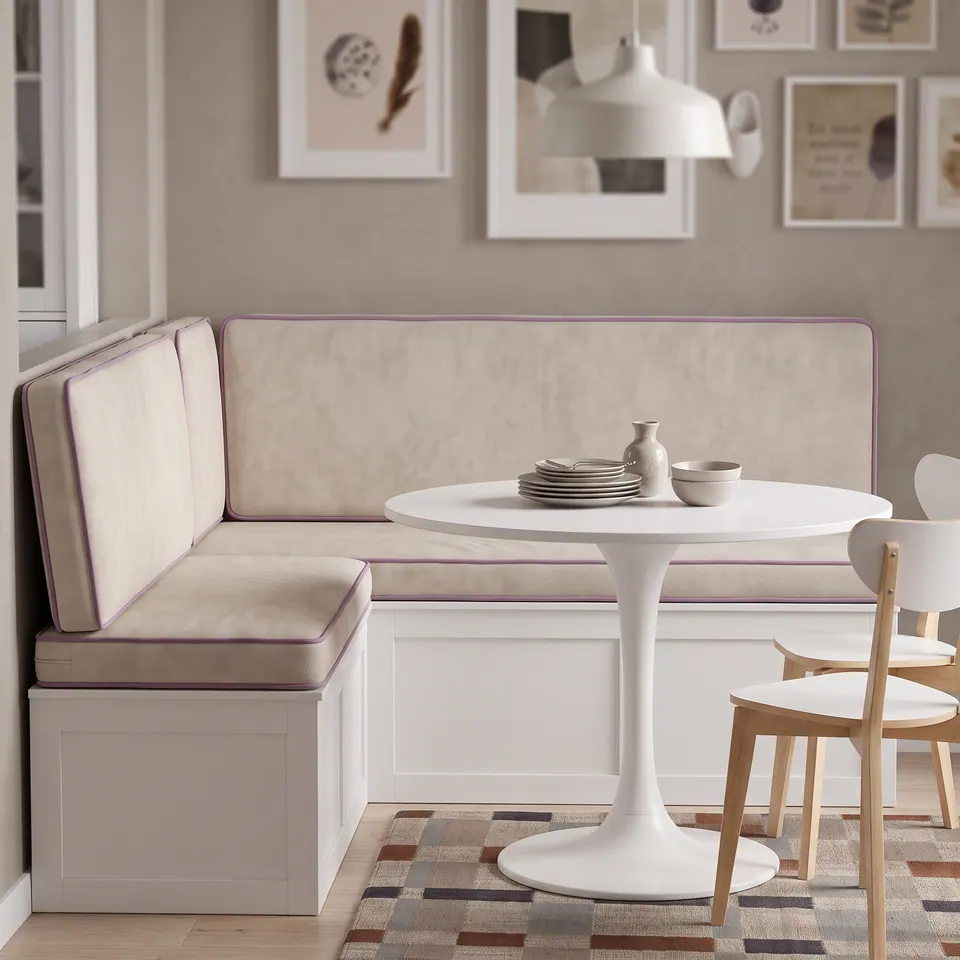
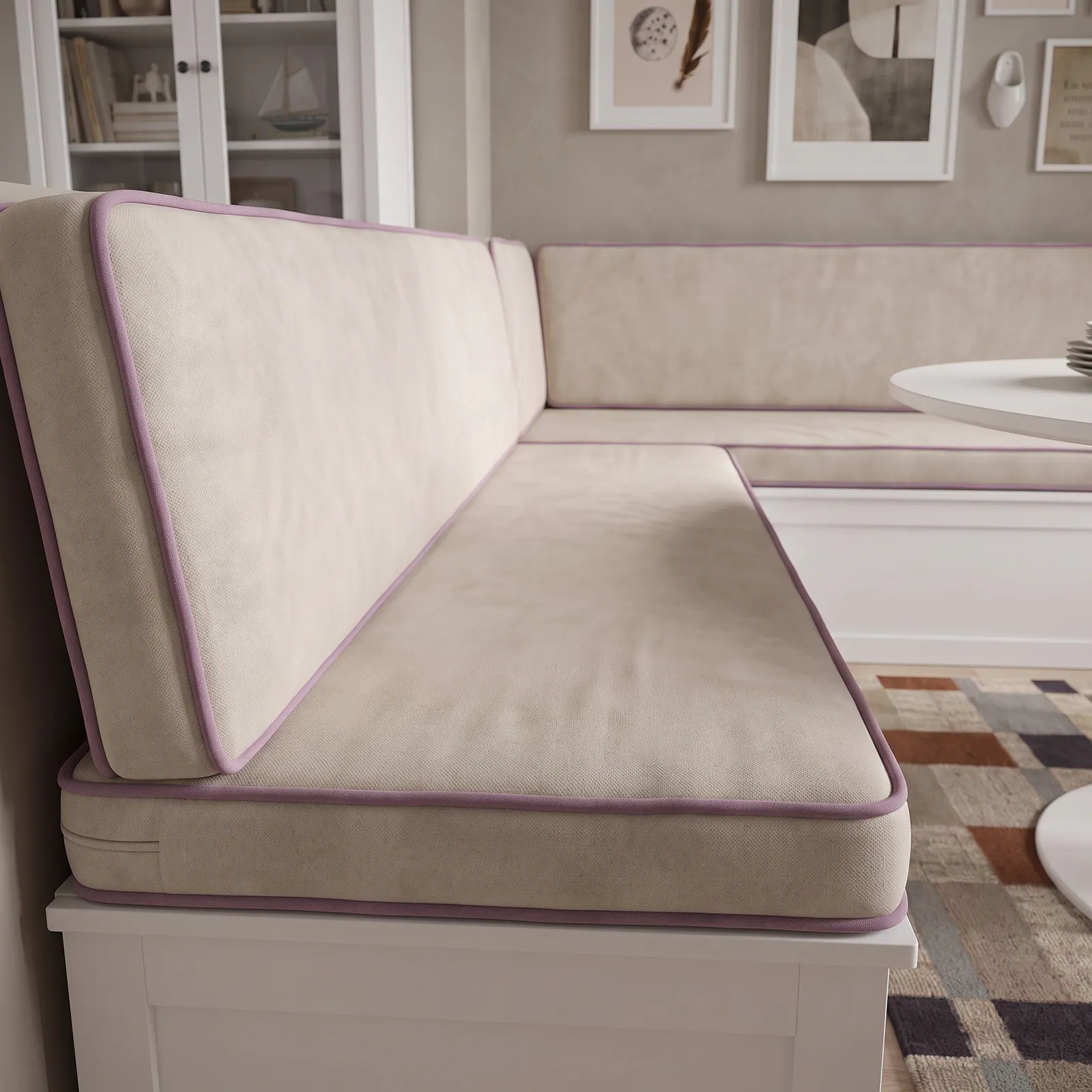
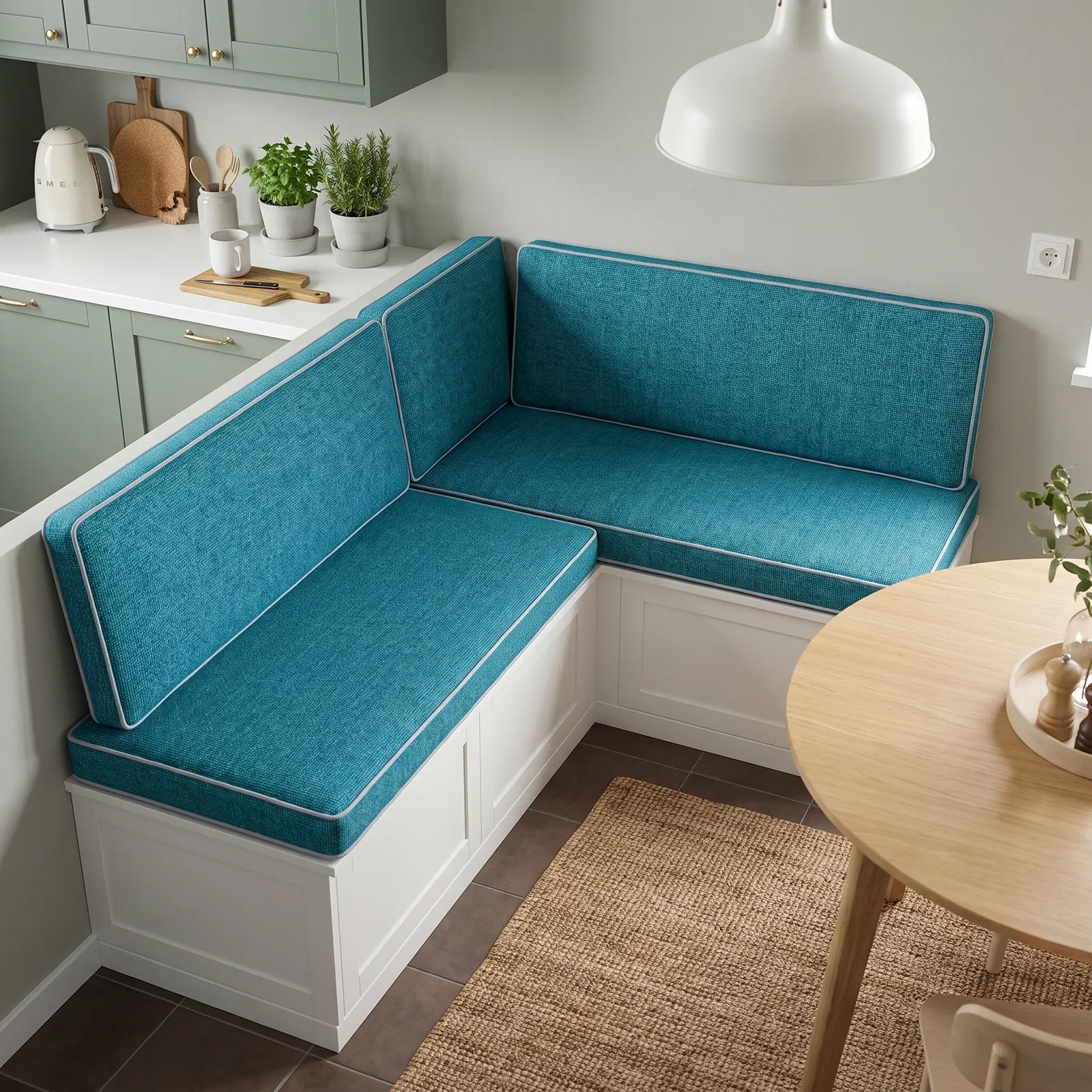
Now the geometry of these L-shaped bench cushions. The long back pad follows the long wall in one piece, no seam. The short-side back is also one piece and meets it in the corner. Below, the shorter end seat butts into the long seat, so each lifts out on its own to reach the storage.
The beige piping does structural work for the eye. It traces every box edge, repeats the cream shag rug and the white bench bases, and stops that much brown from reading as one heavy mass. Honey oak flooring warms the scene; pale blue walls cool it back. Brown sits balanced in the middle.
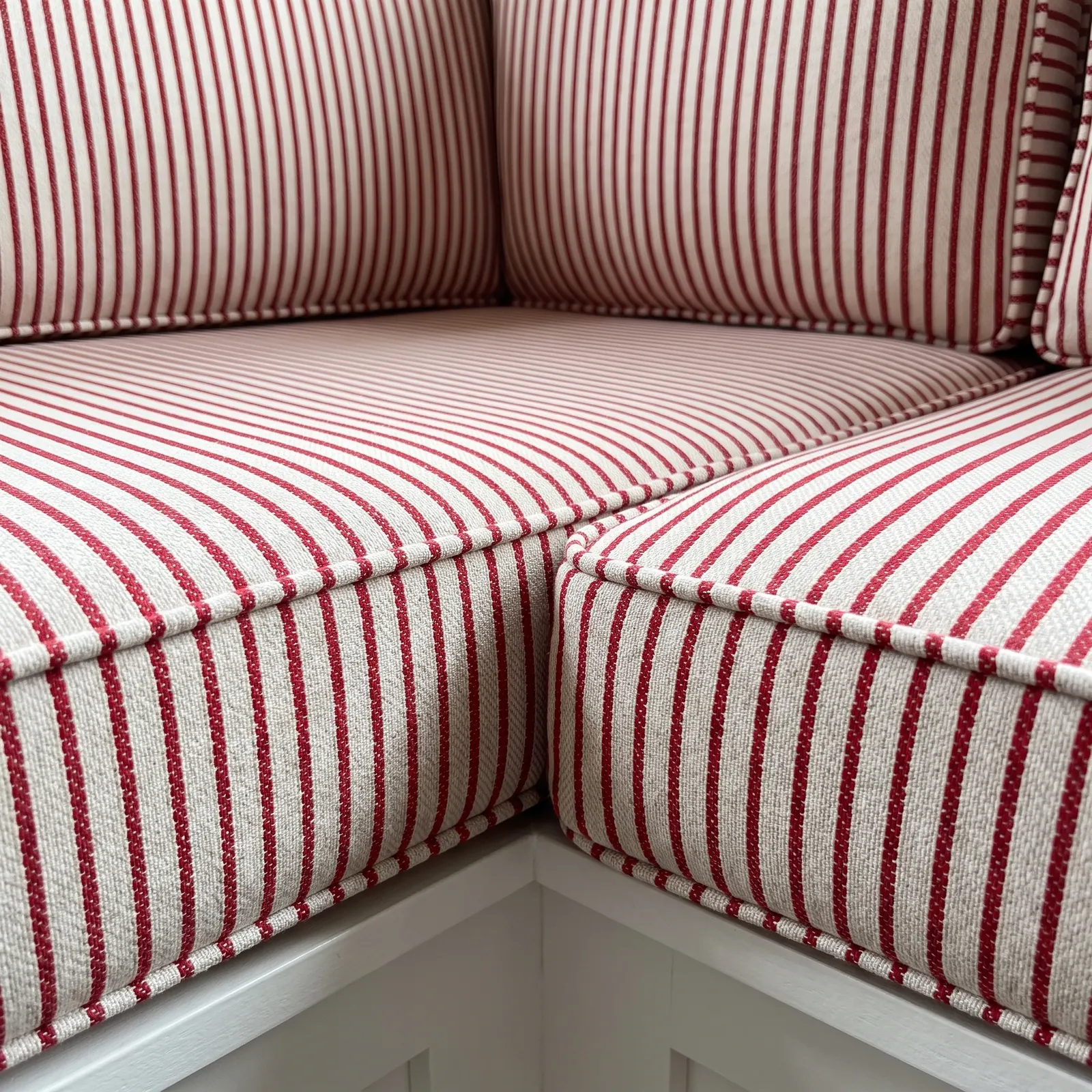
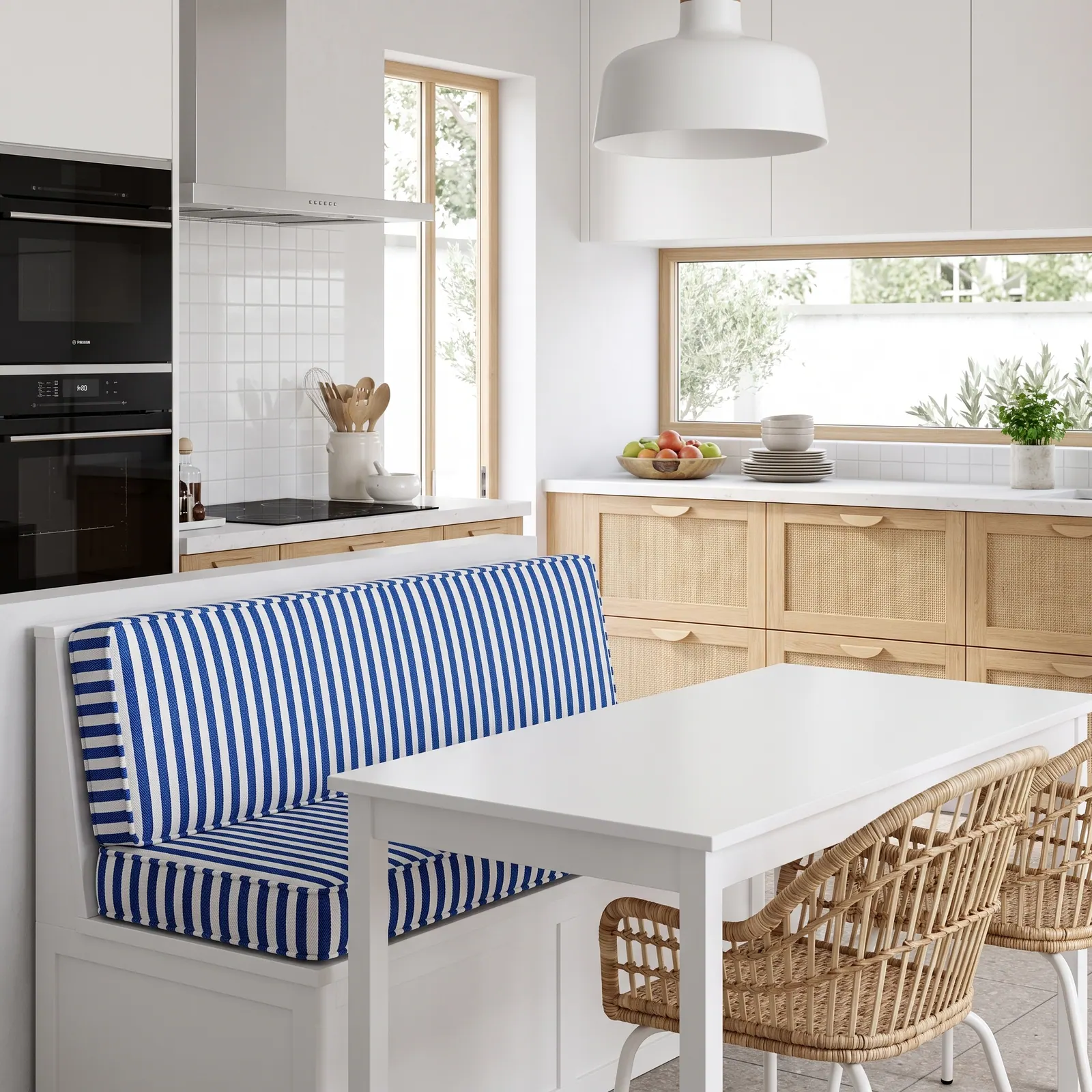
Note what is missing: printed pattern. Every surface is plain, and the shag rug is the only texture. That makes this set the constant in the equation. Stripes you add later are variables, and variables belong in the small pieces: one ticking-striped lumbar, say, with every stripe running the same direction.
Pinned by Nate at the corner joint
Five pins on the corner: two back pads, the butt-jointed end seat, the beige piping and the cream shag rug.
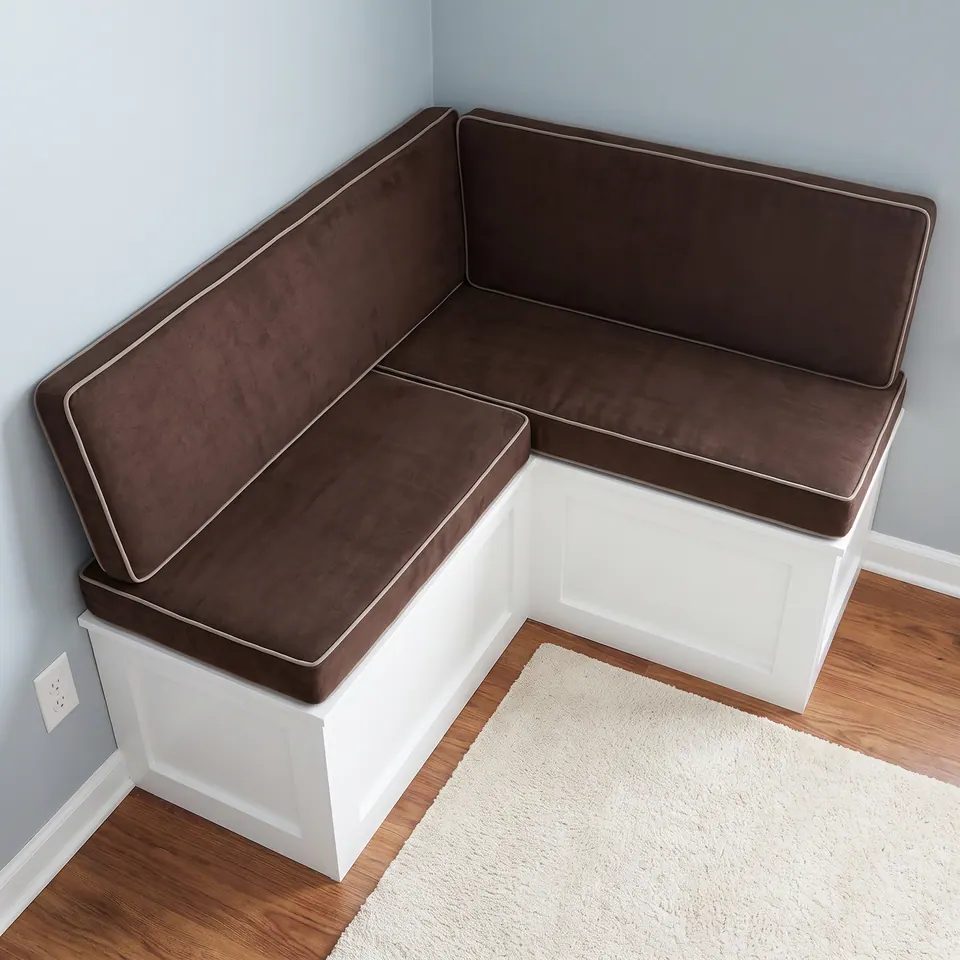
- Short-side back pad
The back on the short run is one piece, meeting the long back in the corner.
- Long back pad
A full-length back cushion follows the long wall without a seam.
- Shorter end seat
The end seat butts into the long one, so each lifts out for access to the storage.
- Beige piping
Beige welts lift the dark mass and echo the cream rug.
- Cream shag rug
A pale rug brightens the floor in front of a dark cushion set.
- Short-side back padThe back on the short run is one piece, meeting the long back in the corner.
- Long back padA full-length back cushion follows the long wall without a seam.
- Shorter end seatThe end seat butts into the long one, so each lifts out for access to the storage.
- Beige pipingBeige welts lift the dark mass and echo the cream rug.
- Cream shag rugA pale rug brightens the floor in front of a dark cushion set.
Plain, stripe, texture: one job each
| Element | Its job | Where it goes on an L bench |
|---|---|---|
| Plain chocolate velvet | Carries the big areas and hides marks | Both seats and both backs |
| Beige contrast piping | Draws the outline, links to pale floors | Every box edge |
| Cream shag texture | Adds depth without adding a color | The rug, or one pillow |
| Stripe or ticking | Adds rhythm; run it one direction only | One lumbar, or the backs alone |
| Second plain color | A quiet accent, like a lavender welt on oat velvet | A welt or a single pillow |
A self-built L, four pieces, one drawing
A buyer building their own L-shaped seating, one run under a window and one along a wall, sent the workshop an illustration with four pieces on it:
- Seat A: 90 1/2 x 22 1/2 x 4 in (230 x 57 x 10 cm)
- Seat B: 82 5/8 x 22 1/2 x 4 in (210 x 57 x 10 cm)
- Back A: 90 1/2 x 9 7/8 x 3 in (230 x 25 x 7.5 cm)
- Back B: 105 1/2 x 9 7/8 x 3 in (268 x 25 x 7.5 cm)
Run the check. 268 minus 210 is 22¾ in (58 cm): one 22½ in (57 cm) seat depth plus ½ in (1 cm). That is the signature of a butt joint, where one seat runs full length and the other stops against it. Pieces longer than 78 3/4 in (200 cm) were no problem, and a photo went out before shipping.
The buyer loved the set and came back for a second full set of covers in another linen color. A spare set lets you change the look, or wash one set, without leaving the bench bare. The L-shaped measuring pattern walks through the same arithmetic. Measure twice; the fabric remembers.
- Sizes
- Seats 90 1/2 x 22 1/2 x 4 in (230 x 57 x 10 cm) and 82 5/8 x 22 1/2 x 4 in (210 x 57 x 10 cm); backs 90 1/2 x 9 7/8 x 3 in (230 x 25 x 7.5 cm) and 105 1/2 x 9 7/8 x 3 in (268 x 25 x 7.5 cm)
The lesson: A spare cover set lets you change the look or wash without leaving the seat bare.
Buyer questions: L measuring, thickness and sizes that aren't listed
- A common question
My bench is an L. How do I measure it for cushions?
The workshop's answerMeasure each arm from the back corner to its end, then measure the seat depth. The workshop makes two pieces: one runs the full length of one arm, and the other is shortened by the seat depth so they butt together. Runs of 63 3/4 in and 63 in (1620 and 1600 mm) with a 15 3/4 in (400 mm) depth became one 15 3/4 x 63 3/4 in (40 x 162 cm) cushion and one 15 3/4 x 47 1/4 in (40 x 120 cm) cushion.
- A common question
What thickness would you recommend for a bench or window seat?
The workshop's answerAbout 4 in (10 cm) is standard. 3 in (about 7.5 cm) is the best seller and suits tight spots, such as a 15 in (38 cm) gap between a bench and a windowsill. For outdoor chair seats the workshop suggests 3 to 4 in (8 to 10 cm), and 2 to 3 in (5 to 8 cm) for curved benches. Extra-tall 8 in (20 cm) seat pads are possible too.
- A common question
None of the listed sizes come anywhere near my bench. How do I order?
The workshop's answerMessage the workshop with your exact size and it is added as a new size option on the listing, so you can check out normally. Sizes added this way have included 18 1/2 x 11 1/2 in, 40 x 138 in, 29 1/2 x 29 1/2 in (75 x 75 cm) and 20 x 50 in.
On the cutting table: the brown corner, by the numbers
| Layout | L-shaped corner storage bench with seat and back cushions |
|---|---|
| Fabric | Chocolate brown suede-look velvet |
| Piping | Beige contrast piping on every box edge |
| Seat joint | Short end seat butts into the long seat; each lifts out |
| Backs | One full-length long back; one short-side back meeting it in the corner |
| Buyer's set | Two seats 22 1/2 in (57 cm) deep, two backs 9 7/8 in (25 cm) tall |
| Joint check | Long back minus short seat = seat depth + 3/8 in (1 cm): 105 1/2 - 82 3/4 = 22 3/4 in (268 - 210 = 58 cm) |
| Best for | Family dining corners and kitchen nooks with storage below |

Have it made
Have this made — ask Nate’s workshop
Every edge and both diagonals, to the nearest 1/4 in. If the numbers do not close, the workshop will say so on the call. — Nate
Leave your details and the workshop will call you to confirm measurements, fabric, foam and piping. No prices, dates or payment on this page: it is a request, not an order.
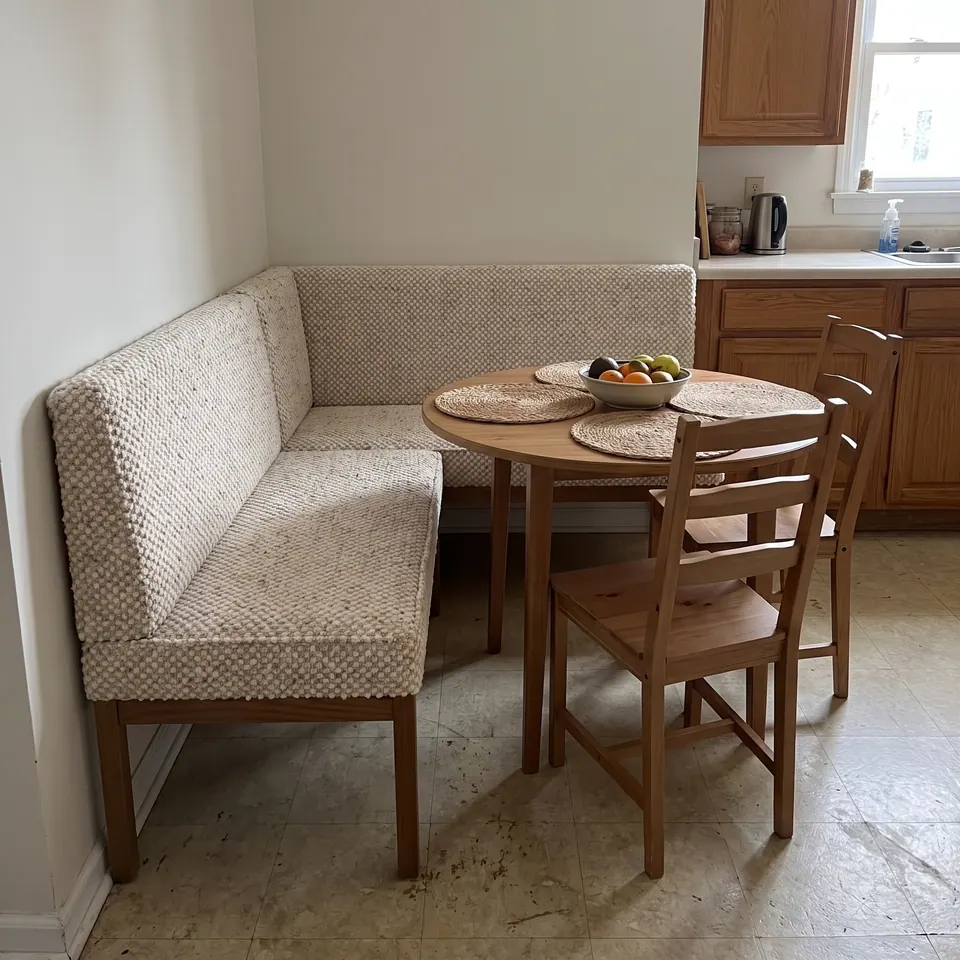
L-shaped bench cushions are two pieces: one runs the full arm, the other is cut shorter by the seat depth so the two butt together in the corner.
Nate
Questions buyers ask next
How do you mix stripes with a plain bench cushion?
Let the plain fabric cover the big areas, the seats and backs, and give the stripe one smaller piece, such as a lumbar pillow or the backs only. Run every stripe in one direction and repeat one of its colors in the piping.
Why is dark brown a practical color for a kitchen corner bench?
A deep brown shows far fewer marks than a pale velvet, which matters on a seat a family uses every day. Lighten it with beige or cream piping and a pale rug so the corner doesn't look heavy.
Can the cushions on an L-shaped storage bench lift out separately?
Yes, when they are made as separate pieces. The shorter seat butts into the long one rather than wrapping the corner, so either can be lifted to open the storage below without disturbing the other.
± 1/4 in — Nate
More photographs to read
 Save
 Save
 Save
 Save
 Save
 Save