Across the Map · Europe
Outdoor cushions for Croatian terraces, stone houses and boats
I cut sail for boats that met worse weather than a Dalmatian summer, but not by much. Sun all day, salt on everything, and a bora that can clear a terrace before your coffee's cold.
- Sun & UVStrong
- HumidityModerate
- WinterMild
- CoastSalt air nearby
- Typical seatsMasonry terrace bench, sun lounger, cockpit bench
 Save
The quick answer
Outdoor cushions in Croatia need UV-resistant, water-repellent outdoor fabric, ties or a non-slip base against the bora, and a freshwater rinse against salt. Split averages about 353 hours of sunshine in July and 44 days a year at 86°F (30°C) or more. Bring cushions in when a bora is forecast: its official record gust is 154 mph (248 km/h).
353 hours of July sun in Split
The Croatian Meteorological and Hydrological Service keeps the numbers at Split-Marjan. Over its 1948 to 2024 record, July averages 353 hours of sunshine and 18 days at 86°F (30°C) or more, and August adds 17 more. The year totals about 2,645 sunshine hours, and the outer islands of Hvar and Korčula top 2,700.
Rain is scarce while you're sitting outside: about five rainy days in July and five in August. It comes back in autumn. November is the wettest month, at about 4.5 in (116 mm).
Sun is the slow storm. It bleaches color and tires fiber over a season, and the sea helps it along: the WHO puts UV reflection at about 25% off sea foam and 15% off sand. A cushion in a cockpit or on a beach terrace gets the sun twice. So outdoor cushions in Croatia start with UV-resistant outdoor fabric, and indoor linens and velvets stay indoors. For the hotter, drier island version of this story, see Cyprus.
The bora blows when your cushions are out
The bora is a cold, dry wind from the northeast that pours down off the mountains and blows in gusts. It's most common in winter. In summer a spell usually lasts one or two days, and the white bora arrives under bright sunshine, which is exactly when your cushions are out.
The official record gust, logged by the national weather service, is 154 mph (248 km/h) at the Maslenica Bridge near Zadar on December 21, 1998. Near Senj and Karlobag it can reach 137 mph (220 km/h). The gusts do the damage, not the average.
So on a bora coast, fasten everything. Ties sewn into the seams at the back corners hold a seat to a bench or chair. A non-slip base swaps the whole bottom panel for a grippy fabric that holds by friction. Neither beats a real bora. When one's forecast, untie the cushions and carry them in.
The jugo is the other face of the coast: warm, humid, cloudy and wet. It won't throw a cushion over the wall, but it will soak one. More on fastening in ties and non-slip bases. Which way does your terrace face when the bora comes, friend?
Stone houses, island rentals and the charter fleet
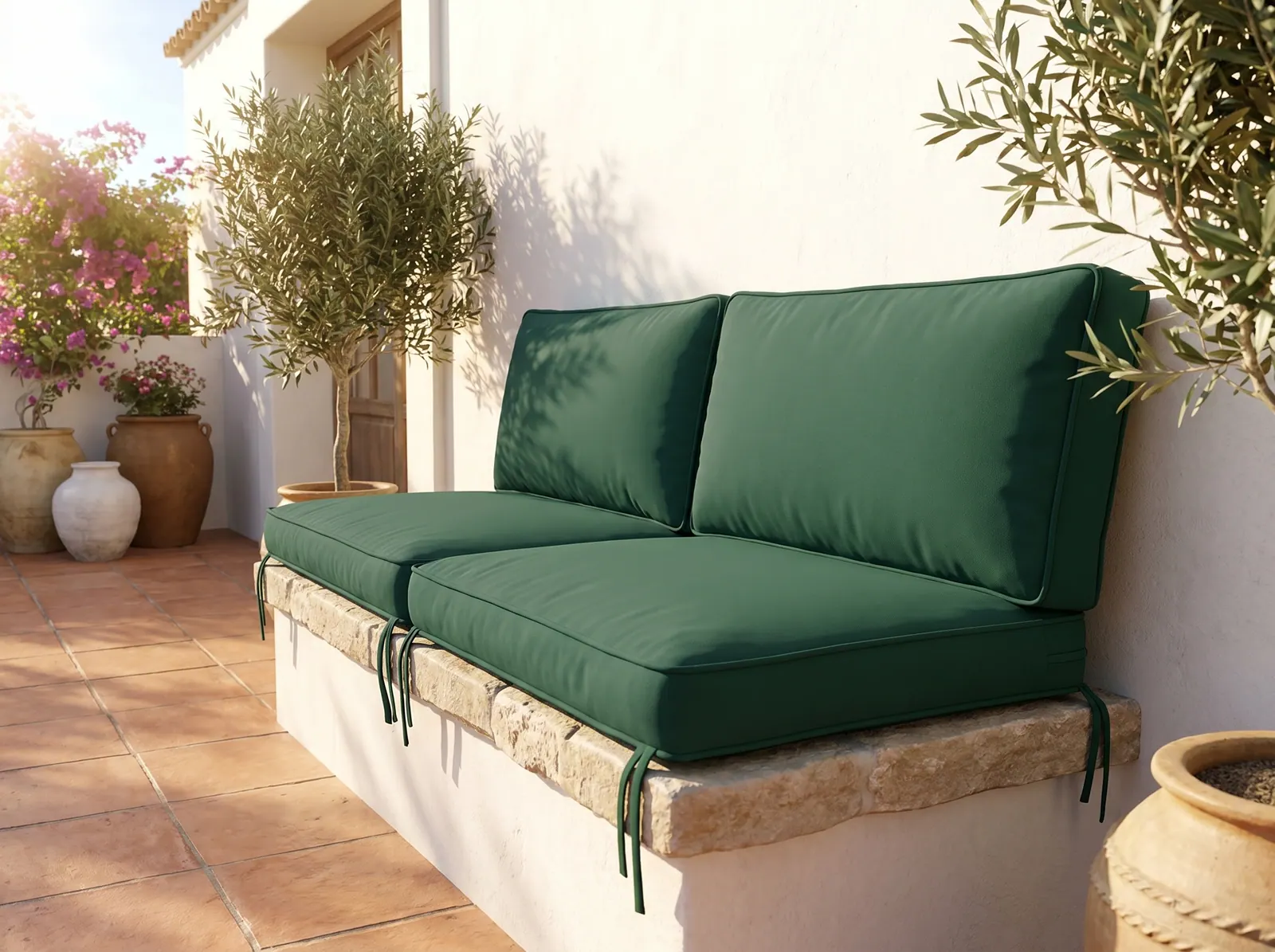
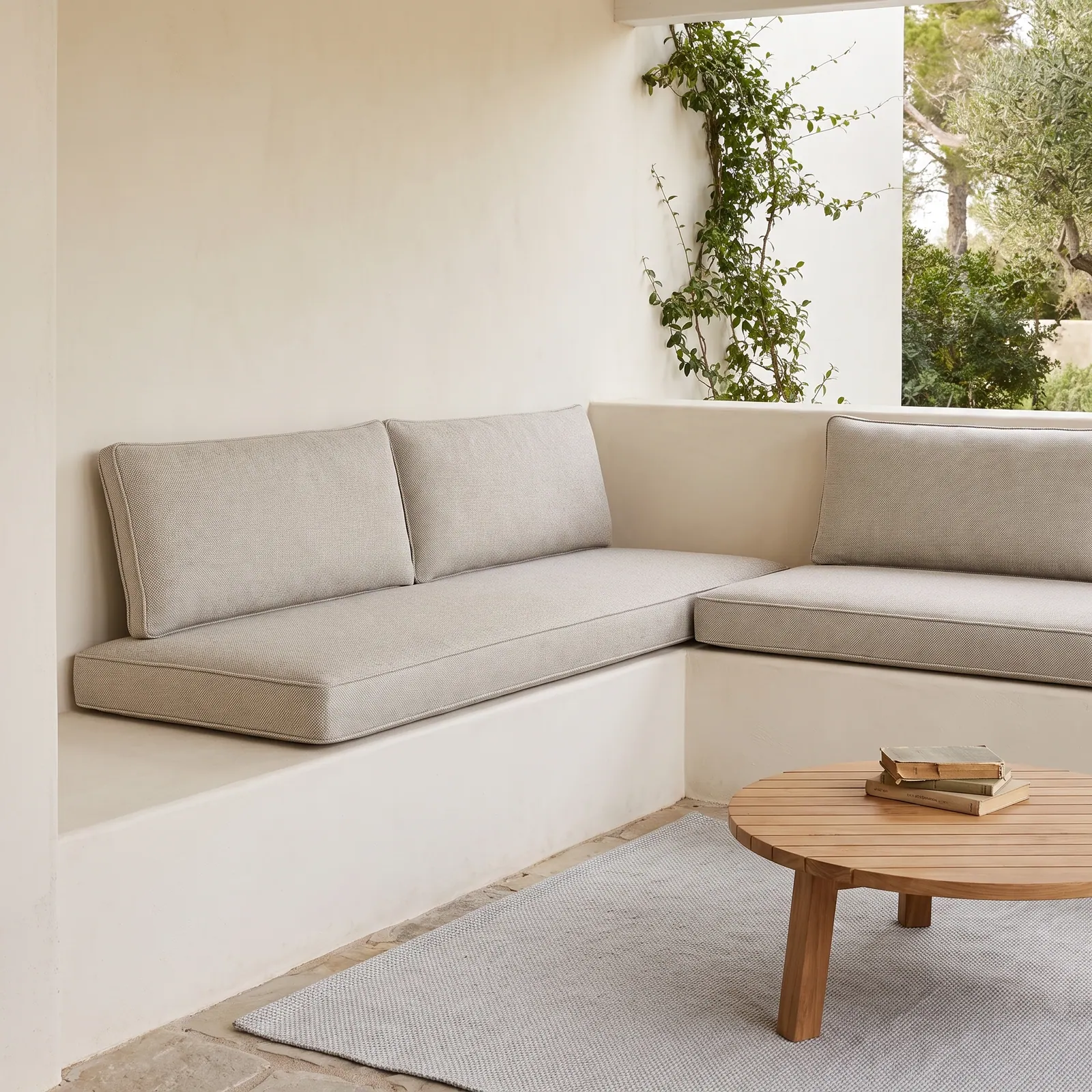
Dalmatian stone is serious stone. Diocletian's Palace in Split was largely built between 295 and 305 CE from limestone quarried on Brač, and the old island houses went up in dry-wall construction. Their terraces carry masonry benches like the one in the photo: a limestone cap, a whitewashed base, and forest green seats and backs tied on at the corners.
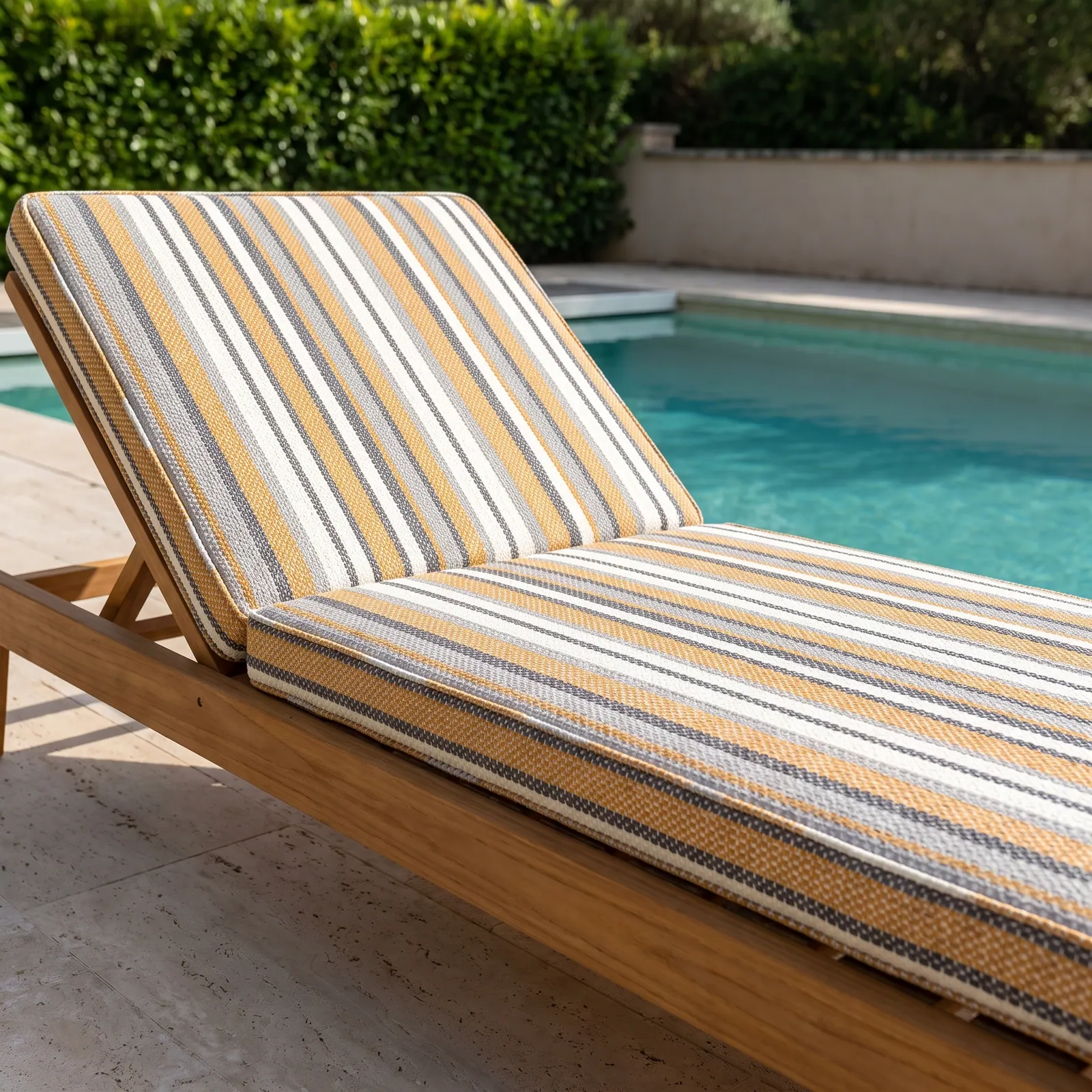
Island holiday rentals add pools, sun loungers and a lot of guests who won't carry anything in. Zippered covers that wash at 86°F (30°C), plus a spare set for changeover day, earn their keep there. The sunbed size Pattern covers the hinge split.
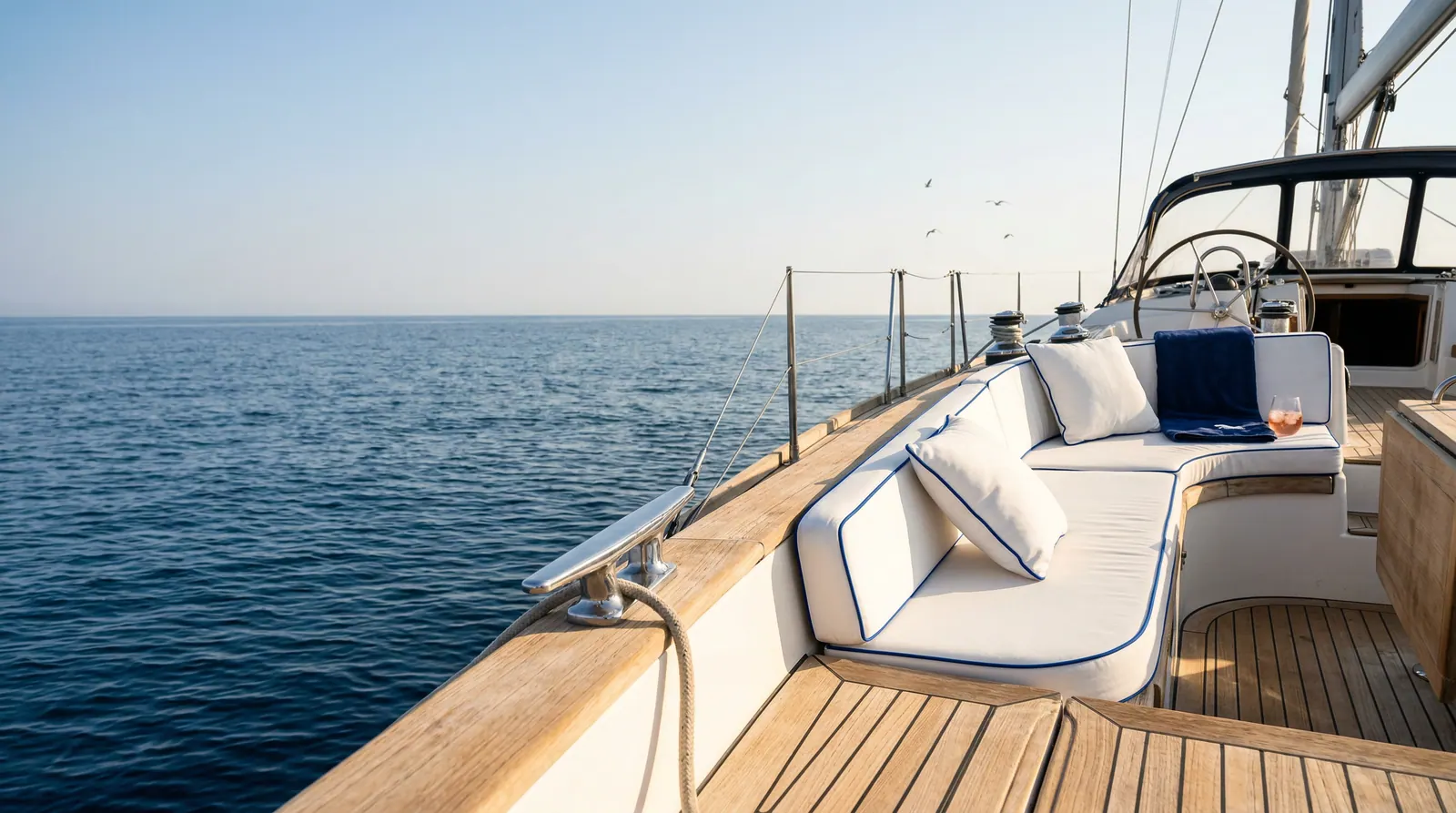
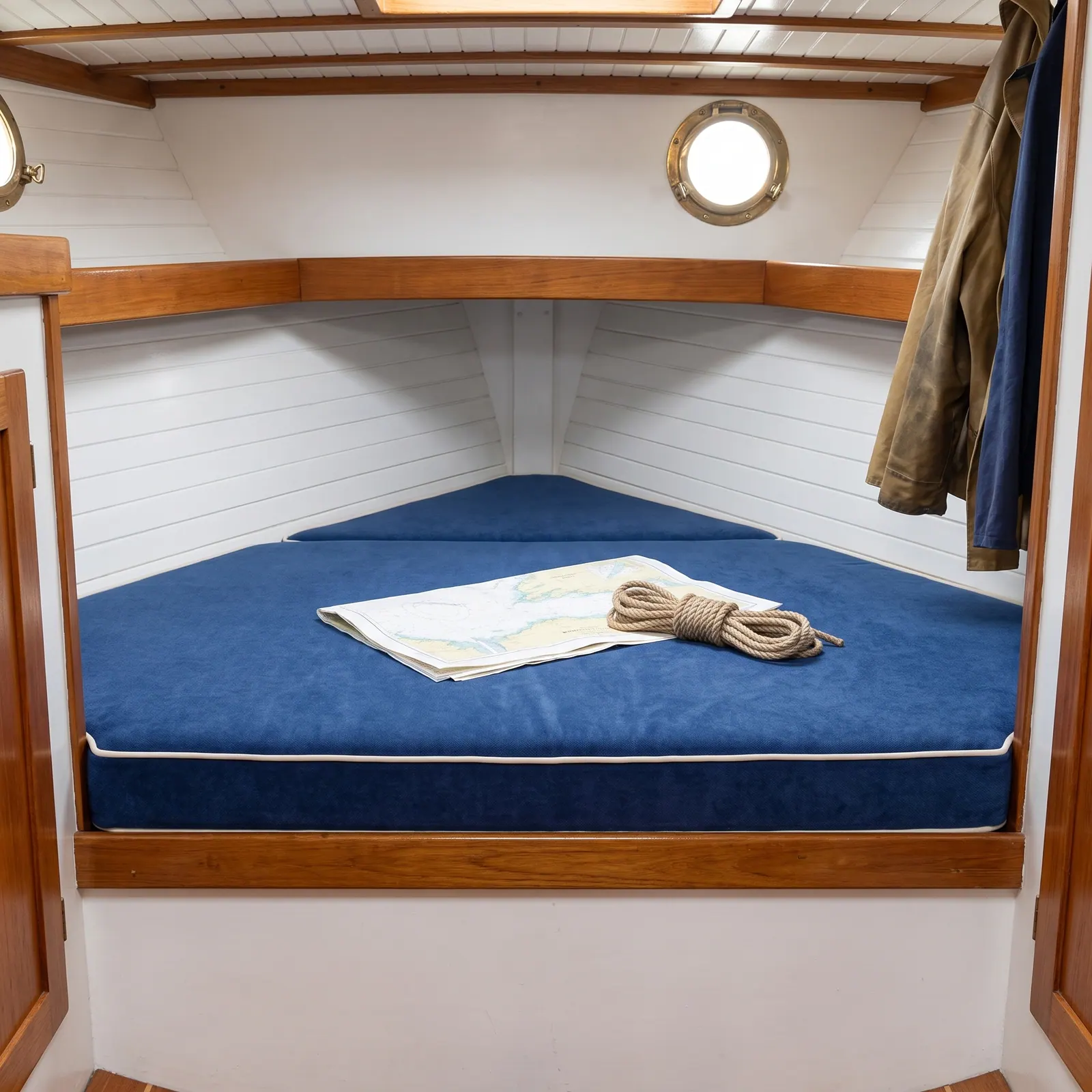
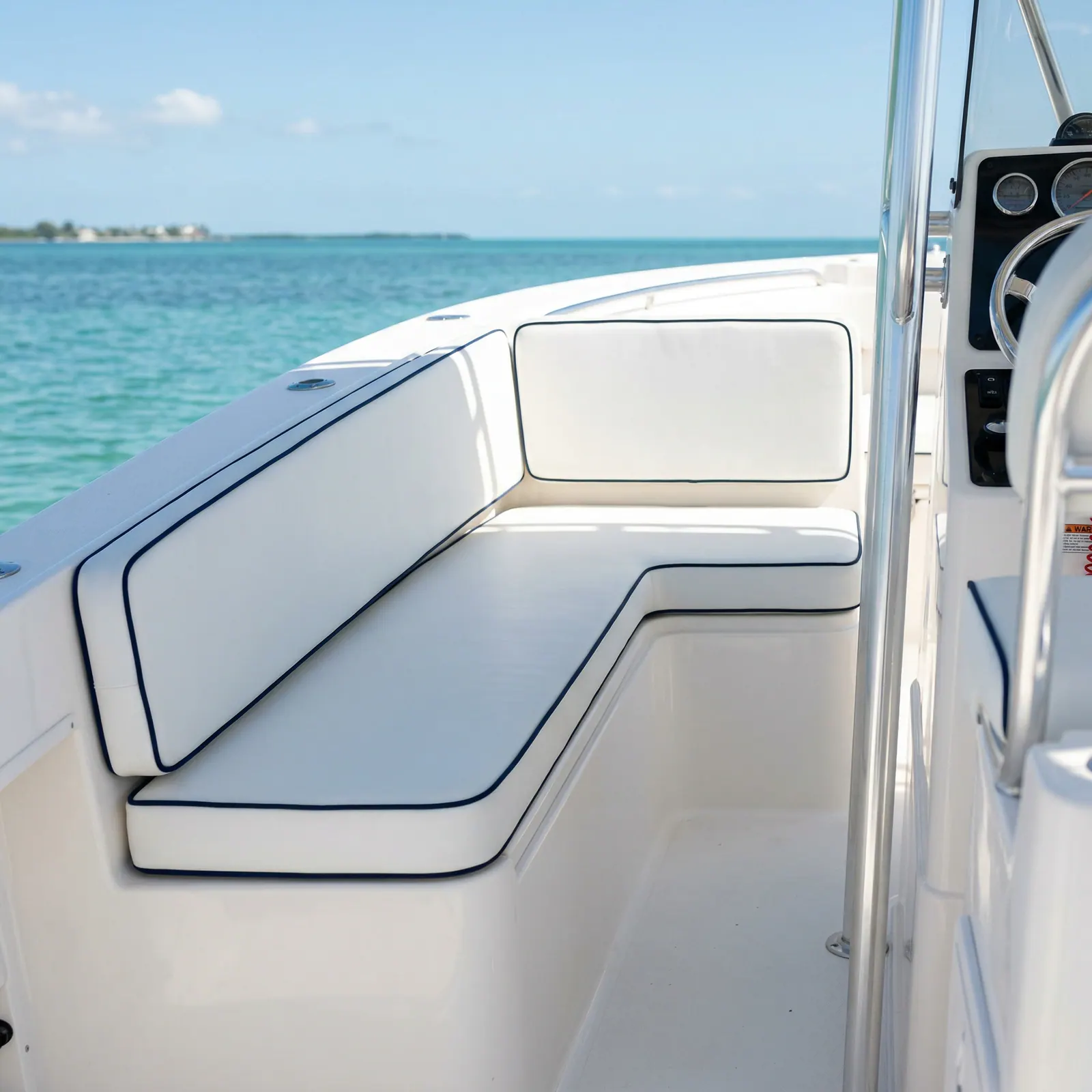
Then the boats. V-berths narrow toward the bow and cockpit benches follow the hull, so work from a traced template, as the V-berth Pattern shows. The straight answer on build: the workshop's regular seat foam, about 2.0 lb/ft³ (32 kg/m³), in water-repellent outdoor fabric. It isn't quick-dry, and there's no mesh bottom as standard. Water-repellent is a promise; waterproof is a contract. These cushions belong under a bimini or below deck when weather comes; for a seat that stays wet, read dry-fast foam first. The Gulf Coast page covers boats on another salty coast.
Terrace, lounger and cockpit: fabric, foam and fastening
| Seat | Fabric | Foam and build | Fastening |
|---|---|---|---|
| Masonry bench on a stone terrace | Outdoor fabric: woven polyester, water-repellent, UV-resistant | Plain, untufted, 4 in (10 cm) standard | Ties at the back corners |
| Pool sun lounger in a rental | Outdoor fabric in a light solid or stripe | Split at the hinge; ask for dry-fast foam if it lives in the open | Ties at the head end |
| Cockpit bench under a bimini | Outdoor fabric | Traced template; standard foam, stowed below in weather | Ties to a fixed point, or stow it |
| V-berth below deck | Outdoor fabric or a performance weave | Template split on the centerline so each half lifts | Loose; the hull holds it |
No fabric is salt-proof. Rinse covers and zippers with fresh water; wash covers at 86°F (30°C) on a gentle cycle and air dry them.
Two ties and a stripe that knows its direction
A buyer ordered a bench cushion of 59 x 19.7 x 4 in (150 x 50 x 10 cm) with piping and two ties on the back, plus two chair cushions of 29.5 x 20 x 3 in (75 x 51 x 7.5 cm), all in a striped outdoor fabric.
They were specific about the stripes: along the length on the bench, across the width on the chairs, just like the example photo they sent. The workshop cut them that way. Bench and chair cushions often want opposite directions, and nobody guesses right unless you say so.
On a bora coast I'd keep both lessons. Put the stripe in writing for each piece, and put the ties where the frame can hold them. Those two back ties are the difference between a cushion on the bench and a cushion in the neighbor's olive grove.
- Measured
- Bench 59 x 19.7 x 4 in (150 x 50 x 10 cm) with two back ties; two chair cushions 29.5 x 20 x 3 in (75 x 51 x 7.5 cm)
- What it taught
- State stripe direction and tie positions separately for each cushion.
Photographs for homes like these
Open any photograph large; each one has its own link and a Save button.
 Save
 Save
 Save
 Save
 Save
Salt, sun and bora: the season's routine
- May: wash covers at 86°F (30°C), inside out, on a gentle cycle, and air dry them before the first guests.
- Every week by the sea: rinse covers and zippers with fresh water. Salt spray is heaviest near breaking waves.
- Bora or nevera on the forecast: untie the cushions and carry them in. A nevera squall can hit gale force and pass within 45 minutes.
- After jugo rain: unzip covers and stand the foam on edge under cover; standard foam needs 24 to 48 hours to dry.
- July and August middays: move loose sunbed pads into shade when nobody's on them.
- November, the wettest month: store cushions indoors, washed and dry to the core, off stone floors, in breathable covers.
On the Adriatic, a cushion needs a color that forgives the sun and ties that don't trust the sky.
Callum
Buyer questions: ties, armchairs and long benches
- A common question
I only have the overall size of my garden armchairs. Is that enough to make seat and back cushions?
The workshop's answerNot for a good fit. Once the chairs arrive, measure the width between the armrests, the seat depth and the back-cushion height you want. The workshop recommends a 3 to 4 in (8 to 10 cm) seat in 32-density HR foam wrapped in polyester wadding, with ties at the back corners. Boxed cushions with piping are no problem.
- A common question
Can you add strong hook-and-loop strips to fix the cushions to a bench?
The workshop's answerFor a bench or banquette, the workshop suggested ties instead, or a base made of non-slip fabric so the cushion won't slide, and asked for a photo of the bench first.
- A common question
Is the fabric on the bench cushion with bolsters suitable for outdoors?
The workshop's answerNo. The indoor bench-with-bolster fabrics aren't for outdoor use. There's a separate outdoor cushion line in water-repellent, UV-resistant fabrics, made in custom sizes and shapes.
- A common question
Should a very long 103 in (262 cm) bench cushion be one piece or two?
The workshop's answerBoth are possible: one 103 in (262 cm) piece or two of 51.6 in (131 cm). The workshop recommends two pieces, but it made a single long one at the buyer's request, adjusted to 103.5 x 15.7 in (263 x 40 cm) before production.

Have it made
Have it made for your home — ask Callum’s workshop
Short list: size, sun hours, how fast it has to dry. The workshop goes through it with you. — Callum
Leave your details and the workshop will call you to confirm measurements, fabric, foam and piping. No prices, dates or payment on this page: it is a request, not an order.
Croatian coast cushion questions
Will ties hold outdoor cushions in a bora?
Ties stop cushions sliding and lifting in ordinary gusts, but bora gusts have been recorded at 154 mph (248 km/h). When a bora is forecast, untie the cushions and bring them indoors, then put them back once it has blown through.
What cushions suit a charter yacht cockpit in Croatia?
Plain, untufted cushions in water-repellent, UV-resistant outdoor fabric, cut from a traced template. The standard foam isn't quick-dry, so they suit a covered cockpit or go below in rain. For seats that stay wet, ask about dry-fast foam.
How do I keep sunbed cushions from fading by an island pool?
Choose outdoor fabric with a UV-resistant finish and ask for the exact code's UV rating. Store pads in shade between guests: Split averages 353 hours of July sunshine, and sand and sea foam reflect extra UV onto the seat.
Do outdoor cushions need to come in for a Dalmatian winter?
Yes. Coastal winters are mild, but November is Split's wettest month at about 4.5 in (116 mm), and the bora blows most often in winter. Store cushions indoors, washed and dry to the core, in breathable covers.
Fair winds — Callum
The atelier
Keep going
Across the Map
Nearby places
Close by on the map