Across the Map
Custom cushions for Canadian homes, cottages and long winters
A Canadian cushion lives two lives: a short, bright season on the dock and a long one in dry storage. Build it for both, and it will see a lot of summers.
- Sun & UVModerate
- HumidityModerate
- WinterLong and hard
- CoastSalt air nearby
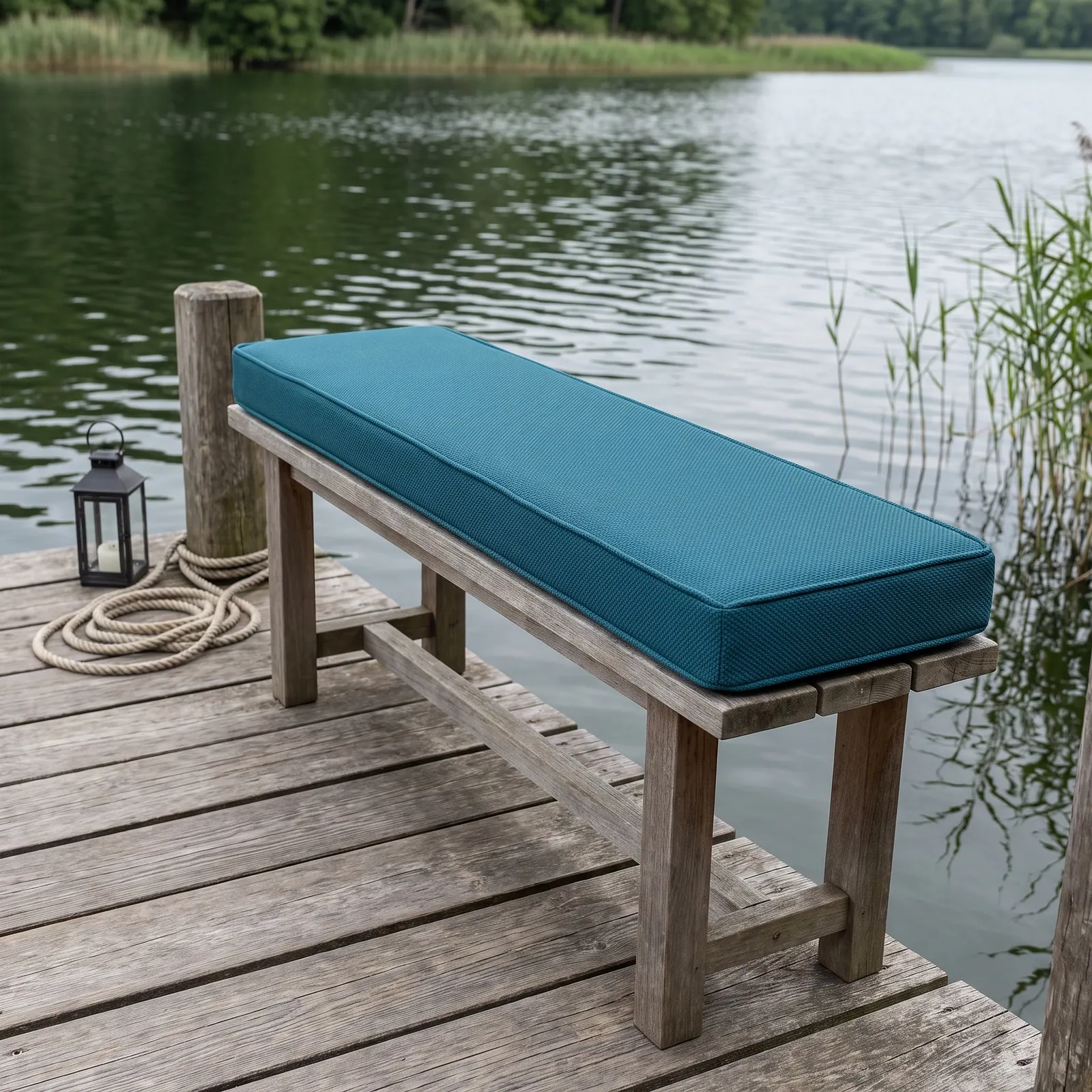
- Typical seatsMuskoka chair, dock and deck bench, vestibule boot bench

 Save
The quick answer
Custom cushions in Canada are built around a short outdoor season and a long freeze. Use water-repellent outdoor fabric on docks, decks and Muskoka chairs from Victoria Day to Thanksgiving, then store cushions dry, breathing and off concrete. Indoors, vestibule boot benches want zip-off covers, and bay windows need a drawing of every edge. Winnipeg averages 193 nights at or below 32°F.
One country, ten weathers
Vancouver sees about 41 nights a year at or below 32°F (0°C). Winnipeg sees 193. Same country, same cushion, very different winters. Here is how Environment and Climate Change Canada's 1981 to 2010 normals read, province by province:
- British Columbia: Vancouver, 47 in (1,189 mm) of precipitation and a mild, wet winter; the Okanagan is dry and hot in summer.
- Alberta: Calgary, 2,396 hours of bright sunshine a year; Edmonton, 208 freezing nights.
- Saskatchewan: Regina, 15.4 in (390 mm) of precipitation and 201 freezing nights.
- Manitoba: Winnipeg, 193 freezing nights and January lows averaging −6.5°F (−21.4°C).
- Ontario: Toronto, 42.5 in (108 cm) of snow; Muskoka, 133 in (338 cm).
- Quebec: Montreal, about 83 in (210 cm) of snow and 148 freezing nights.
- New Brunswick: Fredericton, 99 in (252 cm) of snow and 173 freezing nights.
- Nova Scotia: Halifax, 55 in (1,396 mm) of precipitation and 116 days of fog.
- Prince Edward Island: Charlottetown, 114 in (290 cm) of snow.
- Newfoundland and Labrador: St. John's, 120 fog days and a mean wind of 13.6 mph (21.9 km/h).
Freeze is the one that ruins cushions. Water left in foam freezes, thaws and never quite dries. Bring them in before the first frost and they'll forgive you everything.
Victoria Day to Thanksgiving: the cottage season
Cottage season runs from the Victoria Day long weekend in May to the Thanksgiving long weekend in October. Five months, give or take. Everything outside has to go out fast and come in well.
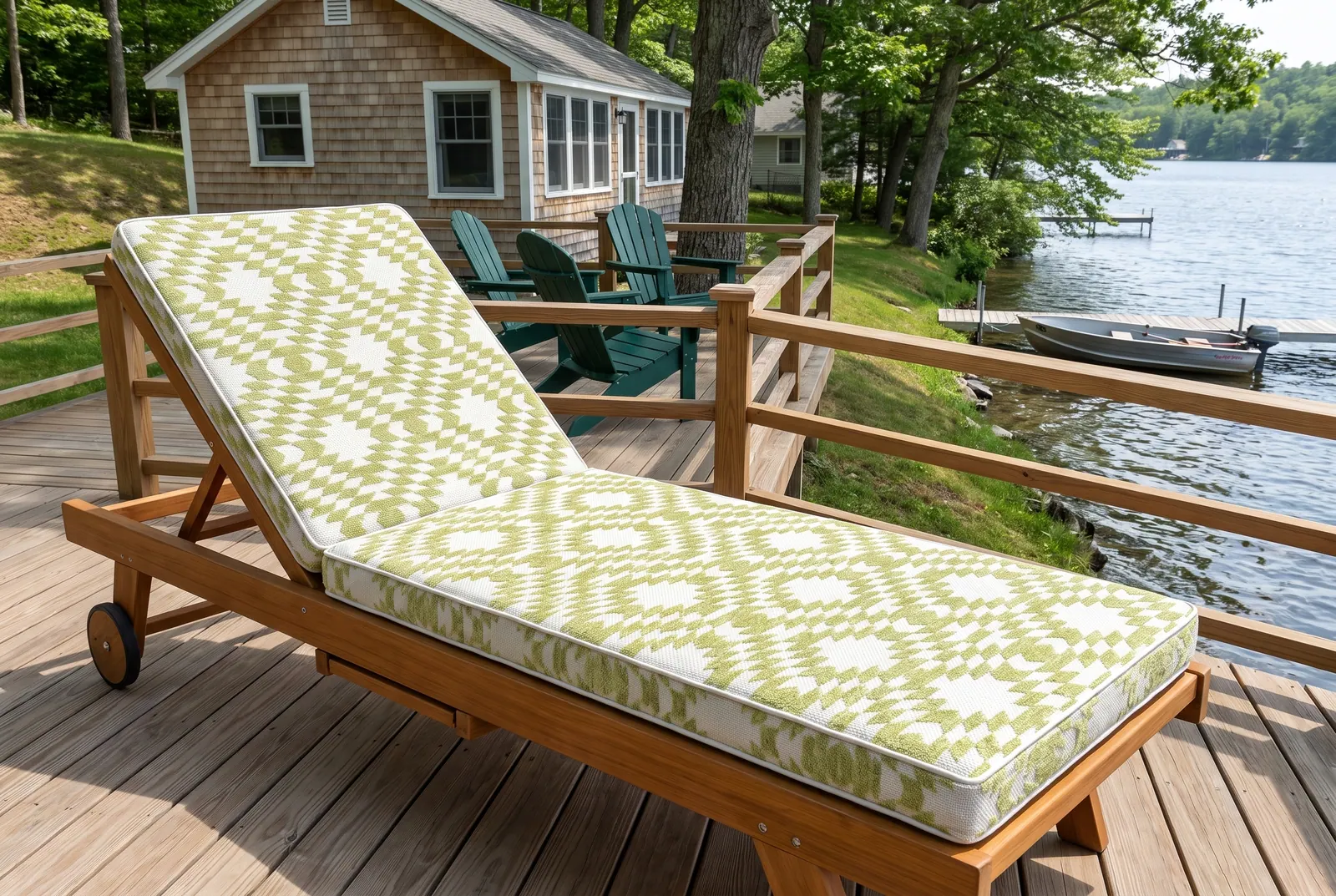
Muskoka shows the pattern. The airport there averages 175 nights at or below 32°F (0°C) and 133 in (338 cm) of snow, then July highs near 76.6°F (24.8°C) and 34 days of fog a year. A dock cushion lives with morning damp and summer sun, then waits out a long winter.
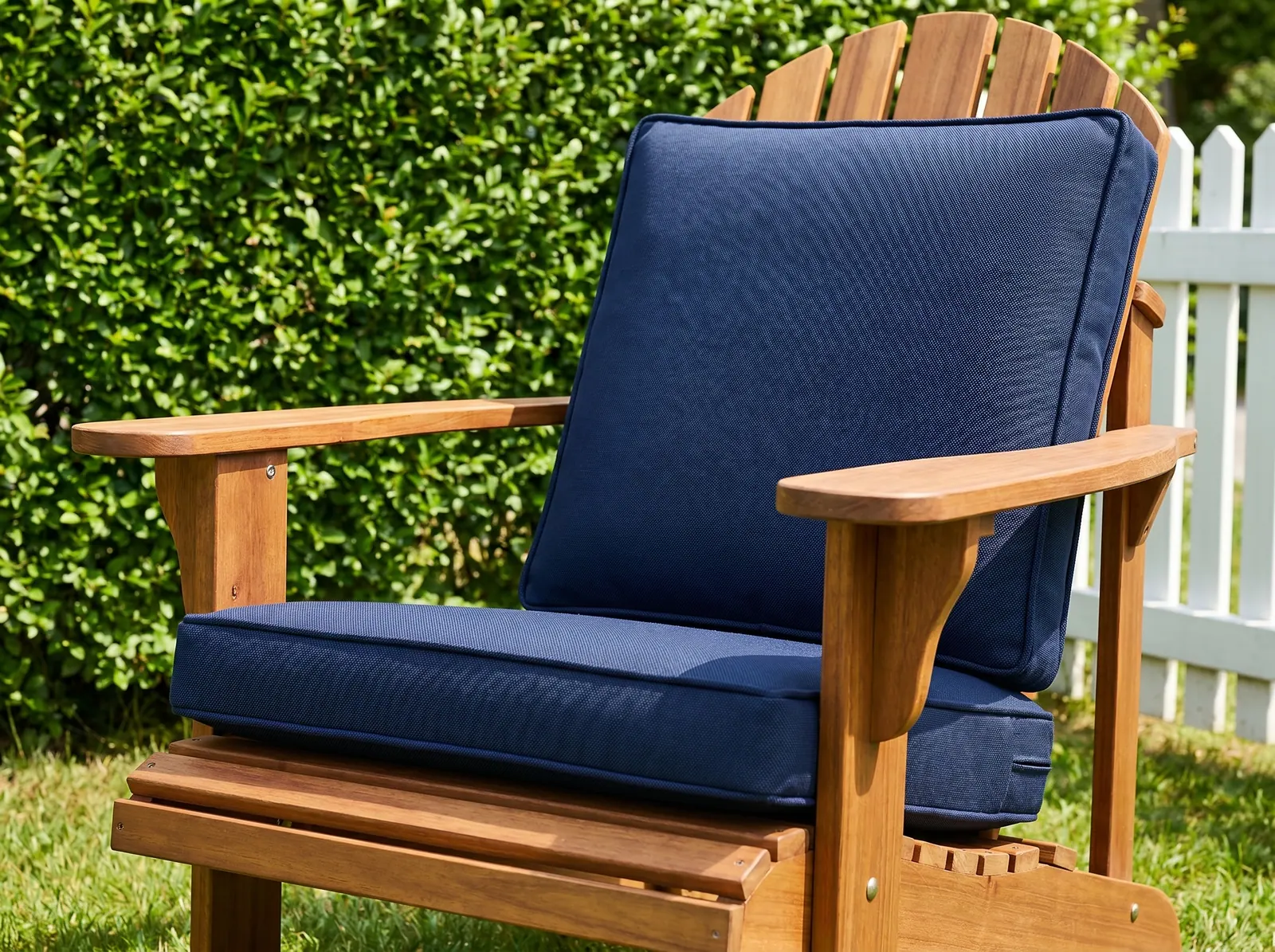
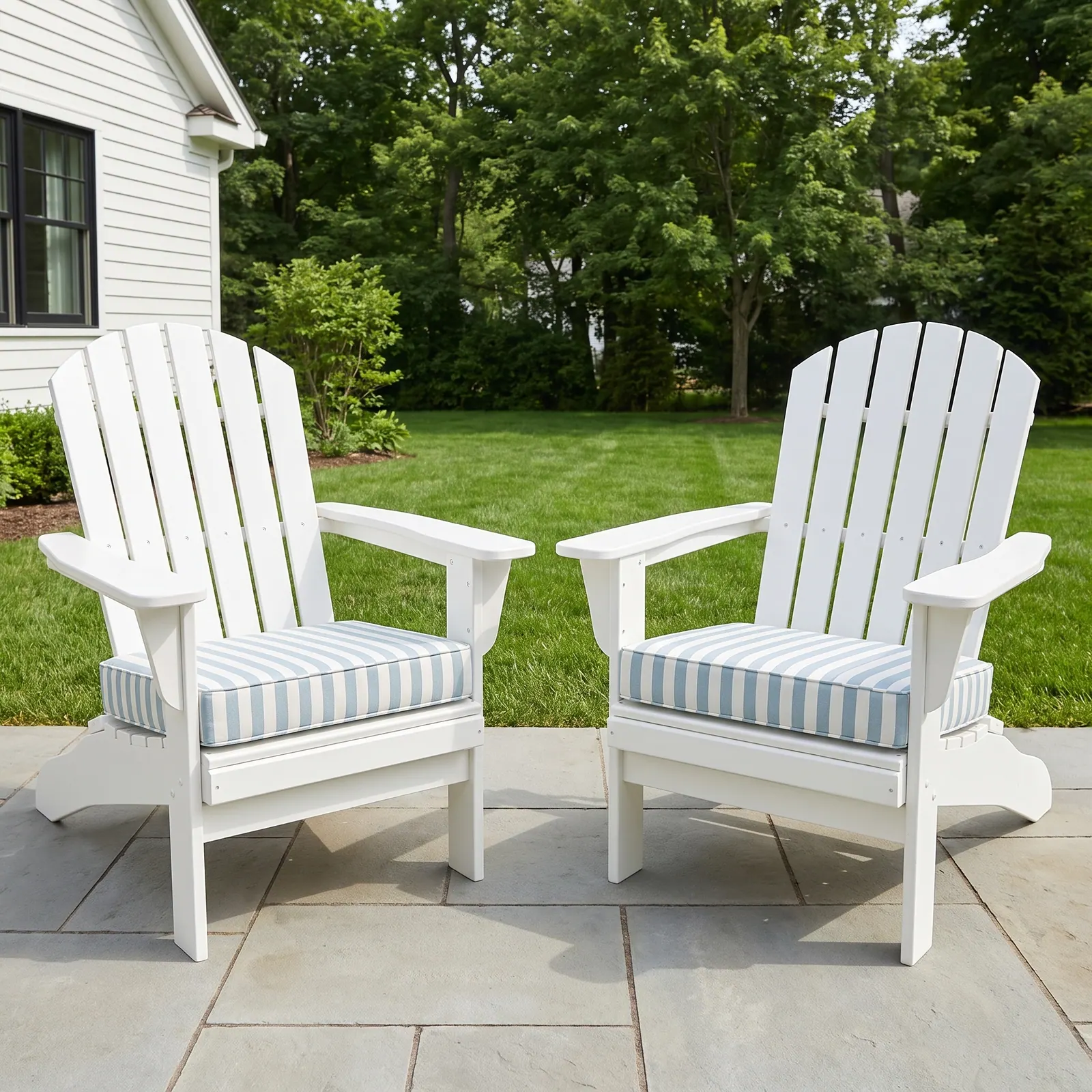
The Adirondack chair has been sold in Canada as the Muskoka chair since the 1980s: seat higher at the front than the back, tall slatted back, wide arms. Muskoka chair cushions come in two pieces, seat and back, tied on at the back. Cottage cushions of every kind want outdoor fabric, and they sleep off the dock boards. More in outdoor cushions.
Vestibules, bay-and-gables and condo balconies
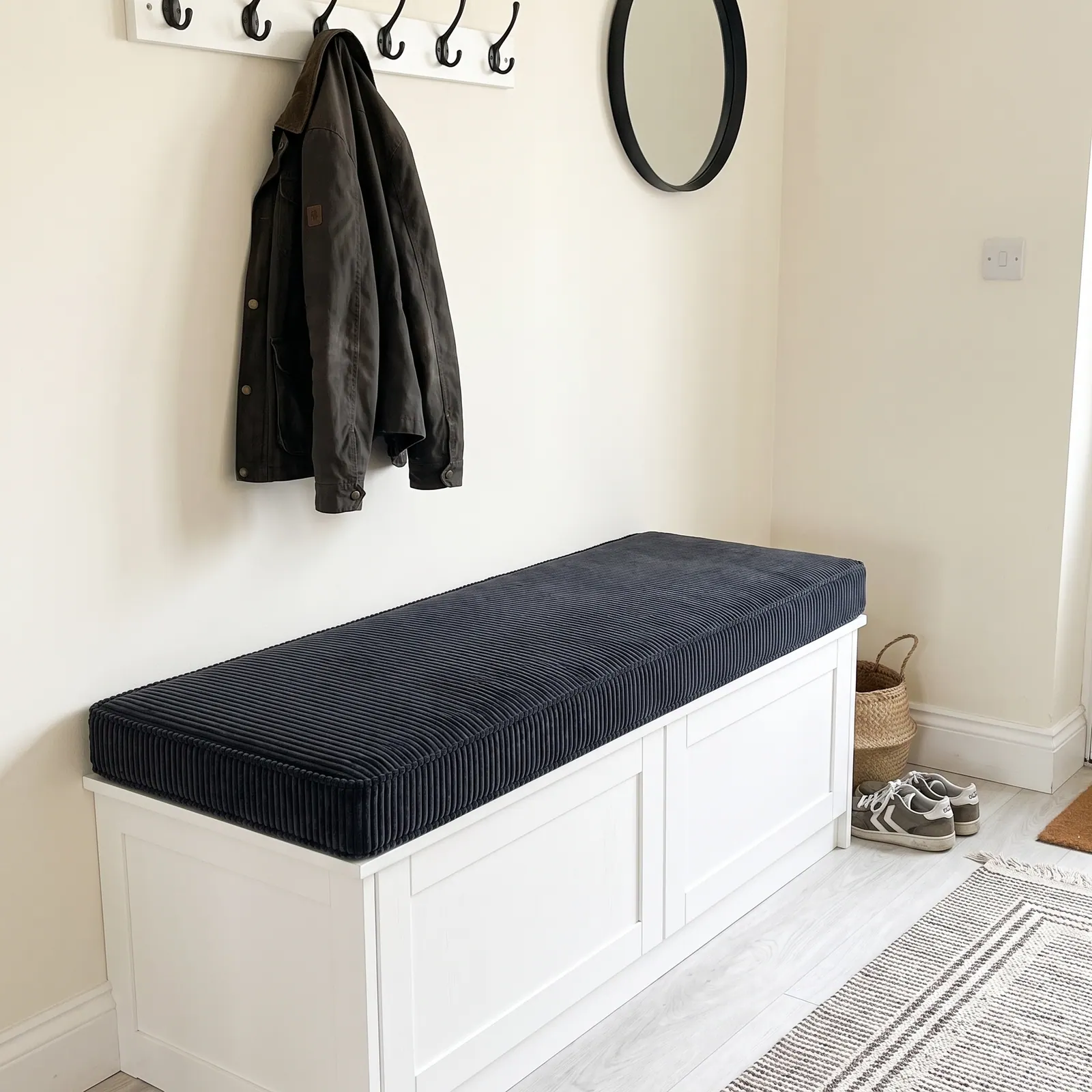
Winter comes in on your boots. The bench by the door is where the meltwater lands, and in a Canadian winter it may be the hardest-working seat in the house. Give it a cover that zips off and a fabric that forgives; see mudroom and entryway bench cushions.
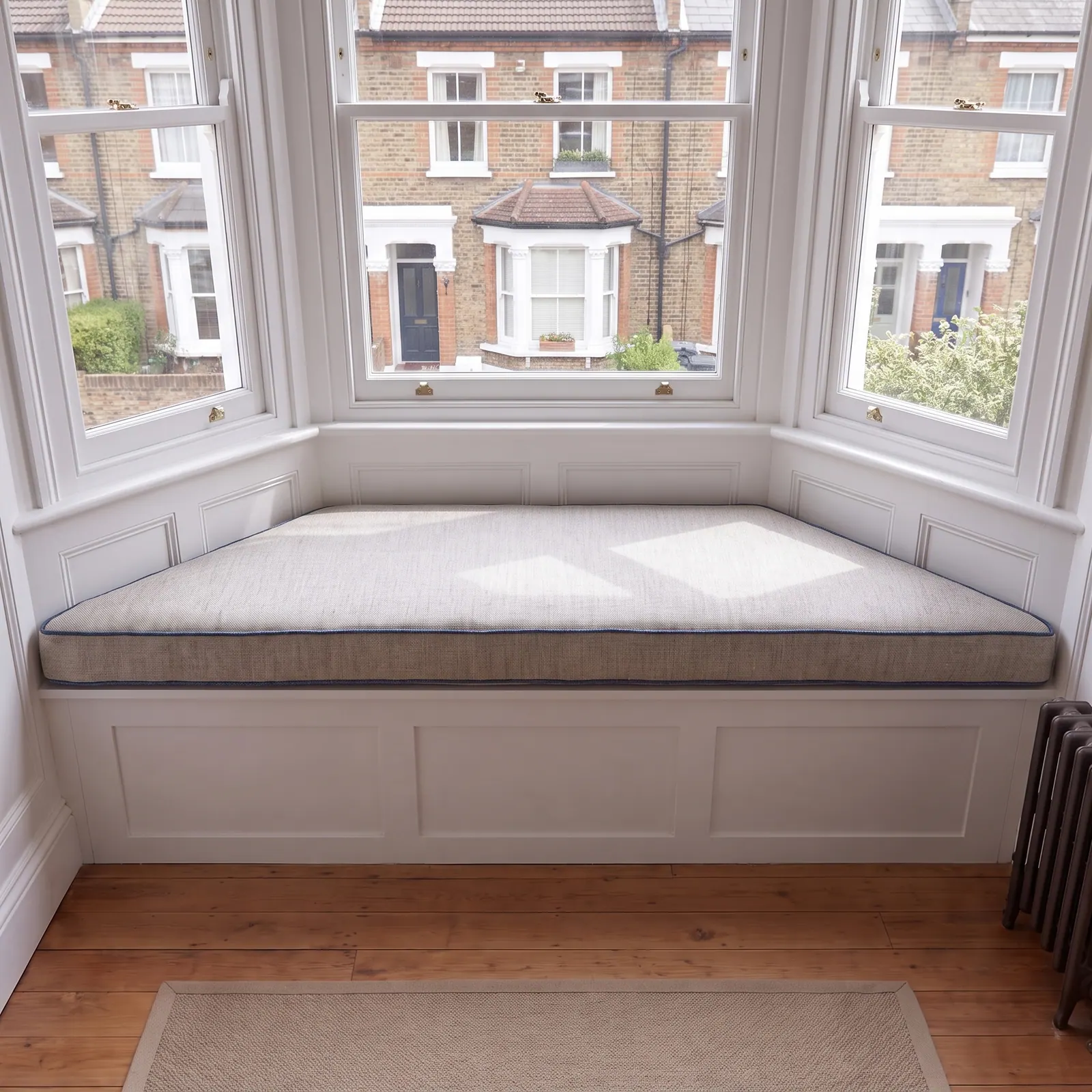
Older cities bring bays. Toronto's bay-and-gable houses, built in numbers from the 1870s through the 1890s, carry a bay window across more than half of the front. Old bays are never square. Window seat cushions in Canada start from a drawing of every edge; the bay window calculator checks the geometry before anything is cut.
Then the condo balcony, the cabin bunk and the camper. Balcony cushions take outdoor fabric and come in for winter. Bunk and camper covers are made from a template, one per cushion; see boat, camper and RV cushions. What does your cottage dock face at breakfast, friend: fog or sun?
Cottage, vestibule, bay: the Canadian cutting list
| Seat | Fabric | Thickness | Winter plan |
|---|---|---|---|
| Muskoka chair seat and back | Outdoor fabric, water-repellent and UV-resistant | 2 to 3 in (5 to 7.5 cm) | Ties at the back; indoors from Thanksgiving to Victoria Day |
| Dock or deck bench | Outdoor fabric; no tufting | 3 to 4 in (7.5 to 10 cm) | Cleaned, dried to the core, stored off concrete |
| Vestibule boot bench | Outdoor fabric or an easy-clean poly-cotton, zip-off cover | 3 in (7.5 cm) | Stays in; cover washed through the season |
| Bay-and-gable or Victorian bay seat | Velvet or linen-look | 3 to 4 in (7.5 to 10 cm) | Lift off cold glass now and then; wipe condensation |
| Condo balcony chair | Outdoor fabric with ties | 2 in (5 cm) | Indoors before the first frost |
| Cabin bunk or camper bench | New covers made from a template | To fit the existing foam | Stored dry, never sealed in plastic |
Send measurements in centimeters or inches, but keep every number on one drawing in a single unit. Covers zip off and wash at 86°F (30°C) on a gentle cycle; air dry, no tumble dryer.
A 64 in bench by the door
A buyer in Canada wanted a tufted bench cushion, 64 x 17¾ in (162.4 x 45 cm), in mustard yellow, for a bench used every day. She asked for a durable fabric that wasn't velvet, and no handles.
The workshop recommended its soft-touch poly-cotton, a durable, easy-clean best seller. It also gave her the trade-off straight: a tufted cover can't come off, because the buttons go through the filling. Without tufting, a zippered cover is possible.
She chose tufted. Fair enough; it's a handsome look. By a door that sees snow, I'd have taken the zipper. Meltwater finds every seam, and a cover you can wash is a cover you'll keep.
- Measured
- 64 x 17¾ in (162.4 x 45 cm), tufted, soft-touch poly-cotton
- What it taught
- For a daily-use entry bench, choose a durable, easy-clean fabric and decide up front between a tufted look and a removable zip cover.
Photographs for homes like these
Open any photograph large; each one has its own link and a Save button.
 Save
 Save
 Save
 Save
 Save
Storing outdoor cushions for a Canadian winter
- Thanksgiving weekend: dock and deck cushions come in. Brush off leaves and sand first.
- Wash covers at 86°F (30°C) on gentle, air dry, and skip the tumble dryer.
- Dry the foam to the core: stand each cushion on edge in a warm room for 24 to 48 hours.
- Store where air moves, on a shelf or a bed, off concrete, never in sealed plastic.
- All winter: shake out the vestibule bench cover weekly and wash it when the salt shows.
- Victoria Day weekend: cushions go back out. Check ties and zippers before the first swim.
A Canadian cushion gets five months in the sun and seven in a dry closet. Build it for both.
Callum
Buyer questions: bays, benches, campers and cloth
- A common question
What thicknesses can a trapezoid bay window cushion be, and is piping extra?
The workshop's answerA bay seat with a 107.5 in (273 cm) back edge, a 55 in (140 cm) front, two 32.5 in (83 cm) angled sides and 23 in (58 cm) of depth was quoted on the custom-shape listing. Thickness can be 2, 3, 4 or 5 in (5, 7.5, 10 or 12.5 cm); piping is included and can be a different color. The cover is removable and washes at 86°F (30°C), with no tumble dryer.
- A common question
Can you put ties on two bench cushions so they stay together and don't slide?
The workshop's answerYes. Ties can be sewn at the end where the two cushions meet, and on a side so they can be fixed to the seat.
- A common question
Can you make covers for the bench cushions in my small camper trailer?
The workshop's answerYes. Send photos plus a template or a drawing with the dimensions of each cushion, six in this case, and the workshop reviews the drawing and quotes.
- A common question
Is your standard cushion fabric waterproof?
The workshop's answerNo. The standard fabrics are not waterproof. A water-repellent collection sheds water well, and there is outdoor fabric for cushions that live outside.
- A common question
Is 4 inches the thickest option, or can I get 5, 6 or 8?
The workshop's answerThickness is fully customizable. Cushions have been made 5 in (12.5 cm), 6 in (15 cm) and about 8 in (20 cm) thick, and the workshop says it can go up to about 15.75 in (40 cm).

Have it made
Have it made for your home — ask Callum’s workshop
Tell them where it lives. Porch, deck or boat: the weather picks the fabric and the foam before anyone else does. — Callum
Leave your details and the workshop will call you to confirm measurements, fabric, foam and piping. No prices, dates or payment on this page: it is a request, not an order.
Canadian cushion questions
Can dock and deck cushions stay outside through a Canadian winter?
No. Muskoka averages 175 nights at or below 32°F (0°C) and Winnipeg 193. Water left in foam freezes and thaws without drying. Wash the covers, dry the foam to the core and store cushions indoors, off concrete, never sealed in plastic.
What cushion fits a Muskoka chair?
Two pieces: a seat pad and a back pad, cut to the chair's own seat and slatted back, tied on at the back. Measure each part flat, mark where the ties should sit and choose outdoor fabric. It is the Adirondack chair under its Canadian name.
Is outdoor cushion fabric waterproof?
No. It is water-repellent: it sheds rain and spray, but water still finds needle holes and zippers. Stand a soaked cushion on edge and get it dry within 24 to 48 hours, and bring cushions in for long wet spells.
Can I send my cushion measurements in centimeters?
Yes. Measurements can come in centimeters or inches. Keep every number on a drawing in one unit, though, because mixing units is an easy way to get a quote or a cut badly wrong.
Fair winds — Callum
Concept Sketches
Sketches for homes like these
Real projects, drawn up as ideas you can borrow.
The atelier
Keep going
Across the Map
Nearby places
In Canada
- Alberta
- British Columbia
- Manitoba
- New Brunswick
- Newfoundland and Labrador
- Nova Scotia
- Ontario
- Prince Edward Island
- Quebec
- Saskatchewan
Nearby