Across the Map · Canada
Custom cushions for Newfoundland and Labrador homes and outports
St. John's sees fog on about 120 days a year and wind on most of the rest. I cut sail for weather like that. A cushion here faces gray glass, salt light and a boat that comes home wet.
- Sun & UVModerate
- HumidityHumid
- WinterLong and hard
- CoastSalt air nearby
- Typical seatsSea-view window seat, dormer window seat, kitchen bench

 Save
The quick answer
Custom cushions in Newfoundland and Labrador should be built for fog, wind and damp rather than sun. St. John's averages 120 fog days and 60 in (1,534 mm) of precipitation a year, so choose zip-off covers that wash at 86°F (30°C), water-repellent outdoor fabric for boats and decks, and window seat cushions sized to clear handles and casings.
120 fog days and a west wind that rarely rests
St. John's is the foggiest and windiest major city in Canada. Environment Canada's 1981 to 2010 normals for the airport count 120 days a year with fog, a mean wind of 21.9 km/h (13.6 mph), most often out of the west, and 44 days with at least one hour above 50 km/h (31 mph).
The wet comes with it: 60.4 in (1,534 mm) of precipitation over 212 days, 132 in (335 cm) of snow and 38 days of freezing rain or drizzle. Morning humidity averages 87%.
So for custom cushions in Newfoundland, sun is rarely the enemy. Damp is. A cushion by cold glass or on a boat bench soaks up moisture, and the airport logs only 1,633 hours of bright sunshine a year to dry it. Build for washing and airing. The wider picture is on our Canada page.
Labrador trades the fog for cold: 169 in of snow a year
Up at Happy Valley-Goose Bay the fog nearly disappears: 11 days a year. The cold moves in instead. The same normals give a January mean of 0.3°F (−17.6°C), 169 in (428 cm) of snow, 62 nights below −4°F (−20°C) and snow on the ground about 182 days a year. The frost-free season averages 110 days.
Cabin cushions there live cold but dry. Close up in fall with covers washed and foam dry to the core, and store them off the floor in breathable bags, never sealed in plastic. A new cushion that arrives vacuum-packed usually needs 24 to 48 hours to regain its shape, so give it two days indoors before you judge it.
Jellybean rows, saltboxes and the window that faces the water
Downtown St. John's is row housing painted in bright colors, which is how it earned the name Jelly Bean Row. Much of it went up after the Great Fire of July 8, 1892, which left about 12,000 people homeless. The rebuild favored Second Empire houses with mansard roofs and bonnet-topped dormers.
Out in the outports, the small coastal communities where most travel was once by boat, you'll find saltbox houses: two stories in front, one behind, and a long, low rear roof.
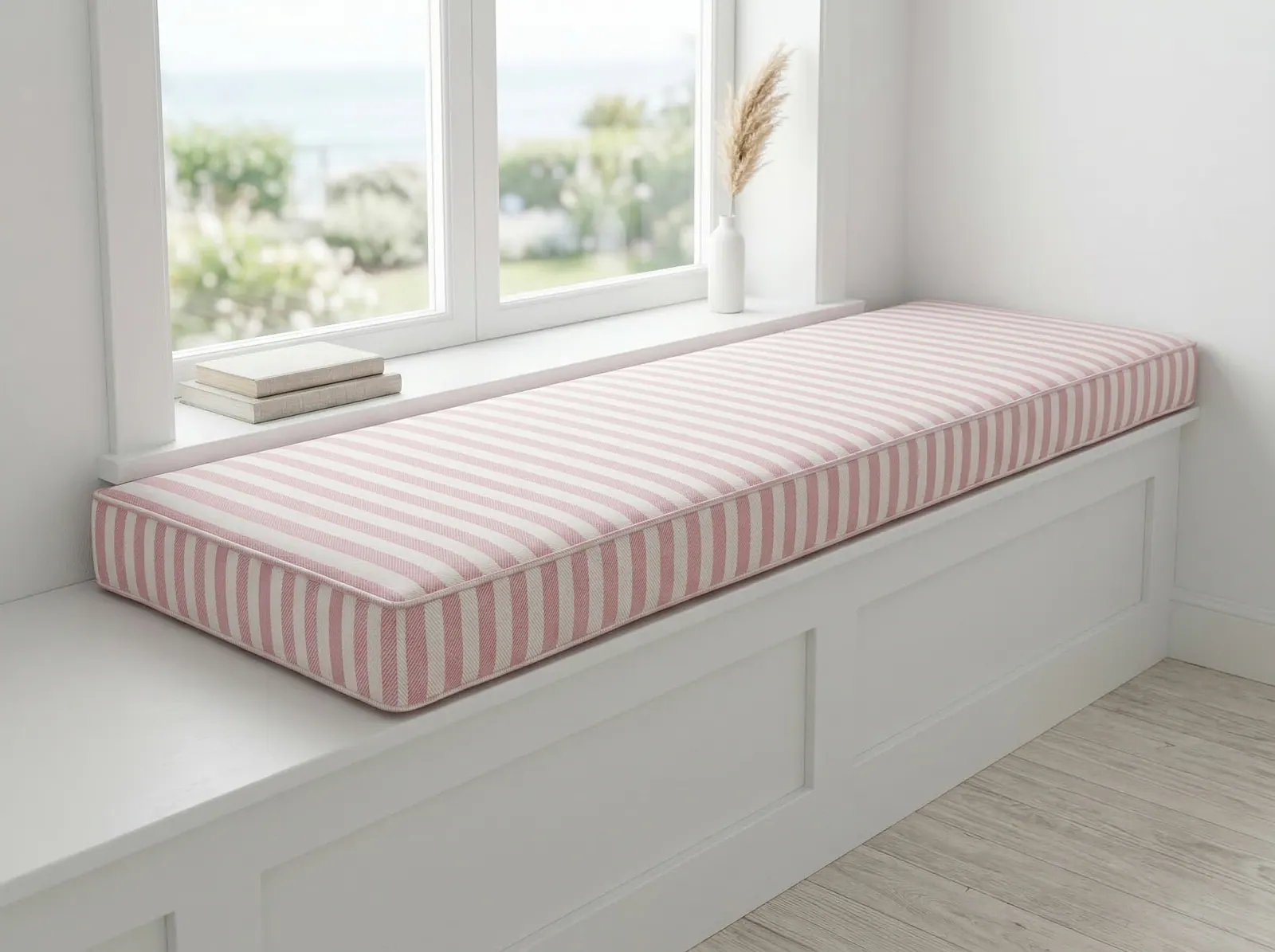
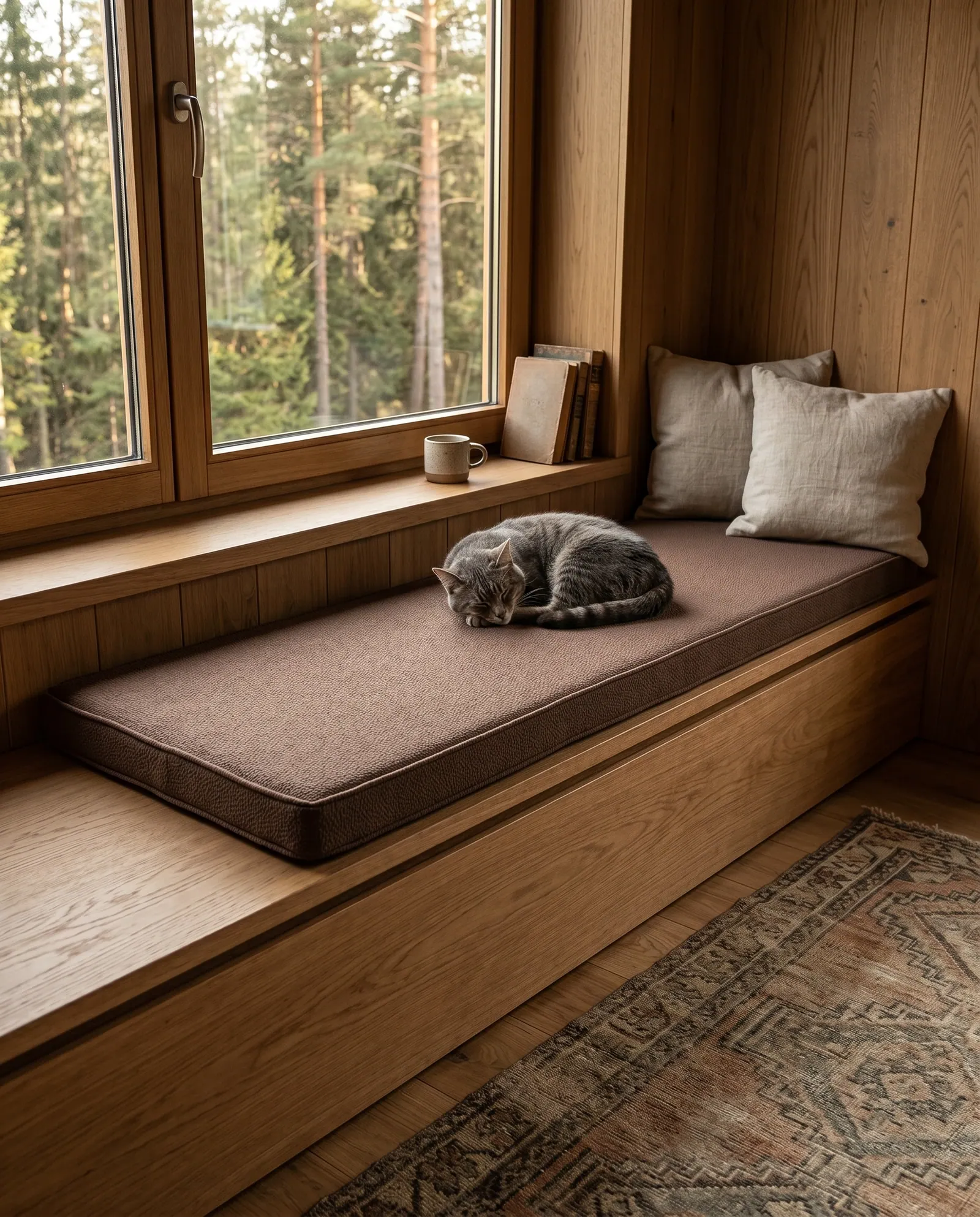
Each gives you a window seat worth building. A dormer under a mansard wants a slim cushion, 2 to 3 in (5 to 7.5 cm), as the thickness guide explains. A front window in a row house takes a full window seat cushion; measure it the way the window seat guide shows, handle and casing included.
The houses outside are candy pink and harbor blue. Inside, gray light flattens color, so pick clear mid-tones and judge swatches at the window, not on a screen. Which way does your seat look, friend: the harbor or the hill?
The window handle that set the depth
A buyer in Canada asked for a velvet window seat cushion 62 x 21 in (157 x 53 cm). Then they remembered the window handle. At 21 in (53 cm) deep, the cushion would sit right where the handle swings every time the window opens.
They cut the depth to 16 in (41 cm) and had 62 x 16 in (157 x 41 cm) quoted in velvet instead. Five minutes with the window open saved a cushion that would have been wrong for good.
Another buyer in Canada had a window bench 96 in (244 cm) long. Instead of one long cushion, they chose three pieces of 32 x 16 in (81 x 41 cm). Each one lifts, airs and flips on its own, which is what you want on a foggy coast.
- Measured
- 62 x 16 in (157 x 41 cm), cut down from 21 in (53 cm) deep; a second bench of 96 x 16 in (244 x 41 cm) split into three 32 x 16 in (81 x 41 cm) cushions
- What it taught
- Check window handles, latches and trim before fixing the depth, and split long window benches into equal pieces.
Row house, outport and cockpit: fabric, foam and piping
| Seat | Fabric | Foam and build | Piping |
|---|---|---|---|
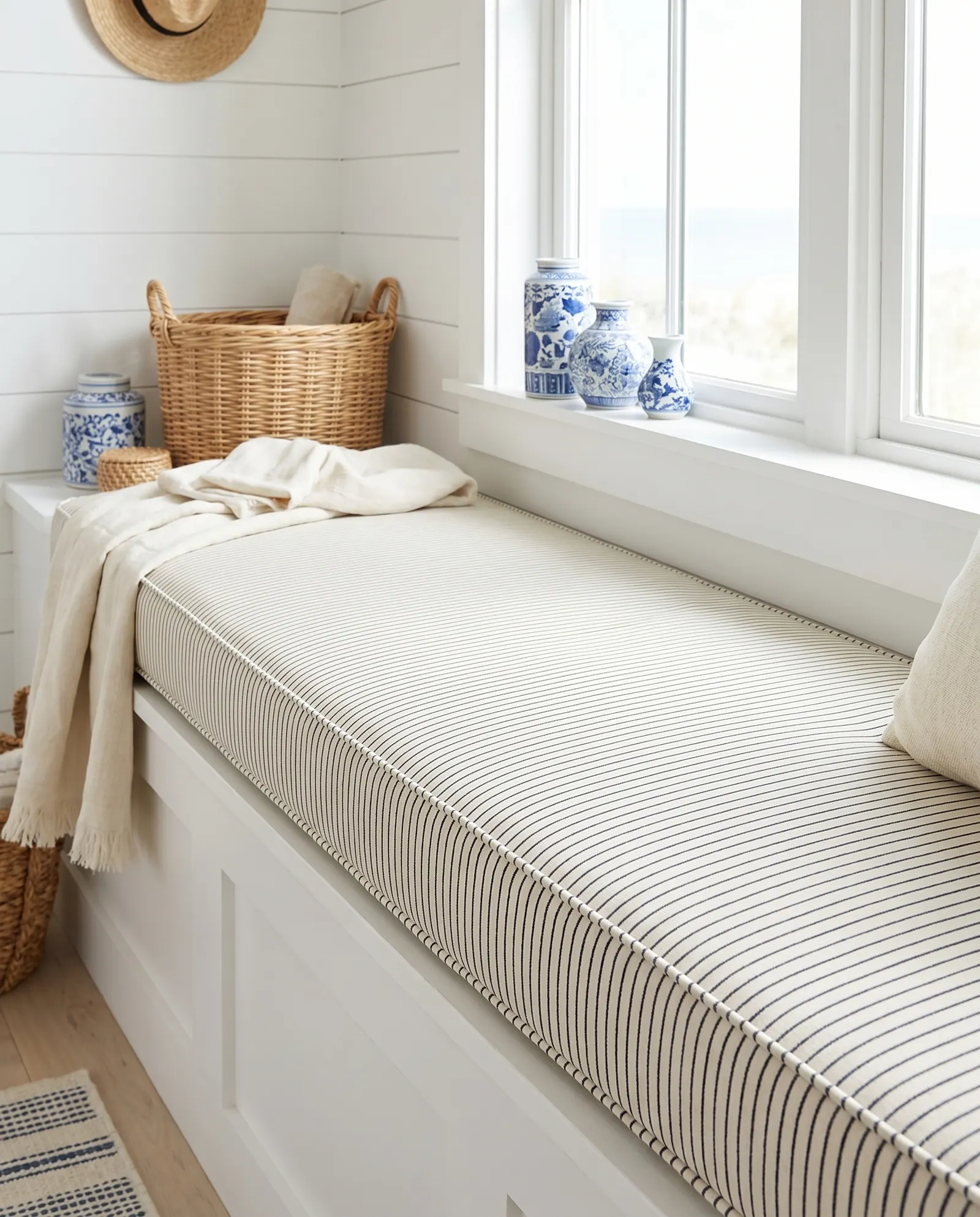
| Sea-view window seat in a row house | Velvet or corduroy for warmth; neither is water-repellent | 3 in (7.5 cm), the workshop's best seller; 4 in (10 cm) standard where there's headroom | Contrast piping draws the edge in gray light |
| Saltbox kitchen bench | Soft-touch poly-cotton, durable and easy to clean | 4 in (10 cm); ties where two cushions meet | Self piping for a quiet edge |
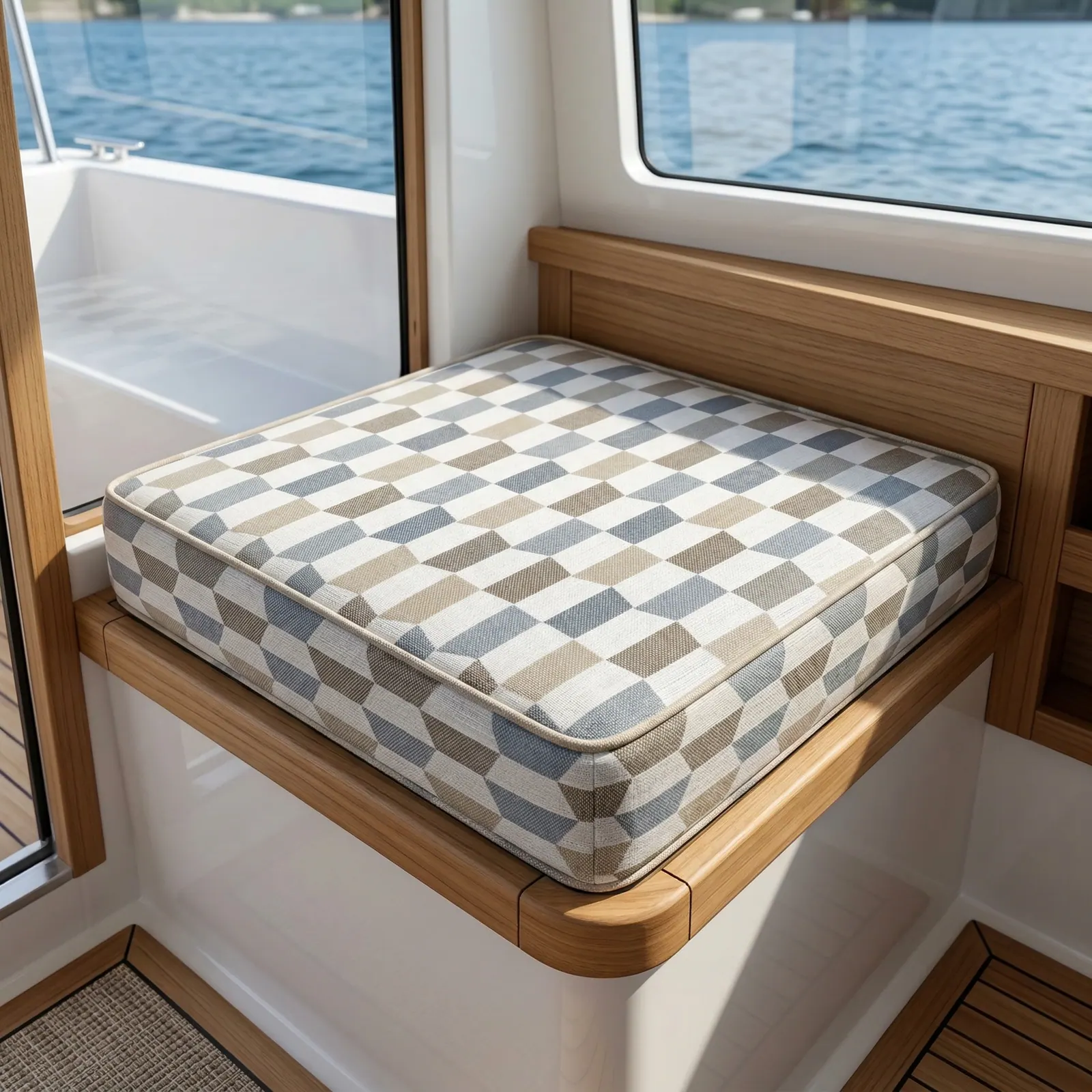
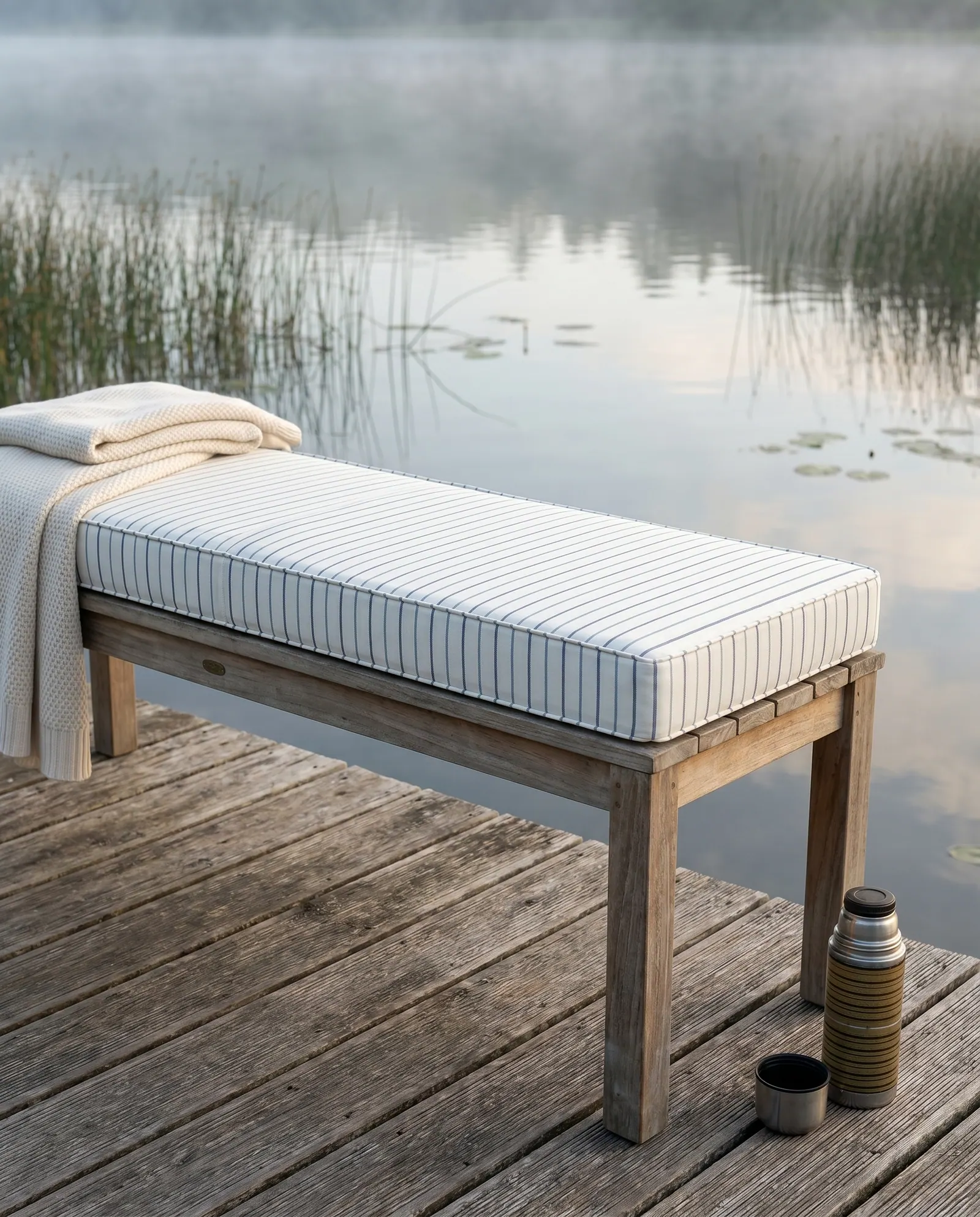
| Boat cockpit or deck bench | Outdoor fabric: water-repellent, UV-resistant, woven rather than coated | Plain, never tufted; carried below when weather comes in | Self or contrast |
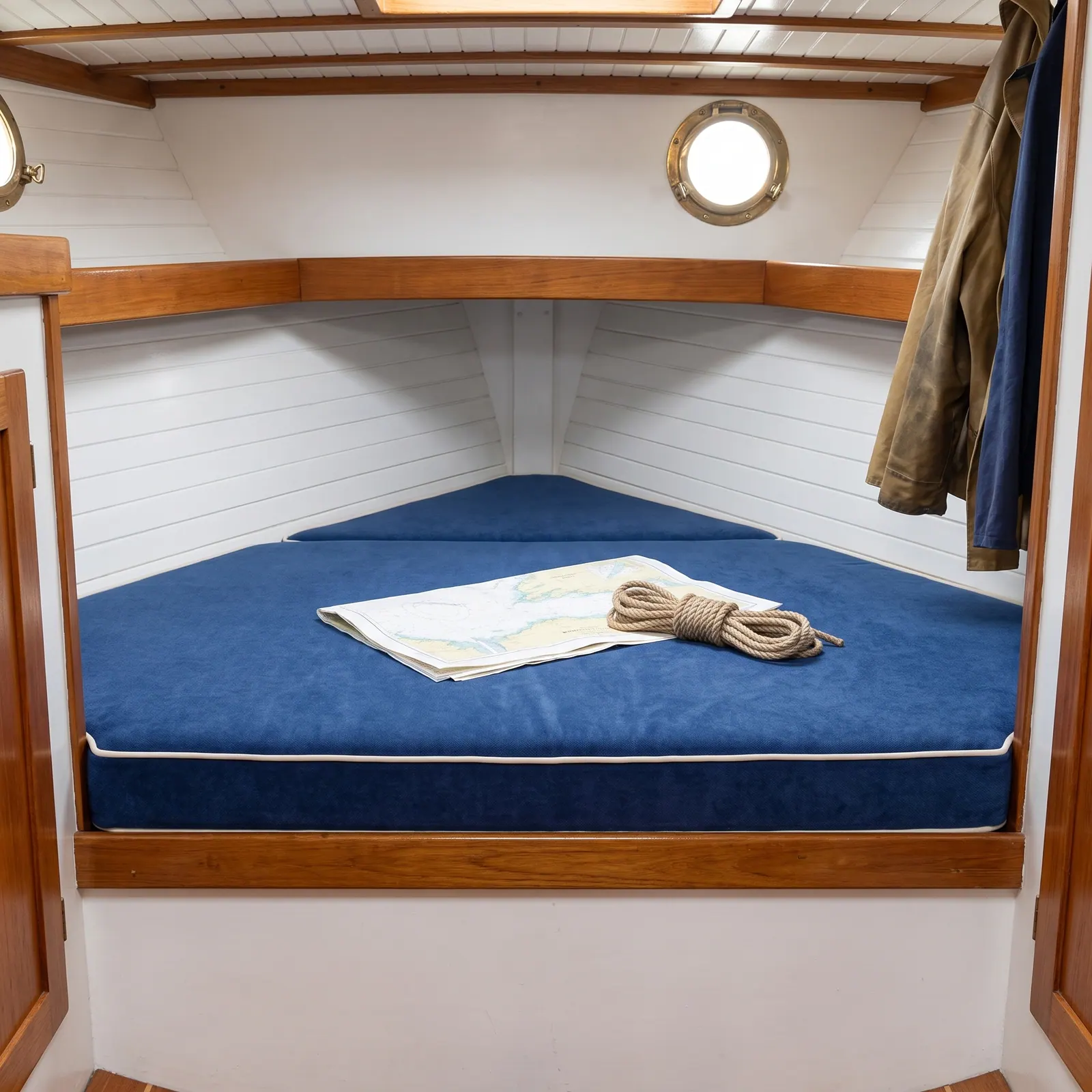
| Camper trailer or cabin bunk | Linen-look or corduroy | Cut from a template of each cushion | Self piping |
Covers zip off and wash at 86°F (30°C) on a gentle cycle; air dry them. The standard seat foam, about 2.0 lb/ft³ (32 kg/m³), is not quick-dry and holds water for a day or two once soaked.
A fog-coast cushion calendar
- Late May: bring deck and boat cushions out after the last spring frost, which St. John's averages around the end of May.
- Fog days: lift window seat cushions in the morning and let the underside breathe.
- Wipe condensation off the glass and sill before it wicks into the foam.
- After every sail, rinse salt off covers and zippers with fresh water.
- Wash covers at 86°F (30°C) on gentle and air dry; stand the foam on edge until it's dry to the core.
- By mid-October, when the first fall frost usually arrives, store outdoor cushions indoors, off the floor, in breathable covers.
Photographs for homes like these
Open any photograph large; each one has its own link and a Save button.
 Save
 Save
 Save
 Save
 Save
In St. John's the sun isn't what wears a cushion out. The fog is. Build it to be washed and aired, and let the weather do its worst.
Callum
Buyer questions: casings, ties and trailers
- A common question
The window casing sticks out over my window seat, so a cushion can't sit flat against the wall. Can you notch it?
The workshop's answerYes. A notched back edge lets the cushion sit tight to the wall and still clear the casing. For a 109.25 x 25 in (277.5 x 63.5 cm) seat with a casing 0.75 in (2 cm) deep, the workshop drew a notch 0.75 in (2 cm) deep and 96.25 in (244.5 cm) wide along the back, keeping full depth for 6 in (15 cm) on the left and 7 in (18 cm) on the right. Send a sketch and a photo; a diagram comes back for approval before the quote.
- A common question
Can two bench cushions be tied together so they don't drift apart?
The workshop's answerYes. Ties can be sewn on the ends where the two cushions meet, and on a side so they can be fixed to the seat.
- A common question
Can you make new covers for the bench cushions in my small camper trailer?
The workshop's answerYes. Send photos plus a template or drawing with the dimensions of each cushion. In one trailer there were six. The workshop reviews the drawing and quotes from it.
- A common question
Does your outdoor fabric feel plastic or rubbery, like cheap waterproof cushions?
The workshop's answerNo. The outdoor fabrics aren't the plastic, coated kind; they feel like proper woven fabric, not a tarp. They are less soft than indoor upholstery fabrics, closer to a good sun lounger cushion, which is worth knowing if you plan to sit on them indoors every day.
- A common question
I need a durable, easy-clean fabric for daily use that isn't velvet. What do you recommend?
The workshop's answerThe soft-touch fabric, a poly-cotton that is one of the workshop's best sellers and is durable and easy to clean. For a kids' playroom it also suggested its thick teddy fabric.

Have it made
Have it made for your home — ask Callum’s workshop
Sun, rain, salt. Say which of them your cushion will meet, and the workshop will plan around it. — Callum
Leave your details and the workshop will call you to confirm measurements, fabric, foam and piping. No prices, dates or payment on this page: it is a request, not an order.
Newfoundland and Labrador cushion questions
Can outdoor cushions stay on a St. John's deck all year?
No. St. John's averages 132 in (335 cm) of snow and 38 days of freezing rain or drizzle a year. Store outdoor cushions indoors from the first fall frost, which averages mid-October, until after the last spring frost around the end of May.
Is outdoor cushion fabric waterproof enough for a boat?
It is water-repellent, not waterproof. Rain beads and runs off, but water still gets in at needle holes and zippers, and the standard foam isn't quick-dry. Keep boat cushions in the cabin or a covered cockpit, or carry them below when weather comes in.
How thick should a dormer window seat cushion be?
Usually 2 to 3 in (5 to 7.5 cm). The workshop's standard is 4 in (10 cm), but 3 in (7.5 cm) is its best seller and suits tight spots under a sill or a sloped ceiling. Check that the window handle and any casing clear the cushion first.
What do cushions for a Labrador cabin need?
Mostly dry storage. Happy Valley-Goose Bay averages a January mean of 0.3°F (−17.6°C) and snow on the ground about 182 days a year. Close the cabin with covers washed and foam dry to the core, and keep cushions off the floor.
Can I send my measurements in centimeters?
Yes. Write every measurement on a drawing in whichever unit your tape reads. The workshop sends back a diagram of the agreed size, often in centimeters, and makes the cushion to that approved layout, so check every number before you say yes.
Fair winds — Callum
The atelier
Keep going
Across the Map
Nearby places
Close by on the map