Across the Map · Canada
Custom cushions for Alberta homes, from Calgary to the Rockies
Snow on a Calgary deck cushion can melt by noon and freeze again by night. In Alberta I build for the back door, the hailstorm and the cabin, in that order.
- Sun & UVStrong
- HumidityDry
- WinterCold
- SettingInland
- Typical seatsMudroom boot bench, entry storage bench, deck dining and lounge cushions

 Save
The quick answer
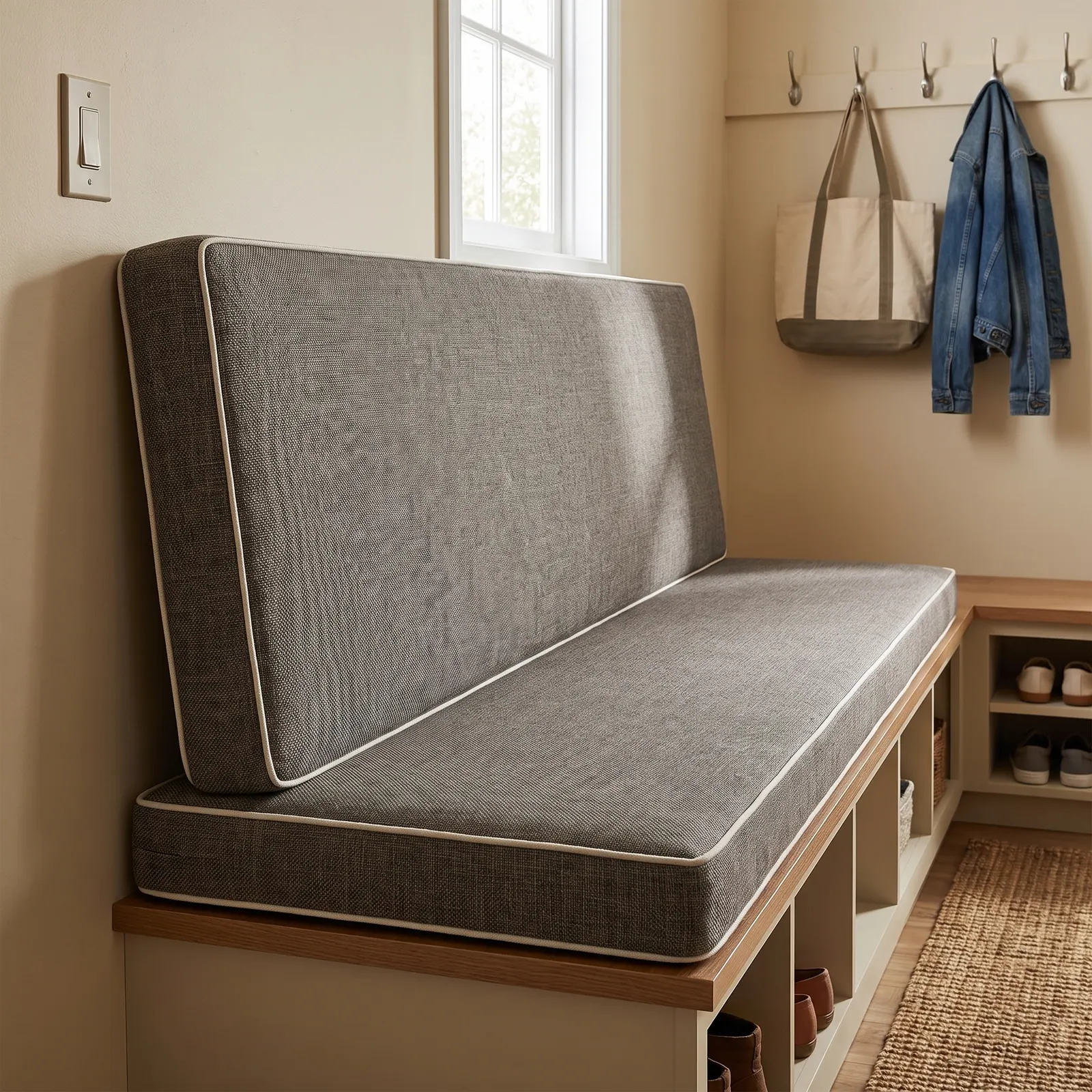
Custom cushions in Alberta have three jobs: mudroom benches want a hard-wearing poly-cotton or performance weave with a zip-off cover for winter boots. Deck cushions want water-repellent outdoor fabric, light enough for one person to carry in when hail threatens (June 1 to September 15). Mountain cabin window seats want corduroy or velvet, 4 to 6 in (10 to 15 cm) thick.
One winter day in three, the wind turns warm
In southwestern Alberta, about one winter day in three is a chinook day. Warm, dry air comes down off the Rockies and can lift the temperature 36 to 54 °F (20 to 30 °C) in hours, melting snow and pulling the humidity down to 25% or less.
That thaw is what ruins a deck cushion. Snow on the seat turns to water by afternoon, soaks into the foam, then freezes when the cold comes back. The workshop's standard foam is not quick-dry, and a cushion that goes through that a few times never really dries. So in Alberta, outdoor cushions winter indoors.
Summer brings the other hazard. Calgary sits in Hailstorm Alley, the belt from High River through Calgary and Red Deer to Lacombe and west to Rocky Mountain House, and the province's hail-suppression planes fly from June 1 to September 15. On August 5, 2024, one storm led to more than 130,000 insurance claims and touched almost one in five Calgary homes. You can't carry a sofa in from that. You can carry cushions, if they're built to move.
In between, the light is hard and clear: about 2,396 hours of sun a year at 3,428 ft (1,045 m), where UV runs roughly 10% above sea level, and fresh snow can bounce over 80% of it back up. A west window seat fades faster here than the same cloth back East.
Bungalows, infills and the busiest seat by the back door
Calgary's inner city filled up with 1950s bungalows, and block by block they're giving way to infills. Old house or new, the hardest-working seat is by the back door: boots, hockey bags, groceries and a dog fresh out of the snow. Mudroom and entryway bench cushions here need a tight weave and a cover that zips off, over firm about 2.0 lb/ft³ (32 kg/m³) foam. Edmonton, at 13.5 °F (−10.3 °C) in January, works its boot benches harder still.
Get the seat height right before the fabric. A 15 in (38 cm) bench with a 3 in (7.5 cm) cushion sits at about 18 in (46 cm); the seat height calculator does the sum for any bench.
Out on the acreages, ranch houses have long porches and boot rooms. In Canmore and Banff the tradition is log and stone; Banff's first rustic log bathhouses and railway stations went up between 1886 and 1888. Those rooms want window seat cushions with a bolster at each end. The Montana page and the Mountain West cabin page cover the same mountains from the south, and the Canada overview covers the rest of the country.
Cloth and foam for an Alberta house, seat by seat
| Seat | Fabric | Foam and thickness | Build notes |
|---|---|---|---|
| Mudroom boot bench | Soft-touch poly-cotton or a performance weave | 3 in (7.5 cm); 4 in (10 cm) on a low bench | Zippered, not tufted, so grit washes out; non-slip base on painted wood |
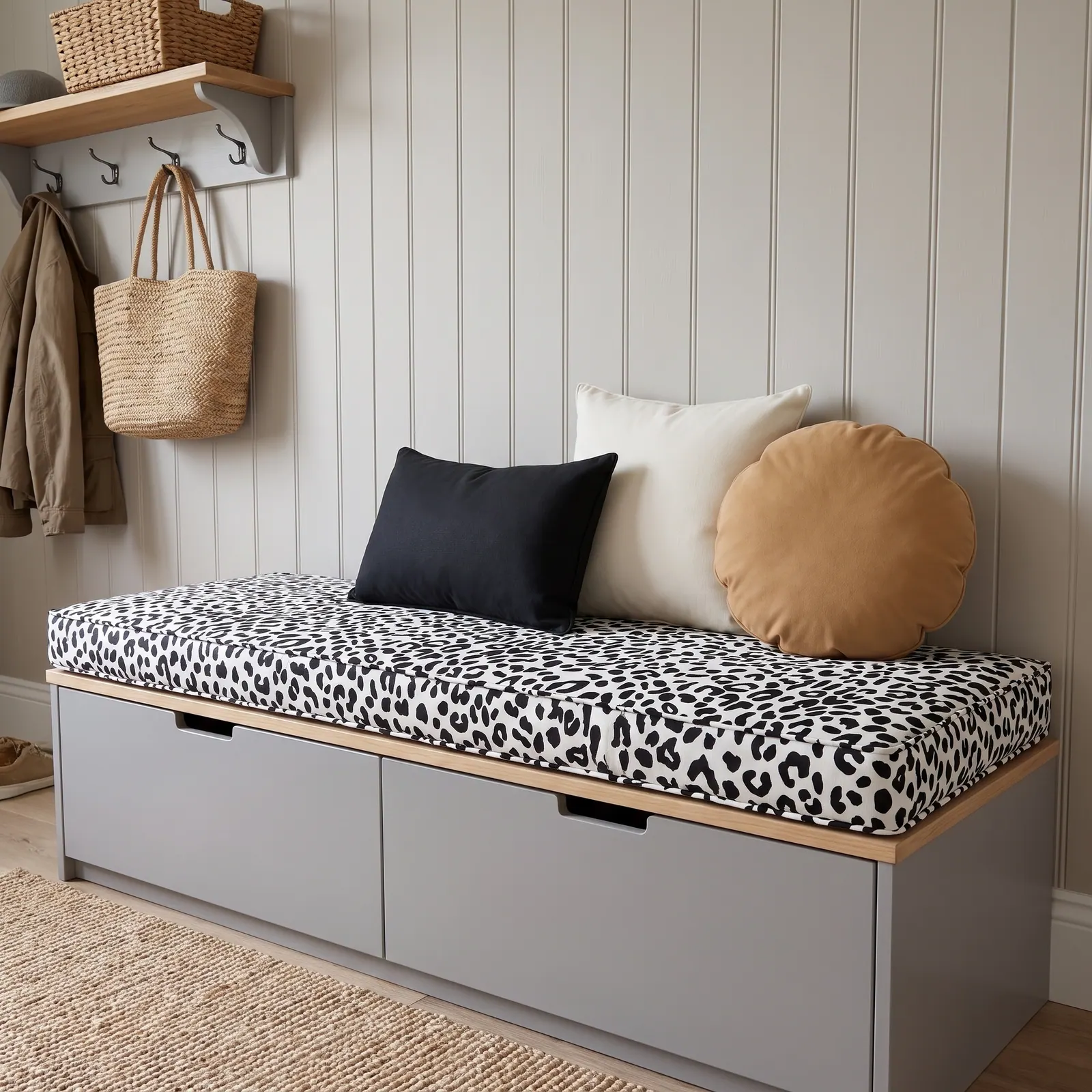
| Entry storage bench with a lift lid | Corduroy or poly-cotton | 2 to 3 in (5 to 7.5 cm) | Split the cushion at the lid line so each lid lifts on its own |
| Deck dining and lounge set | Water-repellent outdoor fabric | 3 to 4 in (7.5 to 10 cm) | One-person carry size; ties keep seat and back together; indoors all winter |
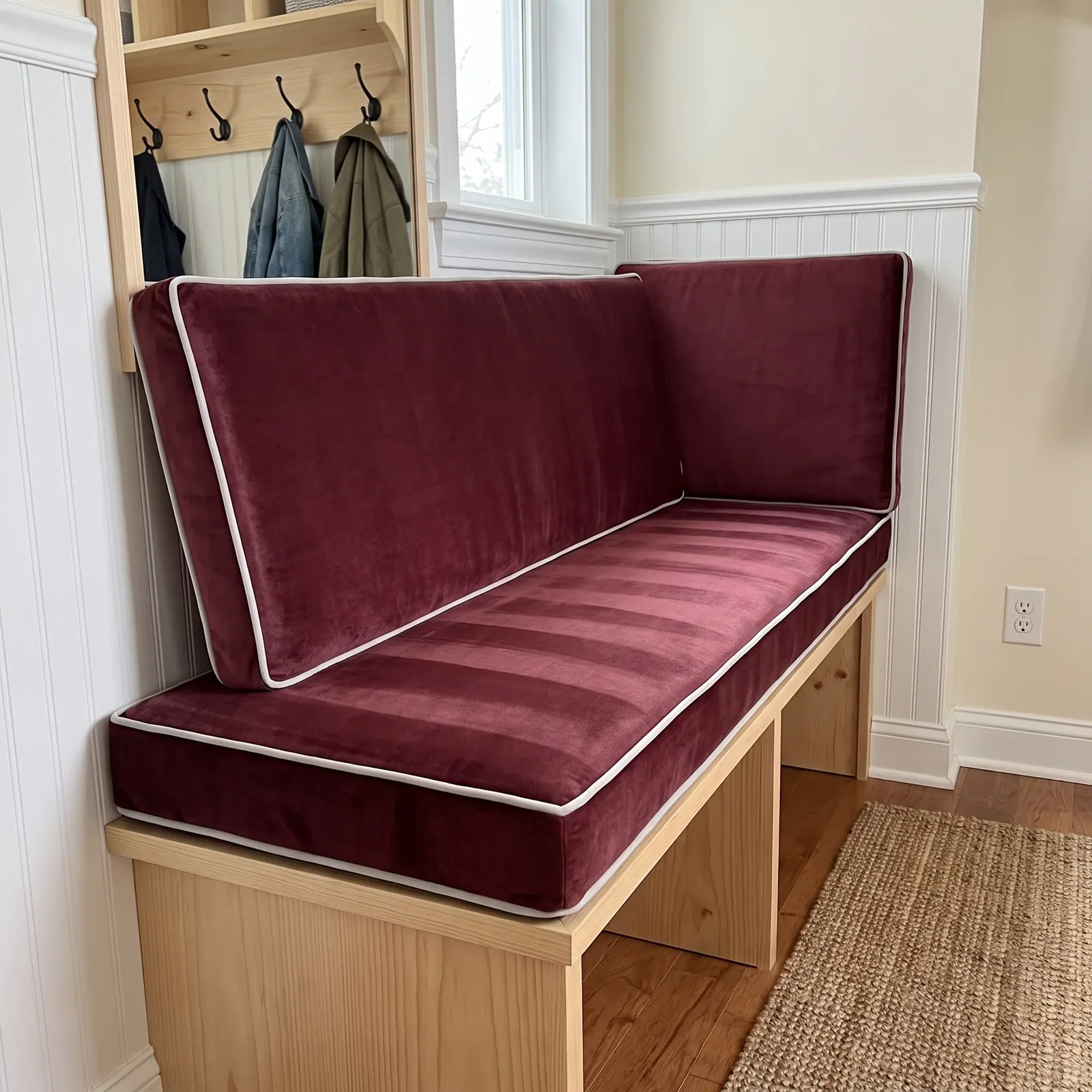
| Canmore or Banff window seat | Corduroy or velvet | 4 in (10 cm); 6 in (15 cm) for a daybed-deep seat | Bolsters at the ends; draw the blind at midday at 4,511 ft (1,375 m) |
| Acreage porch bench | Outdoor fabric | 3 in (7.5 cm) | Ties at the back corners for prairie wind |
A mustard entry bench, tufted on purpose
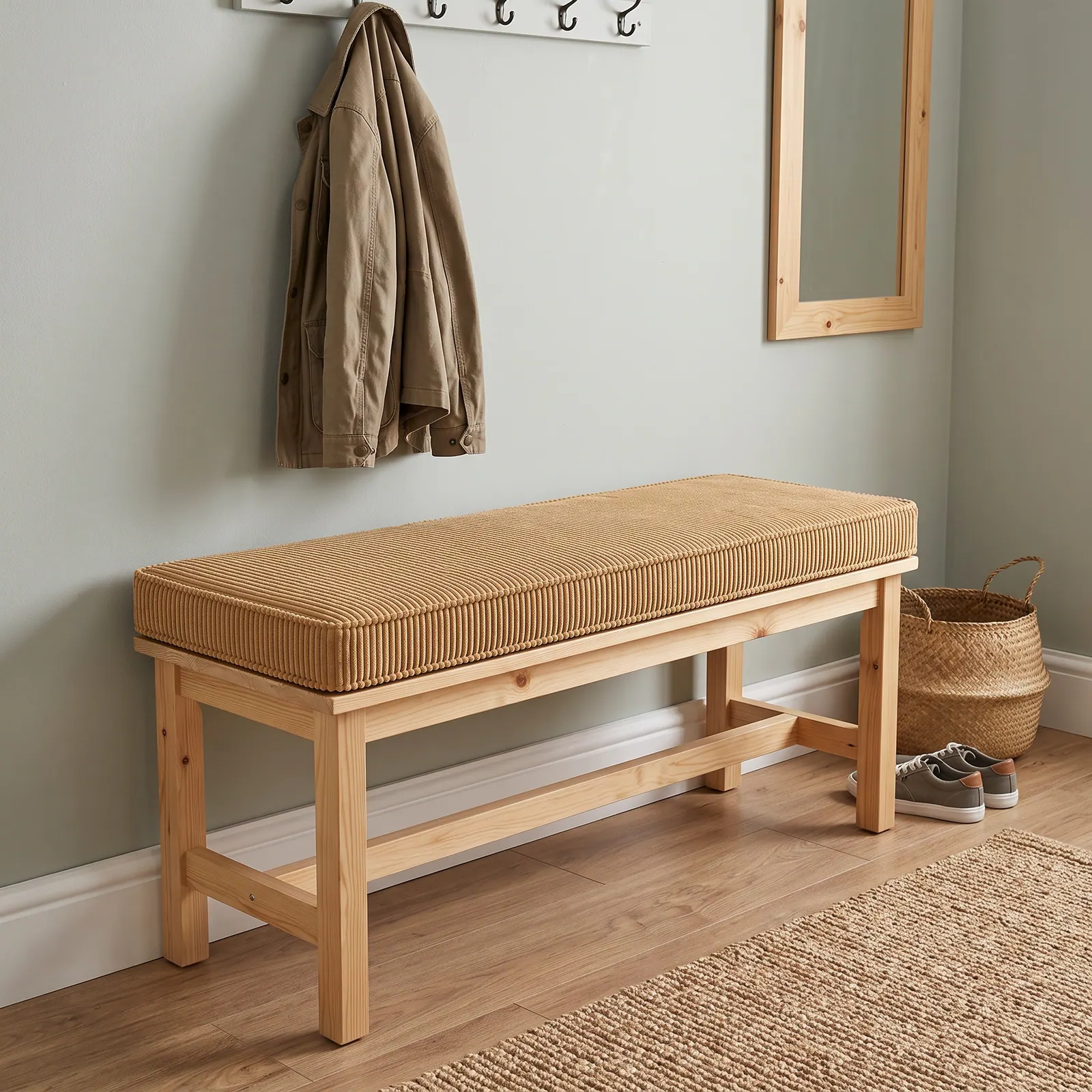
A buyer in Canada wrote to the workshop about an entry bench that gets sat on every day: about 64 x 17¾ in (162.4 x 45 cm), mustard yellow, tufted, no handles. She wanted something tough that wasn't velvet.
The workshop pointed her to its soft-touch poly-cotton, a best seller that stands up to wear and cleans easily. Then came the honest part. A tufted cover can't come off, because the buttons pass through cover and foam together. A zippered cover is possible, but only without tufting.
She chose the tufts and ordered from the 17¾ x 64 in (45 x 162 cm) option. That's a fair trade if you know you're making it: a tufted bench gets wiped down in place, never washed. By a back door where boots drip all winter, I'd take the zipper; in a dry front hall, tufts wear handsomely. Buy the cushion once, cry once. The tufted or plain guide weighs the two.
An Alberta year for cushions
- June 1 to September 15: keep a clear spot in the garage or a deck box by the door. Two short deck cushions carry faster than one long one.
- After a soaking, stand cushions on edge in a warm room, covers unzipped, and get them dry within 24 to 48 hours.
- Before the first snow, wash covers at 86 °F (30 °C) on a gentle cycle, air-dry them, and bring the foam in bone dry.
- No tarps through chinook season. Meltwater finds its way in and freezes overnight.
- Store cushions off the concrete in a breathable cover, never a sealed damp bag.
Photographs for homes like these
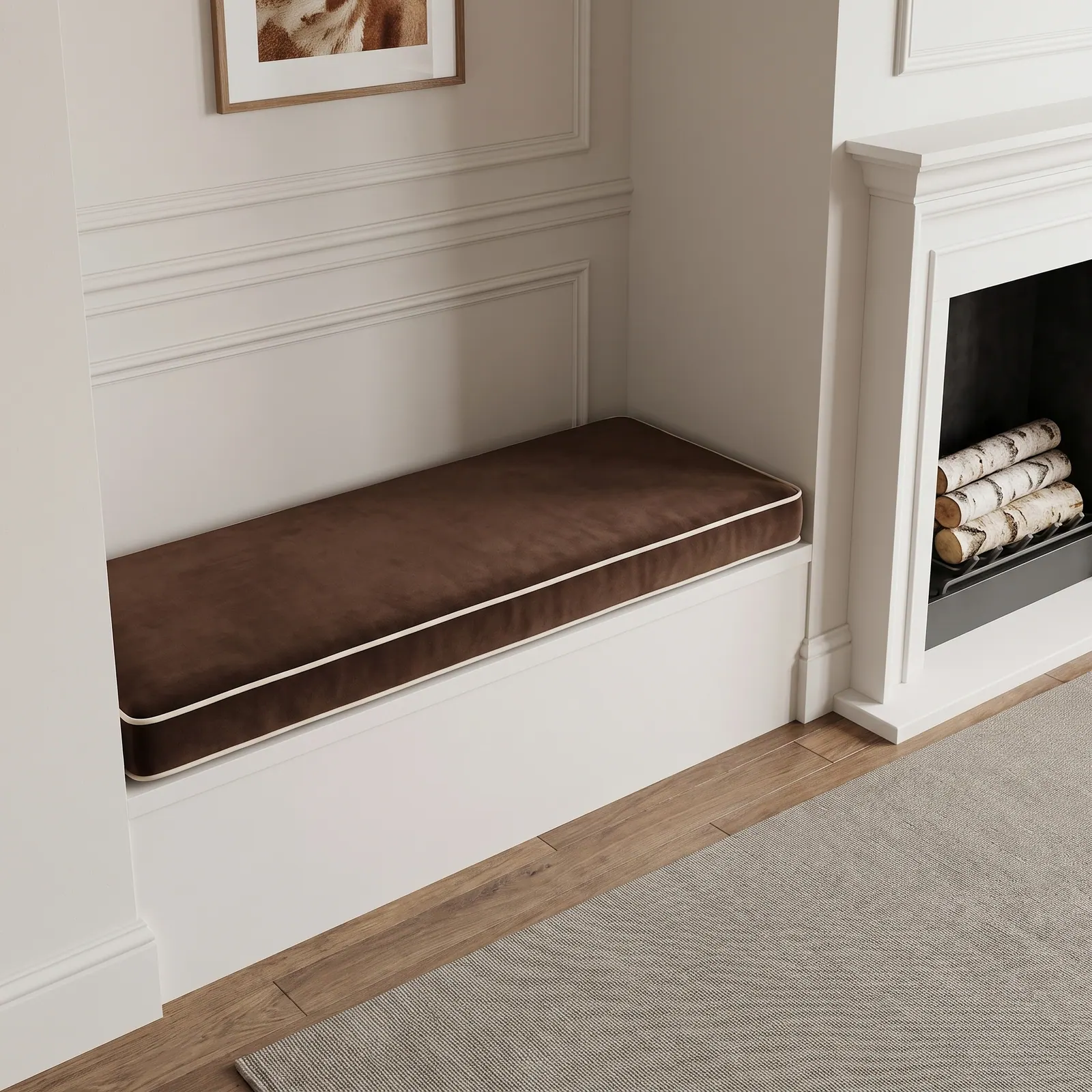
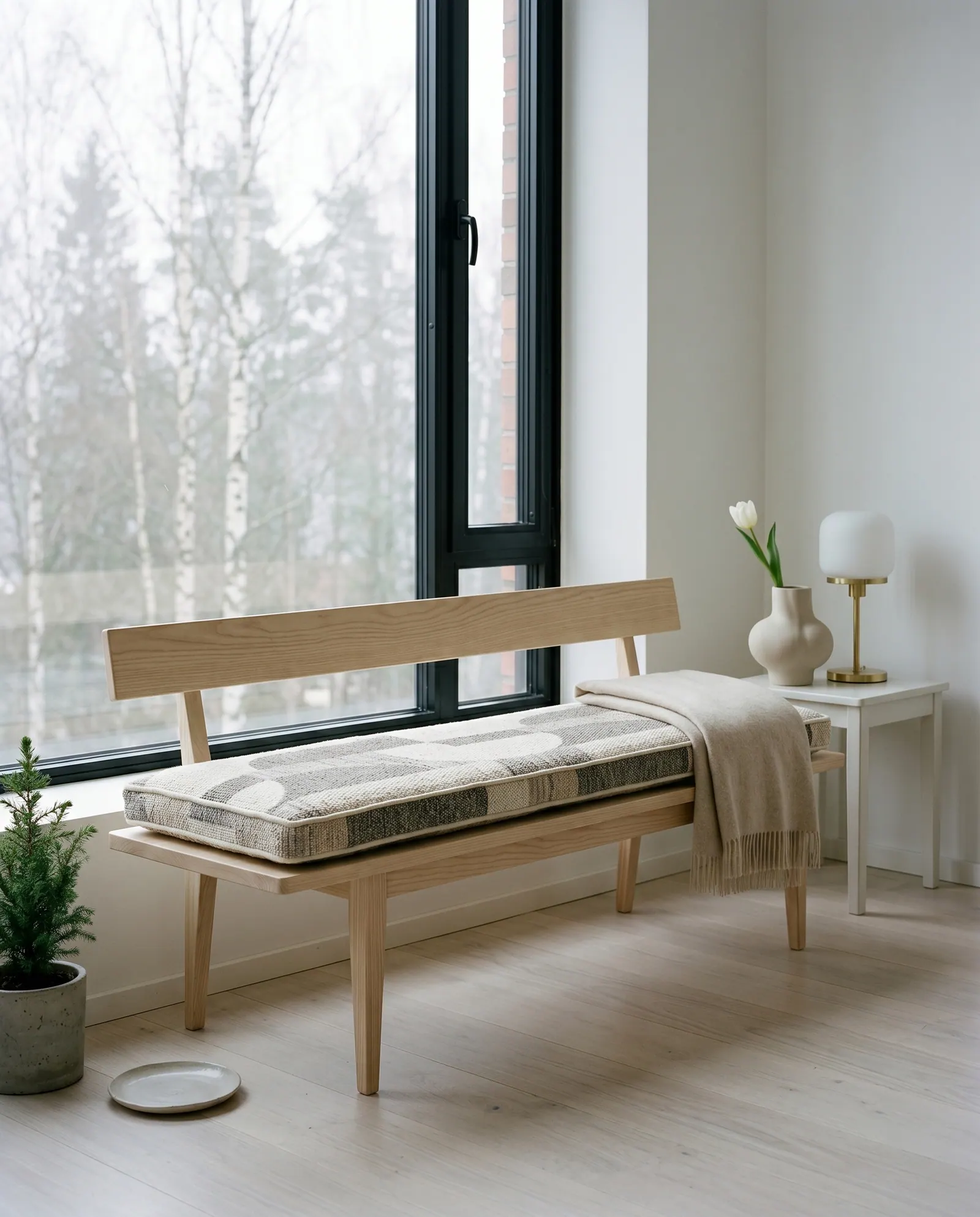
Open any photograph large; each one has its own link and a Save button.
 Save
 Save
 Save
 Save
 Save
Colors that stand up to a big sky
Alberta light is honest about color. In an infill with white oak floors and black window frames, I like a deep corduroy in anthracite or rust: it hides boot grit and doesn't glare. In a log cabin, go the other way. The walls are already honey-orange, so pick a cushion that cools them: forest green, navy, a warm gray.
Mustard belongs out here too. It's a canola field in July, and it sits right on a white mudroom bench under black hooks.
A Canmore room at four o'clock in December is not the room you saw at noon. Hold swatches against the bench at both hours. What does your back door look like on a January morning?
In Alberta, a deck cushion earns its keep by how fast it gets to the garage.
Harlan
Buyer questions: mudrooms, decks and cabin seats
- A common question
I need a hard-wearing, easy-clean fabric for a bench we use every day, and I don't want velvet. What would you pick?
The workshop's answerThe workshop recommends its soft-touch fabric, a poly-cotton and one of its best sellers, because it's durable and easy to clean. For a kids' playroom it also suggests its thick teddy fabric.
- A common question
Which fabric holds up best to heavy use? And between linen and velvet, which is tougher?
The workshop's answerThe soft fabric is the one recommended for heavy use: very durable, soft to the touch and easy to clean. Between linen and velvet, velvet is the more durable choice.
- A common question
The tufted bench cushion has no zipper. How do I keep it clean?
The workshop's answerWipe it in place with a damp cloth; the soft fabric in particular wipes clean easily. If you want a cover you can take off and wash, order the non-tufted, foam-filled version, which has a zipper.
- A common question
Do you make cushions for outside, on the deck?
The workshop's answerYes, from a separate outdoor fabric chart. It's water-repellent, which isn't the same as waterproof. For a full patio set you can order one cushion first and check the fit before ordering the rest.
- A common question
Is 4 in (10 cm) the thickest you make? Could a cabin bench cushion be 6 or 8 in (15 or 20 cm)?
The workshop's answerThickness is fully custom. The workshop has made 5 in (13 cm), 6 in (15 cm) and about 8 in (20 cm) cushions, and it can go up to about 15.5 in (40 cm).

Have it made
Have it made for your home — ask Harlan’s workshop
The best cushions I have known began with somebody asking one more question. Ask yours here. — Harlan
Leave your details and the workshop will call you to confirm measurements, fabric, foam and piping. No prices, dates or payment on this page: it is a request, not an order.
Alberta cushion questions, answered plain
Can outdoor cushions stay out through an Alberta winter?
No. Chinooks thaw snow on the cushion by day and it refreezes when the cold returns, so water gets trapped in the foam. Bring cushions in dry before the first snow and store them off concrete in a breathable cover.
When is hail season around Calgary?
Alberta's hail-suppression flights run from June 1 to September 15, the damaging-hail months. Calgary sits in Hailstorm Alley, and the August 5, 2024 storm led to more than 130,000 insurance claims. Keep a clear spot for deck cushions all summer.
Why do cushions fade faster in Canmore and Banff?
Altitude and snow. Canmore sits at 4,511 to 4,860 ft (1,375 to 1,480 m), UV rises about 10% per 3,280 ft (1,000 m), and fresh snow can reflect over 80% of UV. Draw a blind between 11 a.m. and 3 p.m., when UV is strongest.
How thick should a mudroom bench cushion be?
Usually 3 in (7.5 cm). Add it to the bench: a 15 in (38 cm) bench plus a 3 in cushion gives a seat of about 18 in (46 cm). If boots drip on it all winter, choose a zippered cover over tufting so it can be washed.
Sit well. — Harlan
The atelier
Keep going
Across the Map
Nearby places
Close by on the map