Across the Map · Canada
Custom cushions for Nova Scotia houses, boats and coastal porches
Halifax sees fog on about 116 days a year. On this coast a cushion meets wet air long before it meets strong sun, so I build for the damp first and the bright afternoon second.
- Sun & UVModerate
- HumidityHumid
- WinterCold
- CoastSalt air nearby
- Typical seatsSailboat cockpit bench, v-berth cushions, harbor porch bench
 Save
The quick answer
Custom cushions in Nova Scotia are built for wet air, salt and storms. Halifax averages about 55 in (1,396 mm) of precipitation and fog on about 116 days a year, and hurricane season runs June 1 to November 30. Choose water-repellent outdoor fabric, rinse salt from zippers, keep boat cushions plain and liftable, and carry everything in when a storm is forecast.
116 fog days, 55 in of weather, and salt in all of it
Halifax Stanfield records fog on about 116 days a year, most often in July, by Environment and Climate Change Canada's 1981 to 2010 normals. Precipitation runs about 55 in (1,396 mm), November wettest at about 6 in (154 mm), plus 87 in (221 cm) of snow. September mornings average about 92% relative humidity. Down the South Shore, thick fog and damp can come in any season, especially spring.
Salt rides in that air. Spray is heaviest near breaking waves and falls off within the first 300 to 3,000 ft (90 to 900 m) of shore, yet faster corrosion has been measured 8 to 16 km (5 to 10 miles) inland. Nothing is salt-proof. Rinse covers and zippers with fresh water.
Sun is the smaller enemy here, not a harmless one. Sea foam reflects about 25% of UV and sand about 15%, so a cockpit or dune-side deck gets light from below as well as above. Saturated brights show it first. Pick a shade you can live with a little lighter.
Lunenburg, the Hydrostone, and the boat on the mooring
Old Town Lunenburg, a UNESCO World Heritage Site since 1995, keeps its 1800s grid of narrow streets and its wooden vernacular houses; its shipyard built the Bluenose in 1921. In Halifax, the Hydrostone's houses stand as row houses in groups of four and six. Both mean window seats under old sashes and porch benches that face the wind.
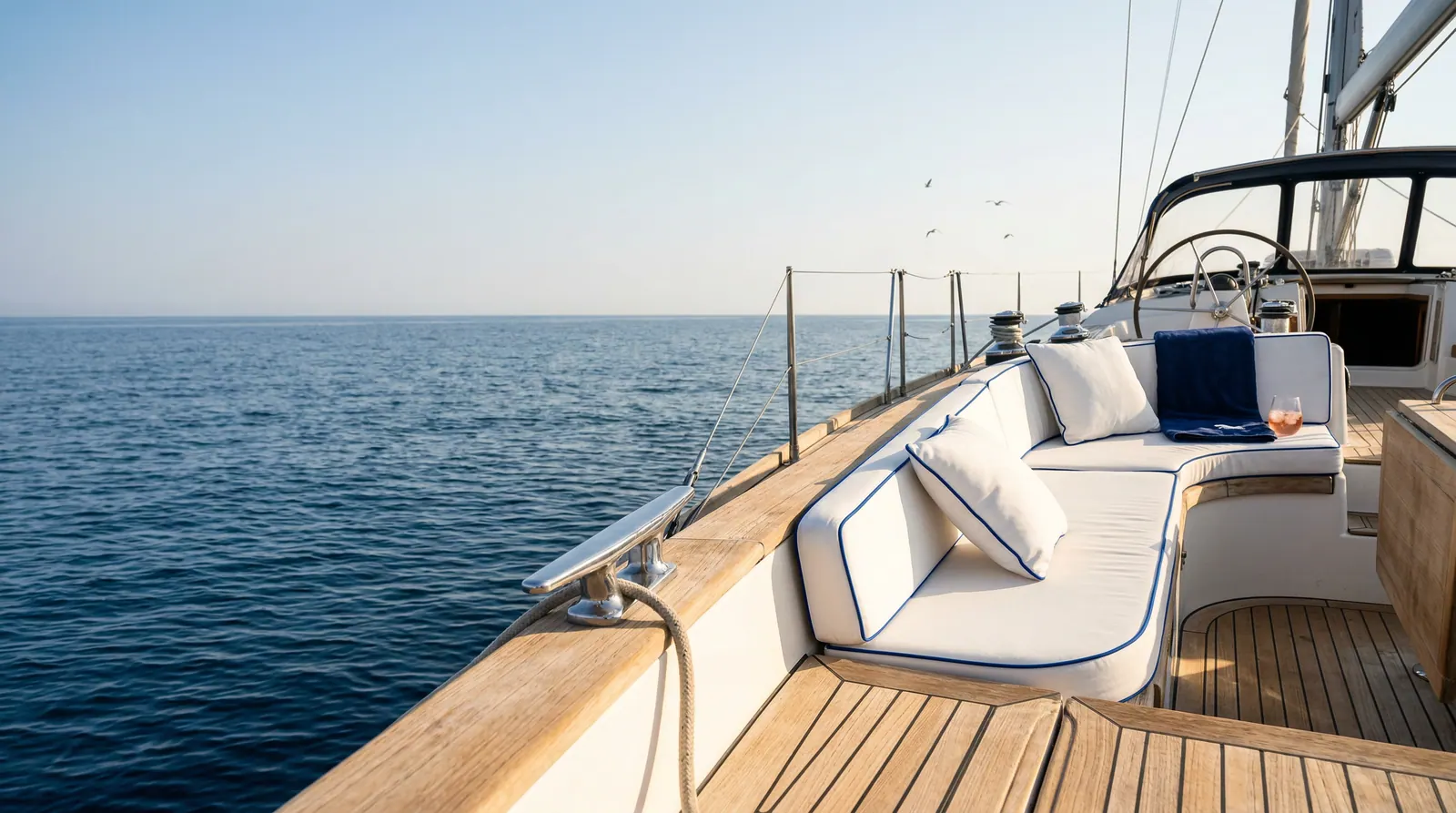
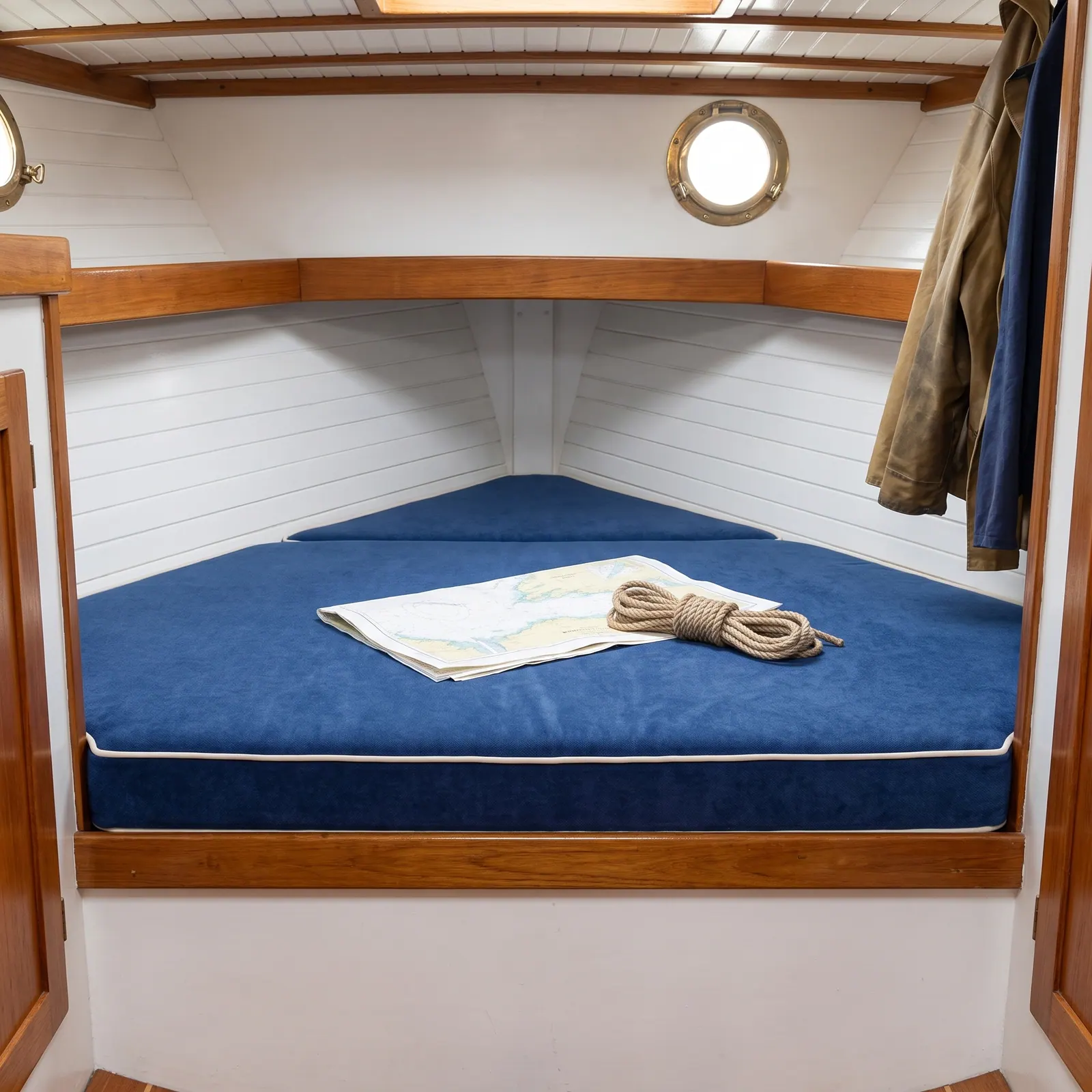
Boats are where custom cushions in Nova Scotia work hardest. Cockpit benches follow the coaming and V-berths narrow to the bow, so trace every base; the V-berth template guide shows how. Keep boat cushions plain, never tufted, because tufting lets water through.
Straight talk on build: the workshop's standard seat foam, about 2.0 lb/ft³ (32 kg/m³), in water-repellent outdoor fabric suits a cabin, a covered cockpit, or a cushion carried below when rain comes. It is not quick-draining. For an open cockpit that takes every squall, read dry-fast foam first. More in boat and RV cushions. Neighbors New Brunswick and Prince Edward Island share this water; the rest is on custom cushions in Canada.
Wedge backs and ties for a windy bench
A buyer in the US, in a windy spot, asked for two seat cushions 33 x 30 x 4 in (84 x 76 x 10 cm) and two back cushions 32 x 13 in (81 x 33 cm) cut as wedges, thicker at the bottom, with ties or straps to hold them down. The workshop quoted the full set.
That is a Nova Scotia porch brief if I ever read one. A wedge back sits heavy where the wind pries, and ties at the corners keep a gust from turning the seat into a sail.
- Measured
- Seats 2 x 33 x 30 x 4 in (84 x 76 x 10 cm); wedge backs 2 x 32 x 13 in (81 x 33 cm)
- What it taught
- In wind, tie seats and backs down, and shape back cushions as wedges so they sit heavy at the bottom.
Storm season: the carry-in plan
The Atlantic hurricane season runs June 1 to November 30. Two storms Nova Scotians remember came ashore in late September: Juan near Halifax on September 29, 2003, a Category 2 with winds of 160 km/h (100 mph), and Fiona on the Canso Peninsula on September 24, 2022, when about 80% of the province's power customers lost service.
So size every outdoor cushion for one person and one doorway. If you can't carry it through the back door alone, split it in two. Keep a dry shelf clear all season. Emergency checklists say to bring in outside furniture before a hurricane; bring the cushions first.
Where does your cushion set ride out a storm, friend?
Cockpit, porch, window: fabric, foam and piping
| Seat | Fabric | Foam and build | Piping |
|---|---|---|---|
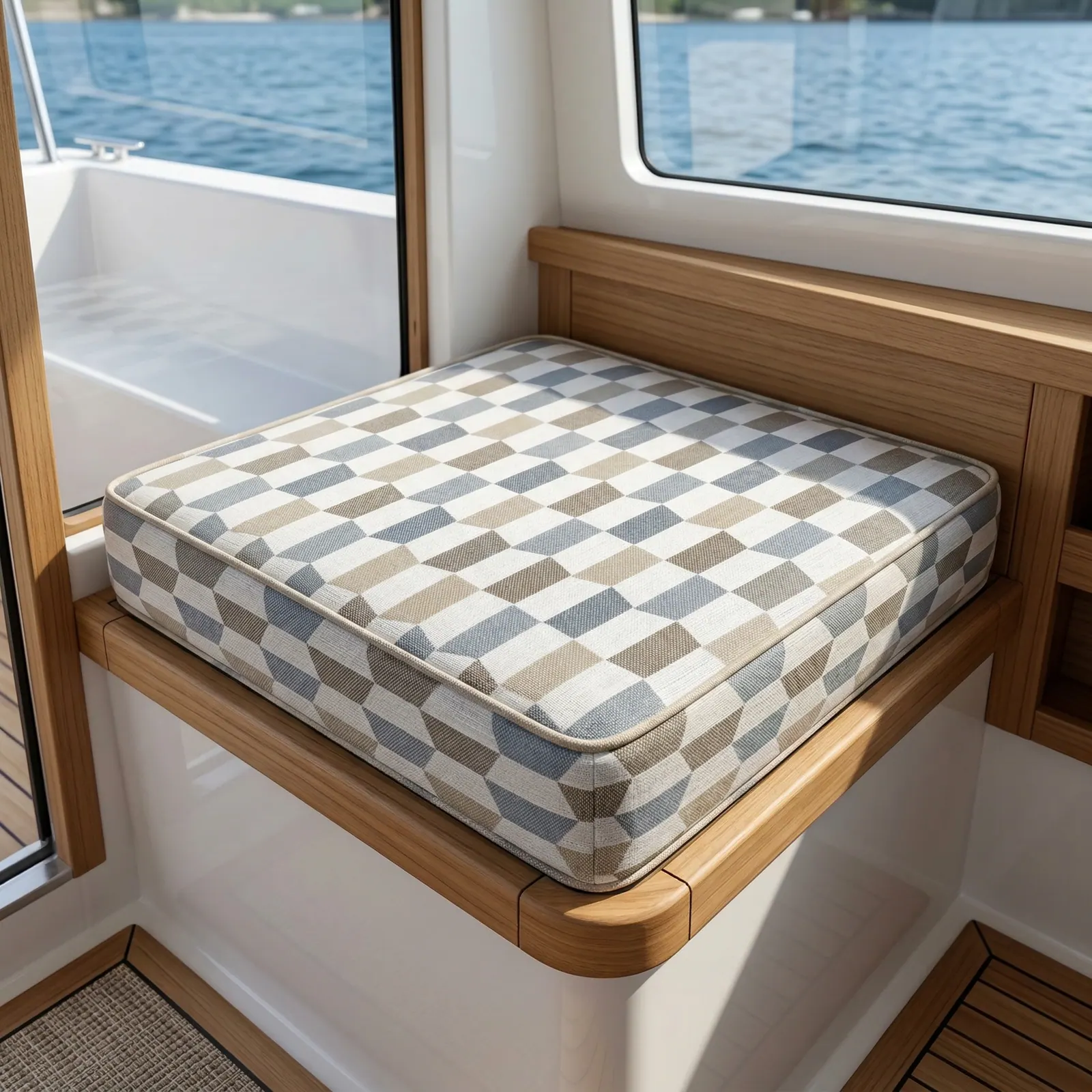
| Covered cockpit bench | Outdoor fabric, water-repellent and UV-resistant | Standard foam, 3 to 4 in (7.5 to 10 cm); traced template; plain, not tufted | Contrast navy draws the curve |
| V-berth below deck | Outdoor fabric or linen-look | Split on the centerline so each half lifts to the lockers | Ivory on cobalt, or self |
| Harbor porch bench | Outdoor fabric in a mid-tone | 4 in (10 cm); ties at the corners; wedge backs | Self piping |
| Row-house window seat | Velvet or a soft performance weave | 2 to 3 in (5 to 7.5 cm) beside cold glass | Optional contrast |
Standard seat foam is not quick-dry. Covers zip off and wash at 86°F (30°C) on a gentle cycle; air dry them.
The salt-and-storm routine
- After every sail: rinse covers and zippers with fresh water, then stand cushions on edge to dry.
- Foggy weeks: bring porch cushions under cover at night.
- June 1 to November 30: keep a dry shelf free and know which door each cushion goes through.
- Storm in the forecast: cushions come in first, before the wind rises.
- Before the first frost, about October 18 at Halifax Stanfield: wash covers at 86°F (30°C), dry the foam to the core, store indoors off concrete.
- Haul-out day: boat cushions come home with the boat; roll or fold long pieces for the ride.
Photographs for homes like these
Open any photograph large; each one has its own link and a Save button.
 Save
 Save
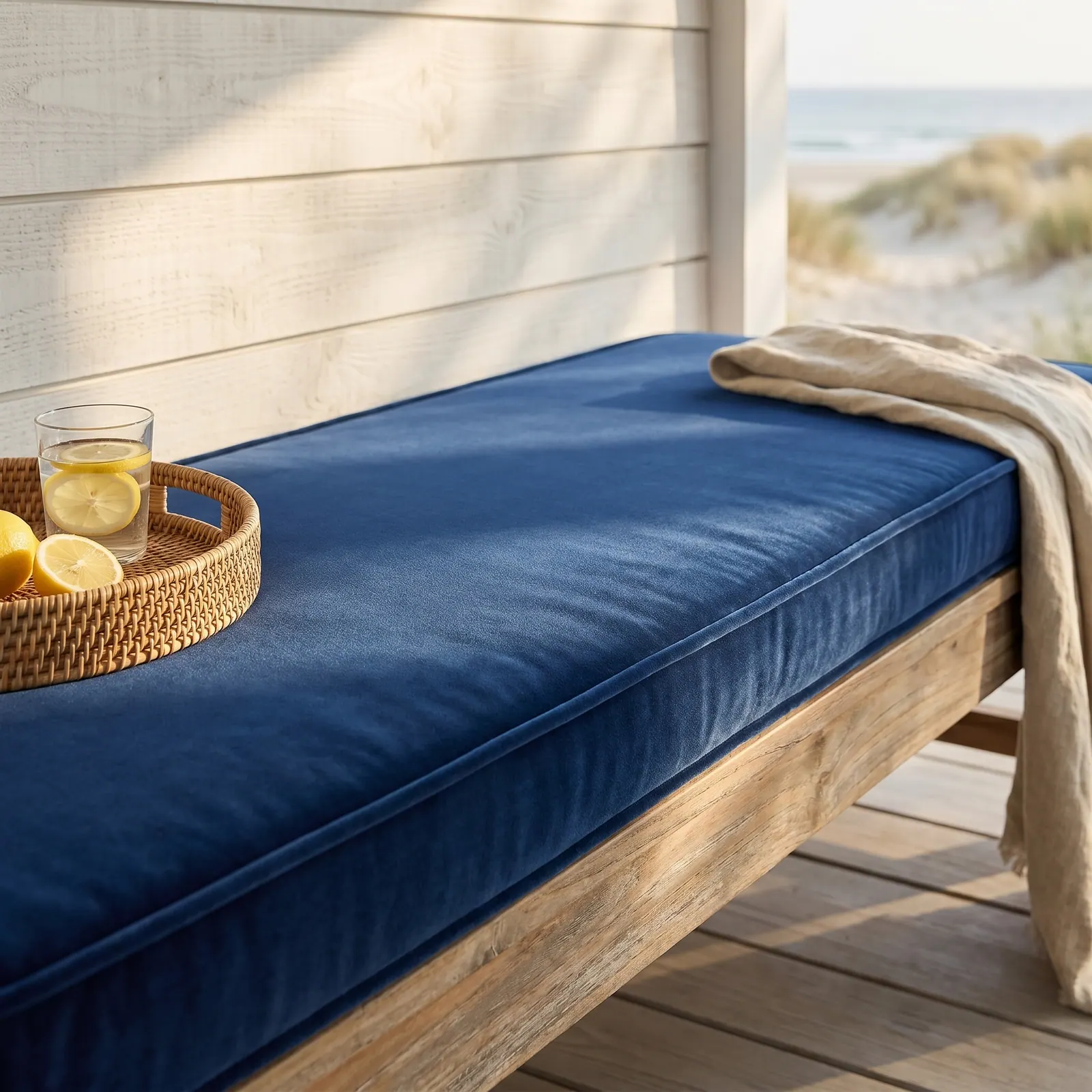 Save
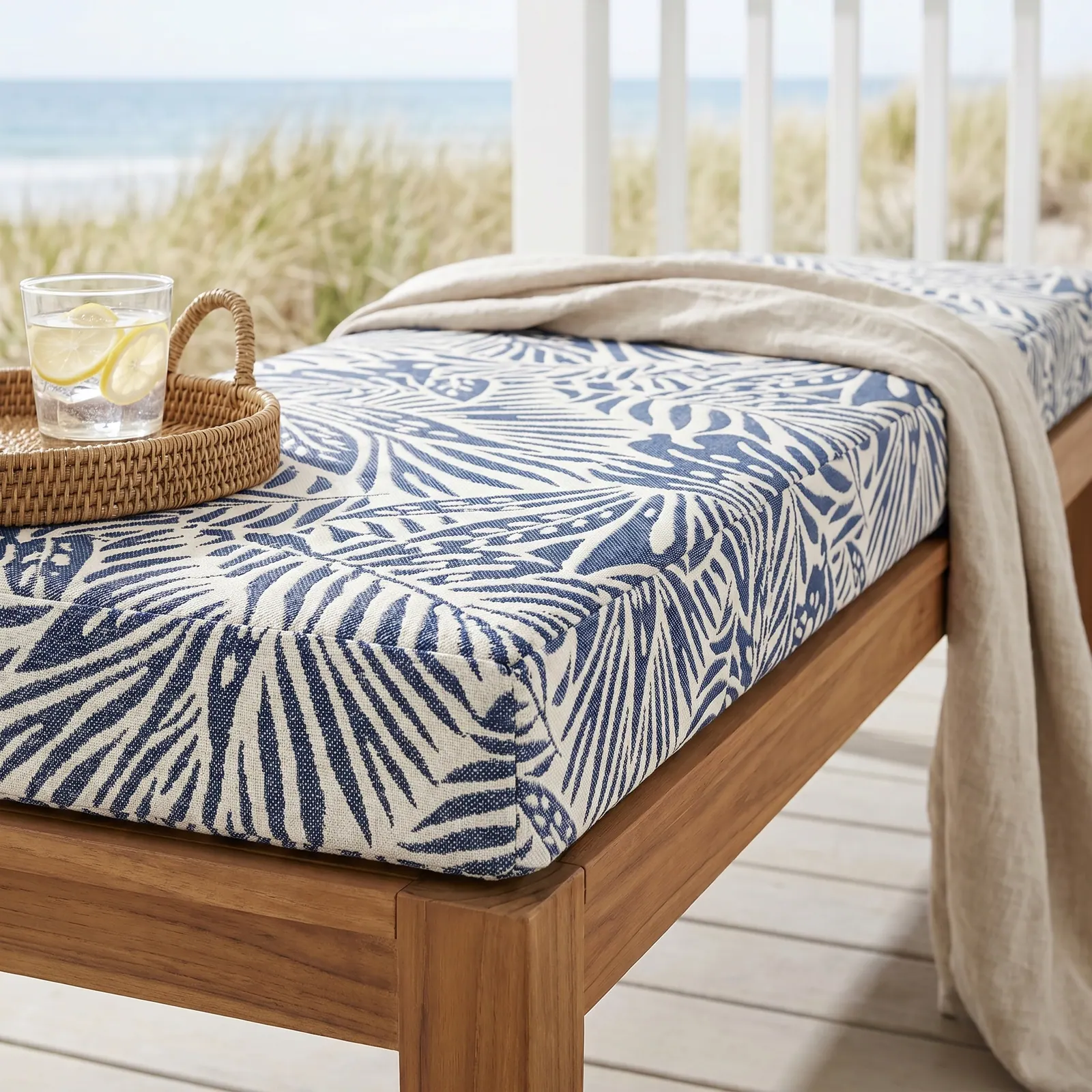 Save
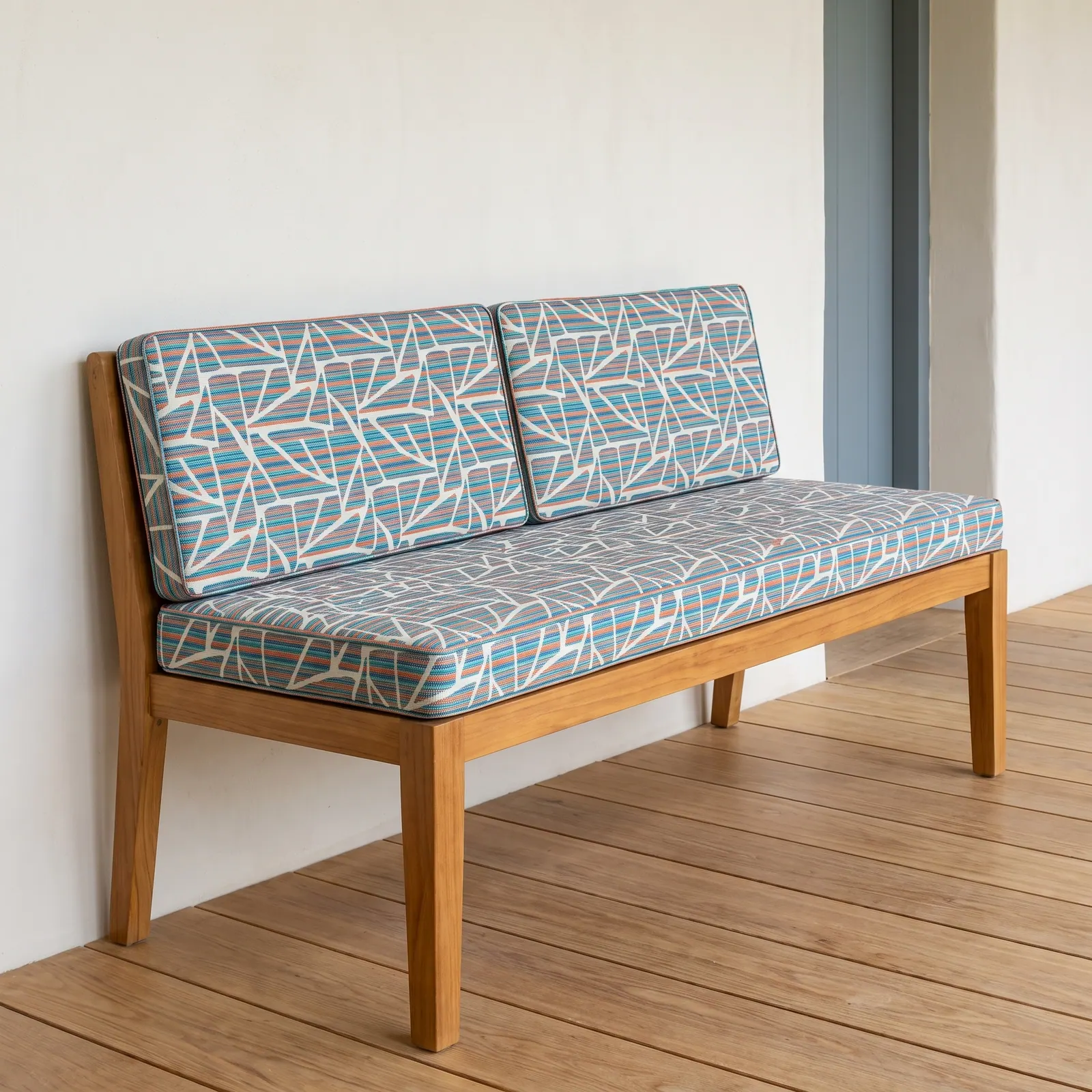 Save
Water-repellent is a promise; waterproof is a contract. On a Nova Scotia boat, plan for the day the promise runs out.
Callum
Buyer questions: covers, zippers and templates
- A common question
Can you make covers for the bench cushions in my small camper trailer?
The workshop's answerYes. Send photos plus a template or drawing with the dimensions of each cushion, six in that case. The workshop reviews the drawing and then quotes.
- A common question
Can you make replacement outdoor cushion covers and matching back pillows?
The workshop's answerYes. One order was two navy outdoor seat covers of 32 x 32 x 6 in (81 x 81 x 15 cm) without inserts, plus two filled back pillows of 12 x 32 x 6 in (30.5 x 81 x 15 cm). Water-resistant outdoor fabrics are available.
- A common question
Can I choose where the zipper goes?
The workshop's answerYes. Name the edge: along the long back edge, down a long side so the cushion can be flipped, at the back of a trapezoid seat, or at the narrow end and around the corner so a tapered cover slides onto its wider end.
- A common question
Can you remake a cover for a tapered cushion that's narrower at the back?
The workshop's answerYes. Send a drawing or photo with the sizes. One cover-only order was 17 in (43 cm) at the back, 19 in (48 cm) at the front, 19 in (48 cm) deep and 3.5 in (9 cm) thick; you add the fabric and piping codes.
- A common question
Can you add ties to a small bench cushion?
The workshop's answerYes. A 14 x 18 in (35.5 x 46 cm) cushion for an oddly shaped bench was quoted with ties on the wider side.

Have it made
Have it made for your home — ask Callum’s workshop
Tell them where it lives. Porch, deck or boat: the weather picks the fabric and the foam before anyone else does. — Callum
Leave your details and the workshop will call you to confirm measurements, fabric, foam and piping. No prices, dates or payment on this page: it is a request, not an order.
Nova Scotia cushion questions
Can boat cushions stay in an open cockpit all season?
Not with standard seat foam. Water gets in at needle holes and zippers, and standard foam takes 24 to 48 hours to dry. Keep cushions under a hard top or dodger, or carry them below; for a fully open cockpit, choose dry-fast foam.
When is hurricane season in Nova Scotia?
The Atlantic season runs June 1 to November 30. Juan came ashore near Halifax on September 29, 2003, and Fiona on the Canso Peninsula on September 24, 2022, so late September deserves a cushion carry-in plan.
Which cushion colors hold up best near the sea?
Shades you can live with a little lighter: navy, slate, sand and mid-tone stripes. Sea foam reflects about 25% of UV and sand about 15%, so decks get sun from below too. Flip cushions and store them out of midday sun.
How do I get salt out of outdoor cushion covers?
Rinse covers and zippers with fresh water after a sail or a stormy week, then wash the zip-off covers at 86°F (30°C) on a gentle cycle and air dry them. Rinse often rather than scrubbing hard.
Fair winds — Callum
Concept Sketches
Sketches for homes like these
Real projects, drawn up as ideas you can borrow.
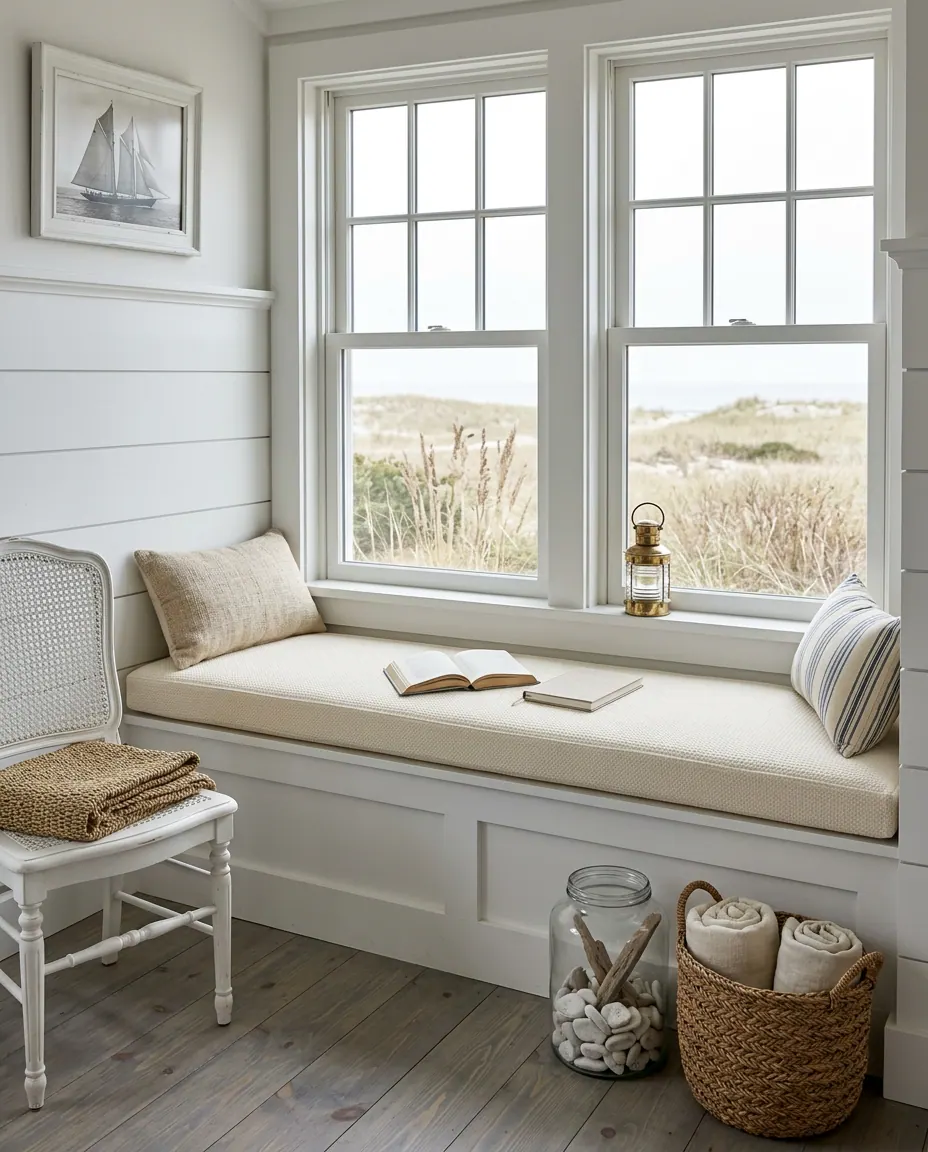
The atelier
Keep going
Across the Map
Nearby places
Close by on the map