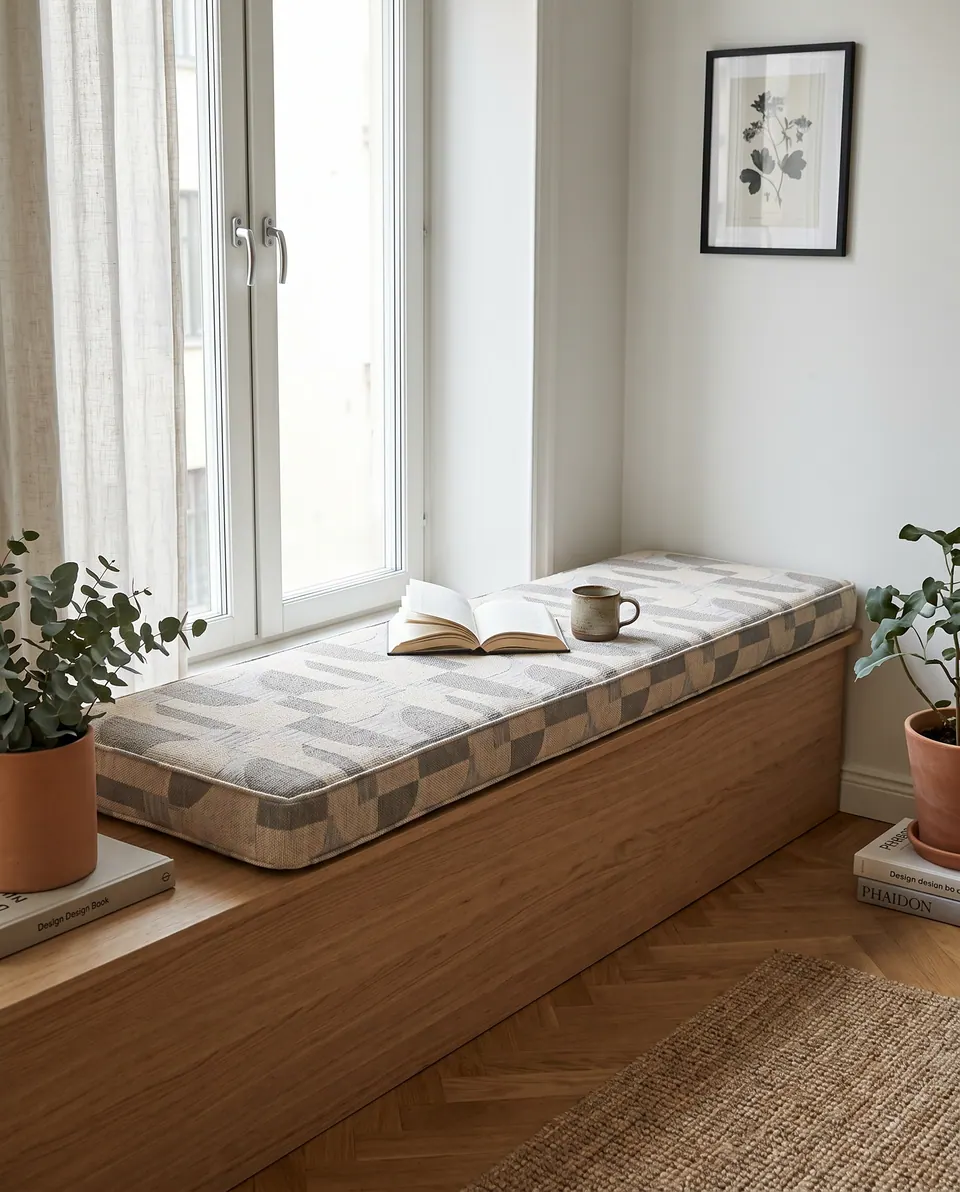
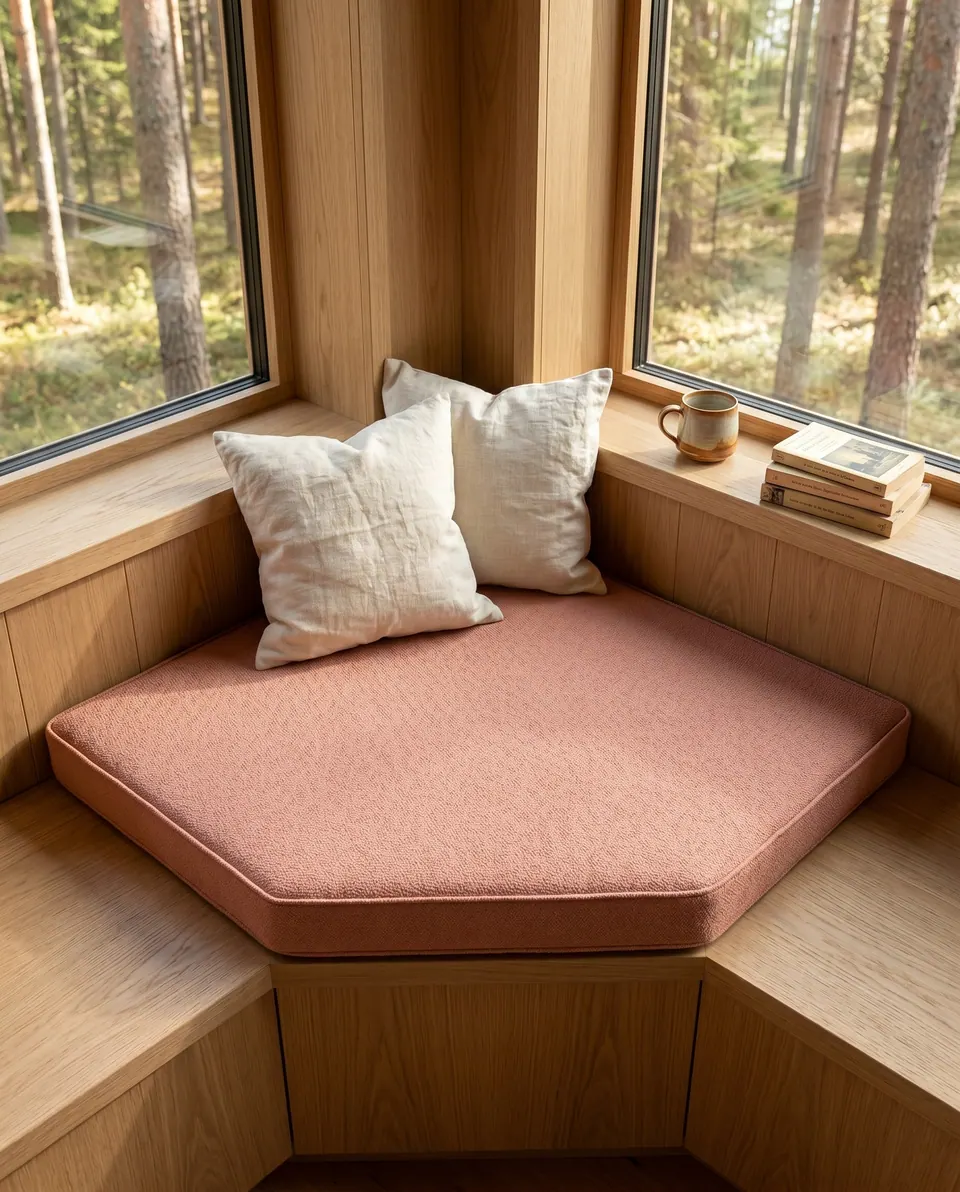
A Reading by RosaWindow Seat Cushions
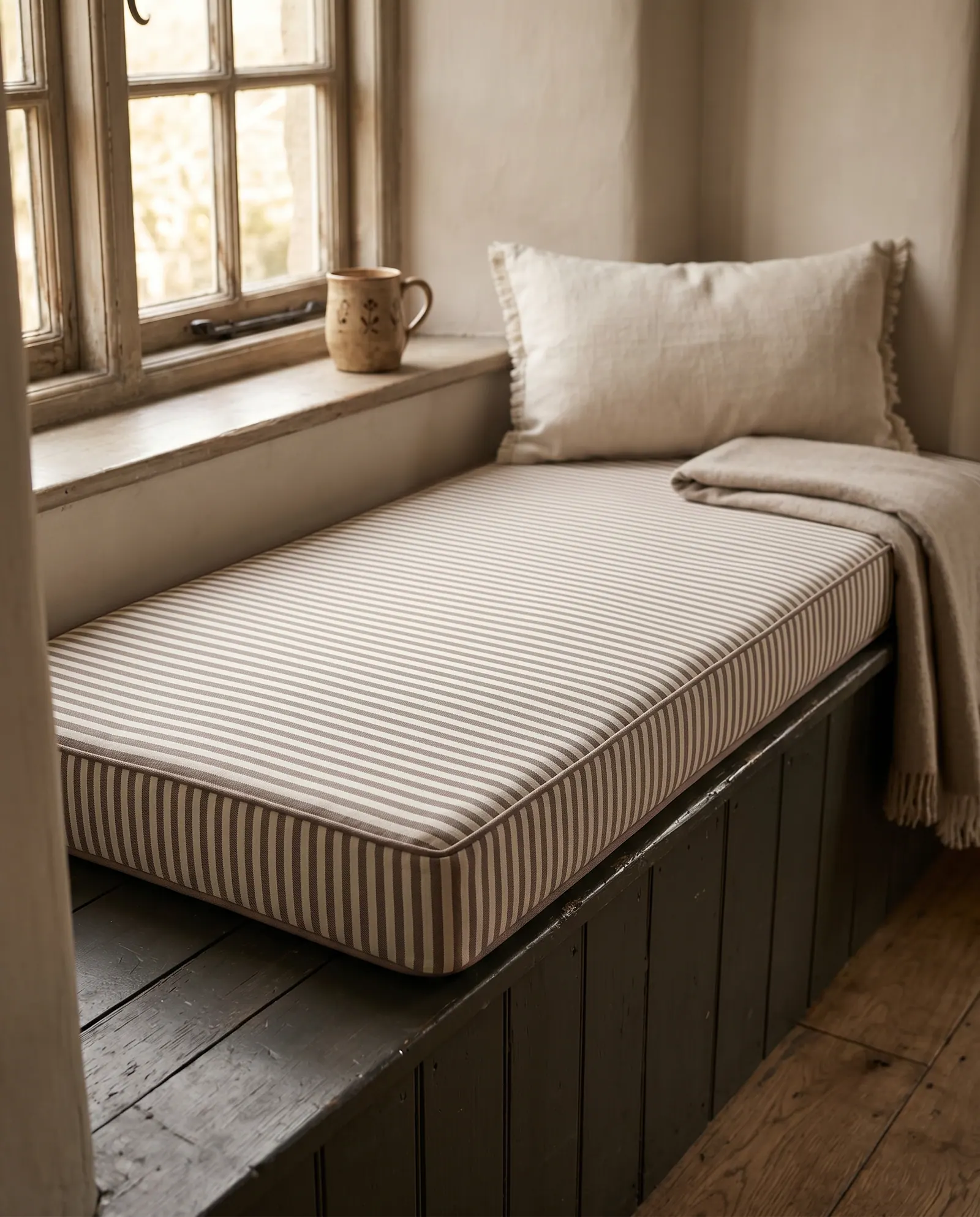
Dark taupe ticking on a cottage window seat, and the small hand-finished details
Rosa lays the pictures out like cards on a kitchen table and points to the piping, the stripe direction and the fringe that make an old nook feel cared for.
The quick answer
The details that make a window seat cushion look hand-finished are a stripe run the length of the seat, piping in the darker color of a two-tone fabric, a box edge that sits level with the sill, and a zipper on the side you choose. Keep the cushion at least 2 in (5 cm) thick so it truly supports sitting.

 Save
 Save
 Save
 Save
 Save
 Save
 Save
Pinned by Rosa: five hand-finished touches on the window seat
Five pins, from the solid taupe piping up to the handmade mug on the sill.
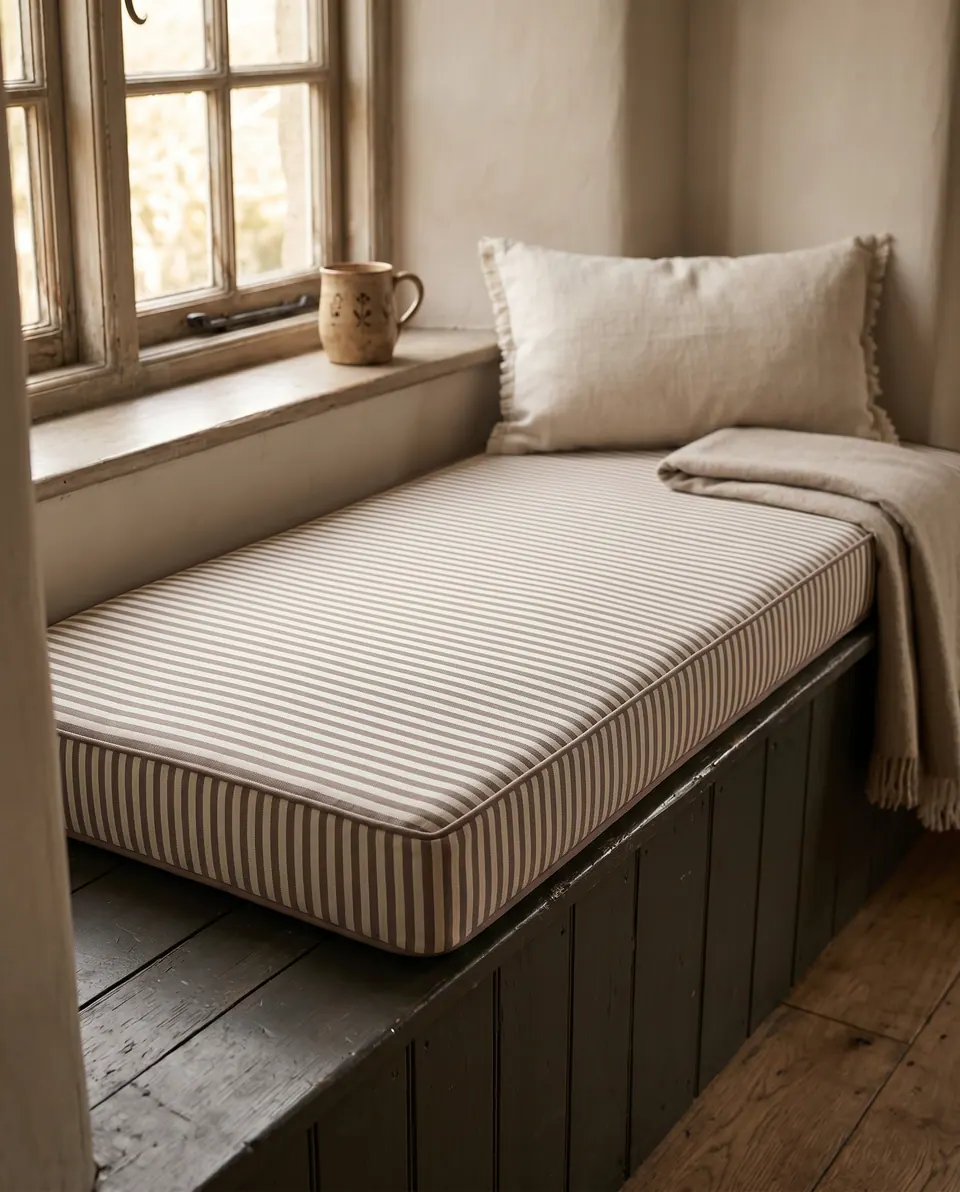
- Solid taupe piping
Piping in a plain dark taupe taken from the stripe gives a firmer outline than a striped cord would.
- Lengthwise ticking stripe
The stripes run the length of the top, which makes a short window ledge look longer.
- Fringed linen pillow
A plain oatmeal linen with a raw fringe softens the tailored box edge without adding pattern.
- Wool throw at the end
Draped over the far end, the throw hides where the cushion meets the wall and invites you to sit.
- Stoneware mug on sill
A handmade mug in the same clay tones keeps the sill part of the seat.
- Solid taupe pipingPiping in a plain dark taupe taken from the stripe gives a firmer outline than a striped cord would.
- Lengthwise ticking stripeThe stripes run the length of the top, which makes a short window ledge look longer.
- Fringed linen pillowA plain oatmeal linen with a raw fringe softens the tailored box edge without adding pattern.
- Wool throw at the endDraped over the far end, the throw hides where the cushion meets the wall and invites you to sit.
- Stoneware mug on sillA handmade mug in the same clay tones keeps the sill part of the seat.
What the hands did before anyone sat down
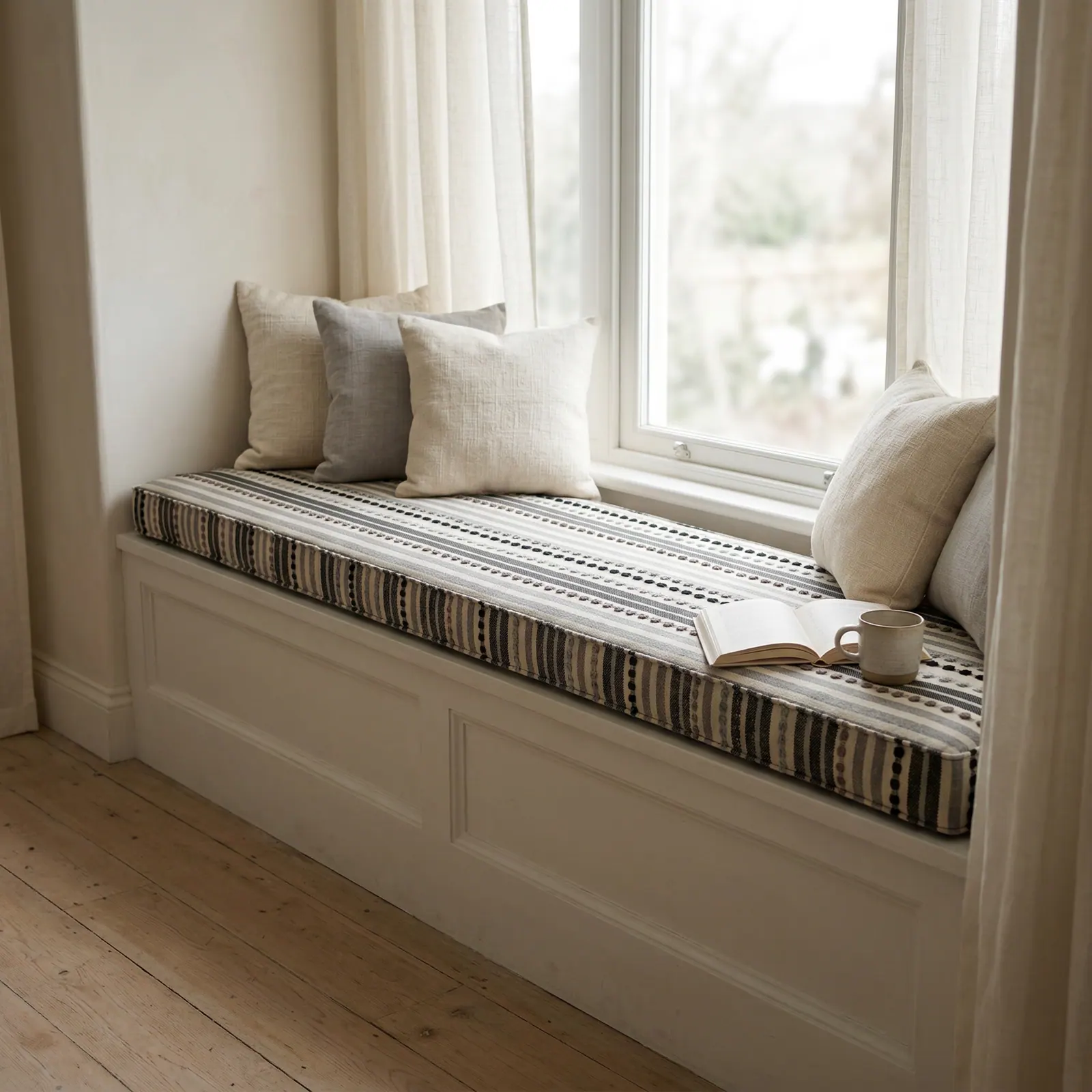
For twenty years I ran my thumb along every piped edge before a cushion left my shop. If the cord wandered, it went back on the table. This window seat cushion would have passed my thumb.
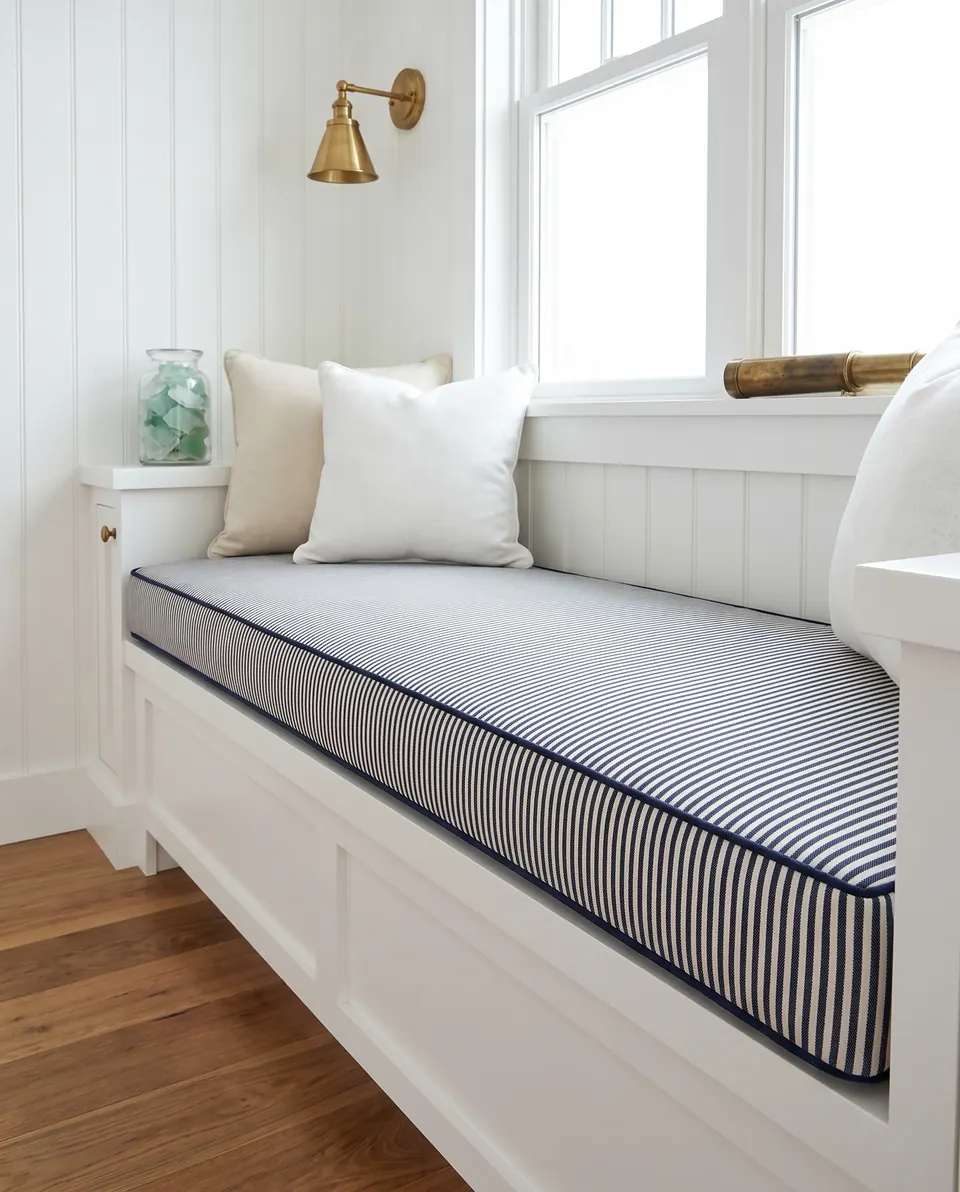
Start with the piping. It is a solid dark taupe taken from the darker of the two stripe colors, and it gives the box edge a firm outline against the dark-stained plank base. Piped in the cream, the outline would have gone soft and melted into the limewash; a striped cord would have looked fussy. Choosing the darker color of a two-tone stripe is an old upholsterer's habit, and it still earns its keep.
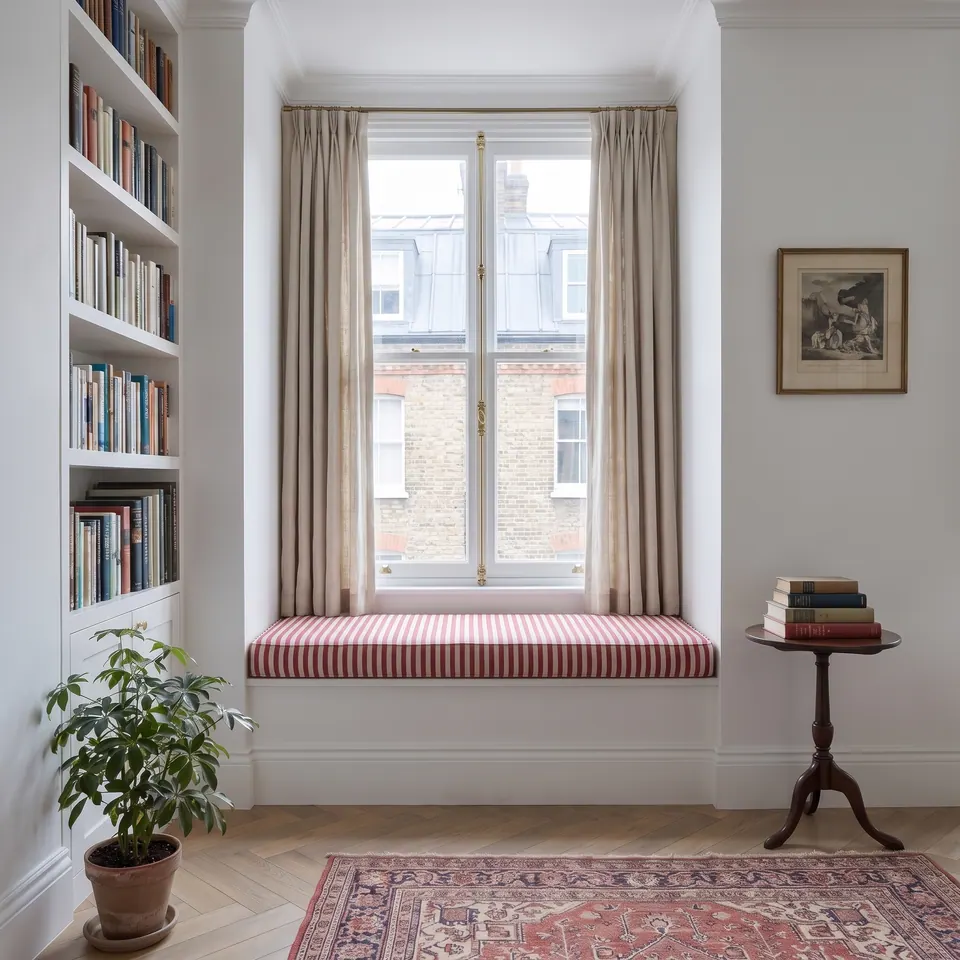
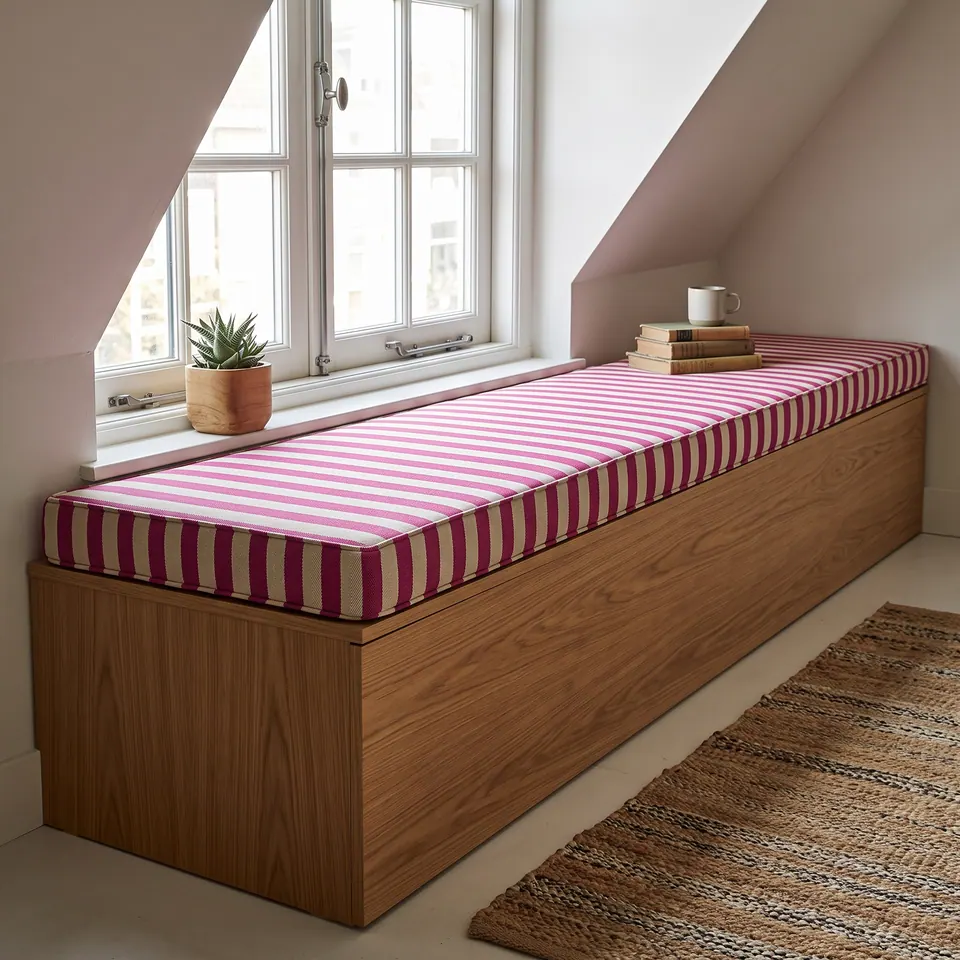
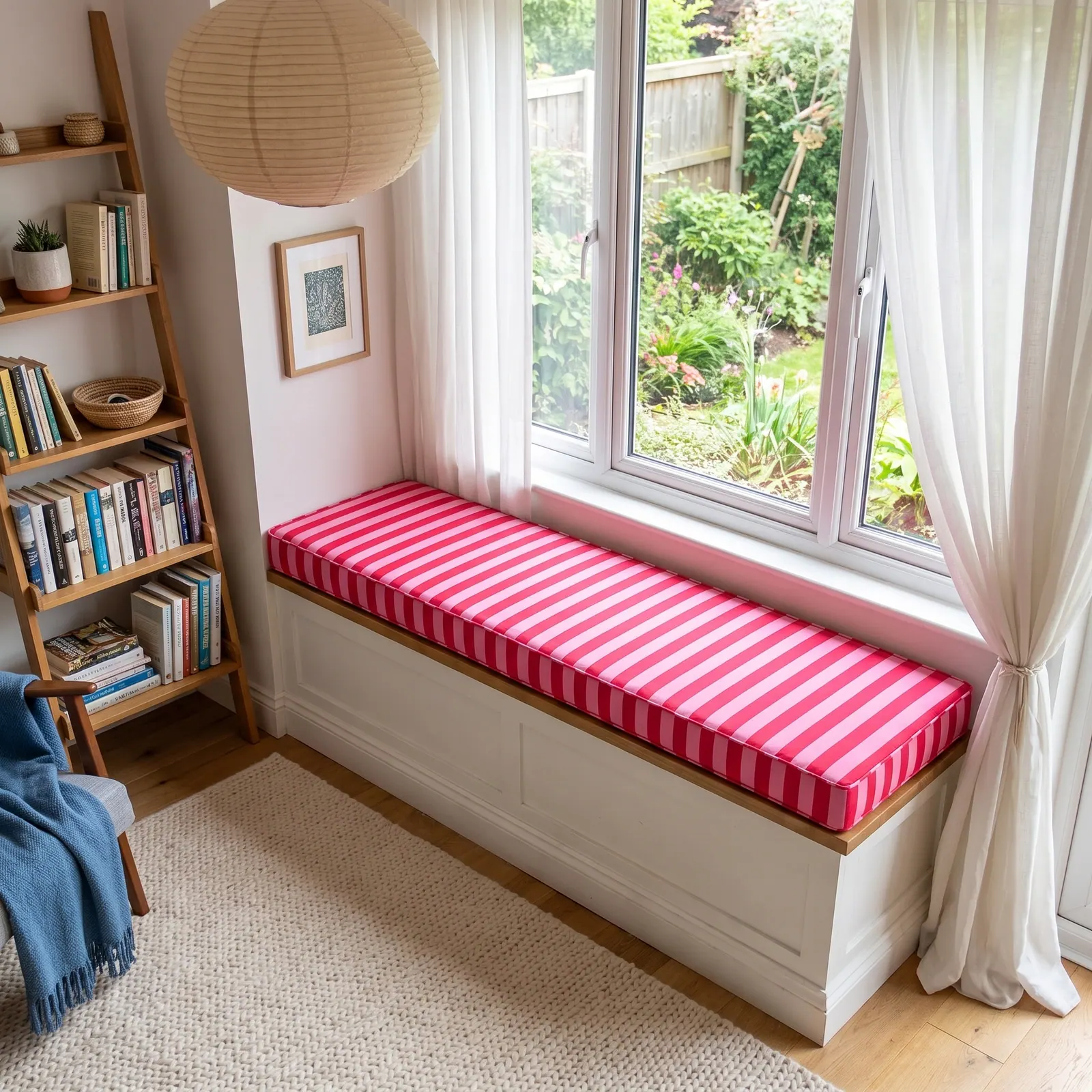
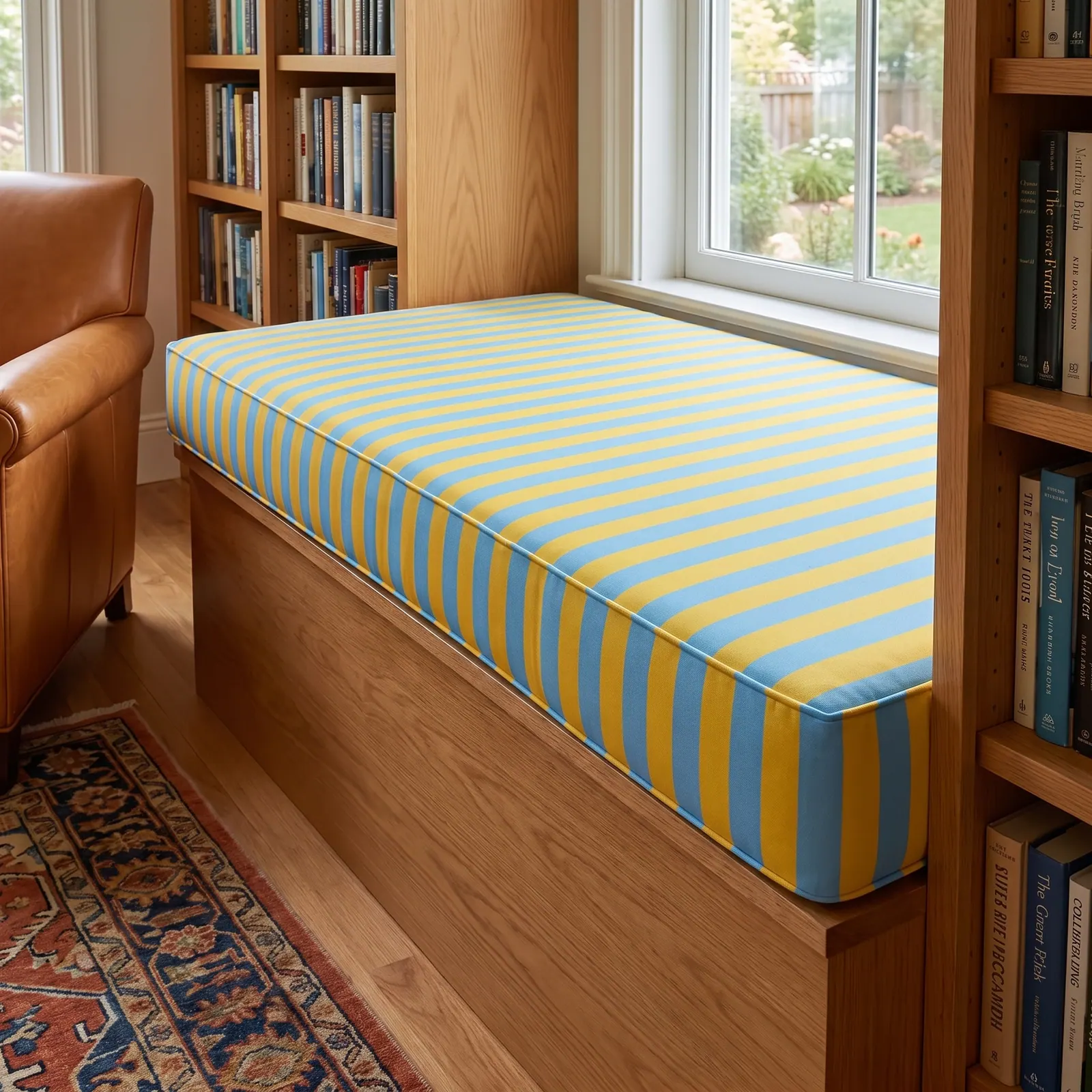
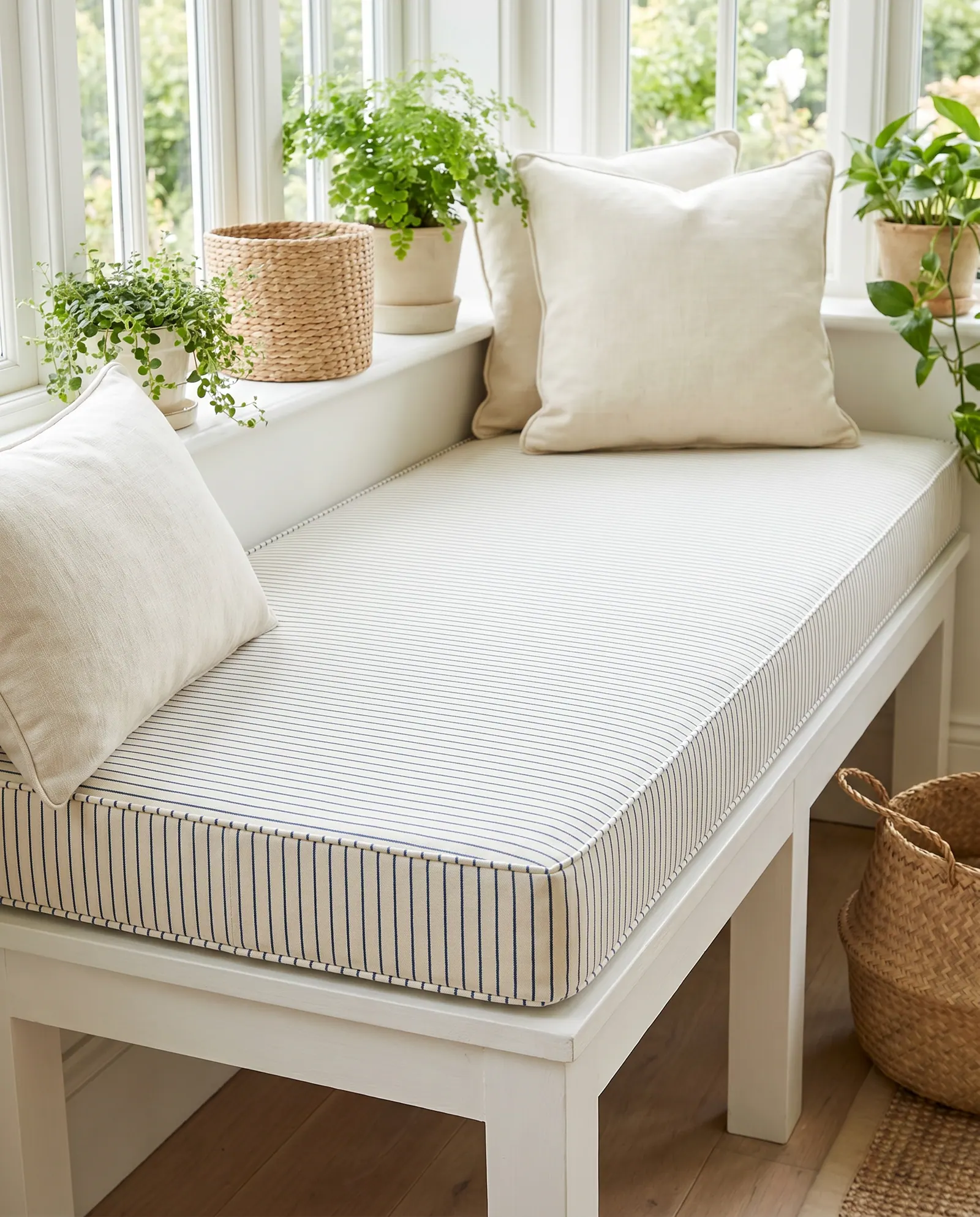
Then the stripe. The ticking runs the length of the top, wall to wall, which makes a short cottage ledge look longer than it is; stripe direction explains the rule. The cushion fills the recess end to end and sits about level with the window sill, so the whole alcove reads as one deep seat.
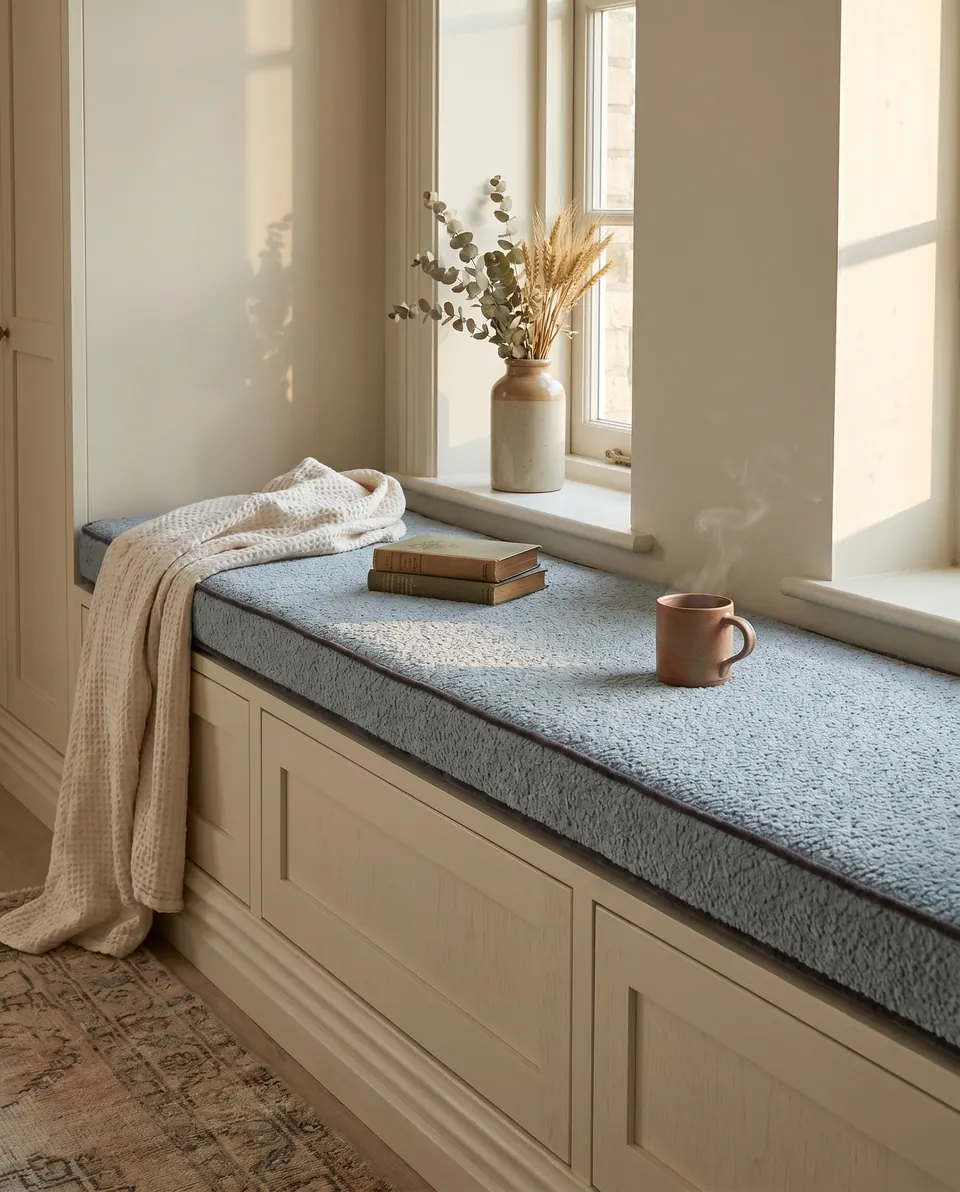
Everything else is quiet and made by hand. A pale linen pillow with a frayed fringe softens the tailored edge without adding pattern. An oatmeal wool throw is draped over the far end, hiding the spot where cushion meets wall. On the sill, a hand-painted stoneware mug in the same clay tones keeps the window part of the seat. The stripe is the only pattern in the nook, neighbor, and that restraint is a craft of its own.
Low winter light comes through the wooden casement and warms the wide oak floorboards. It is a reading nook that asks for a book and an hour. Which detail would you notice first if you sat down here?
Six hand-finished window seat details worth asking for
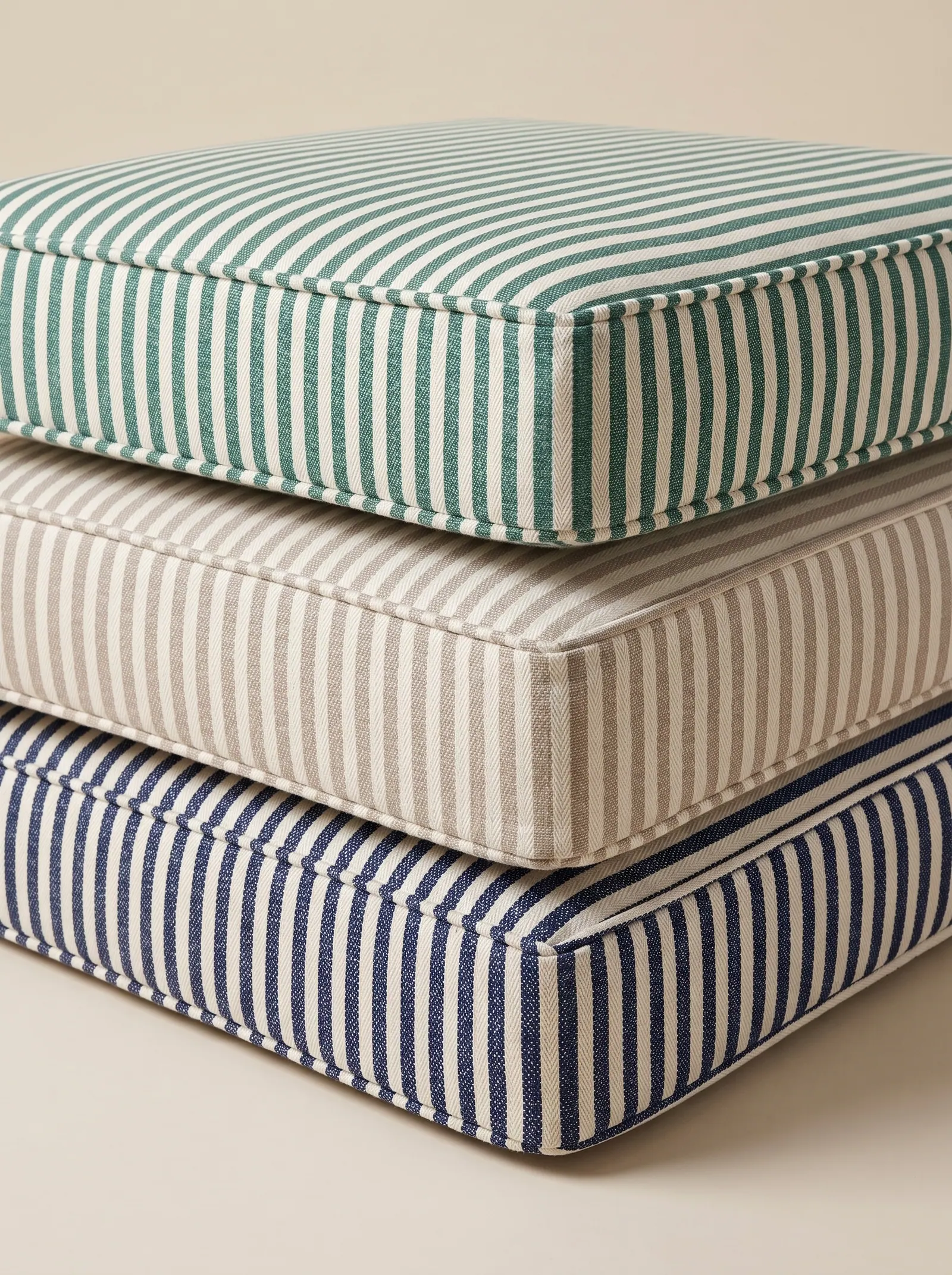
- Piping in the darker color of a two-tone stripe, for a firm outline
- Stripes run the length of the seat on a short ledge
- A cushion cut to fill the recess wall to wall
- The zipper on the side you choose, such as a long side against the wall
- At least 2 in (5 cm) of cushion, even under a low sill
- Daylight photos sent with your measurements for color matching

Have it made
Have this made — ask Rosa’s workshop
Tell the workshop who sits there: grandkids, the dog, a cup of coffee at six. The right fabric and foam follow from the people. — Rosa
Leave your details and the workshop will call you to confirm measurements, fabric, foam and piping. No prices, dates or payment on this page: it is a request, not an order.
Porch light's on — Rosa