Across the Map · Australia & NZ
Outdoor cushions for New Zealand baches, villas and decks
New Zealand weather would suit a Maine sailmaker: four seasons in one day, wind off the water, and a winter that stays damp. The difference is the summer sun. It's stronger than mine.
- Sun & UVIntense
- HumidityHumid
- WinterMild
- CoastSalt air nearby
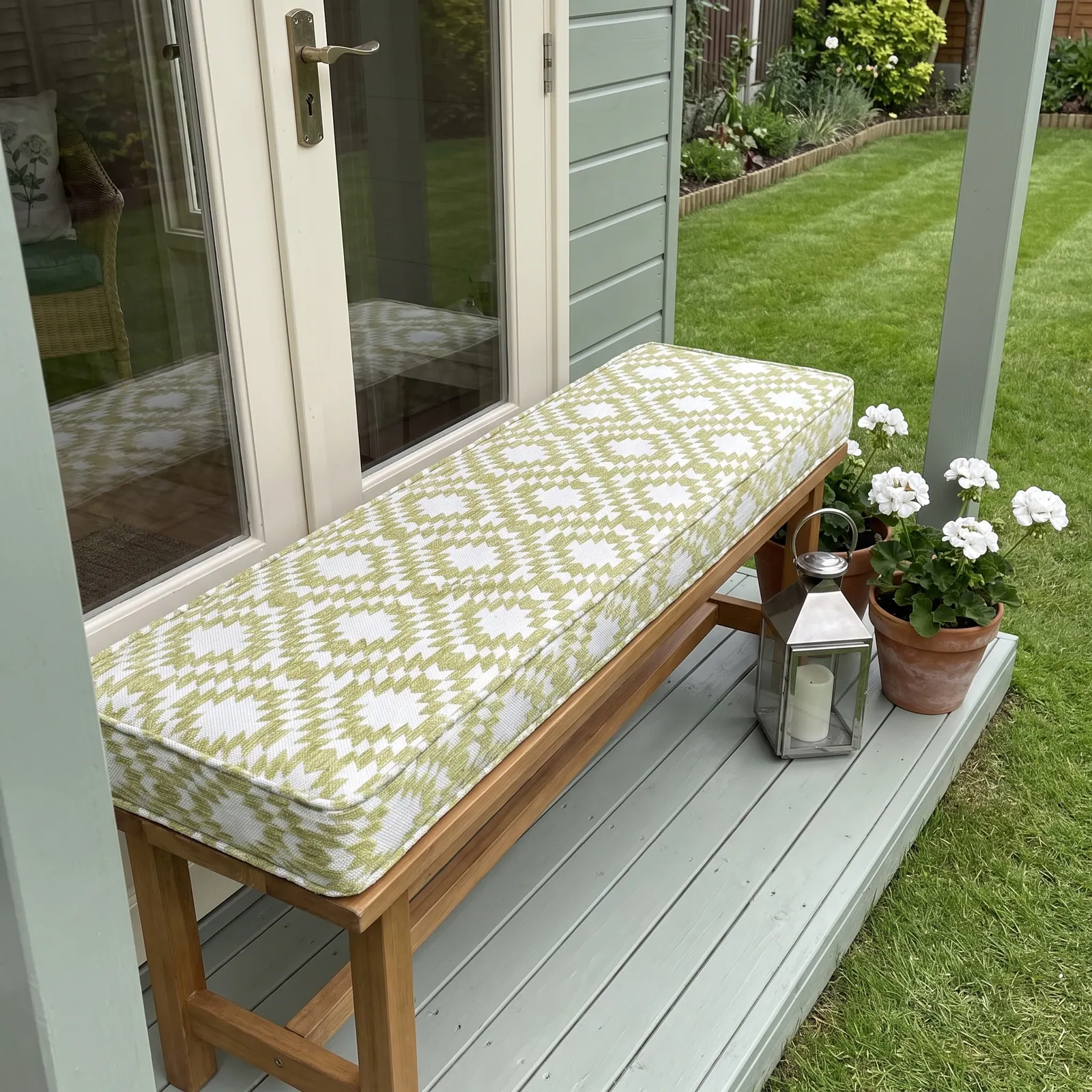
- Typical seatsBach deck bench, deck lounger, villa verandah seat
 Save
The quick answer
Outdoor cushions in New Zealand need UV-resistant, water-repellent fabric and a plan for wind and damp. NIWA puts peak UV there about 40% above comparable Northern Hemisphere latitudes. Tie deck cushions down against the westerlies, dry them fast after showers, and store bach cushions washed and dry through winter. Measure in centimeters.
Forty percent more UV, and the wind to go with it
Outdoor cushions in New Zealand face a sun that's stronger than it looks. NIWA, the national climate agency, puts peak UV there about 40% above comparable latitudes in the Northern Hemisphere, because of ozone, the distance between Earth and sun, and cleaner air. The SunSmart alert runs from September to April, when UV reaches 3 or higher. In winter, NIWA says, the index rarely gets past 3.
So a deck cushion takes most of its year's sun in about eight months. Richmond, near Nelson, set a record of 2,840 hours of sunshine in 2019. Build outdoor cushions in UV-resistant outdoor fabric, and leave the linen and velvet inside.
Then the weather changes its mind. The westerlies prevail, and Wellington is the world's windiest city by average wind speed: 17 mph (27 km/h). Most cities get between 24 in (618 mm) of rain a year in Christchurch and 52 in (1,317 mm) in Whangārei, spread fairly evenly through the year, with a slight winter peak in the north. At Auckland Airport, July is the wettest month, at about 5.4 in (137 mm).
For cushions, that adds up to ties, fast drying and dry storage. The workshop's standard foam, about 2.0 lb/ft³ (32 kg/m³), isn't quick-dry and needs 24 to 48 hours after a soaking. Quick-dry foam isn't standard; a mesh base has been built on request for some projects, so ask before you order. Read dry-fast foam and ties and non-slip bases before you order. Rain doesn't negotiate.
The bach, the villa verandah and the deck off the living room
The bach is the Kiwi holiday cottage, called a crib in the southern South Island. The old ones went up in whatever was cheap or second-hand: fibrolite, corrugated iron, used timber. They caught on in the 1950s, when better roads and more cars put the beach within reach of ordinary families, and some estimates now count more than 50,000.
A bach can sit shut for months, and that's the real risk to its cushions. Close up with every cover washed, every foam dried to the core, and the lot stored in breathable bags, off the floor. Winter storage has the full routine.
At home, timber villas and California bungalows carry verandahs. The bungalow, a single-level wooden house with a verandah, became very common. A verandah bench lives half outdoors: out of the sun, but not out of a sideways shower. Newer houses open straight onto a deck, where the lounger and the built-in bench live.
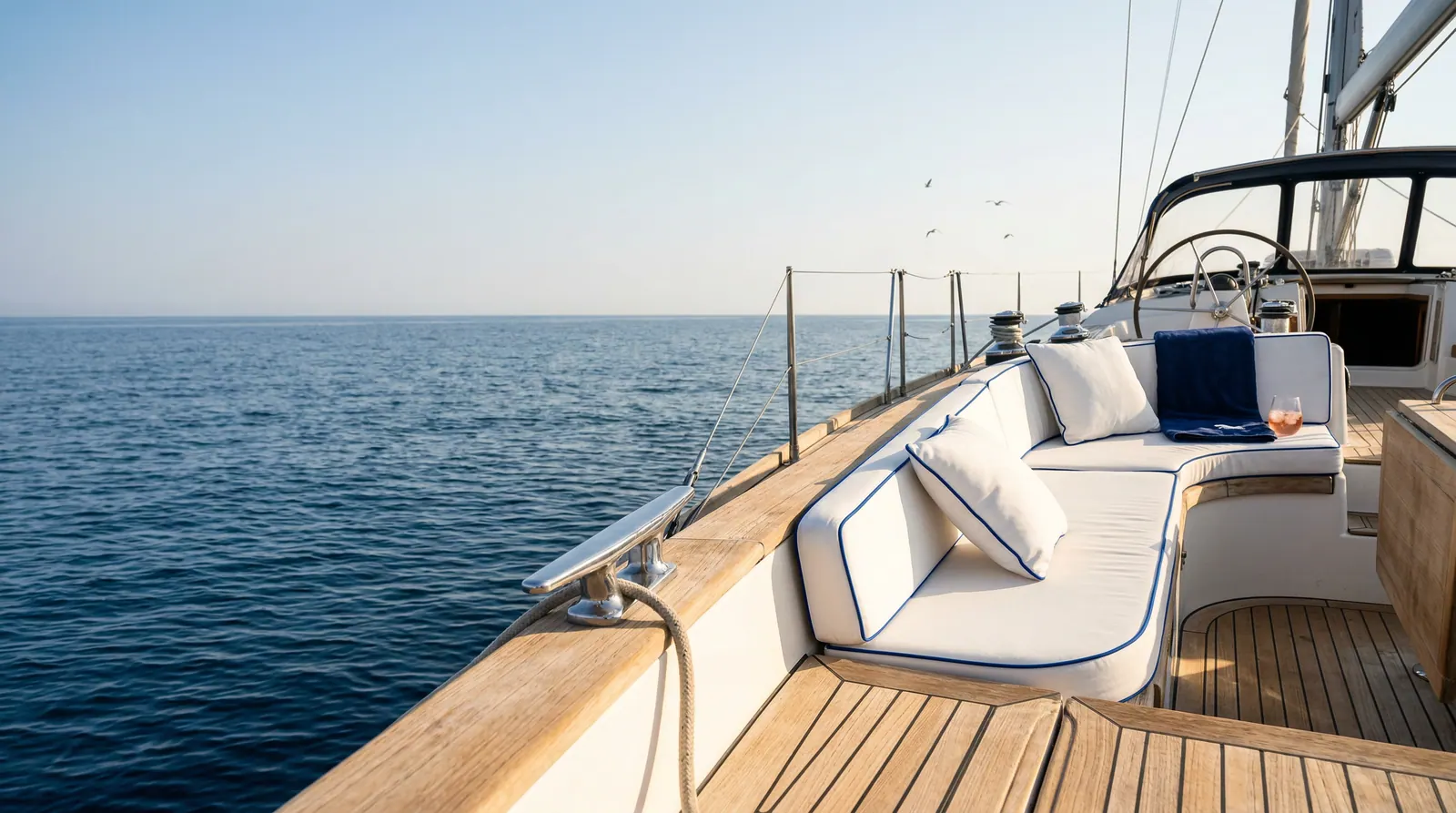
Then the boats. Auckland is the City of Sails, and the country has 15,134 km (9,404 mi) of coastline. Cockpit cushions and V-berths want a traced template; the V-berth Pattern shows how, and the boat and RV cushions collection has the rest. Which way does your deck face when the southerly comes through, friend?
Deck, verandah, bach bench or boat: what to specify
| Seat | Fabric | Foam and thickness | Fastening |
|---|---|---|---|
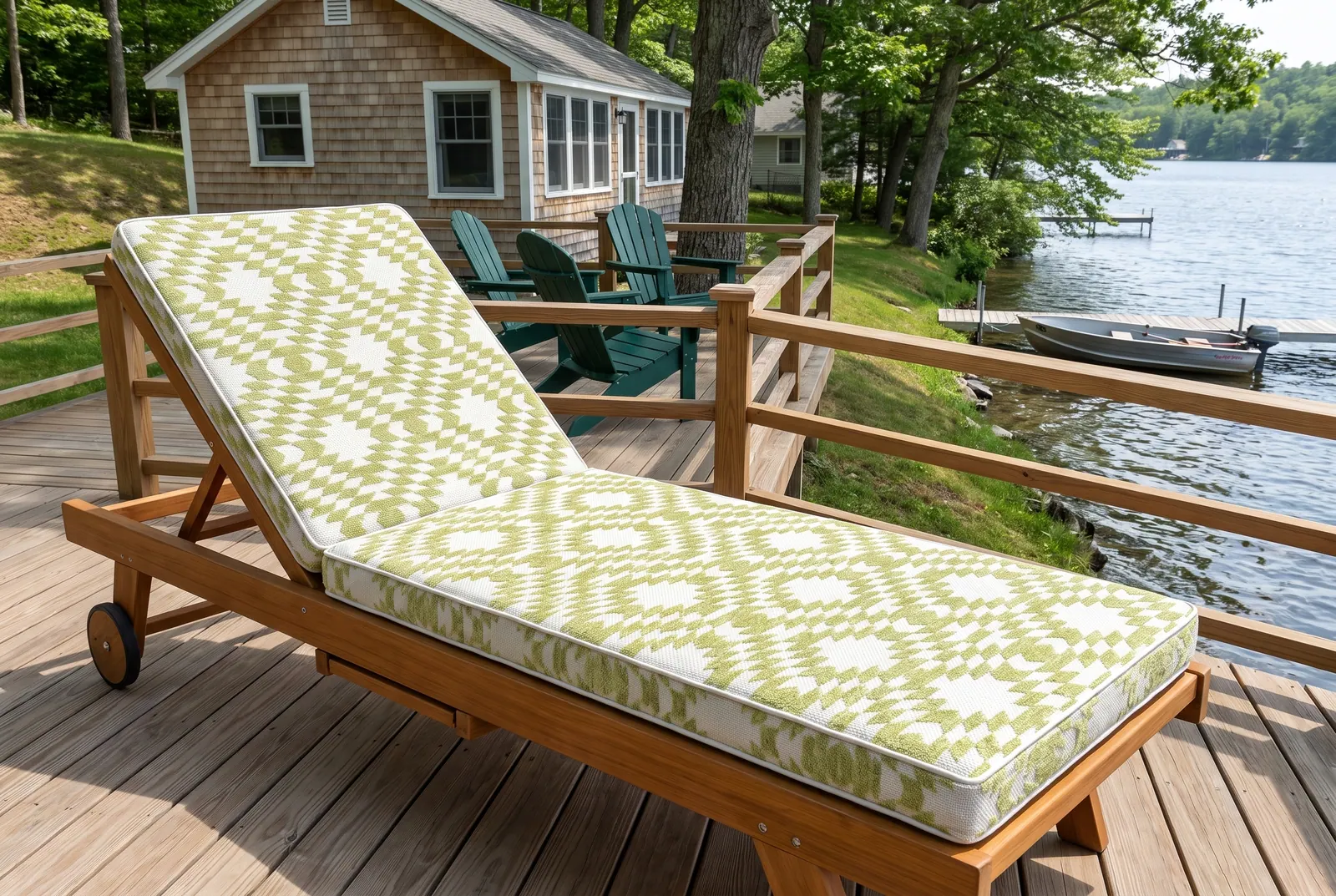
| Open deck lounger | Outdoor fabric, water-repellent and UV-resistant | 3 to 4 in (7.5 to 10 cm), split at the hinge; ask about a mesh base if it stays out | Ties at the head end |
| Built-in deck bench with backs | Outdoor fabric | Firmer 3 in (8 cm) seats, softer 4 3/4 in (12 cm) backs | Ties at the back corners, or a non-slip base |
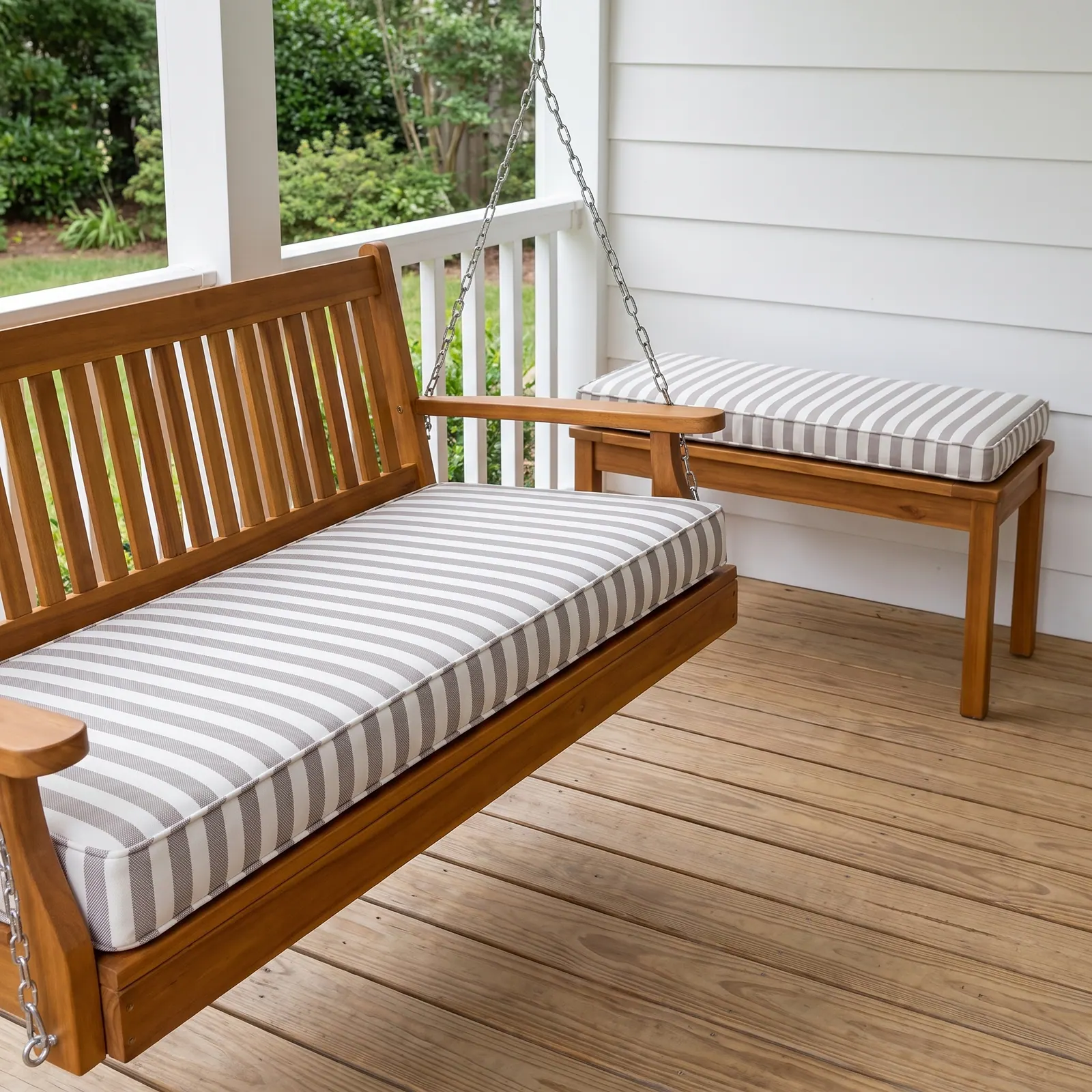
| Villa verandah seat | Outdoor fabric; a performance weave only where rain never reaches | 4 in (10 cm) standard | Ties if the wind comes around the corner |
| Long bench inside the bach | Velvet or linen in a zip-off cover | 3 to 4 in (7.5 to 10 cm); a 3/4 in (2 cm) wadding layer for a softer top | A backrest about 16 in (40 cm) tall at the wall end |
| Boat cockpit or V-berth | Outdoor fabric | Standard foam from a traced template; stowed below in weather | Ties to a fixed point, or stow it |
Ties aren't standard: write their position and length on the order. Covers wash at 86°F (30°C) on a gentle cycle; air dry them.
Three meters of family bench with one curved end
A family wrote to the workshop about a bench 118 in (299 cm) long, with one curved end and children in the house. It's exactly the long seat I picture at a bach table, sandy feet and all.
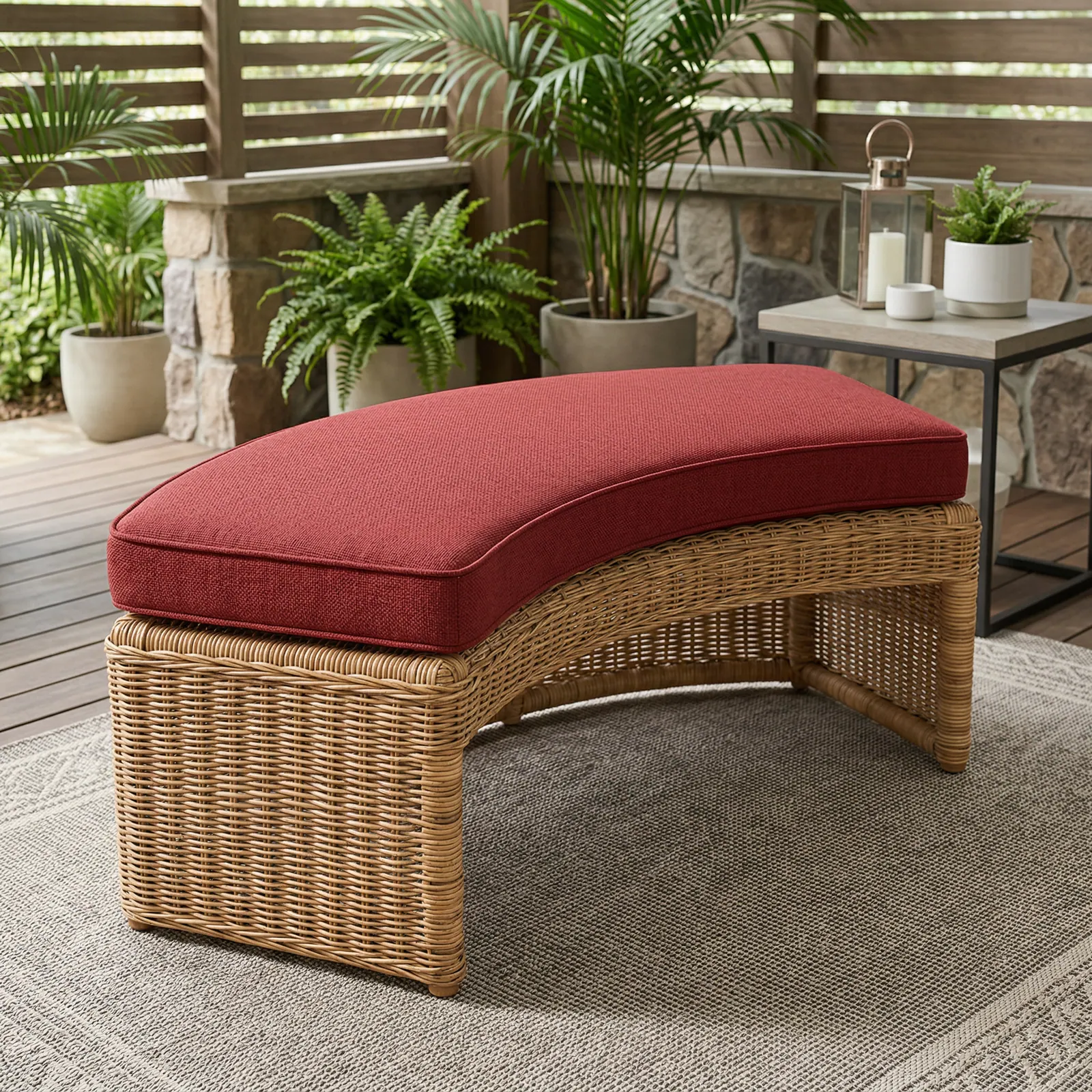
A curve can't come off a size menu, so the workshop sent them to the custom-shape listing and told them what to measure: from the top of the curve to the bottom, and the distance between where the curve starts and where it ends. Both numbers go on a drawing with every other edge.
The length was their call. The cushion could be one piece or split in two. For the children, the workshop explained that velvet, linen and its own fabrics all wash at 86°F (30°C), and that velvet is the easiest to spot-clean between washes.
Two measurements define a curve. Give the workshop both, and the cushion follows the wood.
- Measured
- 118 in (299 cm) long, one curved end
- What it taught
- Put the curve's depth and its span on the drawing, and choose a cover that zips off and washes at 86°F (30°C).
A New Zealand year for deck, bach and boat cushions
- September, when the SunSmart alert season starts: wash covers inside out at 86°F (30°C) on a gentle cycle, air dry, and use a fabric protectant spray.
- Summer at the bach: pull loose lounger pads into the shade at midday when nobody's on them.
- Strong wind on the forecast: untie the cushions and carry them in. Ties hold against gusts, not gales.
- After a passing shower: stand cushions on edge. If one is soaked, unzip it and dry the foam in moving air for 24 to 48 hours.
- After a sail: rinse boat covers and zippers with fresh water, and stow cockpit cushions below when weather comes.
- April, when the alert season ends: wash, dry to the core and store bach cushions indoors, off the floor, in breathable bags, never sealed plastic.
Photographs for homes like these
Open any photograph large; each one has its own link and a Save button.
 Save
 Save
 Save
 Save
 Save
Colors for weatherboards and a big southern sky
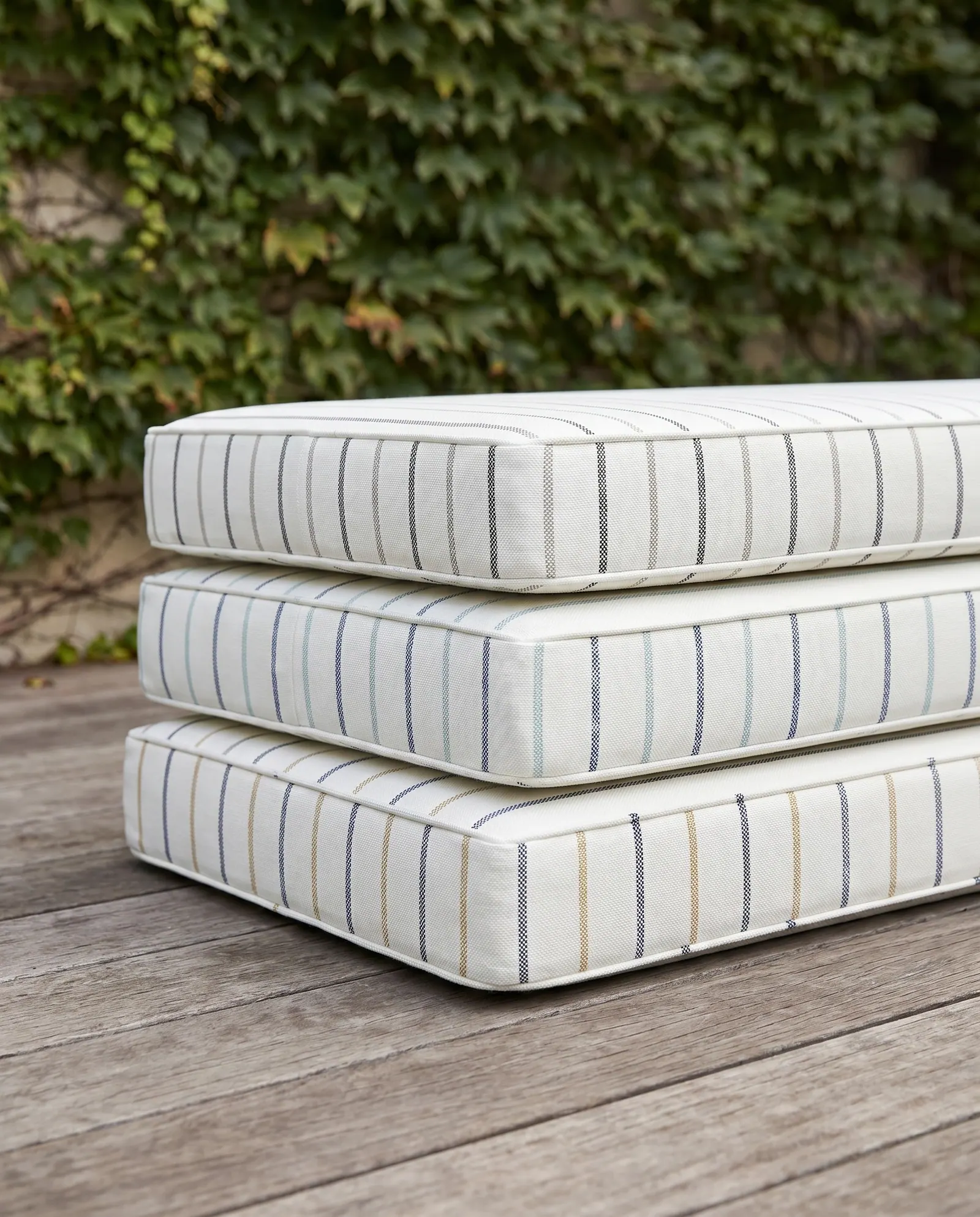
Deck colors live in the hardest light there is. A dark, saturated color shows its first fade line at the fold. Pale neutrals and busy stripes hide it longer. Against painted weatherboards, a clear color reads from the beach: teal, mustard, brick red.
Judge samples in daylight, on the deck, never on a screen. The workshop sends up to 5 codes at a time. If a color in a photo isn't on the chart, ask, because it may still be in stock. The swatch Pattern walks through it.
For the same strong southern sun with more heat, see Australia. For another cold-water coast with its own boats and cottages, see Maine.
In New Zealand the wind decides where a cushion spends the night. Give it ties, or give it a shed.
Callum
Buyer questions: four cushions for New Zealand, softer backs and a pillow to lean on
- A common question
Can you make four bench cushions for us in New Zealand, and is shipping included?
The workshop's answerIn one past quote, yes. Four cushions, two at 37 3/4 x 23 1/2 in (96 x 60 cm) and two at 37 3/4 x 18 in (96 x 46 cm), about 5 in (12.5 cm) thick in linen, were quoted with shipping to New Zealand included. Freight to New Zealand is costly and makes up a large part of a quote like that, so check the shipping line on yours.
- A common question
Do you make back cushions to go with the seat cushions?
The workshop's answerYes, matching back cushions are made alongside the seats. A 98 in (2.5 m) banquette backrest was made in two pieces filled with shredded foam, and outdoor sets have paired softer 4 3/4 in (12 cm) backs with firmer 3 in (8 cm) seats.
- A common question
Can you add a soft layer on top of the foam?
The workshop's answerYes. A 3/4 in (2 cm) layer of volume wadding over the foam was confirmed for a custom cushion of 16 x 44 x 4 in (40 x 112 x 10 cm).
- A common question
I want a pillow to lean on at the end of my window seat. What size should the backrest be?
The workshop's answerBackrests are usually made 16 in (about 40 cm) tall. Order two cushions and the workshop makes one of them into the backrest, sized to the width of your seat.
- A common question
A color in your photos isn't on the chart. Can I still get it?
The workshop's answerOften, yes. Some fabrics were taken off the catalog to keep it simple but are still in stock, with their codes printed on the product photos. The workshop can send close-up phone photos of any color and add a missing one to the order options.

Have it made
Have it made for your home — ask Callum’s workshop
Tell them where it lives. Porch, deck or boat: the weather picks the fabric and the foam before anyone else does. — Callum
Leave your details and the workshop will call you to confirm measurements, fabric, foam and piping. No prices, dates or payment on this page: it is a request, not an order.
Outdoor cushion questions from New Zealand decks and baches
Can deck cushions stay out through a New Zealand winter?
Better not. Rain falls fairly evenly through the year in most places, and standard foam takes 24 to 48 hours to dry after a soaking. Store cushions washed and dry, off the floor and in breathable bags, from April until spring.
Is New Zealand's UV really stronger?
Yes. NIWA puts peak UV in New Zealand about 40% above comparable Northern Hemisphere latitudes, because of ozone, the Earth–sun distance and cleaner air. Outdoor cushion fabric needs a UV-resistant finish, and a lighter color hides fading longer.
How do I stop deck cushions blowing away?
Ties sewn into the back corners hold a cushion to the frame, and a non-slip base holds by friction on a flat bench. Neither beats a real gale, so bring cushions in when strong wind is forecast. Ties aren't standard; write their position and length on the order.
Can boat cushions be made for a New Zealand yacht or launch?
Yes, from a traced template, in water-repellent outdoor fabric over the standard foam. That foam isn't quick-dry, so cockpit cushions belong under cover or below deck in weather. Rinse salt from covers and zippers with fresh water after a sail.
Fair winds — Callum
The atelier
Keep going
Across the Map
Nearby places
Close by on the map