Across the Map · Australia & NZ
Outdoor cushions for Australian verandahs, alfresco areas and pools
I learned weather on the coast of Maine, where summer is short and polite. An Australian summer is neither. There, the sun is the storm you plan for.
- Sun & UVIntense
- HumidityModerate
- WinterMild
- CoastSalt air nearby
- Typical seatsPool sun lounge, verandah daybed, alfresco bench under the main roof
 Save
The quick answer
Outdoor cushions in Australia should be built for sun first and rain second. Choose UV-resistant, water-repellent outdoor fabric, zip-off covers that wash at 86°F (30°C), and ties on sun lounges and daybeds. Cancer Council Australia says a UV Index of 3 or more can damage skin, and that UV is present every day of the year. Keep cushions under the verandah or alfresco roof when you can.
In Australia the sun does the damage the rain gets blamed for
Outdoor cushions in Australia fail from the top down. Cancer Council Australia says a UV Index of 3 or more is enough to damage skin, that UV is present every day of the year, and that it can run just as high on a cool, clear day as a hot one. Thin cloud doesn't stop it. SunSmart, Cancer Council Victoria's program, describes Australian UV as some of the harshest and most dangerous there is.
Fabric feels that too. Sun bleaches color, tires the fiber and, once a cover splits, bakes the foam underneath until it crumbles. Perth averages 8.8 hours of sunshine a day, about 3,200 hours and 138.7 clear days a year. So start outdoor cushions with UV-resistant outdoor fabric, and keep linen and velvet indoors.
Then the water. The tropical north has a wet season from October to April; Darwin takes about 72 in (1,832 mm) of rain a year, with afternoon humidity over 70% in the wettest months. Brisbane's storms run November to March and can bring damaging hail and destructive winds. Perth gets most of its rain between May and September, and the Fremantle Doctor blows in from the south-west on most summer afternoons.
Here's what that means for the foam. The workshop's standard seat foam is about 2.0 lb/ft³ (32 kg/m³), medium-firm, and not quick-dry. After a soaking it needs 24 to 48 hours to dry. Quick-dry foam isn't offered as standard, though a mesh base has been built on request for some projects, so ask before you order. Dry-fast foam explains when it's worth it. Water-repellent is a promise; waterproof is a contract.
Queenslanders, Federation verandahs and the alfresco under the roof
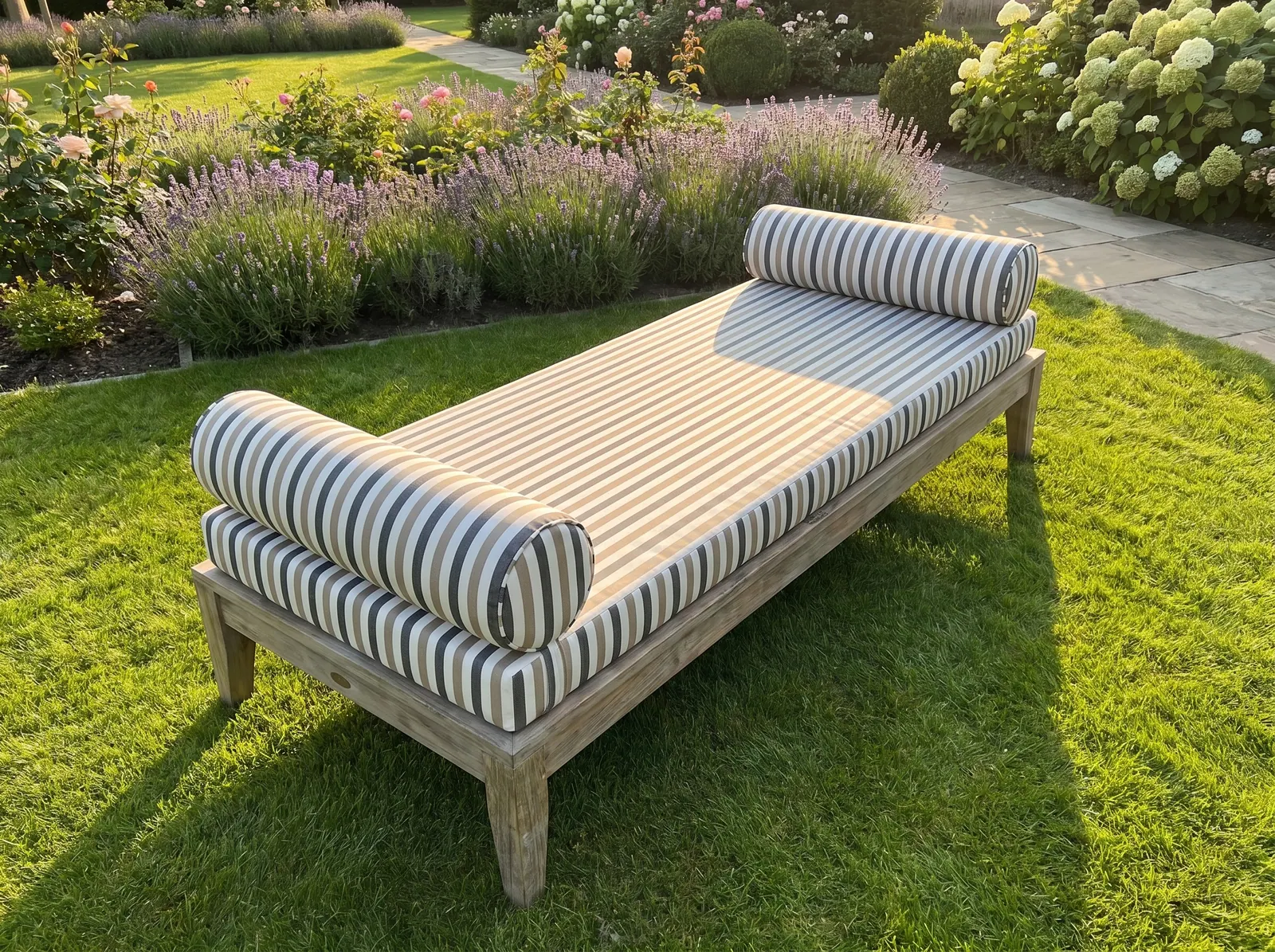
Australians spell it verandah, and they live on it. The Queenslander is a timber house raised on stumps, which let air move under the floor and keep it above floods and termites. Its verandah runs along the front or wraps around several sides. In Brisbane, many people keep a dining table and chairs out there, and a daybed or sleepout. That daybed is one of the best seats in the country, as long as the cushion has a zip-off cover and the afternoon sun doesn't reach it.
Federation houses, built from about 1890 to 1915, have red brick and front verandahs with decorative timber. A narrow front verandah suits a bench by the door or a pair of chairs. Many newer homes put the alfresco area under the main roof, which works as a covered outdoor room. Past it there's often a pool, and a row of sun lounges in full sun.
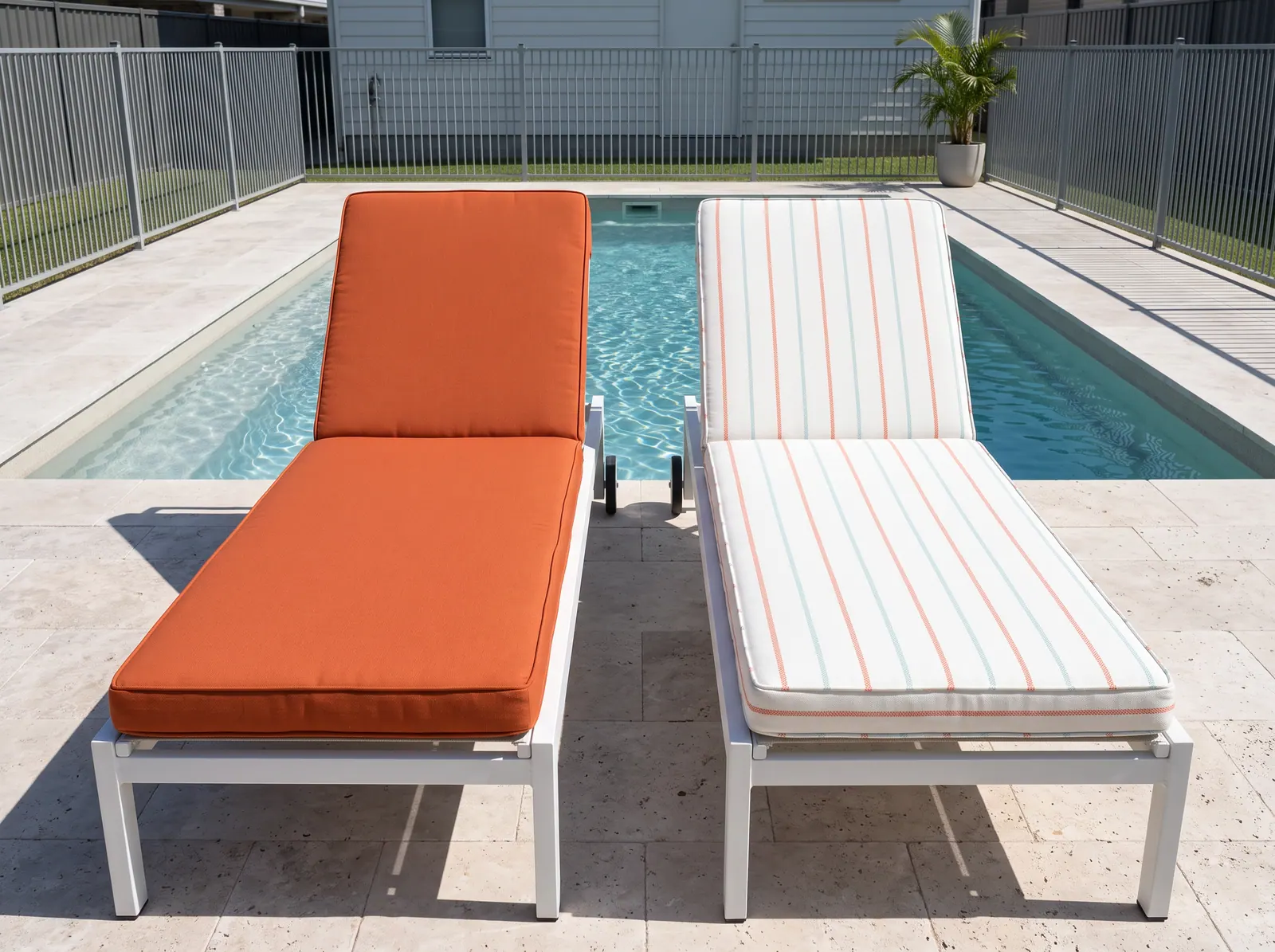
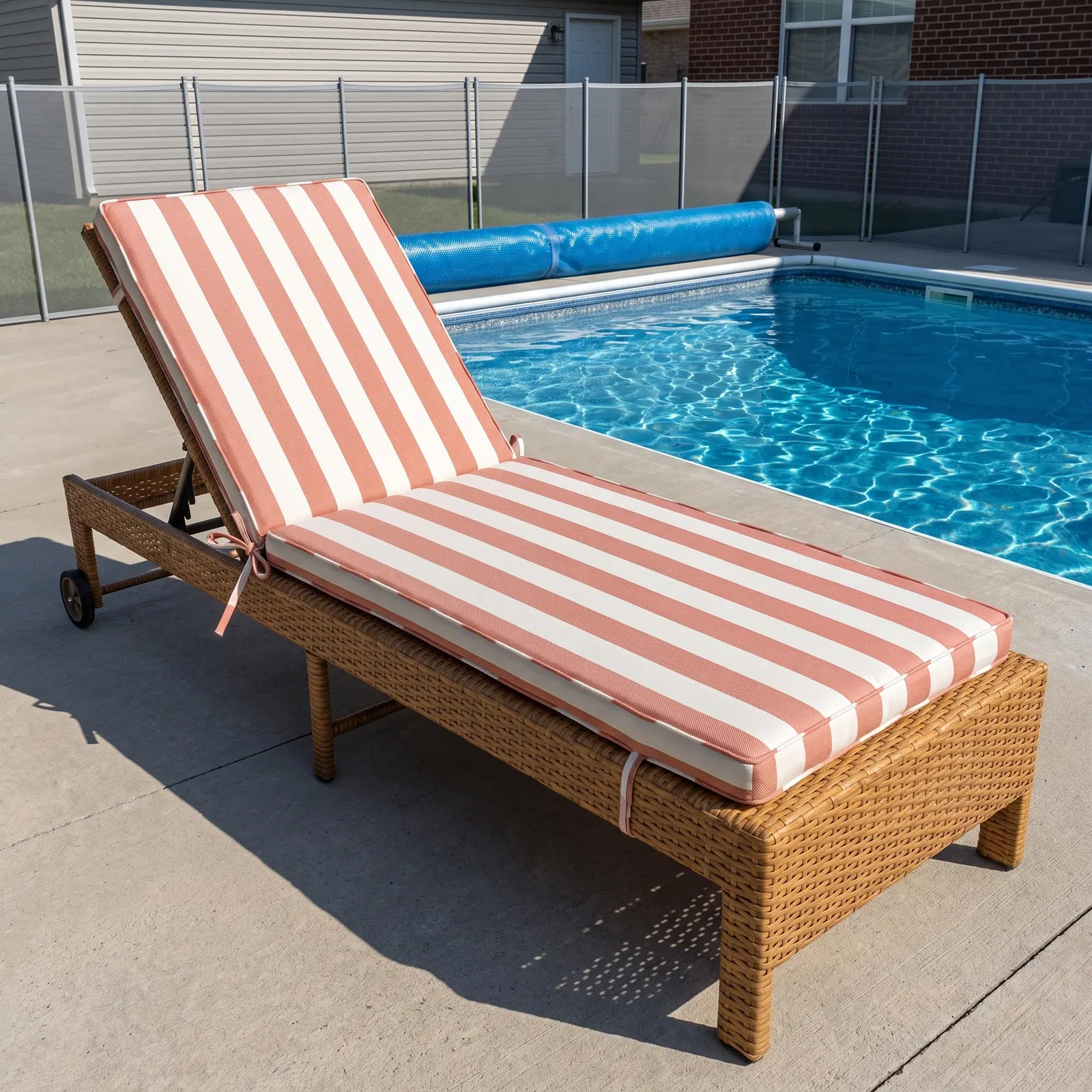
Those sun lounges need their own pattern. Split the cushion at the hinge and add ties at the head end, following the sunbed size Pattern. A verandah daybed wants a mattress-style daybed cushion with round bolsters. How deep is your verandah, friend, and does the late sun reach the back wall?
Sun lounge, verandah daybed or alfresco bench: what to specify
| Seat | Fabric | Foam and thickness | Ties and piping |
|---|---|---|---|
| Pool sun lounge in open sun | Outdoor fabric in a light plain or stripe | 3 to 4 in (7.5 to 10 cm), split at the hinge; if it stays out, ask whether a mesh base suits the project | Ties at the head end; self piping |
| Queenslander verandah daybed | Outdoor fabric; a performance weave only where rain never reaches | 4 in (10 cm) mattress with bolsters about 8 in (20 cm) across | Non-slip base or ties; contrast piping if you like a line |
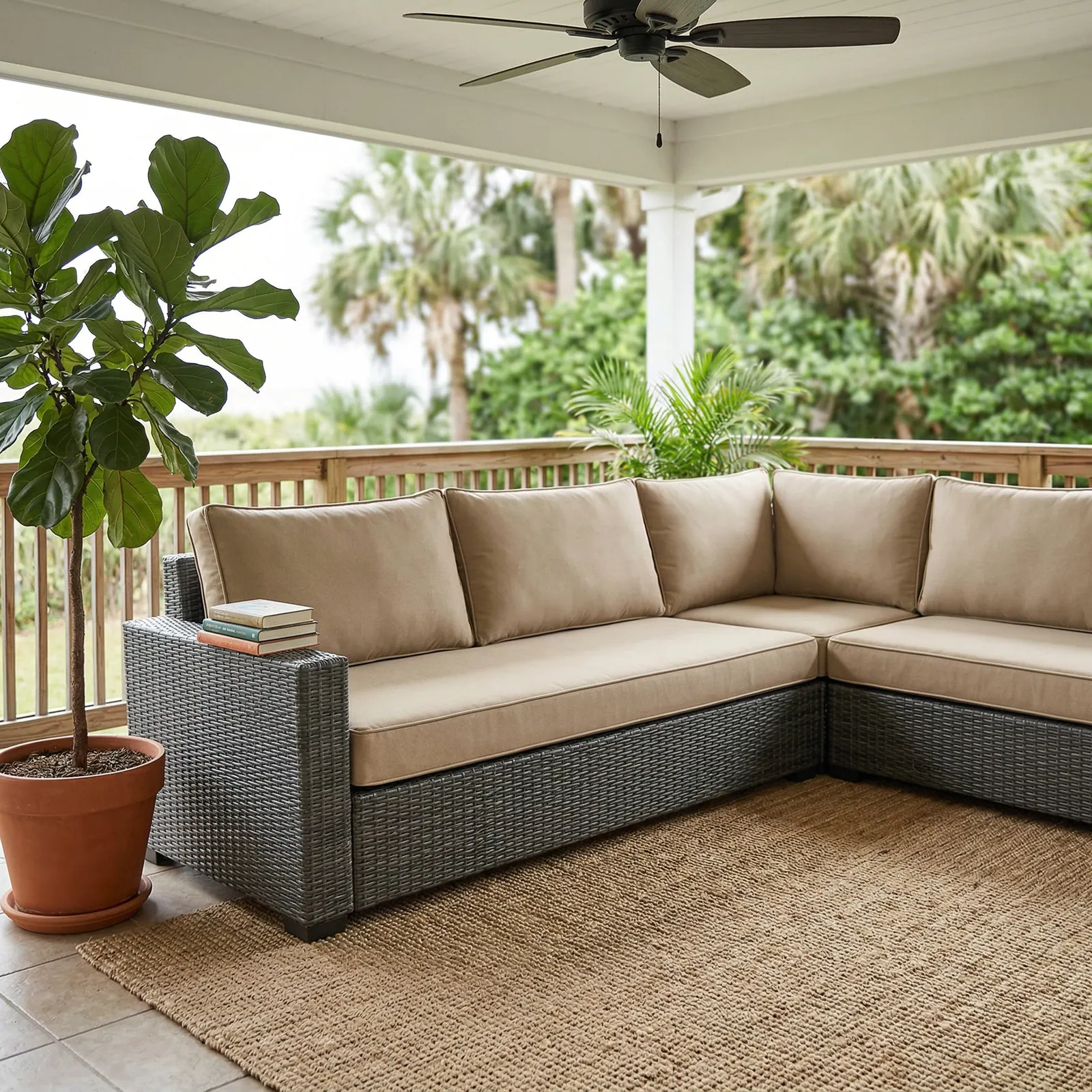
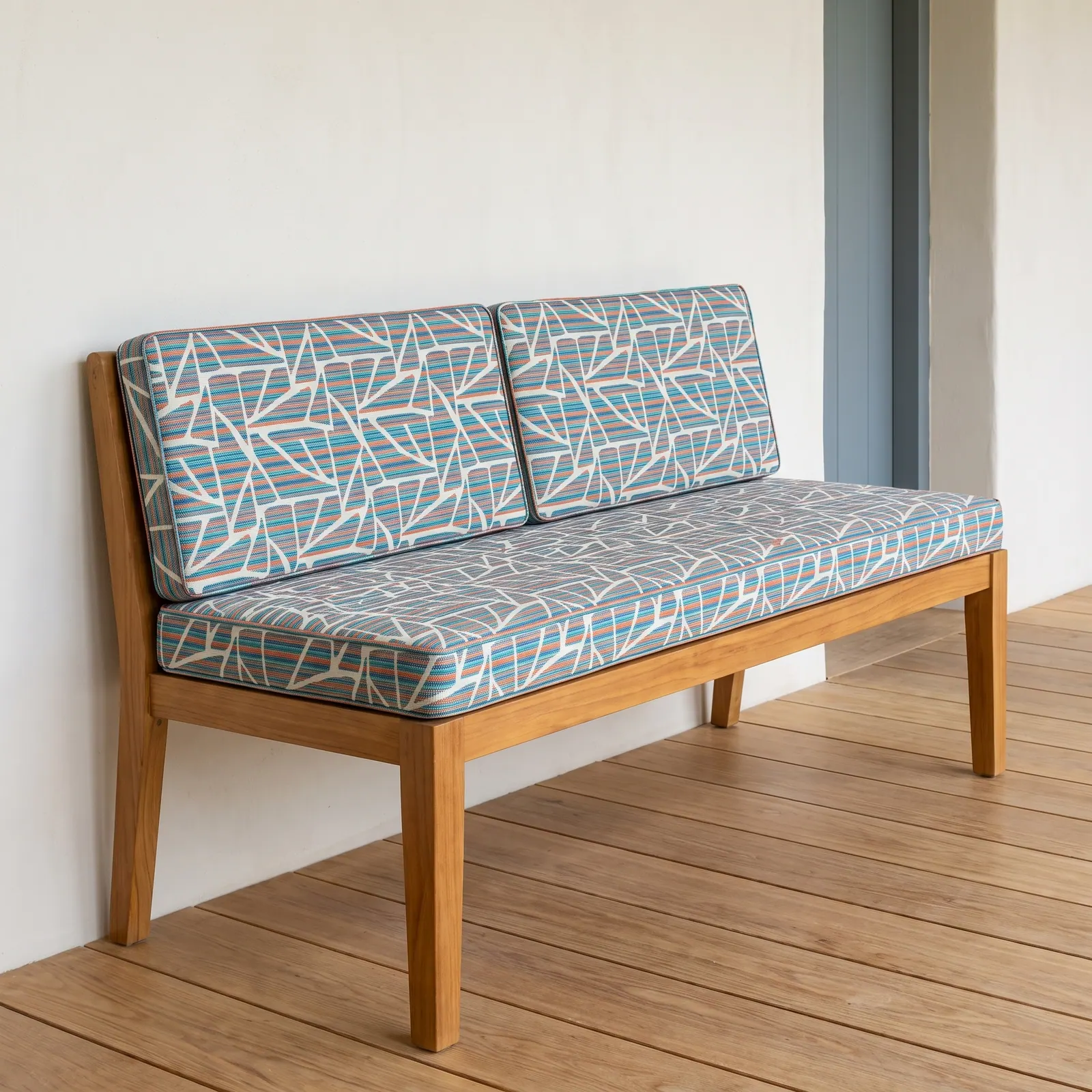
| Alfresco bench under the main roof | Outdoor fabric | Firmer 3 in (7.5 cm) seats with softer 4.7 in (12 cm) backs; long seats in two pieces | Ties at the back corners |
| Open deck in the tropical north | Outdoor fabric | Standard foam is not quick-dry; a mesh base has been built on request, so ask | Ties, and stand it on edge after rain |
Ties never come standard: write their position and length on the order. Covers zip off and wash at 86°F (30°C) on a gentle cycle.
Four seats, four bolsters and a hole for the rain
A buyer in Australia sent millimeter drawings for a big built-in outdoor bench: four seat cushions and four bolsters, one seat with a drain cutout so water on the bench had somewhere to go.
The workshop read the drawing back as a list of gaps: seat thickness, bolster diameter, the size of the cutout, and one length that disagreed with itself. She answered each one. The seats became 3 in thick (75 mm on her drawing). The bolsters became about 8 in (200 mm) across.
The longest bolster was 142 in (360 cm), too long to make in one piece, so it was made as two 71 in (180 cm) halves, with the join where she wanted it. Close-ups of two outdoor codes settled the colors, one for the seats and one for the bolsters.
I like a buyer who draws the drain hole. The rain's going to find that bench anyway. Better it finds a way through.
- Measured
- Seats about 23.5 x 82, 25.5 x 74, 25.5 x 39 and 25.5 x 116 in (60 x 208, 65 x 188, 65 x 99 and 64.5 x 295 cm), 3 in (7.5 cm) thick; bolsters about 8 in (20 cm) across and 23.5, 74, 36.5 and 142 in (60, 188, 93 and 360 cm) long, the last made as two 71 in (180 cm) pieces
- What it taught
- Read a big drawing back as a numbered list, and settle every missing figure before anything is cut.
An Australian year for outdoor cushions
- September and October: unzip the covers, wash them inside out at 86°F (30°C) on a gentle cycle, air dry, and use a fabric protectant spray after washing.
- November to March in Brisbane: storm season. When hail or a squall is forecast, move cushions under the verandah roof or bring them in.
- Summer middays: pull loose sun lounge pads into the shade when nobody's on them.
- After bushfire smoke or ash: shake the covers outdoors, wash them, and air the foam in moving air before it goes back in.
- Coastal houses: rinse covers and zippers with fresh water between washes, so salt doesn't hold damp in the weave.
- The tropical north's wet season, October to April: after a soaking, unzip the cover and stand the foam on edge for 24 to 48 hours.
- The southern winter: store spare cushions washed, dry to the core and off the floor, in breathable bags, never sealed plastic.
Photographs for homes like these
Open any photograph large; each one has its own link and a Save button.
 Save
 Save
 Save
 Save
 Save
Millimeters, fade lines and colors that hold
Australian buyers often measure in millimeters, and that's fine. One sent tapered outdoor chair seats: 18.5 in (470 mm) across the front, 15.4 in (390 mm) across the back, 18.5 in (470 mm) deep in the middle and 17.3 in (440 mm) at the sides, all 2 in (50 mm) thick. The workshop drew templates with curved fronts from those typed numbers before quoting. Write every edge down, and measure the depth at the middle and at the sides.
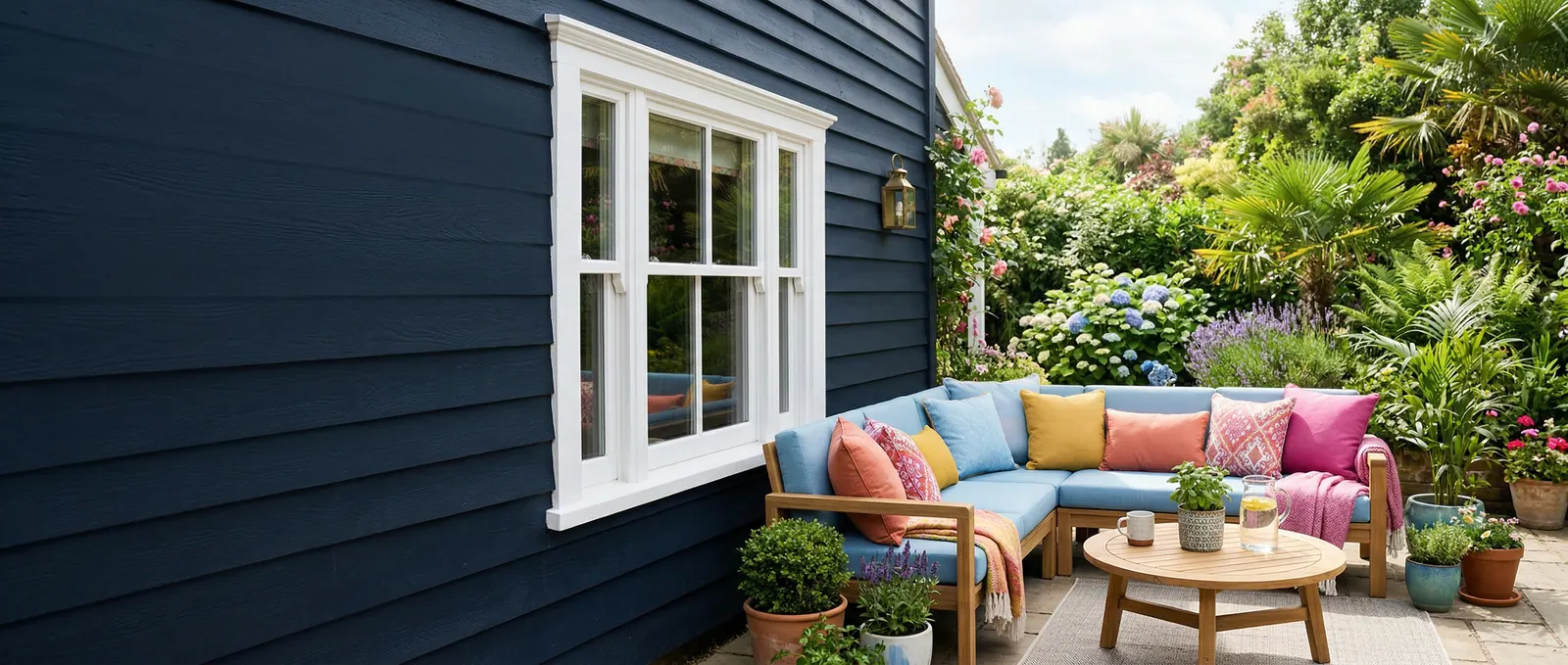
Then pick a color that can take the light. In open sun, a dark, saturated color shows its first fade line at the fold. Sand, stone, white and a good stripe hide it longer. Under a verandah roof you can be bolder, and a teal or a coral reads well against white weatherboards.
Order samples, up to 5 codes at a time. Lay them on the actual sun lounge at noon, then look again at dusk. The swatch Pattern covers the rest, and the piping Pattern helps you pick the edge. For another hot, humid coast, see the Gulf Coast page. Across the Tasman, New Zealand gets the same strong sun with more wind.
In Australia the sun is the storm. Plan for it the way you'd plan for rain.
Callum
Buyer questions: typed sizes, long seats and a thickness mix-up
- A common question
Can I just send photos of the tape measure on the chairs instead of writing the numbers?
The workshop's answerPhotos help show the shape, but reading exact figures off a tape in a photo invites mistakes. Type the numbers: front width, back width, depth and thickness. The workshop then draws a template with your figures beside each edge, for you to check before it quotes.
- A common question
Our built-in seat is almost 10 feet (3 meters) long. Can the cushion be one piece?
The workshop's answerFor a 111 in (2.83 m) seat, the workshop recommended two pieces, for durability and easier handling, and a 111 in (282 cm) bench was made as two 55 in (140 cm) cushions. A single 98 in (2.5 m) banquette seat has been made in one piece when a buyer asked for it.
- A common question
Does a custom cushion come with the foam, or only the cover?
The workshop's answerFoam is included. Cushions arrive filled with high-density foam, not as empty covers. Covers only are possible if you ask. Either way, the cover zips off and is machine washable.
- A common question
Can the piping be a different color from the cushion?
The workshop's answerYes. Any fabric on the charts can be used for piping, a white body with black piping for example, and self piping in the body fabric is fine too. Piping doesn't change the price.
- A common question
My order note says 4 in (10 cm), but I selected 5 in (12.5 cm). Which one will you make?
The workshop's answerThe workshop checks before cutting. The standard thickness is 4 in (10 cm), so when the note and the option disagreed, it asked, and the buyer confirmed about 5 in (12.5 cm).

Have it made
Have it made for your home — ask Callum’s workshop
Sun, rain, salt. Say which of them your cushion will meet, and the workshop will plan around it. — Callum
Leave your details and the workshop will call you to confirm measurements, fabric, foam and piping. No prices, dates or payment on this page: it is a request, not an order.
Outdoor cushion questions from Australian verandahs and pools
Can outdoor cushions stay out all summer in Australia?
Under a verandah or alfresco roof, yes, with regular washing. In open sun and storms, bring them in or stand them on edge after rain. The fabric is water-repellent, not waterproof, and standard foam takes 24 to 48 hours to dry after a soaking.
Which cushion fabric holds up best in Australian UV?
Outdoor-rated fabric with a UV-resistant finish, preferably in a lighter plain or stripe. Indoor linen and velvet fade and wear quickly in open sun. Cancer Council Australia notes UV is present every day of the year, so fading never takes a season off.
What thickness suits a sun lounge or a verandah daybed?
The workshop's standard is 4 in (10 cm), and outdoor quotes assume it. Sun lounges often go 3 to 4 in (7.5 to 10 cm), split at the hinge. A thin pad on a lounge flattens under a full body, so don't go below 3 in (7.5 cm) without a reason.
How do I clean outdoor cushions after bushfire smoke or salt spray?
Unzip the covers, shake off ash outdoors, then wash them inside out at 86°F (30°C) on a gentle cycle and air dry. Rinse coastal covers and zippers with fresh water between washes. Let the foam dry completely before the covers go back on.
Should I send sizes in millimeters, centimeters or inches?
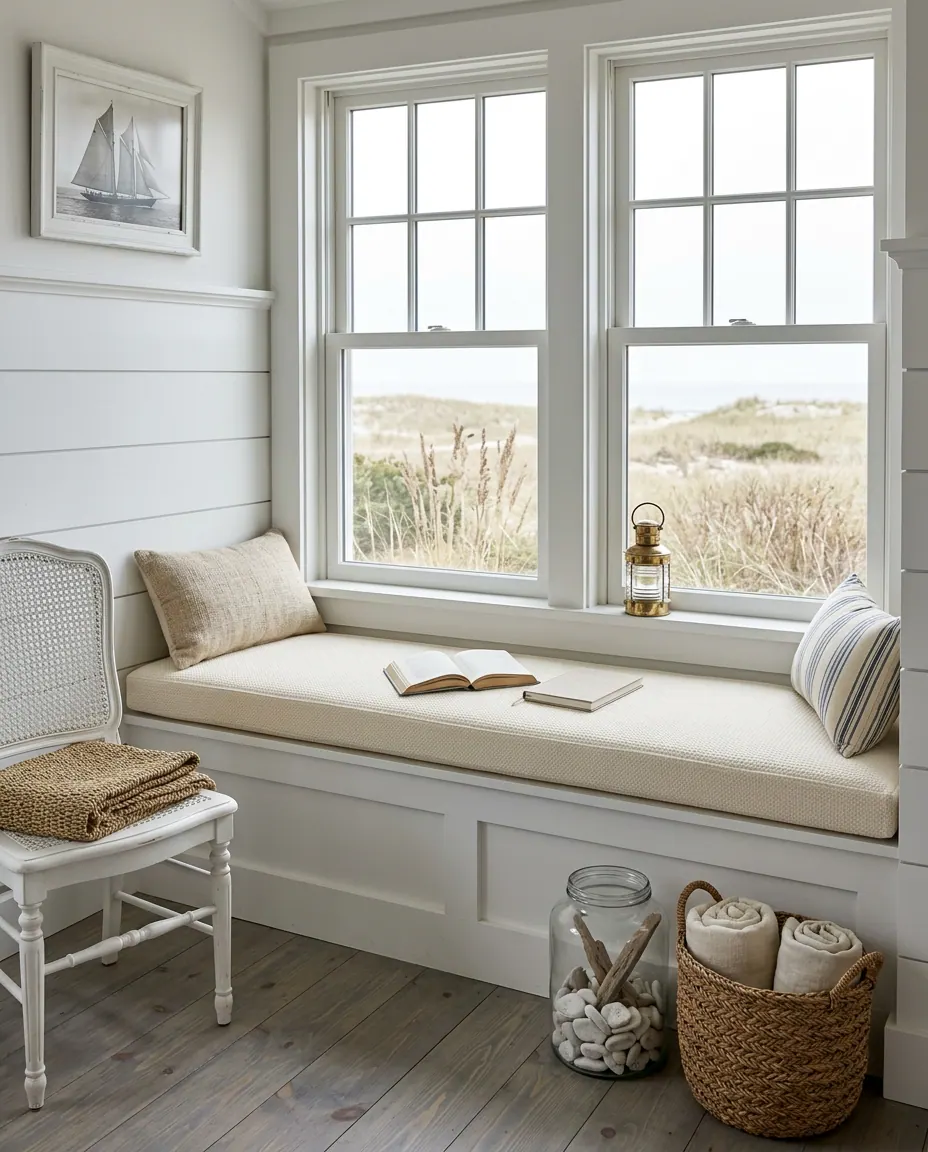
Any of them, as long as you type them. Australian buyers often send millimeters, like 27 x 74 in (685 x 1880 mm) for a bay window seat. Put every edge on a drawing; the workshop confirms the shape and the quote before it cuts.
Fair winds — Callum
Concept Sketches
Sketches for homes like these
Real projects, drawn up as ideas you can borrow.
The atelier
Keep going
Across the Map
Nearby places
Close by on the map