Across the Map · Europe
Custom cushions for Lithuanian apartments, country homes and seaside cottages
Lithuanian mythology kept a god of flax and hemp, and I understand why. Natural linen, in oatmeal, ecru and ash gray, is the color of a northern room at rest. Here is how I choose cloth for the long winter and the short, bright summer.
- Sun & UVModerate
- HumidityHumid
- WinterCold
- CoastSalt air nearby
- Typical seatsDeep-sill window seat, old-town apartment window ledge, homestead kitchen bench

 Save
The quick answer
Custom cushions in Lithuania should pair linen's natural colors with warmer textures for winter. Choose a linen blend or a 100% cotton linen-look for apartments and country homes, velvet or corduroy for deep-sill window seats in the dark months, and water-repellent outdoor fabric for seaside cottages. Vilnius averages 25°F (−3.9°C) in January and 66°F (18.7°C) in July.
Between the sea and the continent: 25°F in January, 66°F in July
Custom cushions in Lithuania live in a climate that sits between sea and continent. The national weather service, LHMT, describes it that way: the west, close to the Baltic, milder and steadier; the east with warmer summers and colder winters. Winters have been growing milder.
In Vilnius, the 1991–2020 normals give 25°F (−3.9°C) in January and 66°F (18.7°C) in July, 27 in (691 mm) of precipitation and about 1,769 hours of sunshine a year. Relative humidity averages 79%.
For color, that makes two lights. Winter light is low and short, and it grays everything it touches; summer light is long and generous. Choose for the winter light, my friends. Summer forgives almost anything.
Flax, and what 'linen' really means on a cushion
Flax runs deep here. Lithuanian mythology, as Jan Łasicki recorded it, had a god of flax and hemp, Vaižgantas. Natural linen still carries the plant's own palette: oatmeal, ecru, ash gray, the ivory of cloth bleached on the grass. Which of those lives in your house already?
Linen has a character to respect. It has little stretch, so it creases; it grows softer with every wash; it dries faster than cotton. On a cushion that reads relaxed, never stiff.
Now the honest part. The workshop's standard natural linen chart is a blend, 50% linen and 50% polyester, and some linen-look codes are 100% polyester. If you want a natural fiber, there is a 100% cotton linen-look; hemp isn't offered. Read real linen vs linen-look and see the linen and cotton-linen swatches before you choose.
Old-town sills, homestead benches, dune cottages
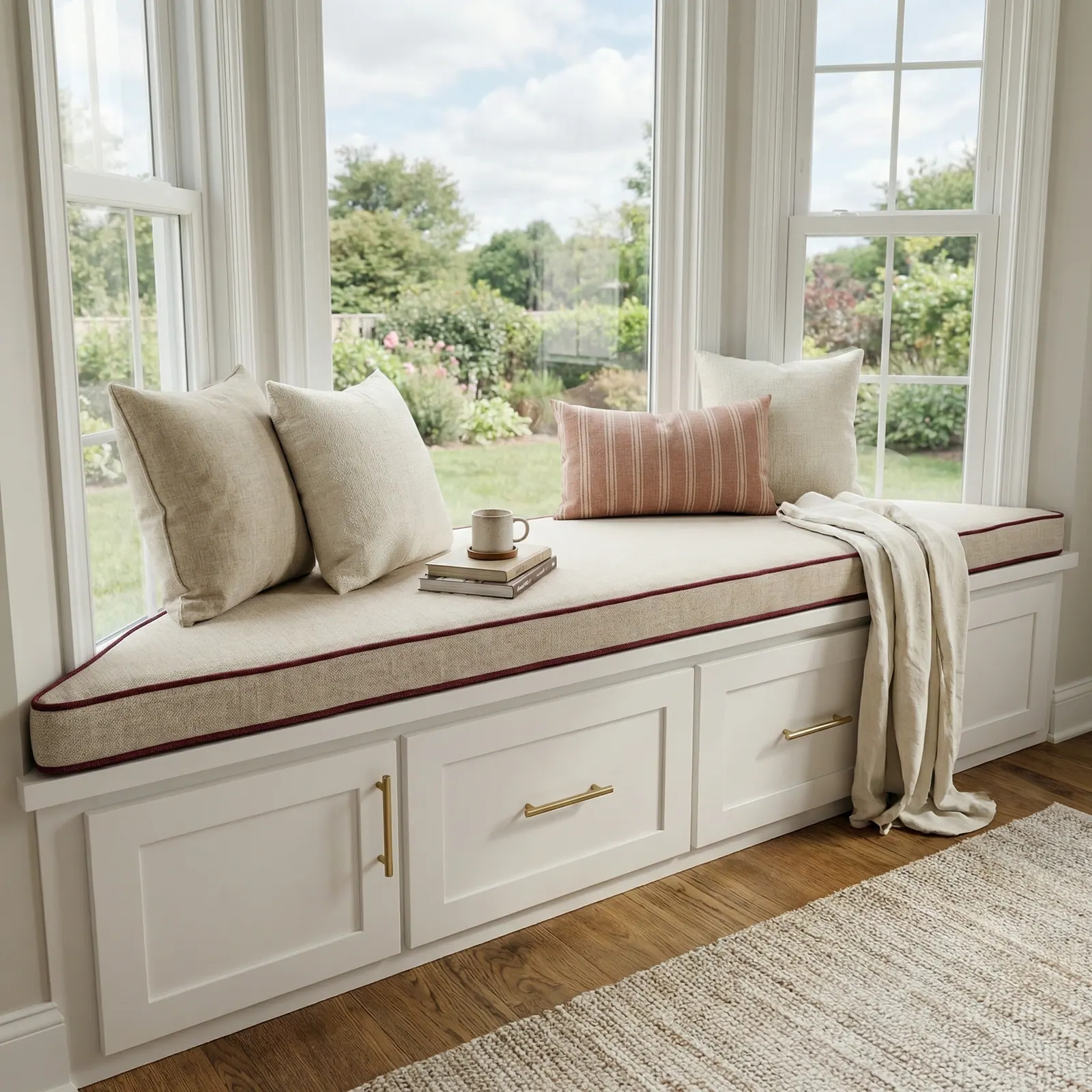
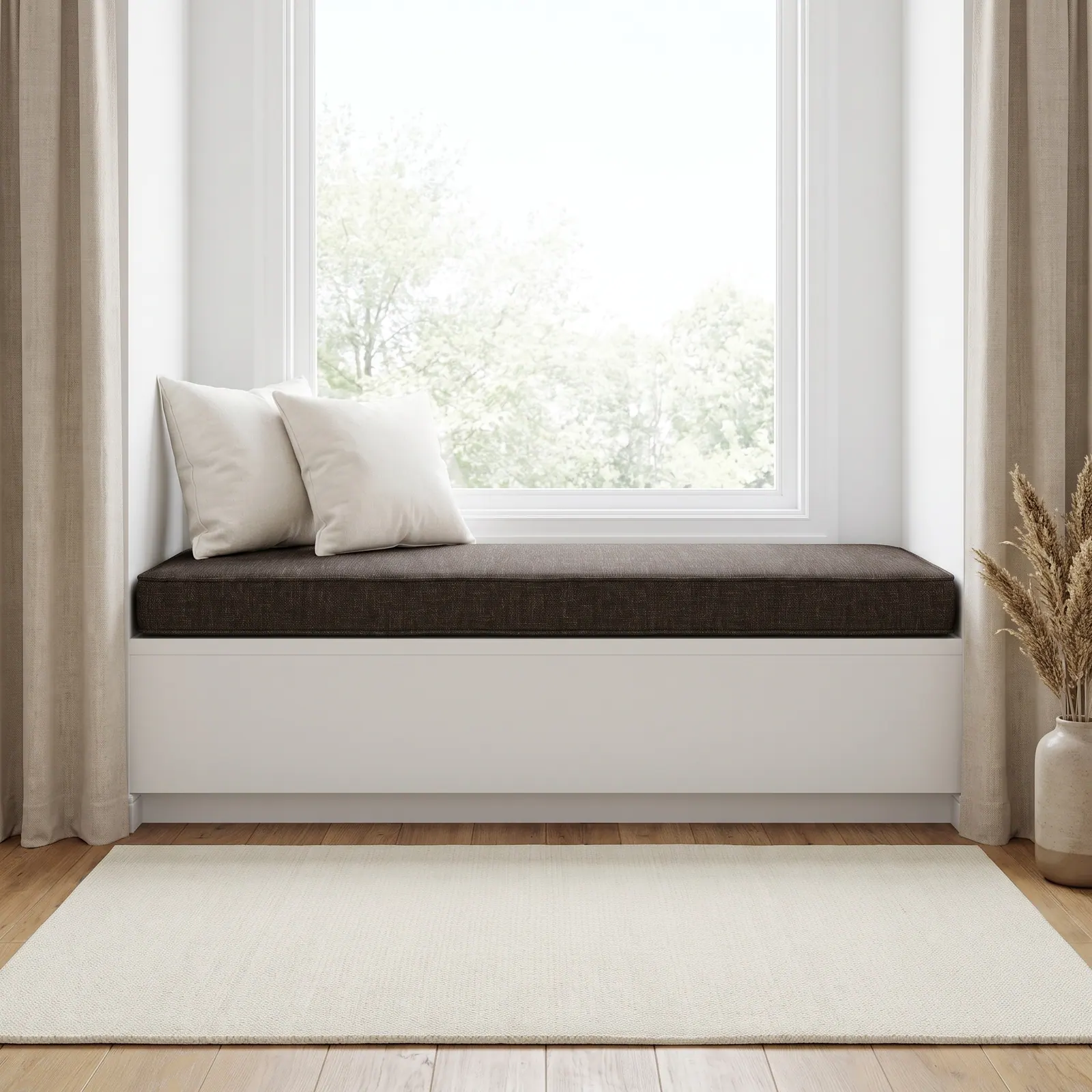
Vilnius Old Town has been on the UNESCO list since 1994 and is counted among the largest and best-preserved old towns in Europe; Vilnius is also called the largest Baroque city north of the Alps. Old masonry walls make deep window reveals, so custom cushions in Vilnius often start at the sill. A 2 in (5 cm) cushion keeps the window free to close above it; see window seat cushions.
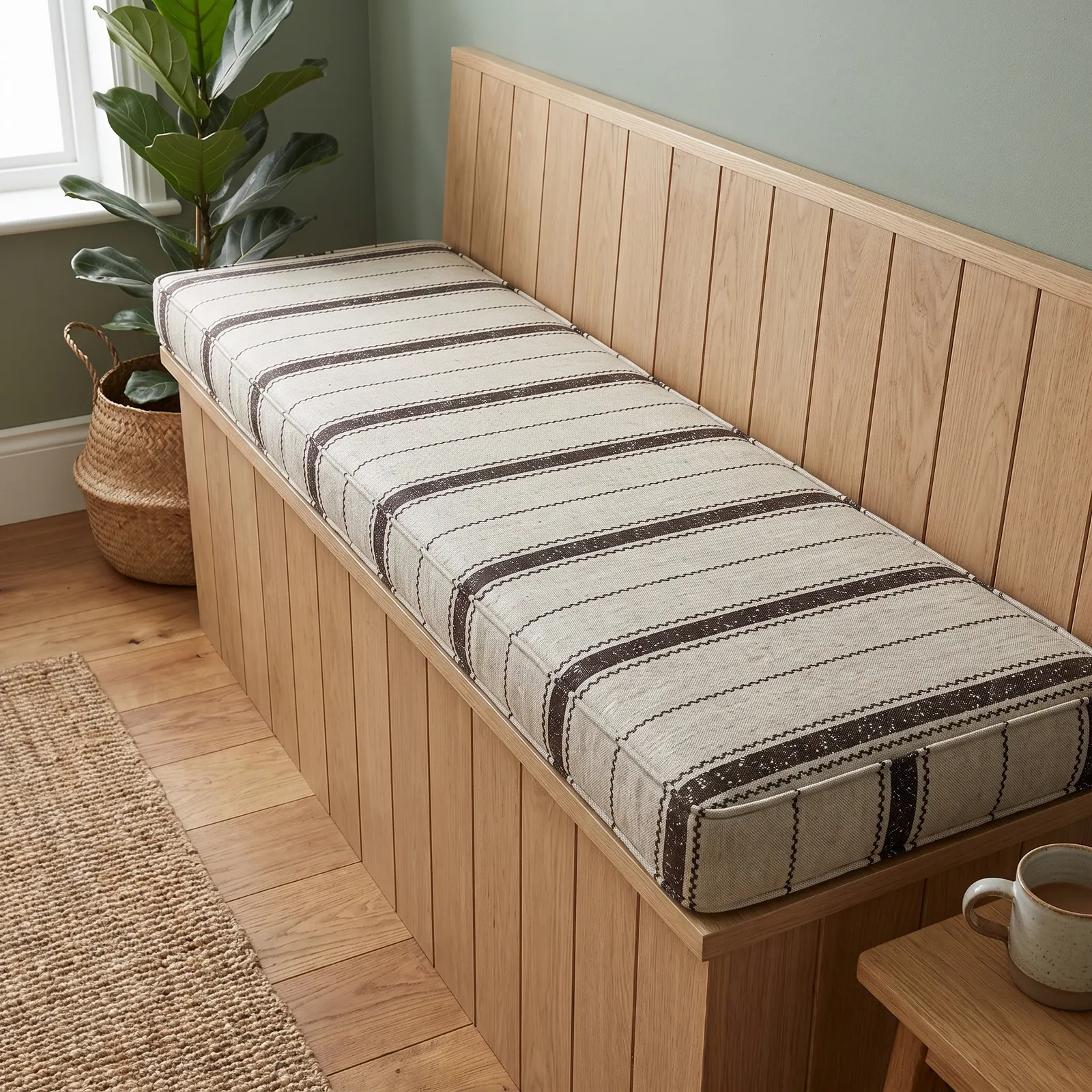
Country homesteads keep an older rhythm. The open-air museum at Rumšiškės gathers 140 buildings from the 18th and 19th centuries on 175 ha (432 acres), farmsteads from each main ethnographic region. A long kitchen bench is where a bench cushion earns its keep.
On the Curonian Spit, 32 mi (52 km) of the 61 mi (98 km) sand spit is Lithuanian, with drifting dunes that average 115 ft (35 m). Nida welcomes 200,000 to 300,000 visitors each summer, and Thomas Mann spent the summers of 1930 to 1932 in his cottage there. Summer house cushions on the spit are outdoor cushions: salt, sand and wind come with the view.
Linen for summer, pile for winter
| Seat | Fabric | Foam and thickness | Piping |
|---|---|---|---|
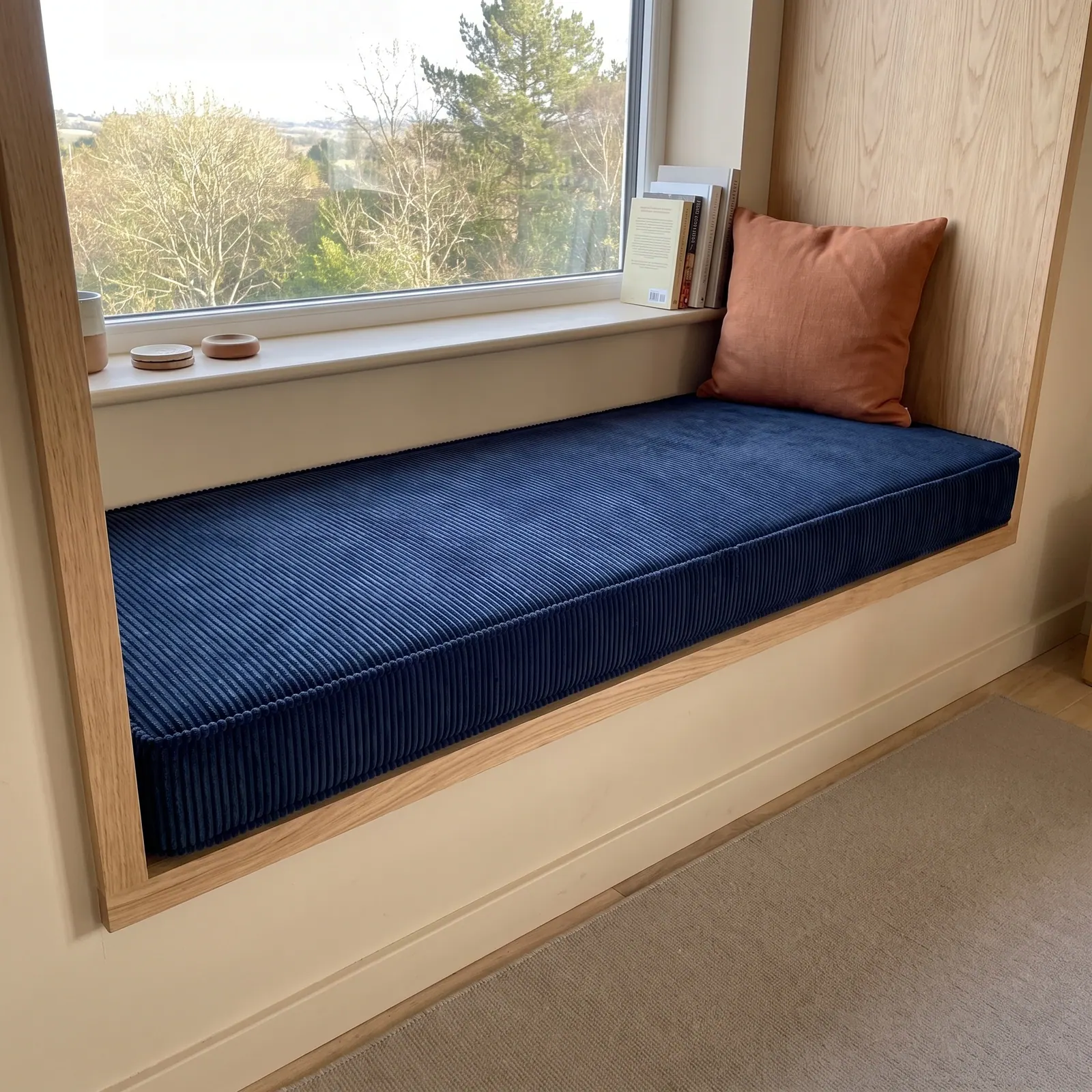
| Old-town deep-sill window seat | Velvet or corduroy for winter warmth | 2 in (5 cm) under a window that must close; 1 1/4 in (3 cm) is the thinnest that takes piping | Self piping keeps the edge quiet |
| Apartment window seat or daybed | Linen blend (50% linen) in oatmeal, ecru or ash gray | 3 to 4 in (7.5 to 10 cm) | Contrast piping one shade darker, in flax brown |
| Homestead kitchen bench | 100% cotton linen-look or soft poly-cotton | 2 to 3 in (5 to 7.5 cm) | Zippered cover, washable at 86°F (30°C) |
| Dining chair pads | Linen blend | 1 1/2 to 2 in (4 to 5 cm), with ties | Piping and tie color named by code |
| Curonian Spit cottage bench | Water-repellent, UV-resistant outdoor linen-look | 3 in (7.5 cm) | Ties against the sea wind |
Velvet and corduroy are not waterproof; wipe cold-window condensation before it reaches the cushion. Outdoor fabric is water-repellent, not waterproof.
Sage linen that turned olive, and eight chair pads
A buyer wrote to the workshop about a sage linen cushion, code L56, with red piping. In person the sage read more olive than she wanted, and the red darker. The workshop made new covers in 945, a dark red.
Then she ordered eight covers for her dining chair pads: slightly trapezoid, rounded at the front corners, about 17 3/4 x 17 x 19 3/4 x 17 in (45 x 43 x 50 x 43 cm) and 1 1/2 in (4 cm) thick, with bow ties. They arrived about 3/4 in (2 cm) short on each side, with piping that looked like 946 and ties too short. The workshop remade them 1/2 to 3/4 in (1 to 2 cm) larger, piped in 945.
Two lessons live in that story. Soft, natural greens shift with the light more than almost any color I know, so judge sage beside your own window, in the daylight you actually have. And when covers go over existing foam, measure the bare insert, add 1/2 to 3/4 in (1 to 2 cm) of ease, and write down the tie length and color.
- Measured
- 8 chair pad covers, about 17 3/4 x 17 x 19 3/4 x 17 in (45 x 43 x 50 x 43 cm), 1 1/2 in (4 cm) thick, remade 1/2 to 3/4 in (1 to 2 cm) larger
- What it taught
- For covers over existing foam, measure the bare insert, add 1/2 to 3/4 in (1 to 2 cm) of ease, and specify tie length and color in writing.
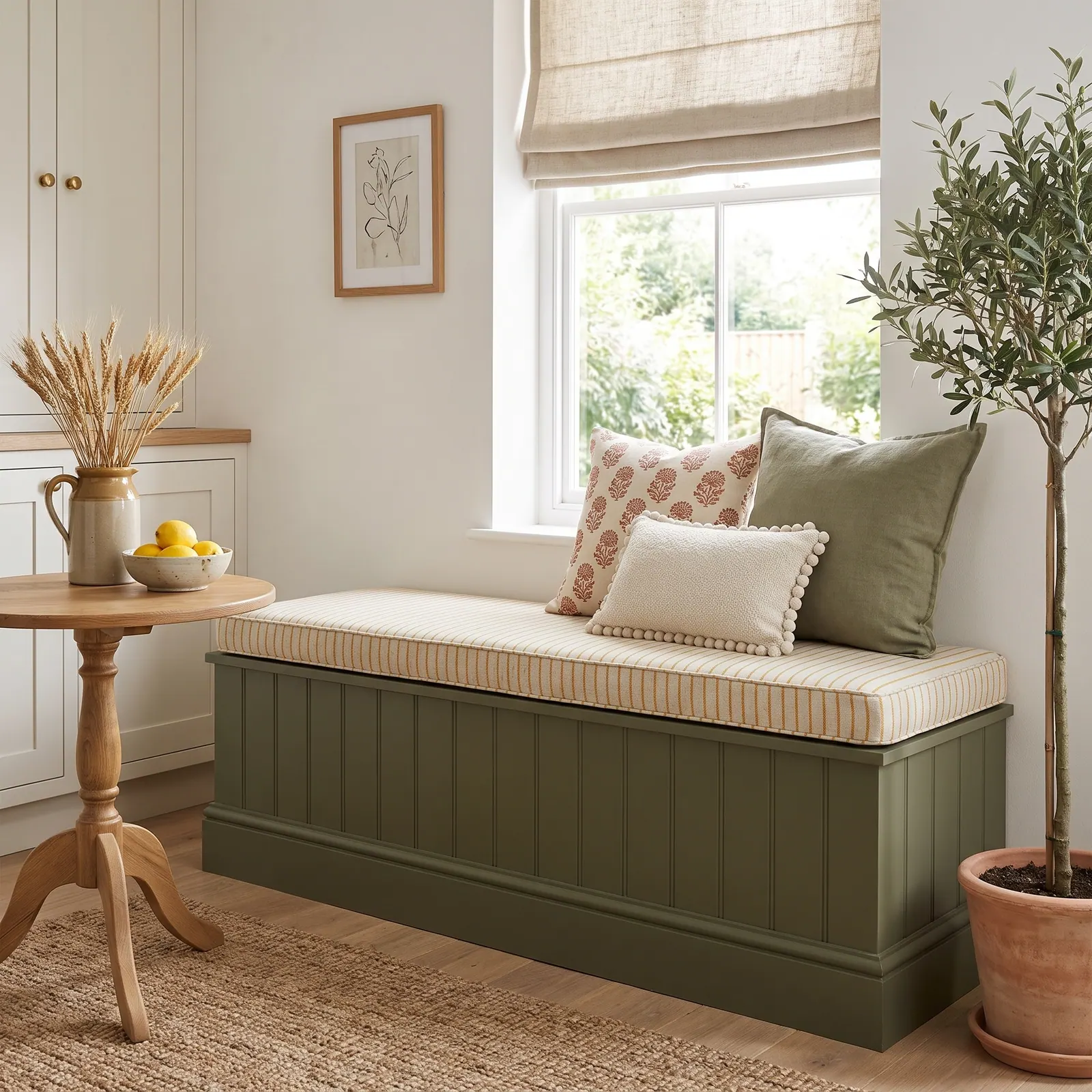
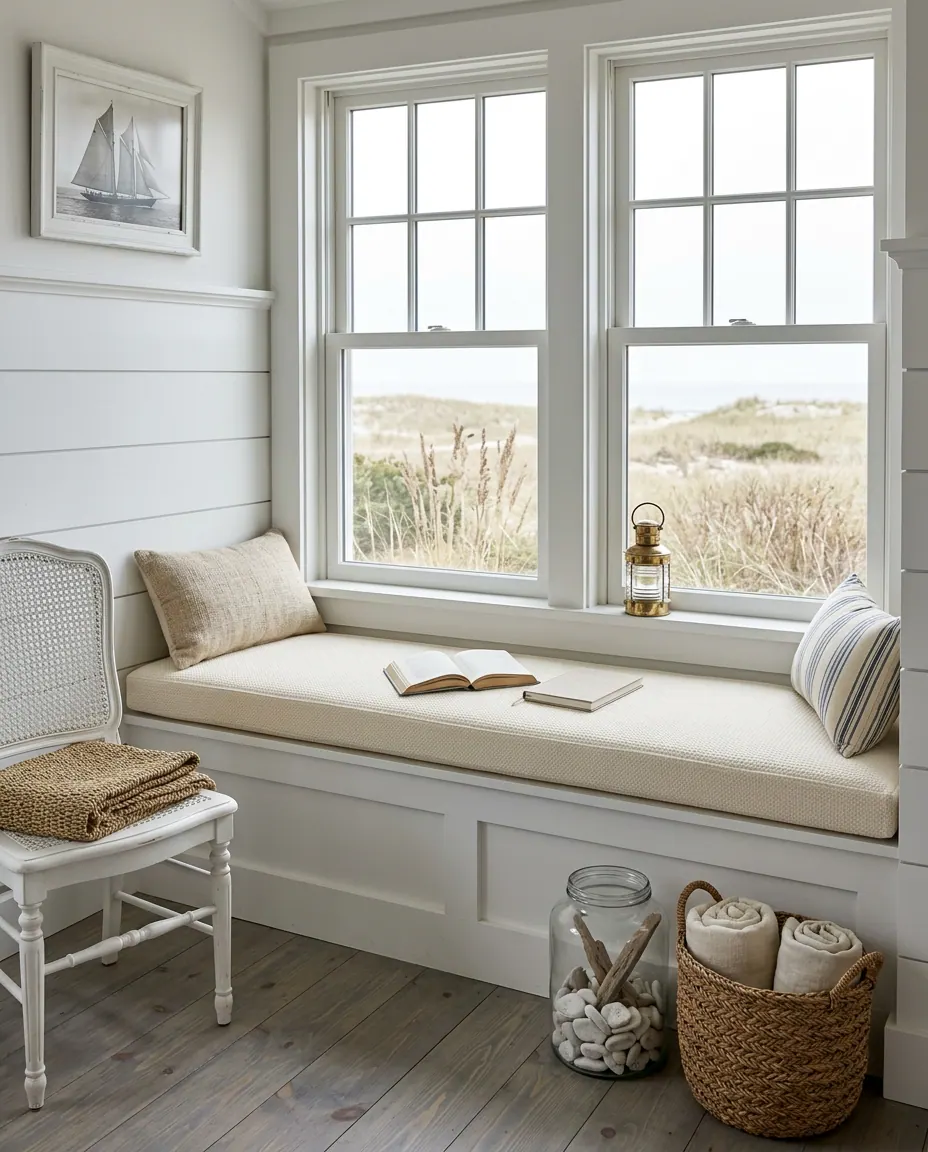
Photographs for homes like these
Open any photograph large; each one has its own link and a Save button.
 Save
 Save
 Save
 Save
 Save
The Lithuanian linen year
- March: wash linen covers at 86°F (30°C) on a gentle cycle and air dry; linen softens with every wash.
- April: as the light returns, put the linen cover back on the window seat and store the velvet one clean.
- June to August: seaside and garden cushions go out. Bring them in before storms, which hit the spit harder, and brush sand from the zippers.
- September: store outdoor cushions indoors, dry to the core, in breathable bags.
- November to February: velvet or corduroy on the deep sills. Wipe the glass on cold mornings and lift the cushion to air it.
Let linen crease. A creased cushion says someone sat there last night, and that is the whole point of a cushion.
Élodie
Buyer questions: linen-look, corduroy and a second cover
- A common question
Can I use the cotton ticking stripe for garden cushions that stay out all year?
The workshop's answerNo. The ticking stripe is 100% cotton and isn't suitable for outdoors. Use the outdoor linen-look fabrics instead: they're water-repellent and UV-resistant, and they come in natural tones.
- A common question
Can I order a spare cover, now or later?
The workshop's answerYes. The workshop can make an extra cover at any time, now or in the future, in the same fabric or a different one. One buyer asked for a second set in another color to rotate for cleaning, which the workshop quotes as an option.
- A common question
Can the corduroy stripes on the side band run vertically, like in the photos?
The workshop's answerThe side band is normally cut with the stripes running horizontally, because of the length of the fabric roll; that keeps the sides seamless. Vertical side stripes are possible as a special request, but the band may then need joins along the way.
- A common question
Will the color look the same in person as on my screen?
The workshop's answerThere can be small differences because of daylight. That's why the workshop sends real-life photos of the fabric on finished cushions and suggests ordering fabric samples first.
- A common question
Should a very long 103 in (262 cm) bench cushion be one piece or two?
The workshop's answerBoth are possible: one 103 in (262 cm) piece or two of 51 1/2 in (131 cm). The workshop recommends two pieces, but it made a single long one, 15 3/4 in (40 cm) deep and adjusted to 103 1/2 in (263 cm), when the buyer asked for it.

Have it made
Have it made for your home — ask Élodie’s workshop
A fabric reads one way at noon and another at dusk. Mention your light, and the workshop will weigh it with you. — Élodie
Leave your details and the workshop will call you to confirm measurements, fabric, foam and piping. No prices, dates or payment on this page: it is a request, not an order.
Lithuania cushion questions
Is linen a good cushion fabric for a Lithuanian winter?
Linen is lovely but cool to the touch, and it creases easily. For deep-sill window seats in the dark months, velvet or corduroy feels warmer; keep linen for daybeds, dining chairs and summer rooms, or keep a second cover in each.
What natural colors suit a linen cushion?
Stay close to the flax itself: oatmeal, ecru, ash gray and ivory, with one darker accent such as a flax-brown or dark red piping. These tones hold up in low winter light, when stronger colors can turn muddy.
Do seaside cushions on the Curonian Spit need special care?
Yes. Use water-repellent, UV-resistant outdoor fabric, add ties against the wind, and brush off sand and salt before the covers dry. Bring cushions in before storms, which tend to be stronger on the spit, and store them dry for winter.
How thin can a window ledge cushion be?
Cushions can go down to 3/4 in (2 cm) or 1 in (2.5 cm), but only without piping; 1 1/4 in (3 cm) is the thinnest that still takes piping. On a deep old-town sill, 2 in (5 cm) is a common choice when the window must close above it.
With color and care — Élodie
The atelier
Keep going
Across the Map
Nearby places
Close by on the map