A Reading by CallumChaise Lounge & Sunbed Cushions
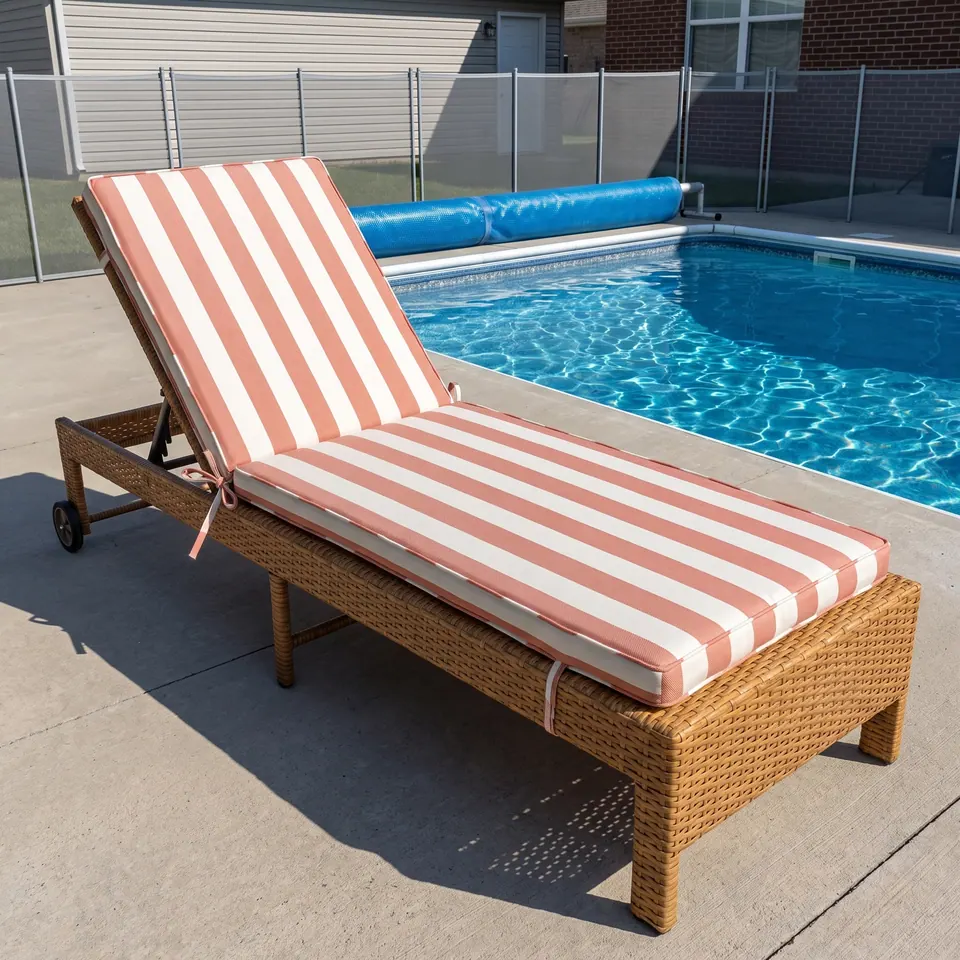
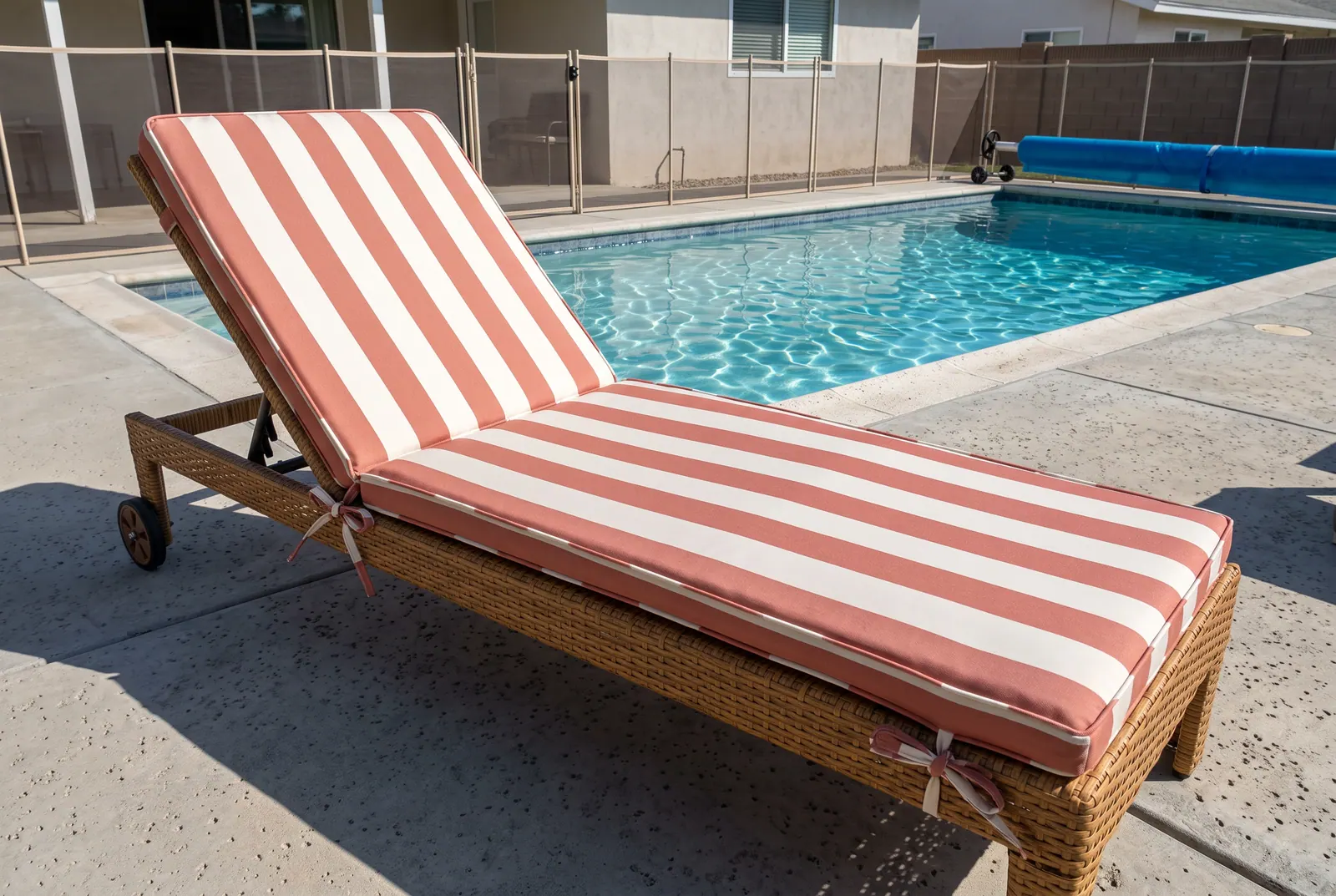
A terracotta awning-stripe sunbed cushion tied to a wicker lounger, and what the cloth does in hard sun
Callum opens with three buyer questions, then reads a striped lounger cushion on a pool deck for how its water-repellent cloth sheds rain, holds color and takes a wash.
 Save
The quick answer
A sunbed cushion for a wicker chaise should be tied at the hinge and at the foot so it cannot creep when the backrest rises. Water-repellent outdoor cloth sheds rain but is water-resistant, not waterproof, so store the cushions indoors off-season. Standard outdoor thickness is 4 in (10 cm); thicker is possible at an updated price.
Three questions off the pool deck
- A common question
Can you make seat and back cushions for an outdoor daybed and have them delivered by a set date?
The workshop's answerYes. For one buyer's 88½ x 25½ in (225 x 65 cm) seat base and 88½ x 25¼ in (225 x 64 cm) high back, finalizing the order the same day left time for production and prompt shipping ahead of the deadline. Order through the outdoor listing and give the thickness of the seat base and of the backrest separately in the notes.
- A common question
How thick are your outdoor cushions, and could I get 6 in (15 cm)?
The workshop's answerThe standard outdoor thickness is 4 in (10 cm), and quotes assume that unless you say otherwise. Thicker cushions, such as 5 in or 6 in (15 cm), can be made at an updated price.
- A common question
What is the fabric code of the cushion in the listing photo?
The workshop's answerJust ask: the workshop replies with the code and a close-up. The wide blue, beige, sand and white stripe on the outdoor listing is V-38. The green in one customer photo was teddy color 18, with 922 also possible, and the thin green stripe was N-21.
Now, the reading
What the membrane cloth does with rain and sun
Here is the part people get wrong, friend. Outdoor cloth like this is water-resistant, not waterproof. A summer shower beads up and runs off the surface. A cushion left face-down in a puddle for a week will still find a way to let water into the foam. Water-repellent is a promise; waterproof is a contract.
In the hand, this cloth is smooth and a little firm, the way a good awning feels when you run your palm along it. Nothing fuzzy for sand or grass to cling to. When the season ends, the cover unzips for a gentle wash at 86°F (30°C).
Then the sun. This deck takes hard afternoon light with sharp shadows. Terracotta is a muted, earthy red, and a muted warm stripe ages more gracefully under that kind of sun than a bright red does. When terracotta lightens it reads as weathered; when bright red lightens it reads as tired.
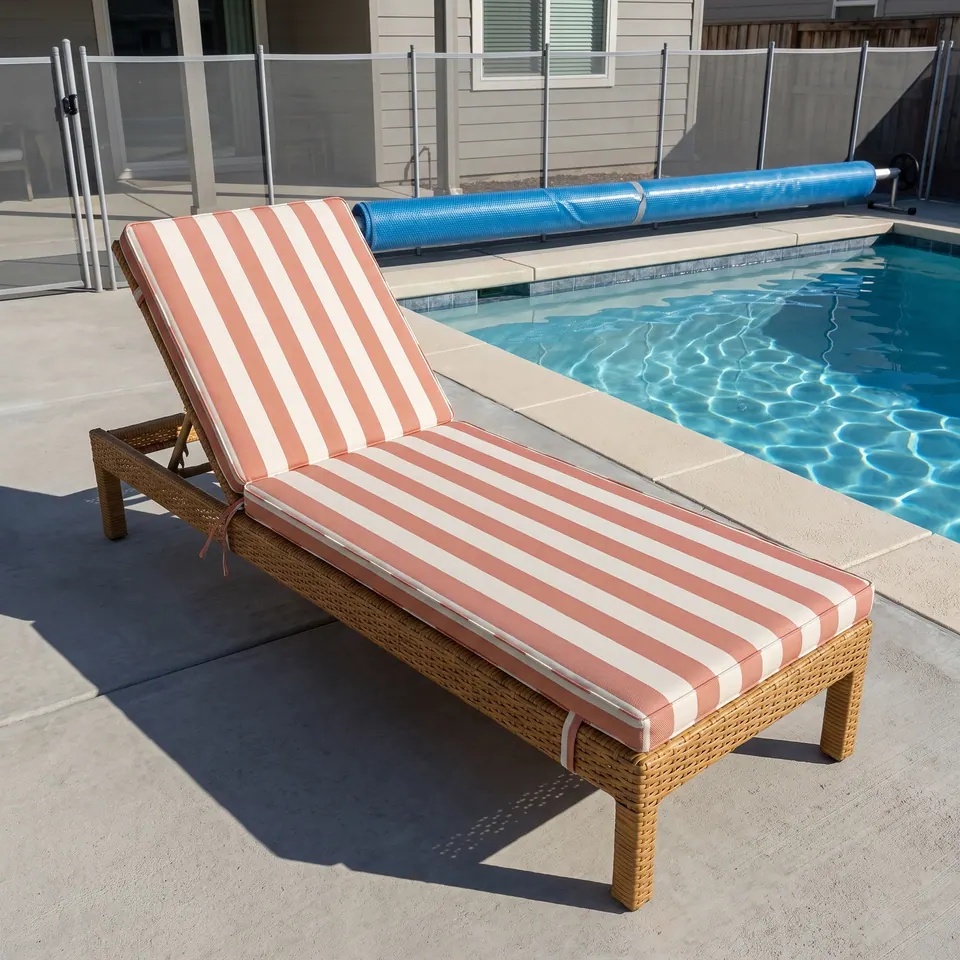
Wide awning stripes run the length of the lounger, which stretches it and hides the fold at the hinge. Honey wicker and pale concrete are both warm; the blue pool is the one cool note that sets them off. More of this cloth sits on the water-repellent membrane shelf, and the water-repellent versus waterproof Pattern spells out the difference.
Pinned by Callum: stripe, hinge and foot
Two ties do the real work here, one at the hinge and one at the foot; the stripes and the pool explain the color.
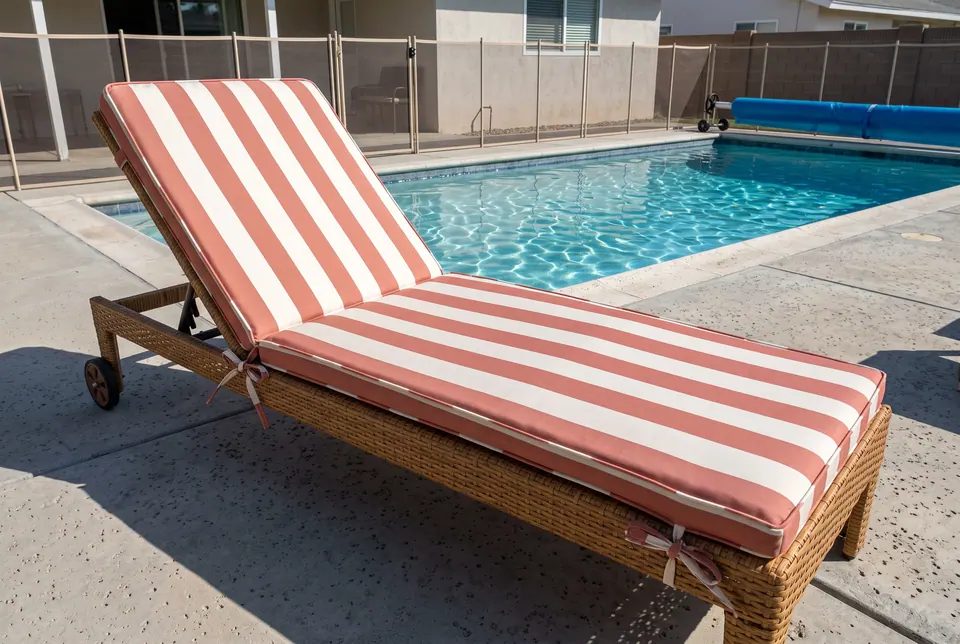
- Awning-stripe backrest
Wide stripes run lengthways, stretching the lounger and hiding the fold line.
- Tie at the hinge
A tie here stops the cushion creeping down when the backrest is raised.
- Tie at the foot
The ties are cut from the same stripe and knotted into bows, so the fixing becomes decoration.
- Seat stripes
Terracotta sits warmly against the honey wicker and pale concrete.
- Pool
Cool blue water sets off the warm stripe.
- Awning-stripe backrestWide stripes run lengthways, stretching the lounger and hiding the fold line.
- Tie at the hingeA tie here stops the cushion creeping down when the backrest is raised.
- Tie at the footThe ties are cut from the same stripe and knotted into bows, so the fixing becomes decoration.
- Seat stripesTerracotta sits warmly against the honey wicker and pale concrete.
- PoolCool blue water sets off the warm stripe.
New cushions or new covers: the refresh arithmetic
| Question | Full new cushions | Covers only on your old foam |
|---|---|---|
| Foam | New foam in every piece | Keep foam that still springs back |
| Relative cost | Higher | About a third less on one real set |
| What to measure | The frame and seat openings | Each foam piece itself |
| Best when | Foam is flat or crumbling | Foam is sound, fabric is tired |
| Off-season | Store indoors | Store indoors |
A tired patio set, two quotes and a straight answer
One buyer wrote in wanting to refresh a whole patio lounge set: six seats at 24½ x 24½ x 4 in (62 x 62 x 10 cm), five backs at 24½ x 14¼ x 3¼ in (62 x 36 x 8 cm) and two sides at 20 x 14¼ x 3¼ in (51 x 36 x 8 cm). Thirteen pieces in all.
They asked for two quotes: full new cushions, or water-resistant covers only for the foam they already had. The covers-only quote came in about a third lower. When the foam is still good, that is money you keep.
Then came the question buyers do not always want answered honestly. Are the covers waterproof? The workshop said no: the outdoor fabrics are water-resistant, not waterproof, and the cushions should come indoors for the off-season. I have seen more cushions ruined by one wet winter than by ten sunny summers.
The lesson: before you replace a patio set, squeeze the old foam. If it springs back, order covers. The patio set cushion refresh sketch walks the whole job, and the sunbed cushion Atlas shows lounger shapes.
On the cutting table: the striped lounger
| Piece | Seat-and-back sunbed cushion with a fold at the hinge |
|---|---|
| Fabric | Terracotta and white awning stripe, water-repellent membrane |
| Edge | Box edge with self piping |
| Stripe direction | Lengthwise, head to foot |
| Ties | Striped fabric ties at the hinge and the foot, knotted in bows |
| Thickness | Standard outdoor 4 in (10 cm); thicker on request |
| Care | Removable cover, gentle wash at 86°F (30°C); indoors off-season |
| Best for | Wicker and woven chaise loungers in full sun |

Have it made
Have this made — ask Callum’s workshop
Short list: size, sun hours, how fast it has to dry. The workshop goes through it with you. — Callum
Leave your details and the workshop will call you to confirm measurements, fabric, foam and piping. No prices, dates or payment on this page: it is a request, not an order.
A sunbed cushion on a wicker lounger needs two ties: one at the hinge so it cannot creep when the back rises, one at the foot so it stays square.
Callum
Questions buyers ask next
Where should ties sit on a cushion for a wicker chaise with a raising backrest?
At the hinge and at the foot. A hinge tie stops the cushion creeping down when the backrest goes up, and a foot tie keeps the lower end square on the frame. Ties cut from the same stripe and knotted in bows turn the fixing into trim.
Why choose terracotta over bright red for a sunbed in full sun?
Even sun-resistant outdoor cloth softens a little after seasons of hard light. A muted, earthy terracotta drifts toward a weathered look that still suits wicker and concrete, while a bright red tends to look tired as it lightens.
Is it worth replacing only the covers on an old patio lounge set?
If the foam still springs back, often yes. On one real set of thirteen pieces, covers only came to about a third less than full new cushions. Measure each foam piece itself and store the refreshed set indoors when the season ends.
Should awning stripes on a lounger cushion run lengthwise or across?
Lengthwise, head to foot, in most cases. Long stripes stretch the lounger visually and hide the fold line at the hinge, while cross stripes cut the cushion into bands. Note the stripe direction in your order if you have a preference.
Fair winds — Callum
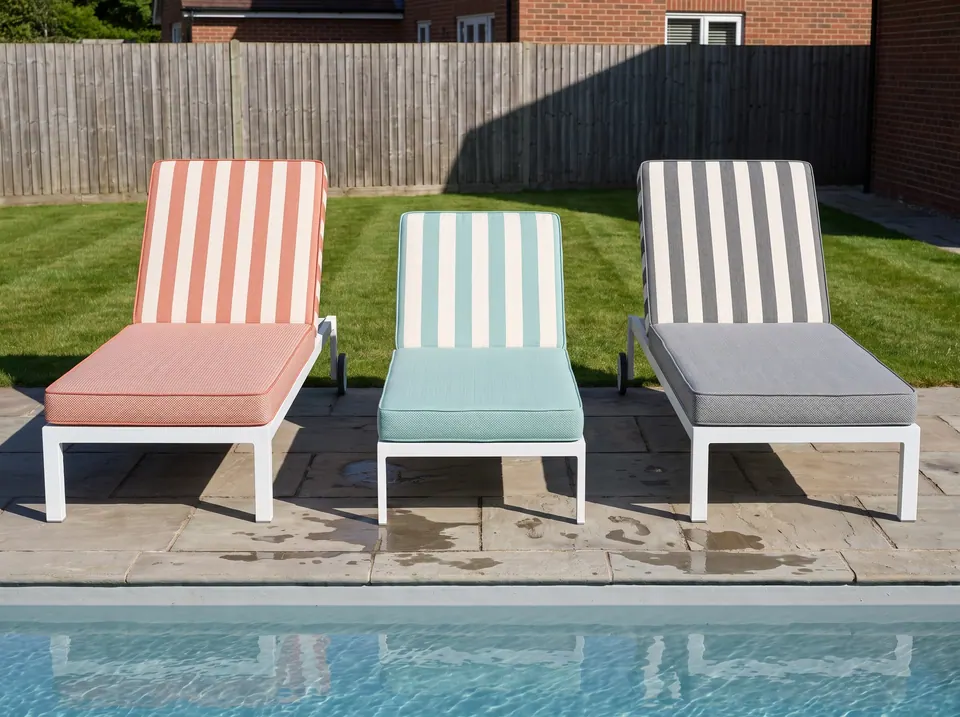
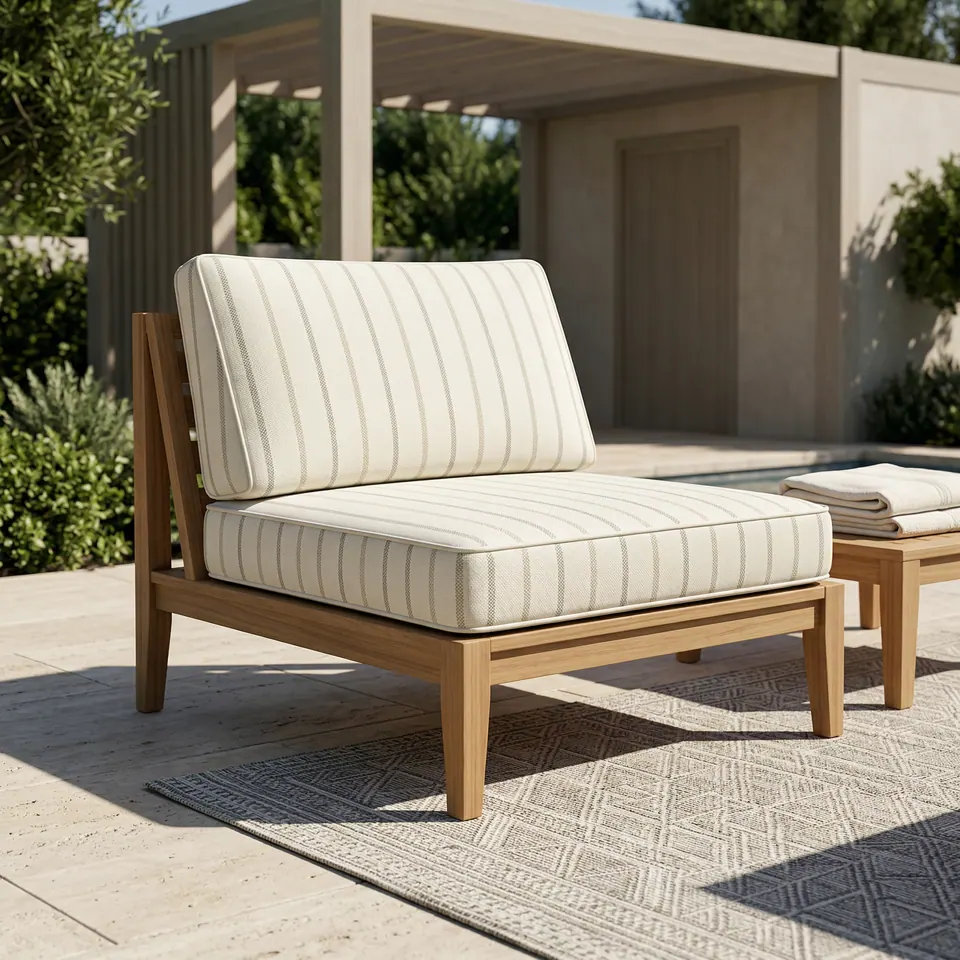
More photographs to read
 Save
 Save
 Save
 Save
 Save
 Save