Across the Map · Europe
Outdoor cushions for Greek island terraces, courtyards and built-in benches
On a Cycladic roof, the wall is the brightest thing you own. Choose cushions that can stand beside whitewash at noon and still look like a color at dusk.
- Sun & UVIntense
- HumidityModerate
- WinterMild
- CoastSalt air nearby
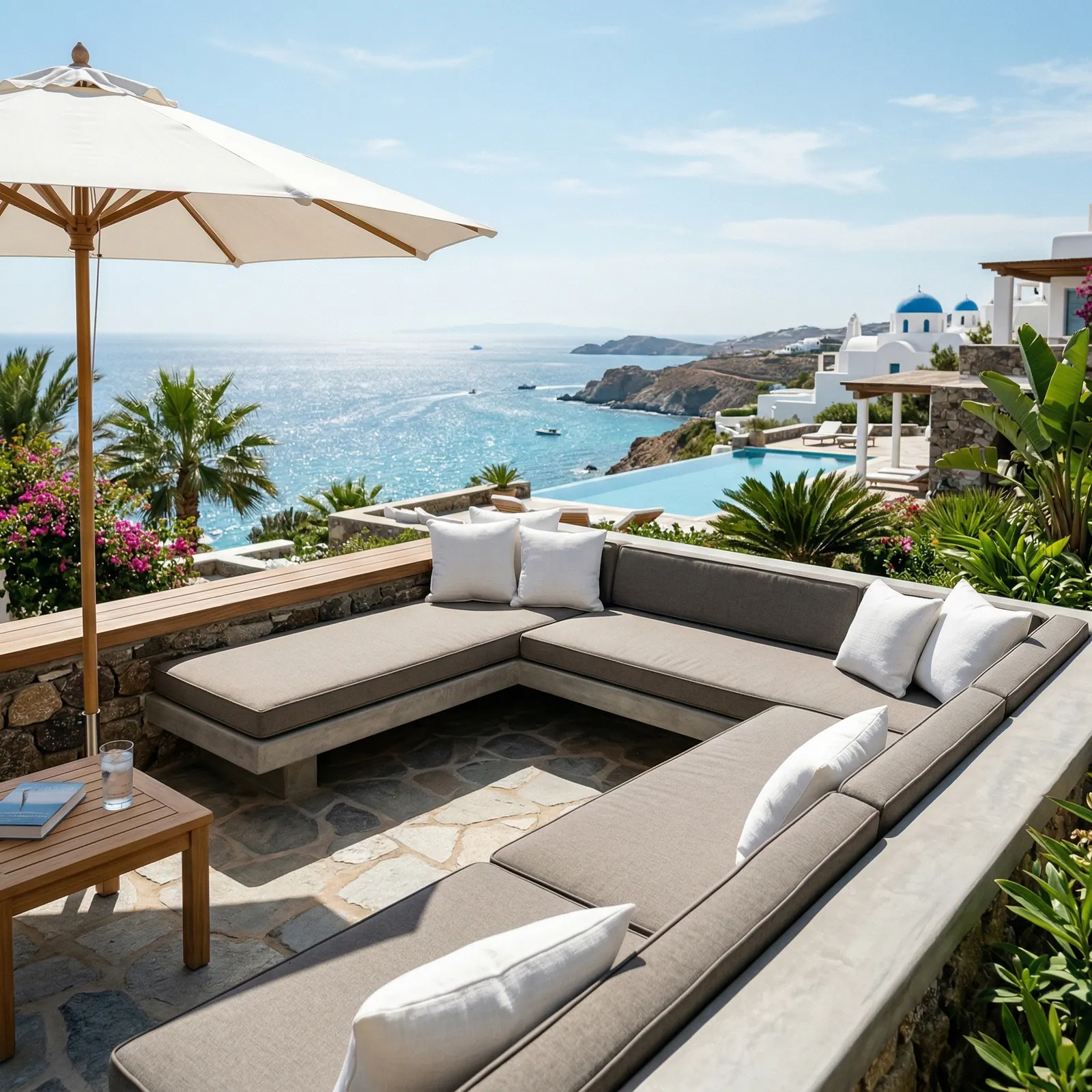
- Typical seatsBuilt-in masonry bench, masonry or roof-terrace sunbed, courtyard banquette under a pergola
 Save
The quick answer
Outdoor cushions in Greece need UV-resistant, water-repellent outdoor fabric, ties or a non-slip base for the meltemi, and sizes cut to the built-in masonry benches of terraces and courtyards. The meltemi blows from about mid-May to mid-September, can reach force 7-8 and peaks in the afternoon, so tie seats down and carry loose pillows in.
Sun, sea glare and the meltemi
Greece is Mediterranean in the plainest sense, hot and dry in summer, mild and wet in winter, though its mountains give it eleven climates in all. The light is generous. Athens gets about 2,192 hours of sunshine a year and southern Crete more than 3,250. The Hellenic National Meteorological Service called the summer of 2024 by far the warmest on record, with average summer temperatures as high as 90°F (32.0°C).
Everything around a Greek cushion reflects. The white walls are there to limit heat absorption, and the sea adds its own glare: the WHO puts sea foam at about 25 percent UV reflection. A cushion on a roof terrace is lit from above and from the side, so saturated colors fade first and dark cushions get hot to sit on at noon.
Then there is the wind. The meltemi blows from about mid-May to mid-September, most often in July and August: north to northeast over the northern islands, northerly in the middle, northwesterly in the south. It can reach force 7-8 on the Beaufort scale, peaks in the afternoon and often drops at night, though sometimes it runs for days. A loose cushion on a roof is a small sail.
- Tie what can be tied. Ties at the back corners of chair pads; ties at the ends of a bench cushion where there is a frame.
- Grip what can't. A masonry bench has nothing to tie to, so ask for a non-slip base.
- Carry the rest in. Throw pillows and thin sunbed pads go inside when the afternoon wind rises.
Benches the house was built with
The traditional Cycladic house began as a single-room cube of about 10 x 13 ft (3 x 4 m) and 8 ft (2.5 m) high, with walls 24-31 in (60-80 cm) thick and small openings, often facing southeast. Walls that thick leave deep window niches that make natural seats, and many terraces and courtyards have masonry benches built in, rendered and whitewashed along with the house.
Masonry is honest but rarely square. Measure the front and the back, both ends, and the depth at each end. If the numbers disagree, send a paper template or a photo with the tape measure lying on the bench. Where a bench turns a corner, decide which cushion owns it; the U-shaped cushion hub covers the geometry.
In Athens, summer living moves out to wide apartment balconies and pergola-shaded courtyards: bistro chairs, a daybed, a long bench. Treat all of it as outdoors. A pergola slows fading; it doesn't stop rain.
A concrete sofa that needed a whole set, not a cushion
A buyer in Europe had a built-in concrete sofa and asked what it would take to make it truly sittable. The answer was a full set: three seats of 23.5 x 27.5 x 4 in (60 x 70 x 10 cm), a single back cushion of 83 x 13.75 x 2 in (211 x 35 x 5 cm) running the whole length, and two 23.5 in (60 cm) cylinder armrests to soften the hard ends.
The buyer wanted a light green. The workshop sent photos of mint and beige on real cushions, with an honest note that color shifts a little in daylight, plus linen color charts to choose from.
Two things I would copy on any Greek masonry sofa, my friends. First, quote it as a package, seats, back and bolsters together, because the ends of a masonry bench are where elbows land. Second, judge the green outdoors. Beside whitewash, mint can read almost white at noon and a cool gray-blue at dusk. On an open terrace I would cut the same sizes in outdoor fabric.
Cut list for island terraces and Athens balconies
| Seat | Fabric | Thickness | Meltemi plan |
|---|---|---|---|
| Built-in masonry bench | UV-resistant outdoor fabric | Seat 4 in (10 cm), back 2 in (5 cm) | Non-slip base; bolsters at the ends |
| Masonry or roof-terrace sunbed | Outdoor fabric with a mesh base for drainage | 3-4 in (8-10 cm) | Carry in when the afternoon wind rises |
| Courtyard banquette under a pergola | Water-repellent outdoor fabric | 4 in (10 cm) | Non-slip base; pillows come in at night |
| Athens balcony chair | Outdoor stripe | 2 in (5 cm) | Two ties at the back corners |
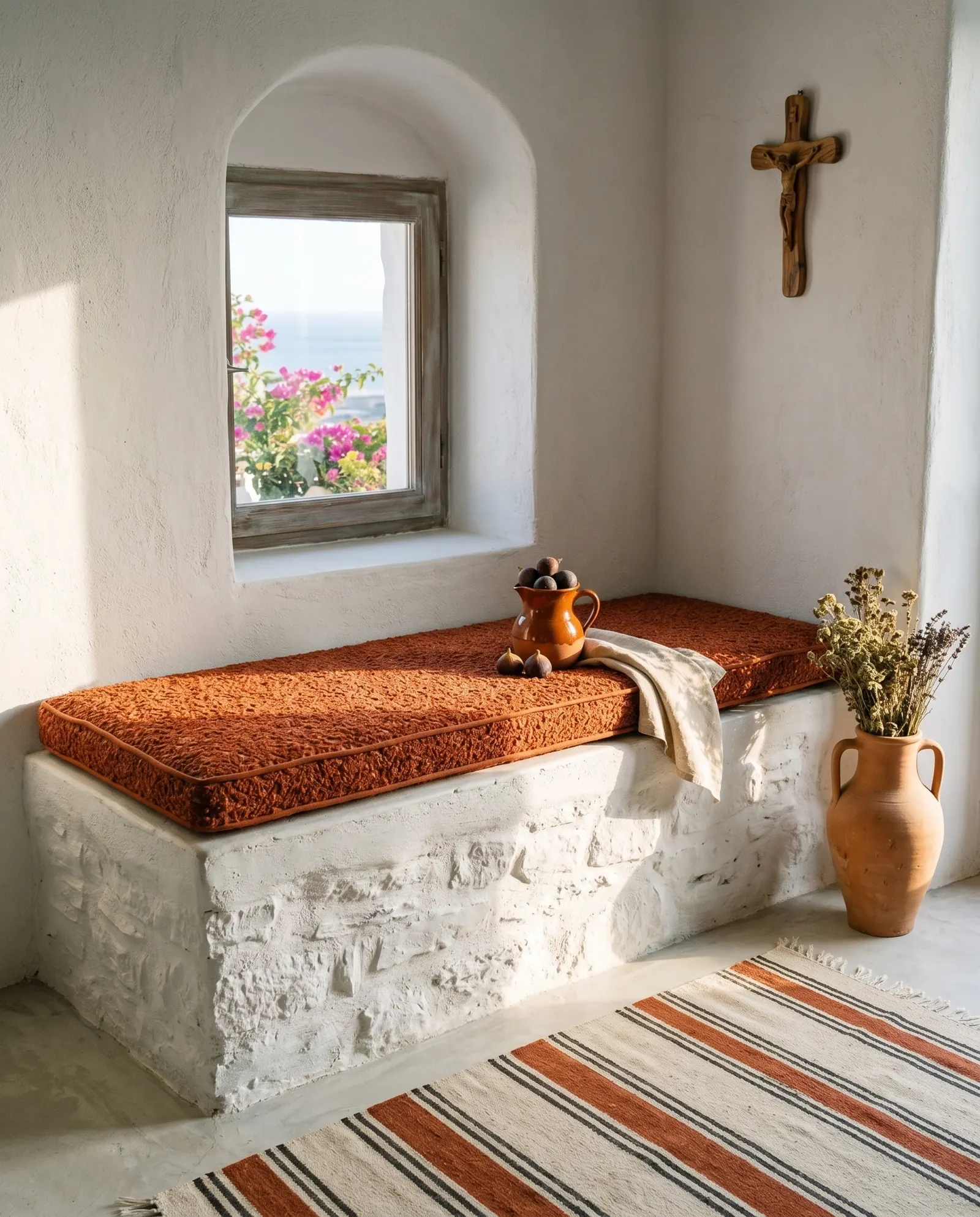
| Indoor window-niche seat | Linen blend or cotton ticking | 2-3 in (5-8 cm) | None needed; shade it at midday |
Island blue, chalk white and the colors the sun leaves behind
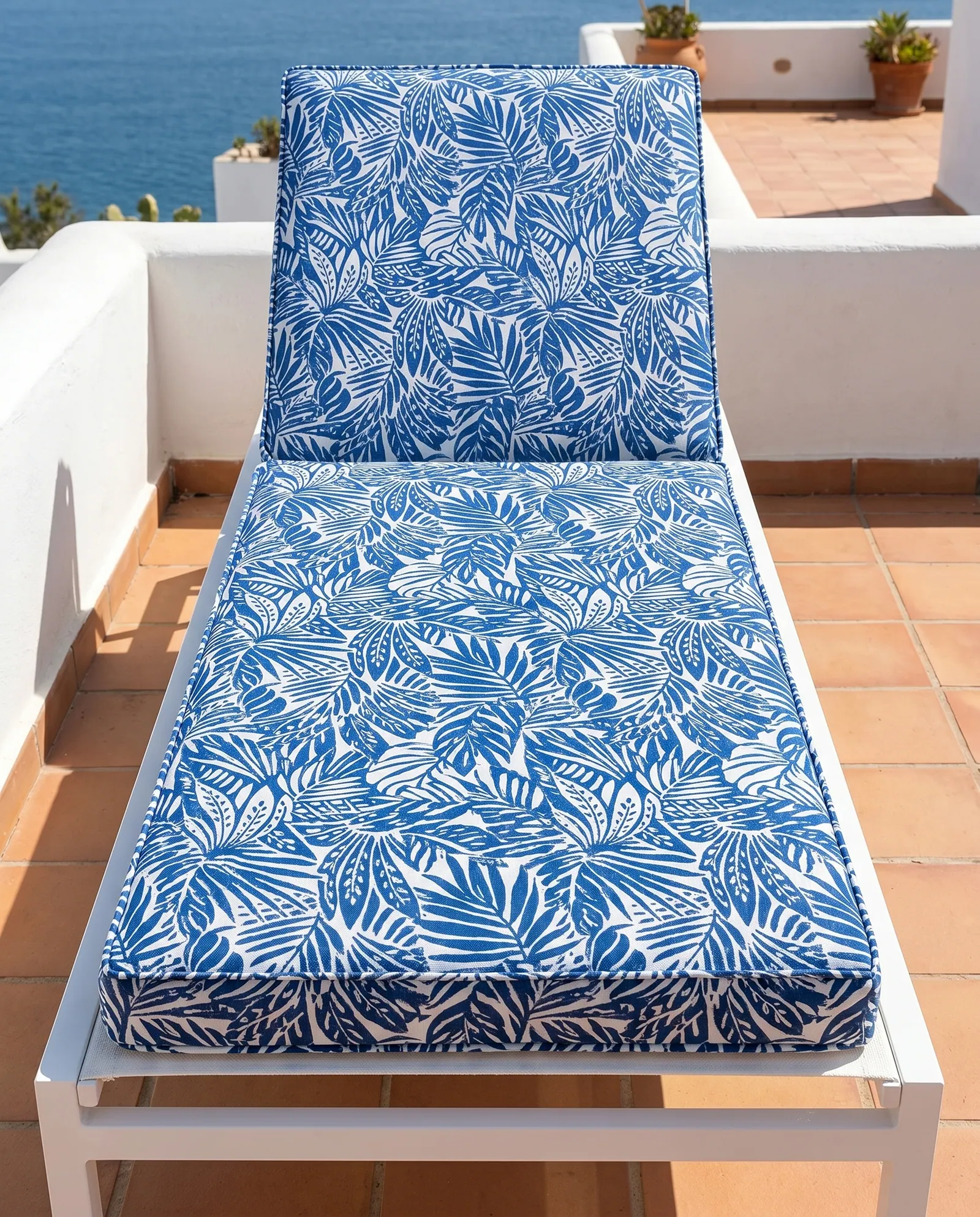
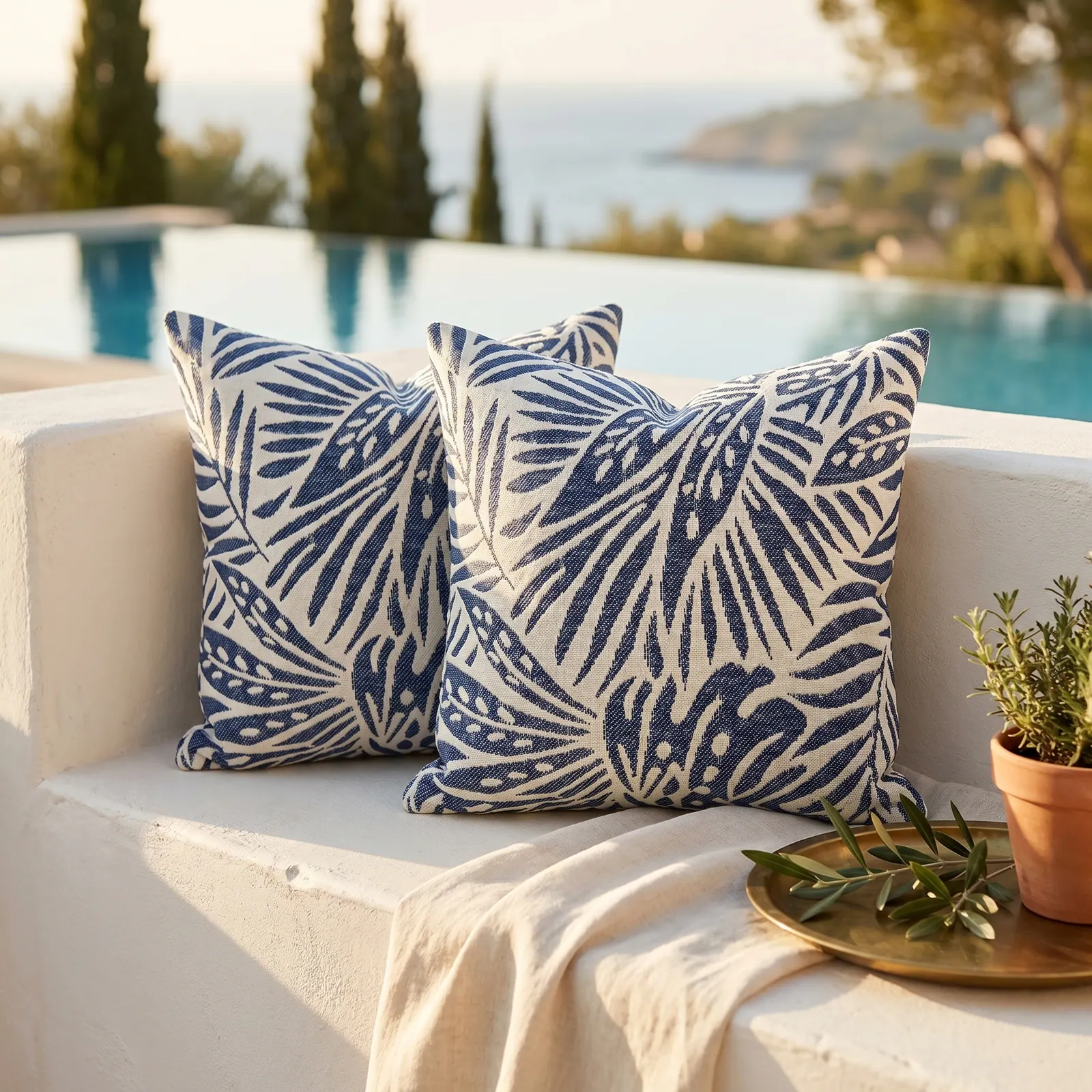
Blue and white is the obvious palette, and it works, but choose the blue with care. Pure cobalt beside chalk-white walls is loud at noon. A softer indigo, washed denim or faded cornflower sits down more gently and forgives a season of sun. Let one color speak and the others listen: a blue body, white or sand piping, one terracotta or caper-green pillow.
Sun-bleached palettes are the other island answer: sand, driftwood gray, olive, sponge yellow, the oatmeal and warm taupe on our hero terrace. They start where the sun would take them anyway, and they let the sea be the loudest blue in view.
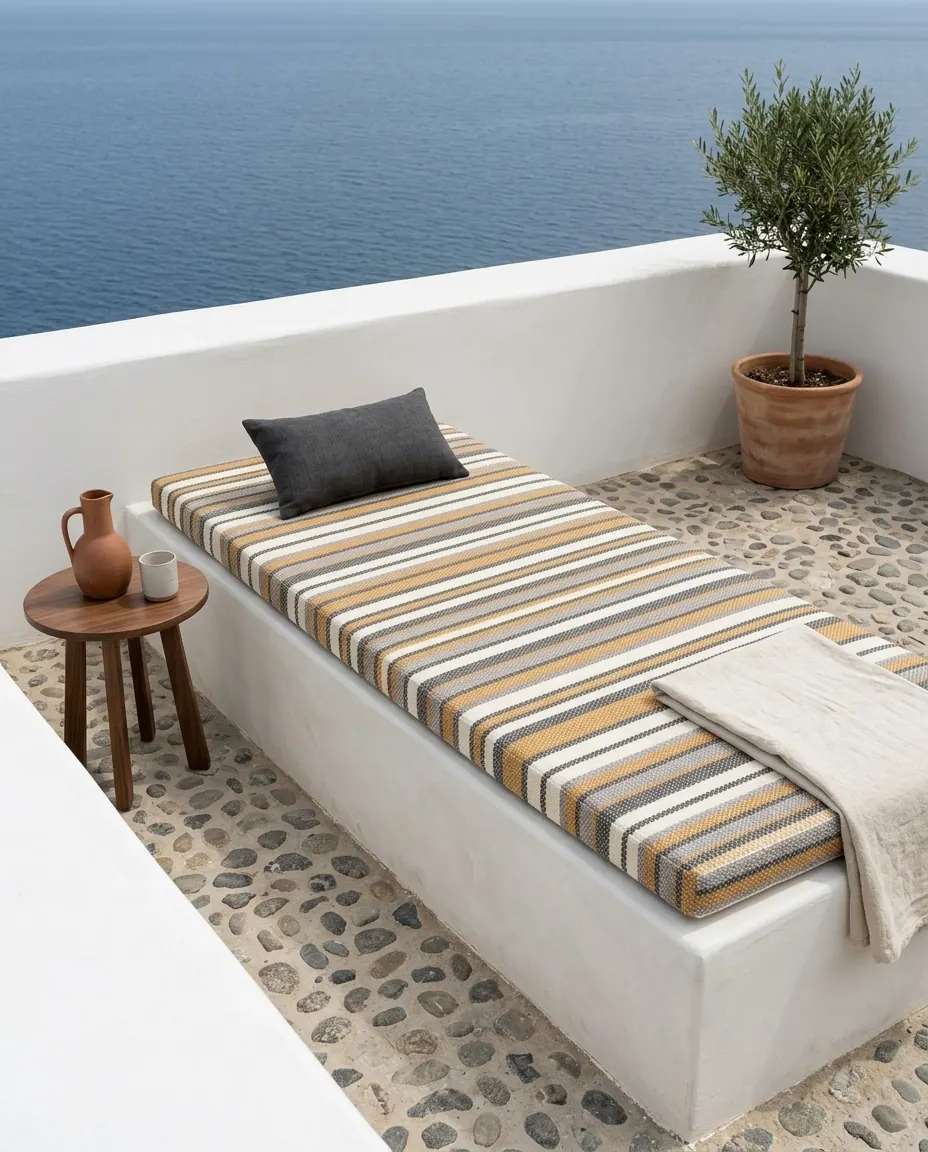
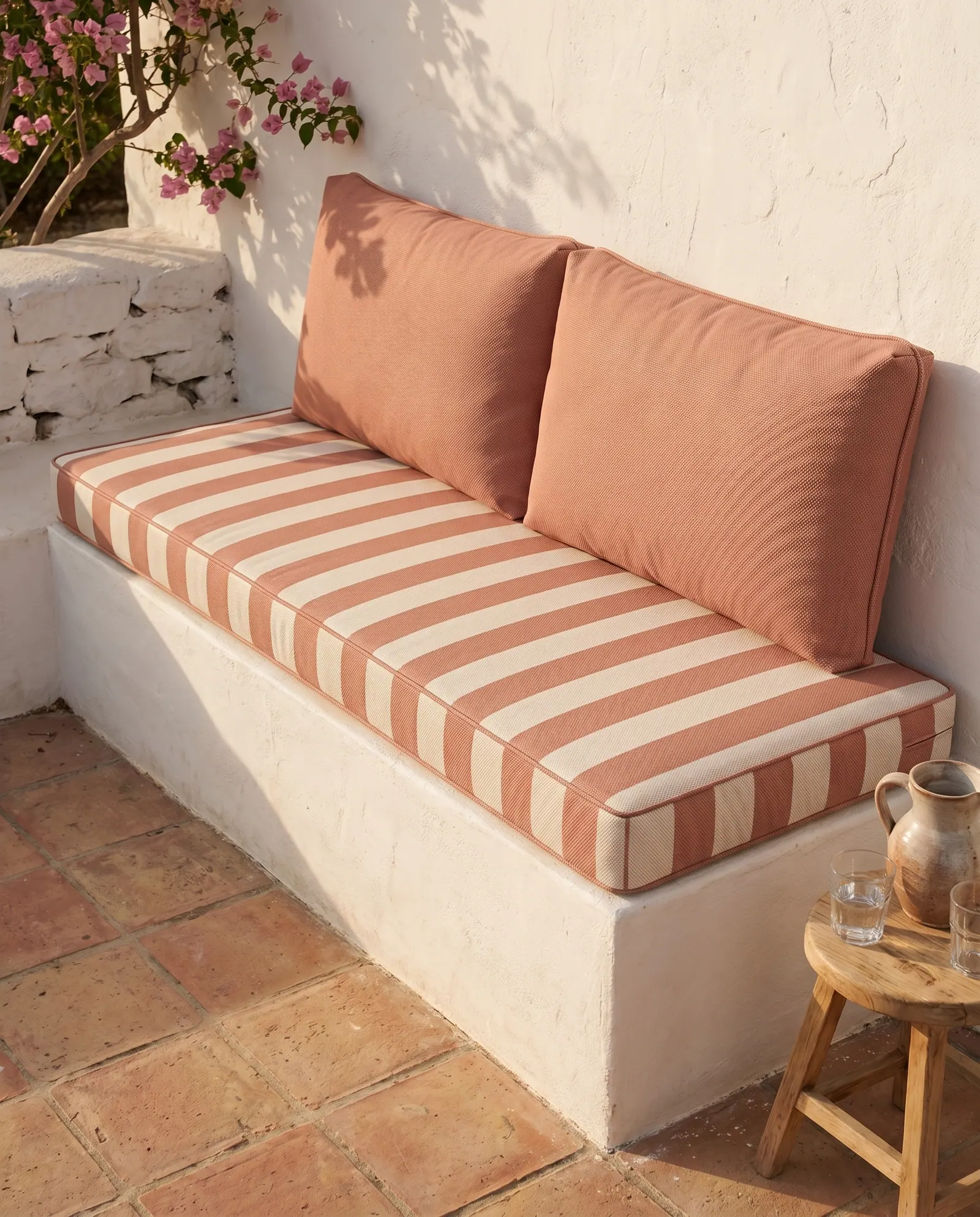
Stripes need a direction for every cushion. On a long bench they can run along the length, as one buyer's did; on the matching chair pads, across. Write it down piece by piece, and check colors outdoors, never only on a screen. Start with outdoor cushions, outdoor fabric and the stripe direction Pattern. Which blue is already on your doors and shutters?
Photographs for homes like these
Open any photograph large; each one has its own link and a Save button.
 Save
 Save
 Save
 Save
 Save
An island cushion year
- April to early May: measure the masonry benches and order before the meltemi season opens in mid-May.
- May to September: tie chair pads, grip bench cushions with a non-slip base, and bring pillows in on windy afternoons.
- July and August: turn and rotate cushions often so one face doesn't take all the sun, and stow them when the house is empty.
- After a windy day by the sea: rinse zippers with fresh water and let everything dry fully.
- Any time: unzip covers and wash at 86°F (30°C) on a gentle cycle, no bleach, then air dry.
- October to March, the rainy season: store outdoor cushions indoors, dry and off stone floors.
- All year: keep cotton ticking indoors; it isn't an outdoor fabric.
Against whitewash at noon, pure white vanishes and cobalt shouts. The islands prefer blues that have already met the sun.
Élodie
Buyer questions: masonry, stripes and sea light
- A common question
Can you add ties to an outdoor bench cushion and control which way the stripes run?
The workshop's answerYes. One order was a 59 x 19.7 x 4 in (150 x 50 x 10 cm) bench cushion with piping and two ties on the back, plus two 29.5 x 20 x 3 in (75 x 51 x 7.5 cm) chair cushions, all in a striped outdoor fabric. The stripes ran along the length on the bench and across the width on the chairs, as the buyer specified.
- A common question
Can I use the ticking stripe for garden cushions that stay out all year?
The workshop's answerNo. The ticking stripe is 100 percent cotton and isn't suitable for outdoors. Use the outdoor linen-look fabrics instead: they're water-repellent, UV-resistant and come in natural tones.
- A common question
Can you make premium outdoor cushions for a large concrete daybed?
The workshop's answerYes. Two 58.75 x 99.25 x 6 in (1492.5 x 2524 x 150 mm) seat cushions and two round head cushions were specified with 32-density medium-firm foam, premium outdoor fabric, UV-resistant thread, a breathable mesh base for drainage, a strong concealed zipper and a double welt in matching fabric. A production drawing is sent for approval before cutting.
- A common question
The fabric looked cream in the listing photo, but the chart looks gray or blue. Which is right?
The workshop's answerIt comes down to lighting. Listing photos were taken under warm light, which brings out cream and beige, while daylight makes the same fabric read grayer. The chart tones are more accurate, and the workshop sends professional photos of your chosen fabrics before production so you can switch codes.
- A common question
Can you add strong hook-and-loop strips to fix the cushions to a bench?
The workshop's answerFor a banquette, the workshop suggested ties or a cushion base made from non-slip fabric so it won't slide, and asked for a photo of the bench first.

Have it made
Have it made for your home — ask Élodie’s workshop
A fabric reads one way at noon and another at dusk. Mention your light, and the workshop will weigh it with you. — Élodie
Leave your details and the workshop will call you to confirm measurements, fabric, foam and piping. No prices, dates or payment on this page: it is a request, not an order.
Greek cushion questions, answered
When does the meltemi blow, and what does it mean for terrace cushions?
From about mid-May to mid-September, most often in July and August, strongest in the afternoon and sometimes for days. It can reach force 7-8, so tie chair pads at the back corners, give masonry bench cushions a non-slip base, and carry pillows and thin pads indoors when it rises.
How do I measure a built-in masonry bench for a cushion?
Measure the front and back edges, both ends, and the depth at each end, because hand-rendered masonry is rarely square. If the numbers disagree, make a paper template or send a photo with the tape measure on the bench, and mark which way the stripes should run.
Should outdoor cushions stay out over a Greek island winter?
No. On the islands the rainy season runs from October to March, and water-repellent fabric isn't waterproof. Wash the covers at 86°F (30°C), dry everything completely and store the cushions indoors, off stone floors, until spring.
Will blue-and-white cushions fade in the Greek sun?
Every fabric fades in time, and southern Crete gets more than 3,250 hours of sun a year. UV-resistant outdoor fabric slows it; softer blues and sun-bleached neutrals hide it; turning cushions and stowing them when you're away does the rest.
With color and care — Élodie
The atelier
Keep going
Across the Map
Nearby places
Close by on the map