A Reading by NateL-Shaped Corner Bench Cushions
Taupe velvet L-shaped bench cushion for a corner window: the foam, the corner math, the chocolate piping
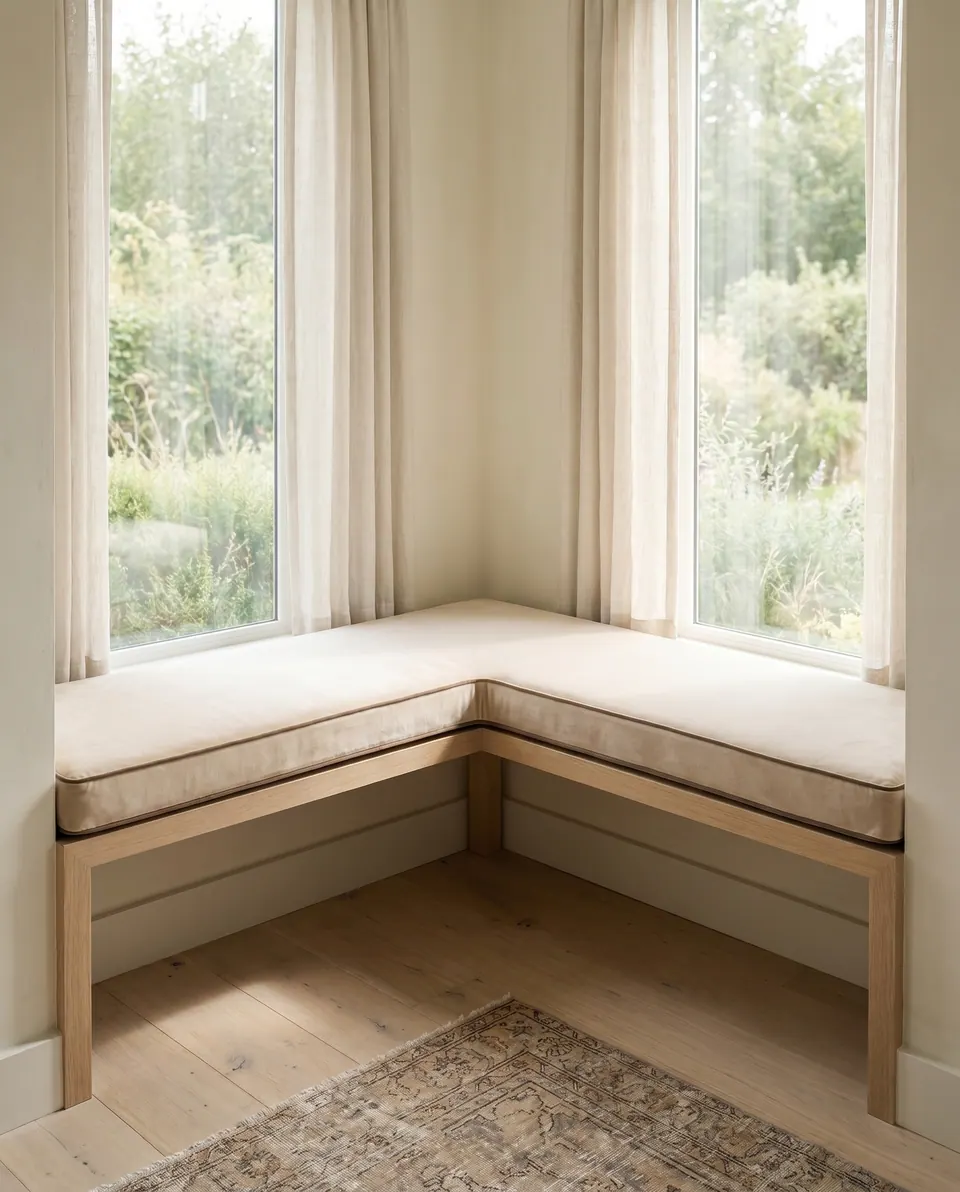
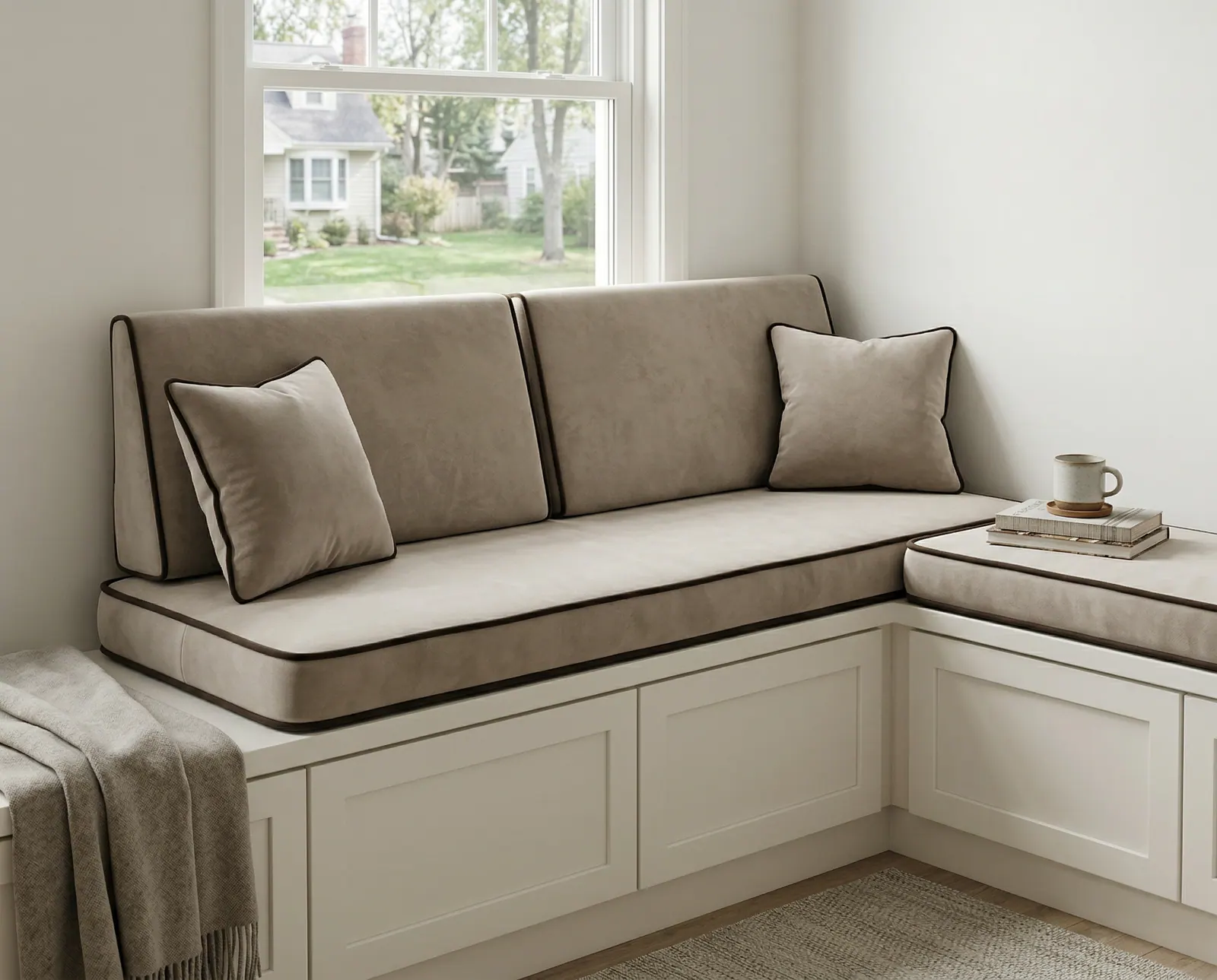
Two cushions, one corner, a 19 in problem. I opened my notebook on this taupe velvet window seat to show what sits under the cover and why the return is its own piece.

 Save
The quick answer
An L-shaped corner window seat is easiest to fit and lift as two cushions, with the second seat shortened by the seat depth so the pieces meet without overlapping. For a breakfast nook bench, the workshop suggests 6 to 7 in (15 to 18 cm) of foam, but it has made 3 in (8 cm) seats where the bench was already high.
Notebook, page one: two rectangles pretending to be an L
Two cushions meet at this corner, and neither one is an L. That is the first thing I'd write on the graph paper.
The long run sits under the double-hung window. The shorter return sits on the right. Each piece is a plain rectangle with a box edge, so one person can lift it, flip it and unzip the cover for cleaning. An L-shaped cushion sewn as a single piece looks tidy in a drawing and turns into a wrestling match on cleaning day.
Under the cover is foam, with the cover removable. The number worth arguing about is thickness, and it depends on the bench, not the fabric: a nook bench at normal height takes a full seat, a bench that is already high takes a thin one. The questions below have the workshop's figures.
Firmness follows from the job. A corner seat gets slid along twice a day, so it wants a firm foam that springs back rather than a soft one that keeps the dent. Our foam firmness finder walks you to a grade.
The fabric matters to the foam too. Taupe velvet has a soft sheen, and sheen shows every dip as a shadow, so a firm core keeps the top reading flat. The chocolate contrast piping draws a line where the two pieces meet. That's honest: it admits there is a joint instead of pretending there isn't.
Tolerance is kindness to your future self. The corner arithmetic is on the next page.
Pinned by Nate: five measurements hiding in plain sight
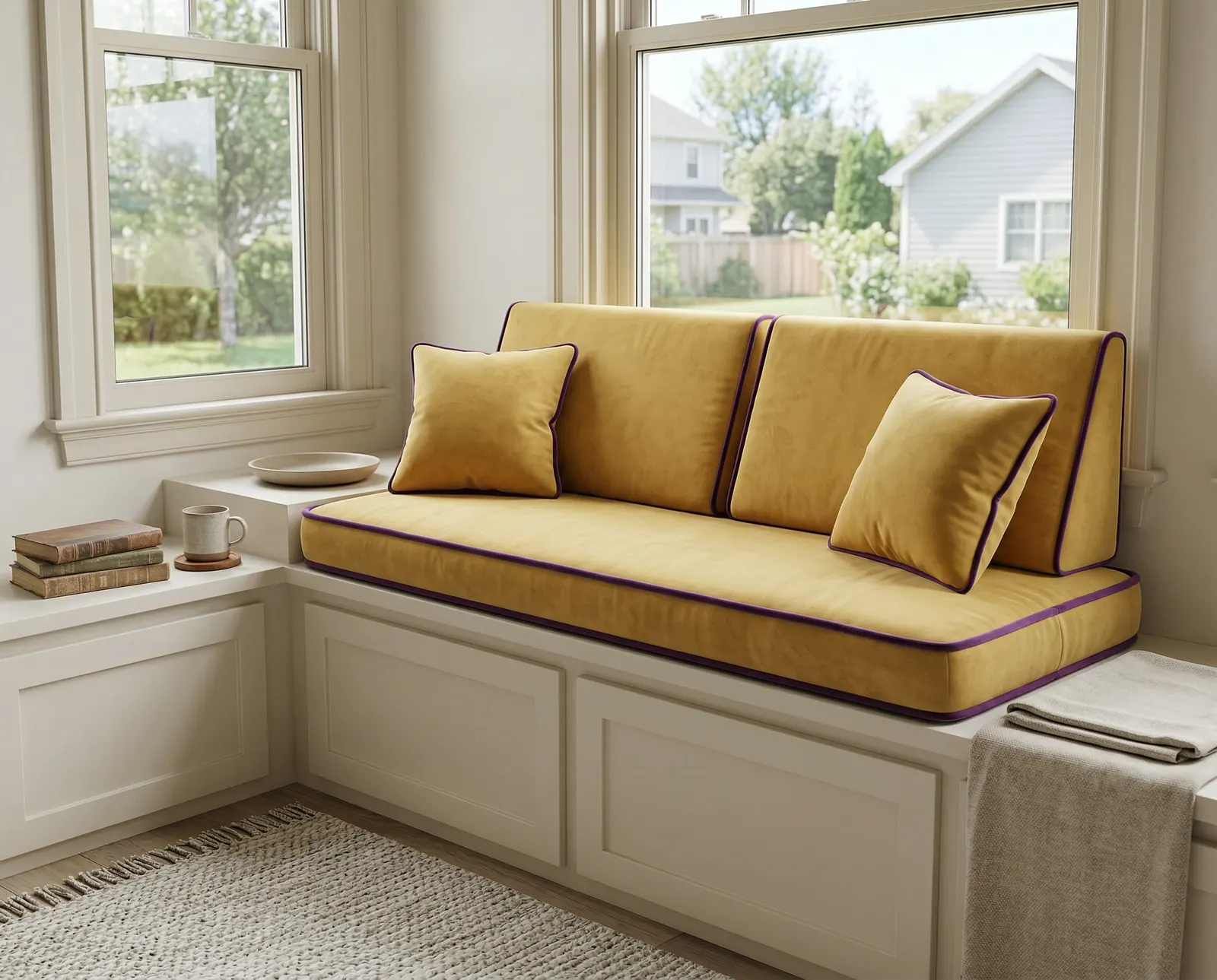
Five pins mark the long seat run, the corner return, the wedge-shaped end backrest, a piped velvet pillow and the gray fringed throw.
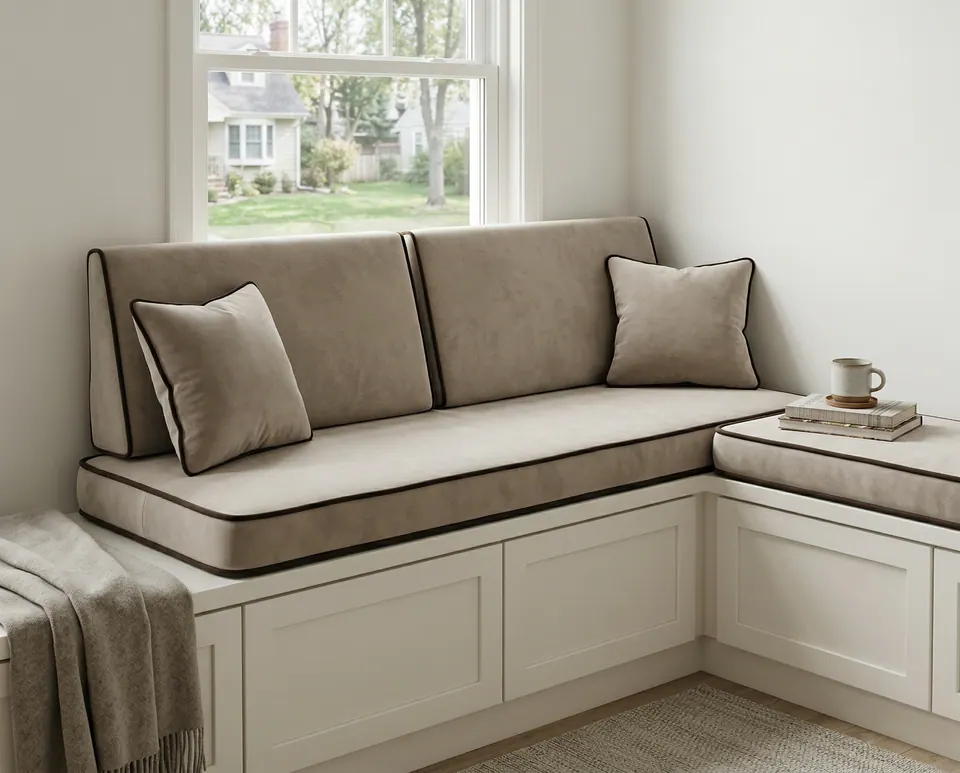
- Long seat run
Chocolate piping on taupe is tonal but crisp, a safe choice on velvet.
- Corner return cushion
A separate return piece is easier to fit and lift than one L-shaped cushion.
- Wedge end backrest
The left back is wedge-shaped so it sits snugly against the side wall.
- Piped velvet pillow
Velvet shows the piping line sharply because the pile catches the light.
- Gray fringed throw
A cooler gray throw keeps the warm taupe from feeling flat.
- Long seat runChocolate piping on taupe is tonal but crisp, a safe choice on velvet.
- Corner return cushionA separate return piece is easier to fit and lift than one L-shaped cushion.
- Wedge end backrestThe left back is wedge-shaped so it sits snugly against the side wall.
- Piped velvet pillowVelvet shows the piping line sharply because the pile catches the light.
- Gray fringed throwA cooler gray throw keeps the warm taupe from feeling flat.
Graph paper: the L corner, wall to wall versus cut
| Part | Wall-to-wall | Cut size | Why |
|---|---|---|---|
| Short seat | 74 in (188 cm) | 74 in (188 cm) | Runs full length into the corner |
| Long seat | 180 in (457 cm) | 161 in (409 cm) | Shortened by the 19 in (48 cm) seat depth |
| Short back | 74 in (188 cm) | 74 in (188 cm) | Runs full length into the corner |
| Long back | 180 in (457 cm) | 178 in (452 cm) | Stops where it meets the short back |
| Back height | 14 in (36 cm) | 14 in (36 cm) | As measured in the nook |
The new nook with a 180-inch wall
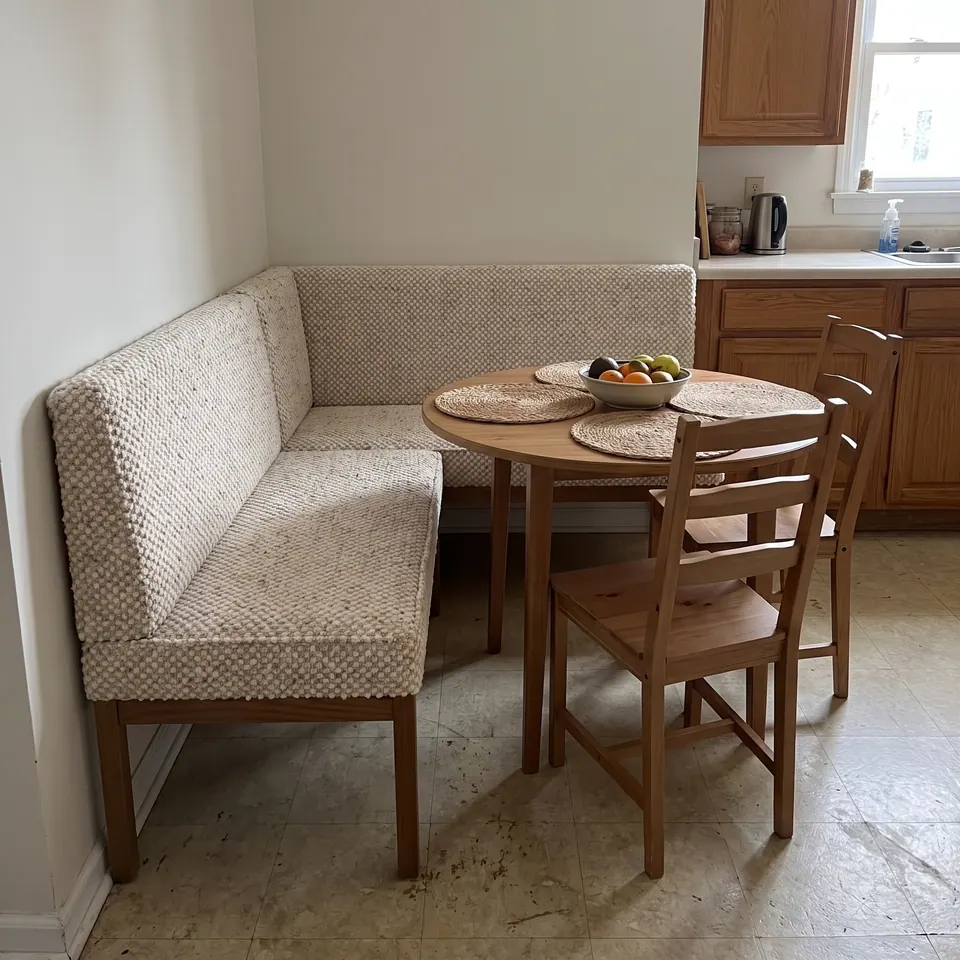
A buyer messaged the workshop about a newly built L-shaped breakfast nook. They wanted seat and back cushions in a brown and ivory stripe, and the workshop added two round pillows to the order. What they weren't sure about was the corner.
So the workshop asked for wall-to-wall numbers only: runs of 74 in (188 cm) and 180 in (457 cm), 19 in (48 cm) deep, with a 14 in (36 cm) backrest height. From those it cut the seats at 74 in and 161 in, and the backs at 74 in and 178 in, so nothing overlapped at the corner. With about 250 active orders in the workshop, dispatch was estimated at 7 to 10 days.
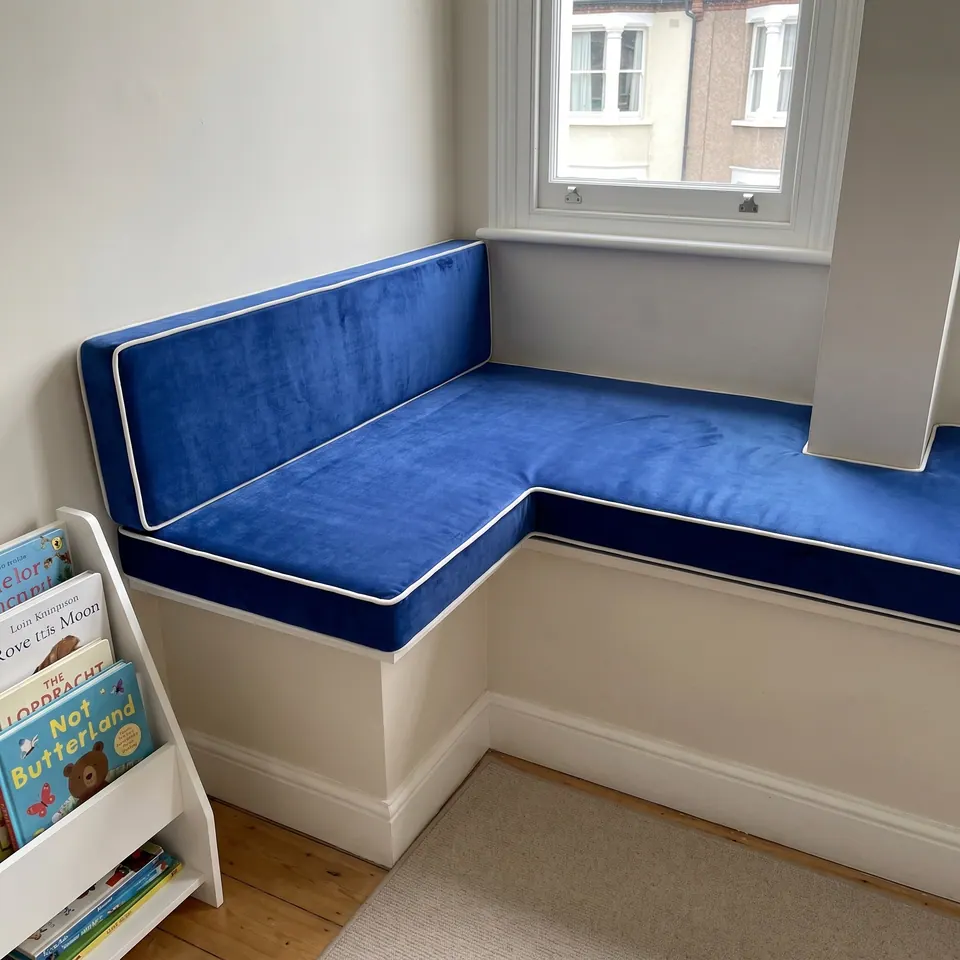
Partner, that's the whole trick. One seat runs into the corner; the other stops short by the seat depth. The backs follow the same rule, using the back's thickness. The L-shaped corner joint Pattern draws it out step by step.
Buyer questions: trapezoids, back heights and thin seats
- A common question
My trapezoid window seat has odd angles. Which measurements do you actually need?
The workshop's answerThe front length, the back length and the straight depth between them. The craftsmen calculate the two angled sides and send a diagram to confirm; a seat 115 in (292 cm) along the bottom, 82 in (208 cm) along the top and 20 in (51 cm) deep came out with sides of about 26 in (66 cm). Upload the approved diagram in the measurement section when you order.
- A common question
How tall should the back cushions be on my futon or built-in seat?
The workshop's answerMeasure the total back height from the frame, then subtract the seat cushion's thickness, because the seat takes up the lower part of the back. The standard seat thickness in that case was 4 in (10 cm). One futon set paired a 23 x 66 in (58 x 168 cm) seat with two 23 x 33 in (58 x 84 cm) backrests and side pillows.
- A common question
What's the usual thickness for a breakfast nook bench seat, and can it be thinner?
The workshop's answerThe workshop suggests 6 or 7 in (15 or 18 cm). It has made a 3 in (8 cm) seat for a buyer whose bench was already high, still foam-filled and with a removable cover.
On the cutting table: the taupe corner
| Product | L-shaped corner window seat in two pieces, with backrests |
|---|---|
| Fabric | Taupe velvet |
| Piping | Contrast piping in chocolate brown |
| Edge | Box edge on every piece |
| Fill | Foam core, removable covers |
| Seat thickness | 6 to 7 in (15 to 18 cm) for a nook; 3 in (8 cm) for a high bench |
| Backrests | Long wall only; wedge-shaped end against the side wall |
| Corner rule | Second seat shorter by the seat depth |
| Best for | Window corners and breakfast nooks used every day |

Have it made
Have this made — ask Nate’s workshop
Every edge and both diagonals, to the nearest 1/4 in. If the numbers do not close, the workshop will say so on the call. — Nate
Leave your details and the workshop will call you to confirm measurements, fabric, foam and piping. No prices, dates or payment on this page: it is a request, not an order.
At an L-shaped corner, one seat runs into the corner and the other stops short by the seat depth: 180 in of wall became a 161 in cushion.
Nate
Questions buyers ask next
Should an L-shaped corner window seat cushion be one piece or two?
Two, in most corners. Two rectangles are easier to fit, lift, flip and wash than one L. The second seat is shortened by the seat depth, so the pieces butt together at the corner instead of overlapping.
Is velvet a good cover for a firm corner bench cushion?
Yes, when the foam underneath is firm. Velvet's sheen shows dips as shadows, so a firm core keeps the top looking flat. A darker contrast piping, like chocolate on taupe, also marks the joint between two pieces cleanly.
Do both arms of an L-shaped window seat need backrests?
Only if people sit on both arms facing out. Here the backrests line the long wall and the return stays open for a mug and books. If your corner seat is used from both sides, add a backrest to the return.
± 1/4 in — Nate
More photographs to read
 Save
 Save
 Save
 Save
 Save
 Save