A Reading by NateBench Cushions
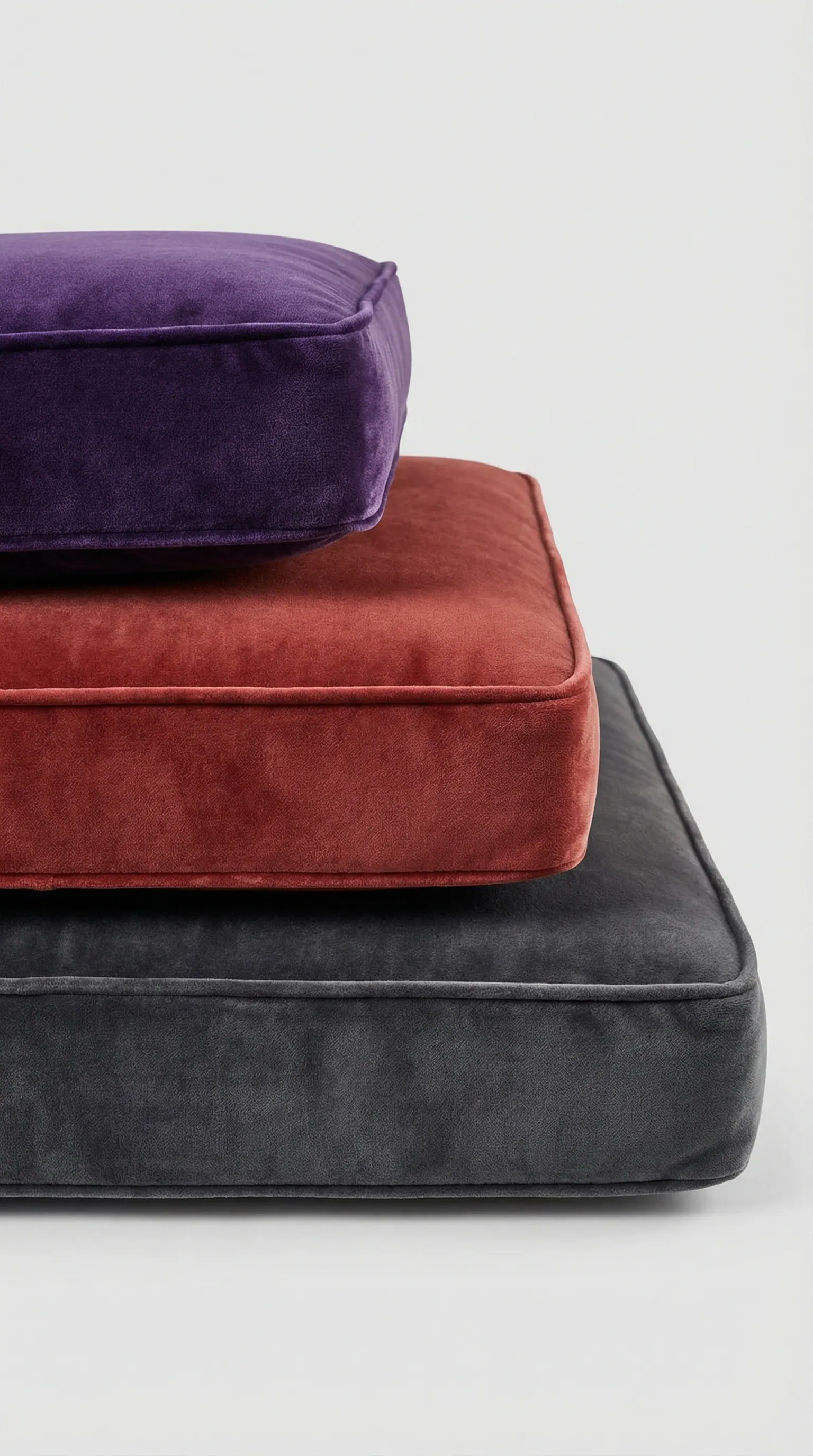
Box, knife or rounded: reading the edge of an olive velvet custom bench cushion
A slab bench is all straight lines, so the cushion edge has to decide how much of that geometry to keep. These are my notes on why a slim box edge won, with the numbers.

 Save
The quick answer
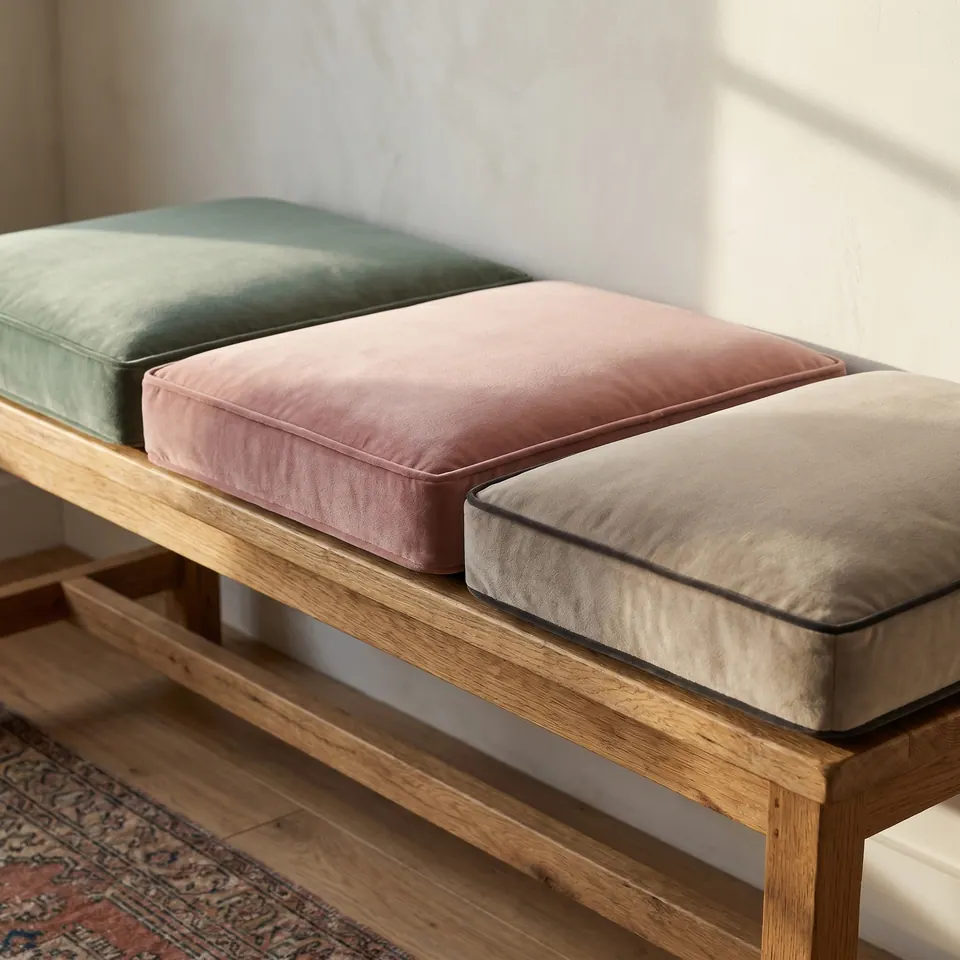
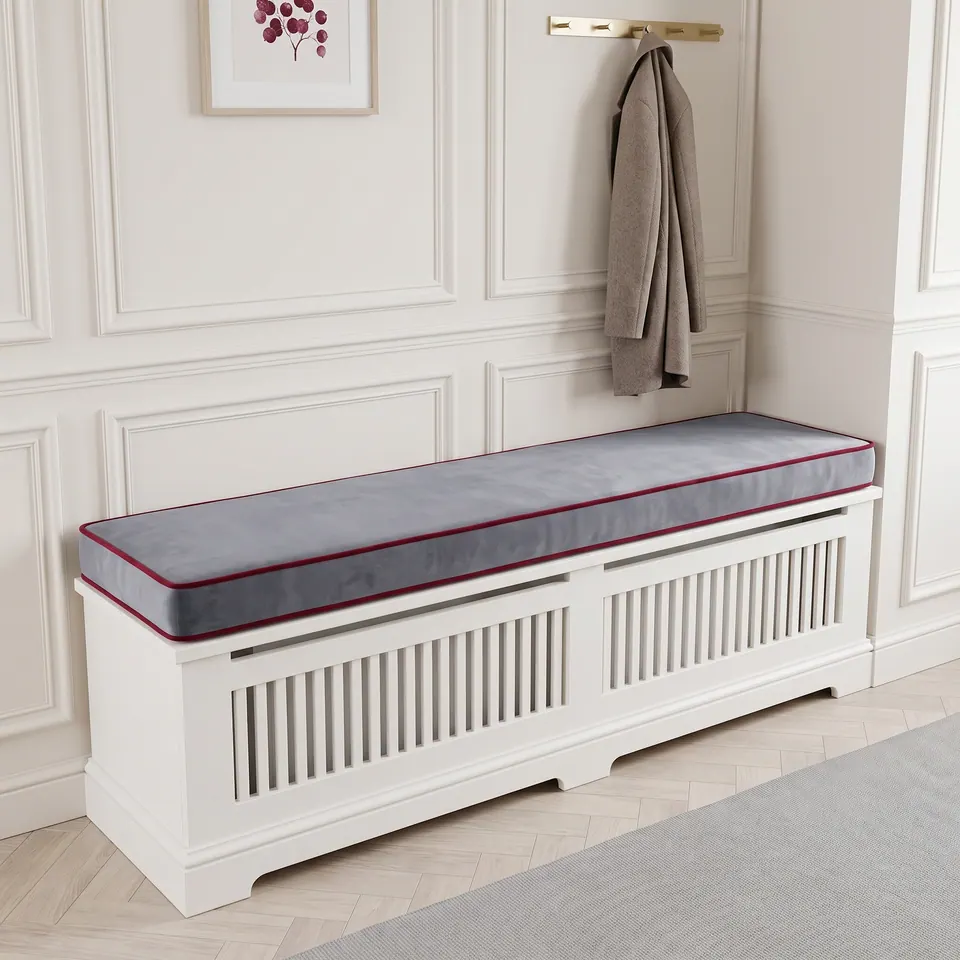
For a slab-leg entryway bench, a slim box-edge custom bench cushion with self piping keeps the bench's straight lines and lets the oak legs stay the frame. A knife edge would look softer and thinner; rounded corners suit benches with curved ends. Order the exact top size and let the box edge sit square to the slab.
Notes from the graph paper: why the edge is boxed
Straight lines in, straight lines out. That's the whole design brief of this entryway, partner, and the cushion follows it.
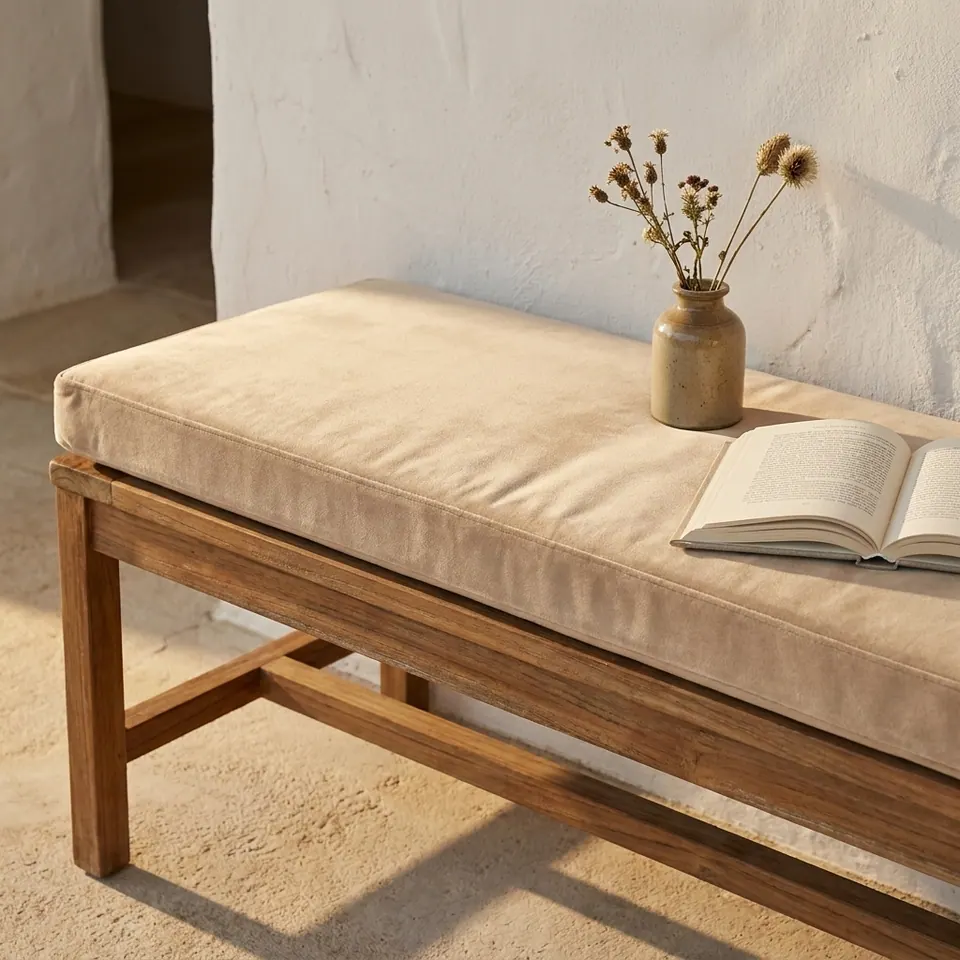
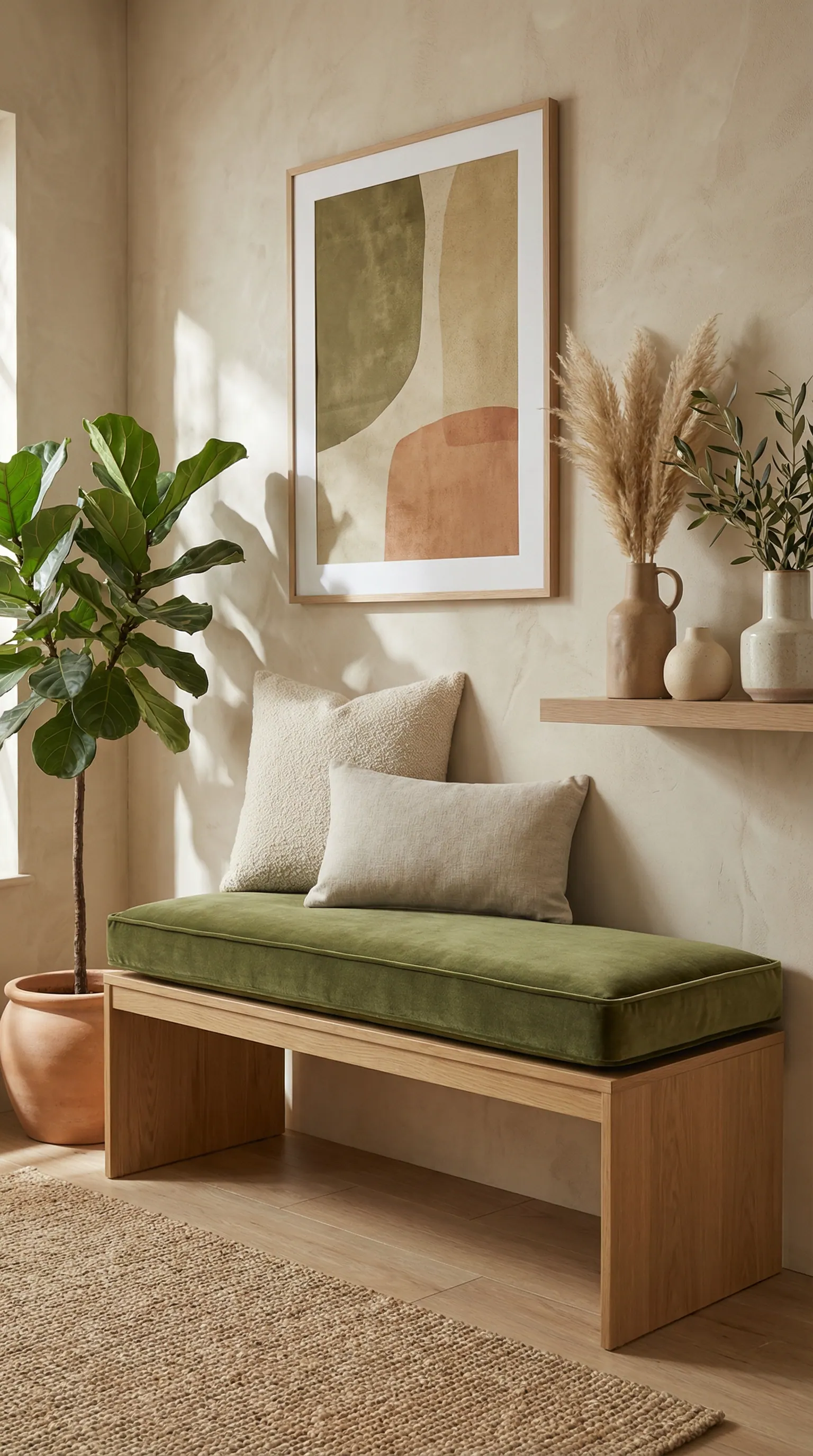
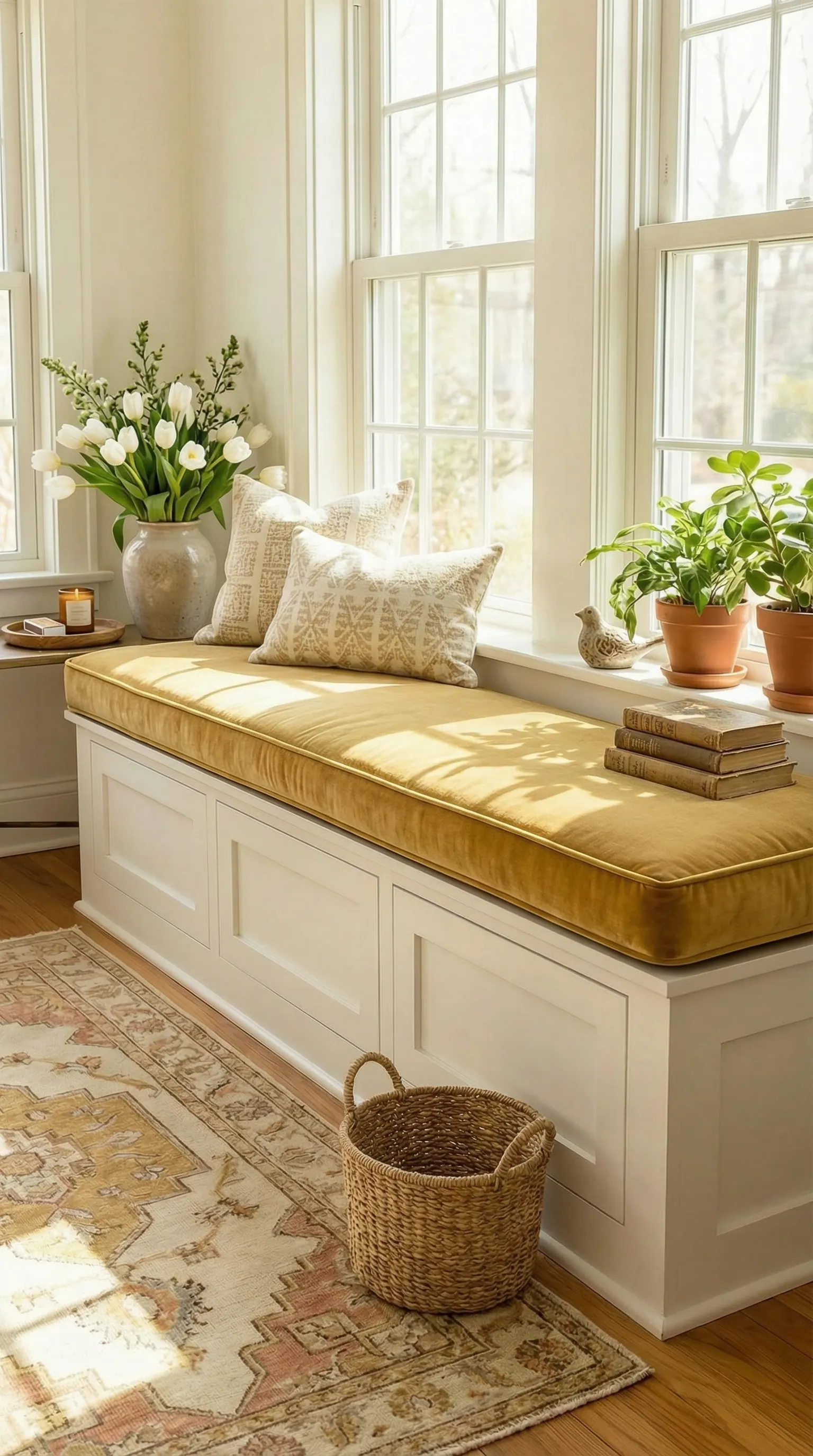
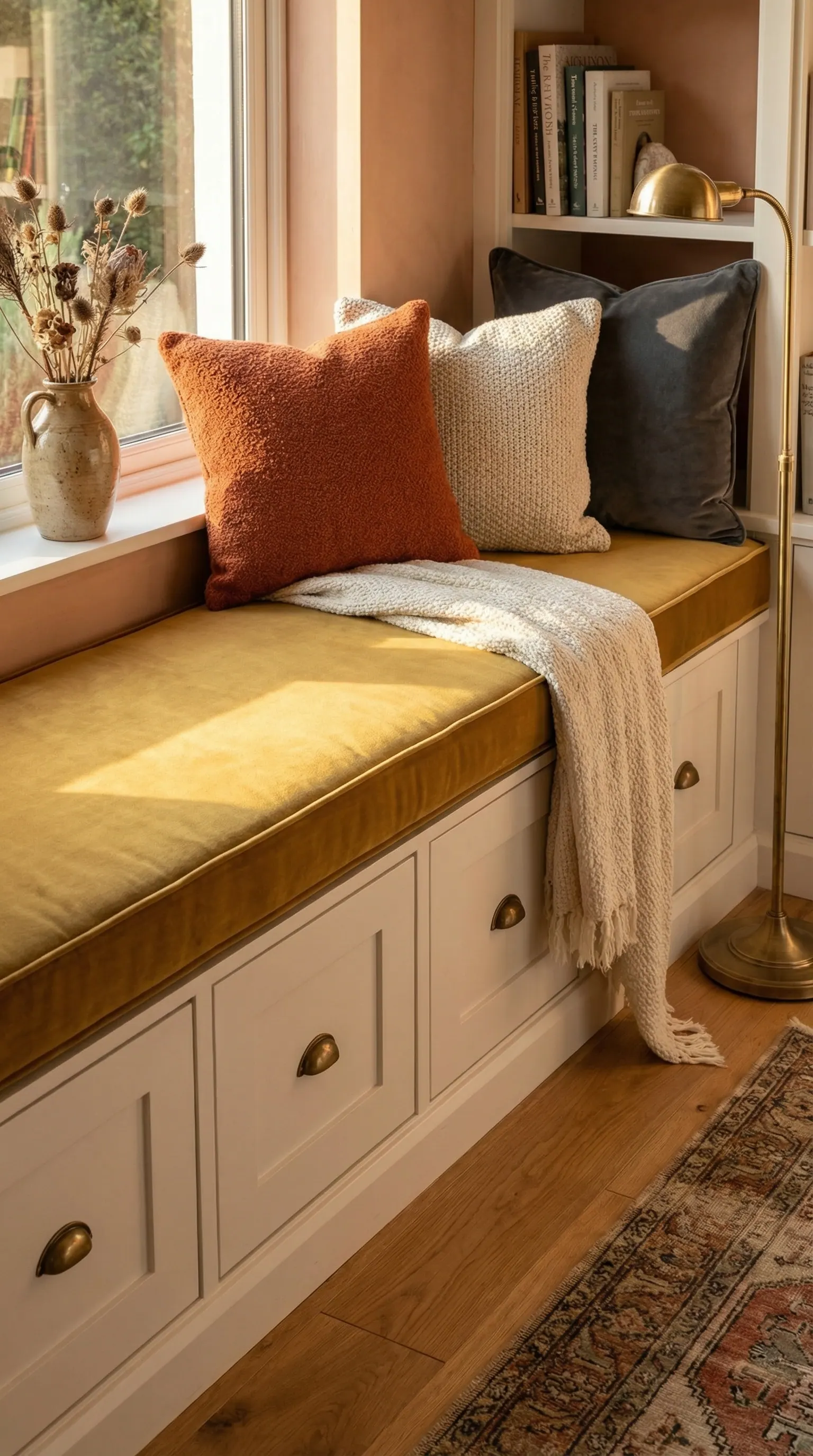
The bench is a slab-leg oak piece against a limewashed plaster wall. The custom bench cushion runs the full length of the top in olive velvet, with a slim box edge and self piping. Slim is the key dimension. A thick box would bury the slab and turn the bench into a sofa; a thin one keeps the oak legs reading as the frame and the cushion as the upholstery.
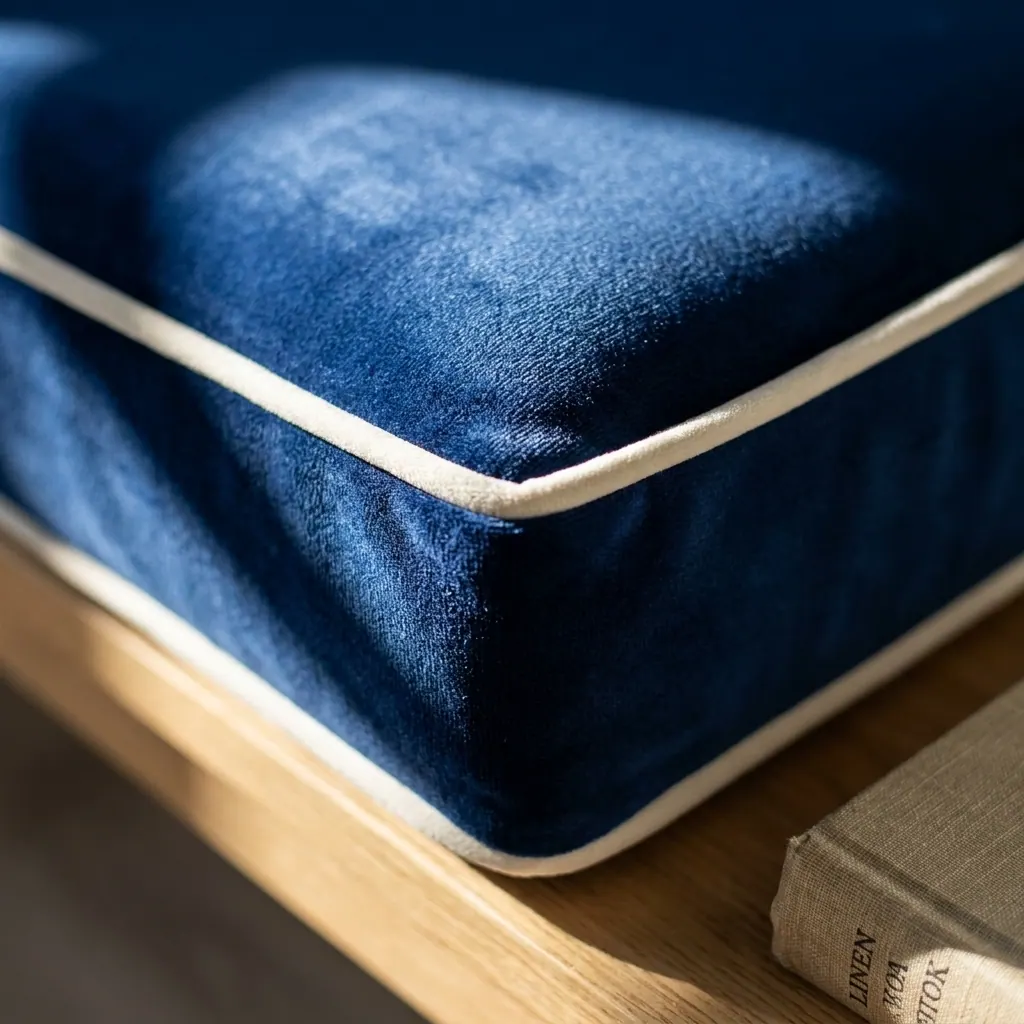
The self piping does the drafting. Olive on olive draws the top and bottom edges as two clean parallel lines, with no contrast pulling the eye to the corners. On a bench with no curves anywhere, you don't want the corners shouting.
Now the color, which didn't come from the bench at all. The framed abstract print above has olive, sand and terracotta shapes, and every soft thing in the shot was picked from it: the cushion, a cream boucle pillow, an oatmeal linen lumbar, the terracotta planter. A fiddle-leaf fig on the left repeats the green at full height. Pampas in a terracotta vase on the floating oak shelf balances it on the right, beside olive branches in a cream vase and a small round pot. A jute rug grounds the lot.
Two pillow textures, boucle and linen, keep the velvet from looking too polished against rough plaster. To copy it, take the cushion color from art you already own and repeat it once with a living plant. What's hanging above your bench right now? More slab and cubby benches live under entryway bench cushions, and the Pattern on box edge vs knife edge has the cross-sections.
Pinned by Nate: five reference points on the slab bench
Five pins mark the abstract print, the pampas on the shelf, the boucle pillow, the self-piped front edge and the fiddle-leaf fig.
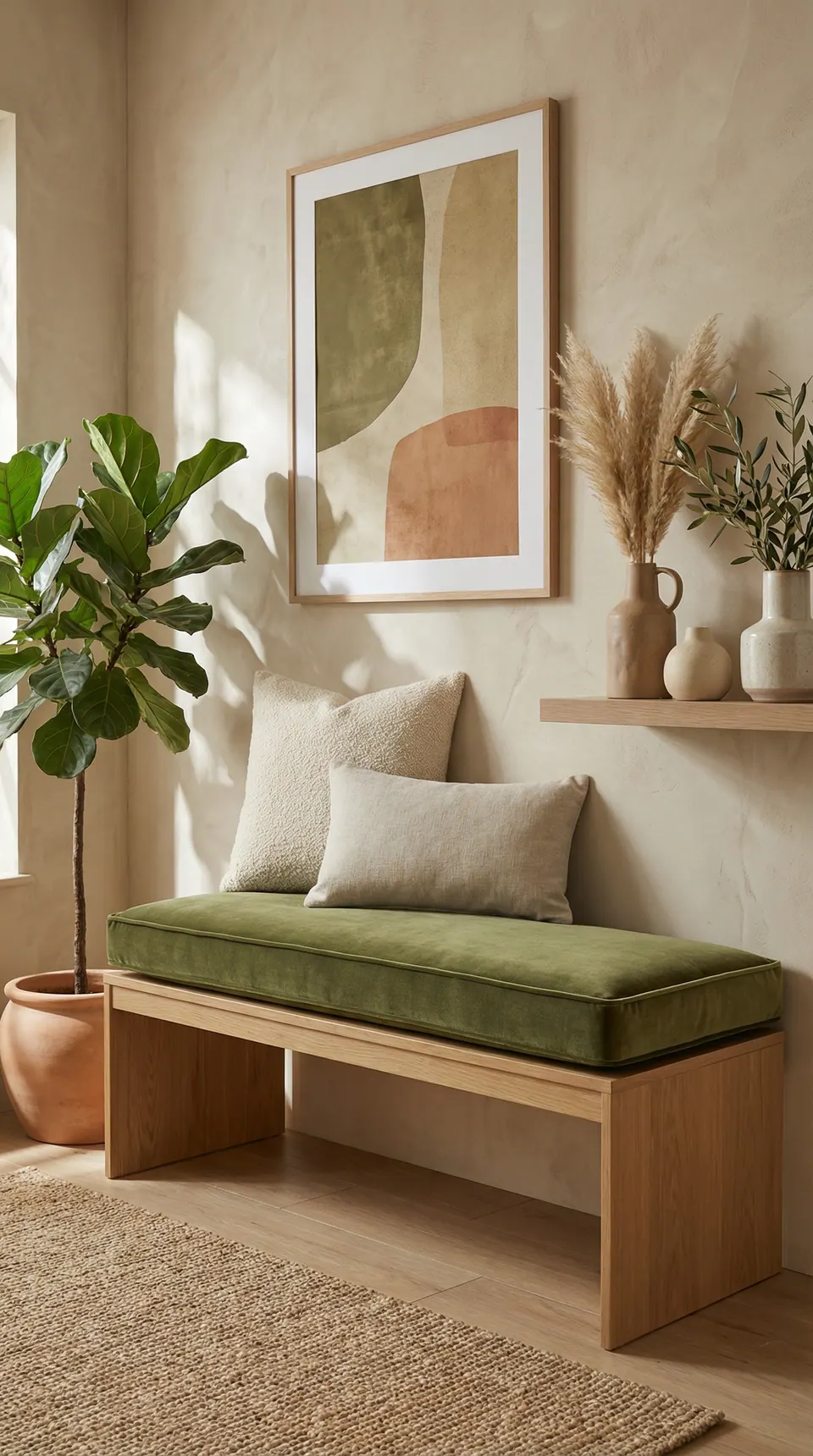
- Abstract print
The olive and terracotta shapes in the art are where the cushion color came from.
- Pampas on the shelf
Dried grasses add height on the right to balance the tall fig on the left.
- Boucle pillow
Nubby cream boucle gives a matte contrast to the soft sheen of the velvet.
- Self-piped front edge
Olive piping on olive keeps the edge clean on a simple slab bench.
- Fiddle-leaf fig
A living plant repeats the cushion's green at full height.
- Abstract printThe olive and terracotta shapes in the art are where the cushion color came from.
- Pampas on the shelfDried grasses add height on the right to balance the tall fig on the left.
- Boucle pillowNubby cream boucle gives a matte contrast to the soft sheen of the velvet.
- Self-piped front edgeOlive piping on olive keeps the edge clean on a simple slab bench.
- Fiddle-leaf figA living plant repeats the cushion's green at full height.
Box, knife, rounded, angled: four edges for one oak slab
| Edge | Silhouette | Best on | What to measure |
|---|---|---|---|
| Box edge, self piped | Square sides, two crisp parallel lines | Slab benches, built-ins, storage lids | Length and depth of the top, then choose the thickness |
| Knife edge | Tapers to one seam, pillow-like | Chair pads and loose seat pillows | Length and depth; expect it to look thinner at the edges |
| Rounded corners | Box edge with curved corners | Benches with softened corners | A sketch marking where each curve starts and ends |
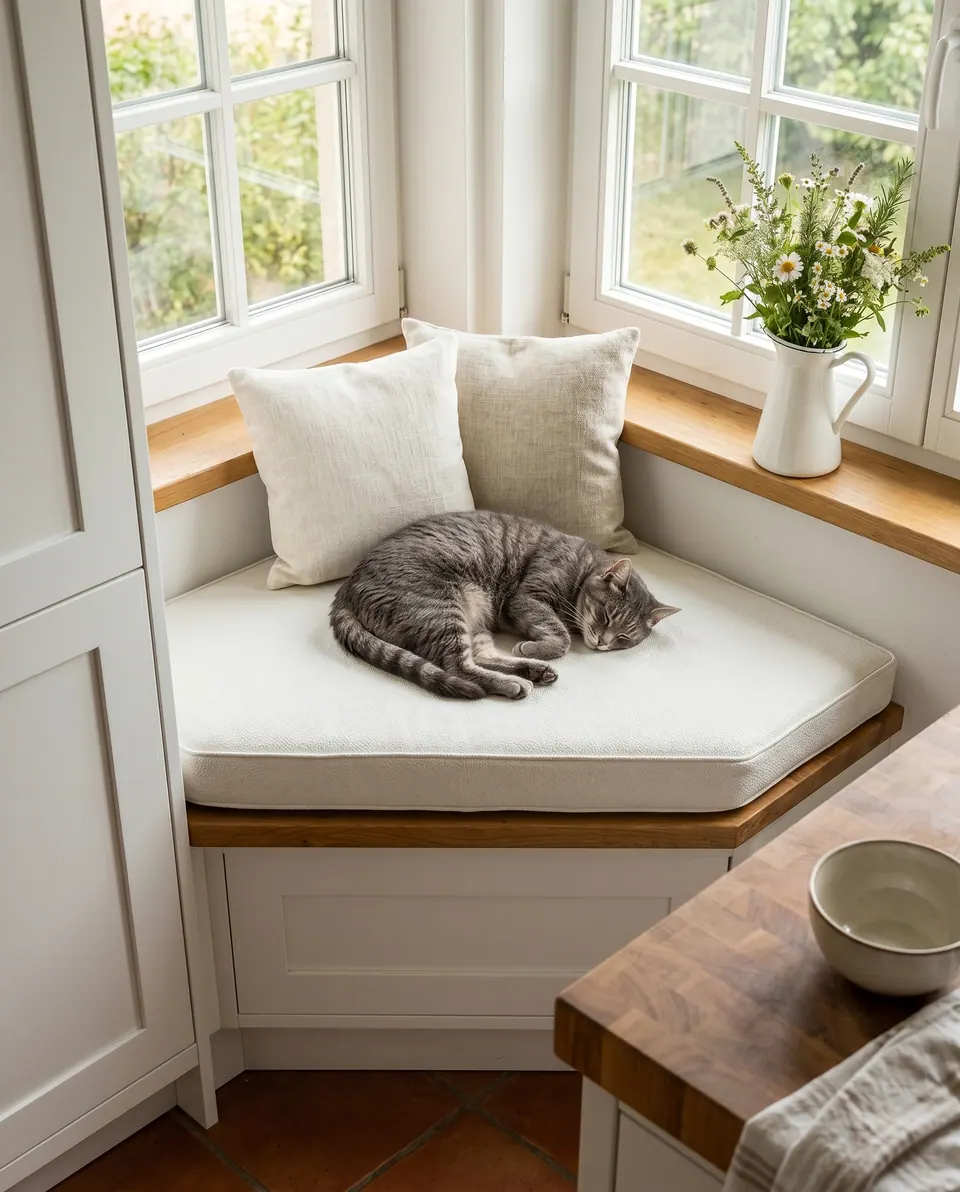
| Angled (trapezoid) | Box edge cut to non-square ends | Nooks, angled walls, bay windows | Every side length plus the depth |
132 inches, halved: the lounge seat that became two
A buyer in the US asked for one tufted velvet seat 33 x 132 in (84 x 335 cm), with a 30 in (76 cm) high back cushion, in color 11. That's 11 feet of seat in a single piece.
The workshop proposed two pieces of 33 x 66 in (84 x 168 cm) instead. Then the buyer asked for armrests on both ends of each piece, four in total, so each half became a finished unit of its own.
My engineering note: a 132 in cushion is hard to get through a doorway, hard to turn and hard to flip. Two 66 in halves, each with its own armrests, are modules you can rearrange. Very long tufted seating works better as halves. Our Pattern on one piece or two has the split math.
Buyer questions: backrests, bundled orders and a fold-down bed
- A common question
I want a pillow to lean on at the end of my window seat. What size backrest should I order?
The workshop's answerBackrests are usually made 16 in (41 cm) tall. Buy two cushions from the listing and the workshop makes one of them into the backrest, sized to the width of your seat.
- A common question
Can you quote a mixed order: a floor cushion set and several bench cushions together?
The workshop's answerYes. One four-item order, a velvet floor cushion set and three bench cushions, the longest about 108 3/4 x 23 5/8 in (276 x 60 cm), was discounted as a bundle. Shipping was free on that order, and production took about 10 days.
- A common question
Could you make an upholstered headboard for a fold-down wall bed, one that lifts out?
The workshop's answerThe workshop can make separate foam cushions to your measurements that lift out. It declined a brief needing plywood-backed rigid panels, a removable support frame, hook-and-loop or clip attachments and customer-supplied fabric: that's upholstery-and-carpentry work, and a local upholsterer or carpenter will do it better. Production is foam cushions and covers only.
Measurement table: the slab bench
| Product | Entryway bench cushion, rectangle |
|---|---|
| Edge | Slim box edge, square corners |
| Fabric | Velvet in olive green |
| Piping | Self piping on the top and bottom seams |
| Fit | Full length of the slab top |
| Pillows | Cream boucle square, oatmeal linen lumbar |
| Backrest height | Usually 16 in (41 cm) |
| Very long seats | Split in halves, e.g. two at 33 x 66 in (84 x 168 cm) |
| Best for | Slab, box and cubby benches in an entry |

Have it made
Have this made — ask Nate’s workshop
Precision starts on the phone. Give the workshop your measurements and they will read them back to you, edge by edge. — Nate
Leave your details and the workshop will call you to confirm measurements, fabric, foam and piping. No prices, dates or payment on this page: it is a request, not an order.
Keep a box-edge bench cushion slim on a slab bench, so the oak legs read as the frame and the velvet reads as the upholstery.
Nate
Questions buyers ask next
Is a box edge or a knife edge better on an entryway bench?
A box edge suits most entry benches: its straight sides stay square when people sit on the front and drop bags on top. A knife edge tapers to a single seam and looks softer, which works for chair pads and loose seat pillows more than a flat slab.
Can a bench cushion have rounded corners instead of square ones?
Yes. Send a simple sketch with the measurements marked, showing where each curve starts and ends, along with the length and depth. Match the curve on the bench top; a cushion with sharper corners than the wood looks borrowed from another bench.
Why take a bench cushion color from the art on the wall?
A print already holds a tested palette. Taking the cushion color from it, then repeating that color once in a plant or pillow, ties the bench to the wall above. Here olive, sand and terracotta in one print set the velvet, pillows and planters.
± 1/4 in — Nate
More photographs to read
 Save
 Save
 Save
 Save
 Save
 Save