 Save
A Reading by ÉlodieBench Cushions
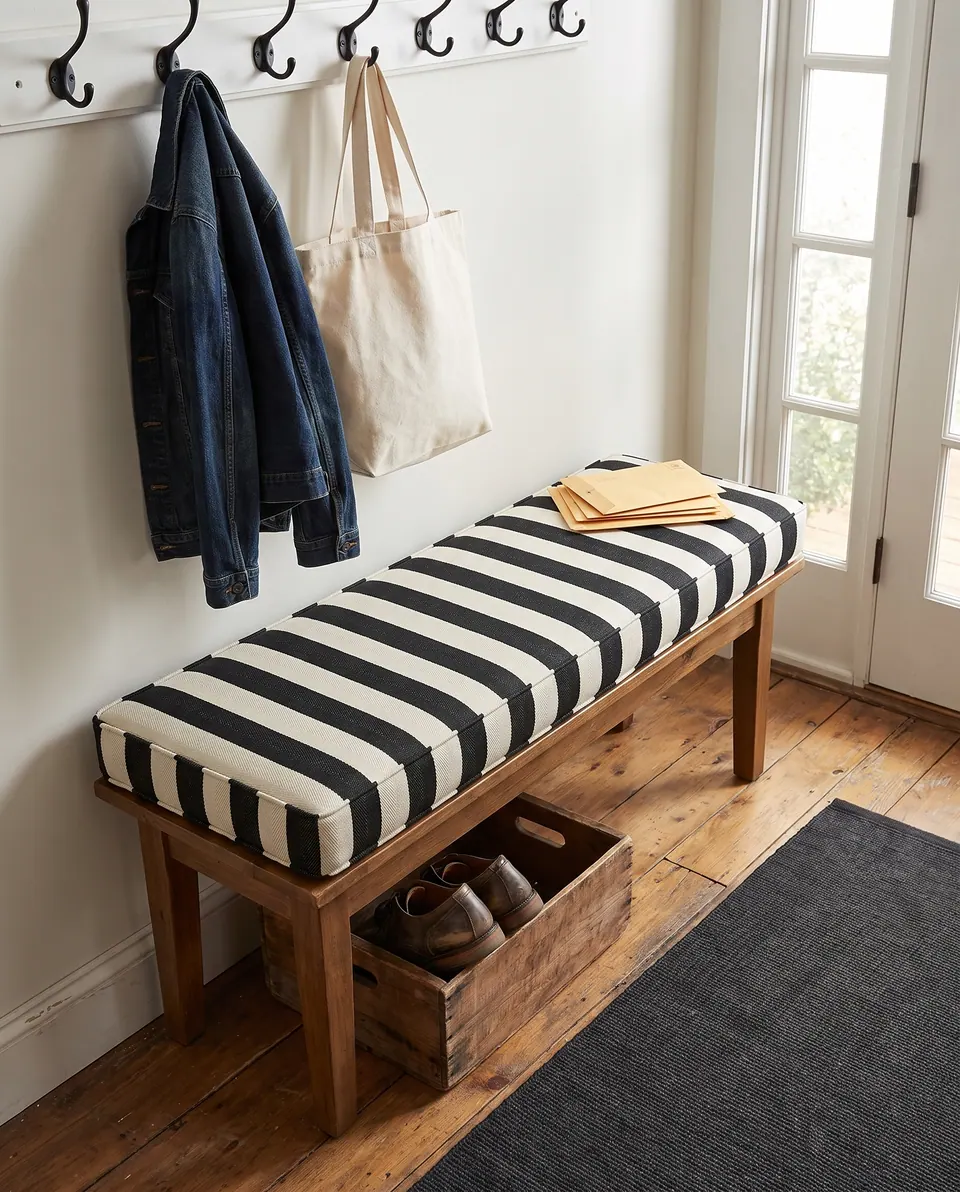
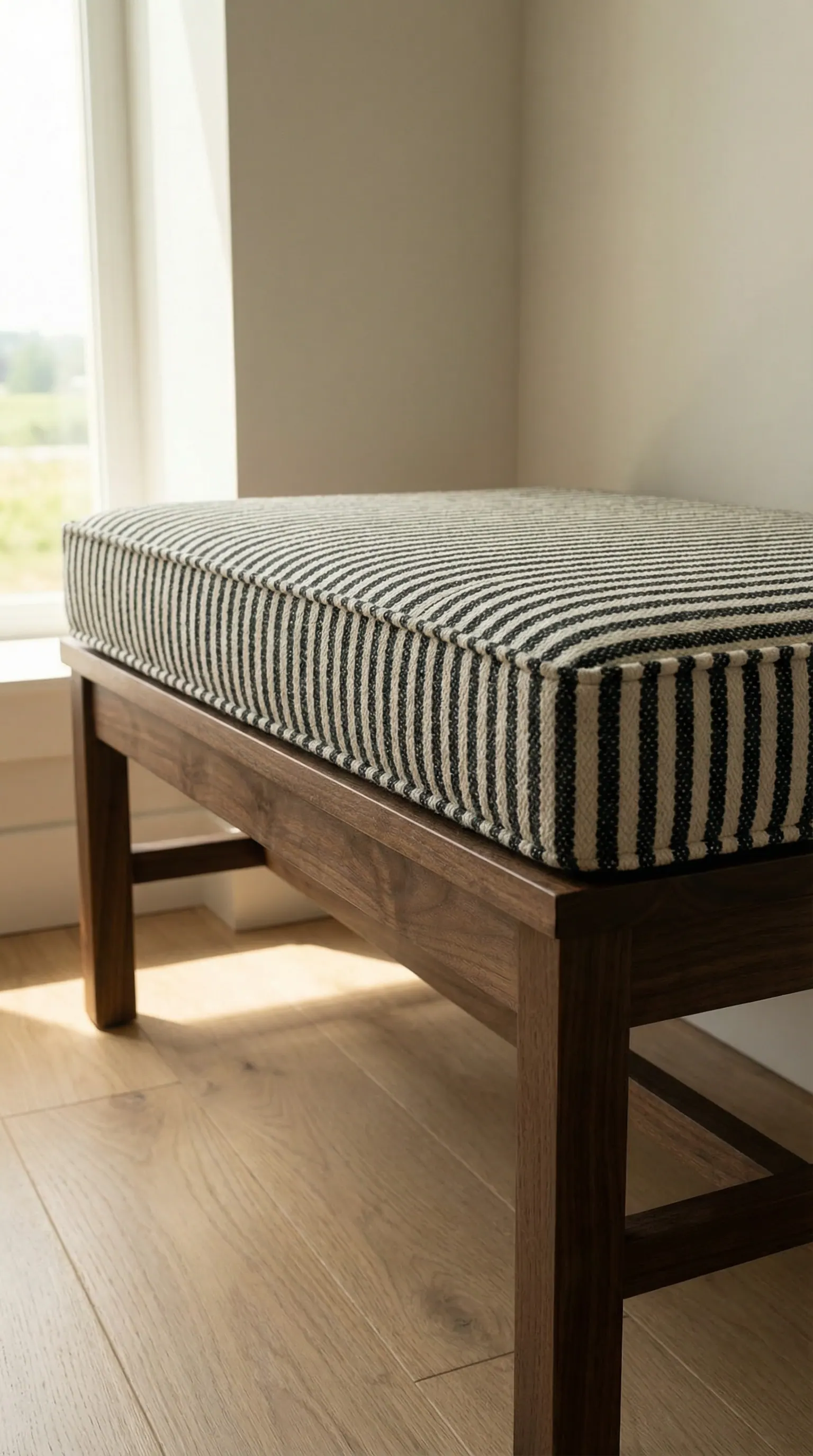
Black and cream ticking on a walnut bench: the firm foam under the stripes
I read this photograph for its low, raking sun first. Then I read the four inches of foam that keep every black stripe running true.
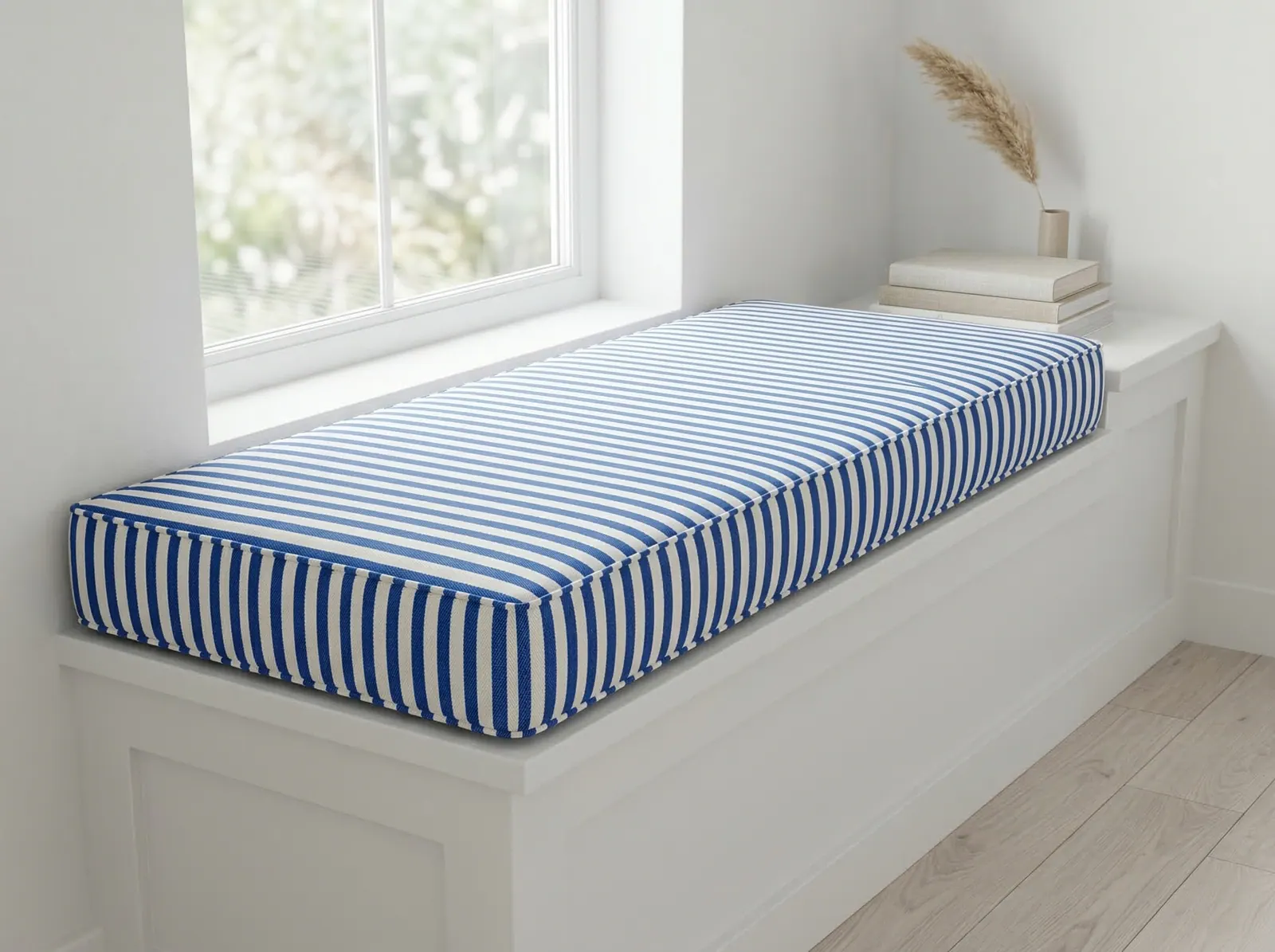
Close up, the ticking shows a small herringbone texture in each stripe, and self piping keeps the box edge tight.

The quick answer
A firm box cushion about 4 in (10 cm) tall suits a slim walnut entry bench: it keeps woven ticking stripes straight, holds the self-piped edge square and makes a thin frame look sturdier. Cut the cushion to the bench's outer edge. On striped cushions longer than 55 in (140 cm), ask which way the stripes can run before you order.
Where the black stripe meets the walnut grain
In low side sun, the black stripe of this ticking is the exact depth of the walnut's darkest grain. That is why cushion and bench read as one piece of furniture rather than a seat laid on a frame.
Lean in and each stripe carries a small herringbone, woven, not printed. Raking light from the white-framed window picks it out; flat ceiling light would erase it. The cream is not white either. It is a warm, unbleached cream that holds the afternoon, and the wide oak boards bounce more warmth back up, so the black-and-cream ticking never turns cold.
The warm white wall is left bare on purpose. No pillows, no throw, no basket. The eye sits down first, and here it sits on one clean stripe and one dark leg with stretchers, and stays.
Pinned by Élodie
Five pins follow the sun, from the window frame across the weave to the walnut leg.
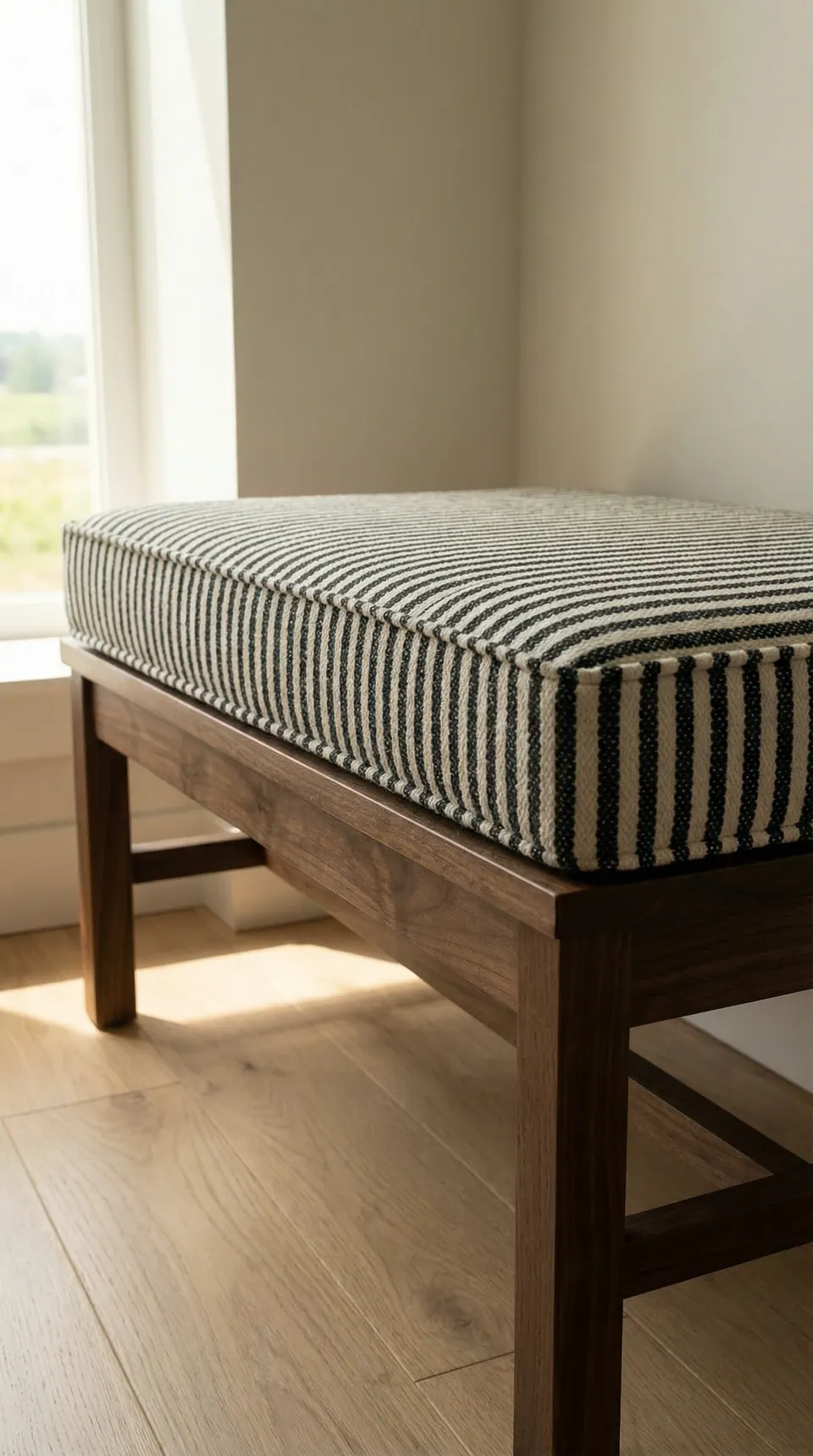
- herringbone ticking weave
Each stripe carries a small herringbone texture that shows in low raking sun.
- self-piped box edge
Piping in the same ticking keeps the edge tight and lets the stripe wrap the corner.
- walnut bench leg
The black stripe picks up the darkest grain of the walnut frame.
- side window light
Side light from the window rakes across the weave and shows its texture.
- sunlit oak floor
Warm floor tones keep a black-and-cream stripe from feeling cold.
- herringbone ticking weaveEach stripe carries a small herringbone texture that shows in low raking sun.
- self-piped box edgePiping in the same ticking keeps the edge tight and lets the stripe wrap the corner.
- walnut bench legThe black stripe picks up the darkest grain of the walnut frame.
- side window lightSide light from the window rakes across the weave and shows its texture.
- sunlit oak floorWarm floor tones keep a black-and-cream stripe from feeling cold.
Four inches of firm foam under a woven stripe
The cushion stands about 4 in (10 cm) and is cut to the bench's outer edge. On slim walnut legs, that proportion adds weight where the frame has little, so the bench looks sturdier than it is.
The core has to be firm, my friends, and the stripe is the reason. Woven stripes are straight lines. A soft top dips where you sit and bends them into a shallow smile; a firm one keeps the top flat, the self-piped box edge square and the stripe wrapping each corner cleanly. One long banquette order asked for exactly this build: 4 in high-density foam with a Dacron wrap, which softens the first touch without letting the top sag.
An entry bench is a perch. You sit to pull on boots, not to nap. How long does anyone really sit on yours? If the answer is minutes, choose firm. The foam firmness finder and the notes on foam density versus firmness help you name it when you order a custom bench cushion for a mudroom or entry.
The 92-inch cushion whose stripes ran lengthwise
A buyer wrote in about a long striped linen cushion, 20 x 92 in (51 x 234 cm), with the exact size added as a custom option. It arrived well made. But the stripes ran along the length of the cushion, and the listing photos had shown them running front to back.
The cloth explained it. The roll is 55 in (140 cm) wide, and a stripe woven along the roll can only run front to back if the whole cushion length fits across that width. At 92 in it cannot, not in one piece. The shop offered a two-piece version with the cost shared, and suggested a bolster laid over the join to hide it.
On any long striped cushion, ask about stripe direction before you order. The stripe direction notes show both ways.
On the cutting table
| Piece | Rectangular box bench cushion |
|---|---|
| Fabric | Black and cream ticking with a herringbone weave |
| Piping | Self piping in the same ticking |
| Thickness | About 4 in (10 cm), read from the photo |
| Core | Firm foam; ask for high-density, Dacron-wrapped if you like a softer first touch |
| Fit | Cut to the bench's outer edge |
| Stripe limit | Front-to-back stripes need the length to fit a 55 in (140 cm) roll |
| Best for | Mudroom and entry benches used for short sits |

Have it made
Have this made — ask Élodie’s workshop
A fabric reads one way at noon and another at dusk. Mention your light, and the workshop will weigh it with you. — Élodie
Leave your details and the workshop will call you to confirm measurements, fabric, foam and piping. No prices, dates or payment on this page: it is a request, not an order.
Buyer questions: wide cushions, fabric by the meter, one orange in two cloths
- A common question
My cushion is bigger than your fabric is wide. Will there be a seam across the top?
The workshop's answerPossibly. The fabric rolls are at most 55 in (140 cm) wide, so a very large piece may need a subtle join in the top and bottom panels. If it does, the join goes toward the back or wherever it shows least, and sometimes no seam is needed at all.
- A common question
Can I buy your fabric on its own so I can upholster chairs to match?
The workshop's answerYes. The shop can supply its fabric, linen L-07 for example, by the meter. Tell them how many meters you need.
- A common question
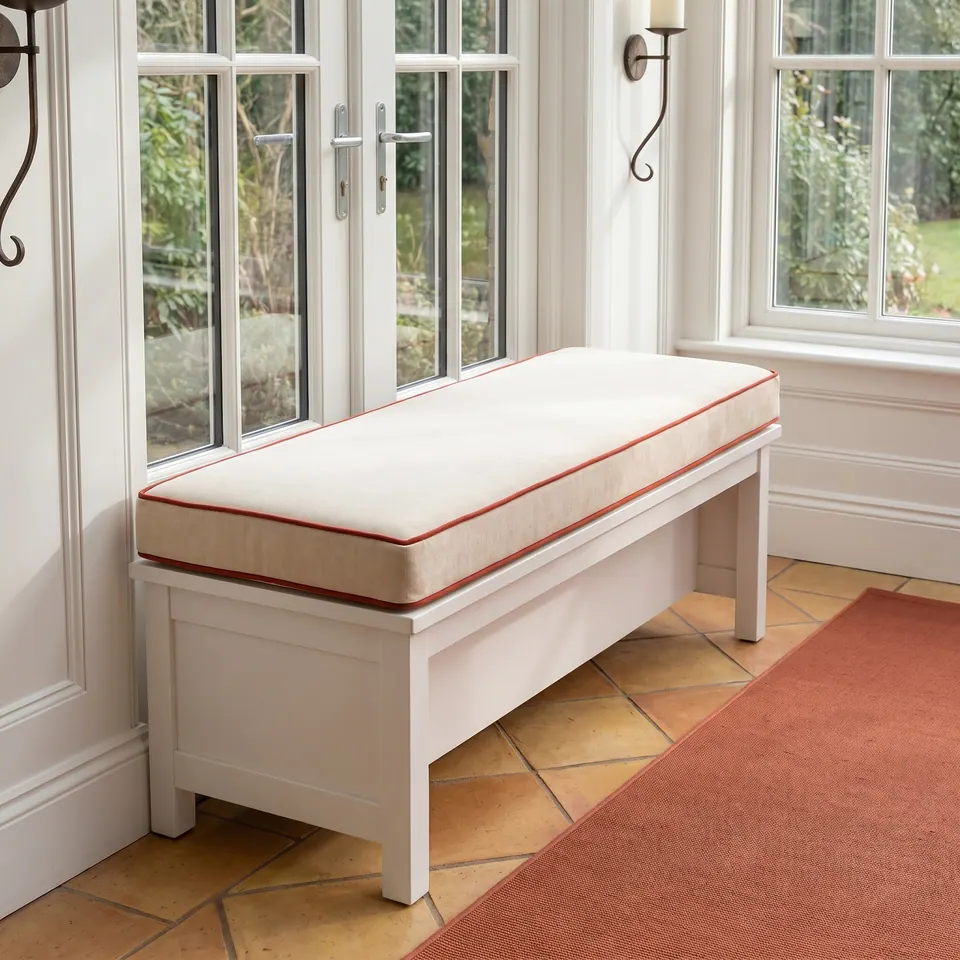
Is the orange linen in your photos the same shade as the burnt terracotta velvet?
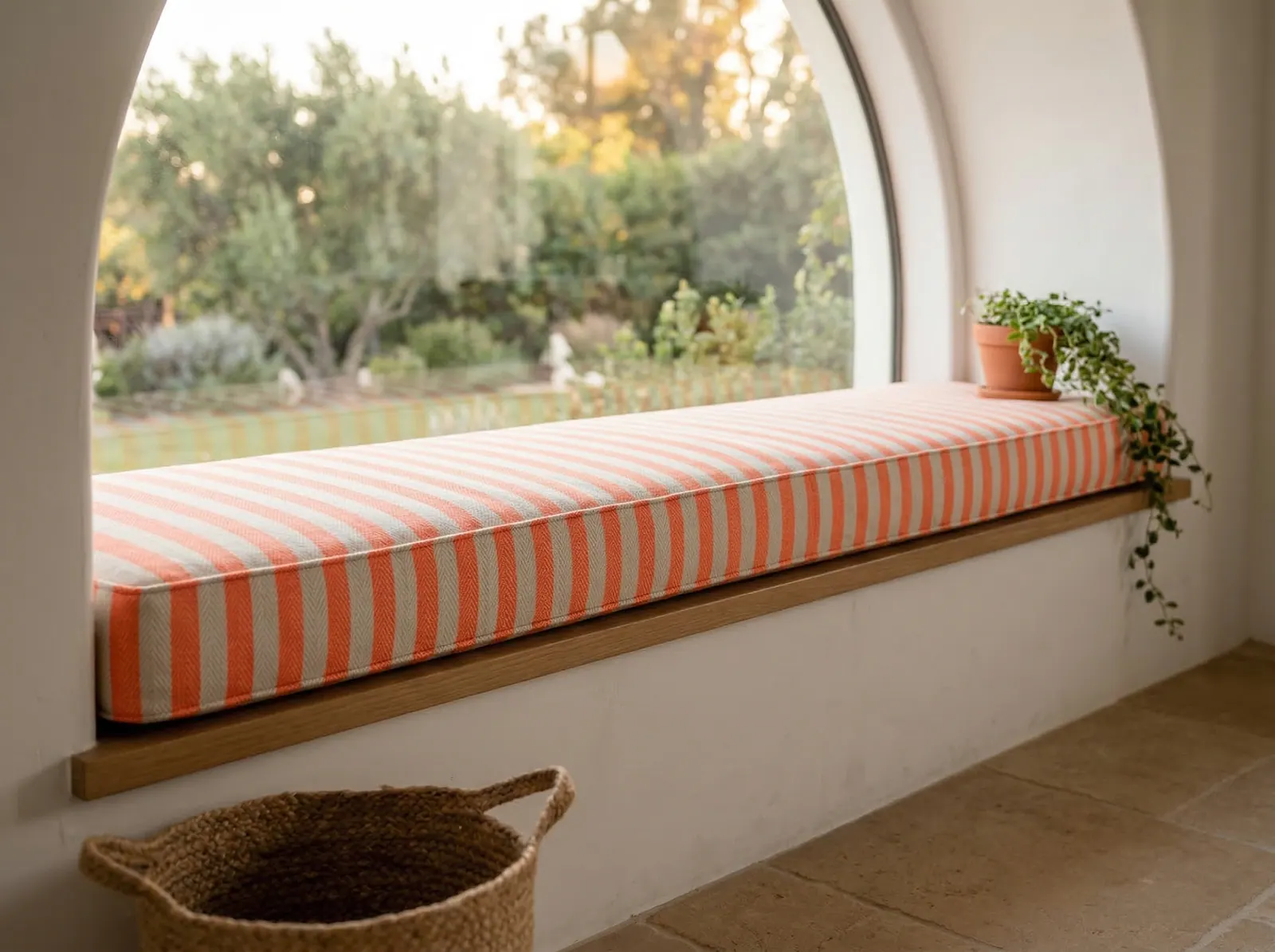
The workshop's answerThe orange in the photos is linen L-53, and it is very close to Burnt Terracotta 112 velvet. The small difference comes from how linen and velvet reflect light, not because the linen is brighter, so choose the fabric type you prefer.
On a striped bench cushion, a firm foam core keeps woven stripes straight; a soft top dips where you sit and bends every stripe into a curve.
Élodie
Questions buyers ask next
How thick is the cushion on this walnut bench?
It stands about 4 in (10 cm) and is cut to the bench's outer edge. That proportion gives a slim-legged bench more visual weight, and a firm core keeps the top flat enough to perch on while you pull on boots.
Should ticking have matching or contrast piping?
Self piping in the same ticking, as here, keeps the edge tight and lets the stripe wrap the corner with no new color interrupting it. Since a woven stripe cannot be recolored, piping is the one color choice you still control.
Why pair black and cream stripes with dark walnut?
The black stripe picks up the walnut's darkest grain and the cream catches the sun, so cushion and frame read as one piece. Warm oak floors below keep a high-contrast stripe from feeling cold.
With color and care — Élodie
More photographs to read
 Save
 Save
 Save
 Save
 Save
 Save