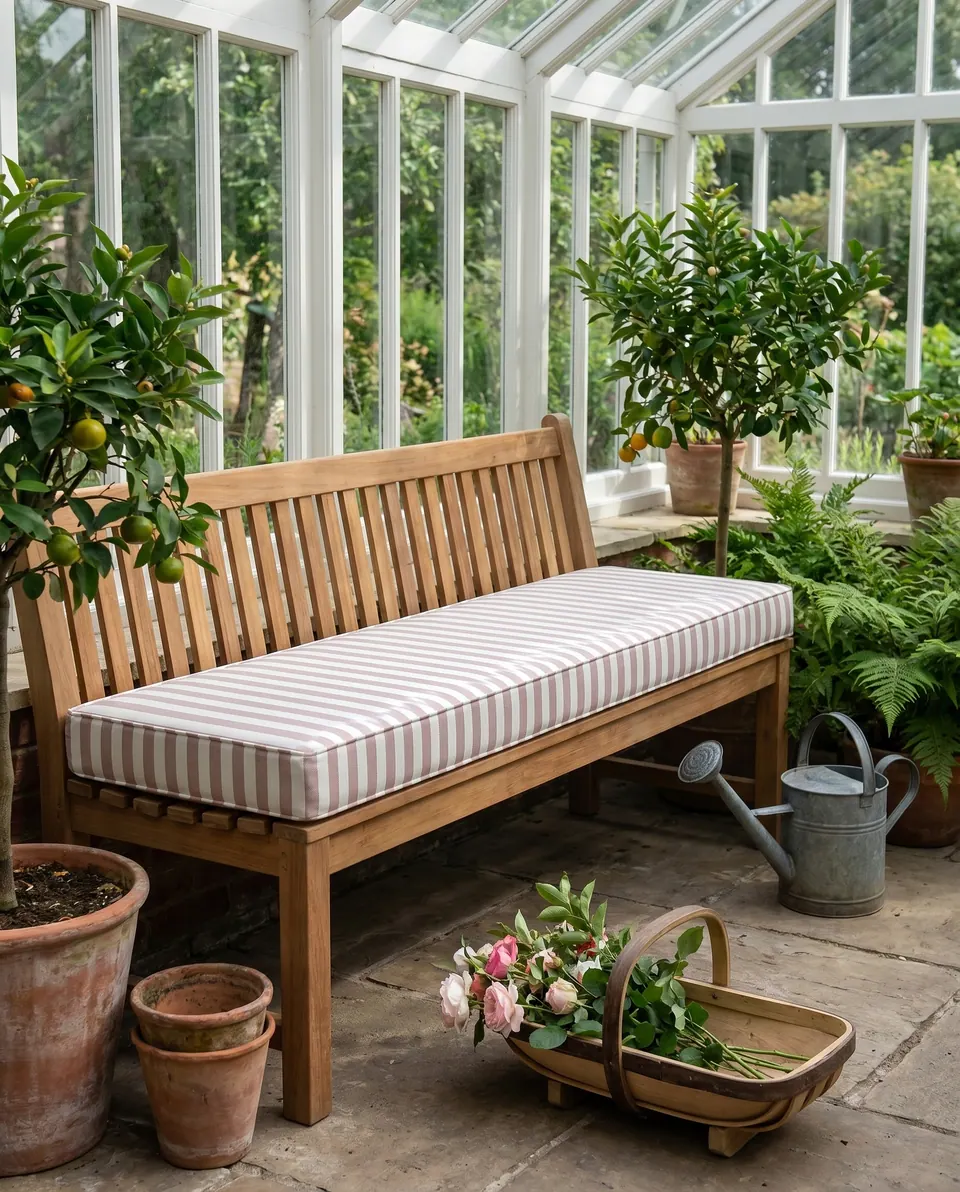
A Reading by ÉlodieBench Cushions
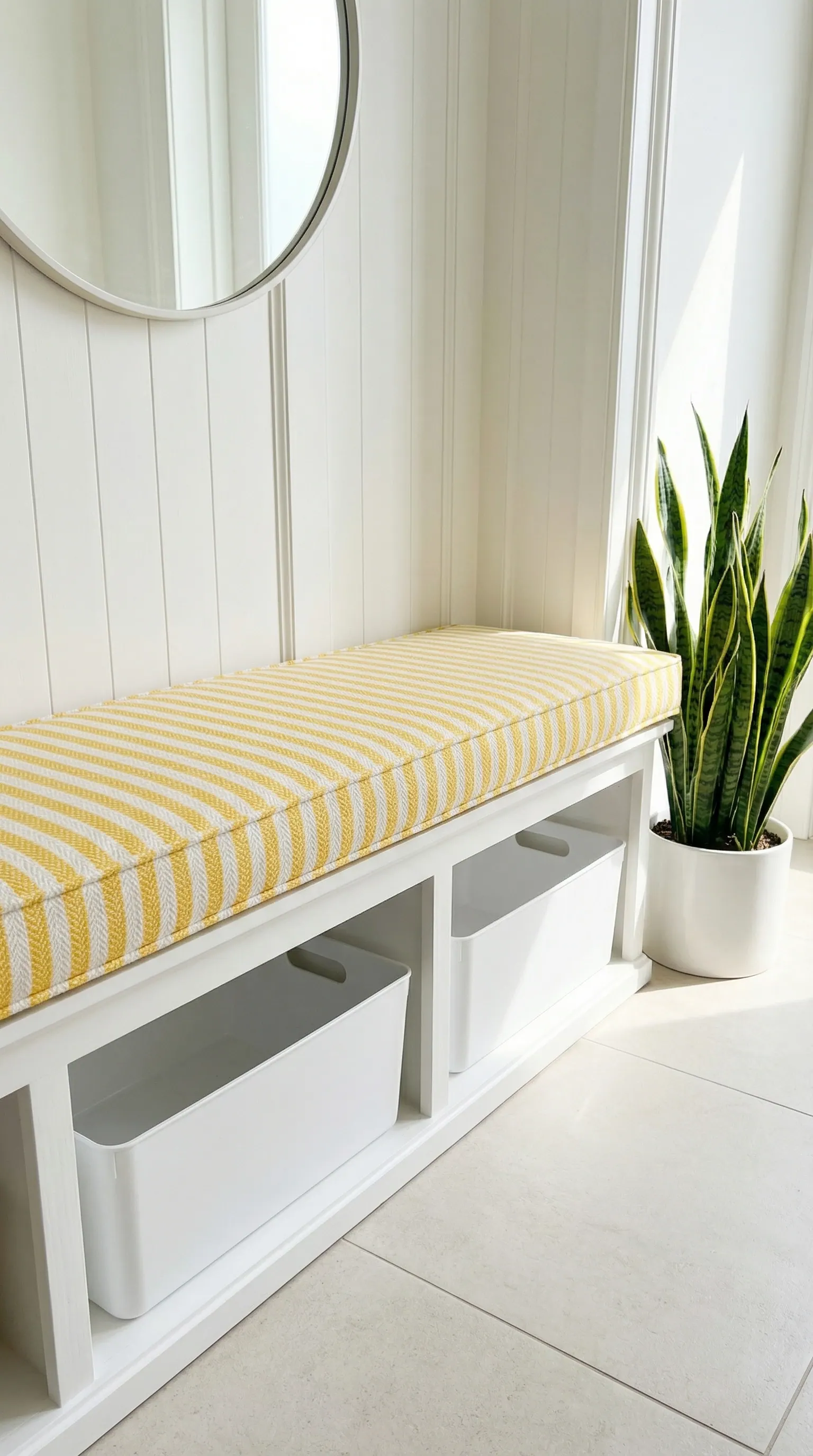
A yellow striped cushion on a white cube bench, and the order note behind it
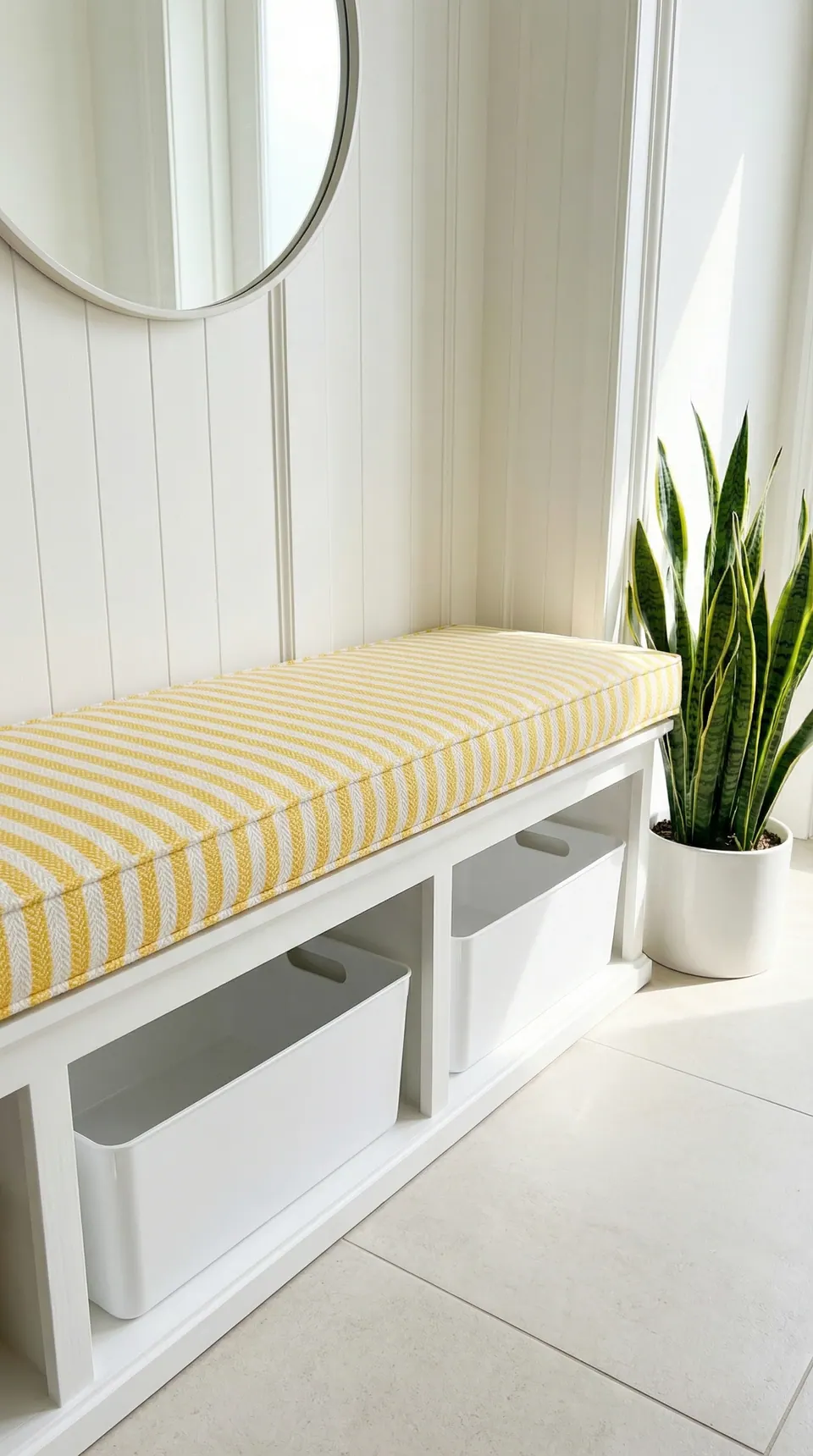
One color in a white entry: a stripe the yellow of sunflowers at noon. My notebook covers the photograph and the order note behind it.
 Save
The quick answer
To get a custom bench cushion right the first time, measure the bench top yourself and write the exact size, the fabric code and the piping code in the order note. Pick the nearest size range for pricing; the cushion is made to the size you write. Here a yellow stripe about 3 in (7.5 cm) thick sits flush on a white cube bench.
Sunflower yellow in a white room
Everything here is white, my friends: the cube unit, the tongue-and-groove paneling, the bins, the pale porcelain tiles in hard sun. Then one stripe of sunflower yellow, repeating nothing else in the room. It turns a storage unit into a seat.
The herringbone weave gives the stripe a fine texture that softens the glare. The piping is cut from the same stripe, so the edge never draws a second line. At about 3 in (7.5 cm) and cut flush with the top, the cushion stays low enough to sit on while you pull on boots.
The round mirror breaks up all those straight lines. The snake plant's upright leaves echo the rhythm of the stripe and add the only green. The bins keep shoes and bags out of sight, so the eye rests on the yellow.
What does the top of your bench measure? Start with entryway bench cushions in striped cottons, or size one in the bench cushion builder.
The numbers from the real order
| Piece | Inches | Centimeters | Note |
|---|---|---|---|
| Seat | 66 x 20.5 x 3 in | 66¼ x 20½ x 3 in (168 x 52 x 7.5 cm) | asked for about 2¾ in (7 cm) |
| Back cushions (3) | 22 x 18 in | 22 x 18 in (56 x 46 cm) | one per section |
| Hero cushion | about 3 in thick | about 3 in (7.5 cm) | cut flush with the cube top |
Inches first, centimeters in parentheses, as the order note should read.
Notes pinned to the photograph
From the mirror at the top to the bins below the seat.
- round mirror
A round mirror breaks up the straight lines of paneling, bench and stripe.
- yellow stripe cushion
The only color in an all-white entry, it turns a storage unit into a seat.
- snake plant
Upright leaves echo the stripe's rhythm and add green at the end of the bench.
- white storage bins
Bins below keep shoes and bags out of sight so the cushion stays the focal point.
- yellow stripe box edge
Cut flush with the unit's top at about 3 in, it stays low for pulling on shoes.
- round mirrorA round mirror breaks up the straight lines of paneling, bench and stripe.
- yellow stripe cushionThe only color in an all-white entry, it turns a storage unit into a seat.
- snake plantUpright leaves echo the stripe's rhythm and add green at the end of the bench.
- white storage binsBins below keep shoes and bags out of sight so the cushion stays the focal point.
- yellow stripe box edgeCut flush with the unit's top at about 3 in, it stays low for pulling on shoes.
Four lines that get it right the first time
Measure the cube top yourself
Write the exact size of the actual top. Cushions are made to your size, within a small handmade tolerance.
Choose the nearest size range
Size ranges on the order page are for pricing only. Pick the closest, then write your real length x depth x thickness in the note.
Write codes, not color names
Give the fabric code and the piping code, or write same as body. The order note Pattern has the full checklist.
Judge swatches in your own light
Daylight never lies; your screen sometimes does. Look at the swatch by the door at noon and again under the evening lamp.
A striped set that asked for 2 3/4 in and got 3
A buyer wrote with a clear list: one seat of 66 x 20.5 in, about 2¾ in thick, and three back cushions at 22 x 18 in, all in a stripe. The workshop answered that its usual seat thickness for a set like this is 3 in (7.5 cm), a hair more than asked and exactly the comfort they had in mind.
It priced the four pieces together, for less than they cost one by one, and waited on one thing only: the stripe code. A complete message leaves nothing to ask.
- Sizes
- Seat 66 x 20.5 x 3 in (168 x 52 x 7.5 cm); 3 backs 22 x 18 in (56 x 46 cm)
- Fabric
- Striped fabric, code to choose
The lesson: About 3 in (7.5 cm) is a comfortable seat thickness for a bench with separate back cushions.
Three ordering questions
- A common question
My cushion is smaller than the smallest size on the menu. Can I still order it?
The workshop's answerYes. The size options are for pricing only. Choose the closest range, for example 10 to 16 in for an 8.5 in (22 cm) wide cushion, and write your exact size in the personalization box. The price can't go below the smallest range, but the cushion is made to the size you write.
- A common question
How do I choose the piping color?
The workshop's answerAny fabric code from the charts can be used, or the same fabric as the body for a clean look, which is what most buyers choose. Write the piping code, or same as body, in the personalization box.
- A common question
How does the non-slip base work?
The workshop's answerThe whole bottom face is a grip material, not strips or dots. Friction keeps the cushion planted when someone sits or leans back, even on smooth painted or wooden tops. It is invisible in use and leaves no residue.
On the cutting table
| Cushion | Bench cushion, box edge, flush with the unit's top |
|---|---|
| Fabric | Herringbone stripe cotton, sunflower yellow and white |
| Piping | Self piping in the same stripe |
| Thickness | About 3 in (7.5 cm) |
| Base | Non-slip grip across the whole underside, on request |
| Best for | An entry or mudroom bench where people sit to pull on shoes |

Have it made
Have this made — ask Élodie’s workshop
Describe the room at four in the afternoon: the floor, the wall, the one color you love. That is where a good fabric choice begins. — Élodie
Leave your details and the workshop will call you to confirm measurements, fabric, foam and piping. No prices, dates or payment on this page: it is a request, not an order.
On a white cube storage bench, one yellow stripe cushion about 3 in thick turns shelving into a seat and stays low enough for pulling on boots.
Élodie
Questions buyers ask next
How thick should an entryway bench cushion be?
Low enough to sit on while you pull on shoes. The cushion here is about 3 in (7.5 cm), cut flush with the unit's top. A thicker cushion looks plusher, but it also raises the seat.
Is a striped cotton cushion practical by the front door?
It is cheerful and indoor-only, and 100% cotton stripes stain more easily than tighter weaves. By a door that sees wet boots, choose a zippered cover you can wash at 86°F (30°C) and air dry.
Why does the workshop ask for a code instead of a color name?
Color names are opinions; codes are specific. Two buyers can call the same cloth mustard and sunflower. The workshop sews to the code in your note and confirms codes and sizes before production.
With color and care — Élodie
More photographs to read
 Save
 Save
 Save
 Save
 Save
 Save