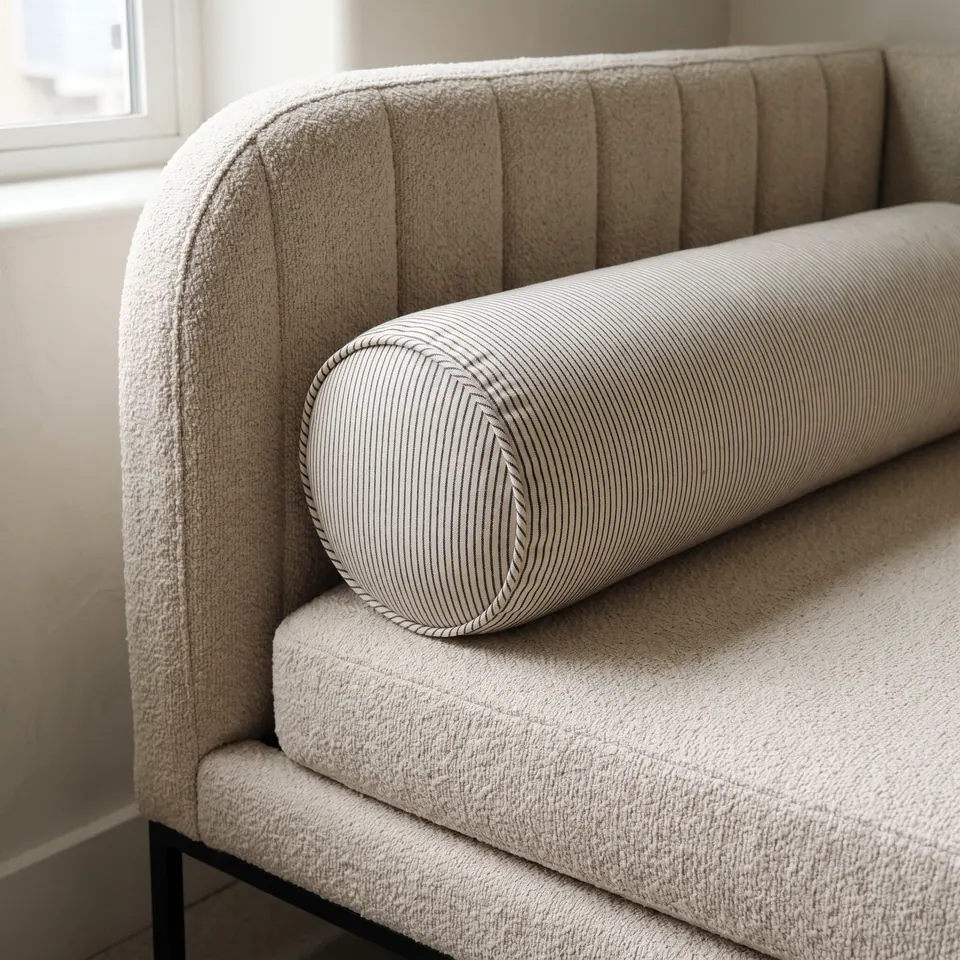
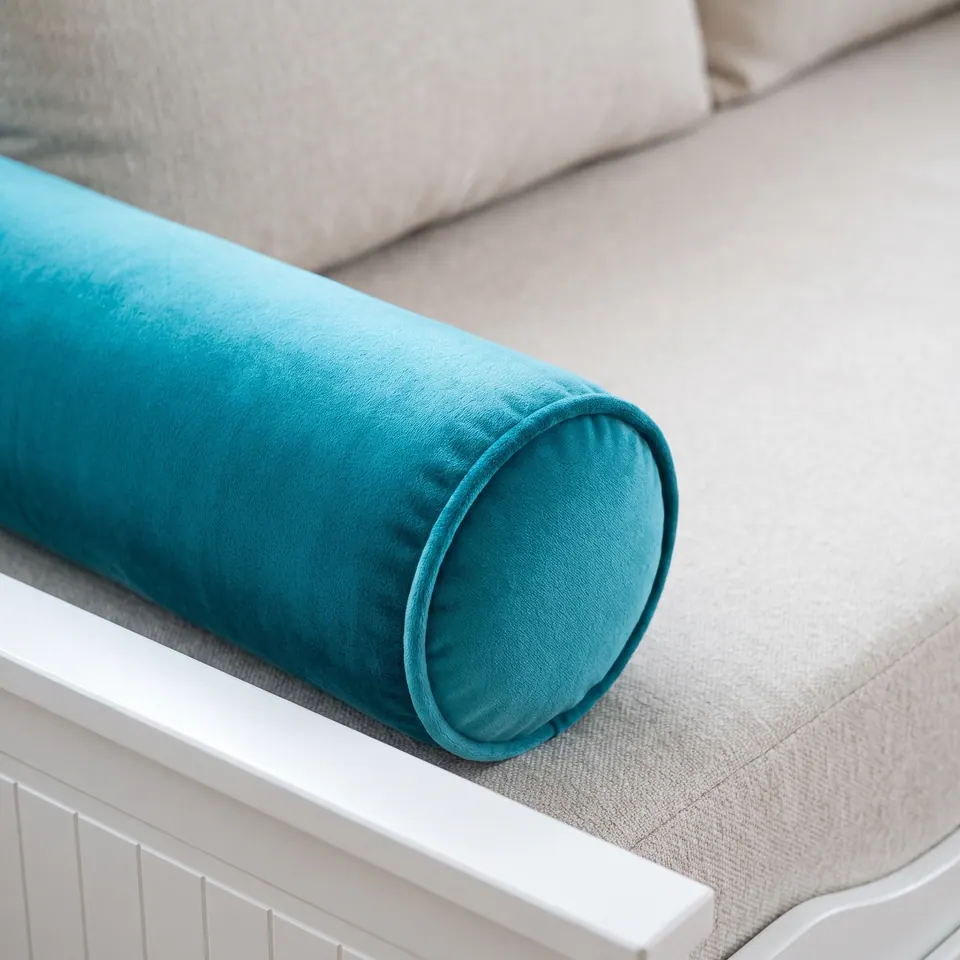
A Reading by HarlanBolster Pillows
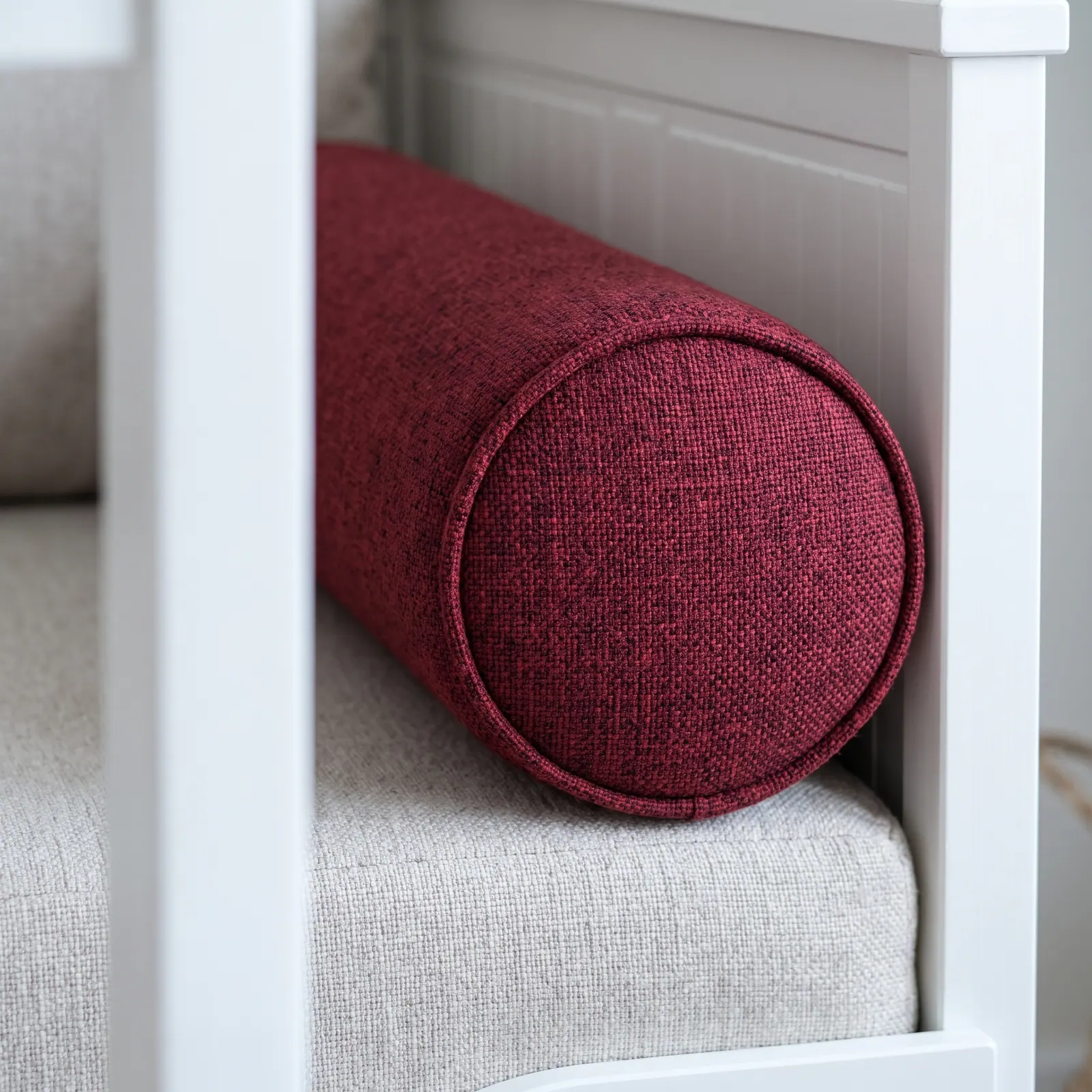
A heathered crimson bolster pillow, tucked between white daybed slats
Harlan reads one red bolster through the end of a daybed and answers the fastening question: what holds it, where the zipper goes, and when ties earn their keep.
The quick answer
A bolster pillow on a daybed seldom needs ties: the slatted end, the back panel and the seat cushion hold it in the corner on three sides. The real fastening choice is the cover's zipper, best kept on the side facing the wall. The standard diameter is 8 in (20 cm) on a 19.75 in (50 cm) bolster.
 Save
 Save
 Save
 Save
 Save
 Save
 Save
What holds a bolster when nothing is tied
Look at this one through the slats, my friend, the way a daybed shows it to the room.
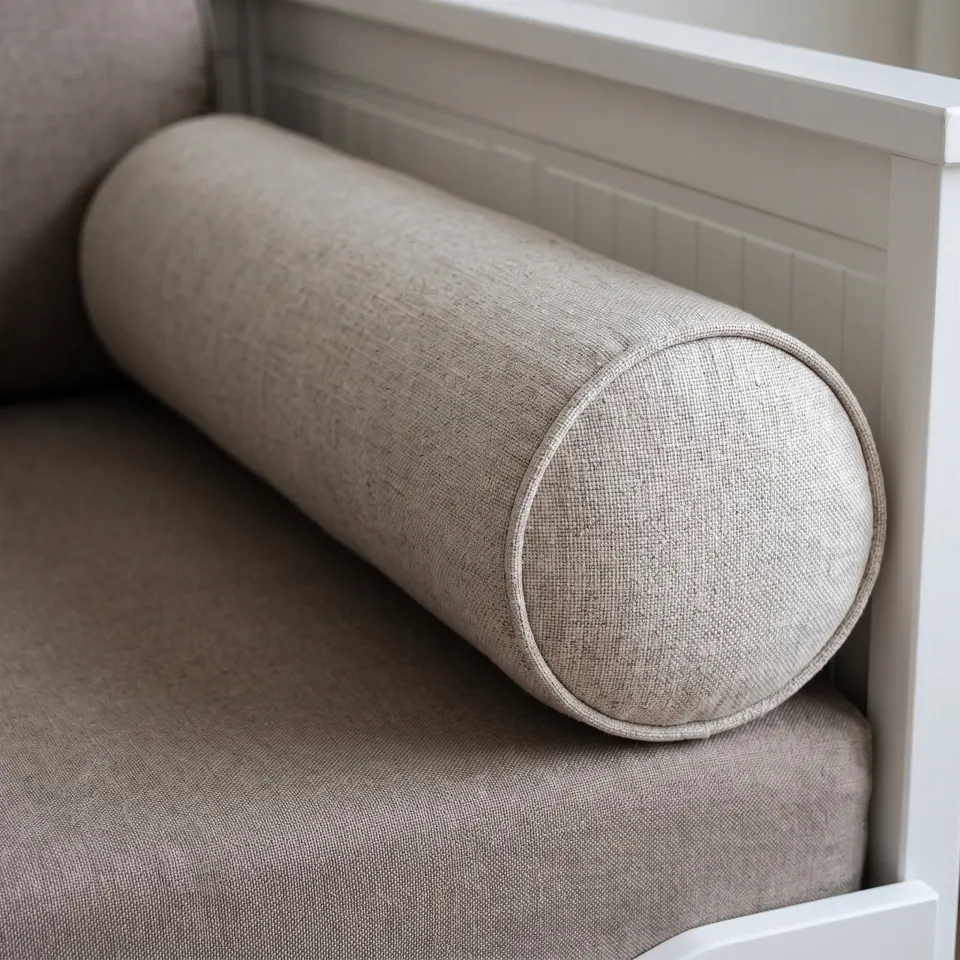
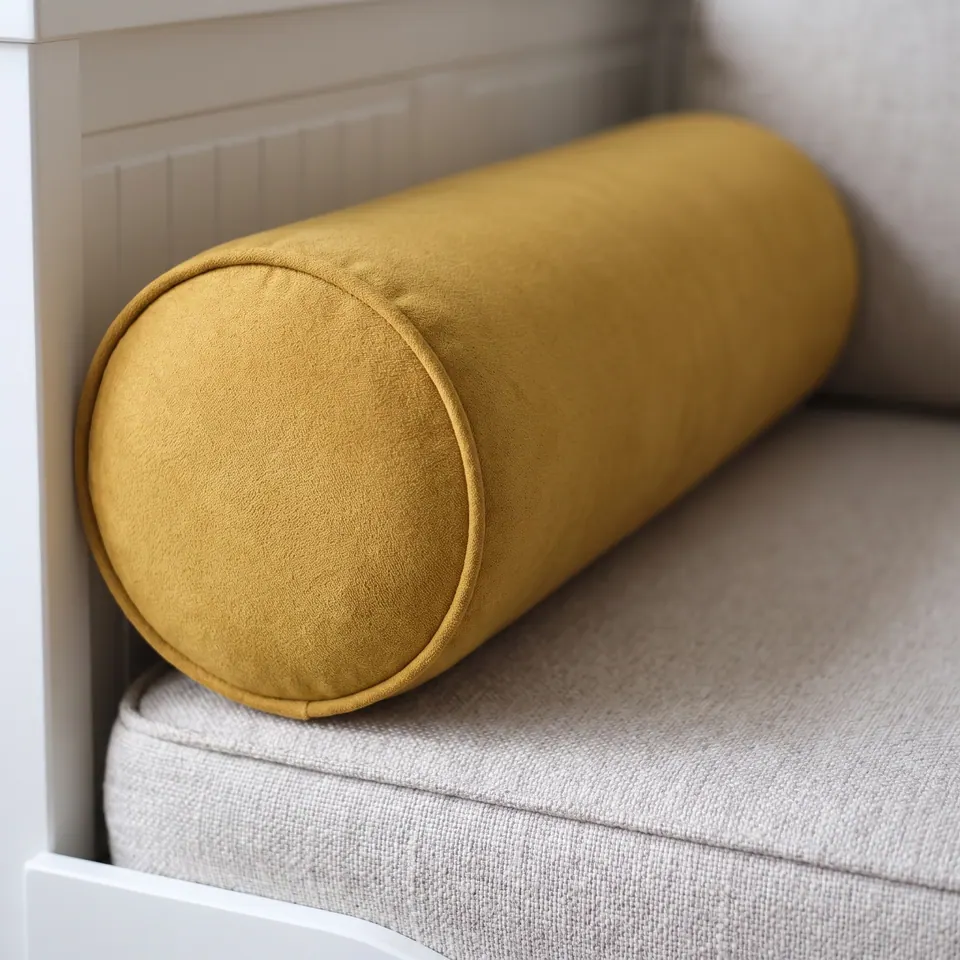
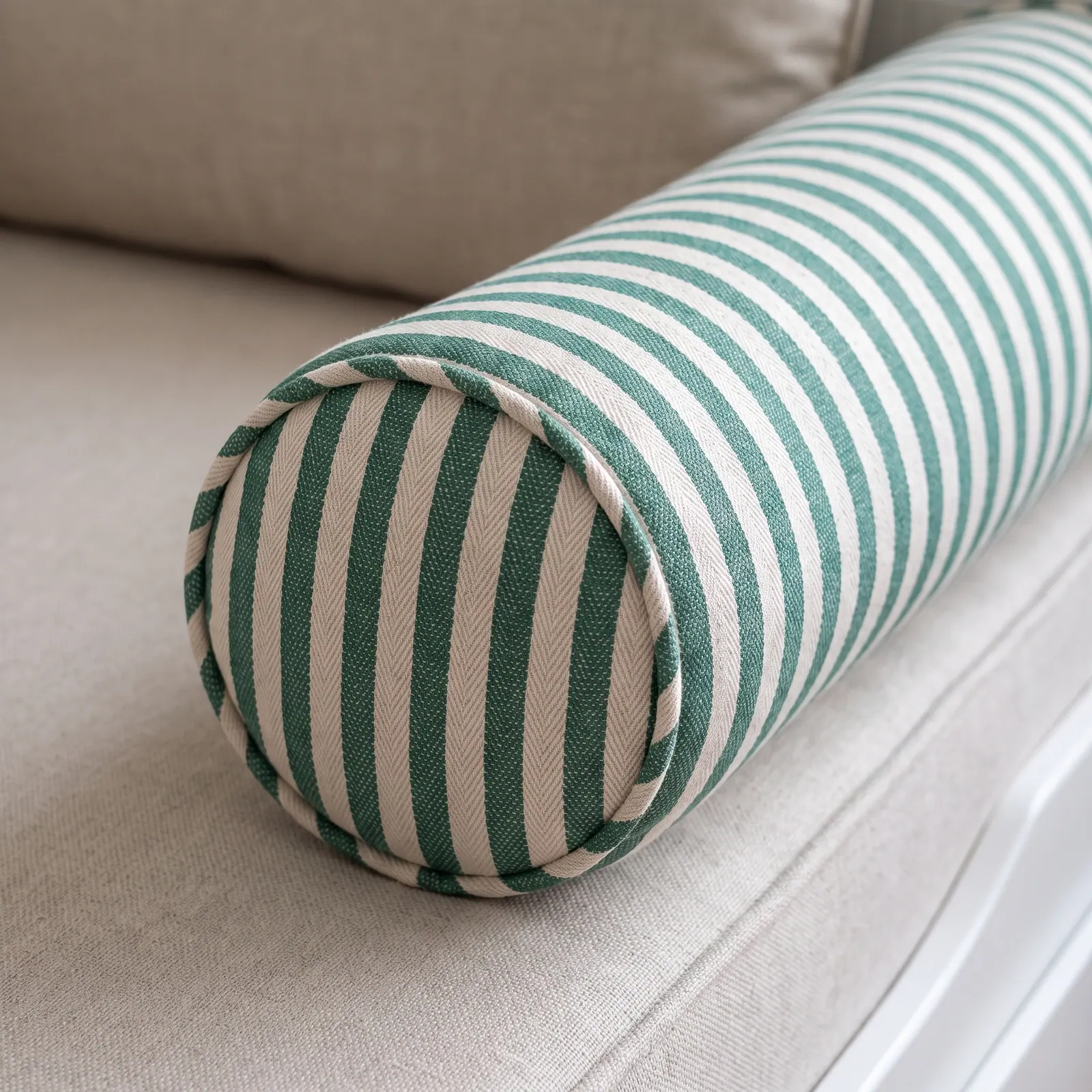
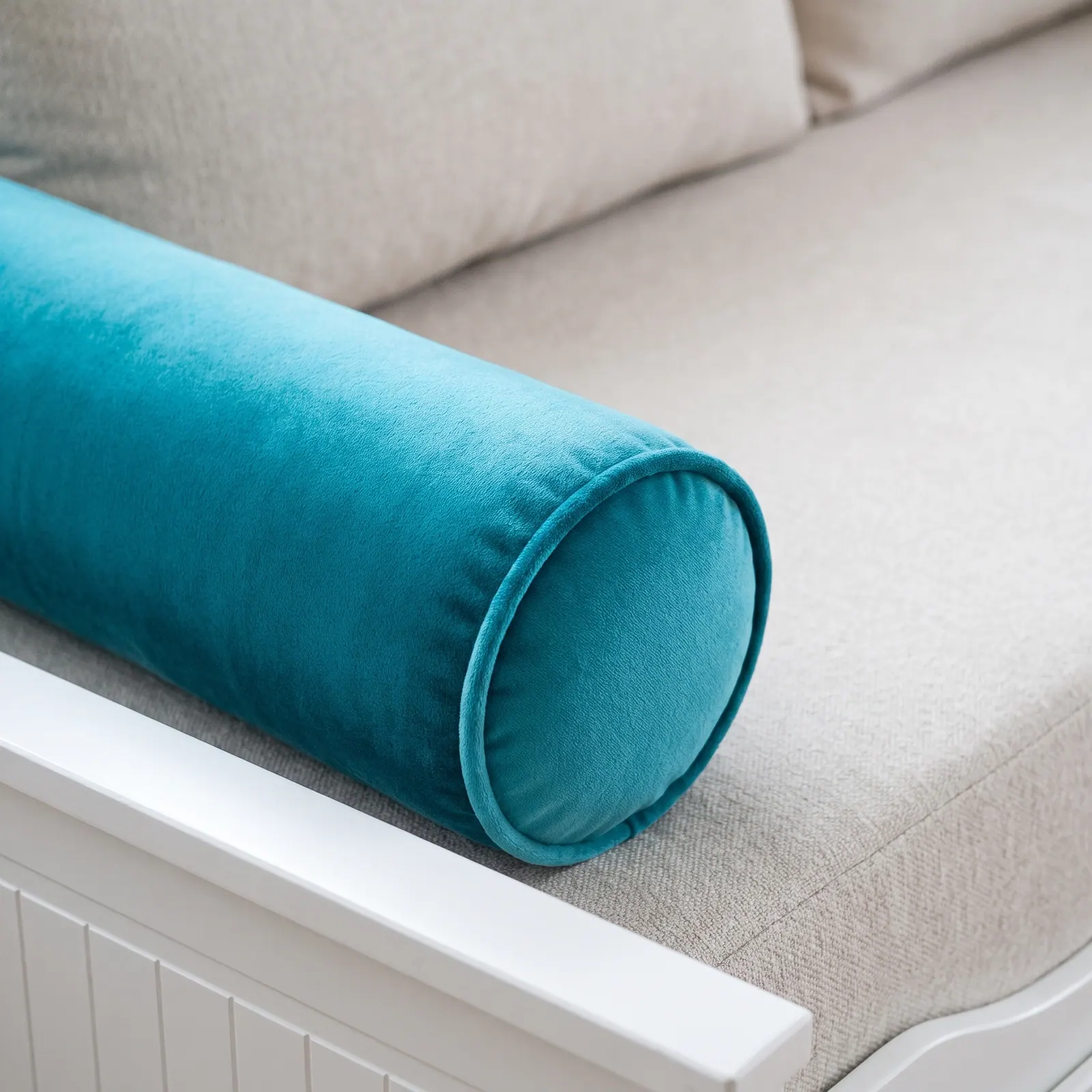
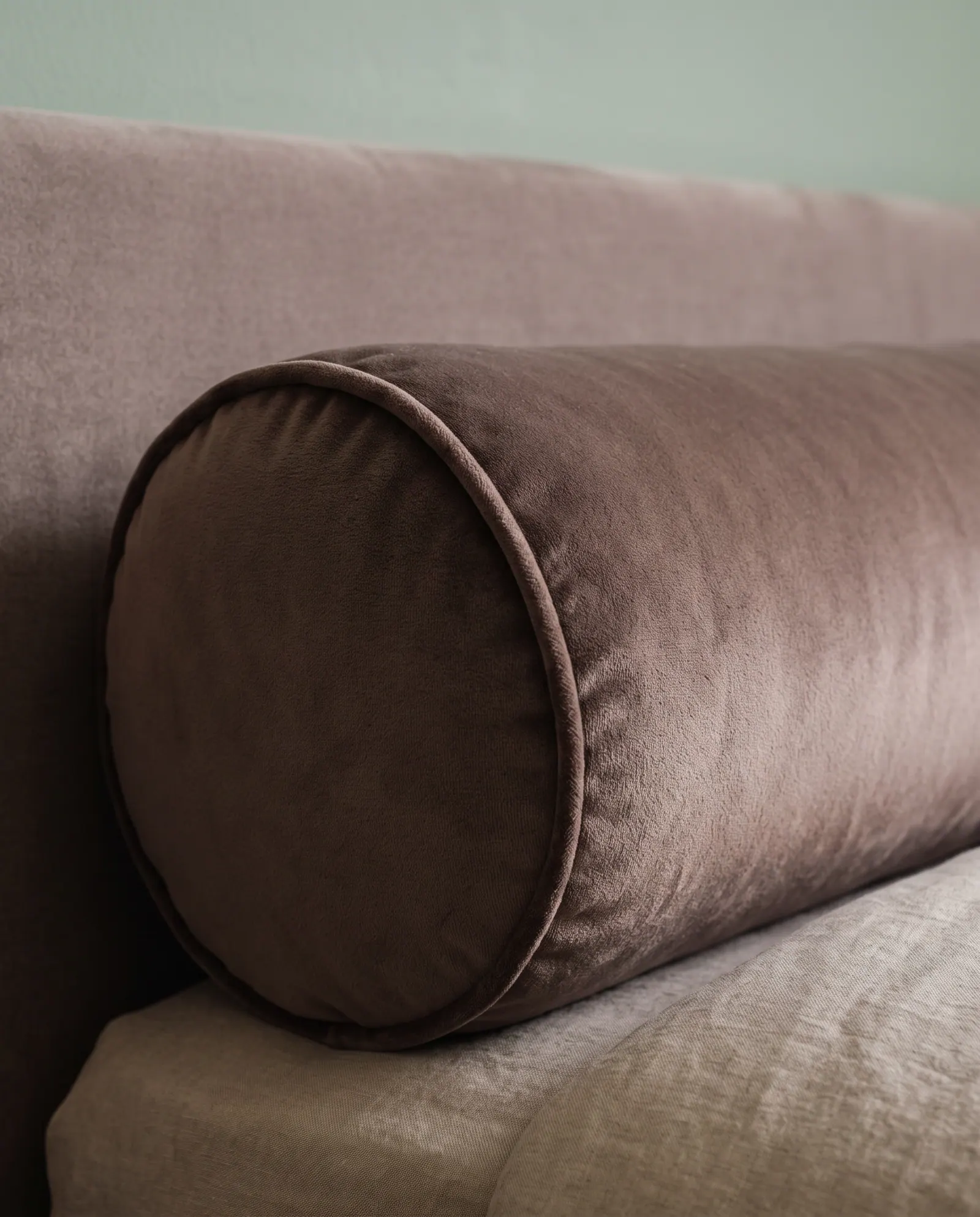
The bolster pillow lies in the back corner of a white beadboard daybed. The slatted end stops it rolling sideways. The back panel stops it rolling back. The seat cushion holds it from below. Three sides of a box and not a tie among them, which is why a daybed bolster seldom needs fastening at all.
What it does need is a good closure. A bolster cover comes off for cleaning, and the zipper has to live somewhere. I put it along the length, on the side that faces the wall, and never across the round end that looks into the room. The Pattern on zipper placement gives the full reasoning.
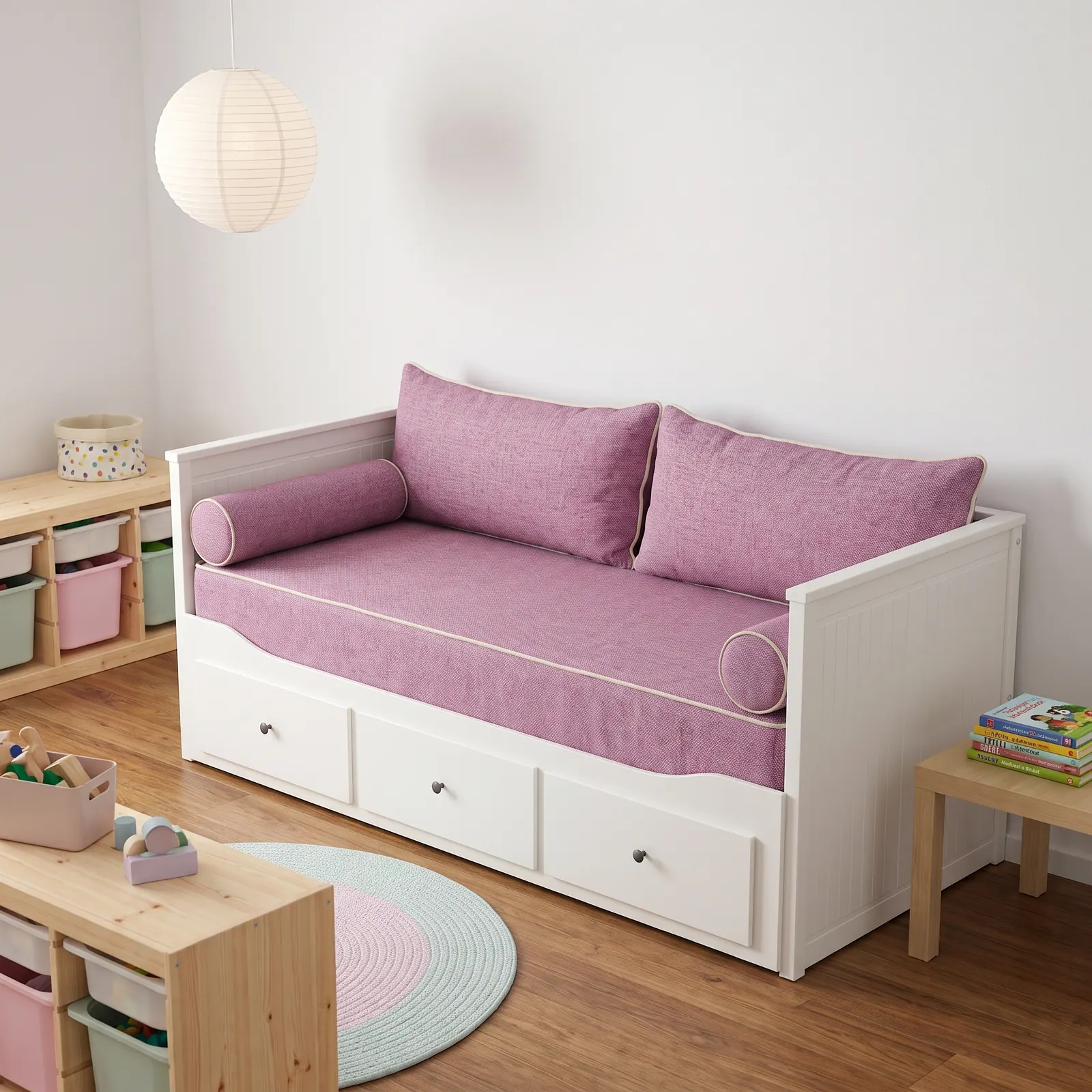
Ties earn their keep on a chair or a porch swing, where the cushion moves when the body moves. On a daybed the frame does that work. For the seats where it doesn't, the Pattern on ties and non-slip bases sorts it out. The same three-sided hold works on a slatted IKEA daybed; see the Hemnes daybed covers.
Pinned by Harlan: four points seen through the slats
Four pins, from the piped end of the crimson bolster to the pale oatmeal seat that makes it glow.
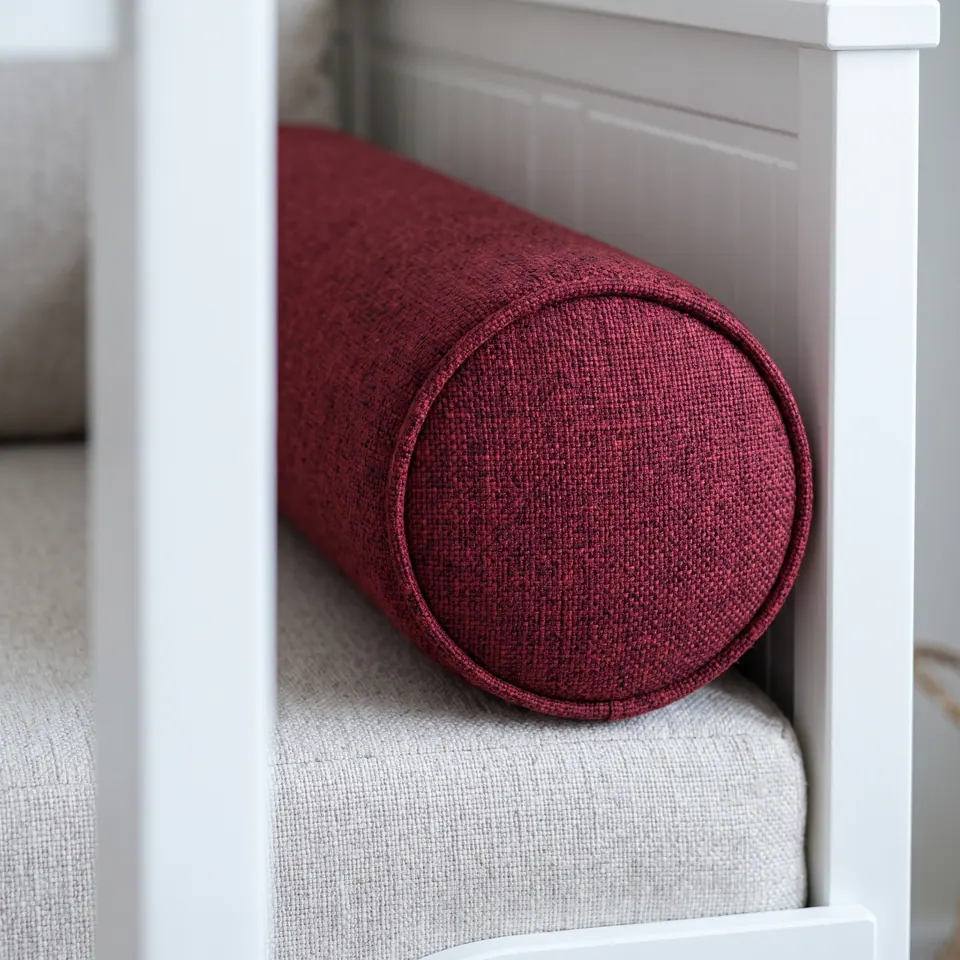
- Piped end
Fine self piping reads as an outline rather than a trim.
- Heathered weave
Mixed dark and light red threads give depth to a plain color.
- White slat
Framing through the slats shows where the bolster tucks in.
- Oatmeal seat
A pale seat makes the crimson glow.
- Piped endFine self piping reads as an outline rather than a trim.
- Heathered weaveMixed dark and light red threads give depth to a plain color.
- White slatFraming through the slats shows where the bolster tucks in.
- Oatmeal seatA pale seat makes the crimson glow.
Have it made
Have this made — ask Harlan’s workshop
Fabric has a temper and foam has a memory. Better to settle both in a conversation than to guess at them alone. — Harlan
Leave your details and the workshop will call you to confirm measurements, fabric, foam and piping. No prices, dates or payment on this page: it is a request, not an order.
Why a heathered crimson, and why the piping is self
The cloth is a linen-look weave in crimson, heathered, which means darker and lighter red threads run together. A flat red can look painted on. A heathered red has depth, the way an old brick wall has depth in low sun.
The piping on the end is self piping, cut from the same cloth. It sits fine and tight around the circle, so it reads as an outline, not a trim. A seam is a promise, and a round one is the hardest to keep. The fabric has to ease around the curve without a single pucker.
The rest of the picture is quiet on purpose: white slats, white beadboard, a pale oatmeal seat. Winter daylight comes in gray and short, and one warm bolster is enough to heat the whole daybed. Two would argue. Would one red piece do the same for your room?
Sit well. — Harlan