A Reading by HarlanBolster Pillows
A mustard bolster pillow with a piped end, and how to order one right
Sit down a minute, my friend. One mustard roll on a plain daybed says more than six small pillows ever will, and it says it best when the order that made it was written plain.
 Save
The quick answer
A daybed bolster pillow works as an armrest when it runs the depth of the seat, or about 4 in (10 cm) shorter, at the usual diameter of about 8 in (20 cm). Order it with two fabric codes, one for the body and one for the piping, and ask in writing for a strap if you want one.
A daybed bolster, cut open
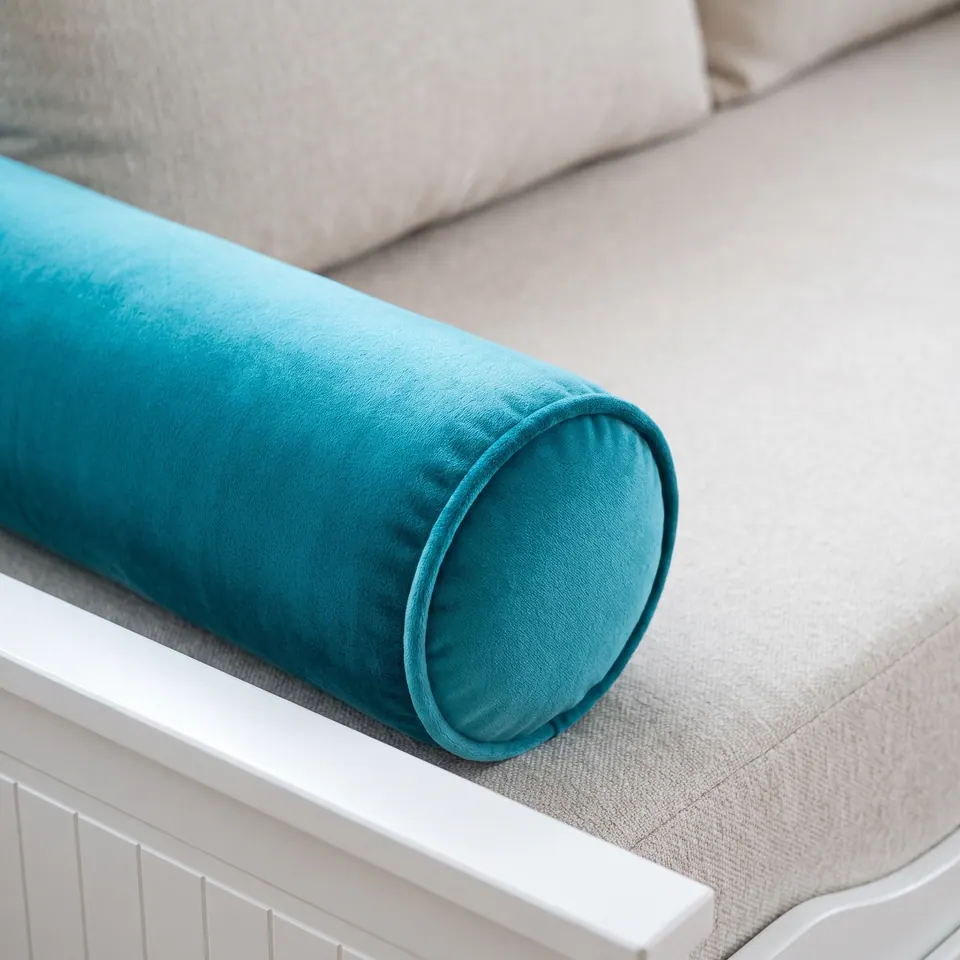
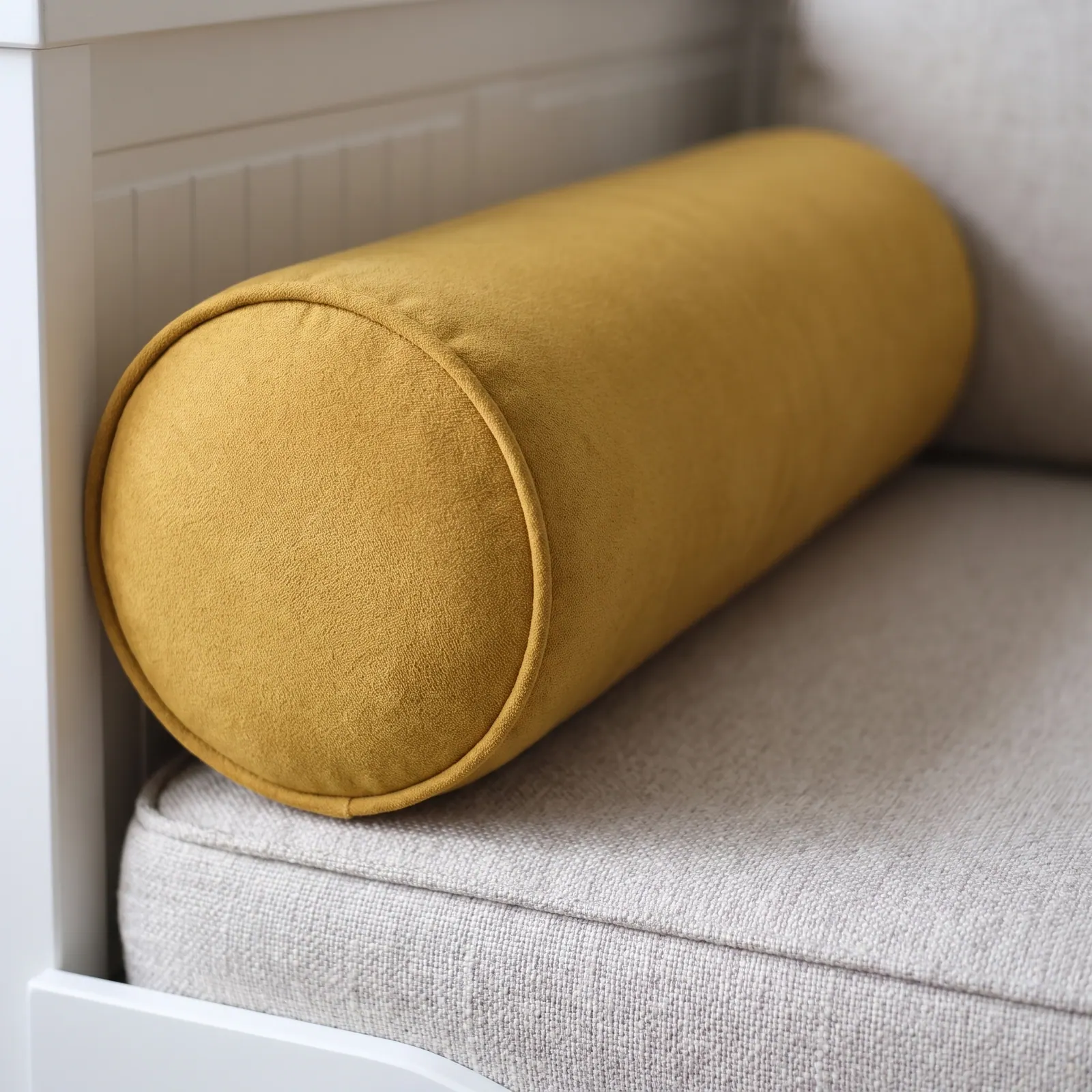
Linen-look cover. Mustard, with a soft brushed face. Zipped, so it comes off for washing at 86°F (30°C).
Self piping. A cord covered in the same cloth, ringing each round end.
Insert. The filled insert that fills the cover out. The brushed face shows how firmly it is packed.
Filling. Bolsters come filled. For a neck roll, shredded foam is the recommendation: not very soft, and it holds the roll.
Zipper. Along the length, on the underside, so it lies against the seat.
Round end. Cut to the diameter. Perfectly flat ends are close to impossible, because of the filling inside.
What the photograph tells an old hand
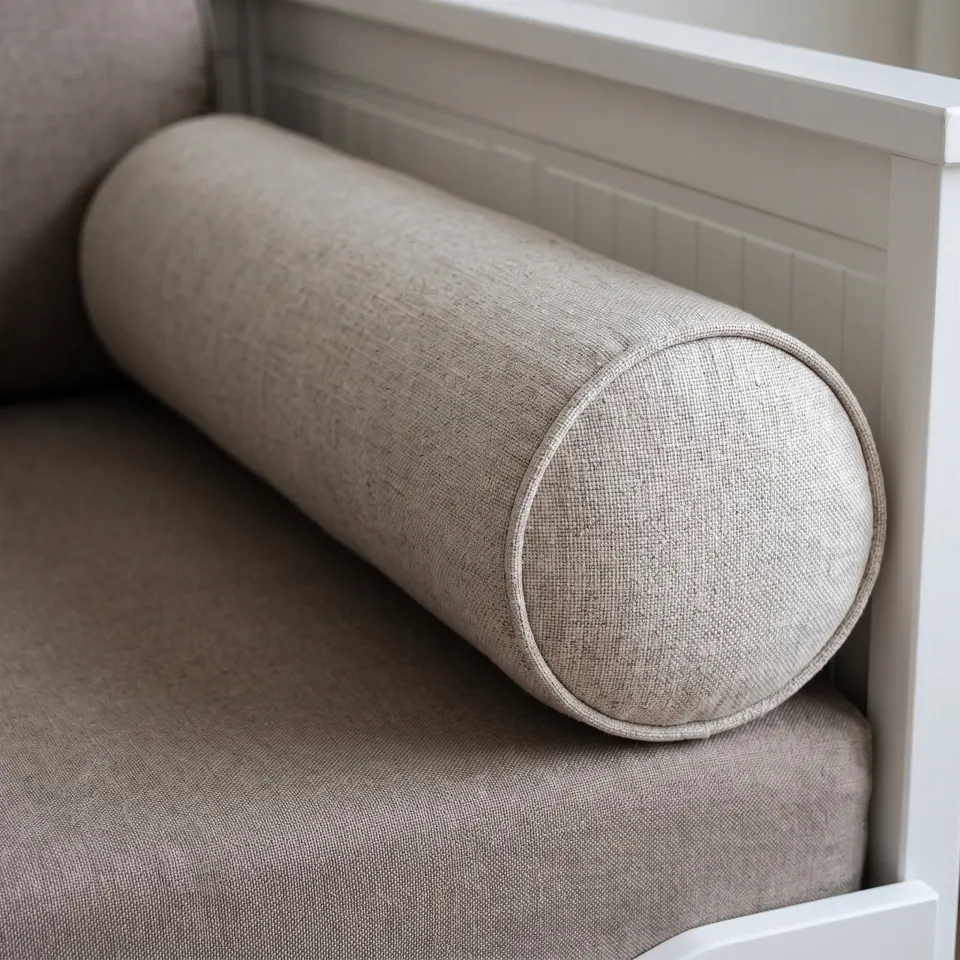
Mustard on oatmeal. It is an easy, warm mix, and I have seen it calm a busy room more than once. The gold picks up any wood tones nearby, and the neutral seat under it keeps the whole thing quiet.
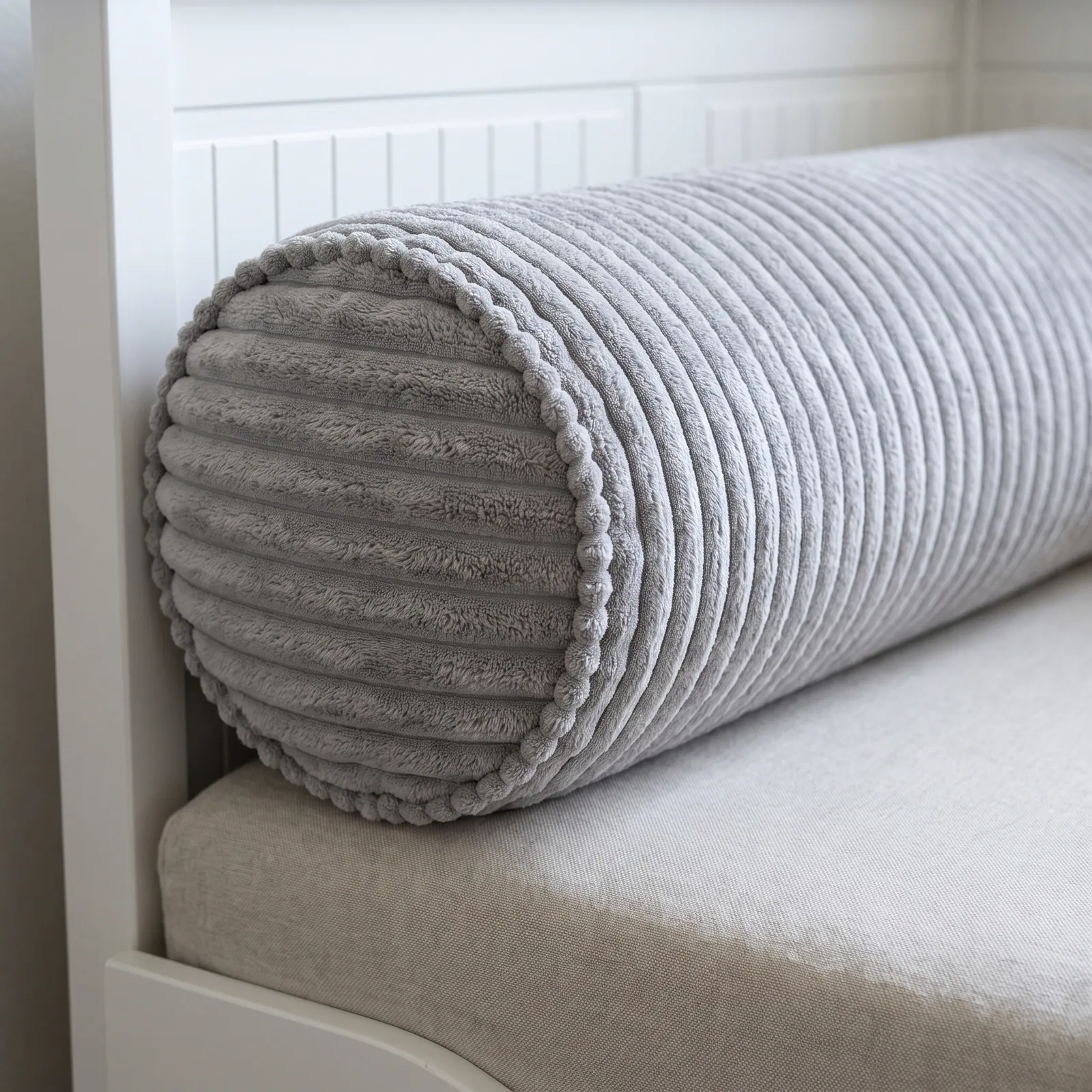
Look at the face of the cloth. It is a linen-look weave with a soft brushed surface, so the light falls across it evenly and shows you how firmly the insert fills the cover. No sag in the middle, no wrinkles running toward the ends. A bolster that is underfilled looks like a sleeping dog; this one looks awake.
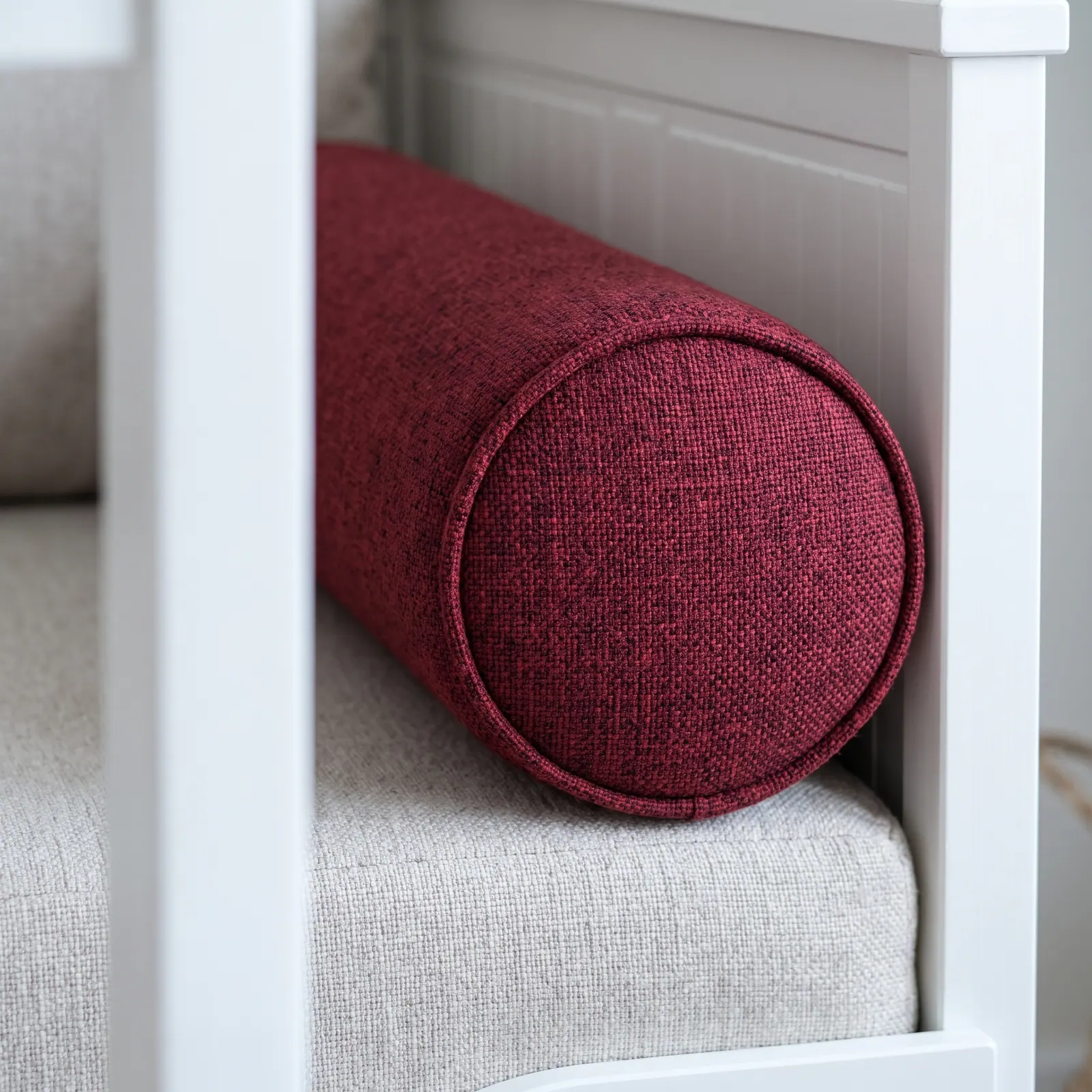
Now the end. The piping rings it in the same mustard, and the piped end sits square to the arm of the daybed. That is how a bolster ought to be placed when it works as an armrest: end to the frame, body along the seat. The white beadboard frame at the edge of the picture keeps the gold bright, the way a white mat brightens a painting.
The lesson for your own daybed is simple. For one strong accent on a neutral seat, choose a single bolster pillow in a saturated color rather than a crowd of small pillows.
Pinned by Harlan
Four places where the bolster tells you how it was ordered.
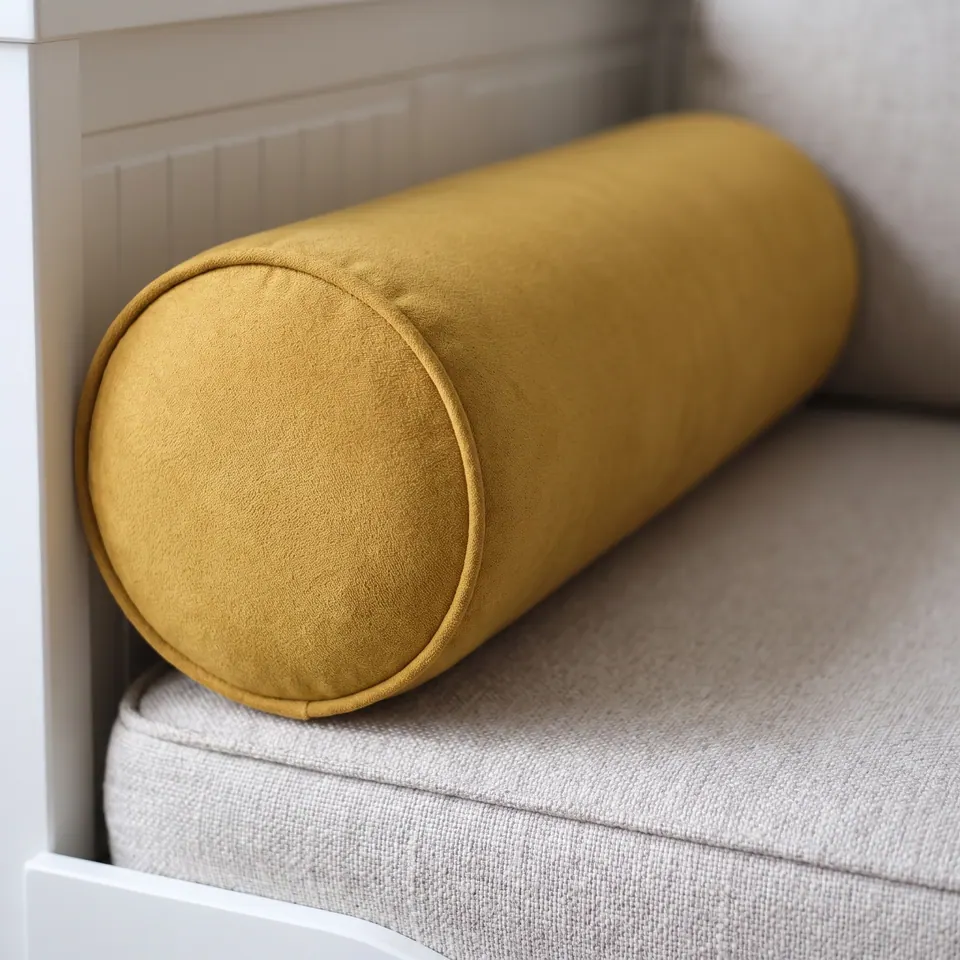
- Piped end
The piped end sits square to the arm so the bolster works as an armrest.
- Brushed mustard face
A soft brushed surface shows how firmly the insert fills the cover.
- Oatmeal cushion
A neutral seat lets one saturated accent carry the look.
- White frame
White joinery keeps the gold bright.
- Piped endThe piped end sits square to the arm so the bolster works as an armrest.
- Brushed mustard faceA soft brushed surface shows how firmly the insert fills the cover.
- Oatmeal cushionA neutral seat lets one saturated accent carry the look.
- White frameWhite joinery keeps the gold bright.
Ordering a bolster so it comes right the first time
Measure the seat, then size the roll
An armrest bolster usually runs the depth of the seat, or about 4 in (10 cm) shorter. About 8 in (20 cm) across is standard, 10 in (25 cm) is possible, and any size can be made.
Send codes, not color names
Give one code for the body and one for the piping. Neighboring numbers on a chart can differ only in tone, and a code leaves nothing to guess.
Order swatches before the cloth is cut
One sample order takes up to 5 codes. Look at them by a window at noon, then under your evening lamp.
Put extras in the order note
Straps are not standard. If you want the bolster tied to the mattress, put it in the order note.
Put it all in one message
Diameter, length, quantity and fabric codes, with a photo of the daybed. One clear message gets one clear quote.
Two mattresses and a question of length
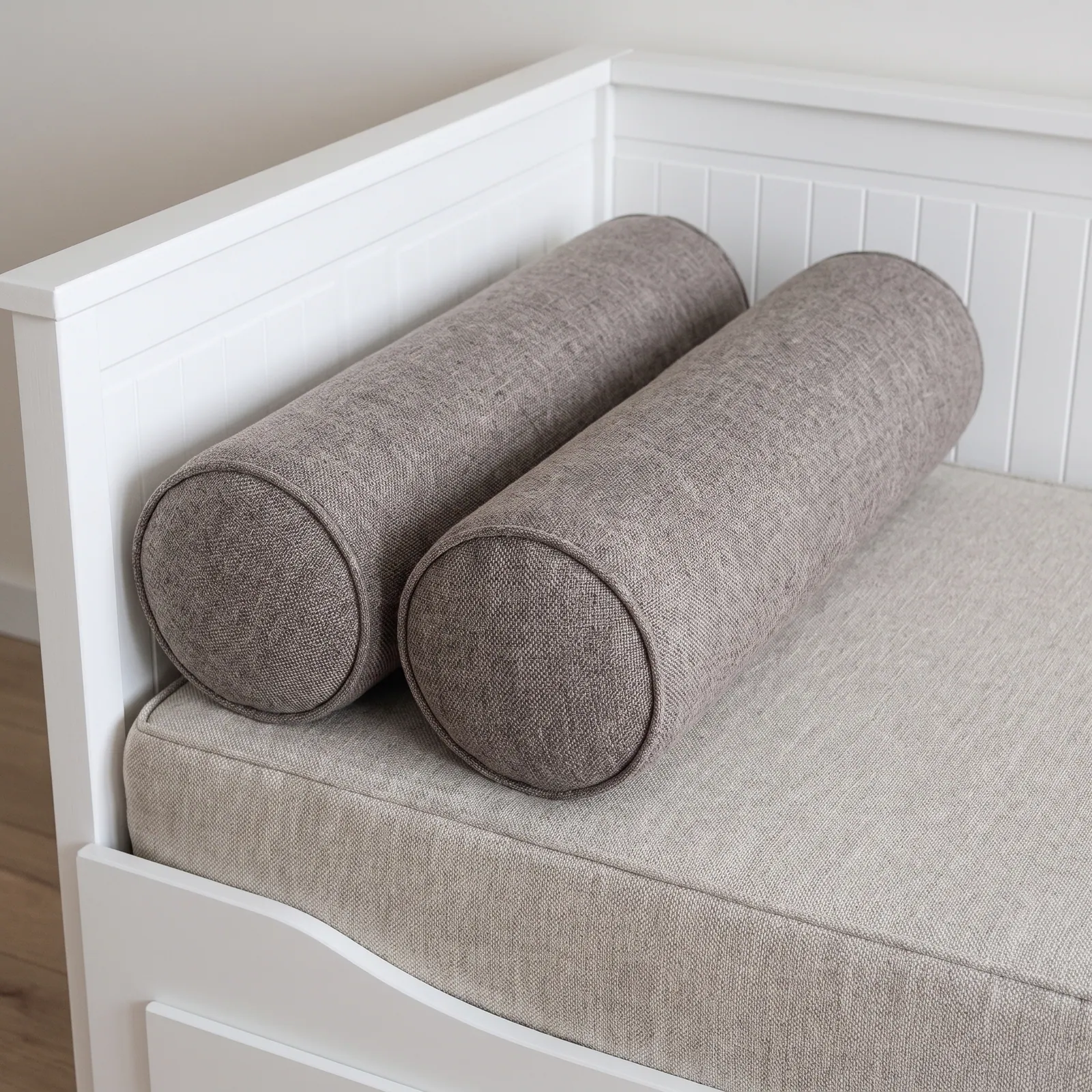
A buyer wrote in with a daybed that already had its mattresses: two of them, about 75 x 35½ in (190 x 90 cm), each about 5 to 5½ in (13 to 14 cm) deep. What was wanted was covers and a bolster.
The workshop's first thought was two bolsters, about 10 in (25 cm) across and 35½ in (90 cm) long. The buyer weighed it and came back with two ideas of their own: one roll about 75 in (190 cm) long, the full length of the bed, or two of about 31½ in (80 cm). The workshop confirmed the 31½ in rolls could be made.
I would choose the two short ones. They move where you need them, and each is easy to carry to the wash on its own. A single long roll is handsome, but it is heavy to lift and awkward to launder. Buy the cushion once, cry once: think about the washing before you think about the looks.
- Sizes
- Mattresses 75 x 35½ x 5-5½ in (190 x 90 x 13-14 cm); bolsters 31½ in (80 cm)
The lesson: A daybed bolster is often split into two shorter rolls that are easier to move and wash.
Three cushion questions about getting it right
Covers, slow-rising foam and a color that surprised: three questions worth settling before you order.
- A common question
Can I buy just the covers for my sofa, so I can change the color?
The workshop's answerYes. There is a covers-only listing, with no foam, where you choose a color and the pieces you need. The couch option is made per section, including the corner backrest covers, not as one single throw.
- A common question
My vacuum-packed cushion is still flat and lopsided. How long should it take to expand?
The workshop's answerGive it a couple of days and work the filling with your hands. If it is still flat after about a week, send the workshop photos from a few angles with your order details, my friend; that is what it needs to judge the foam.
- A common question
The color I received looks different from the photos. What can I do?
The workshop's answerColor can vary by about 5 to 10 percent with daylight and screen settings, and fabric rolls can differ slightly in tone; the workshop photographs every order before it ships to check. Depending on the case, it has sent a free replacement cover in another color, offered a partial refund to keep the piece or a discount on a new one, or accepted a return with the buyer paying return shipping.
An armrest bolster should run the depth of the daybed seat, or about 4 in shorter, and 8 in across is the usual diameter.
Harlan
On the cutting table
| Piece | Bolster pillow, round, filled |
|---|---|
| Fabric | Linen-look, mustard, with a brushed face |
| Piping | Self piping at each round end |
| Placement | Piped end square to the daybed arm |
| Diameter | About 8 in (20 cm) standard; 10 in (25 cm) possible |
| Length | The seat depth, or about 4 in (10 cm) shorter |
| Straps | Not standard; ask for one on the order |
| Care | Zipped cover, 86°F (30°C) gentle cycle, air dry |
| Best for | Daybeds, window seats and bench ends |

Have it made
Have this made — ask Harlan’s workshop
The best cushions I have known began with somebody asking one more question. Ask yours here. — Harlan
Leave your details and the workshop will call you to confirm measurements, fabric, foam and piping. No prices, dates or payment on this page: it is a request, not an order.
Questions buyers ask next
What diameter should a daybed bolster be?
About 8 in (20 cm) is standard and suits most seats; 10 in (25 cm) is possible, and any diameter can be made. Slim 4 in bolsters have been made to go with 2 in bench cushions.
Do bolsters come with filling?
Yes, they arrive filled and ready to use. For a neck roll, shredded foam is the recommendation: it is not very soft, and it keeps a rolled shape.
Can I add a matching bolster to a cushion I already bought?
Yes. Send the diameter, length, quantity and fabric code, and the workshop adds it to your quote or sets up a separate link later, in the same fabric and piping as the seat.
Sit well. — Harlan
More bolsters, more daybeds
 Save
 Save
 Save
 Save
 Save
 Save