A Reading by NateL-Shaped Corner Bench Cushions
A buttercup stripe L-shaped bench cushion and the five props that make the nook work
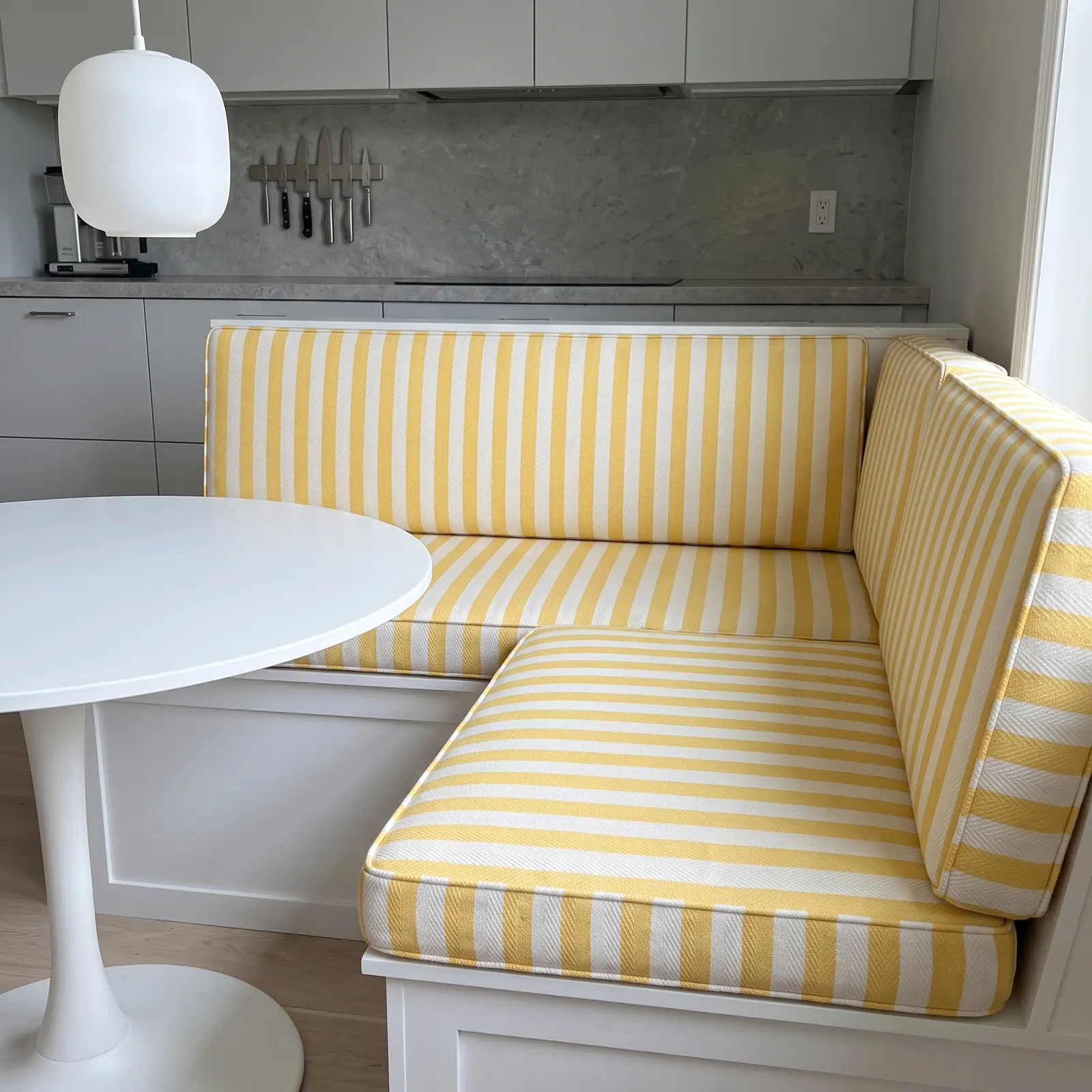
Nate reads a yellow-striped kitchen banquette the way he reads a drawing: parts first, then the props, then the tolerances between them.

 Save
The quick answer
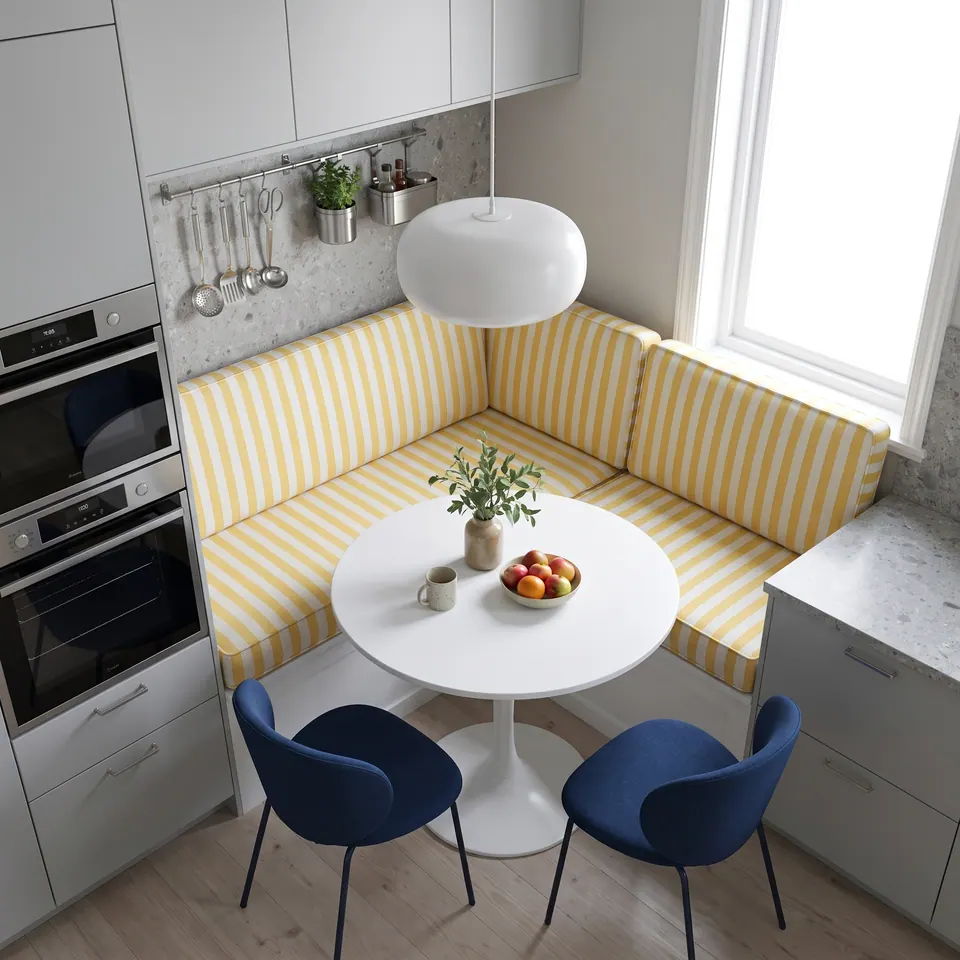
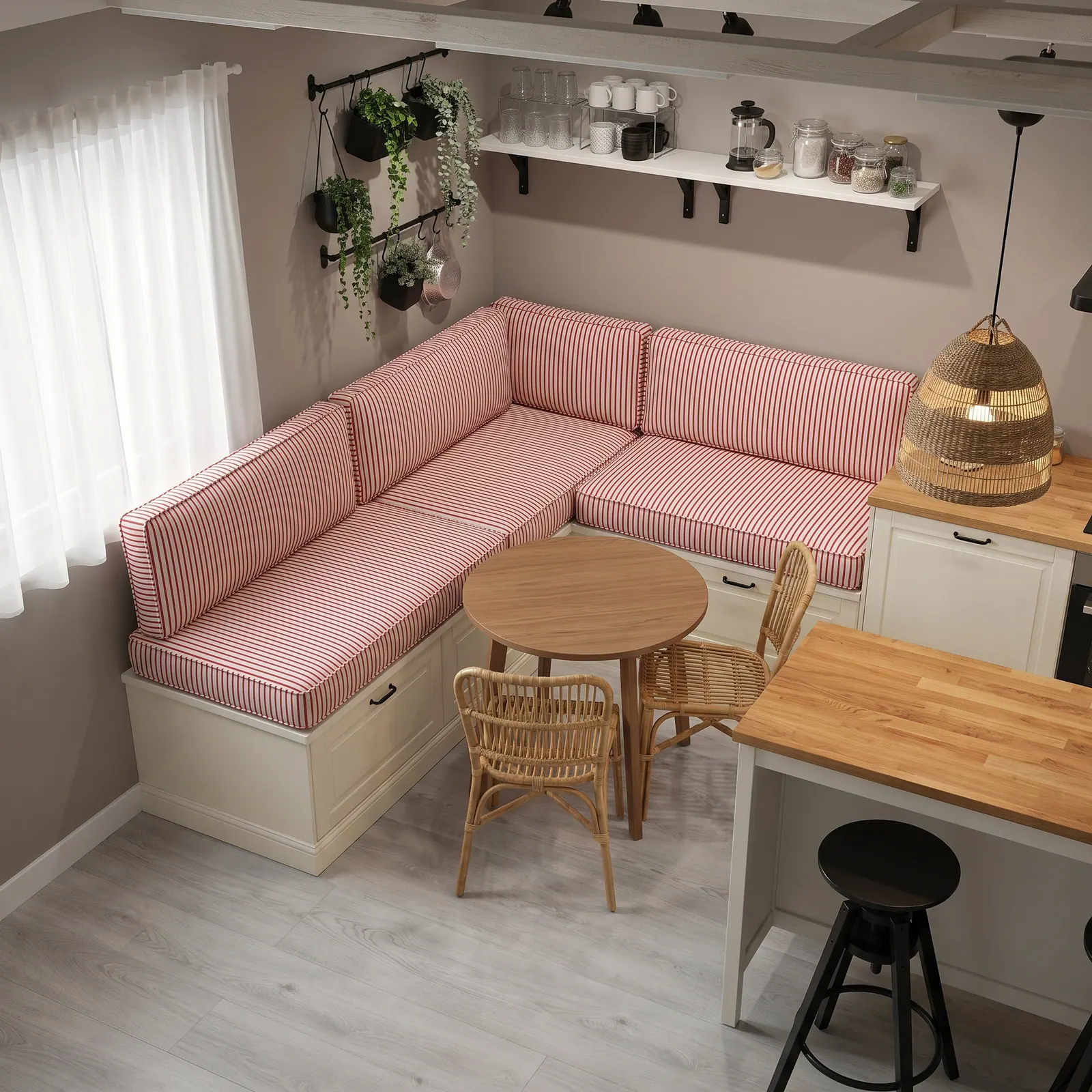
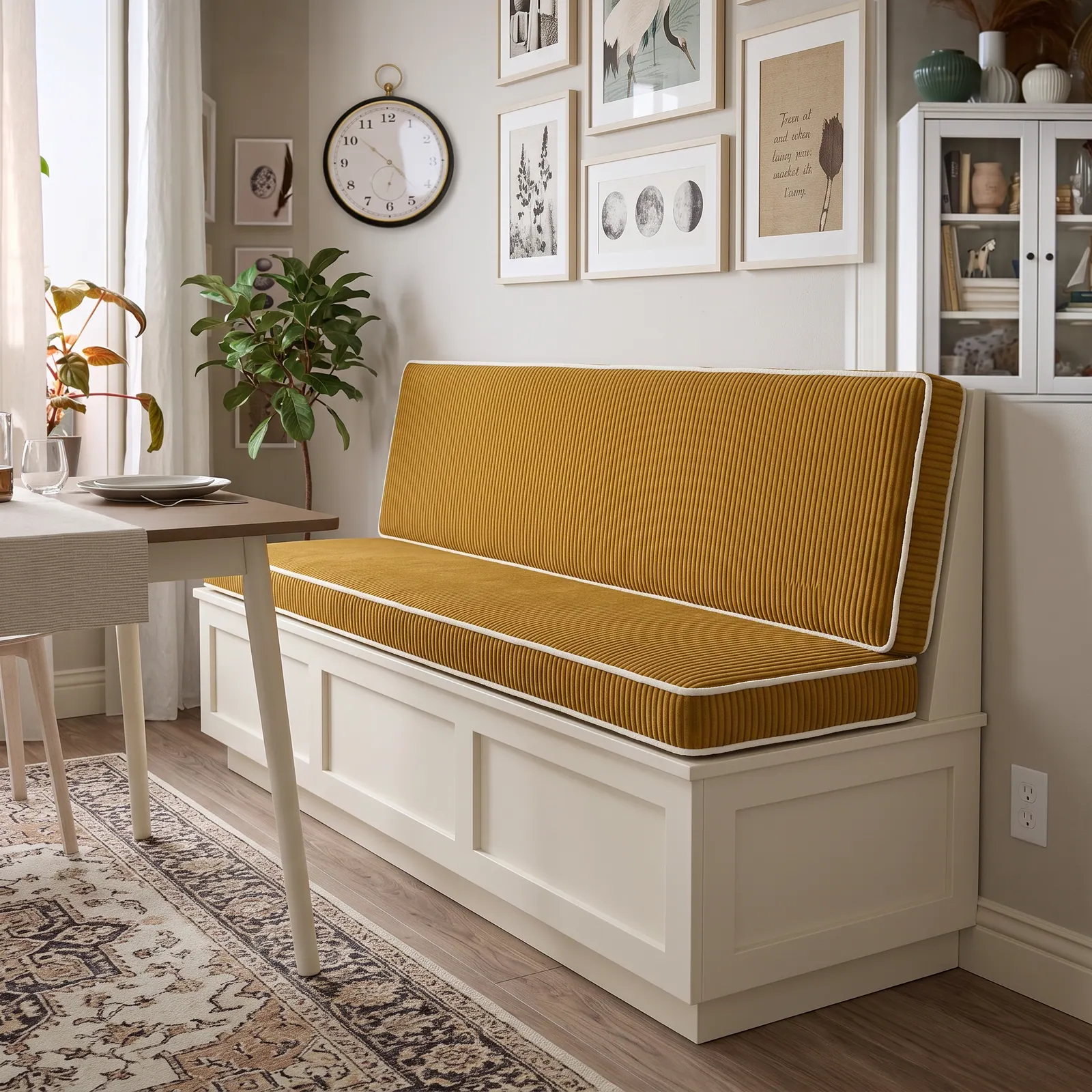
A striped L-shaped bench cushion works best in a kitchen nook when the props stay quiet: one pedestal table, one glass pendant and a room held to yellow, white and stone gray. Build the seat as a long run, a return and a separate corner square, all 4 in (10 cm) thick, so each piece fits, washes and gets replaced on its own.
Pinned by Nate: five marks on the drawing
Read the pins left to right: the pendant and the table first, then the three cushion parts that meet in the corner.
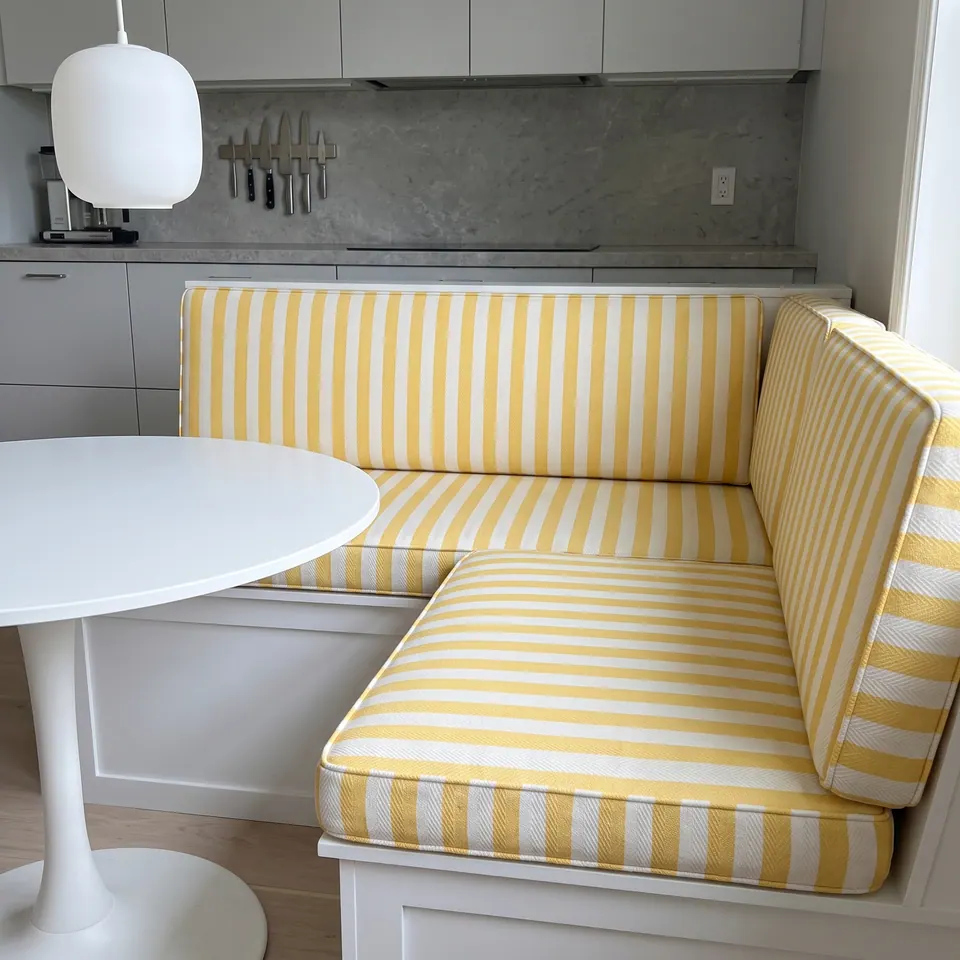
- Long back cushion
A single long back runs the whole wall and meets the side back in the corner.
- Tall side back
The side back cushion is tall enough to lean on at the table end.
- Corner seat front
The return seat butts neatly into the long seat, and slight sitting marks show daily use.
- Tulip table
A round white top keeps the palette to yellow, white and stone gray.
- Glass pendant
A soft white glass shade hangs low over the table for the nook's own light.
- Long back cushionA single long back runs the whole wall and meets the side back in the corner.
- Tall side backThe side back cushion is tall enough to lean on at the table end.
- Corner seat frontThe return seat butts neatly into the long seat, and slight sitting marks show daily use.
- Tulip tableA round white top keeps the palette to yellow, white and stone gray.
- Glass pendantA soft white glass shade hangs low over the table for the nook's own light.
Why the table has one leg
Five props, partner, and not one is there for decoration alone. I read them the way I read a parts list: what does each one do for the seat?
Tulip pedestal table. One center column instead of four legs. You slide onto a banquette sideways, and every corner leg is a knee collision waiting to happen. The round white top also leaves the stripe as the only pattern in the corner.
White glass pendant. Hung low and centered over the table, it gives the nook its own pool of light. Soft white glass throws no hard shadow line across the stripes.
Knife strip, stone splashback, handleless cabinets. This is the kitchen doing its job in steel, gray and white. Because none of it competes, the buttercup stripe gets to be the one warm note. Add a second pattern here and the corner starts arguing with the stove.
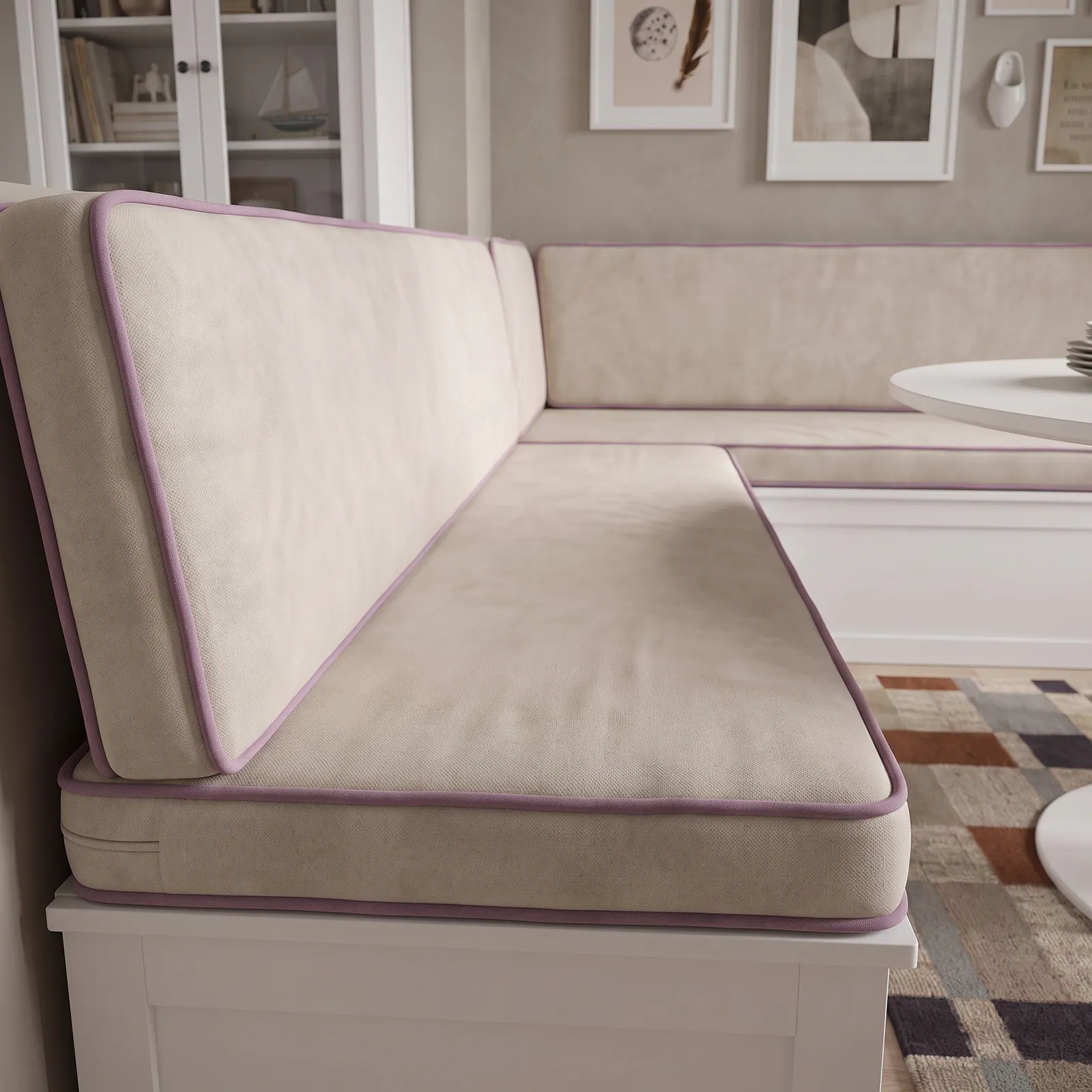
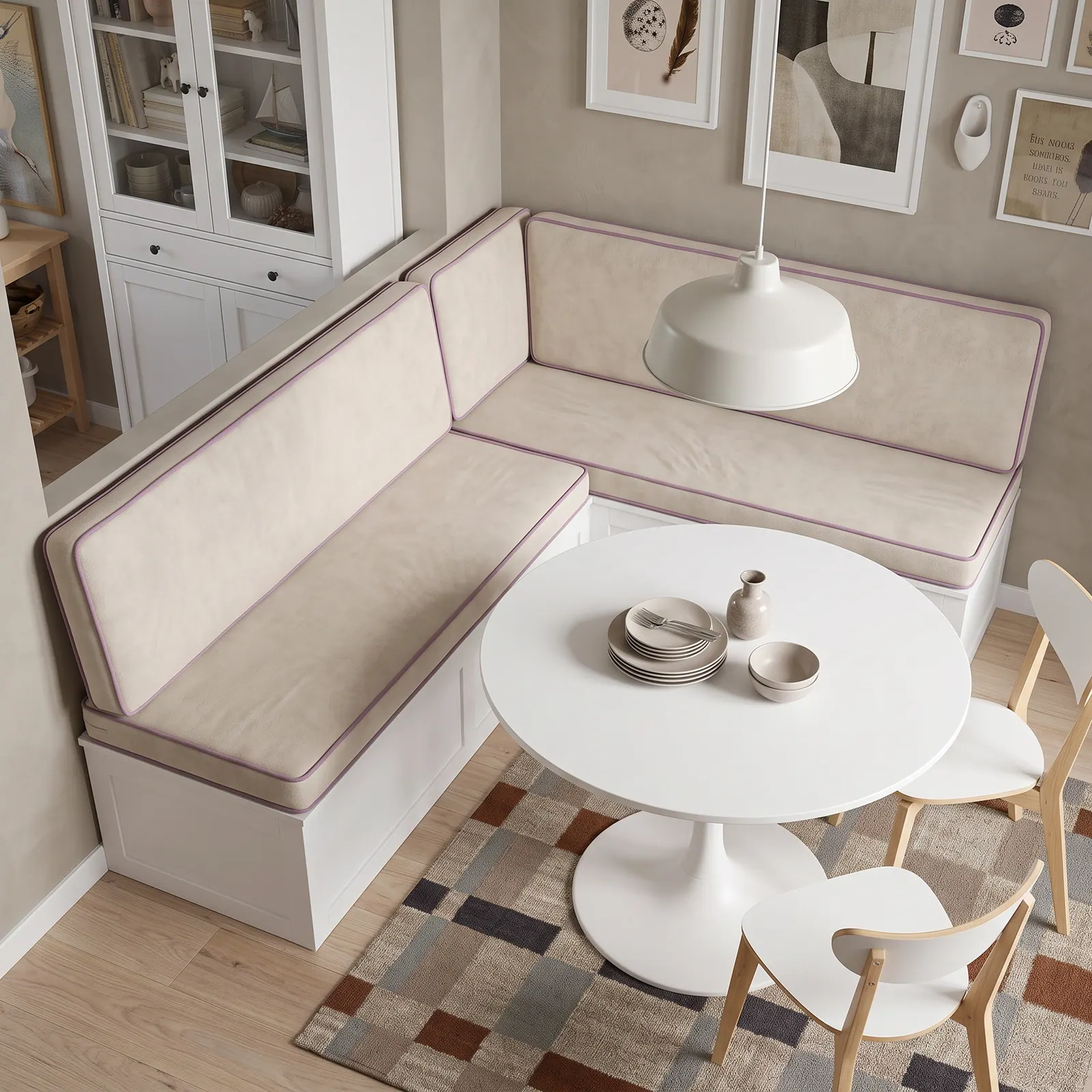
The cushions themselves. A long back runs the whole wall and meets a tall side back, tall enough to lean on at the table end. Self piping and a box edge keep the outline plain, and the woven stripe hides small marks between washes. More stripes live on the striped cotton and ticking shelf.
The copy rule: count the colors. This nook holds three. Anything you add should already be one of them. How many colors does your kitchen corner hold right now?
Four pieces or one L: the notebook tally
| Check | One L-shaped piece | Long seat + return + corner square |
|---|---|---|
| Corner slightly out of square | Must match the angle exactly | Each piece sits flat on its own |
| Stripe at the turn | One leg has to turn 90 degrees | Corner square can run either way |
| Wash day | One big cover | Smaller covers, one at a time |
| One seat wears first | Replace the whole L | Replace only that piece |
Four cushions or one L plus a bench: a buyer's worksheet
A buyer wrote to the workshop with a corner nook and, a few feet away, a narrow straight bench. The question was the classic one: one continuous L, or separate pieces?
The worksheet had four parts, all 4 in (10 cm) thick: a long side at 59 x 19 in (150 x 48 cm), a short side at 47 x 19 in (119 x 48 cm), a 19 x 19 in (48 x 48 cm) corner square, and a straight bench pad at 35 x 10.5 in (89 x 27 cm). Striped linen was on the table.
The workshop priced the pieces one by one, offered the whole set for less than the sum, and checked every number against its own template before sending the purchase link. Measure twice; the fabric remembers.
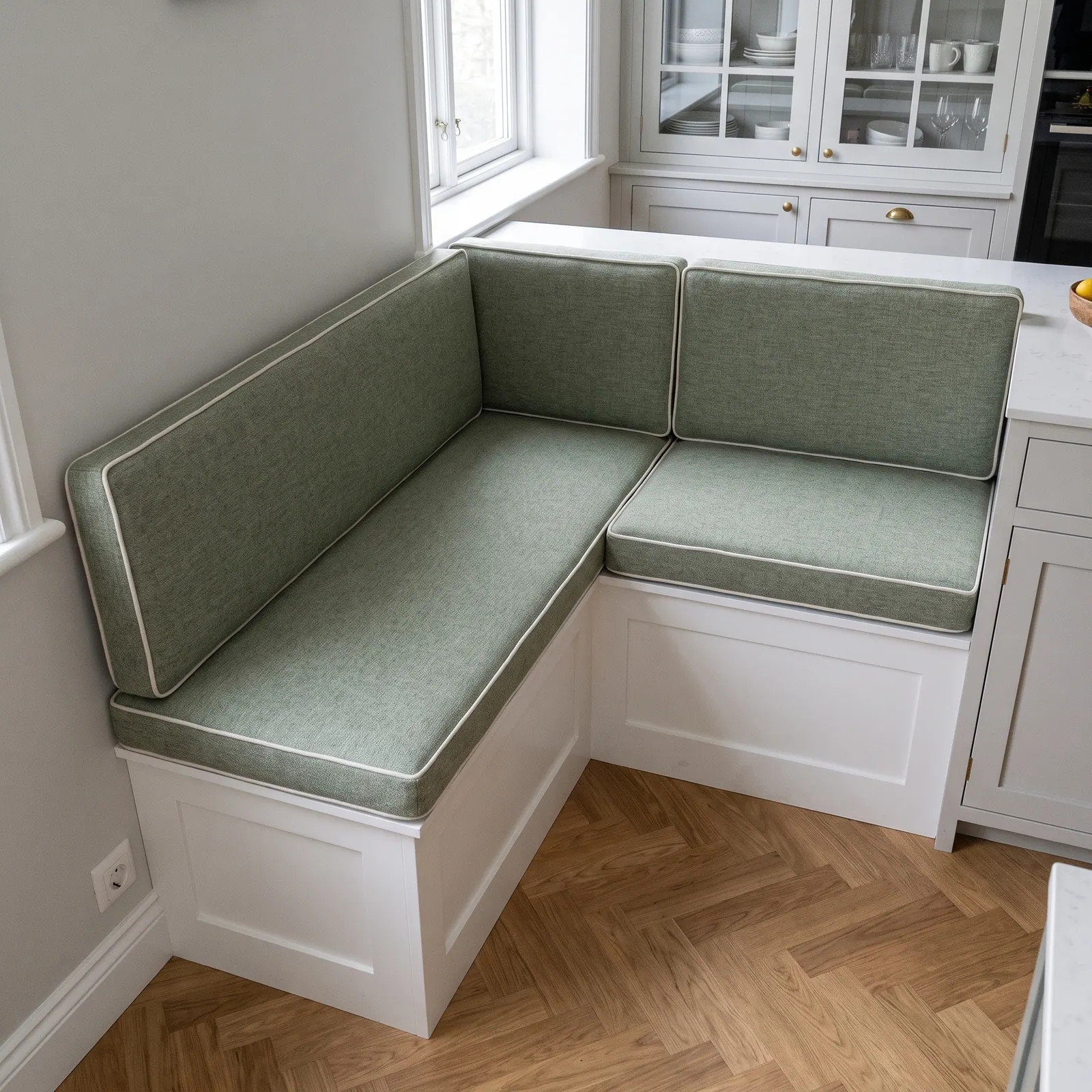
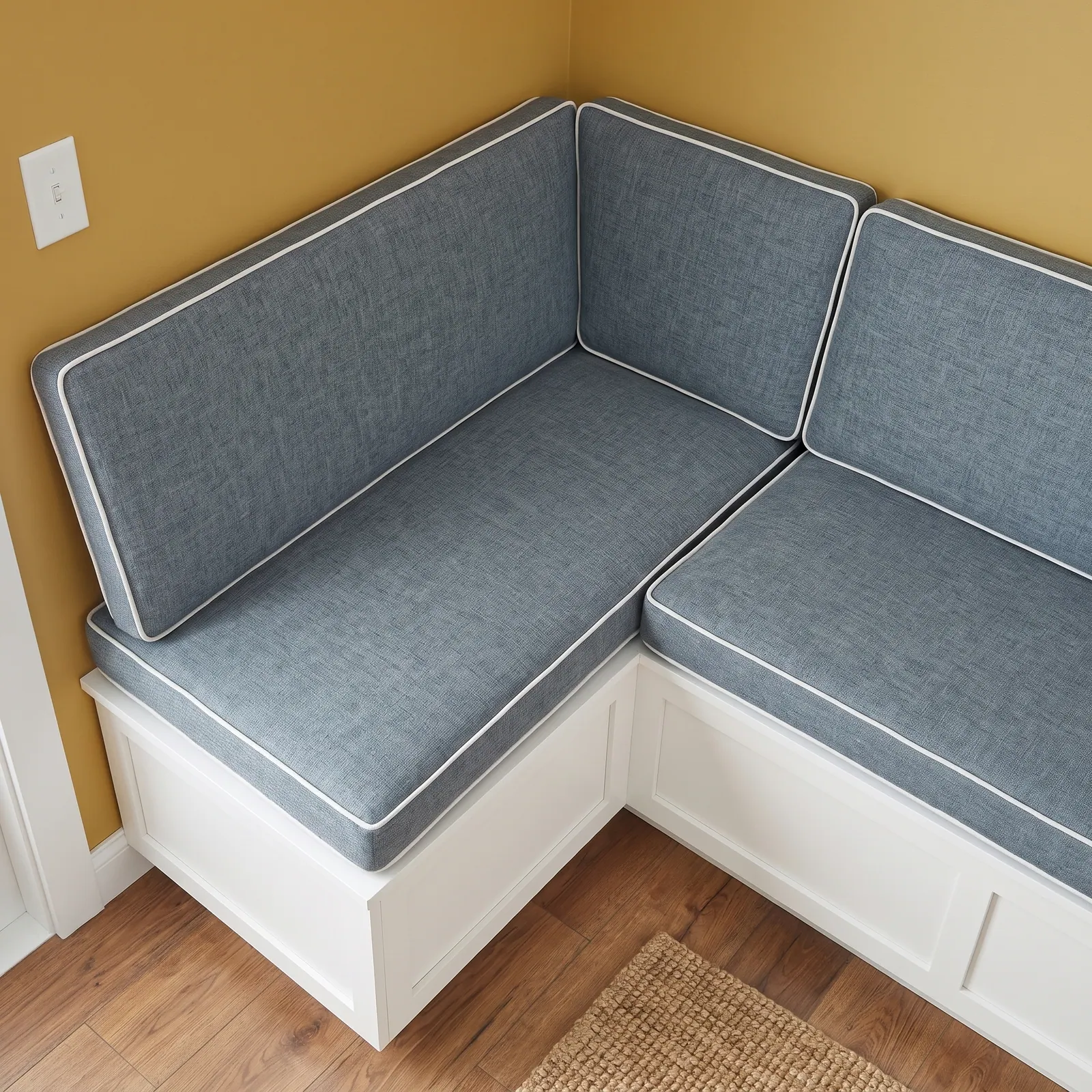
My margin note: a separate corner square usually fits a real corner better than one L-piece, and it is far easier to wash. The L-shaped cushion corner joint Pattern draws both options, and the kitchen nook cushions show more corners.
On the cutting table: the nook in numbers
| Piece | L-shaped bench cushion set with backrests |
|---|---|
| Parts | Long seat, return seat, long back, tall side back |
| Fabric | Buttercup yellow and white woven cotton stripe |
| Piping | Self piping in the same stripe |
| Edge | Box edge |
| Thickness | 4 in (10 cm), as in the buyer's worksheet |
| Grip | Anti-slip underside or corner ties on request |
| Palette rule | Three colors: yellow, white, stone gray |
| Best for | A kitchen nook used every day |

Have it made
Have this made — ask Nate’s workshop
Precision starts on the phone. Give the workshop your measurements and they will read them back to you, edge by edge. — Nate
Leave your details and the workshop will call you to confirm measurements, fabric, foam and piping. No prices, dates or payment on this page: it is a request, not an order.
Buyer questions: angles, grip and window seats
- A common question
My bench has an angled end. Which measurements do you need to make the cushion?
The workshop's answerLetter every side, A through F if the shape needs that many, and add the depth. One buyer sent A 6 in, B 6 in, C 68 in, D 34 in, E 23 in and F 23 in, with 22 in of depth in the middle. Pick the nearest size range in the drop-down, such as 22 x 68 in, place the order, then send the side lengths or a labeled drawing so the workshop can confirm before cutting. These shapes are 4 in thick as standard.
- A common question
Will the cushion come with a non-slip bottom or ties to hold it on the bench?
The workshop's answerNot by default. On request, the workshop can put anti-slip fabric on the underside or add ties, such as two corner ties; write it in the personalization box. Straps have been added at no extra charge.
- A common question
We just had a window seat built. How do I measure it for a cushion?
The workshop's answerUse a rigid tape on the seat itself. Measure the front edge wall to wall in a straight line, then the back edge along the window, which is often shorter, then the depth front to back, on both the left and right if it varies. Measure any angled side edge on its own. Length is side to side; width is front to back. Send a top-view sketch with each number on its edge, plus a photo, and the workshop confirms the shape.
A separate corner square often fits a kitchen nook better than one L-shaped cushion, and it goes through the wash on its own.
Nate
Questions buyers ask next
Why does a pedestal table suit a banquette better than a four-leg table?
People slide onto a banquette sideways, and legs at the table corners get in the way of knees and feet. A single center column leaves the seat front clear, and a round top keeps the corner open for getting in and out.
Is a separate corner square better than a one-piece L for a kitchen nook?
Usually. A long seat, a return and a corner square each sit flat even when the walls are slightly out of square, and each cover goes through the wash on its own. A one-piece L has to match the corner angle exactly.
Does a striped cotton cushion make sense in a busy kitchen?
Yes, with care. A woven stripe hides small marks between washes, though cotton stains more easily than velvet or linen-look fabrics. Keep the rest of the corner to two or three colors so the stripe stays the only pattern.
± 1/4 in — Nate
More photographs to read
 Save
 Save
 Save
 Save
 Save
 Save