Across the Map · United Kingdom
Made to measure cushions for Scottish tenements, cottages and bothies
Stone keeps a house standing for centuries, but it won't keep a cushion dry. In Scotland I build a cushion the way I'd pick a good coat: warm to the hand, and easy to take off and wash.
- Sun & UVGentle
- HumidityHumid
- WinterCold
- CoastSalt air nearby
- Typical seatsTenement window seat, bed recess reading nook, deep stone window recess

 Save
The quick answer
Made to measure cushions in Scotland should be warm to the touch and easy to wash. Near Glasgow it rains on about 174 days a year and December sees roughly 34 hours of sun, so choose corduroy, velvet or a tweed-look weave with zip-off covers, measure deep stone window recesses at the seat top, and air cushions often against condensation.
174 wet days and 34 hours of December sun
Scotland asks one thing of a cushion: stay warm while the weather doesn't. The Met Office's 1991 to 2020 averages for Paisley, just west of Glasgow, give 49.7 in (1,263 mm) of rain on 174 days, 33 air frosts and 1,280 hours of sun a year. December manages about 34 of those hours.
Go north and west and it gets wetter. Most of the western half of northern Scotland sees at least 67 in (1,700 mm) a year, and the wettest ground northwest of Fort William tops 157 in (4,000 mm). By the Moray Firth, in the lee of the mountains, it's nearer 28 in (700 mm). The western and northern coasts are the windiest in the UK, and up north the frost-free season can be as short as three months.
That's weather for wool coats and covers that come off. Made to measure cushions in Scotland should be warm to the hand and easy to wash, because the damp will find them. The rest of the country is on our United Kingdom page, and the bay windows of the south are on England.
Tenements, the bed recess and walls deep enough to sit in
Glasgow's tenements went up in red or blond sandstone through the 19th and early 20th centuries, mostly three to five stories, no taller than the street was wide. In Edinburgh's World Heritage Site, homes are almost all tenements. People prize the flats now for their large rooms, high ceilings and period features.
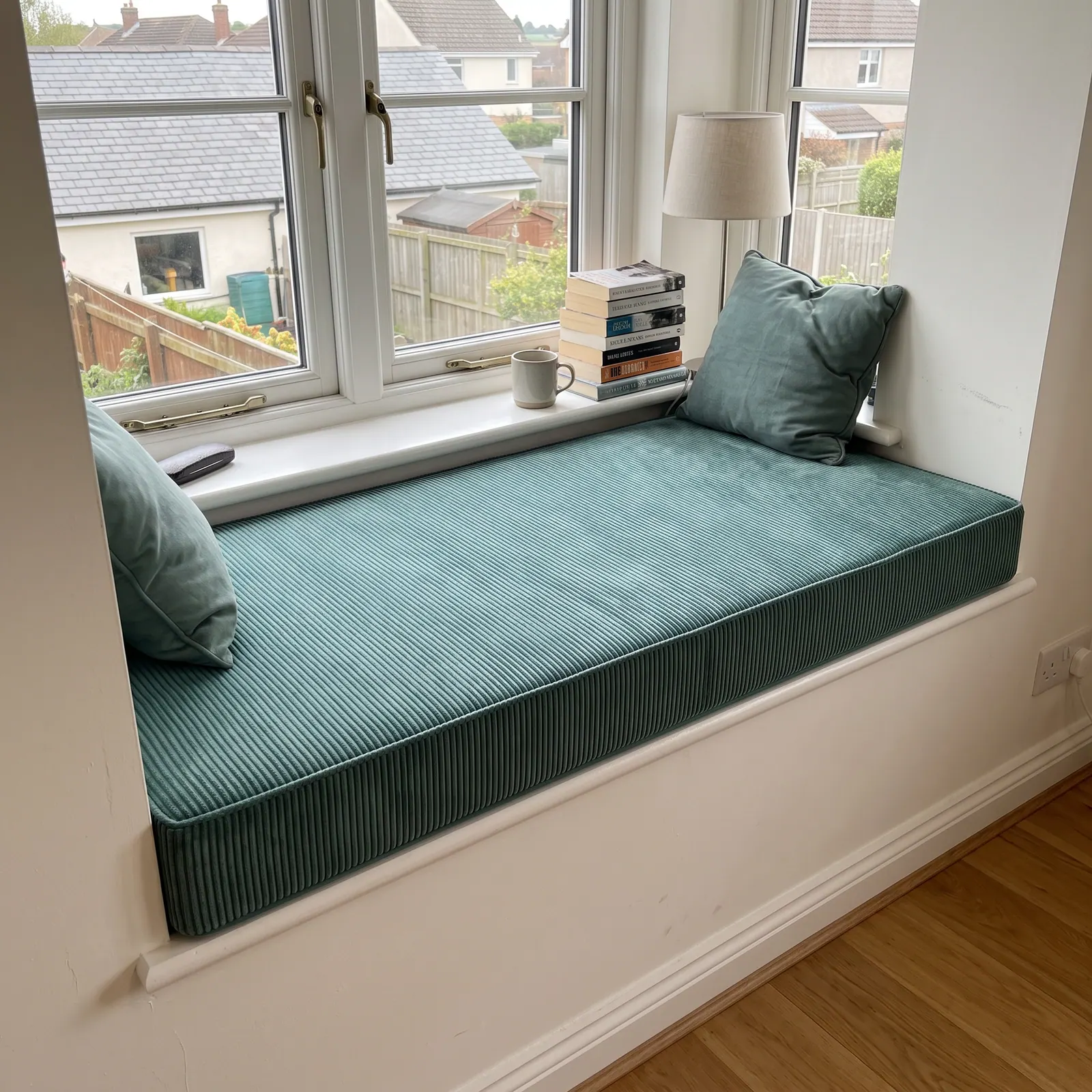
Their windows make good seats. Measure the window board itself, not the floor, and be exact about depth. A window seat cushion there wants a zip-off cover and a lift now and then, because condensation forms first on cold frames and external walls.
Many Glasgow kitchens from the late 1800s had a bed recess, an alcove sized for a double bed and hidden behind a curtain. Later renovations often folded the alcove into the room. If yours survived, it makes a fine reading nook: a firm floor cushion, a backrest and two bolsters, as the reading nook guide lays out.
Out in the country the walls get thicker. The old blackhouses of the Hebrides and Highlands had double drystone walls packed with earth, and a stone cottage gives you window recesses deep enough to sit in. Cut a sill cushion a little smaller than the sill: one parent in the UK measured sills of 43 1/4 x 15 3/4 in (110 x 40 cm) and planned cushions of about 41 1/4 x 13 3/4 in (105 x 35 cm).
A word on bothies. The Mountain Bothies Association keeps about 100 open shelters where you should expect only four walls, a roof and somewhere dry to sleep. Carry your sit mat in and out. A converted farm bothy or a Highland lodge is another matter; a sleeping platform or a bench by the stove takes a firm pad gladly. What's the deepest window in your house, and does anybody sit in it yet?
A self-built window bench, ten swatches and a 15 in gap
A couple in the UK built their own window bench and wanted it lined in corduroy: four cushions of 17 3/4 x 35 1/2 in (45 x 90 cm) and four of 11 3/4 x 35 1/2 in (30 x 90 cm). They ordered ten samples first, from terracotta tones to a jumbo corduroy, and chose only once the swatches were in their hands.
The bench left just 15 in (38 cm) between seat and sill, so they went with 3 in (7.5 cm). Then they found they'd ordered half the cushions they needed, and came back for a second batch and an 18 x 19 in (46 x 48 cm) corner pad. A few covers had dust marks from packing, which wipe off or wash out at 86°F (30°C).
I've told apprentices the same thing for fifty years: count the cushions per run before you count the money.
- Measured
- Four 17 3/4 x 35 1/2 in (45 x 90 cm) and four 11 3/4 x 35 1/2 in (30 x 90 cm) cushions, ordered twice over, plus an 18 x 19 in (46 x 48 cm) corner pad; all 3 in (7.5 cm) thick under a 15 in (38 cm) clearance
- What it taught
- Measure the clearance under the sill before choosing thickness, and count cushions per run before checkout.
Wool, tweed-look and corduroy, honestly named
Real Harris Tweed is a legal thing. The Harris Tweed Act 1993 defines it as cloth handwoven by islanders at their homes in the Outer Hebrides, from pure virgin wool dyed and spun there, and the Harris Tweed Authority stamps it with the Orb. The workshop doesn't cut it, and I won't dress a mill weave up as the real article.
What it does have is warm-looking cloth that washes. There's a charcoal mixed weave of black and gray yarns with a salt-and-pepper face; that's your tweed-look. When a buyer asked for plaid, the workshop sent a chart of plaid and tartan fabrics in brown, green, blue and red. Corduroy comes in thicker and lower-pile weights, and velvet catches firelight like nothing else. Velvet remembers the hand that brushed it, so brush it with the pile.
Then throw your own wool blanket over the back of the seat. That's where the real wool can live, my friend.
Warm fabric for a cold house: the cushions I'd cut
| Seat | Fabric | Thickness | Piping |
|---|---|---|---|
| Tenement window seat | Corduroy, in a thicker or lower-pile weight | 3 to 4 in (7.5 to 10 cm) | Self piping |
| Bed recess reading nook | Velvet or corduroy, with bolsters | Tufted seat 4 in (10 cm), 5 in (13 cm) on request | Self piping on the bolsters |
| Fireside floor cushion | Soft fabric, hard-wearing and easy to clean | 4 in (10 cm) tufted, or 8 in (20 cm) for a deep sit | None, or self |
| Cottage window recess | Tweed-look charcoal mixed weave | 2 to 3 in (5 to 7.5 cm), checked against the sill | Contrast in rust or moss |
Velvet and corduroy are indoor fabrics with no water resistance. Zippered covers wash at 86°F (30°C); tufted cushions have no zipper, so wipe them clean in place.
Looking after cushions through a long Scottish winter
- Lift window seat cushions once a week and let the underside breathe; cold frames and external walls gather condensation first.
- Keep cushions and furniture a little off external walls so air can move.
- Brush corduroy and velvet along the pile, never against it.
- Wash zippered covers at 86°F (30°C) on gentle and air dry them; wipe tufted cushions in place.
- Keep floor cushions well back from an open fire or stove. The standard foam and fabrics are not fire-retardant.
- In May, usually the sunniest month up north, turn cushions that sit in a bright window.
Photographs for homes like these
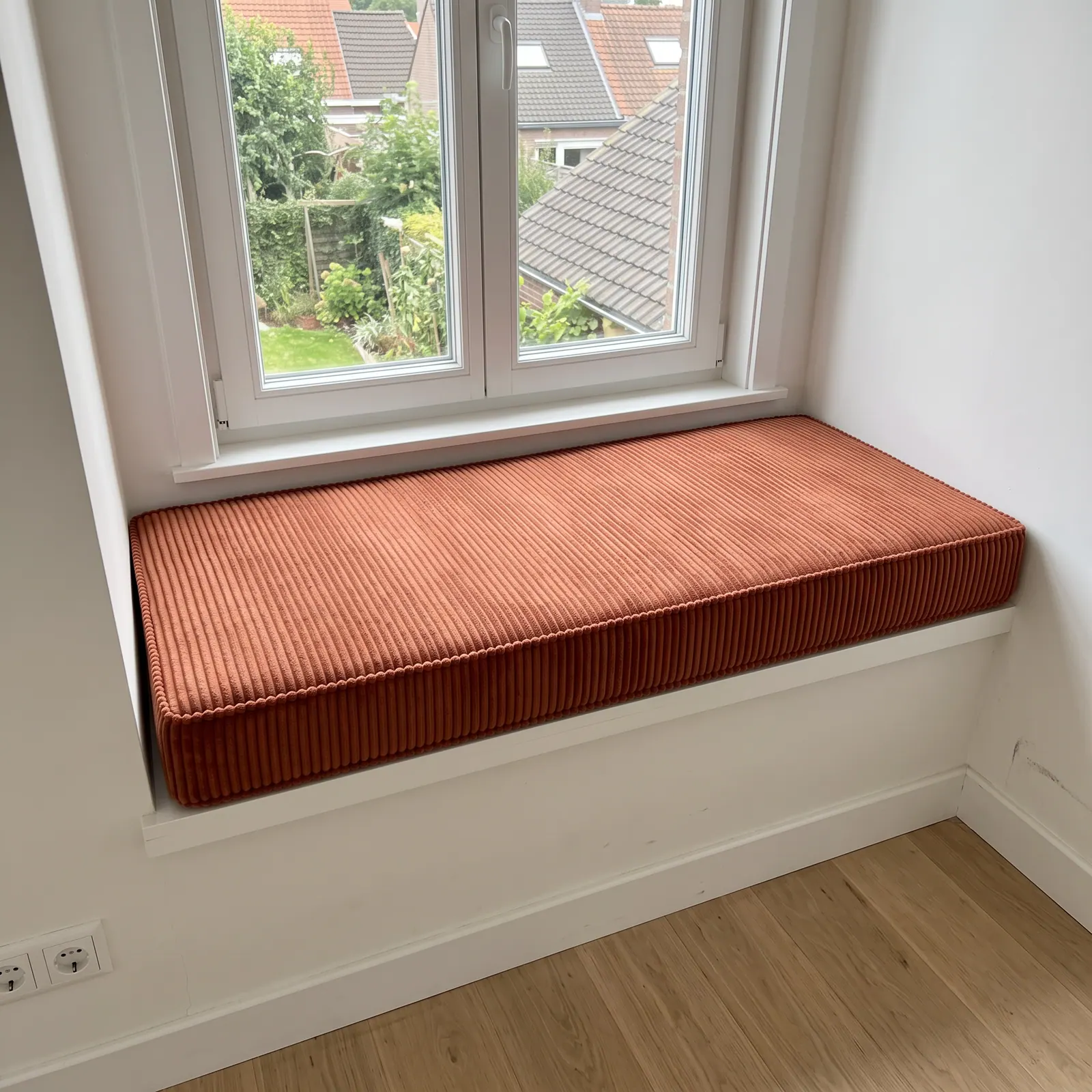
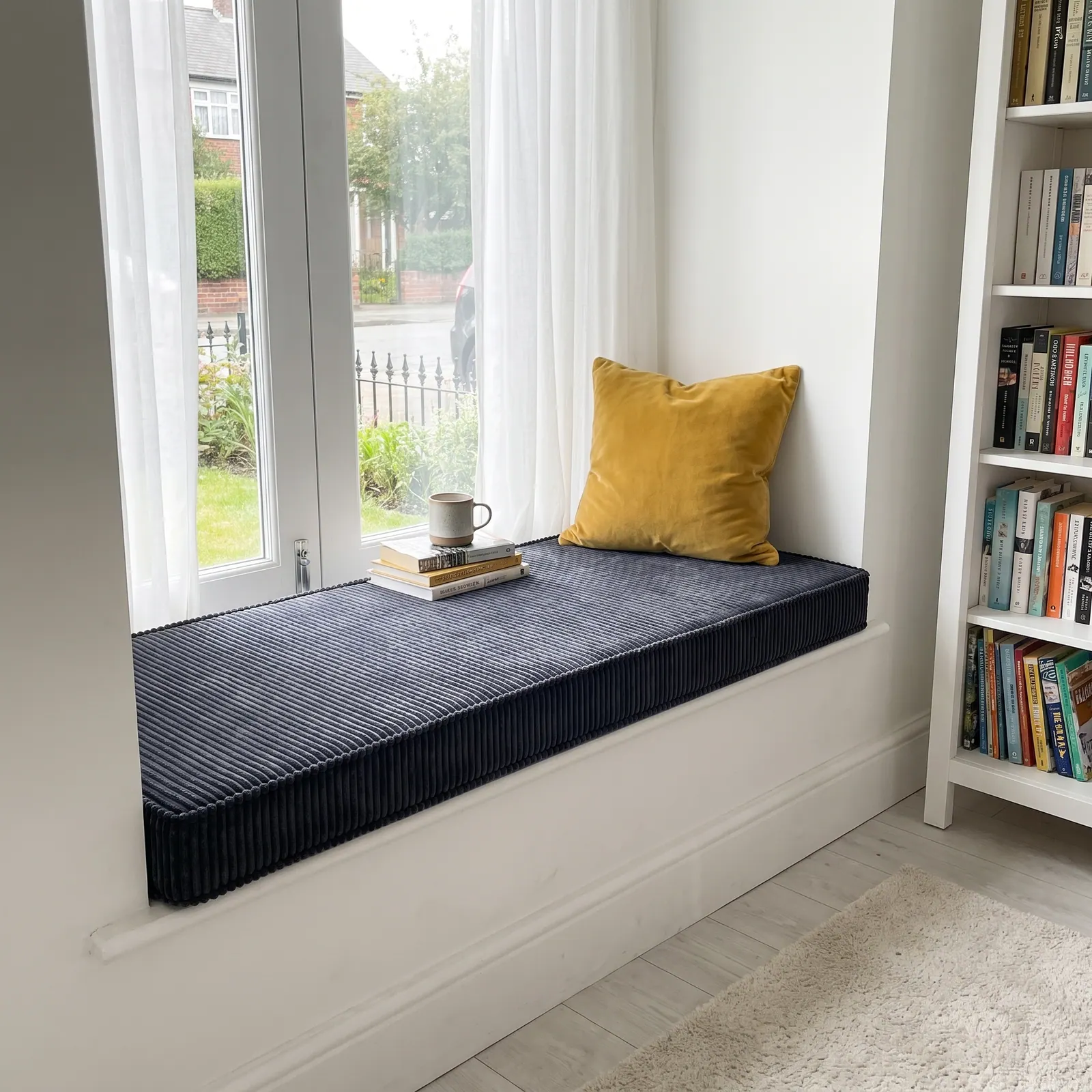
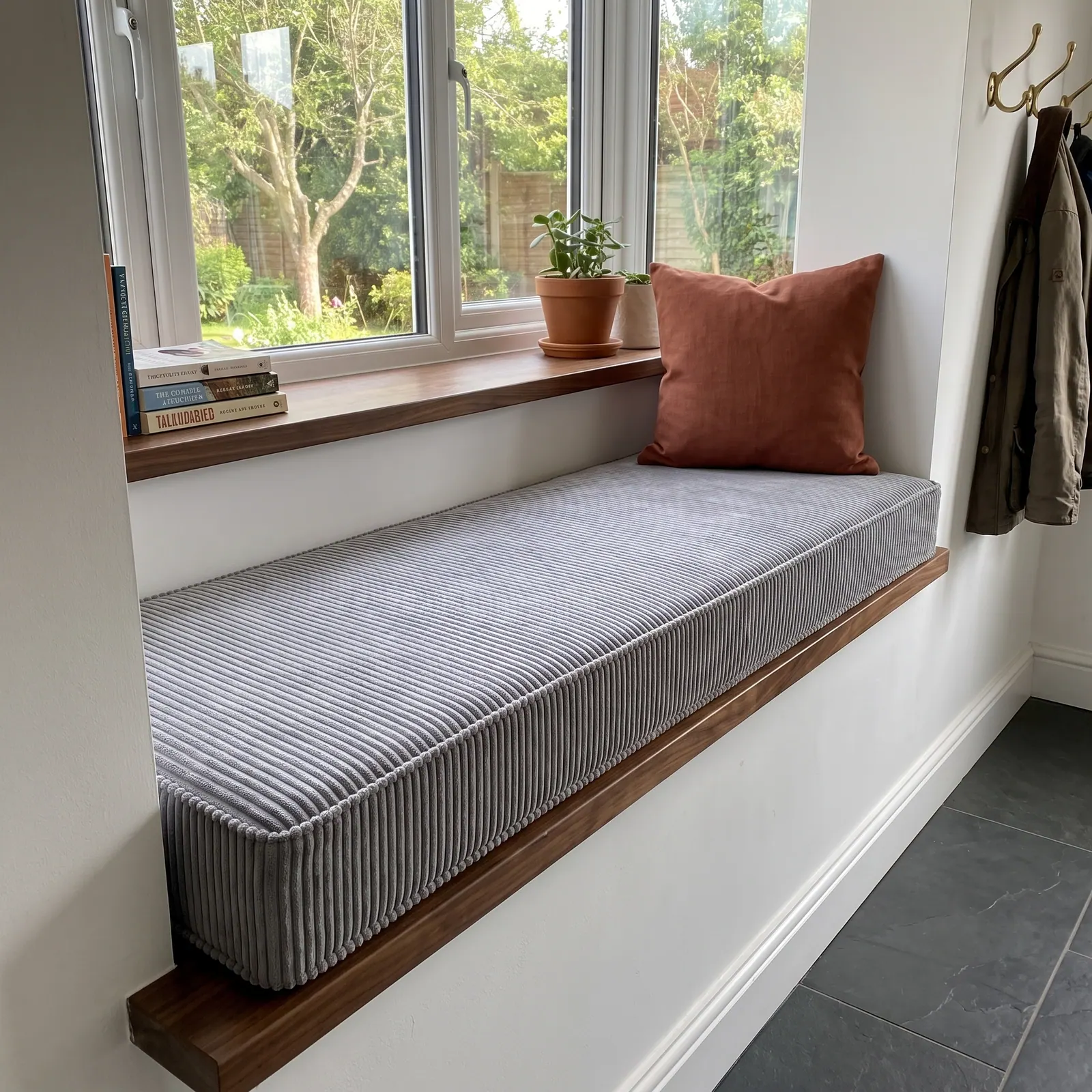
Open any photograph large; each one has its own link and a Save button.
 Save
 Save
 Save
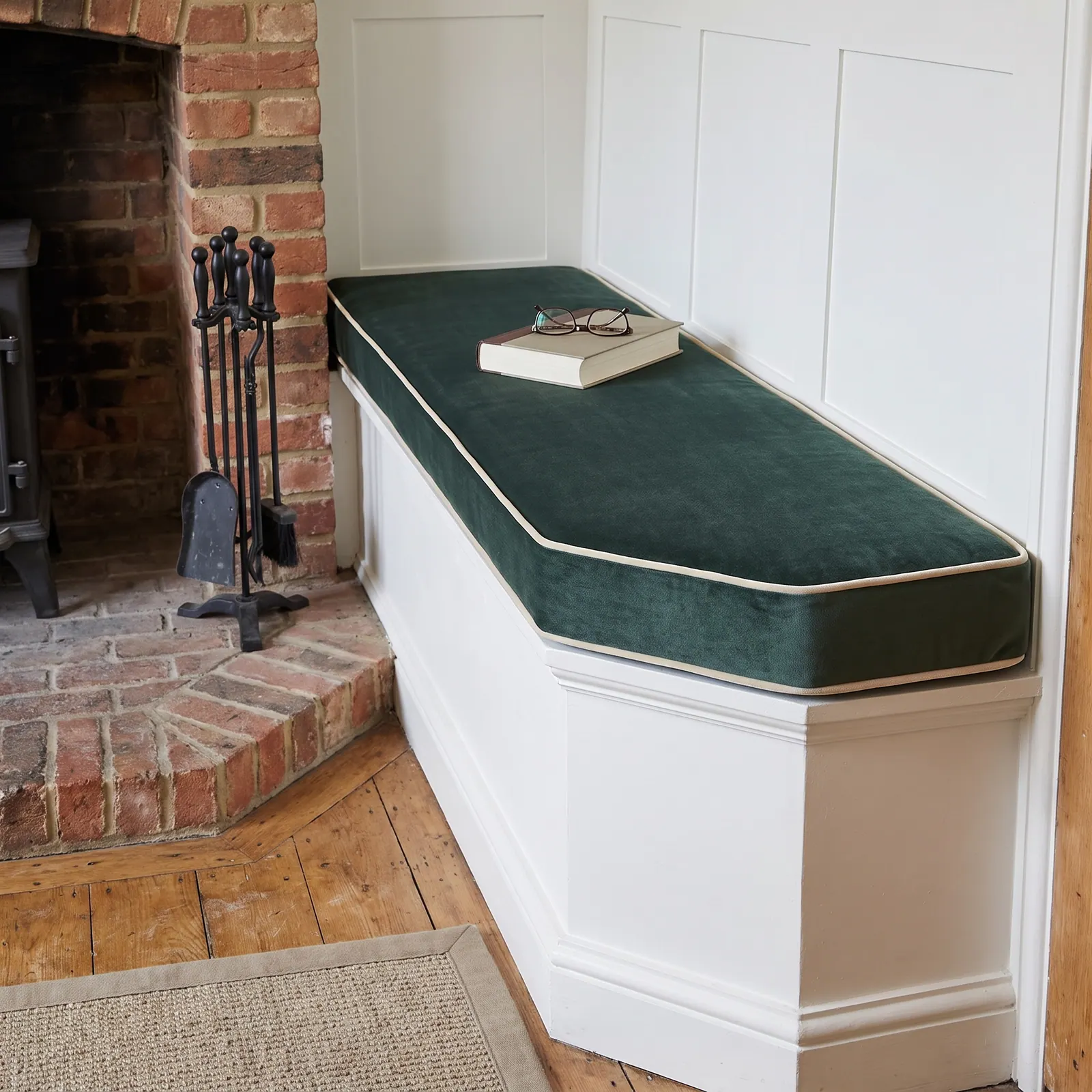 Save
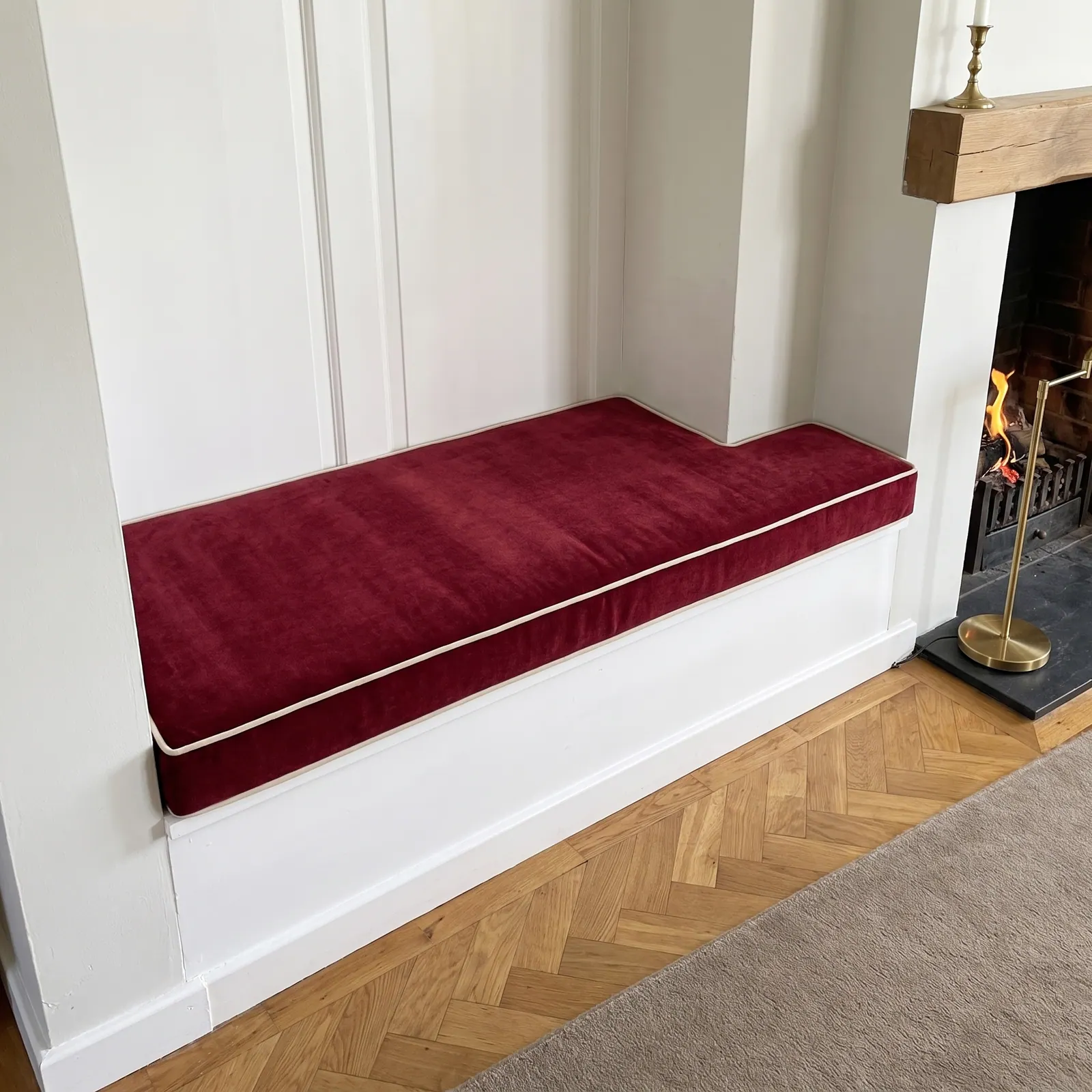 Save
Stone keeps a house standing. It doesn't keep a cushion dry. That part is your job, and it takes a minute a week.
Harlan
Buyer questions: tweed-look, color matching and heavy floor cushions
- A common question
Is the charcoal mixed weave a gray-black, or does it have a blue tone?
The workshop's answerIt's a gray-black charcoal woven from black and gray yarns, with no blue tone. In daylight it reads as dark charcoal with a slightly textured, salt-and-pepper look.
- A common question
Can you match a color from a photo I send?
The workshop's answerYes. Send a photo and the workshop compares it with its velvet chart and suggests the closest number. One buyer's pea green matched velvet #35; another, after a warm orange-brown, was steered to Tobacco.
- A common question
Will a heavy tufted floor cushion slide about on a marble floor?
The workshop's answerNo. The workshop says its tufted floor cushions are heavy and won't slide.
- A common question
How should I send measurements for a window seat or built-in bench?
The workshop's answerDraw the seat on paper with every dimension and send it. For a built-in bench, measure the bench top rather than the floor, since the two can differ, and be exact about depth: 20 in (51 cm) is not 19 3/4 in (50 cm).
- A common question
The corduroy sample was fluffier than I expected. Is there a lower-pile or thicker corduroy?
The workshop's answerYes. Other corduroys are available, including thicker ones, and the workshop offered to check its thinner, lower-pile options.
- A common question
Which fabric is the most hard-wearing and easy to clean for a floor cushion?
The workshop's answerThe soft fabric. It's durable, easy to maintain, smooth and comfortable to sit on, and it stands up to daily use in busy rooms.

Have it made
Have it made for your home — ask Harlan’s workshop
Fabric has a temper and foam has a memory. Better to settle both in a conversation than to guess at them alone. — Harlan
Leave your details and the workshop will call you to confirm measurements, fabric, foam and piping. No prices, dates or payment on this page: it is a request, not an order.
Scottish cushion questions
Can I get a cushion made in real Harris Tweed?
Not from this workshop. Harris Tweed is defined in law as cloth handwoven by islanders at home in the Outer Hebrides from pure virgin wool dyed and spun there. The tweed-look option here is a mixed weave, such as a charcoal of black and gray yarns.
What thickness suits a window seat in a thick stone wall?
Check the clearance under the window board first. The standard is 4 in (10 cm), 3 in (7.5 cm) is the best seller for tight spots, and 2 in (5 cm) is the practical minimum for sitting. Cut the cushion a little smaller than a deep sill.
Can a floor cushion sit near an open fire or wood stove?
Keep it well back. The workshop's standard foam and fabrics are not fire-retardant, so a floor cushion belongs outside the hearth area, never on it. For the UK fire-safety rules on cushions, read our United Kingdom page.
Which fabric copes best in a damp tenement flat?
A washable one. Velvet, corduroy and soft fabric covers zip off and wash at 86°F (30°C); none of them is water-resistant. Air window cushions often, because condensation forms first on cold window frames and external walls.
Sit well. — Harlan
The atelier
Keep going
- A Reading by HarlanCorner Floor Cushion in Sand Linen-Look with Burgundy Backrests
- A Reading by HarlanCorner Floor Cushion in Oatmeal Linen-Look: Order It Right
- A Reading by HarlanBolster Pillow in Sage Linen-Look: Zipper, Ties or Nothing
- The Cutting TableIs your linen durable enough for seat cushions, and will it wrinkle or stain?
Across the Map
Nearby places
Close by on the map