The Pattern Room · a measuring pattern
Zabuton and meditation floor cushions: choosing size, thickness and fill
A zabuton is barely a cushion. It is the floor, made kinder. Here is how to size the mat, the seat that sits on it, and what goes inside both.
 Save
The quick answer
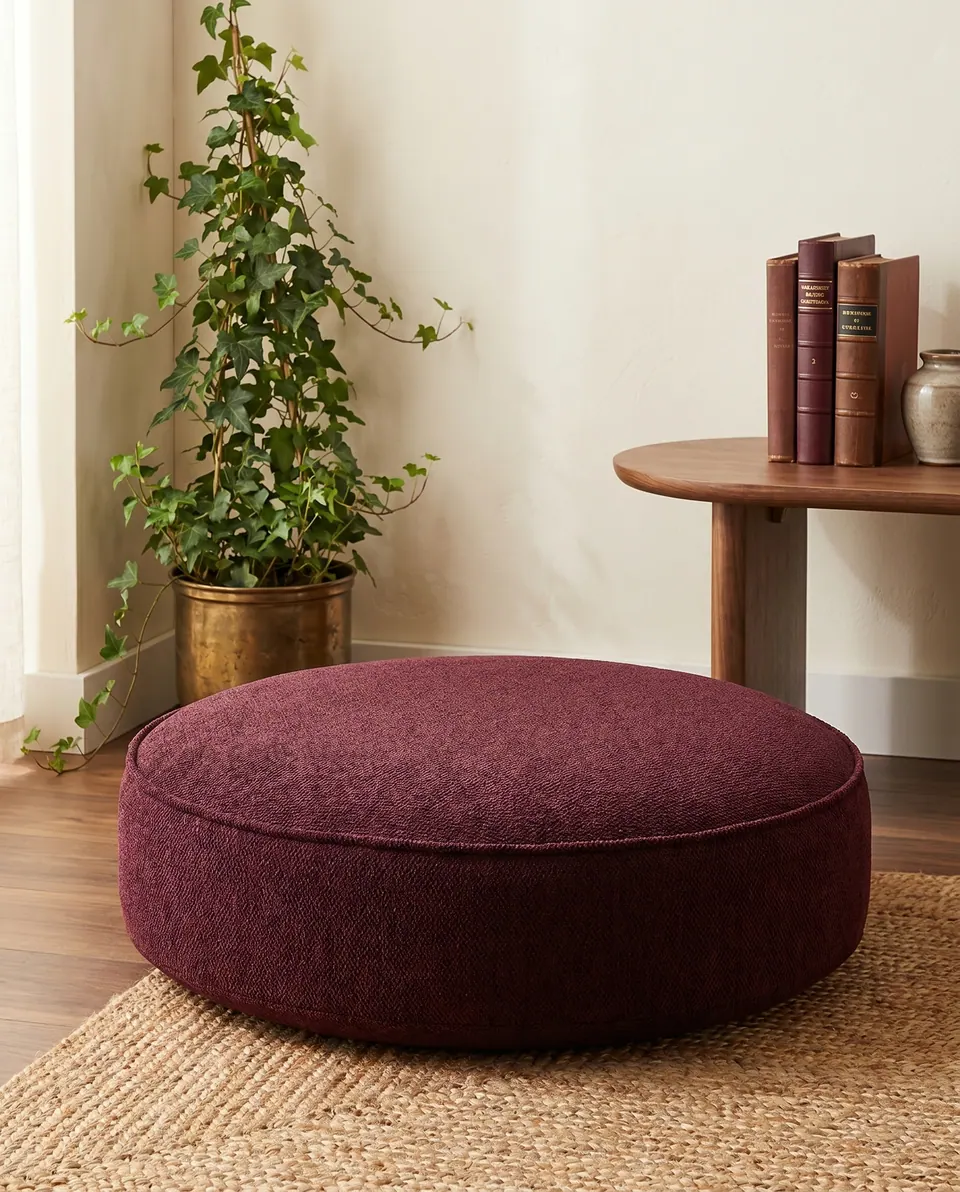
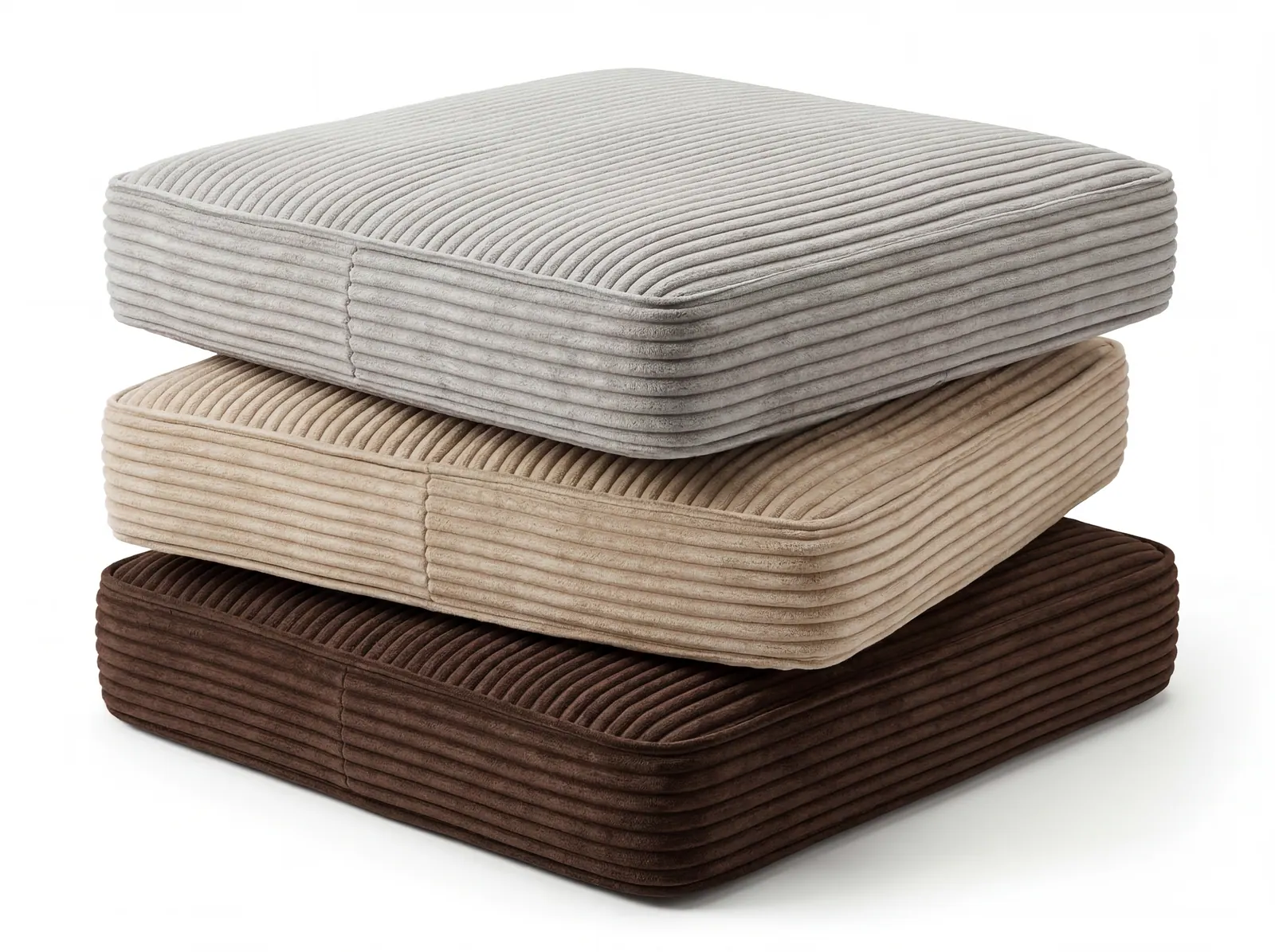
A meditation floor cushion setup pairs a flat zabuton, about 28 to 30 in (71 to 76 cm) across and 1 to 2 in (2.5 to 5 cm) thick, with a smaller raised seat on top. The workshop's standard meditation square is 20 x 20 in (50 x 50 cm), 4 in (10 cm) thick, filled with dense polyester fiber, cotton for a little more, or foam.
The mat under the cushion
A zabuton is 1 to 2 in (2.5 to 5 cm) thick. That is the whole point of it.
It is a flat mat, about 28 to 30 in (71 to 76 cm) across, traditionally filled with cotton batting. It takes your knees, shins and ankles. A smaller, taller round cushion, the zafu, sits on top and takes your hips.
A Western meditation floor cushion is usually one thicker piece that does both jobs. The workshop makes them 4 in (10 cm) thick as standard, and around 3 in (7.5 cm) on request. After the practice it becomes ordinary seating, one of the floor cushions that drift around a living room.
Neither is wrong. So the first question is yours: how do you sit?
Zabuton, zafu and floor cushion, side by side
| Piece | Typical size | Thickness | What it holds up | Usual fill |
|---|---|---|---|---|
| Zabuton | About 28 to 30 in (71 to 76 cm) across | 1 to 2 in (2.5 to 5 cm) | Knees, shins, ankles | Cotton batting, traditionally |
| Zafu | About 14 in (35 cm) round | About 8 in (20 cm) fluffed | Hips | Kapok or buckwheat hulls, traditionally |
| Meditation square | 20 x 20 in (50 x 50 cm) | 4 in (10 cm) | The whole seat | Fiber clusters, cotton or foam |
| Flatter square | 18 x 18 in (46 x 46 cm) | About 3 in (7.5 cm) | A lower seat | Fiber or foam, named on the order |
| Everyday floor cushion | 24 x 24 in (61 x 61 cm) to 24 x 40 in (61 x 102 cm) | Made to order | Sitting, lounging, guests | Fiber, cotton or foam |
Sizing a meditation cushion in eight quiet steps
Sit the way you practice
Kneeling, cross-legged, or legs folded to one side. Sit on the bare floor for two minutes and notice what complains first. Ankles ask for a mat. Hips ask for height.
Measure knee to knee
In your posture, have someone measure across the outside of both knees. The mat should be at least that wide, which is why the usual zabuton size runs 28 to 30 in (71 to 76 cm).
Choose the height
A zabuton alone is 1 to 2 in (2.5 to 5 cm). A seat you sit on directly is 4 in (10 cm) as standard, or about 3 in (7.5 cm) flatter. Test it first: fold a blanket to each height and sit on it first. The floor cushion thickness guide has the longer table.
Pick the fill by how it should feel
Fiber clusters feel soft, like cotton. Cotton fill feels denser and costs a little more; the quote shows the difference. Foam is firm and flat. If you are allergic to foam, write 'no foam' plainly on the order.
Pick the cover by what touches your skin
The standard linen is a linen-polyester blend. For natural fiber, ask for 100% cotton, pure linen or cotton-linen from the linen and cotton-linen family, and get the exact composition in writing. See real linen versus linen-look.
Say the shape in words
Write 'round, diameter 24 in' for a round cushion. Two numbers mean a rectangle to a cutter. For a curve, send a drawing.
Fit the room, not only the body
Any meditation cushion custom size is possible. Measure the spot first: a play tent with a 30.5 in (77.5 cm) floor got a 30 x 30 in (76 x 76 cm) cushion, and the linen floor cushion's standard 16 x 31.5 in (40 x 80 cm) has been shortened to 16 x 29.5 in (40 x 75 cm). In an open room, leave a hand's width of floor around it.
Order one before you order ten
For a studio or a retreat room, buy one cushion and sit on it for a week. Then order the rest.

Have it made
Measured it? Have Hana’s workshop make it
Measure once, slowly. Write the numbers here. The workshop will go over them with you. — Hana
Leave your details and the workshop will call you to confirm measurements, fabric, foam and piping. No prices, dates or payment on this page: it is a request, not an order.
Three fills, felt from the inside
Fiber clusters. The standard fill is polyester hollow fiber rolled into small clusters, often called silicone balls. They feel like cotton, not like beads or foam, and they are packed densely: about 8 to 10 kg (18 to 22 lb) in a 60 in (152 cm) cushion. Tufted floor cushions have no foam core, and the tufting is bound, so you do not feel buttons sitting cross-legged. See cluster fiber.
Cotton. Seat cushions, backrests and pillows can be filled with cotton or organic cotton through a custom order. It looks the same outside and costs a little more; the quote shows the difference.
Foam. Firm, flat and still, for a lower seat that must not shift. On some floor pieces, natural latex can replace the high-density foam for an extra charge.
Flax or linen-fiber stuffing is not offered, so an all-linen cushion means a linen cover over cotton or fiber. Natural fabrics take longer too, cotton-linen cloth most of all. More in cushions for allergies and natural fibers.
A farm retreat that ordered one first
A retreat owner in the US wrote to the workshop about a meditation space on a farm: seven to ten cushions at 24 x 40 in (61 x 102 cm), plus squares at 24 x 24 in (61 x 61 cm). They asked about cotton velvet, teddy and swatches.
The quotes came back in three fabrics. Teddy cost the most; the soft fabric and velvet less. A full set with a back and two arms ran 1.8 times the seat alone.
The owner decided to order one cushion first. Sit on it. Check the seams, the fill, the color in that room's light. Then order the rest.
Ten cushions made from one guess are ten guesses.
- What it taught
- For group spaces, order one sample cushion before a bulk run.
Letters from quiet rooms
One buyer wanted a cushion to match an area rug brought home from travel, in gray or smoke. The honest way is swatches laid on the rug in daylight, not a photo held up to a screen.
Another asked whether cover and filling could both be 100% linen. The cover, yes. The filling, no; cotton is the natural fill on offer.
A buyer finishing a tiny house with cedar walls and a zen feel re-measured two 24 x 48 in (61 x 122 cm) floor cushions down to 20 x 44 in (51 x 112 cm), and asked to see three grays against black accent pillows and green window light. Settle quantities and piece prices before checkout. More rooms like these live in meditation corner floor cushions and tiny house and loft floor seating.
A thin mat. A small seat. Enough floor left over to stand up slowly.
Where quiet-room orders go wrong
- Assuming linen means linen: linen-look upholstery is usually synthetic or a blend, so ask for the fiber content of the exact code.
- Guessing the fill: with allergies, ask what it is made of and for a photo of it.
- Two numbers for a round cushion: write 'round, diameter X in', or a rectangle arrives.
- Forgetting the backrest in the depth: a 20 in (51 cm) seat with a 4 in (10 cm) back fills 24 in (61 cm).
- Measuring late: check on arrival and send photos of any shortfall at once; one seat ordered at 20 in (51 cm) measured 19 in (48 cm).
A zabuton is only 1 to 2 in (2.5 to 5 cm) thick because the zabuton is a floor, not a seat. The height belongs to the smaller cushion on top.
Hana
Buyer questions: fill, foam and size
- A common question
I'm allergic to foam. Is there any foam in the tufted floor cushions?
The workshop's answerNo. The tufted floor cushions are filled with durable fiber inserts, with no foam. The tufting is bound, so you won't feel the buttons sitting cross-legged. A flatter meditation version can be made, for example 18 x 18 in (46 x 46 cm) at about 3 in (7.5 cm) high. One such request was for foam, so write 'no foam' clearly on a custom order.
- A common question
Can the filling be cotton instead of polyester?
The workshop's answerYes. Seat cushions, backrests and pillows can be filled with cotton or organic cotton through a custom order link, and the cushion looks the same outside. Cotton costs a little more, and the quote shows the difference. Flax or linen-fiber stuffing isn't offered, and very large cotton-filled pieces can seal poorly when vacuum-packed.
- A common question
What is actually inside a tufted floor cushion?
The workshop's answerSilicone-ball fiber: polyester hollow fiber rolled into small clusters that feel soft like cotton, not like foam. It is packed densely, the standard mix often includes some cotton, and there is no foam core. The cushions are sewn by hand, and the workshop can send a photo of the filling first.
- A common question
Can a floor cushion be made to my own size and thickness?
The workshop's answerYes. Floor cushions and floor mattresses are made to any length, width and thickness, including firm fill. Past orders include 18 x 40 x 5 in (46 x 102 x 13 cm) in cotton, long linen cushions such as 16 x 84 in (41 x 213 cm), and twin or full floor mattresses 4 to 6 in (10 to 15 cm) thick. The workshop adds your size to the listing or sends a custom link.
- A common question
Could you make a floor cushion for one particular spot, like a pallet platform or a kids' tent?
The workshop's answerYes. Send your measurements, plus a picture of the layout for anything L-shaped, and the workshop quotes a made-to-fit cushion. A 30 x 30 in (76 x 76 cm) cushion was made for a play tent with a 30.5 in (77.5 cm) floor, and 40 x 48 in (102 x 122 cm) cushions are made to sit on standard pallets in meditation rooms.
Asked in quiet rooms
How big should a zabuton be?
About 28 to 30 in (71 to 76 cm) across and 1 to 2 in (2.5 to 5 cm) thick. It should be at least as wide as the distance across your knees in your sitting posture, so knees and ankles rest on padding rather than on the floor.
What's the difference between a zabuton and a zafu?
The zabuton is the flat mat underneath, about 28 to 30 in across. The zafu is the small round cushion on top, about 14 in (35 cm) across and about 8 in (20 cm) tall when fluffed, traditionally filled with kapok or buckwheat hulls. The mat cushions the legs; the zafu lifts the hips.
How thick should a meditation cushion be if I sit on it directly?
The workshop's standard meditation cushion is 4 in (10 cm) thick, and flatter ones of about 3 in (7.5 cm) have been made. Fold a blanket to each height and sit on it for a few sessions before ordering. Your body settles the question faster than a chart.
Is a Japanese floor cushion padded differently from a French tufted one?
No. Both are built the same way with the same filling, so the padding is identical. Only the cover differs: the Japanese-style linen is a little stiffer and of a higher grade, while the French-style fabric is softer and more flexible.