A Reading by HarlanFloor Cushions & Floor Seating
Anatomy of a round plum floor cushion: what holds it together and in place
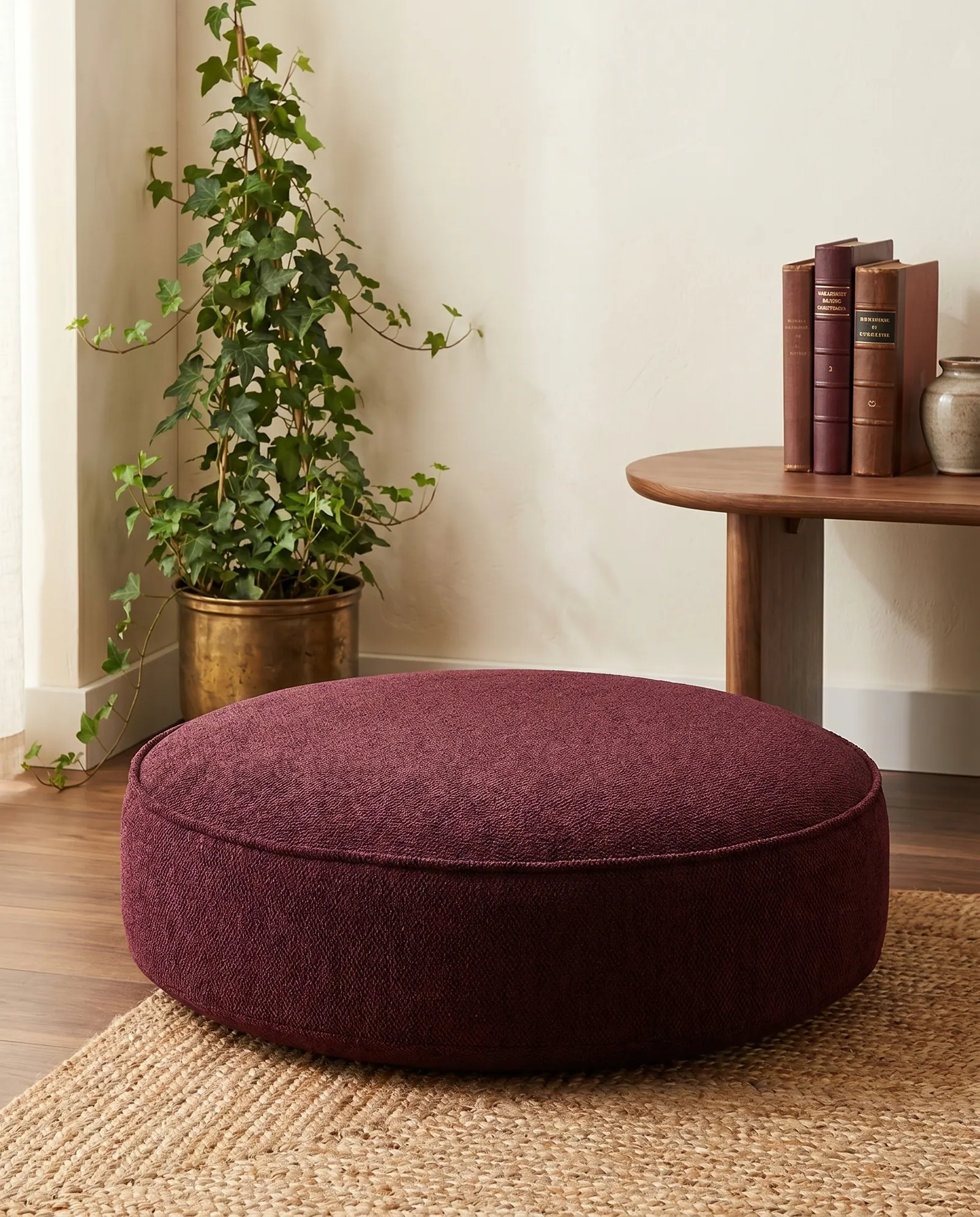
Harlan cuts through a plum herringbone pouf on a jute rug, from the piped top seam to the zipper on its side wall, and says whether it needs ties at all.
 Save
The quick answer
A round floor cushion needs no ties, because a floor offers nothing to tie them to. Its weight and a deep side wall hold it on a rug, and on bare wood a non-slip base stops it creeping. Put the zipper low on the back of the side wall, and pipe the top seam so the circle stays true.
The cushion, cut open
Cover fabric. A removable, zippered cover. Machine wash at 86°F (30°C) on a gentle cycle and air dry.
Piping. A fabric-covered cord sewn into the seams. It sits on the seam line, so it does not change the size.
Fiber wrap. Polyester fiber (Dacron) batting around the foam: it fills the cover out and softens the edges.
Foam core. About 2.0 lb/ft³ (32 kg/m³) high-resilience foam, firm to medium-firm, cut to the ordered size.
Zipper. Along the back band, as hidden as possible. The zipper side faces down or toward the wall.
Base panel. The underside of the cover. A non-slip fabric backing can cover the whole of it instead.
Not a pillow but a stool, with nothing to tie it to
Folks call a round floor cushion a pillow. It is closer to a stool, my friend, and it wants to be built like one.
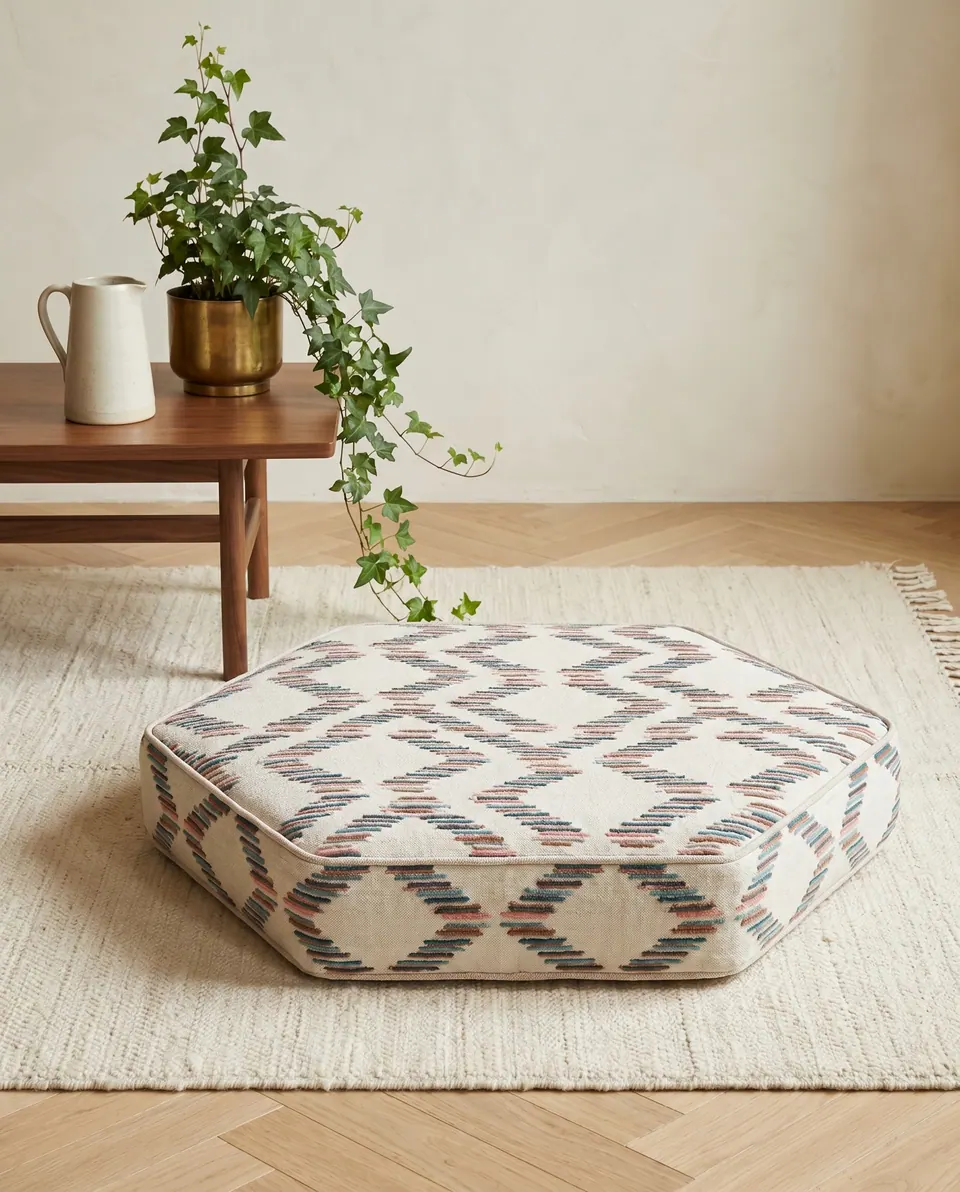
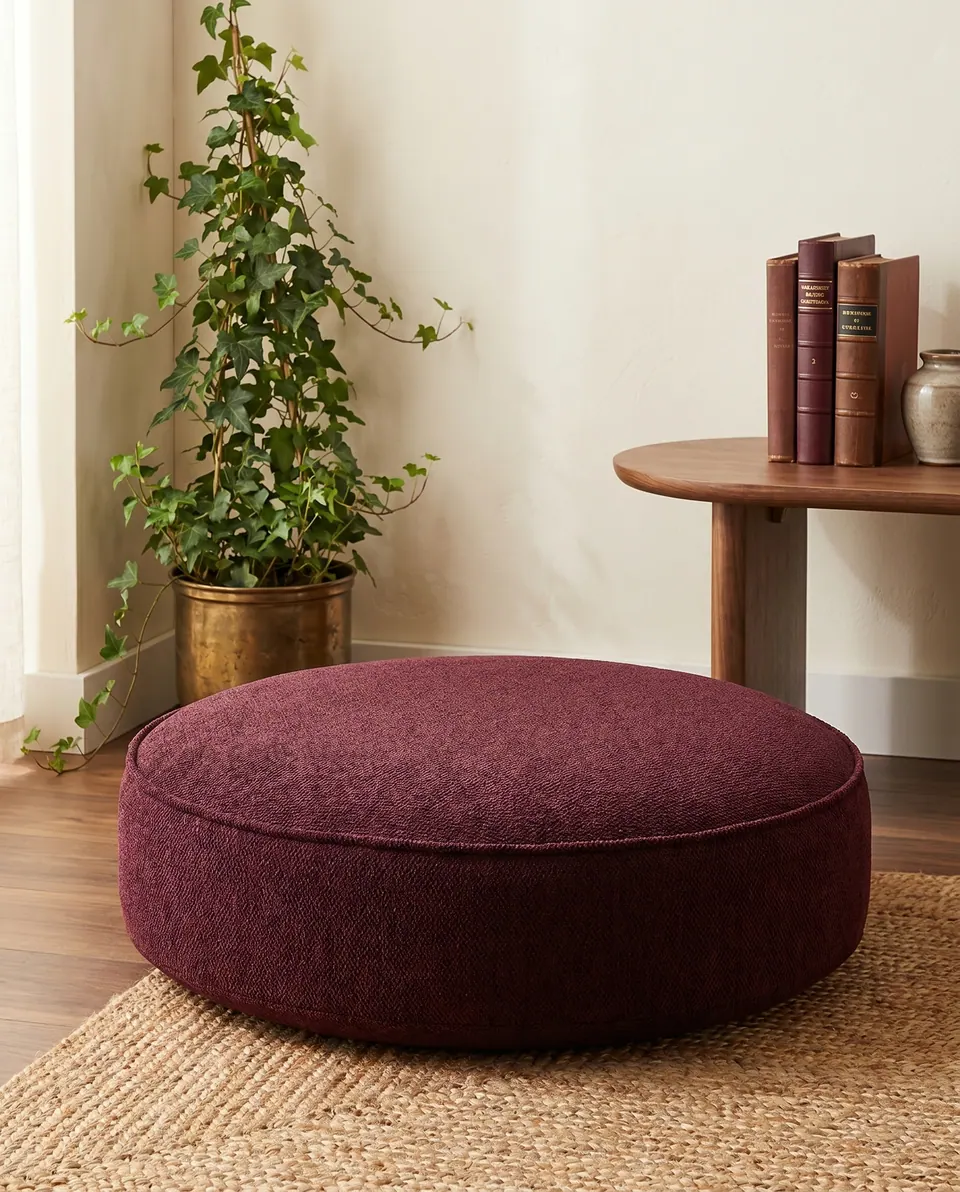
This one is plum herringbone chenille, cut round and deep, on a round jute rug in a cream-walled corner of a living room. It stands about as high as a low stool, which makes it a true seat and not a decoration. Plum on neutral ground, cream walls and natural jute, looks chosen instead of loud.
Now the question buyers ask about every floor cushion: what keeps it put? Not ties. Ties need a spindle, a slat or a rail, and a floor has none. Weight holds a deep round cushion, the rug's rough texture helps, and on slick boards a non-slip base finishes the job. The rest of the fastening question comes down to where the zipper sits.
Where does yours live, on a rug or on bare boards?
Cut through it: five layers, top to floor
- Top panel. A tight herringbone chenille from the jacquard and damask family. When side light rakes across it, the weave gives off a soft sheen.
- Piped top seam. Self piping in the same plum. It holds the top in a true circle so the cushion does not slump into a dome. A seam is a promise, and a piped one keeps it longer.
- Side wall. A tall gusset. This is what turns a pillow into a low pouf you can sit on and rise from.
- Zipper. Low on the side wall, on the half that faces the console or the wall, never across the front where a heel rests. More on cushion zipper placement.
- Base. Flat, sitting square on the jute. On bare oak, a grippy underside belongs here.
Around it, each piece earns its spot. Trailing ivy in a brass planter sits opposite plum on the color wheel and makes the cloth look richer. Three leather-bound books on the walnut console carry oxblood up to eye level. A gray stoneware vase cools all that warm wood, and the oak boards at the rug's edge frame the circle.
Pinned by Harlan: top, seam, wall, ivy and books
Five pins run from the herringbone top down the piped seam and side wall, then out to the ivy and the books that echo it.
- Plum herringbone top
The tight herringbone texture shows a soft sheen when side light rakes across it.
- Piped top seam
Self piping holds the top in a true circle so the cushion does not slump into a dome.
- Deep side wall
A tall gusset turns a floor cushion into a low pouf you can actually sit on.
- Ivy in brass pot
Green sits opposite plum on the color wheel, so the plant makes the fabric look richer.
- Leather books
Oxblood spines repeat the cushion color at eye level and tie the corner together.
- Plum herringbone topThe tight herringbone texture shows a soft sheen when side light rakes across it.
- Piped top seamSelf piping holds the top in a true circle so the cushion does not slump into a dome.
- Deep side wallA tall gusset turns a floor cushion into a low pouf you can actually sit on.
- Ivy in brass potGreen sits opposite plum on the color wheel, so the plant makes the fabric look richer.
- Leather booksOxblood spines repeat the cushion color at eye level and tie the corner together.
A 41-inch round for the floor of a play tent
A buyer in the US was looking at a 28 x 56 in (71 x 142 cm) floor sofa set with a backrest and two bolsters. Then came a second question: could the shop make a round cushion to fill the floor of a children's play tent?
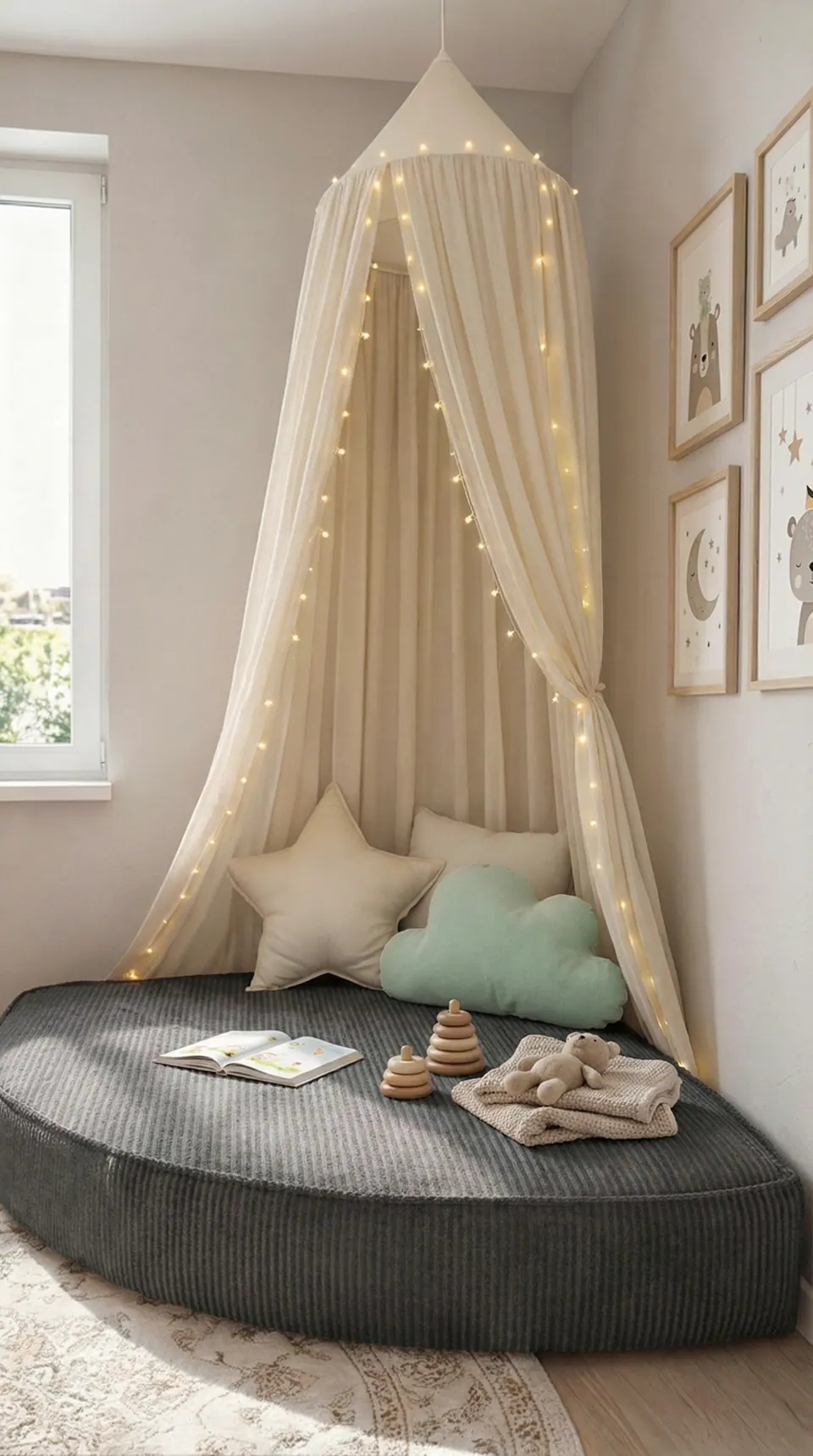
It quoted a 41 in (104 cm) round. That number came from the tent, not from a catalog, and that is the right way round. Measure the inside diameter of the tent floor and the cushion fits snug, with no gap at the edge for small feet to find. There are more ideas in play tent and crash pad cushions.
Buyer questions: round tufts, warranty questions, a bed for the dog
- A common question
Can you make a 38-inch round tufted floor cushion, and how would I order it?
The workshop's answerYes. The shop quoted it straight away and pointed to the round French cushion listing, where a 38 in (97 cm) round tufted cushion is ordered by picking that size.
- A common question
Does the floor sofa come with a warranty, and will a light color stain?
The workshop's answerWarranty terms come from the workshop, not from this site, so ask for them in writing before you order and keep that message. Damage from misuse is a different conversation from a manufacturing defect. The shop said it had sold more than 5,000 of that sofa without staining complaints, and a light pillow can be swapped for a darker one in the order notes.
- A common question
Could I buy only a floor cushion, without the backrest, to use as a dog bed?
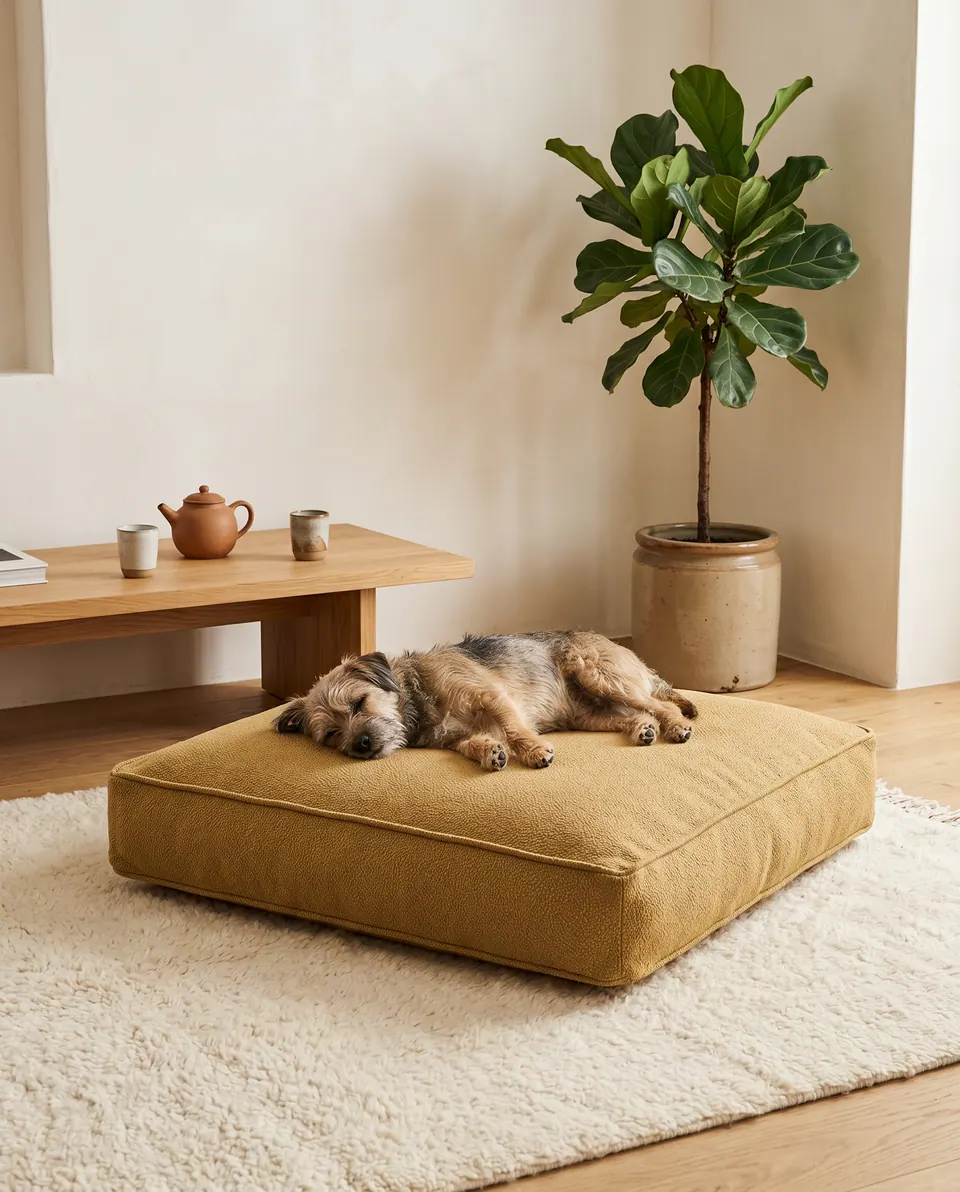
The workshop's answerYes. A thick 24 x 24 in (61 x 61 cm) linen floor cushion without the backrest was quoted on its own.
On the cutting table: the plum round
| Product | Round floor cushion, box edge with a deep side wall |
|---|---|
| Fabric | Plum herringbone chenille |
| Piping | Self piping on the top seam |
| Height | About that of a low stool |
| Ties | None; a floor has nothing to tie to |
| Grip | Weight and rug texture on jute; non-slip base on bare wood |
| Zipper | Low on the side wall, facing the wall |
| Best for | Reading corners and extra living room seating |
Have it made
Have this made — ask Harlan’s workshop
Old upholsterers will tell you the real cutting happens in the conversation, long before the shears come out. Tell the workshop what you sit on, and they will talk it through with you. — Harlan
Leave your details and the workshop will call you to confirm measurements, fabric, foam and piping. No prices, dates or payment on this page: it is a request, not an order.
A round floor cushion needs no ties, because a floor has nothing to tie to. Weight and a deep side wall hold it; a non-slip base helps on bare wood.
Harlan
Questions buyers ask next
Do round floor cushions slide on hardwood floors?
A heavy, deep one mostly stays put, but on smooth boards it can creep when someone drops onto it. A non-slip underside, or a textured rug beneath it, stops that.
Where should the zipper go on a round floor cushion?
Low on the side wall, on the back half that faces a wall or furniture. That keeps it away from the top seam and the front, where people sit and rest their heels.
Why add piping to the top of a round cushion?
Piping stiffens the seam it sits in. On the top edge of a round cushion it holds the circle crisp, so the top stays flat instead of doming up in the middle.
How tall should a floor cushion be to use as a seat?
Around the height of a low stool, as with this pouf. A tall side wall turns a flat floor pillow into a seat you can actually sit on and get up from.
Sit well. — Harlan