A Reading by NateL-Shaped Corner Bench Cushions
Anatomy of an L-shaped bench cushion that stays where you put it
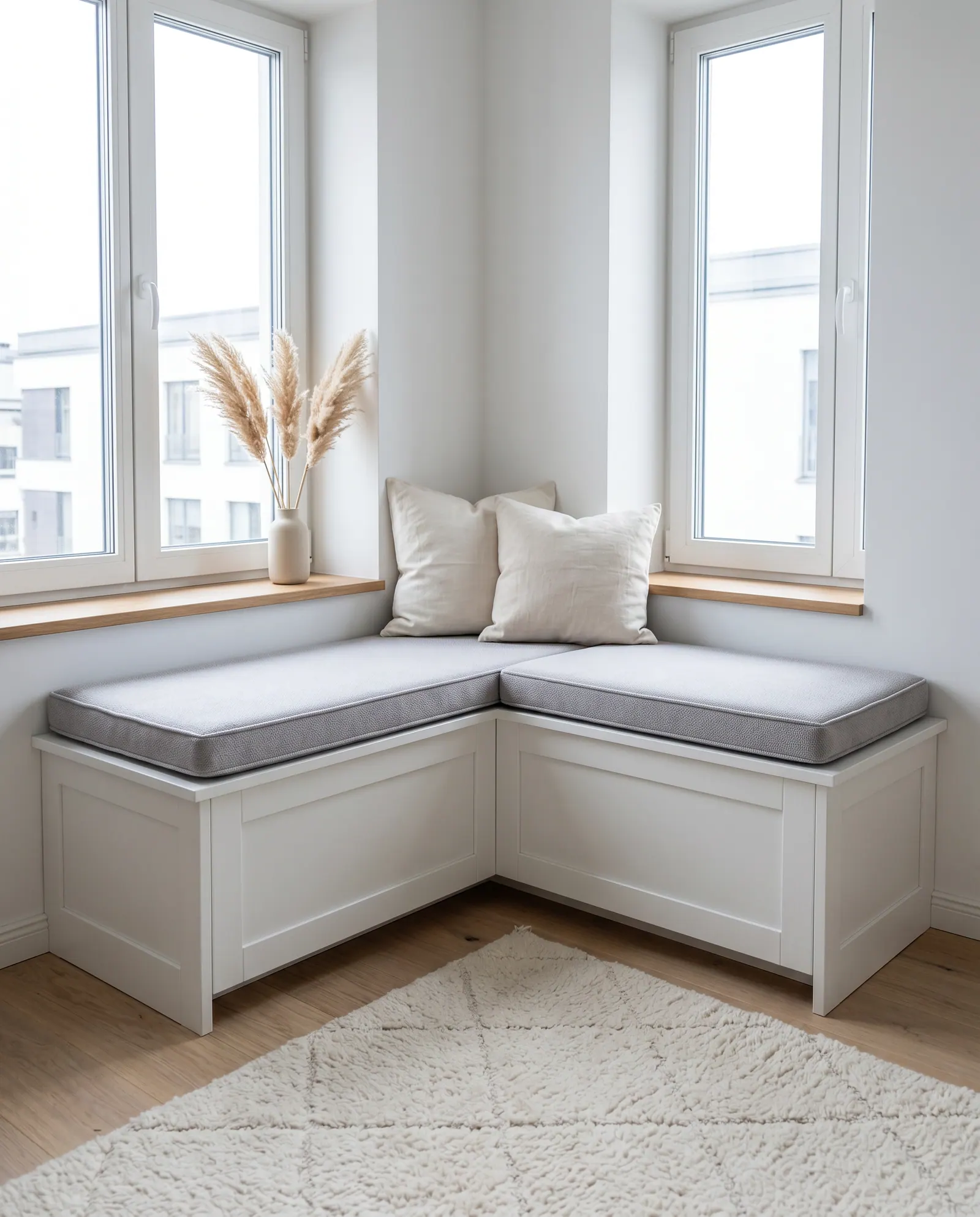
Two gray rectangles meet in a white corner and do not move. No ties in sight, no hook-and-loop tape. So what is doing the holding? Let's take it apart.

 Save
The quick answer
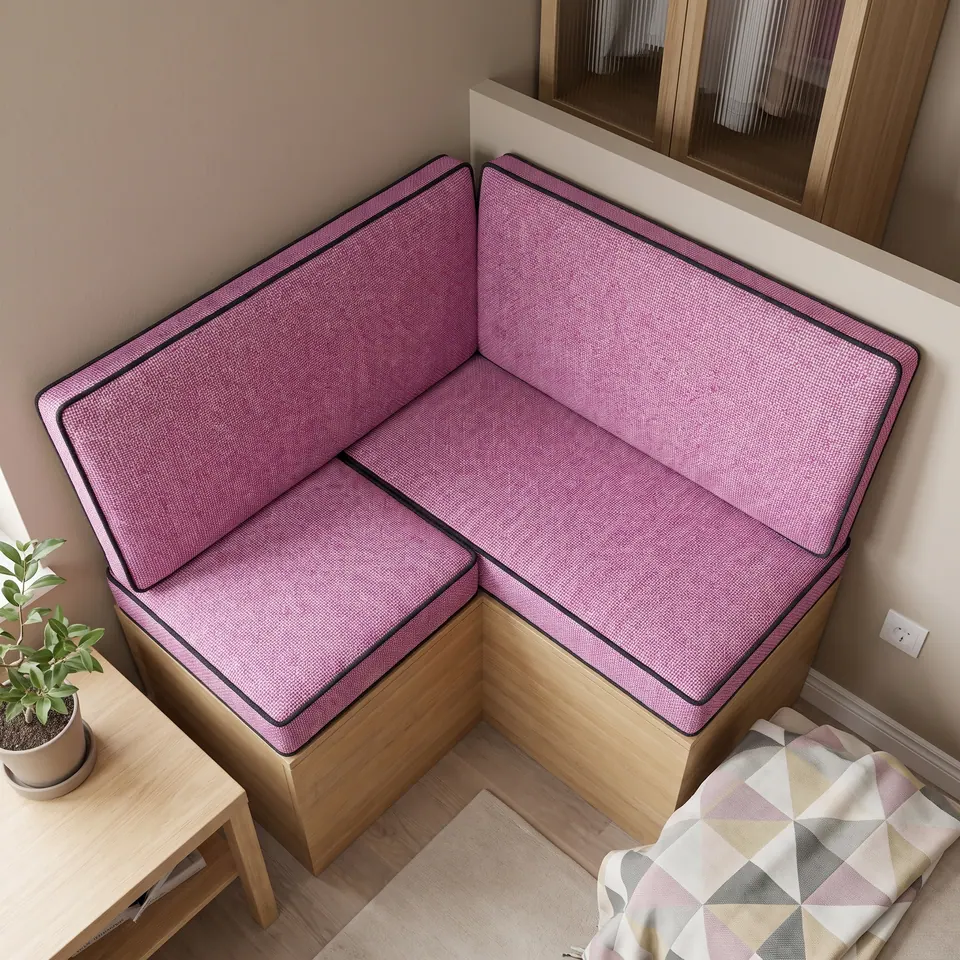
An L-shaped bench cushion usually fits and behaves best as two straight rectangles butted in the corner, each zipped on the back edge against the wall. To stop sliding, add a non-slip base at checkout or ask for ties in the personalization note. For a backrest, a wedge-cut foam back leans on the wall and stays put without hook-and-loop tape.
The cushion, cut open
Cover fabric. A removable, zippered cover. Machine wash at 86°F (30°C) on a gentle cycle and air dry.
Piping. A fabric-covered cord sewn into the seams. It sits on the seam line, so it does not change the size.
Fiber wrap. Polyester fiber (Dacron) batting around the foam: it fills the cover out and softens the edges.
Foam core. About 2.0 lb/ft³ (32 kg/m³) high-resilience foam, firm to medium-firm, cut to the ordered size.
Zipper. Along the back band, as hidden as possible. The zipper side faces down or toward the wall.
Base panel. The underside of the cover. A non-slip fabric backing can cover the whole of it instead.
Pinned by Nate: the corner, part by part
Five pins, from the long left run to the cream rug that softens two hard white boxes.
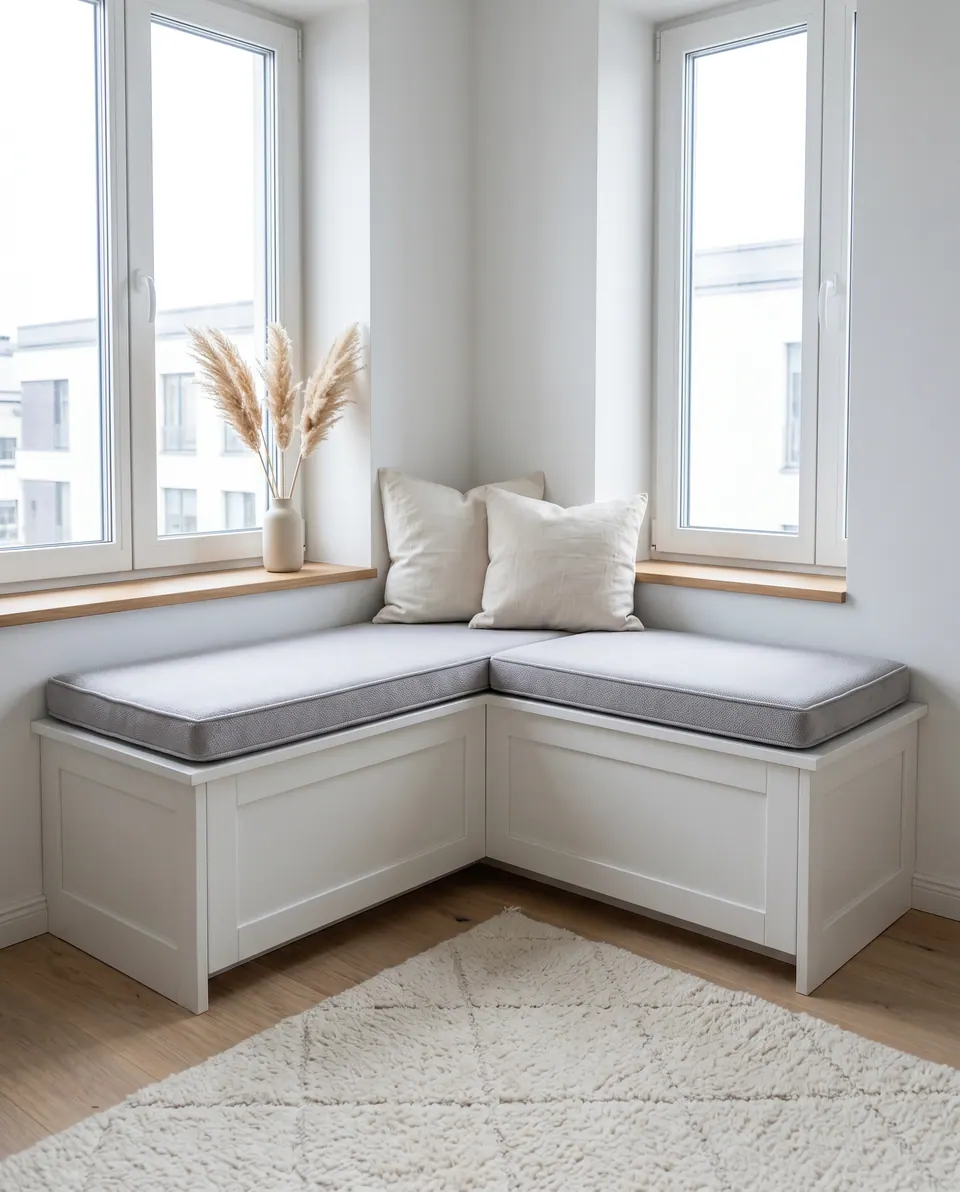
- Long left cushion
The long run carries past the corner so the seams stay tidy.
- Corner join
Two cushions butt together in the corner rather than one awkward L piece.
- Ivory pillows
Pillows sit right in the corner to cover the join.
- Pampas vase
Tan pampas echoes the oak sills and adds height.
- Berber shag rug
A cream shag rug softens the hard white boxes.
- Long left cushionThe long run carries past the corner so the seams stay tidy.
- Corner joinTwo cushions butt together in the corner rather than one awkward L piece.
- Ivory pillowsPillows sit right in the corner to cover the join.
- Pampas vaseTan pampas echoes the oak sills and adds height.
- Berber shag rugA cream shag rug softens the hard white boxes.
Two rectangles, one corner, zero drama
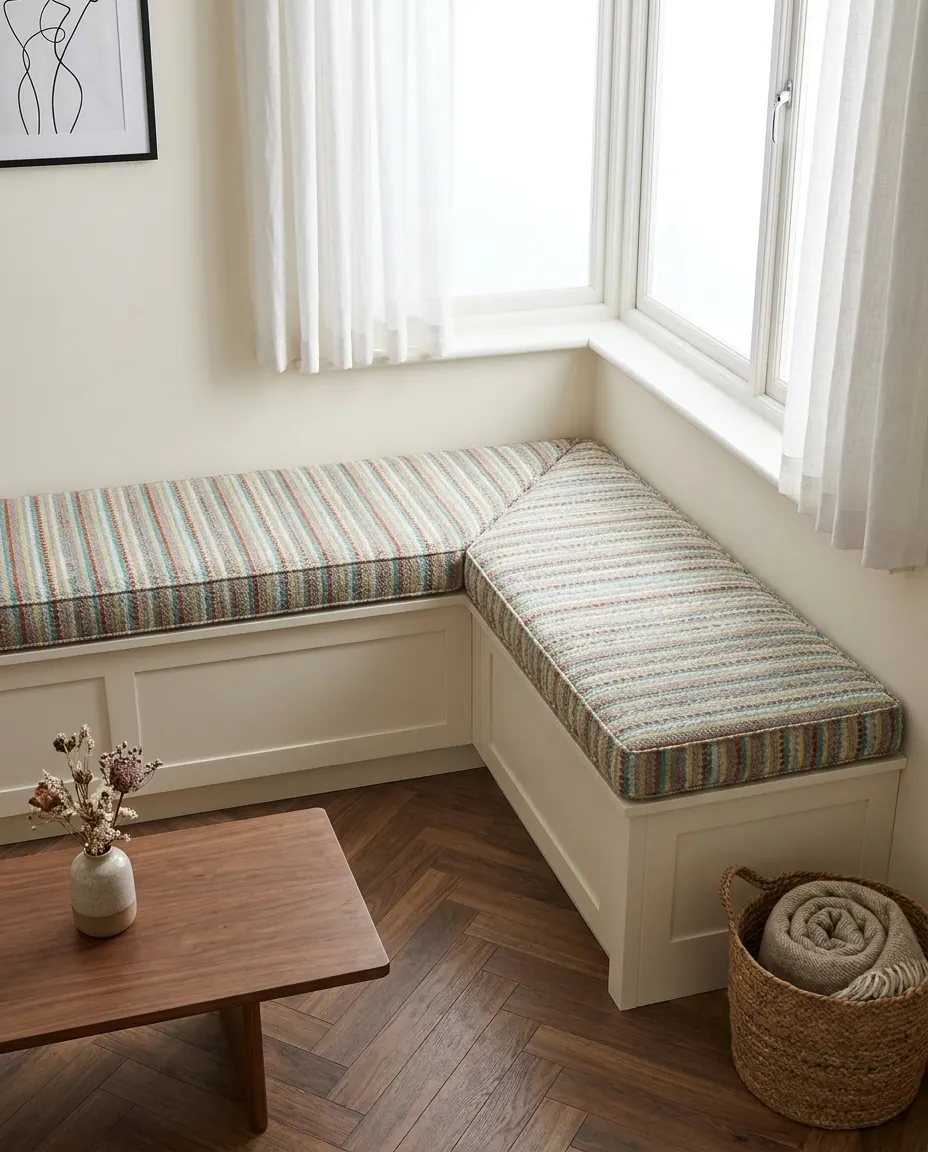
This is an L-shaped bench cushion that is not actually L-shaped. Look at the corner. The long left run carries straight past it, and the short run butts into its side. Two rectangles, one joint.
I prefer this to a single L cut, partner, and not only because it is simpler to make. Each piece can be flipped and washed on its own, and each one is fitted to its own bench. Built-in corners are rarely a true 90 degrees. Two rectangles absorb that at the joint; one L piece shows it along an edge.
The color follows the same restraint. Silver gray, a few steps darker than the white benches, so the seat outline shows without breaking the calm. Self piping keeps the box edge crisp and adds no second color. With a cat or a dog in the house, a performance weave from the pet-friendly fabric family is the practical call, and gray forgives a little dust.
The props do structural work too. Two ivory linen pillows sit directly over the joint: they hide it, and they give a backrest at the one spot where two people lean into the corner. Pampas grass in a white bud vase repeats the tan of the oak windowsills and adds height. The cream Berber shag rug softens the hard white boxes at floor level.
More corners like this live in the L-shaped cushion atlas and with the living room cushions.
Which side of your bench faces the room? That answer decides where your zippers go.
Keeping an L-shaped window seat cushion in place, from the lid up
The bench lid
These are storage benches, so the lids must lift. Ask for any rounding to go down, never up, and the cushions clear the hinges. See storage bench cushions with hinged lids.
The base
A non-slip base, selected at checkout, grips the lid. It is the quietest fix, because it disappears under the cushion.
The ties
If the bench has a frame or posts to tie to, write the request for ties in the personalization note and production adds them.
The zipper
The zipper sits on the back edge, against the wall. On a corner, send a photo of the bench so the shop knows which edge is the back of each piece.
The joint
Butt the short run into the long run, then set a pillow over the seam. The pillow hides the join and marks the best seat.
The backrest
A wedge-cut foam back leans into the wall and stays there without hook-and-loop tape. More in L-shaped cushion corner joints.
An 84 in kitchen L with a back that holds itself up
A buyer in the US wrote to the workshop about an L-shaped kitchen bench. One run measured 84 x 22 in (213 x 56 cm), the other 62.5 x 21.5 in (159 x 54.5 cm), both 4 in (10 cm) thick, in sage corduroy.
She wanted a back cushion on the long side only. The shop offered two kinds of back, loose pillows or foam. She chose foam, and the shop proposed cutting it as a wedge, so it leans into the wall and stays upright without any hook-and-loop tape.
Same idea as the gray corner in the photograph: let geometry do the fastening wherever it can, and add hardware only where it cannot. Angles are just lengths in disguise. The back options are compared in shredded foam versus wedge backs.
Buyer questions: corners, notches and add-on backs
- A common question
We have custom reading benches in our office, and two classrooms need cushions too. Do you take orders like that?
The workshop's answerYes. Send a picture of the benches with the measurements of each section to get a quote. The shop has made 40 x 40 in (102 x 102 cm) corner cushions for early-learning classrooms and multi-section cushions for office benches.
- A common question
My bench has a small notch at each end. Can you make two cushions, split down the middle, that fit around them?
The workshop's answerYes. The shop confirmed the split point, exactly in the middle, and asked whether the notches sit on the back edge, where the zipper goes. A photo of the bench settled which side each zipper belonged on.
- A common question
Could I add an L-shaped backrest to our ottoman later, or a straight back piece between two corner pieces?
The workshop's answerYes. An extra L-shaped backrest turns the ottoman into a small sectional, and it can be bought later through the same link. A straight 39 in (99 cm) cushion to sit between two corner pieces was quoted as its own piece.
On the cutting table: the white corner seat
| Layout | Two straight box cushions butted in the corner |
|---|---|
| Fabric | Silver-gray performance weave |
| Piping | Self piping, same gray |
| Zipper | Back edge, against the wall |
| Grip | Non-slip base selected at checkout |
| Ties | Added on request in the personalization note |
| Backrest | Wedge-cut foam leaning on the wall, no tape |
| Sizing | Rounded down, if at all, so storage lids lift |
| Best for | Bright living-room corners with storage below |

Have it made
Have this made — ask Nate’s workshop
Send the numbers in inches: length × depth × thickness, plus any angle. The workshop checks them with you, because foam has no undo button. — Nate
Leave your details and the workshop will call you to confirm measurements, fabric, foam and piping. No prices, dates or payment on this page: it is a request, not an order.
Two straight cushions butted in a corner forgive a bench that is not quite 90 degrees. One L-cut piece reports every error.
Nate
Questions buyers ask next
Is one L-shaped cushion or two rectangles better for a corner bench?
Two rectangles butted in the corner are often the better fit. Each piece can be fitted, flipped and washed separately, and small errors in a corner that is not quite square are absorbed at the joint instead of showing along an edge.
Where should the zipper go on a corner window seat cushion?
On the back edge, against the wall or window, where nobody sees it. On a corner or a notched bench, send a photo so the shop can tell which edge is the back of each piece.
How do I keep a corner bench cushion from sliding?
Start with a non-slip base selected at checkout. If the bench has a frame or posts, ask for ties in the personalization note. For a backrest, a wedge-cut foam back holds itself against the wall without tape.
± 1/4 in — Nate
More photographs to read
 Save
 Save
 Save
 Save
 Save
 Save