 Save
- Sand bolster
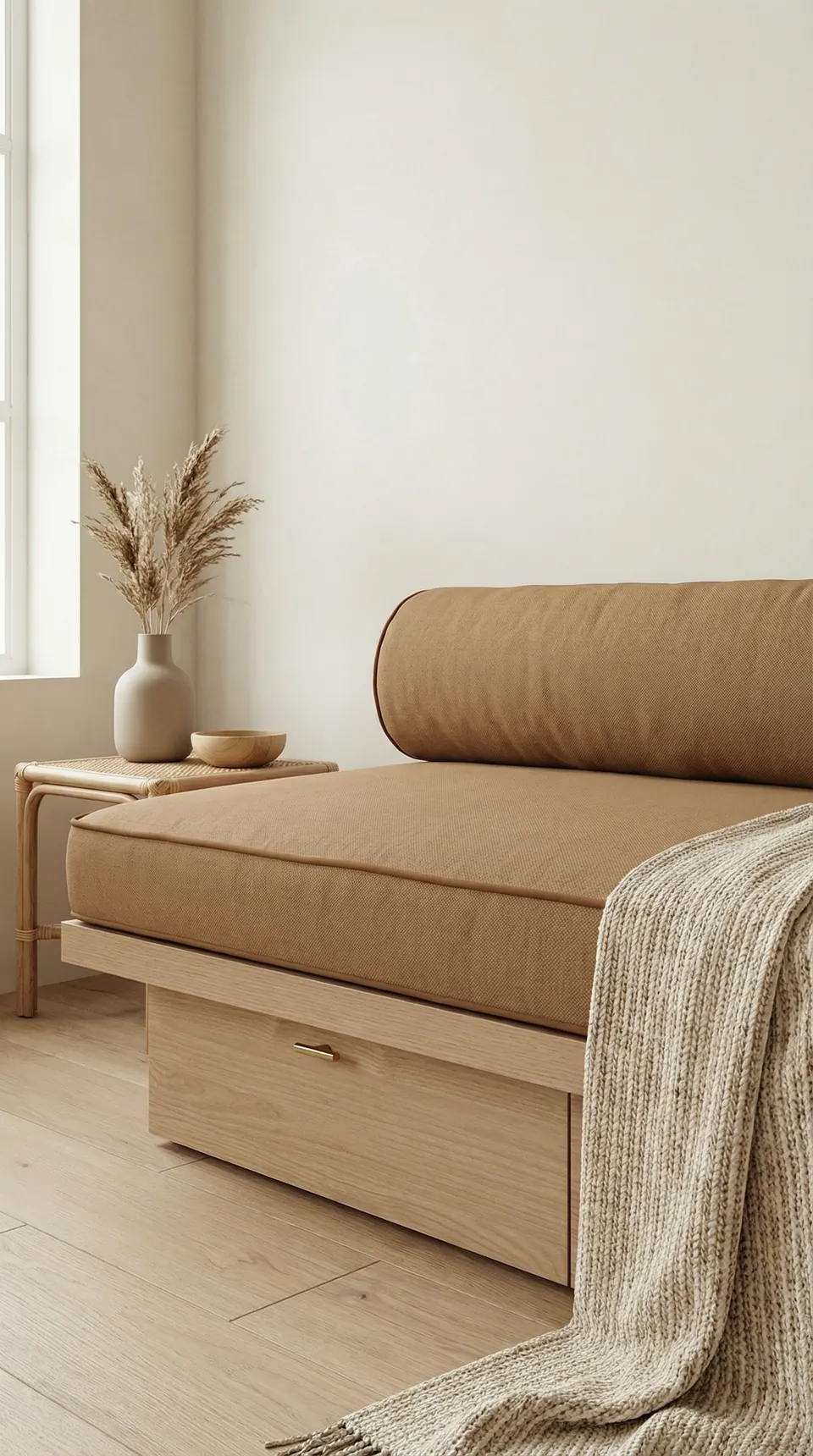
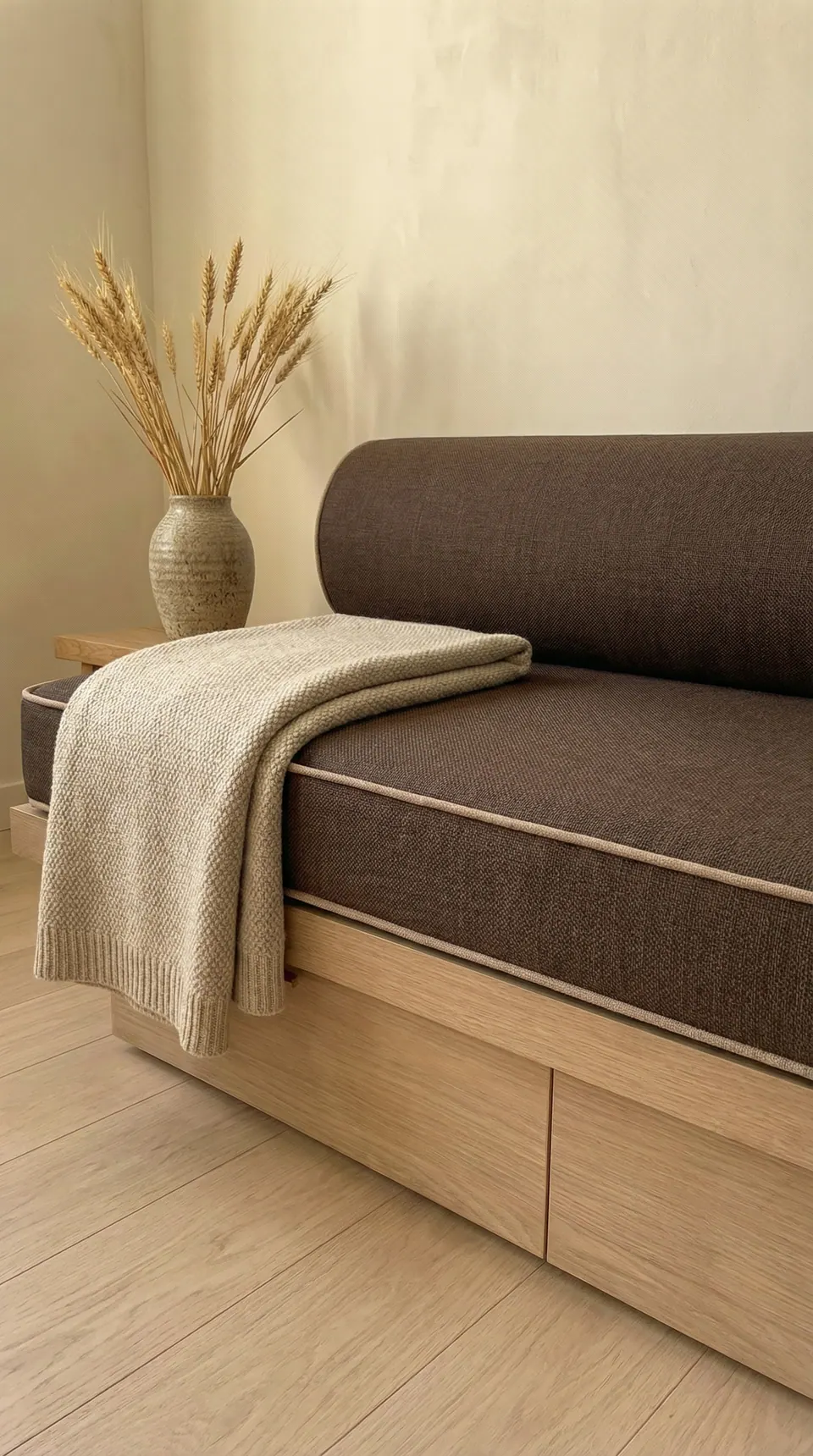
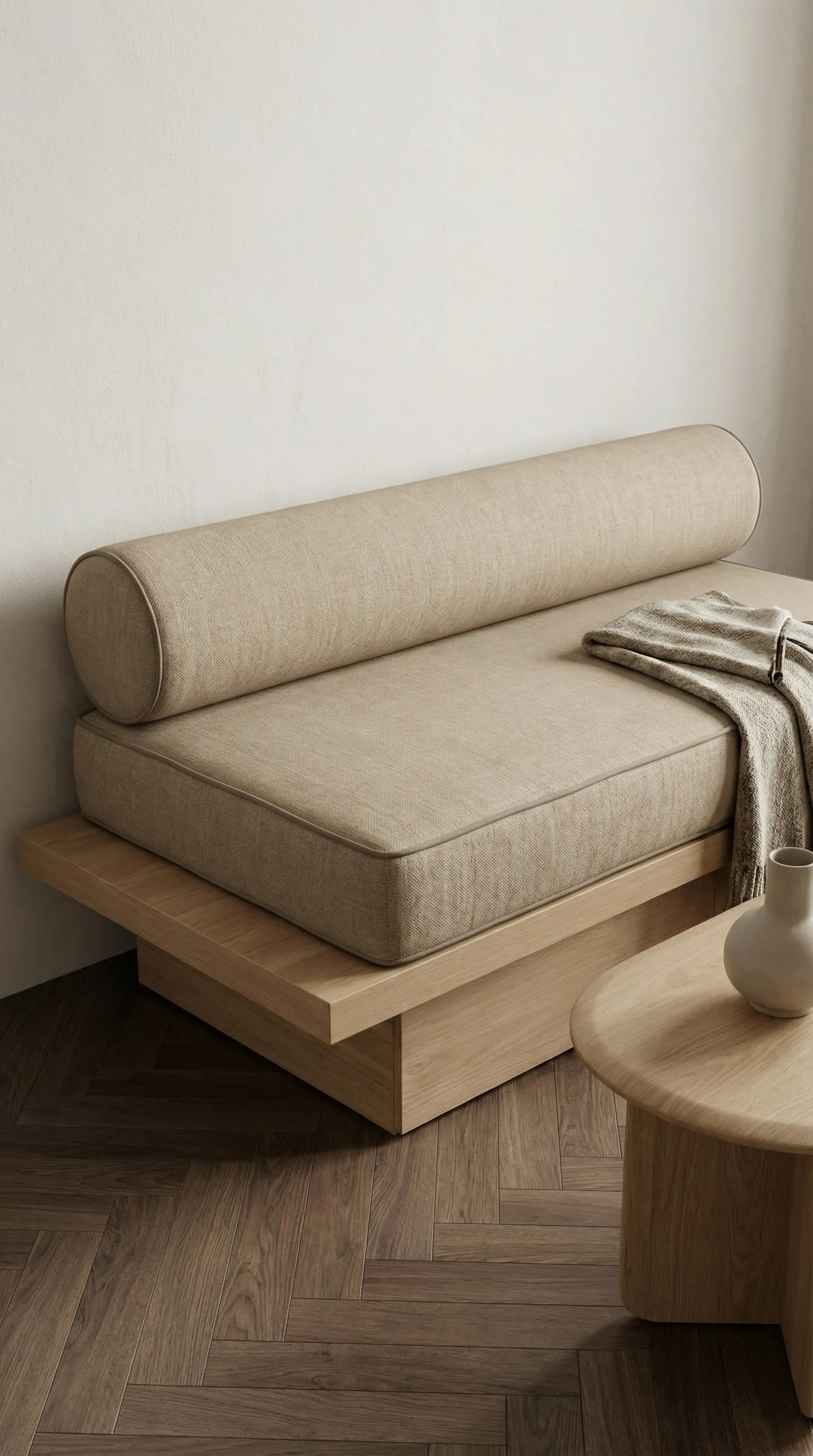
A self-piped bolster reads as one soft cylinder against the wall.
- Self-piped box edge
Matching piping gives a crisp edge without adding a line of color.
- Floating plinth
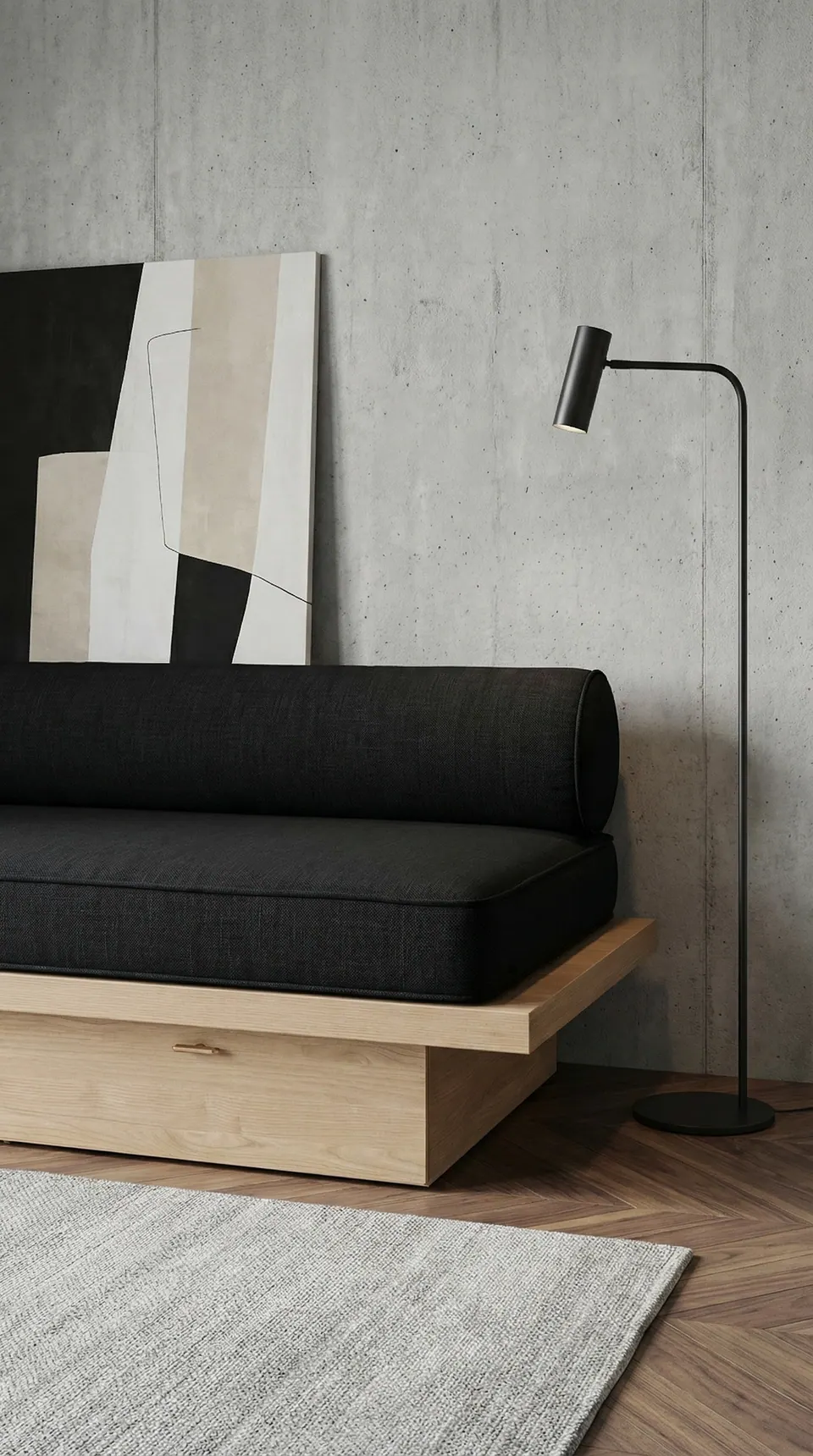
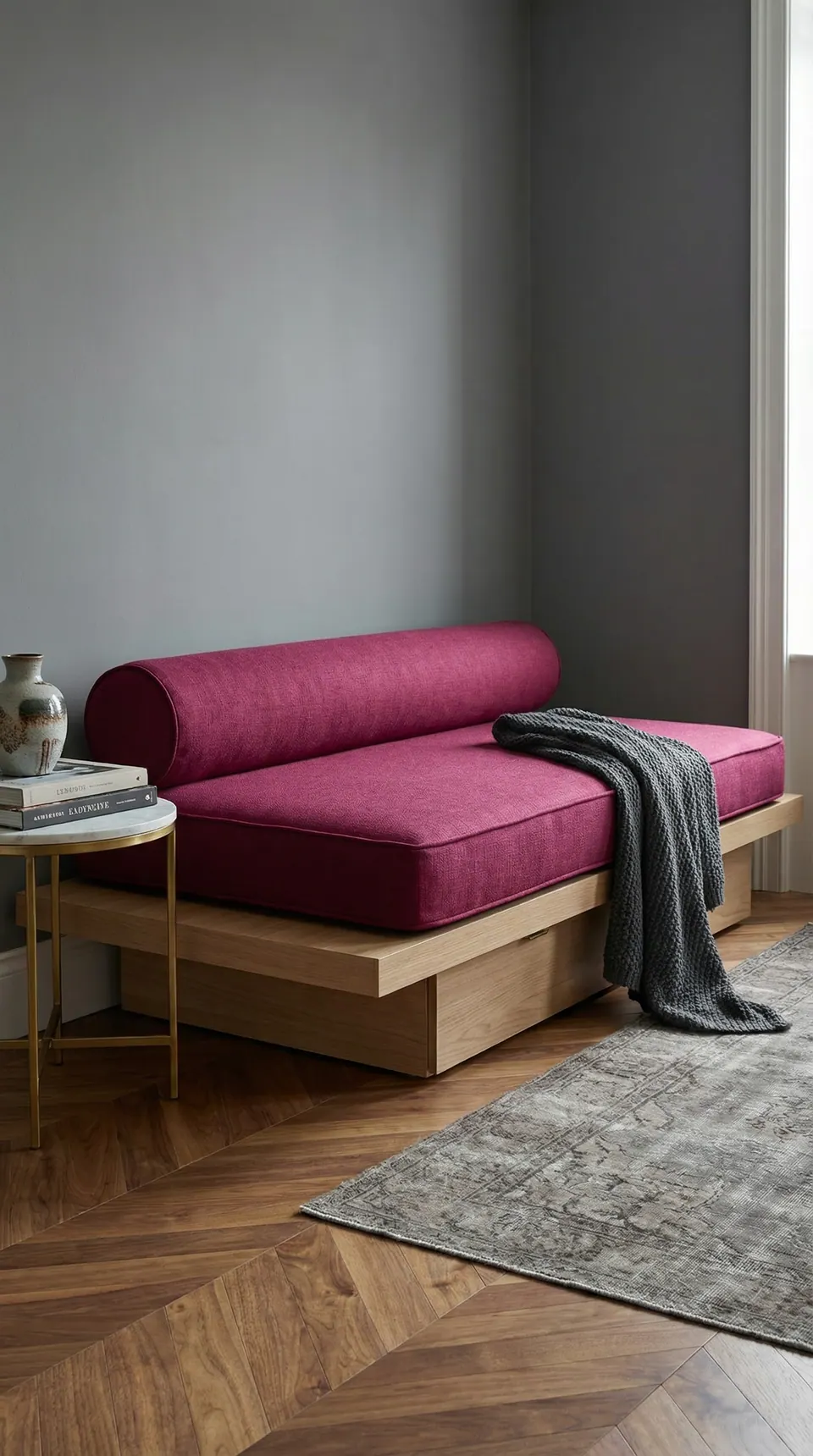
The recessed base makes the cushion appear to hover above the floor.
- Gray knit throw
A single throw is the only soft accent in a very restrained palette.
- Oak table and vase
A round table and one white vase echo the bolster's curve.
Plate Sand Linen-Look Daybed on a Floating Oak Plinth
Self piping and a floating plinth make the whole piece read as one soft block.
A Reading by HanaDaybed Cushions & Covers
A sand daybed cushion on a floating oak plinth, and where pattern belongs in a plain room
One color, one cloth, self piped. The pattern in this room is on the floor. Read it before you add a stripe.
The quick answer
A plain sand daybed cushion mixes best with texture, not more pattern: a knit throw, oak grain and a herringbone floor already do that work. If you want a stripe, put it on the smallest piece, such as the bolster or one lumbar, and keep the self piping. One pattern per sightline is enough.
Pinned by Hana: five textures, wall to floor
Five pins run from the bolster at the wall down to the plinth, and each one marks a texture rather than a print.
The numbers match the pins on the plate.
- Sand bolsterA self-piped bolster reads as one soft cylinder against the wall.
- Self-piped box edgeMatching piping gives a crisp edge without adding a line of color.
- Floating plinthThe recessed base makes the cushion appear to hover above the floor.
- Gray knit throwA single throw is the only soft accent in a very restrained palette.
- Oak table and vaseA round table and one white vase echo the bolster's curve.
The pattern is on the floor
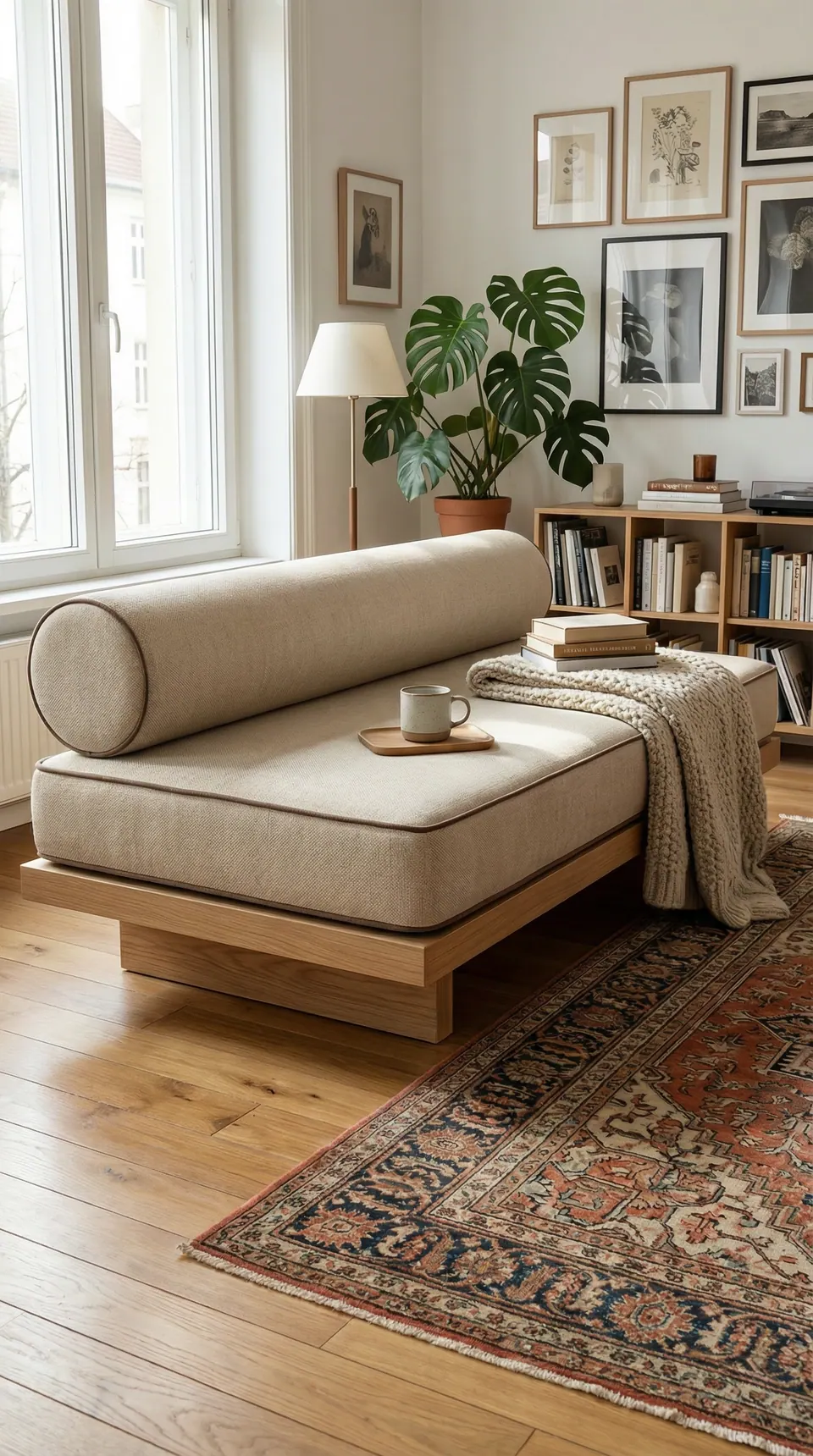
This is a close reading. Seat, back and a round bolster, all in sand linen-look fabric. The piping is the same cloth, so the box edge shows as a crisp shadow line, not a color.
The plinth is recessed. Its base sits back from the front edge, so the daybed cushion appears to float. That lifts the eye to the edge of the seat, which becomes the strongest line in the picture.
Then the floor. Dark herringbone parquet is already a pattern: a zigzag, repeated, in deep brown. A striped cushion on top would argue with it. So the textile stays plain, and the variety comes from touch. The dry weave of the linen-look. The loops of the gray knit throw. The grain of the oak.
A round oak side table and one white bud vase repeat the curve of the bolster. Nothing else. Height is a feeling, and a low plinth under an empty wall feels quiet.
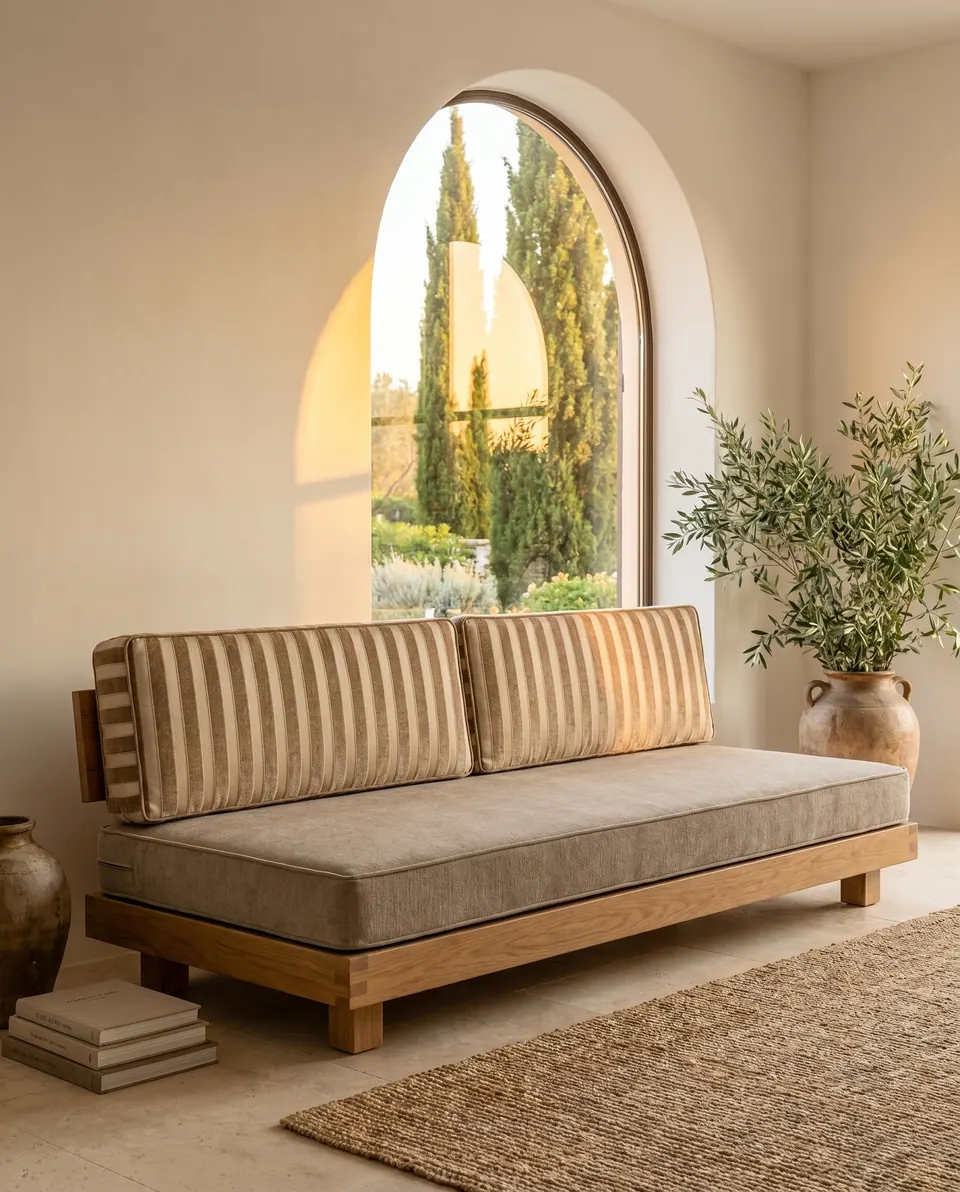
Where would a stripe go, if you want one? On the smallest thing. A striped bolster or a single lumbar, in a stripe that shares the sand. Not on the seat. The seat is the ground; pattern belongs to the accents. The striped cotton and ticking shelf has narrow stripes that sit calmly beside a plain, and the daybed cushions in the Atlas show other layouts.
What pattern is already in your room: the floor, a rug, a curtain?
Plain, stripe, texture: an order of decisions
- Count the patterns already in the room first. Floors, rugs and curtains count.
- Keep the largest piece plain. On a daybed that is the seat.
- Give a stripe to the smallest piece, a bolster or one lumbar.
- Add texture before pattern: knit, wool, wood grain.
- Self pipe the plain pieces so the edges add no new color.
One cover for two mattresses, and a neck roll
A buyer wrote to the workshop about a daybed with two mattresses stacked one on the other. She wanted one cover over both, 31 1/2 x 78 3/4 x 12 5/8 in (80 x 200 x 32 cm), with the zipper placed so both mattresses could slide in. And a neck roll, 31 1/2 in (80 cm) long and 8 5/8 in (22 cm) across.
She asked for natural fibers. The workshop was direct: its standard linen is a blend. It offered 100% cotton and an acrylic linen instead, and sent samples. She chose L33.
The neck roll was filled with shredded foam, chosen so it isn't too soft.
Two details carried the order. Zipper placement decided whether the cover could be loaded at all. The filling of the neck roll was agreed before cutting, not guessed.
The floor gives the pattern. The cloth gives the touch. The edge gives the line.
Buyer questions: halves, stacked mattresses, sleeping
- A common question
My daybed mattress is about 89 x 38 in (226 x 96.5 cm). Should the cushion be one piece or two halves?
The workshop's answerEither works. The workshop can make it full size or split it into two cushions of 44 x 38 in (112 x 96.5 cm) each, and sends a custom order link for the size you choose.
- A common question
Will the IKEA Hemnes daybed cover fit both mattresses when they are stacked?
The workshop's answerYes, it wraps both. Write the length and width, for example 31 1/2 x 78 3/4 in (80 x 200 cm), plus the combined height of the two mattresses in the personalization note. Measure your own, because Hemnes mattress sizes vary by country. Give exact numbers with no leeway; the fit allowance is built into the cutting.
- A common question
Are the floor cushions comfortable enough to sleep on, and can two make a double bed?
The workshop's answerYes. The workshop says they are very comfortable to sleep on, can be joined into a double bed, and can be made in bed sizes. For regular sleeping it recommends the soft fabric over linen.
On the cutting table: the floating daybed
| Product | Daybed seat and back cushion with a round bolster |
|---|---|
| Fabric | Linen-look, sand (915) |
| Piping | Self piping |
| Edge | Box edge |
| Base | Recessed oak plinth, so the cushion appears to float |
| Floor | Dark herringbone parquet, the room's only pattern |
| Accents | Gray knit throw, round oak side table, white bud vase |
| Style | Japandi, modern-minimal |
| Pattern rule | A stripe only on the smallest piece, if at all |

Have it made
Have this made — ask Hana’s workshop
Leave your numbers and the height you like to sit at. The rest is a short conversation. — Hana
Leave your details and the workshop will call you to confirm measurements, fabric, foam and piping. No prices, dates or payment on this page: it is a request, not an order.
When the floor is herringbone parquet, the daybed cushion stays plain: one pattern per sightline, and knit and oak grain supply the texture.
Hana
Questions buyers ask next
How long should a neck roll be on a daybed?
Often the width of the mattress. One buyer's neck roll matched her 31 1/2 in (80 cm) mattress and measured 8 5/8 in (22 cm) across, filled with shredded foam that wasn't too soft. Our bolster size notes cover other diameters.
Is a sand linen-look cushion made of pure linen?
No. The standard linen-look cloth is a blend, not pure flax. If you want natural fibers, say so before ordering; one buyer was offered 100% cotton or an acrylic linen and chose after seeing samples.
Can a plain daybed look finished without patterned pillows?
Yes, when texture takes over the job. A knit throw, an oak table and a wood floor give the eye enough variation. Self piping keeps the edges crisp, and one small object, such as a bud vase, finishes the scene.
— Hana