A Reading by HanaDaybed Cushions & Covers
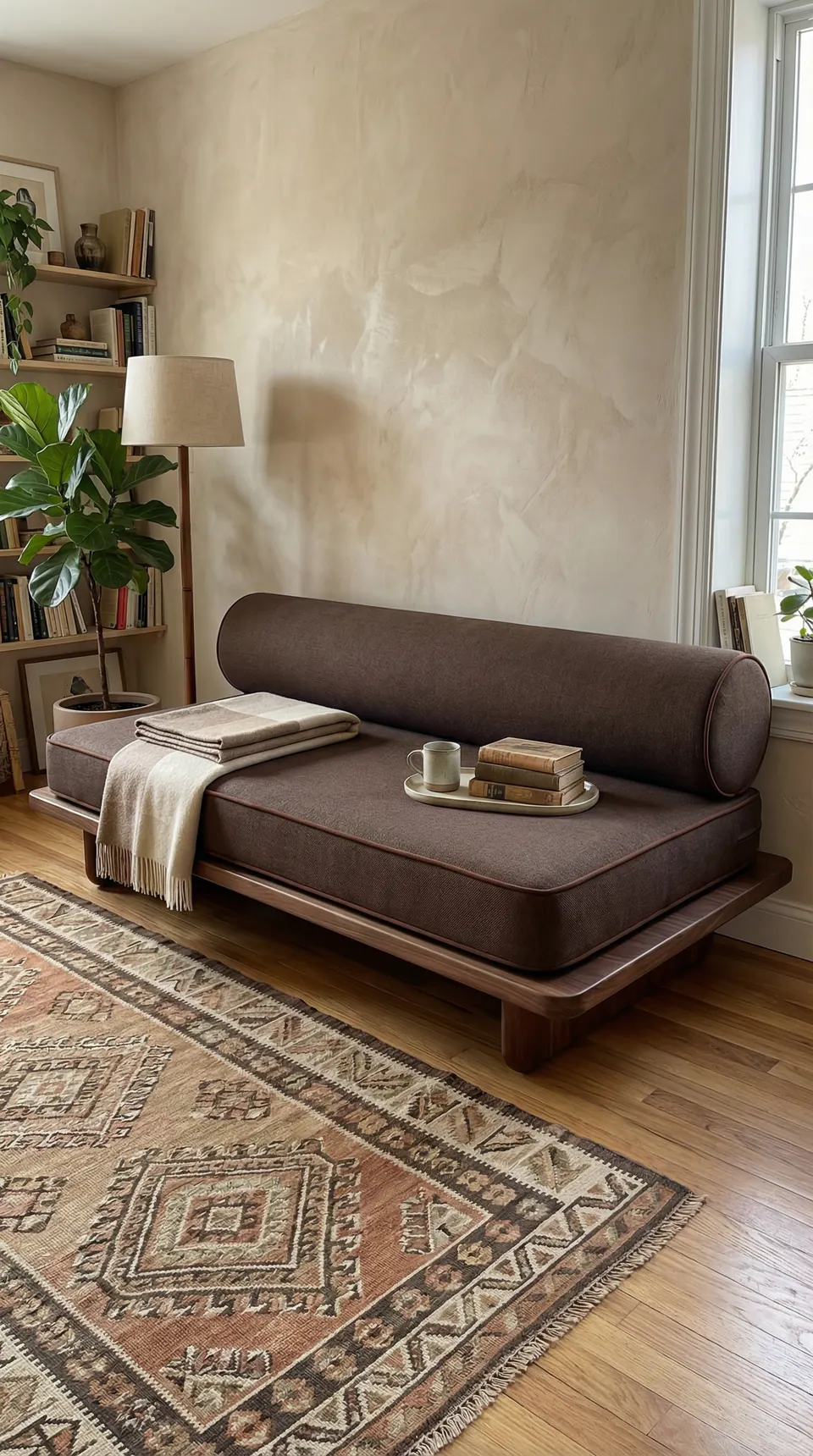
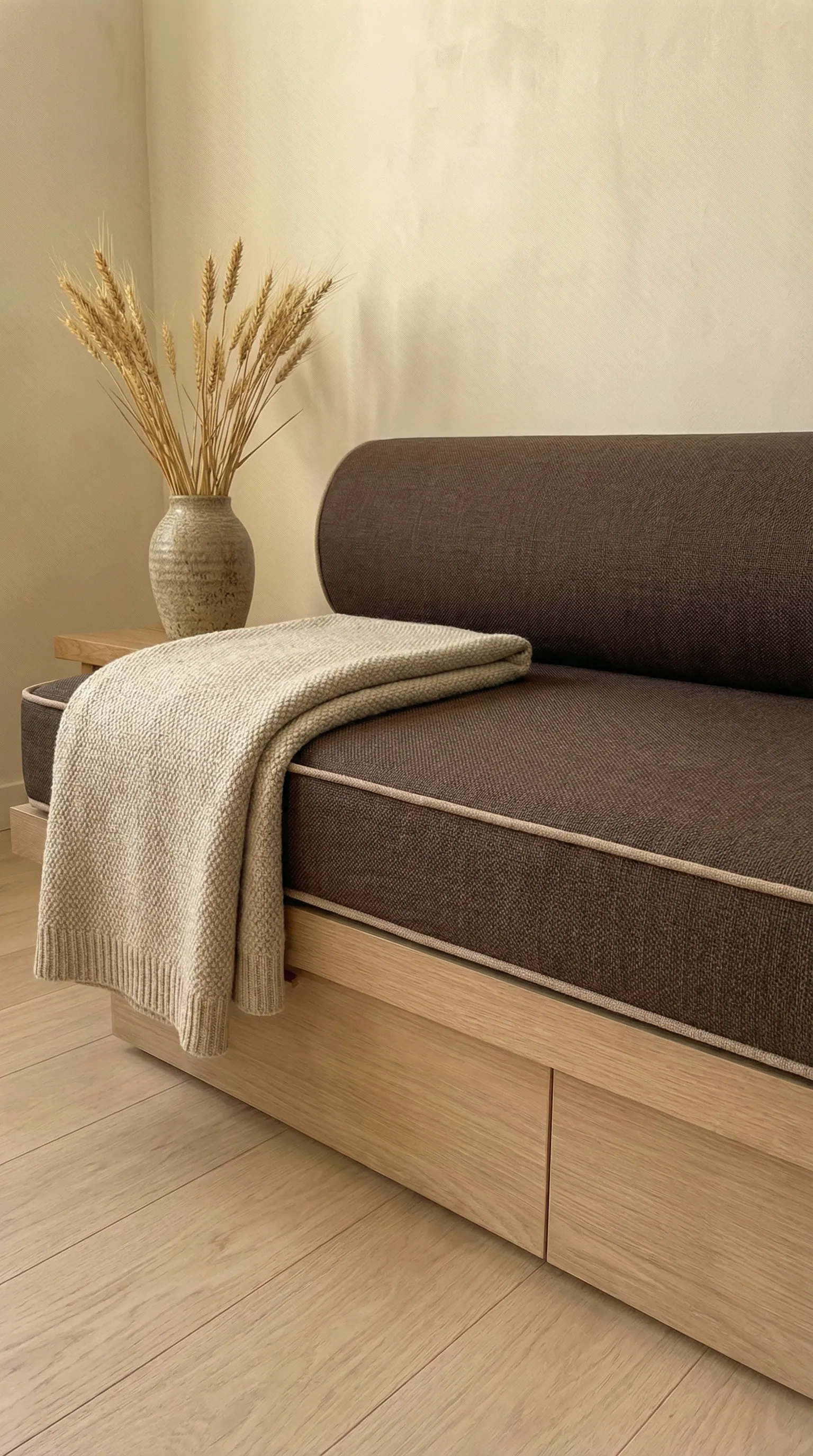
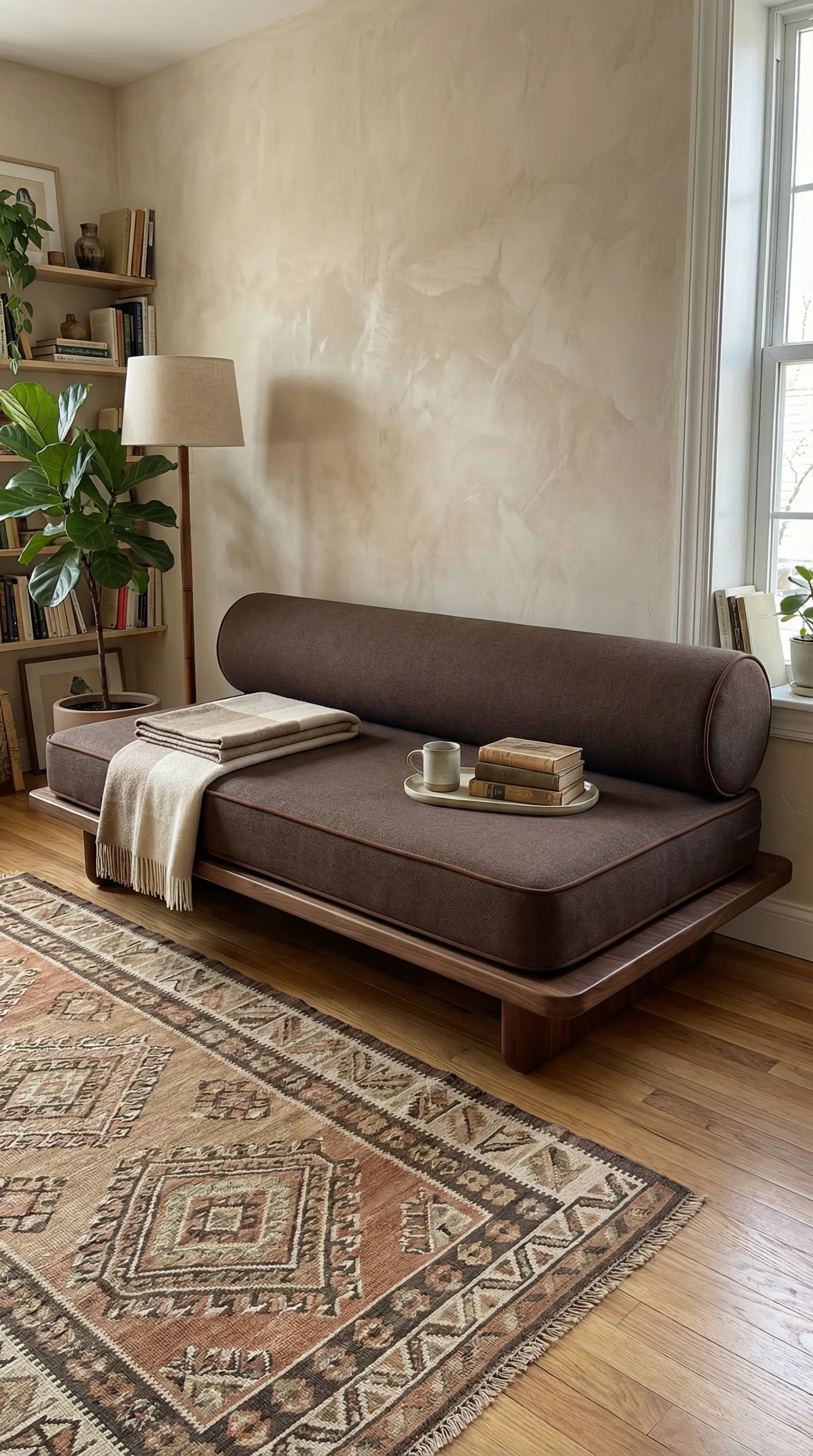
A chocolate daybed cushion with sand piping, from the floor up
Oak, then foam, then a line of sand. A daybed is a stack of layers, and one buyer learned how much its height matters.

 Save
The quick answer
A daybed cushion cover for stacked mattresses must be cut to the full height of the stack, measured with both mattresses in place. One buyer's cover came out about 6 in (15 cm) deep for an 8 in (20.5 cm) stack and would not close; it was remade at 7 7/8 in (20 cm). Photograph the tape before ordering.
The cushion, cut open
Cover fabric. A removable, zippered cover. Machine wash at 86°F (30°C) on a gentle cycle and air dry.
Piping. A fabric-covered cord sewn into the seams. It sits on the seam line, so it does not change the size.
Fiber wrap. Polyester fiber (Dacron) batting around the foam: it fills the cover out and softens the edges.
Foam core. About 2.0 lb/ft³ (32 kg/m³) high-resilience foam, firm to medium-firm, cut to the ordered size.
Zipper. Along the back band, as hidden as possible. The zipper side faces down or toward the wall.
Base panel. The underside of the cover. A non-slip fabric backing can cover the whole of it instead.
The daybed, layer by layer
A daybed is a stack. Read it from the floor up.
Pale oak boards. An oak platform with drawers, a low box that lifts the seat to sitting height without legs.
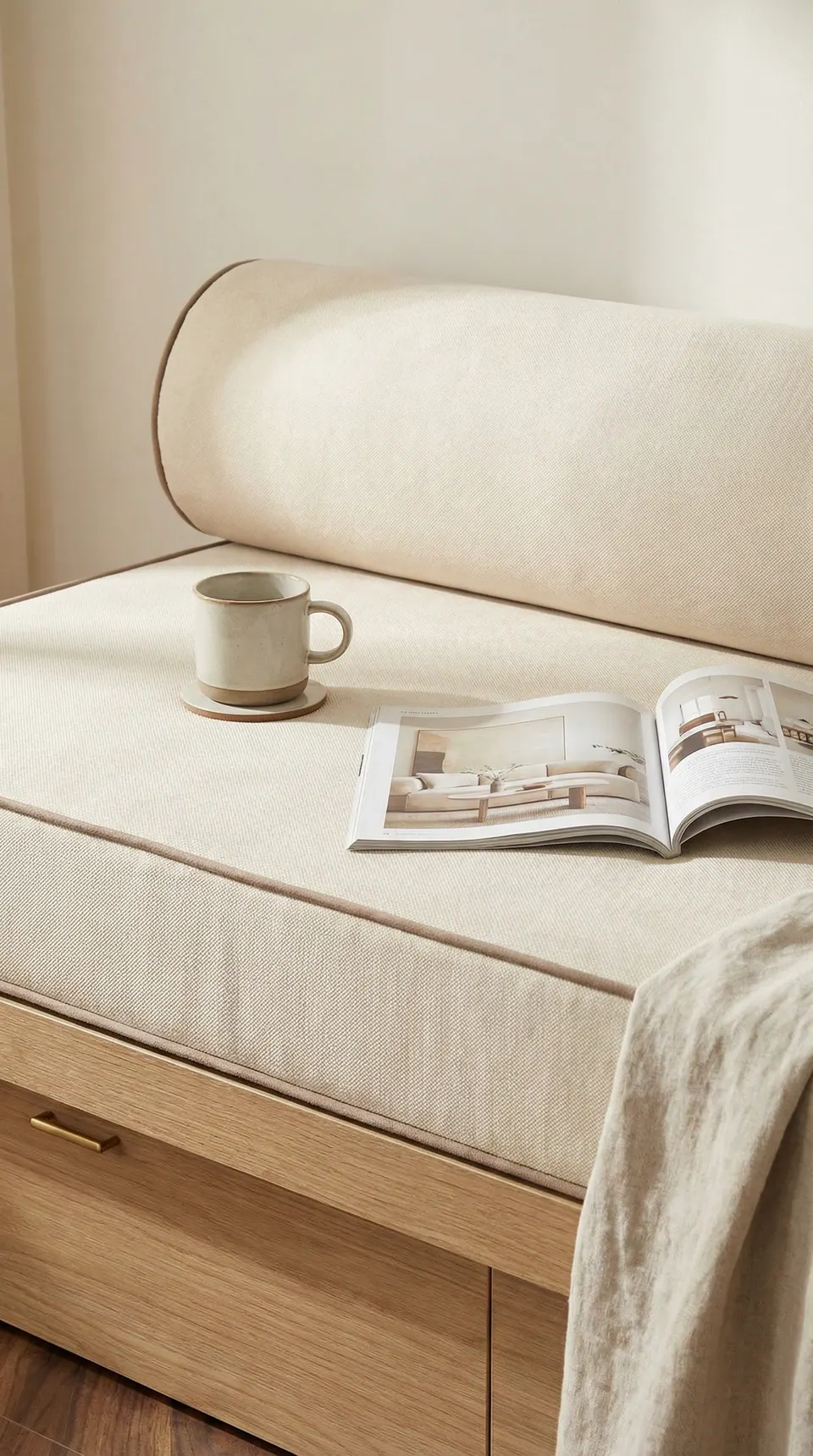
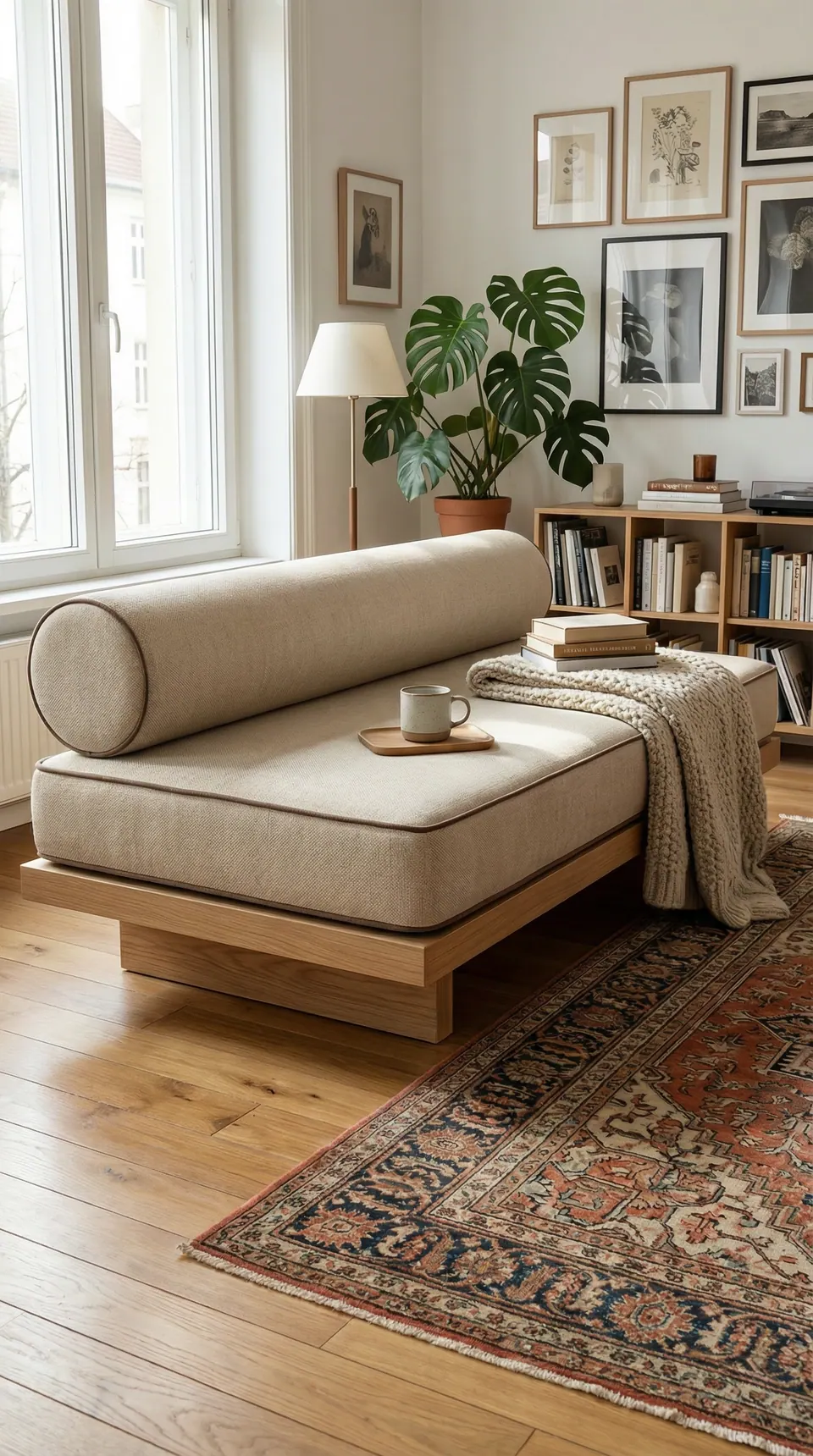
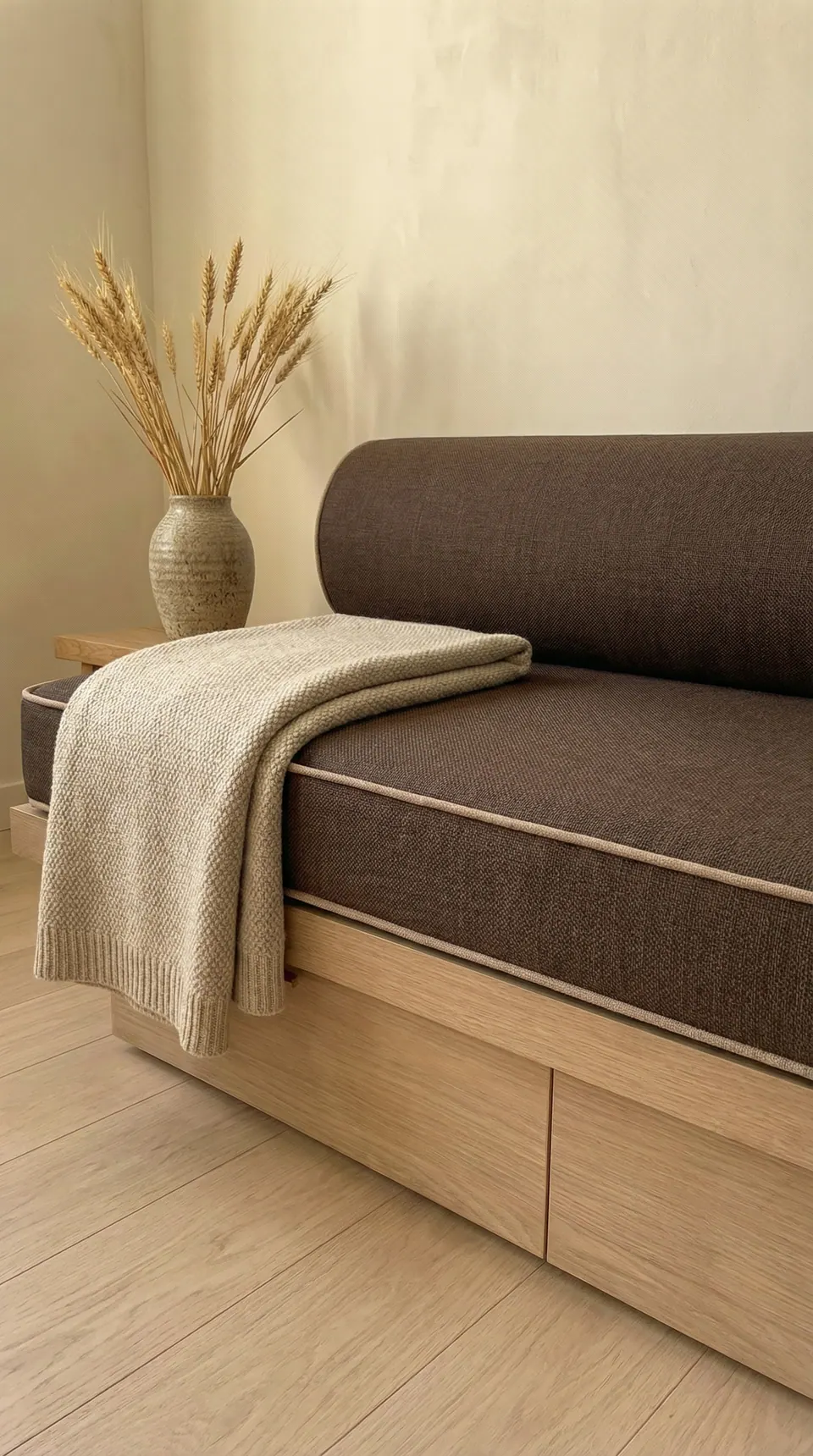
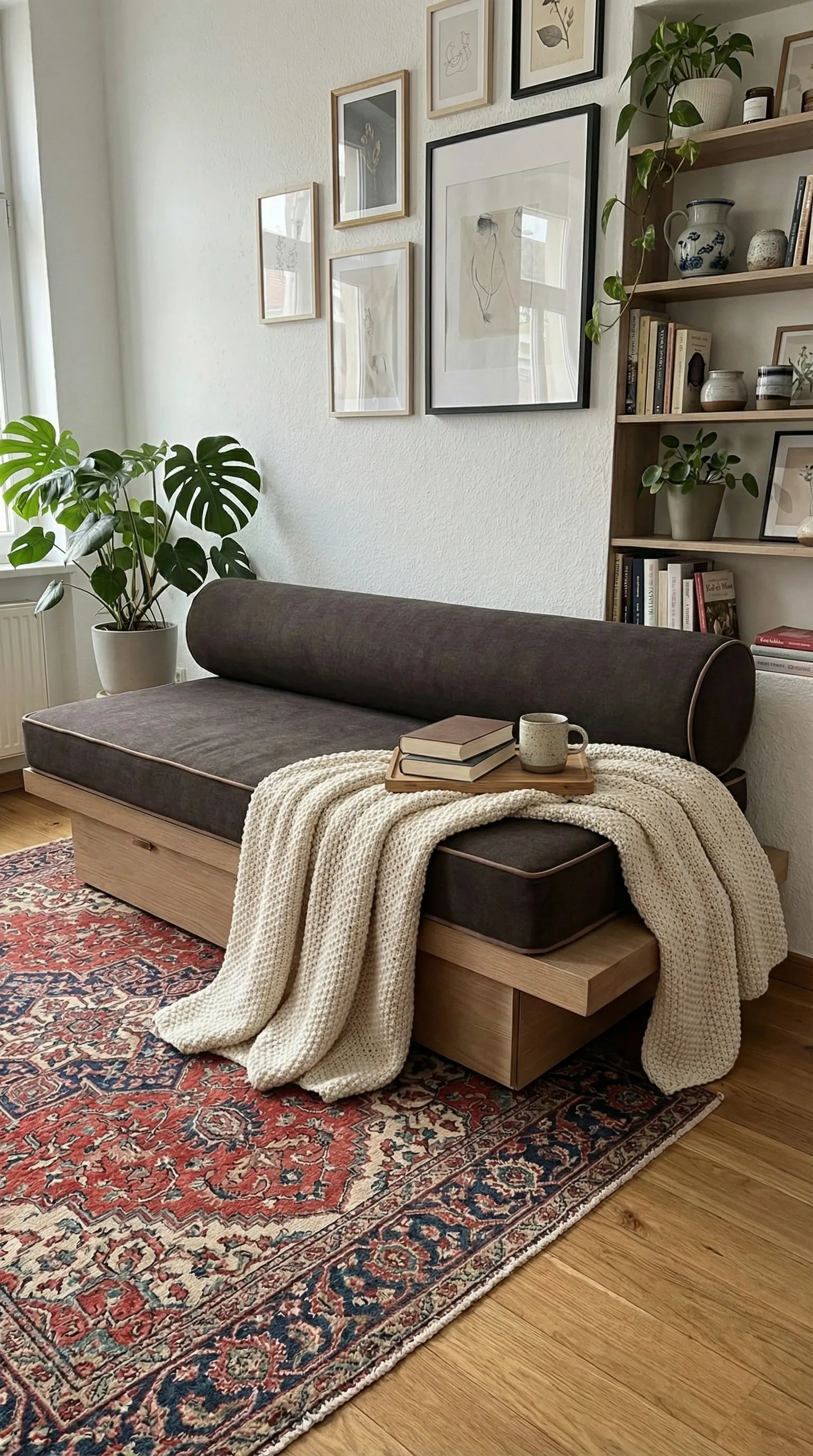
Then the seat: a box-edged cushion in chocolate linen-look weave, with a sand welt at the top seam and another at the base. Those two lines are the anatomy made visible. They mark where the top panel ends, where the side band (the gusset) begins, and where it meets the bottom.
On a dark fabric a light welt pulls the edge forward, so the eye reads a box, not a dark mass. The sand is not a new color. It comes from the oak below and the oatmeal knit throw folded over the end.
Behind the seat, a round chocolate bolster runs the full length, snug against the limewashed wall, and turns a bed into a sofa. At the open end, dried wheat in a stoneware jug: the only upright line, the only rough texture.
Hazy light, no shine: a matte weave keeps chocolate true.
What stands at the open end of your daybed? See daybed cushions, linen-look fabrics and daybed mattress cover measurements.
Five pins on the stack
Five pins, from the sand welt to the oak platform that gave the piping its color.
- Sand piping
A light welt on a dark seat pulls the box edge forward so it reads from across the room.
- Chocolate bolster
The bolster runs the full length and sits snug against the wall.
- Wheat in stoneware
Dried wheat adds height and a rough texture at the open end.
- Folded knit throw
Oatmeal knit repeats the piping color in a larger, softer patch.
- Oak platform
The piping shade was taken from this oak, so nothing new is introduced.
- Sand pipingA light welt on a dark seat pulls the box edge forward so it reads from across the room.
- Chocolate bolsterThe bolster runs the full length and sits snug against the wall.
- Wheat in stonewareDried wheat adds height and a rough texture at the open end.
- Folded knit throwOatmeal knit repeats the piping color in a larger, softer patch.
- Oak platformThe piping shade was taken from this oak, so nothing new is introduced.
Eight inches, then six
One buyer wrote in about a daybed holding two stacked IKEA mattresses, 31 1/2 x 78 3/4 in (80 x 200 cm), and wanted one corduroy cover to wrap both. The stack measured 8 in (20.5 cm). The workshop agreed on 7 7/8 in (20 cm), because the fabric gives a little.
Before production the workshop sent a photo of the cloth. The buyer caught it: the cream next door on the chart, not the soft cream ordered.
The finished cover came out about 6 in (15 cm) deep and would not close. A long exchange followed about the true height, and the workshop remade the cover at 7 7/8 in (20 cm), at no charge.
A photo before cutting caught the color. A photo of the tape would have caught the depth. Both take a minute.
The lesson: Photograph the tape on the full stacked height and confirm the mattress model; a snug cover leaves no margin.
One project, five depths
| Moment | Depth | What it told the workshop |
|---|---|---|
| Stack, first measured | 8 in (20.5 cm) | The starting number |
| Agreed cut | 7 7/8 in (20 cm) | Fabric gives a little |
| First cover | About 6 in (15 cm) | Would not close |
| Stack, re-measured | 8 to 9 1/2 in (20.5 to 24 cm) | Moved with the tape |
| Remade cover | 7 7/8 in (20 cm) | No charge |
On the cutting table
| Piece | Daybed seat with a full-length round bolster |
|---|---|
| Fabric | Chocolate linen-look weave, polyester, matte |
| Piping | Contrast sand, top and bottom seams |
| Edge | Box edge with a side band (gusset) |
| Bolster | Made to any length or diameter; about 8 in (20 cm) across is typical |
| Foam | Wrapped in polyester wadding |
| Cover | Zippered; 86°F (30°C) gentle cycle, air dry |
| To measure | Length, width, full stacked height, tape in the photo |

Have it made
Have this made — ask Hana’s workshop
Measure once, slowly. Write the numbers here. The workshop will go over them with you. — Hana
Leave your details and the workshop will call you to confirm measurements, fabric, foam and piping. No prices, dates or payment on this page: it is a request, not an order.
Buyer questions
- A common question
Can you make a cushion to sit on top of an IKEA Kallax?
The workshop's answerYes, cut to the full 15 3/8 x 57 5/8 in (39 x 146.5 cm). The listing option reads 15x57 in because of character limits, but the cushion is made to the exact measurement.
- A common question
I use a mini crib mattress as a floor play mat. Could you make a fully zippered, washable box cover for it?
The workshop's answerYes. A removable, washable, fully zippered box cover for a 37 3/4 x 23 3/4 x 3 in mattress is no problem. Order through the cover listing and write the exact size and fabric code in the personalization box.
- A common question
Do the daybed armrest bolsters come filled? Do they have zippers?
The workshop's answerThey arrive filled with their own filling. Because the armrests and backrests are tufted, they have no zippers.
On a chocolate daybed cushion, sand piping at the top and bottom seams pulls the box edge forward so the shape reads from across the room.
Hana
Questions buyers ask next
Why put light piping on a dark daybed cushion?
A light welt on a dark seat pulls the box edge forward, so the shape reads from across the room. Take the shade from the wood or a throw already in the room and the piping looks chosen, not added.
How should two stacked mattresses be measured for one cover?
Stack them as they will sit, measure the height at several points, and photograph the tape. Give length, width and that combined height, and confirm the mattress model. A cover cut 2 in short will not close.
Does a linen-look daybed cover contain any linen?
No. Linen-look is a polyester weave with the matte, slubbed face of linen, and it washes at 86°F (30°C) on a gentle cycle. Real linen and linen-cotton blends are separate fabric families, each with its own swatches.
— Hana
Daybeds in other browns, greens and creams
 Save
 Save
 Save
 Save
 Save
 Save