CushionGuide

A Reading by HanaDaybed Cushions & Covers

A camel daybed cushion and piped bolster that make a tight corner feel wide

Three warm browns and one darker line. That is most of why this small corner seems larger than it is.

The quick answer

To make a narrow daybed corner feel generous, keep the cushion, wood and props in one warm range and let one darker piping line draw the edge. Here a camel linen-look box seat sits one step darker than the oak, with a brown welt on the bolster. For two stacked 4.75 in (12 cm) mattresses, order the cover at 9.5-10 in (24-25 cm).
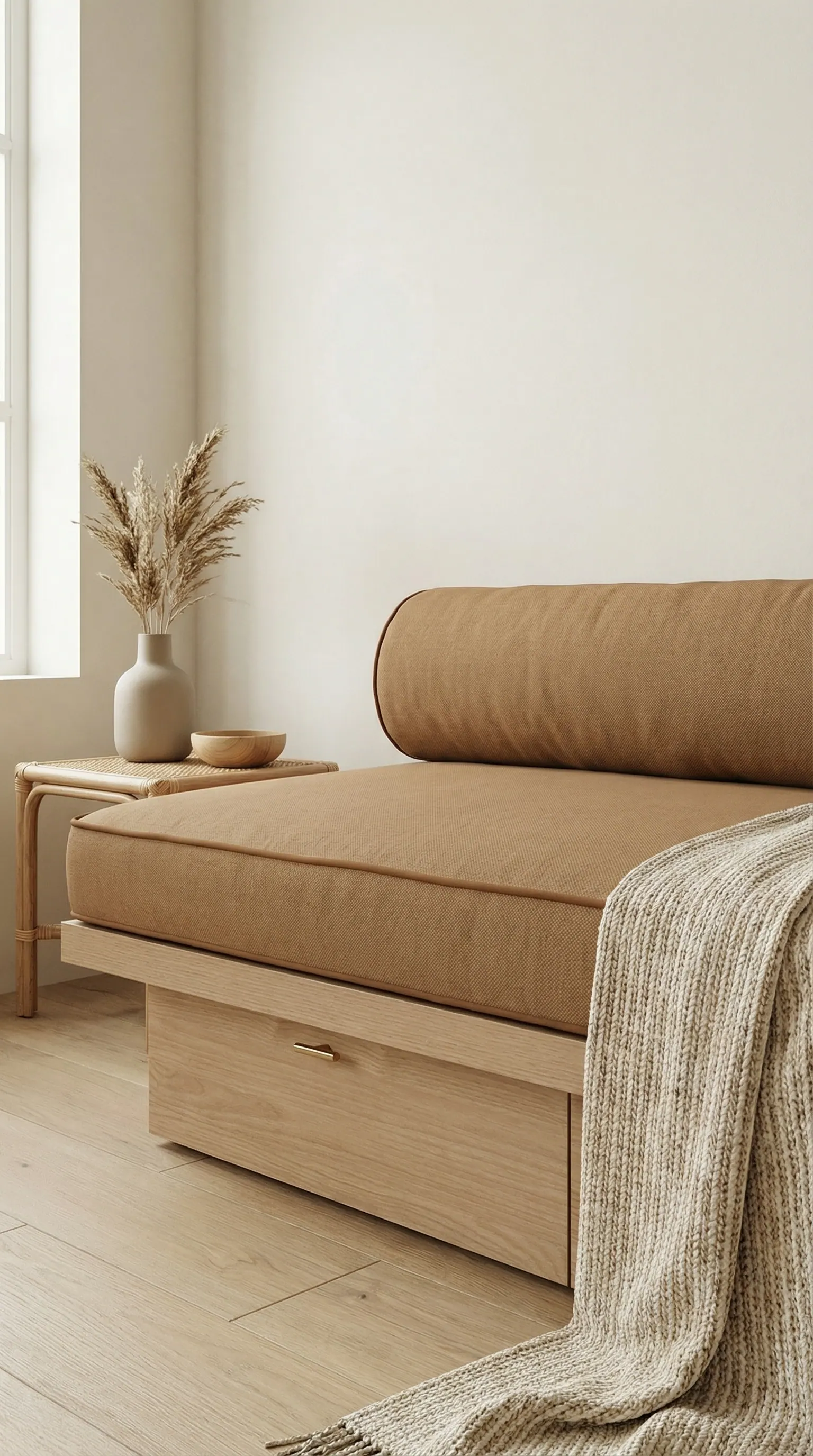
Camel linen-look daybed seat and bolster with fine brown piping on oak drawers, dried pampas grass on a rattan tableSave
Camel, rattan and dried grass keep this corner in one warm family of browns.
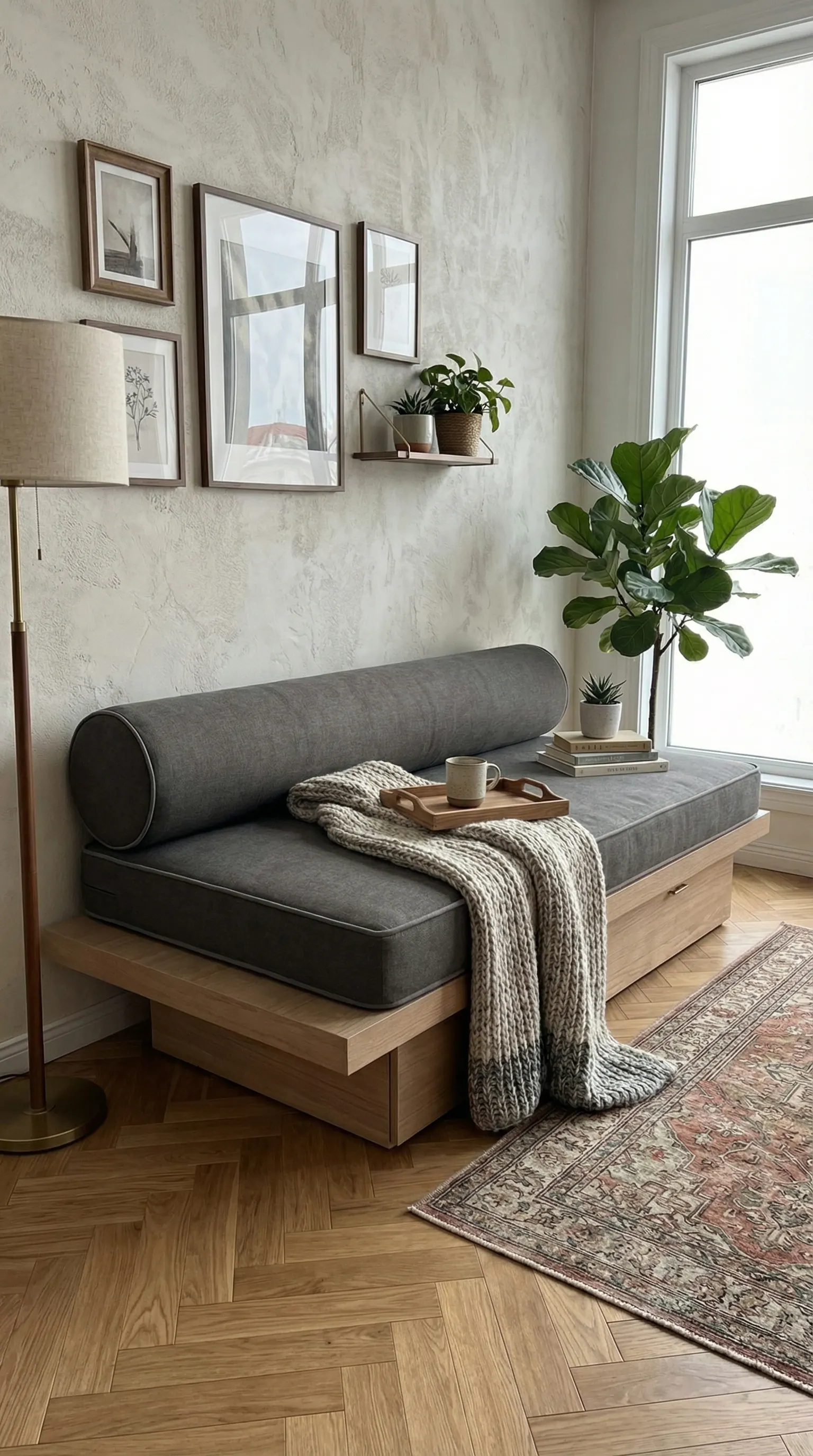
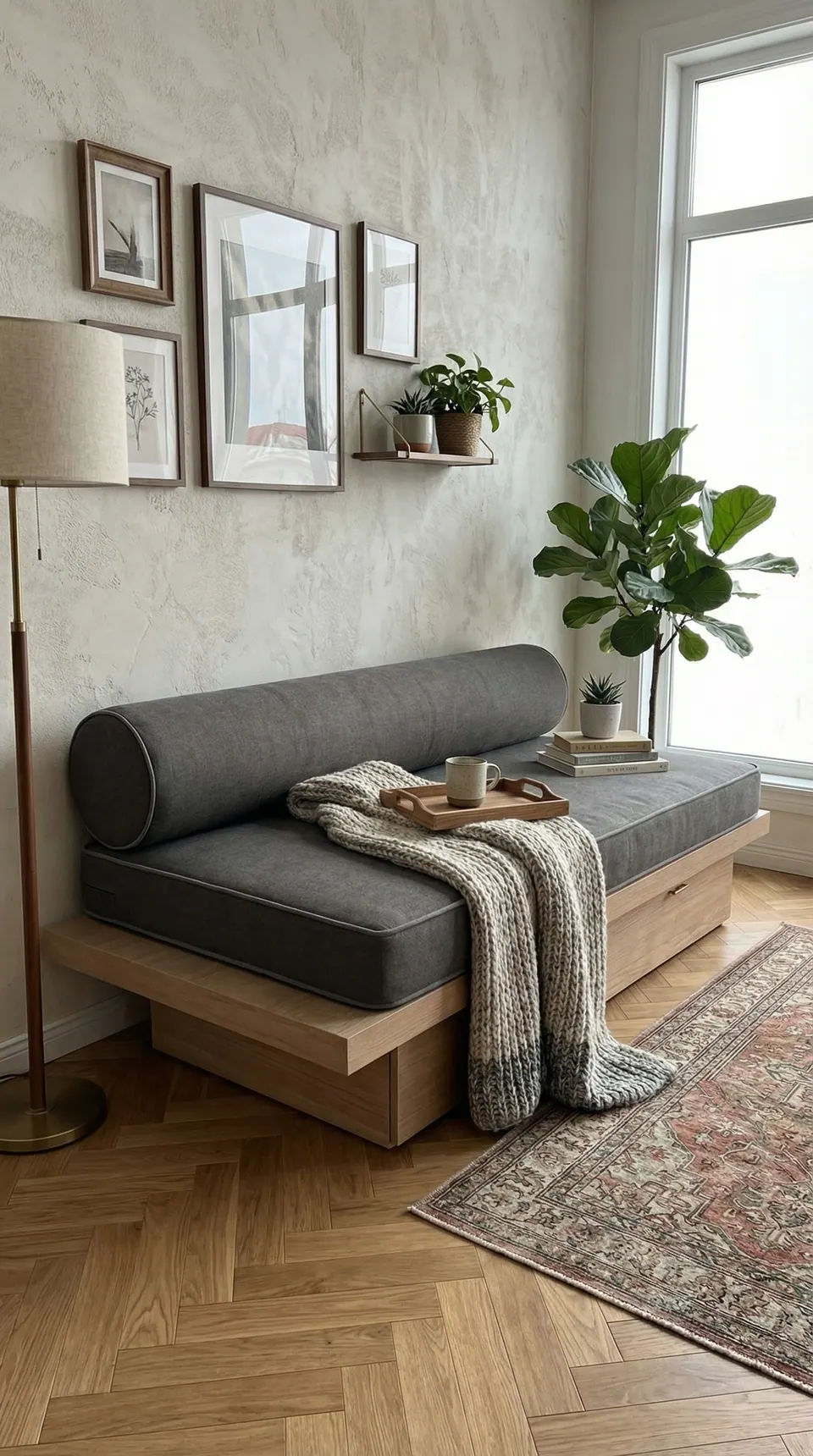
Charcoal gray linen-look daybed seat cushion and round bolster on a light oak platform with knit throw and Persian rugSave
A single long bolster replaces a row of back pillows, keeping the daybed low and clean-lined.
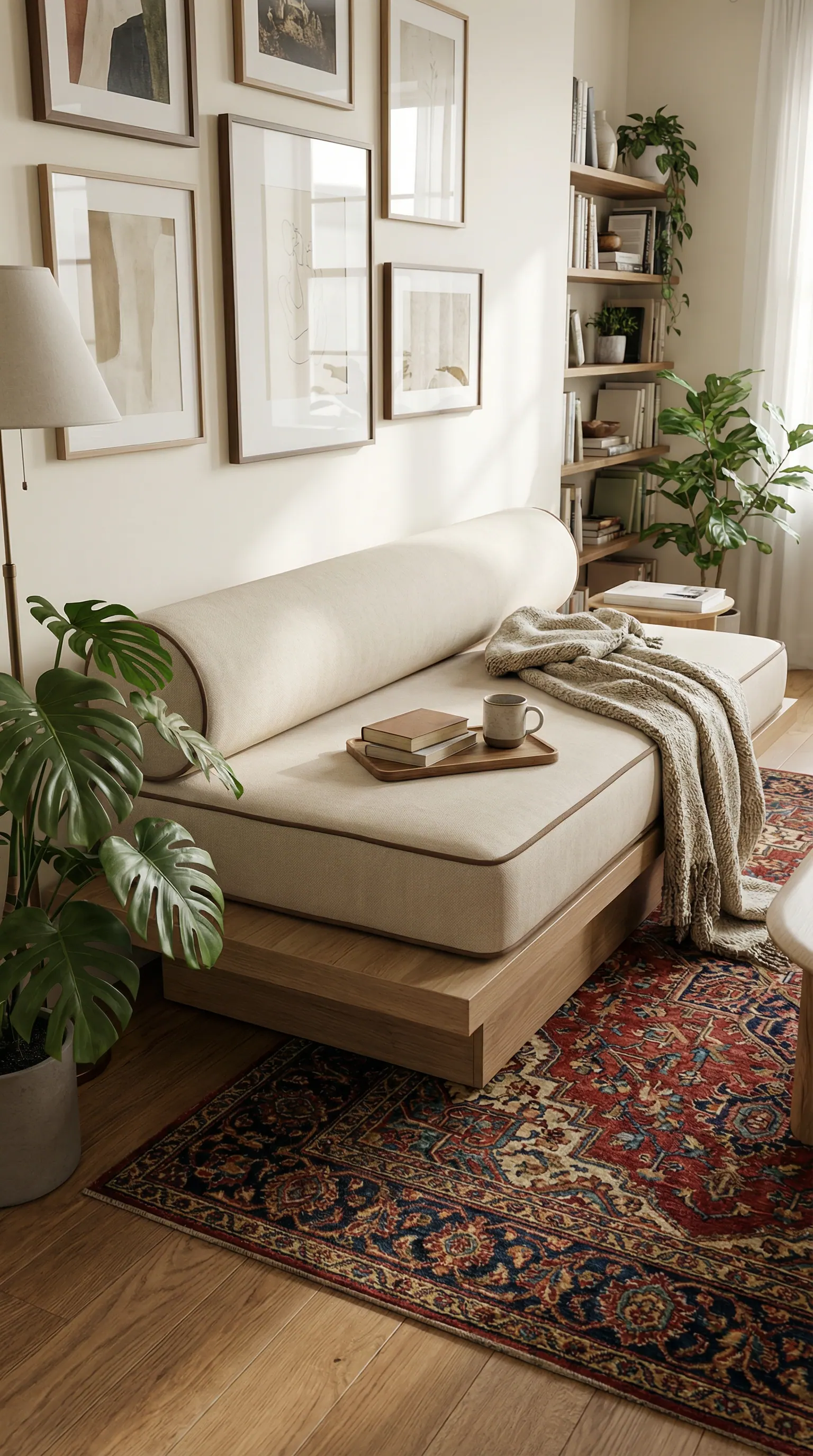
Ivory linen-look daybed cushion and bolster with brown piping on oak platform beside monstera, bookshelf and Persian rugSave
Ivory on light oak brightens a crowded, cozy corner; the brown welt keeps the outline crisp.
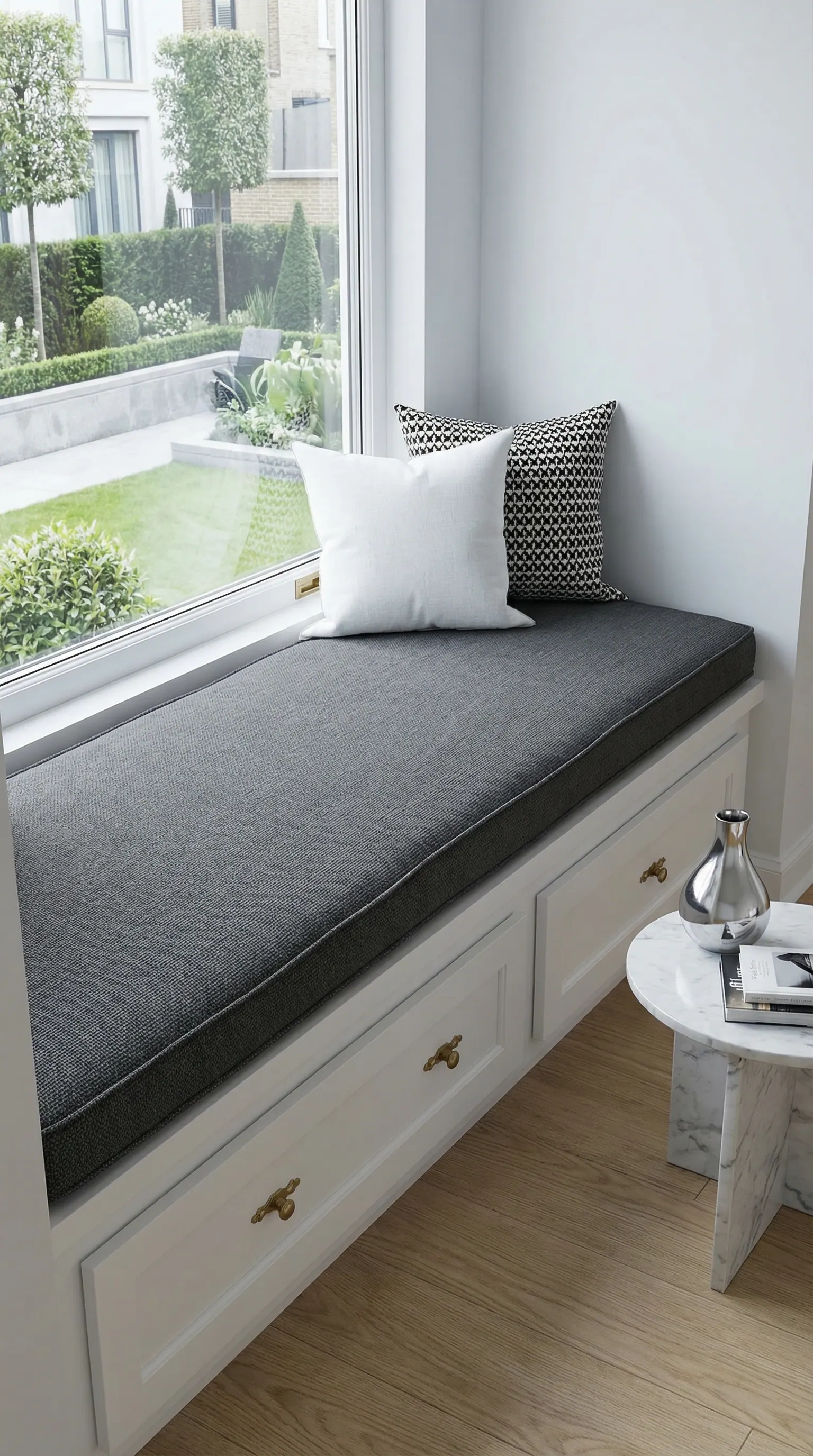
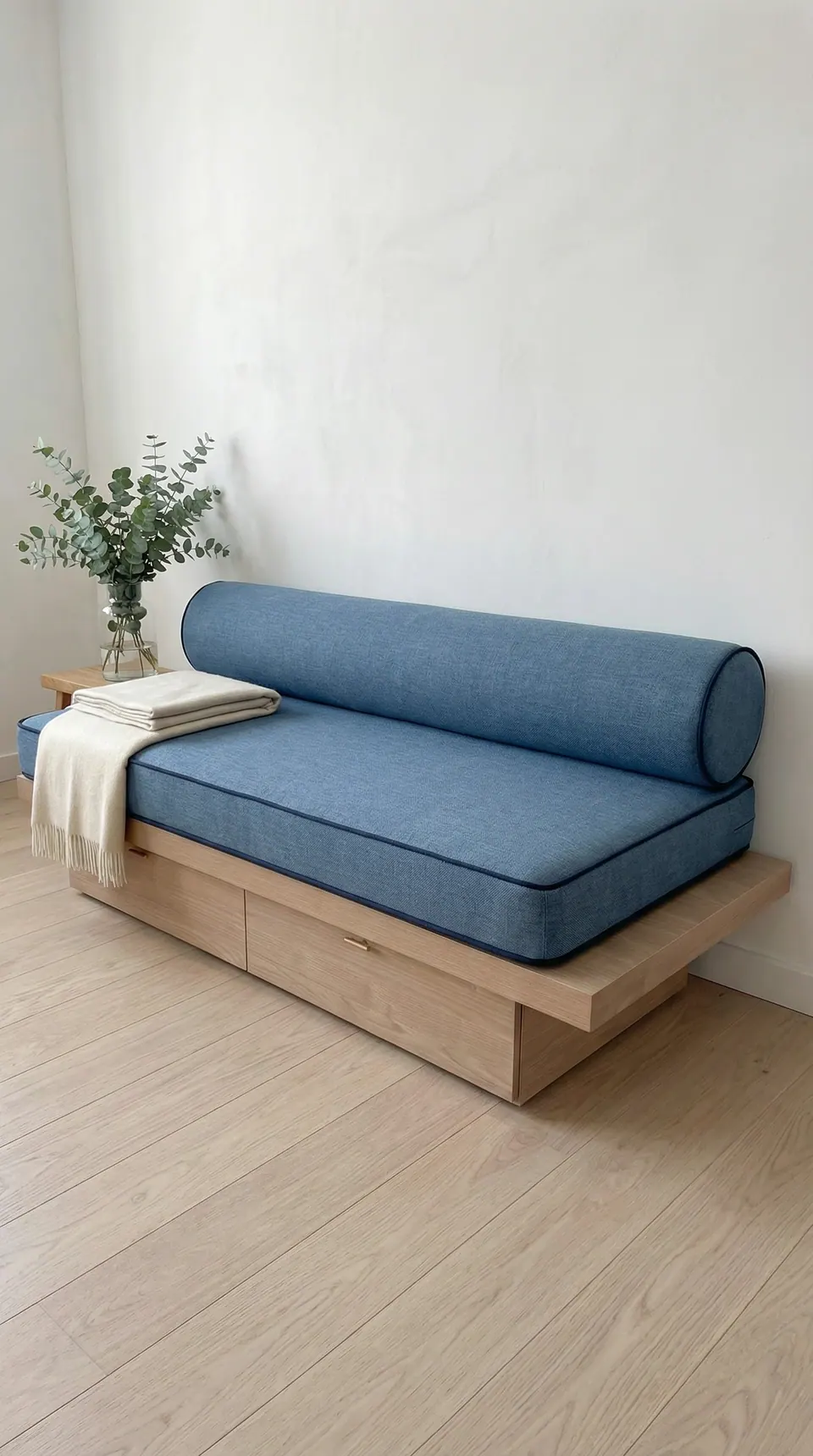
Charcoal textured box cushion with light gray piping on a white drawer window seat facing a clipped garden, marble side tableSave
Pale gray piping outlines a charcoal cushion like a pencil line, keeping a dark seat crisp against white cabinetry.
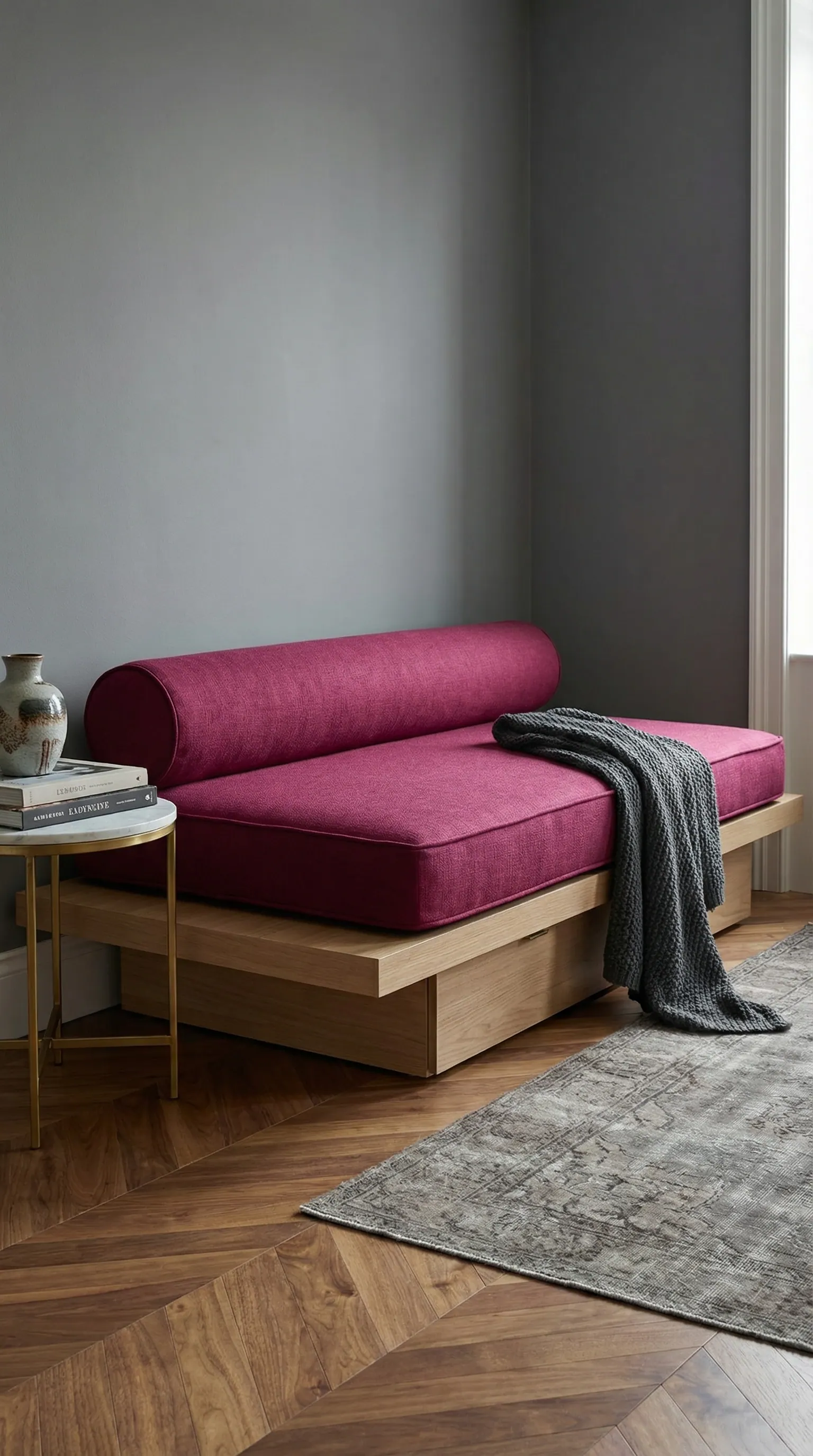
Raspberry linen-look daybed cushion with matching bolster on a light oak platform, charcoal knit throw and marble side tableSave
Raspberry against slate gray: a bold daybed cushion and bolster made calm by pale oak and a charcoal throw.
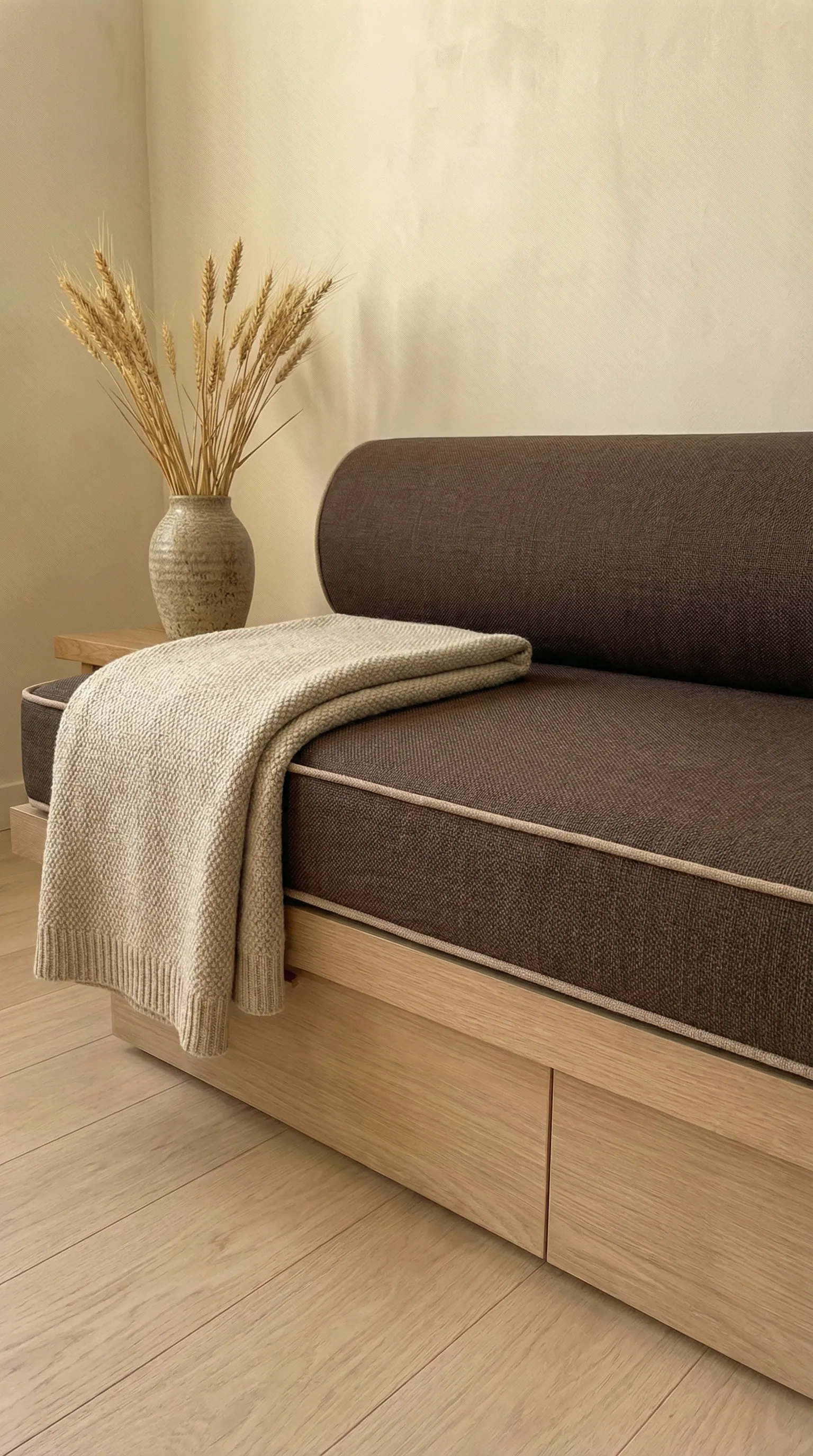
Chocolate brown linen-look daybed cushion with sand piping and bolster, oatmeal knit throw and dried wheat in stonewareSave
Light sand piping draws a fine line around a dark seat, matching the oak and the knit throw.
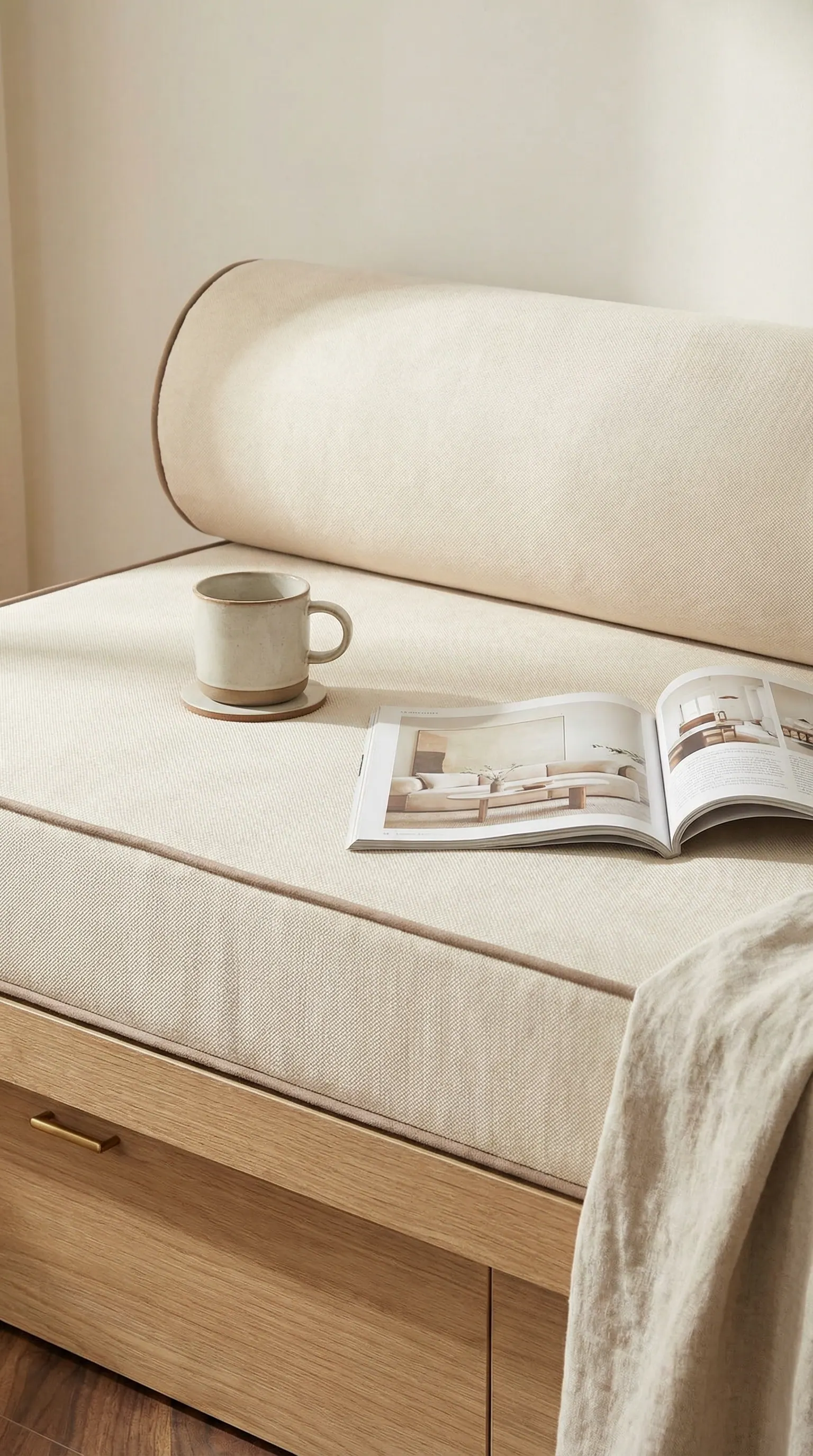
Close-up of an ecru linen-look daybed cushion and bolster with taupe piping, stoneware mug and open magazineSave
Up close, the taupe welt shows how neatly the bolster's round end and the seat's box edge are finished.

Pinned by Hana: five warm notes in one corner

Follow the pins from the brown welt outward and notice that nothing in the frame is louder than camel.
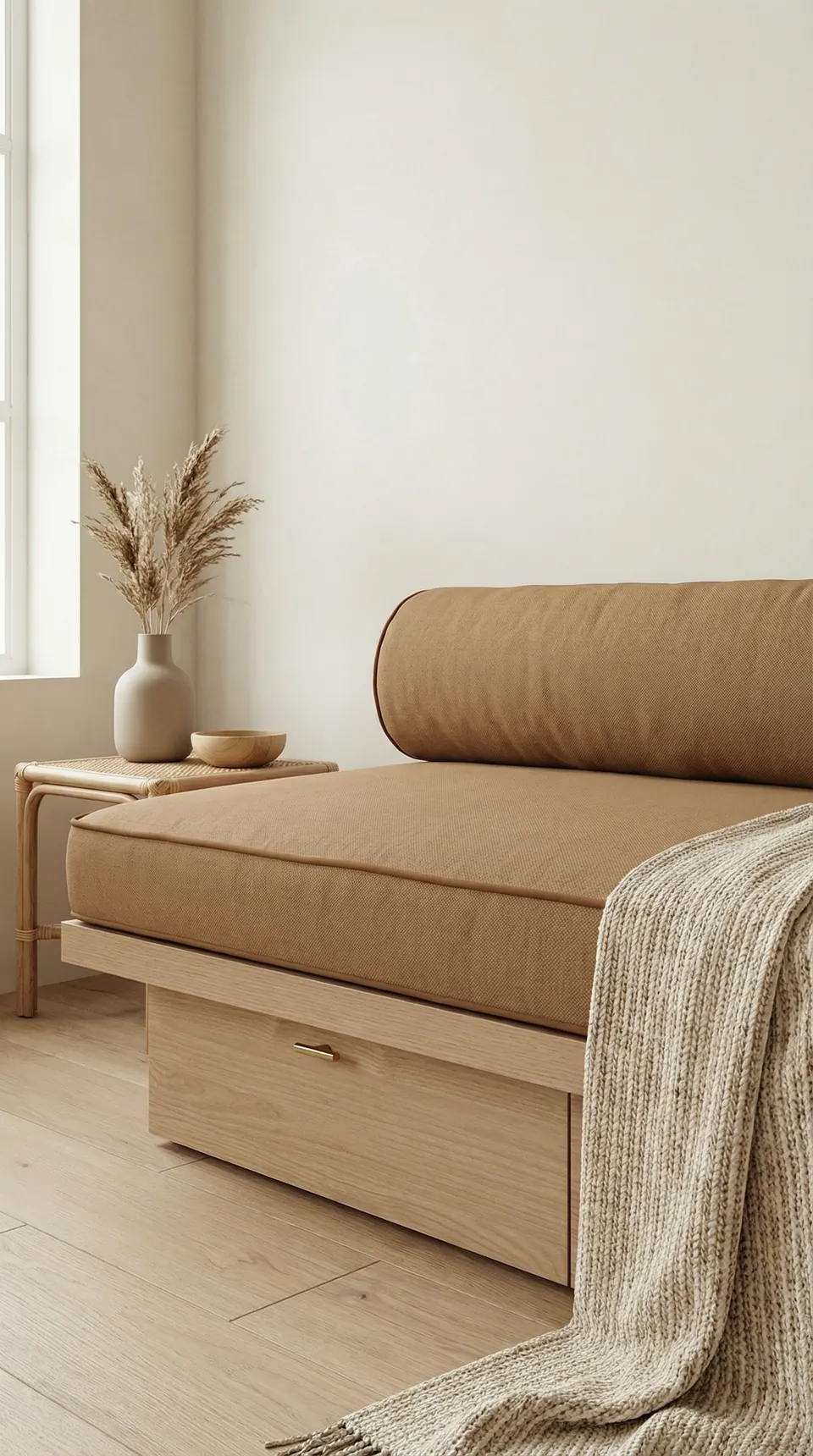
Pinned: Camel linen-look daybed seat and bolster with fine brown piping on oak drawers, dried pampas grass on a rattan table
  1. Piped bolster

    A fine brown welt is the darkest line in the frame and traces the bolster clearly.

  2. Camel box seat

    The seat is one step darker than the oak, a calm tonal pairing.

  3. Dried pampas

    Feathery grass repeats the camel tone and adds height.

  4. Rattan side table

    Rattan keeps the whole corner in one warm material family.

  5. Knit throw

    A loose chunky knit gives touchable contrast to the flat weave.

  1. Piped bolsterA fine brown welt is the darkest line in the frame and traces the bolster clearly.
  2. Camel box seatThe seat is one step darker than the oak, a calm tonal pairing.
  3. Dried pampasFeathery grass repeats the camel tone and adds height.
  4. Rattan side tableRattan keeps the whole corner in one warm material family.
  5. Knit throwA loose chunky knit gives touchable contrast to the flat weave.

Why a small corner reads wide

The frame is tight. One end of a daybed, a rattan side table, a vase of dried grass. Still, the corner feels roomy.

It comes from steps of tone. Pale oak floor. Oak drawer base. A camel box seat one step darker. Brown piping one step darker again. Nothing jumps, so the eye keeps moving and the space seems to continue past the edge of the photo.

The box edge helps. A square side panel reads as furniture, not as a pad, and gives this daybed cushion a clear top line level with the rattan table.

The bolster carries the darkest line in the frame. A fine brown welt traces its round end, so you understand the shape from across the room. On a bolster pillow, that thin cord does the work of a picture frame.

Each prop has a job. Pampas adds height without width. Rattan stays in the same warm family and lets light through its weave. A small wooden bowl gives scale. The oatmeal knit throw is loose and chunky against the flat linen-look weave, so there is something to touch. The brass drawer pull is the one small shine.

The wall stays bare. Empty space is part of the furniture.

What sits at the end of your daybed now?

Height is a feeling. Here it stays low and even. The corner breathes.

Small-space moves to copy from this corner

  • Choose the cushion fabric one step darker than your wood, and the piping one step darker again.
  • Keep the side table open-weave or slim, like rattan, so light passes through it.
  • Add height with one airy arrangement of dried stems instead of a wide lamp shade.
  • Leave the wall above the cushion bare so the box edge carries the line.

A real project

A coverlet with three different drops

A buyer in the US wrote to the workshop about a twin daybed with a wooden frame. They wanted a one-piece coverlet in pure flax linen with a waterfall drape over a 75 x 39 x 8 in (191 x 99 x 20 cm) mattress.

The front drop was 20 in (51 cm), enough to cover the mattress and a 12 in (30 cm) wooden rail below it. The sides dropped 8 in (20 cm) and tucked inside the armrests. The back needed only a flat hem against the wall.

The workshop asked for their diagram before quoting. A drawing shows what a size alone cannot.

For a coverlet, give the drop for each side separately, not only the mattress size. Front, sides and back rarely want the same length. The Pattern on what to measure for a daybed mattress cover lists every number.

Buyer questions: stacked mattresses, thick twins, tall backs

  1. A common question

    I'm stacking two 4.75 in twin mattresses on a Hemnes daybed. Is an 8 in cover right, or should it be thicker?

    The workshop's answer

    Thicker. Two 4.75 in (12 cm) mattresses come to roughly 9.5 in (24 cm) together, so a cover made for about 9.5-10 in (24-25 cm) looks properly filled. An 8 in (20 cm) cover would have to stretch over them.

  2. A common question

    My twin mattress is 12.5 inches thick. Can your daybed slipcover still fit it?

    The workshop's answer

    Yes. The zippered corduroy daybed cover is made to your mattress, so write the sizes in your order; for that standard twin it was 39 x 75 x 12.5 in (99 x 191 x 32 cm). For that buyer, order to door took 9-11 business days.

  3. A common question

    We have twin XL daybeds under the windows. Can they look like sofas for reading, with tall back pillows?

    The workshop's answer

    Yes, as mattress covers with backrests. Send the overall mattress length, width and depth, here 38 x 80 x 10 in (97 x 203 x 25 cm). Back pillows can be made extra tall, such as 26 in (66 cm), and sized to span the full mattress length against a window.

On the cutting table: the camel daybed end

CushionDaybed box seat with a round bolster at the end
FabricCamel linen-look weave (911)
PipingDark brown contrast welt, clearest on the bolster
EdgeSquare box edge with a flat side panel
BasePale oak drawer base with a brass pull
PaletteCamel, dark brown, oak, rattan, oatmeal
StylingPampas in a white vase, wooden bowl, oatmeal knit throw
Best forA narrow living room corner that should feel calm and roomy

Order this cushion

Have it made

Have this made — ask Hana’s workshop

Leave your numbers and the height you like to sit at. The rest is a short conversation. — Hana

Leave your details and the workshop will call you to confirm measurements, fabric, foam and piping. No prices, dates or payment on this page: it is a request, not an order.

Fabric · Foam · Pipingwhat the workshop will confirm with you

Fabric
Camel linen-look weave (911)
Foam
The core: its density and thickness set the feel.
Piping
Dark brown contrast welt, clearest on the bolster
Only for this request: no marketing calls or texts. Outside the US, add the country code.
In inches: length × depth × thickness, plus any angles or cut corners.

* Required. A member of the workshop team will call you to talk it through; nothing is charged and nothing is made until you have agreed on every detail with them.

We use these details only to answer this request and make your cushion: your name and contact details, the cushion details and photos you send, the page you came from and the ad or link that brought you, if any. The workshop that makes the cushions receives them. We don't sell them or share them for advertising, and we delete requests after 24 months. Privacy notice for requests.

Nothing is made or charged until you approve the details.

Want to pick the shape and add photos? Use the full quote form

A daybed cushion one step darker than its oak base, with piping one step darker again, makes a narrow corner read calm and wide.

Hana

Questions buyers ask next

What color piping works on a camel daybed cushion?

A welt one step darker than the fabric, such as dark brown on camel, draws the edge without breaking the tonal calm. In this corner it is the darkest line in the frame, so the bolster's shape reads from across the room.

Why add a bolster to the short end of a daybed?

A round bolster closes the end of the seat and gives you something to lean on without a full backrest. With a fine piped end, it outlines the shape clearly while taking very little floor, which suits a narrow corner.

How do I give measurements for a daybed coverlet with a drape?

Measure the mattress length, width and thickness, then give each drop on its own: front, each side and back. One buyer asked for 20 in (51 cm) at the front, 8 in (20 cm) at the sides and a flat hem at the back.

Which side table suits a small daybed corner?

A slim rattan or cane table close to seat height keeps the corner in one warm material family and lets light through its weave. A solid, heavy table fills the same spot but makes the corner feel smaller.

— Hana