A Reading by MaggieDining Chair Cushions & Pads
An indigo ticking chair cushion, and the foam that makes a ladder-back bearable
A hard oak seat on a limestone floor is a firmness problem before it's a style problem. Here is what belongs inside the ticking, and how to make sure the ties actually show up.

 Save
The quick answer
A kitchen chair cushion for a hard ladder-back seat works best as a box-edge pad that keeps its full thickness right to the front rail, cut to the seat and not past it. Buyers tired of thin, flat pads ask us for 2 in (5 cm) with piping. Ties are never added automatically: request them, and their position, when you order.
Page one: a ladder-back chair sits harder than it looks
A ladder-back chair looks friendly and sits like a church pew. The rails are pretty; the seat is a slab of weathered oak with no give at all.
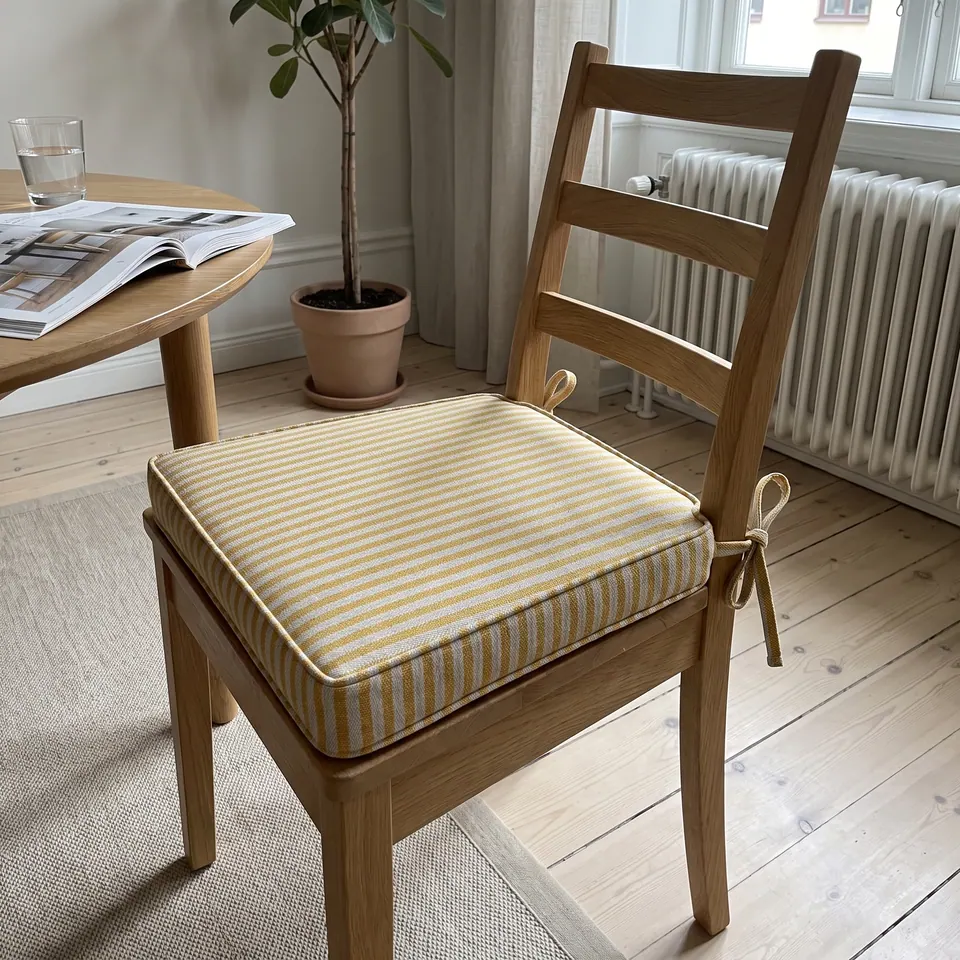
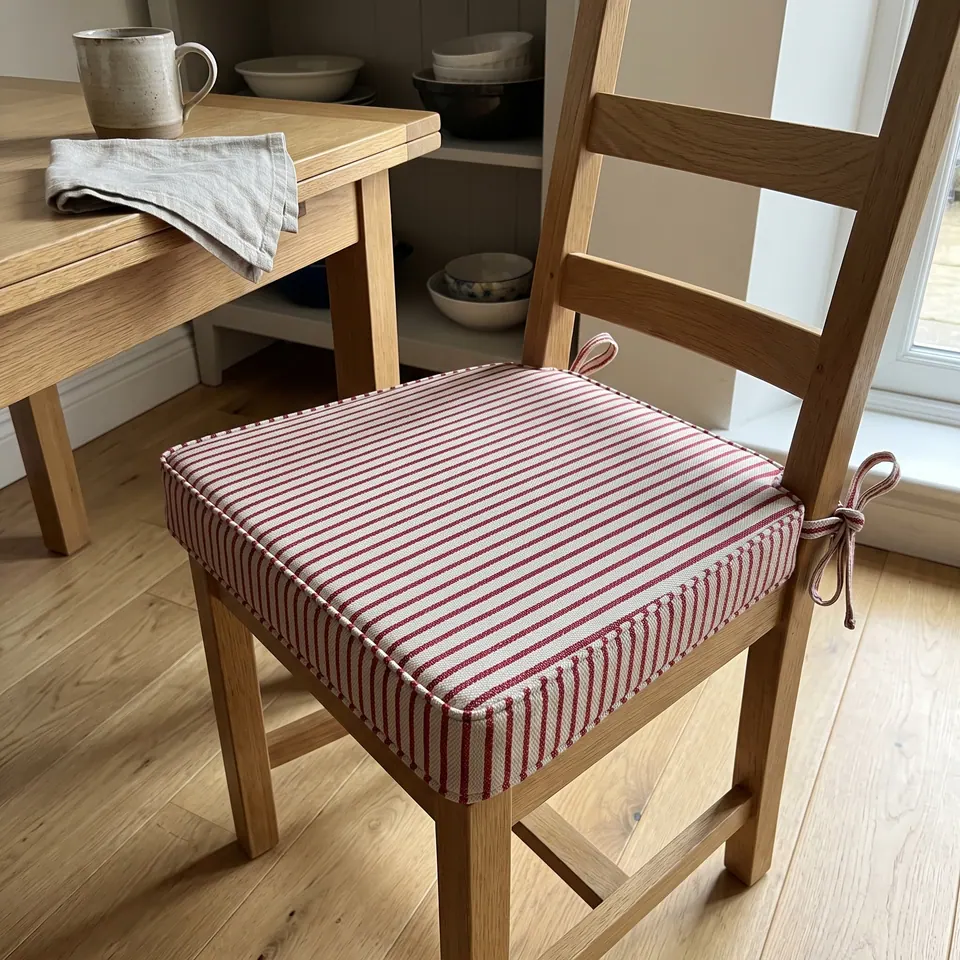
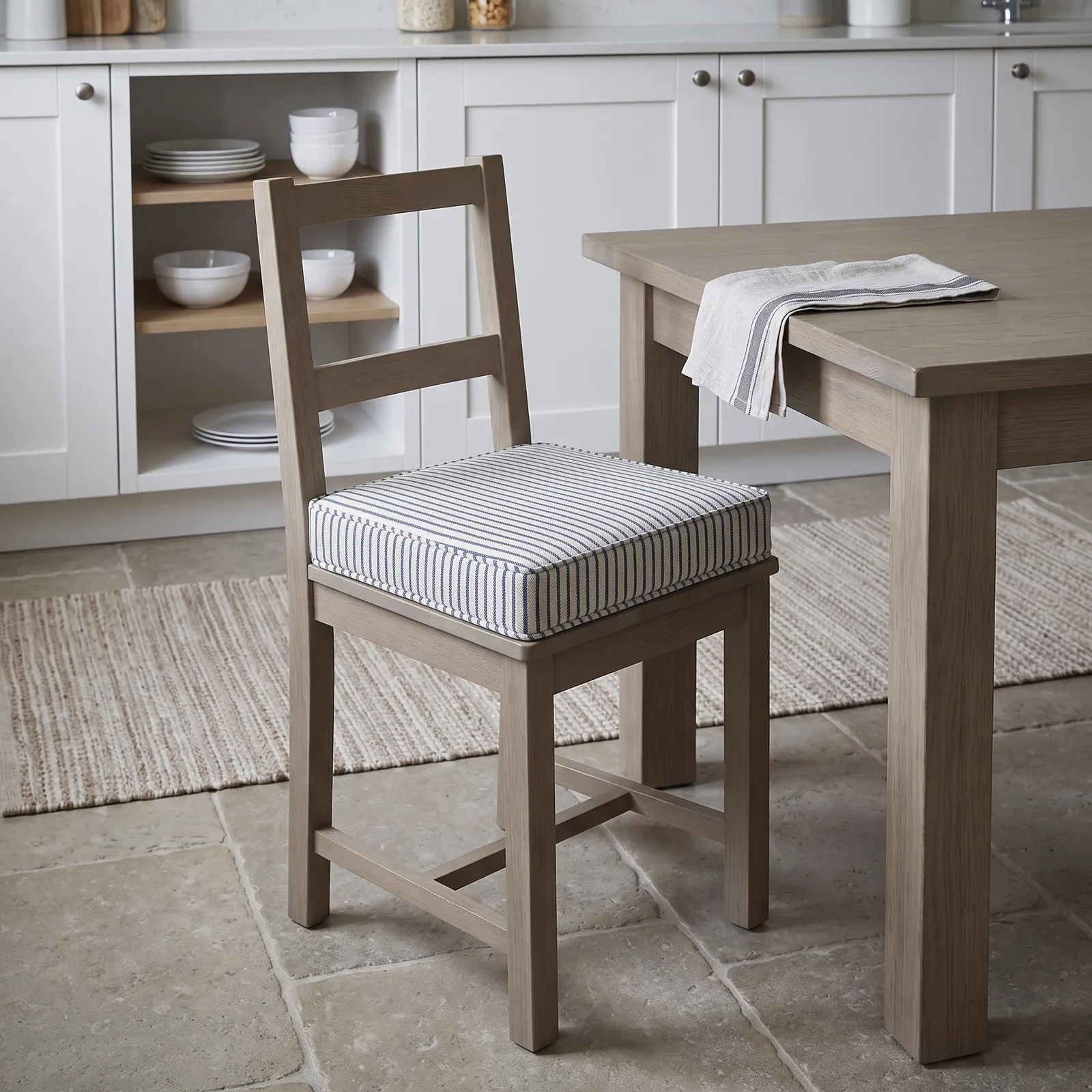
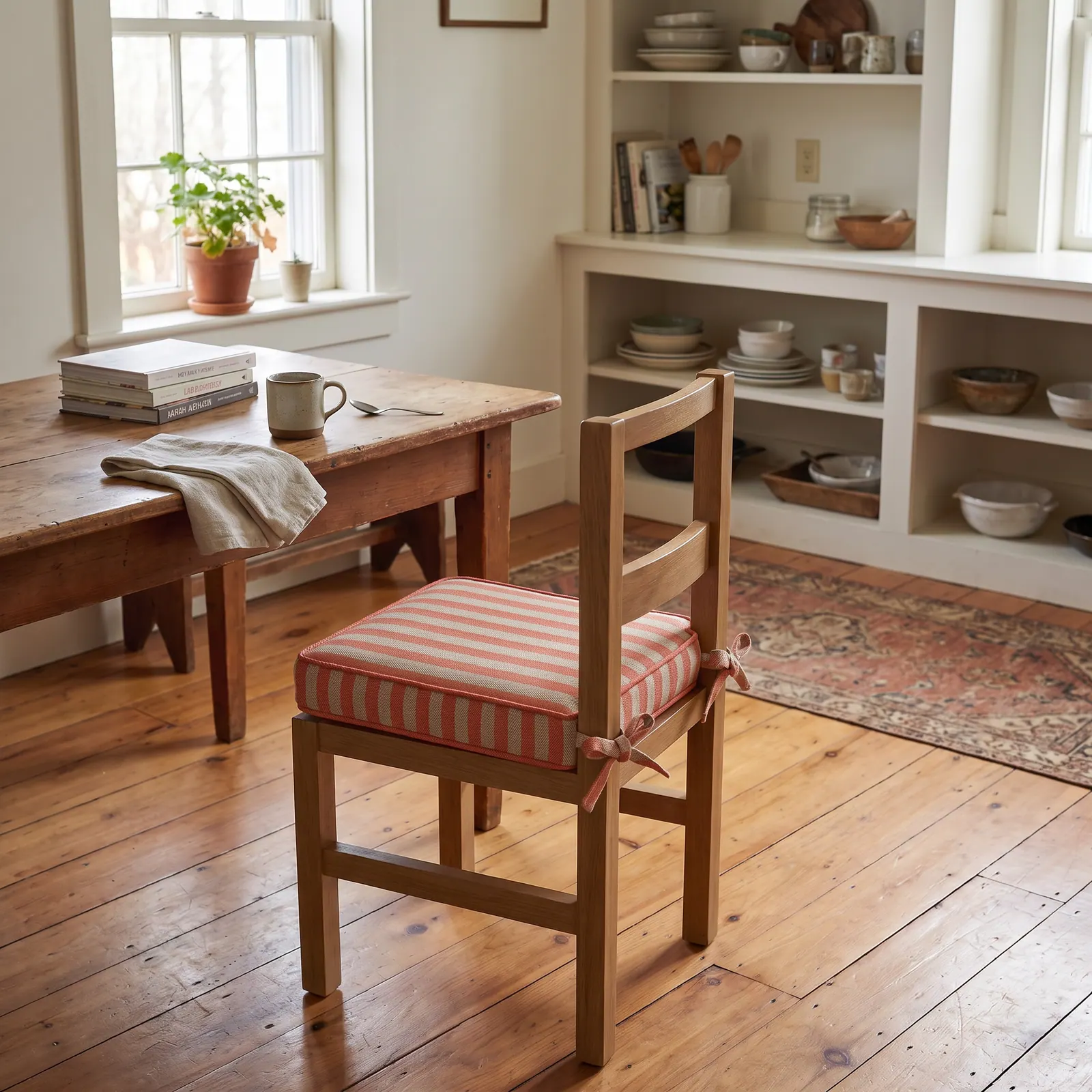
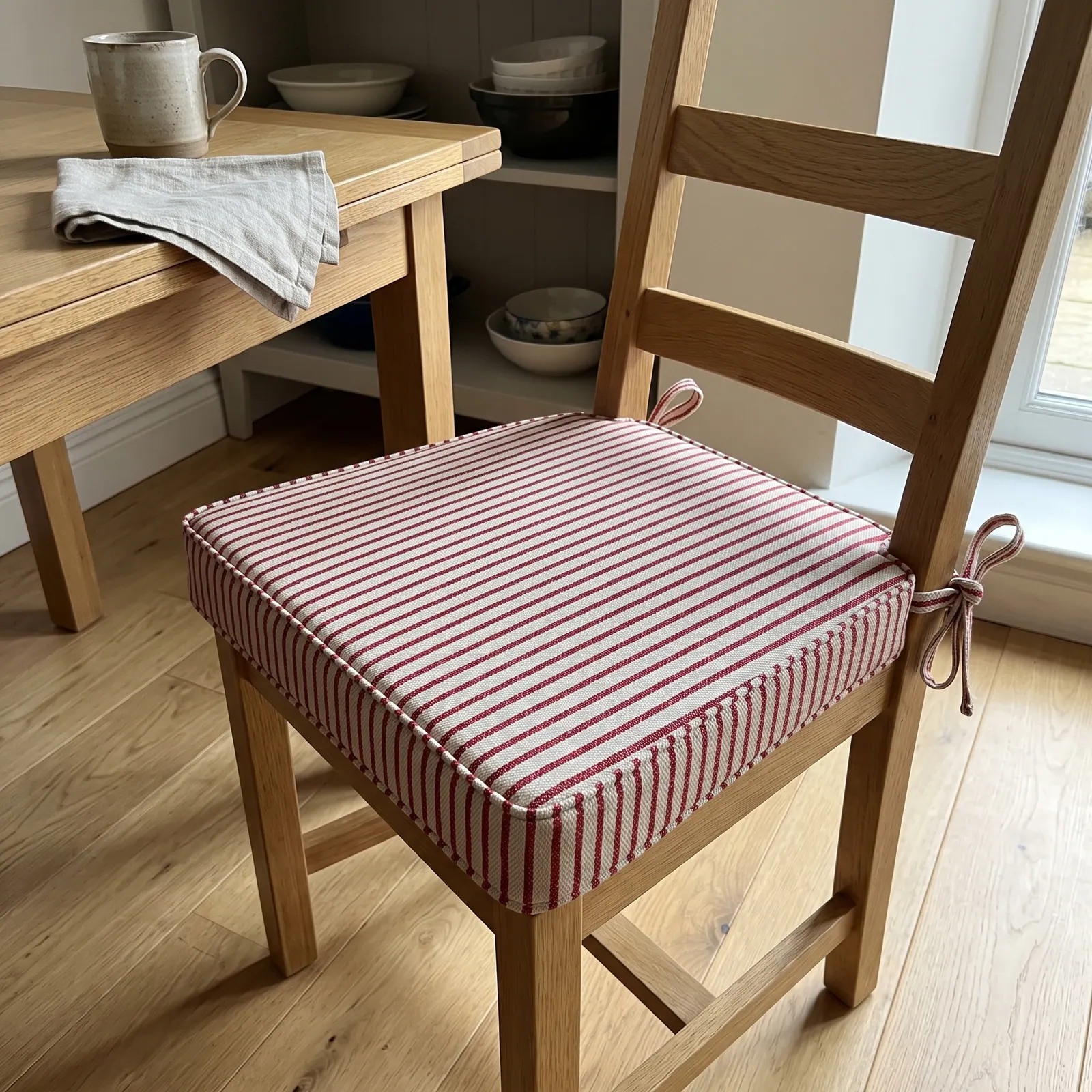
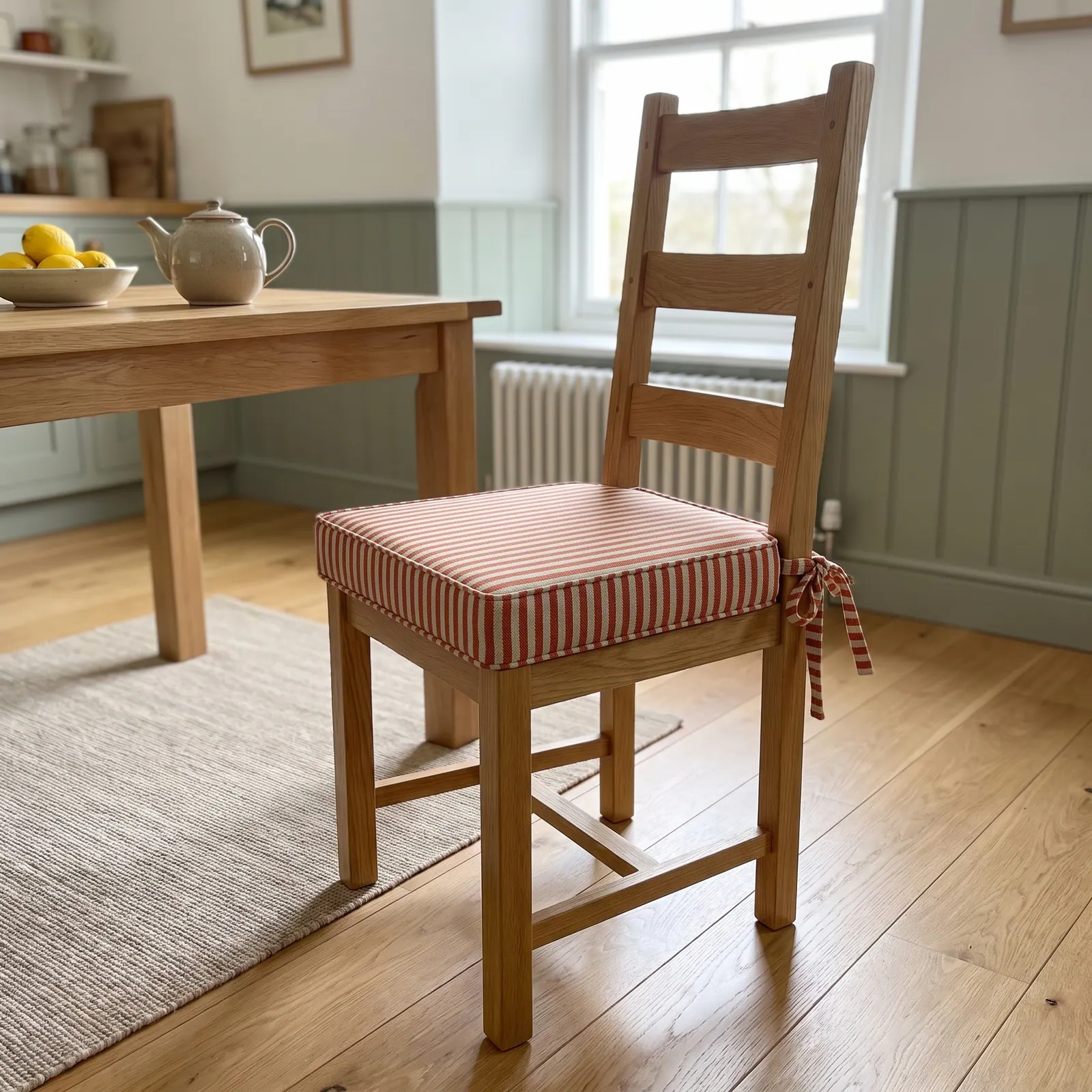
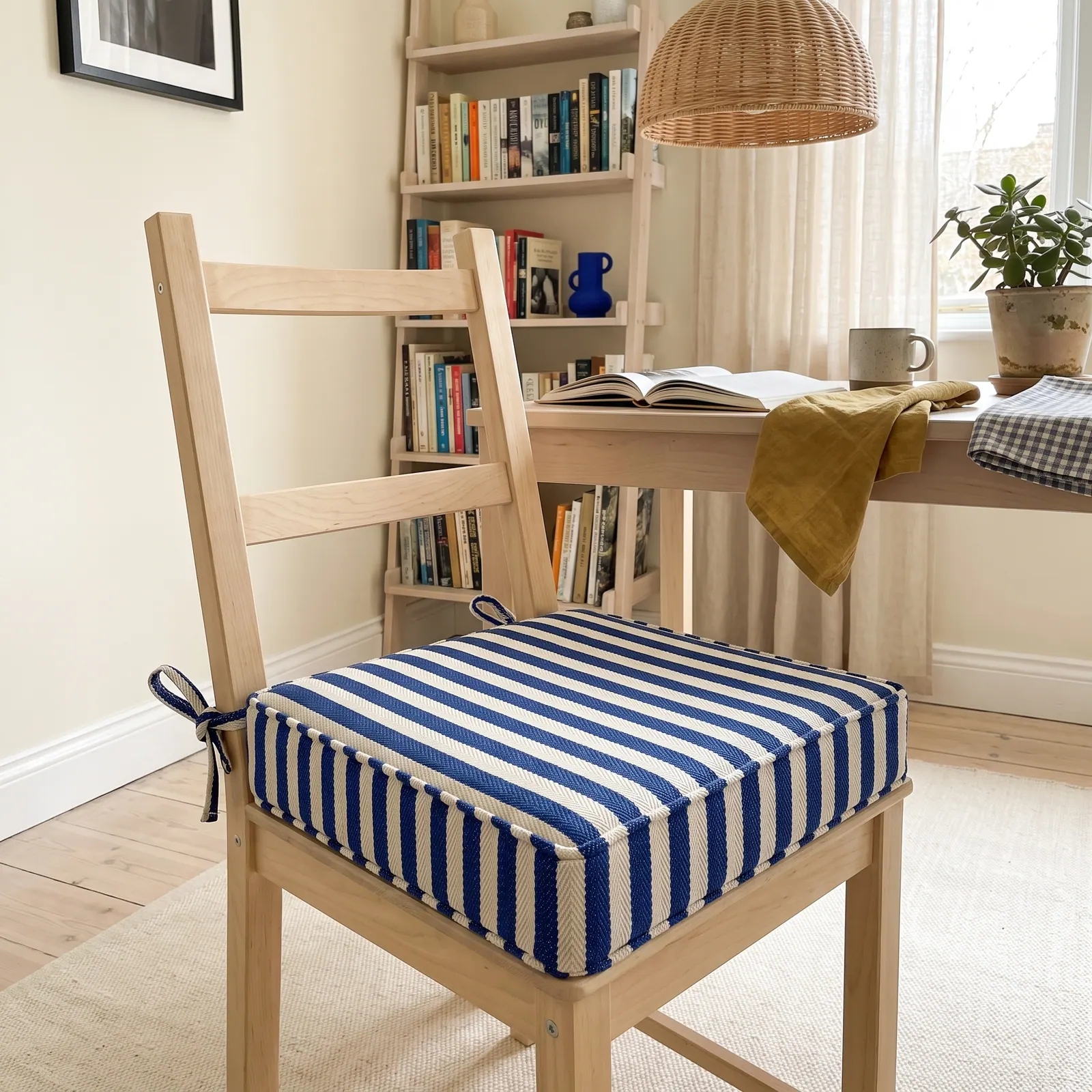
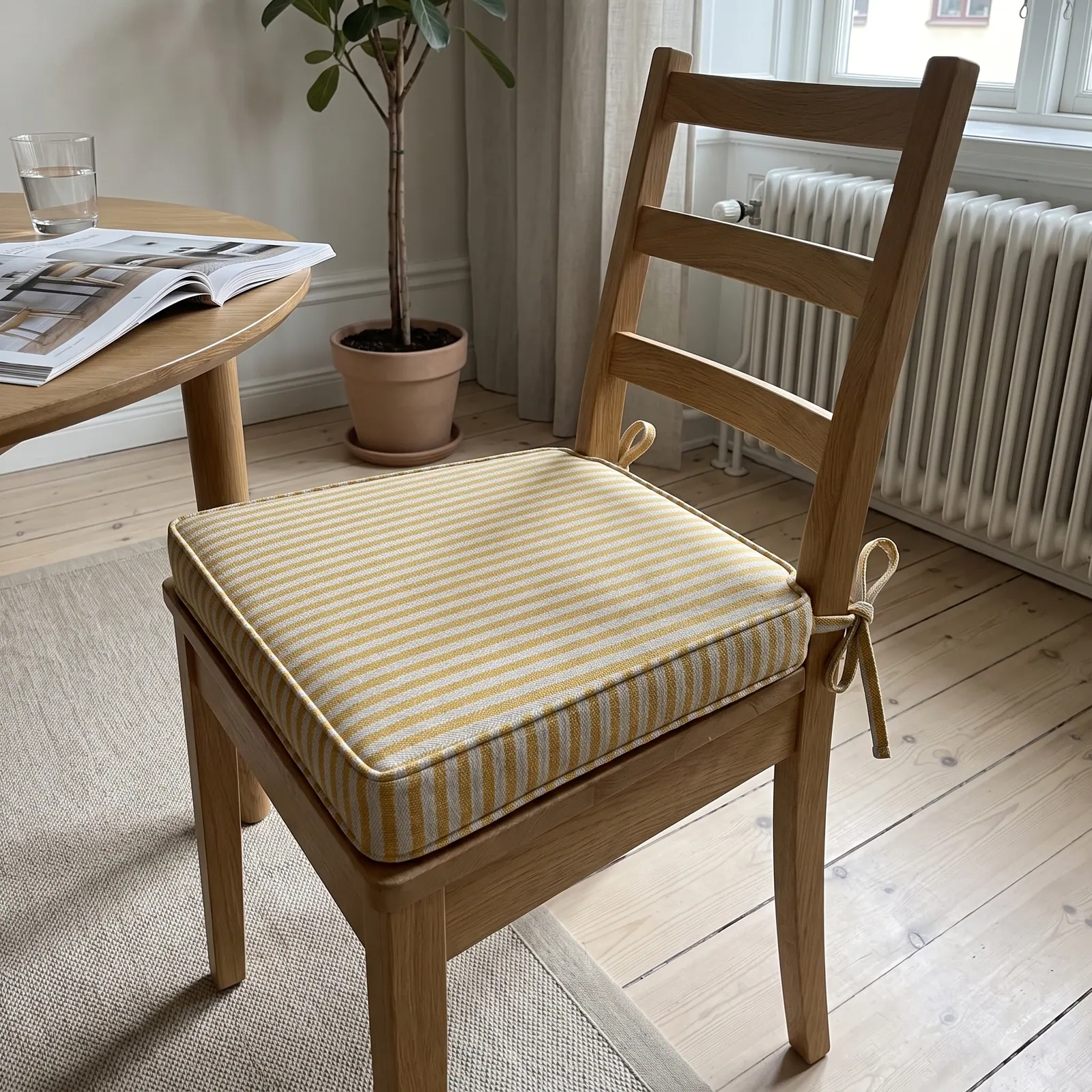
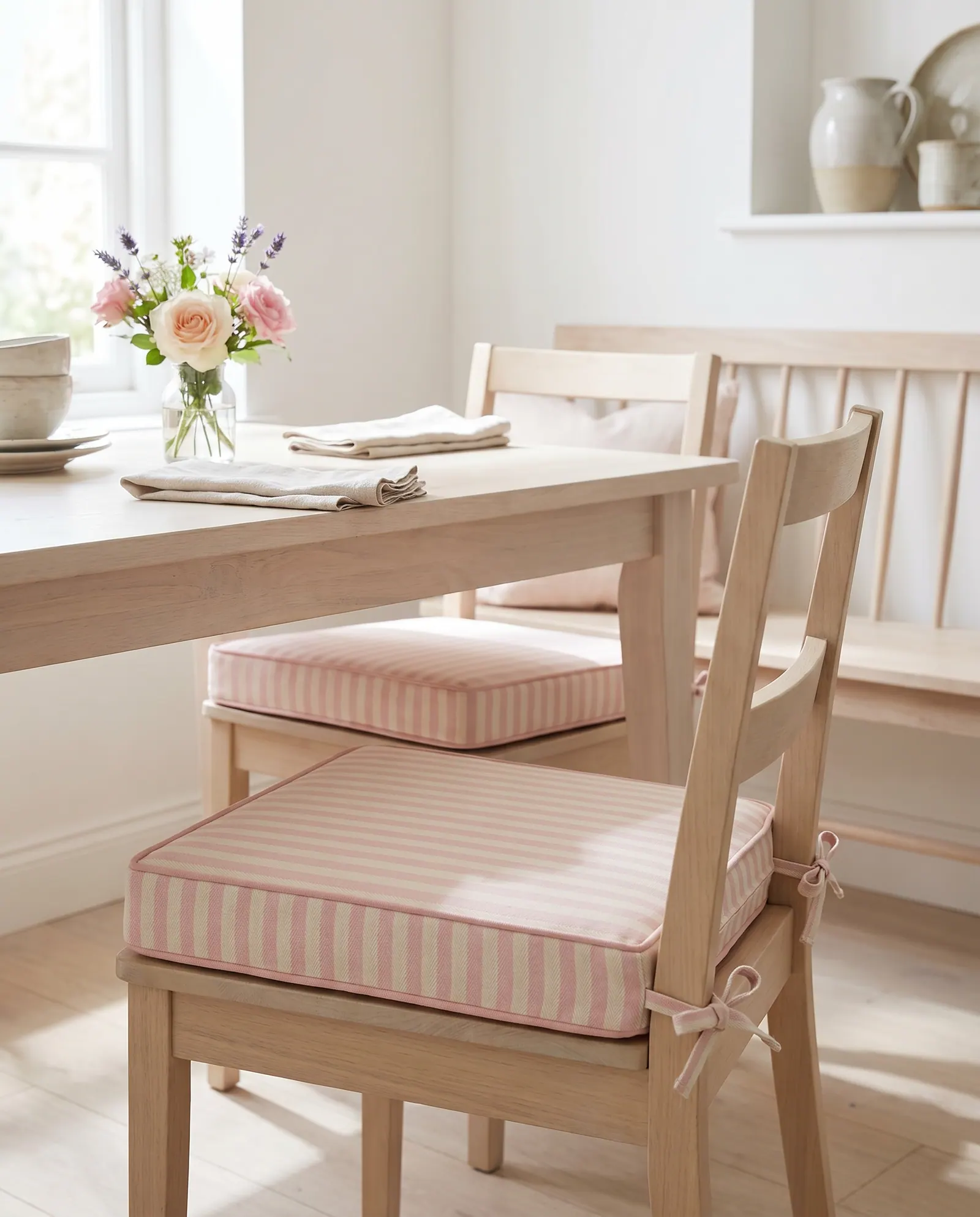
That's why this chair cushion is a box, not a flat pad. Look at the front edge: the gusset is deep and square, so the foam keeps its full height right to the rail where the backs of your thighs rest. A knife-edge pad tapers to a seam there, which is exactly where you need padding most. The box edge versus knife edge note has the long version.
Notice what the cushion doesn't do. It stops at the rails. No foam spills over the sides, no corner droops toward the stone. A pad cut to the seat, and not to some general idea of a seat, is half the comfort.
On firmness my rule is short. Hard seat underneath, firmer foam on top. A soft, thin pad on oak bottoms out quickly and you're back on the wood. If you're unsure where your chair lands, run it through the foam firmness finder before you pick a thickness.
My notebook list for a kitchen chair cushion, in order: - Seat width at the front and at the back (they are rarely the same) - Depth, front rail to back posts - Where the back posts sit, if you want ties - Thickness, checked against the table apron - A drawing, if any edge curves
Pinned by Maggie: the ladder-back chair pad
Five pins, from the indigo pinstripe down to the limestone flags that made a padded seat necessary.
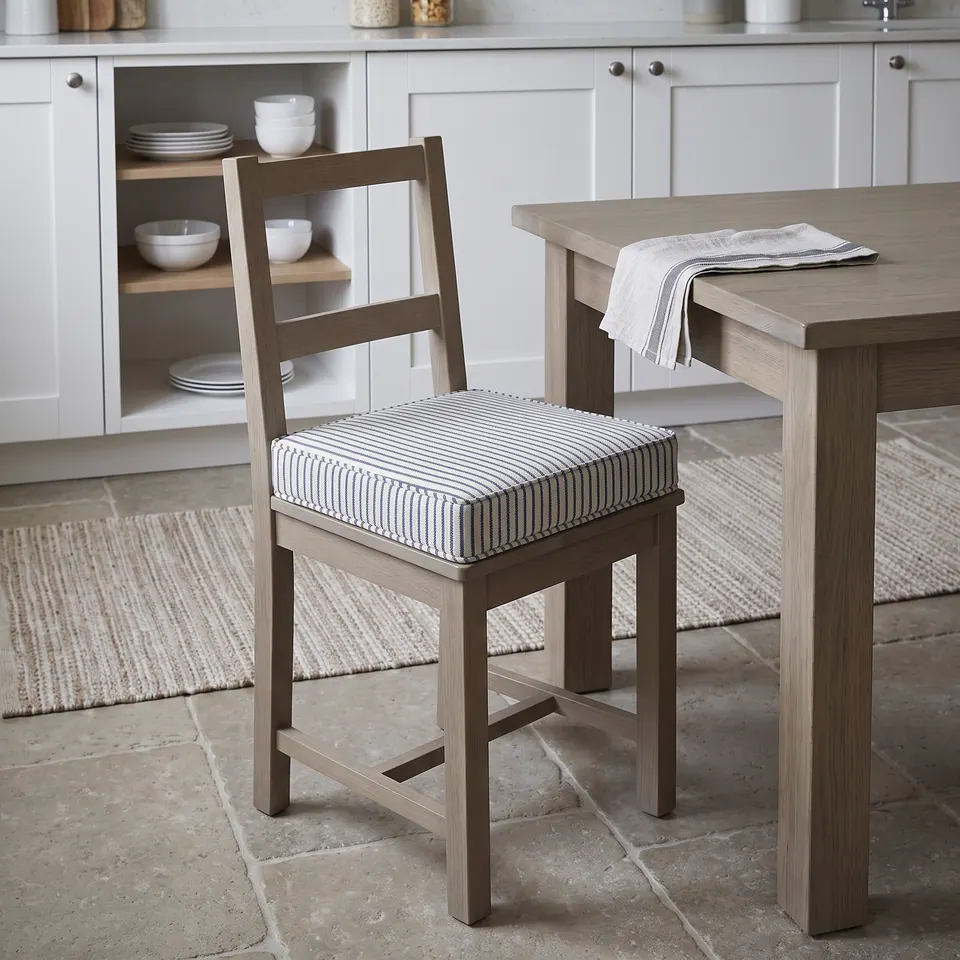
- Indigo ticking
A classic ticking pinstripe softens a hard ladder-back seat.
- Thick box edge
A deep gusset gives a generous seat without spilling past the chair rails.
- Ladder-back rails
Weathered gray oak and blue ticking are both cool, so the cream ground keeps it fresh.
- Striped tea towel
A striped towel on the table repeats the ticking in a second textile.
- Limestone flags
Hard stone floors call for a padded seat, and the pale ground lifts their gray.
- Indigo tickingA classic ticking pinstripe softens a hard ladder-back seat.
- Thick box edgeA deep gusset gives a generous seat without spilling past the chair rails.
- Ladder-back railsWeathered gray oak and blue ticking are both cool, so the cream ground keeps it fresh.
- Striped tea towelA striped towel on the table repeats the ticking in a second textile.
- Limestone flagsHard stone floors call for a padded seat, and the pale ground lifts their gray.
On the cutting table: the ladder-back pad
| Piece | Box-edge seat pad for a ladder-back kitchen chair |
|---|---|
| Fabric | Indigo ticking pinstripe on a cream ground |
| Edge | Box, with a deep square gusset |
| Piping | Self piping in the same ticking |
| Fit | Cut to the seat, inside the rails |
| Thickness | 2 in (5 cm) piped, for buyers tired of flat pads |
| Ties | Only when requested; placed at the back posts |
| Shaped seats | Drawing with back width, front width, curved side and tie positions |
| Best for | Hard wooden kitchen and dining chairs |

Have it made
Have this made — ask Maggie’s workshop
Have the tape measure handy when they call. Old cushions shrink and sag; the seat underneath does not. — Maggie
Leave your details and the workshop will call you to confirm measurements, fabric, foam and piping. No prices, dates or payment on this page: it is a request, not an order.
Why cream ticking works in a cool gray kitchen
The light in this kitchen is soft and gray, the kind that makes everything look a little chilly. Weathered gray oak, limestone flags, white Shaker cabinets with round knobs: all cool. Indigo is cool too. What saves the corner is the cream ground of the ticking. It carries just enough warmth to keep the chair from looking like it's waiting for a bus. Ticking like this is 100% cotton and indoor-only, and it stains more easily than a performance fabric, so zip the cover off and wash it at up to 86°F (30°C).
None of the props is an accident. The striped linen tea towel on the table repeats the ticking in a second textile, so the chair looks chosen with the room. The open shelf of white bowls and plates picks up the cream. The jute rug puts one warm, rough fiber under the chair legs and takes some chill off the stone. And the stone is the reason the cushion exists at all: nobody lingers on hard oak over a hard floor.
Ticking lives in our striped cotton and ticking family, and more seats like this sit in the dining chair cushion atlas and the kitchen nook collection.
What is your kitchen chair seat made of, dear: rush, slats or solid wood? The answer changes the foam.
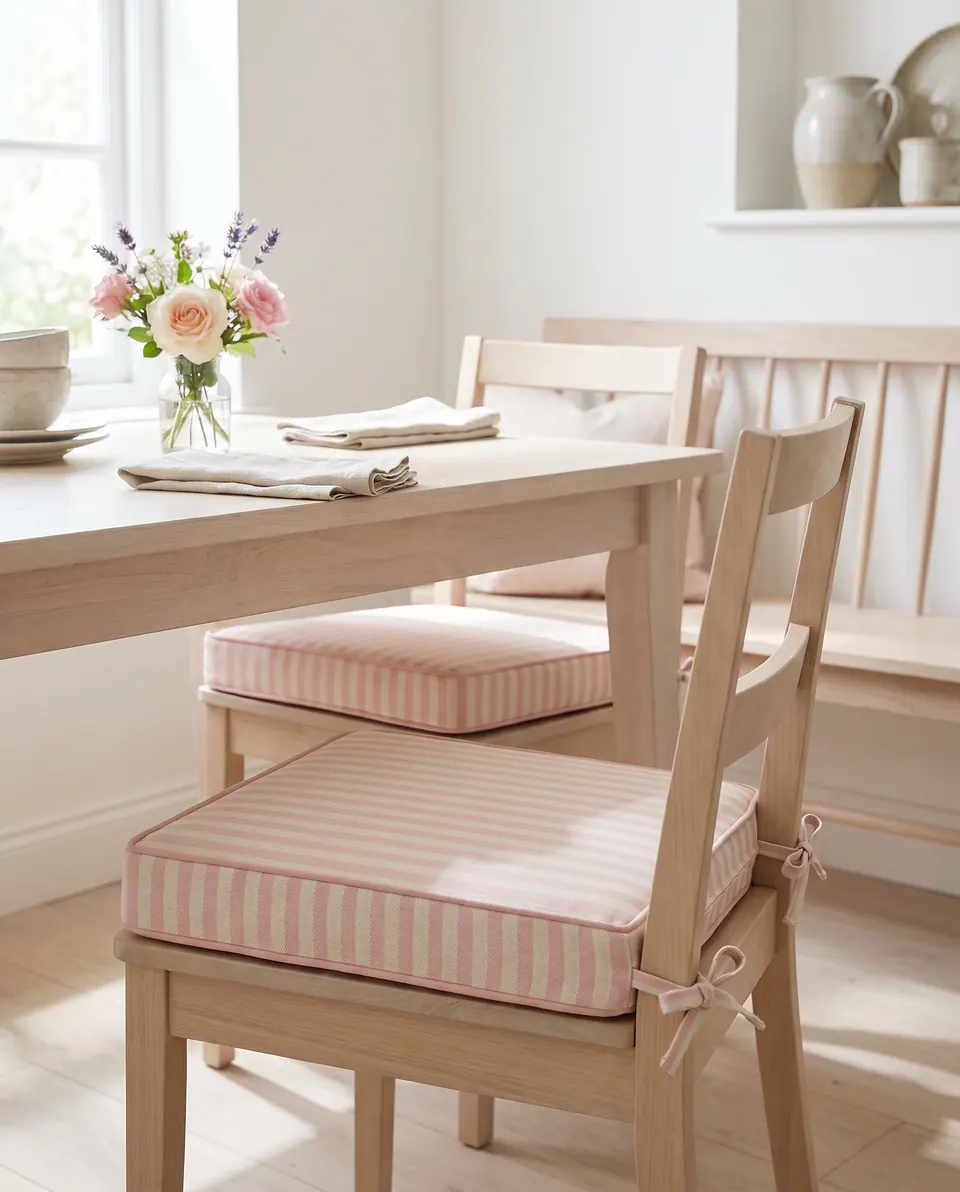
The brown chair that should have been pink
A buyer in the US wrote to the workshop about a floor chair that arrived brown. The color was far from what she had expected, and she wanted pink.
The shop offered pink replacement covers on their own, for a good deal less than a whole new chair, since the filling could stay. She weighed it and chose a completely new filled chair in pink at a special price instead, and kept the brown one to give away. Both roads were fair.
Right, then. Here is what went in my notebook: when a color disappoints, the foam is rarely the problem. A new cover costs far less than a new piece, so ask about covers for existing foam before you start over.
Buyer questions: shaped pads, sets of eight, and missing ties
- A common question
Could you make slightly curved trapezoid pads with ties for four chairs, to match the bench cushion I'm ordering?
The workshop's answerBefore quoting, the shop asks for a drawing of each size on paper: back width, front width, the length of the curved side, and where each tie goes. A shaped chair pad can't be priced from a list of numbers alone.
- A common question
If I order several chair cushions at once, is there a discount?
The workshop's answerYes. A set of eight 17 x 18 in (43 x 46 cm) velvet seat cushions was offered at roughly a sixth off the total, and a set of four corduroy lounge chairs with ottomans also came down in price when bought together.
- A common question
My chair cushions arrived without ties. Aren't ties standard?
The workshop's answerNo. Ties are added only when you ask for them at the time of ordering. When one buyer assumed otherwise, the shop offered to cover half of what a local tailor charged to sew them on.
A dining chair cushion on a hard oak seat needs a box edge, so the foam stays at full height right to the front rail where the thighs rest.
Maggie
Questions buyers ask next
How thick should a kitchen chair cushion be?
On a hard wooden seat, a box pad of about 2 in (5 cm) with piping is a sensible floor for anyone who dislikes thin, flat pads. Check your table clearance first, because every inch on the seat lifts your knees toward the apron.
Box edge or knife edge for a dining chair pad?
A box edge keeps the foam at full height right to the front rail, so the seat feels even. A knife edge tapers to a seam around the outside, which looks lighter but is thinnest exactly where your thighs rest.
Where should ties go on a ladder-back chair?
At the two back corners, wrapping the rear posts. Mark the post positions on your drawing and name them in the order note, since ties are only added when they are requested.
Will ticking look cold in a gray kitchen?
Not if the ground is cream. Indigo pinstripes and weathered gray oak are both cool, and a cream ground warms the pair. Repeat the stripe once, in a tea towel or runner, so the pad looks chosen with the room.
Stitch straight — Maggie
More photographs to read
 Save
 Save
 Save
 Save
 Save
 Save