 Save
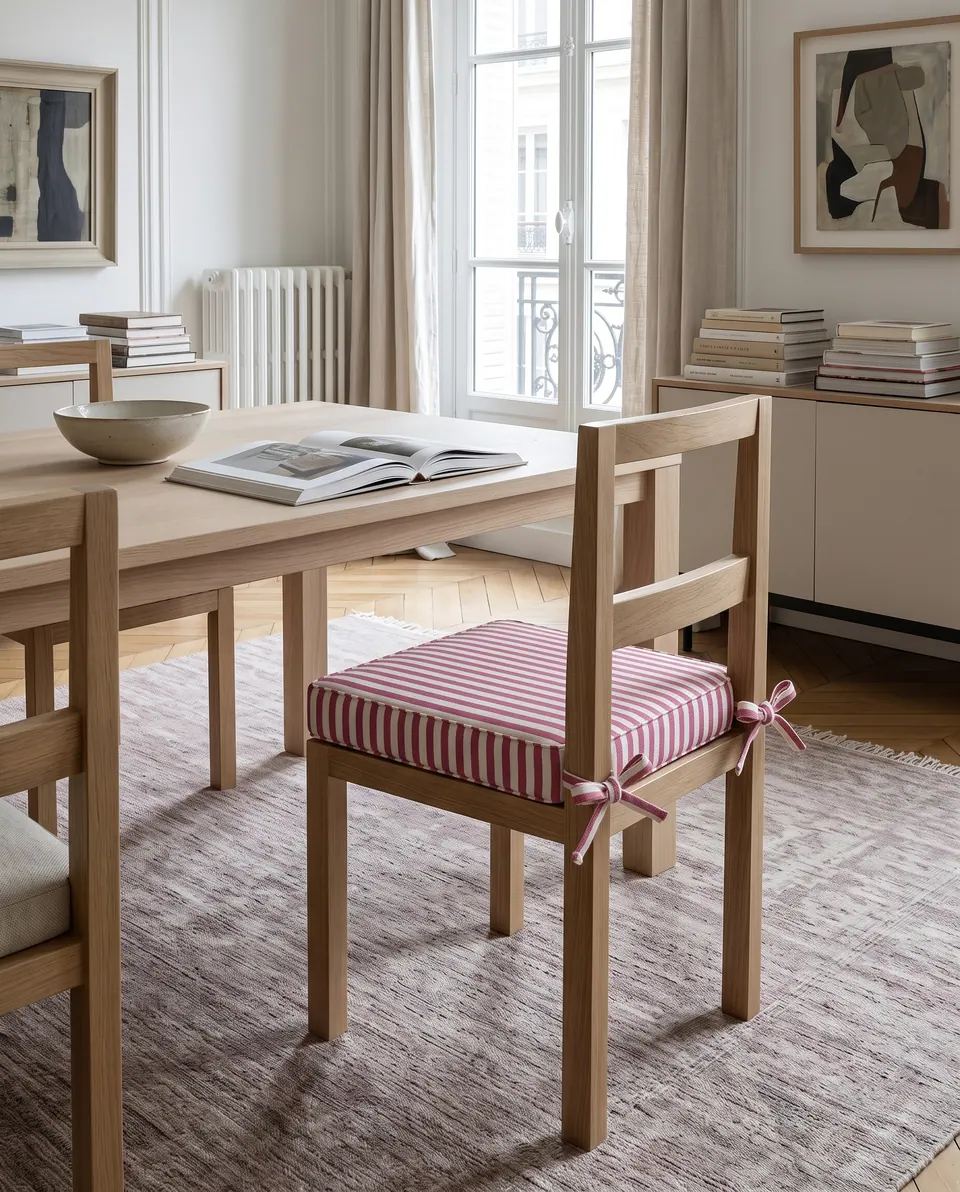
- bow ties at the posts
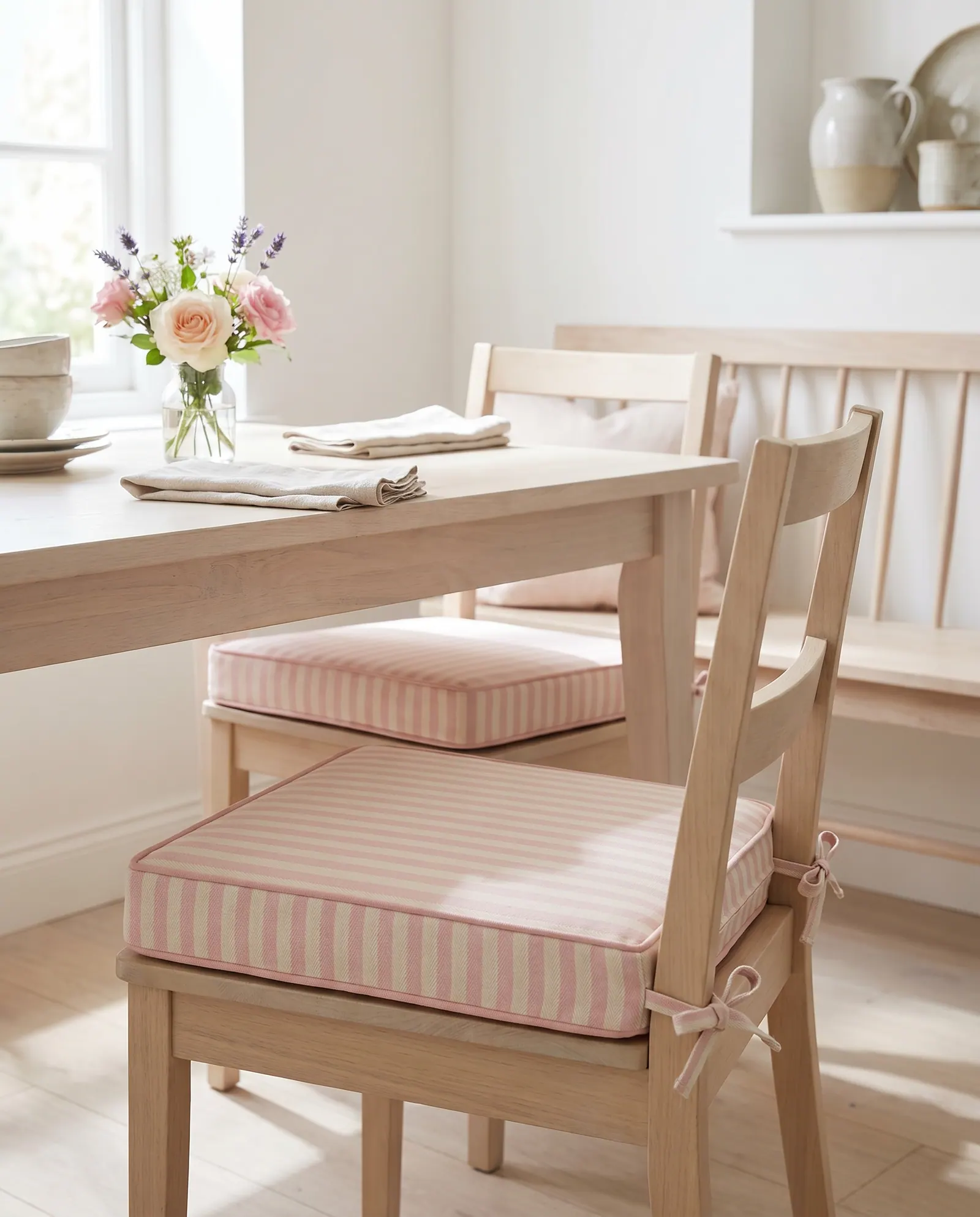
Ties sewn into the back seam knot round the uprights and stop the pad sliding forward.
- box-edge chair pad
A 2 to 3 in box edge shows the stripe on all four sides and adds real comfort.
- second chair pad
Identical pads on every chair make a mismatched set of seats look planned.
- roses and lavender
The posy repeats the blush of the stripe at table height.
- stoneware jug on shelf
Cream stoneware keeps the rest of the room in the stripe's pale ground.
Plate Blush Striped Box Chair Pads Tied to Oak Dining Chairs
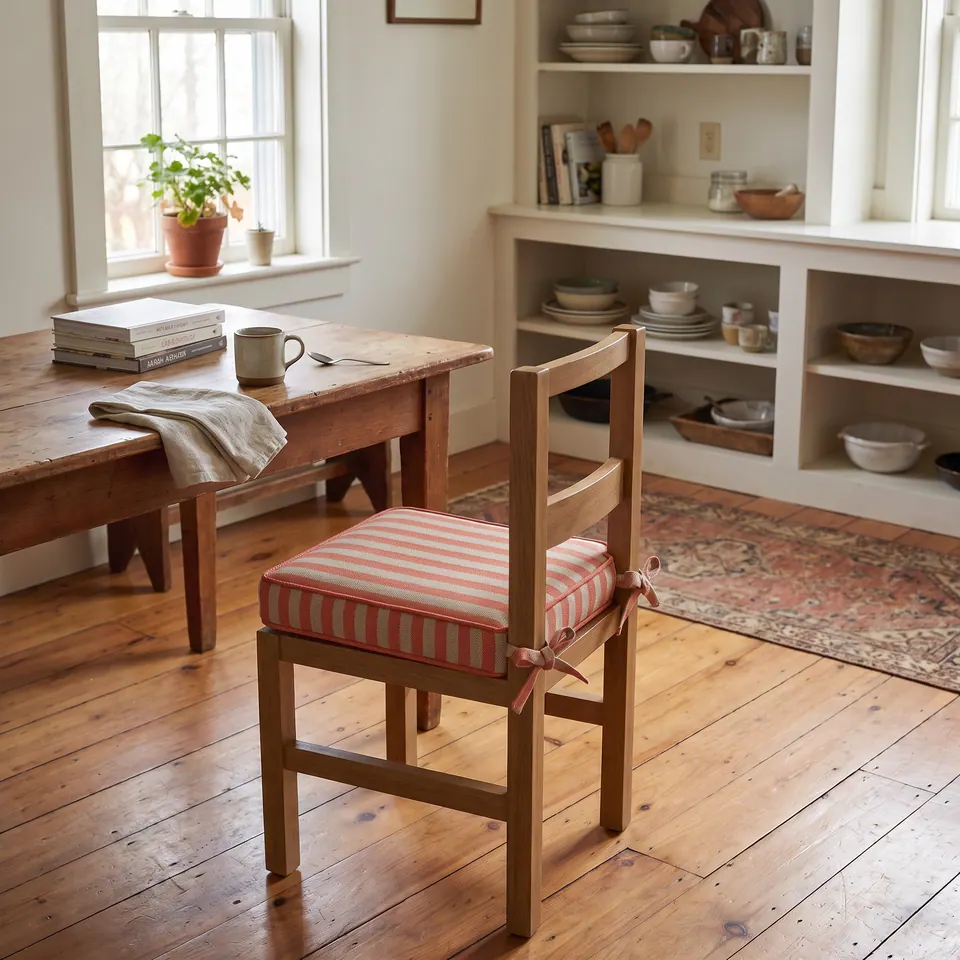
Box-edge chair pads in a blush stripe, tied at the back posts, bring a soft cottage note to a pale oak dining table.
A Reading by MaggieDining Chair Cushions & Pads
Blush stripe chair cushions with ties, and the finishing that makes them sit right
Maggie reads two blush striped box-edge pads tied to pale oak ladder-back chairs, and lists the finishing details that separate a tailored pad from a bought one.

The quick answer
A well-made chair cushion with ties has its ties sewn into the back seam, a 2 to 3 in (5 to 7.5 cm) box edge that carries the stripe around all four sides, and piping that runs straight. Knot the ties in bows around the back uprights so the pad can't slide forward when someone pushes back from the table.
Pinned by Maggie
Begin at the bow ties on the back posts, then follow the pins across the box edge, the matching second pad, the roses and the stoneware jug on the shelf.
The numbers match the pins on the plate.
- bow ties at the postsTies sewn into the back seam knot round the uprights and stop the pad sliding forward.
- box-edge chair padA 2 to 3 in box edge shows the stripe on all four sides and adds real comfort.
- second chair padIdentical pads on every chair make a mismatched set of seats look planned.
- roses and lavenderThe posy repeats the blush of the stripe at table height.
- stoneware jug on shelfCream stoneware keeps the rest of the room in the stripe's pale ground.
Reading the plate: two pads, one pale oak table
A straight welt is a kind of honesty, and a dining chair tests it three times a day.
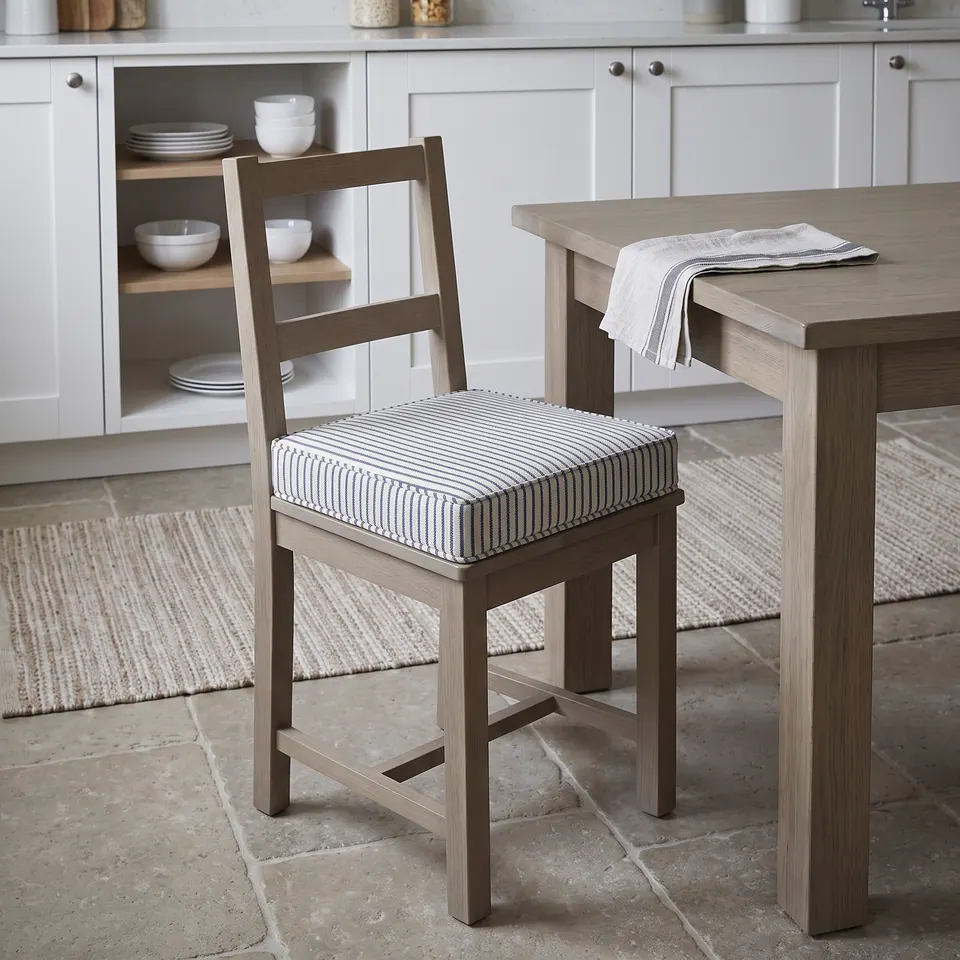
Two blush-and-cream striped pads sit on pale oak ladder-back chairs at a pale oak table. They are box-edge pads, not flat seat covers, about 2 to 3 in deep. That depth does two jobs. It adds real comfort to a hard seat, and it lets the stripe show on all four sides, so the pad looks like part of the chair rather than something lying on it.
Look at the back corners. The ties come out of the seam itself and knot in bows around the uprights. That is the first thing I check on any tied pad. A tie sewn into the seam pulls against a whole line of stitching; a tie tacked on afterward pulls against one small patch, and one day it lets go. The bows also stop the pad sliding forward. If you'd rather have no ties, a non-slip base is the alternative.
The pad on the next chair is identical, and that matters more than people think. Matching pads on every chair make a set of seats look planned, even when the chairs themselves don't quite match.
The styling stays in the stripe's pale ground. Roses and lavender in a glass jar repeat the blush at table height. Folded linen napkins and stacked stoneware bowls stay cream. A spindle-back bench waits at the far side, and a ceramic jug on the wall shelf keeps the room in one soft key.
One practical warning, dear, since this is a dining room: cotton stripes stain more easily than polyester weaves. Choose zippered covers you can wash at 86°F (30°C). The striped cotton shelf and the tie placement pattern are worth a look before you order.
Maggie's finishing checklist for a tied chair pad
- Ties sewn into the back seam, so they pull against stitching, not a patch
- Ties long enough to knot a bow around the upright, with tails to spare
- A box edge of 2 to 3 in, so the stripe wraps all four sides
- The stripe centered on the seat and lined up at the front corners
- Piping that runs straight along the front with no wander at the corners
- Measurements taken from the bare seat or bare foam, never an old cover
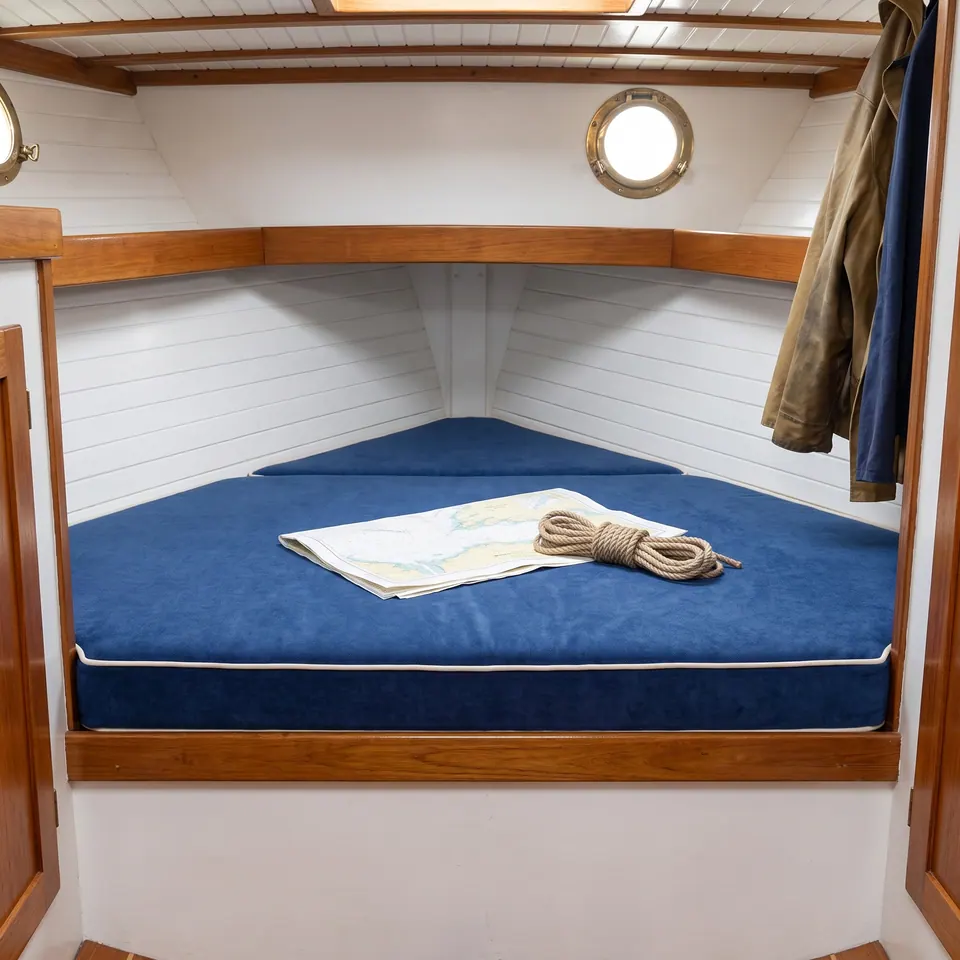
A floor couch for a play tent, measured from the inside
A parent in the US wrote to the workshop wanting a floor couch to fit inside a children's play tent: 52 in wide and 35 in deep (132 x 89 cm), in blue velvet, color 38. The shop quoted it and sent a custom order link.
The lesson has nothing to do with velvet and everything to do with where you put the tape. Tent walls lean in, so the floor inside is smaller than the footprint outside. Measure the inside floor, or the couch rides up the canvas.
Dining chairs play the same trick. The seat a pad lies on is not the frame's outside width; it is the space between the back uprights and the front edge. Measure inside the posts and the ties land exactly where the bows belong. Do your chairs have back posts to tie to, or a solid back? The chair pad measuring pattern has the drawing, and the chair cushion builder takes the numbers.
On the cutting table: the blush dining pads
| Piece | Box-edge dining chair pads, one per chair |
|---|---|
| Fabric | Blush and cream striped cotton, code N19 |
| Edge | Box edge, about 2 to 3 in (5 to 7.5 cm) |
| Piping | Self piping in the stripe |
| Fastening | Ties sewn into the back seam, knotted in bows around the uprights |
| Alternative | Non-slip base instead of ties |
| Care | Zippered covers, washable at 86°F (30°C) |
| Chairs | Pale oak ladder-backs |
| Best for | Cottage and farmhouse dining tables |

Have it made
Have this made — ask Maggie’s workshop
I once cut a lovely cushion two inches short, and I have not forgotten it. That is why the workshop goes over your measurements with you on the phone. — Maggie
Leave your details and the workshop will call you to confirm measurements, fabric, foam and piping. No prices, dates or payment on this page: it is a request, not an order.
Questions that came across the dining table
- A common question
My chair pads are a slightly odd shape. How do I measure for replacement covers?
The workshop's answerDraw the foam insert with every side labeled, for example a slight trapezoid with rounded front corners of about 17.75 x 17 x 19.75 x 17 in (45 x 43 x 50 x 43 cm), 1.5 in (4 cm) high. Measure the bare foam, not the old cover. When one set came out about 3/4 in (2 cm) short, the remake was cut 1/2 to 3/4 in (1 to 2 cm) larger, with longer ties.
- A common question
I already own one of your floor sofas. Can I order just the ottoman piece?
The workshop's answerYes. The ottoman can be ordered alone from the listing options, and it ships with its own metal support bars. Buyers often add an ottoman to a sofa they bought months earlier.
- A common question
Is piping included, and do ties or a non-slip bottom cost extra?
The workshop's answerPiping is included, in any piping color you like, at no extra charge. Ties and a non-slip bottom are optional extras you select on the listing. For a reversible cushion, leave off the non-slip bottom.
A tied chair pad lives or dies at its back corners: ties sewn into the seam hold for years, and ties tacked on afterward are the first to tear.
Maggie
Questions buyers ask next
How deep should a box-edge pad on a dining chair be?
About 2 to 3 in (5 to 7.5 cm). That adds real comfort to a hard wooden seat and shows the fabric on all four sides, while keeping the seat height close to where it was, so the table still sits at a comfortable level.
Why do ties sewn into the seam outlast ties added later?
A tie sewn into the seam spreads its pull along the stitched corner, so it stands up to years of knotting and pushing back from the table. A tie stitched onto the surface afterward pulls on one small spot and is the first thing to tear.
Are cotton stripes practical on dining chairs?
They are, with washable covers. Cotton stripes stain more easily than polyester weaves, so choose zippered covers you can take off and wash at 86°F (30°C). Keep a spare set if the chairs see daily meals and little hands.
Stitch straight — Maggie