 Save
A Reading by ÉlodieBench Cushions
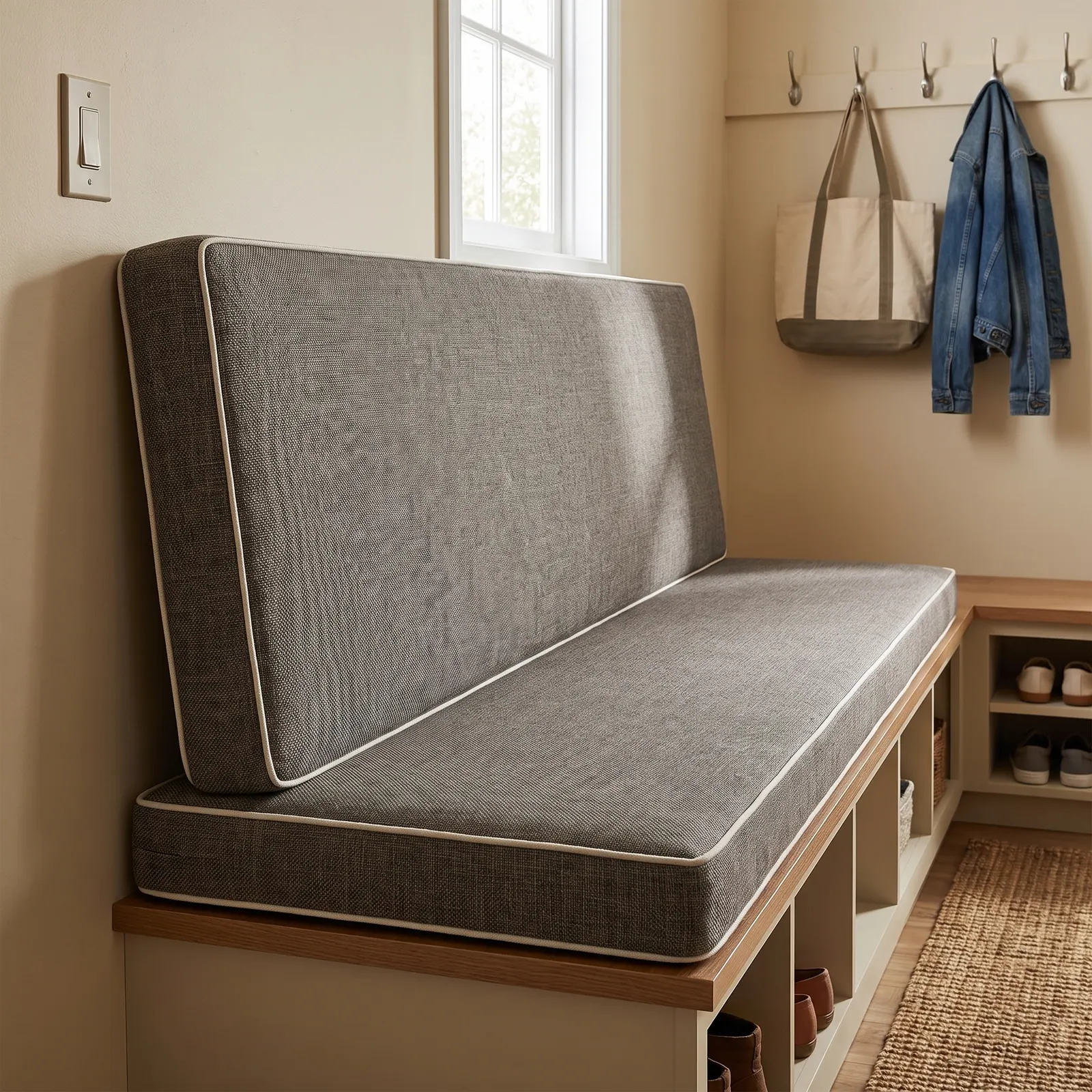
Measuring a dark taupe mudroom bench cushion and its tall ivory-piped backrest
A built-in entry bench looks simple until you order for it. Here is how to measure this exact seat, and why the backrest stops where it does.

Swatch strip measured from the photograph
- camel#95847229%
- umber#77604924%
- deep walnut#40302222%
- sand#b7a79314%
- oatmeal#d5cec112%
The quick answer
To measure a built-in mudroom bench cushion, take the length wall to wall where the cushion will sit and the depth from the wall to the front edge, then send those true numbers without subtracting anything. Measure a backrest's height from the top of the seat cushion, not the bench, and stop it below any window sill.
The entryway palette, from boot level up
- Dark taupe#4A4038Seat and backrest. A heathered dark weave hides scuffs from boots and bags.
- Ivory#F0EADCThe piping on both pieces, drawing the edges so the dark shapes stay tailored.
- Canvas sand#C8B698The tote on the peg rail, a middle tone between wall and piping.
- Jute#A88B62The runner, carrying warmth across the floor.
- Cream wall#E5DED0The pale ground that lets taupe read as a color, not a shadow.
- Washed denim#4E607CThe jacket on the hook: the one cool note, and why the taupe looks warm.
Pinned by Élodie
Four pins, from the ivory welt on the backrest to the shoe cubbies below.
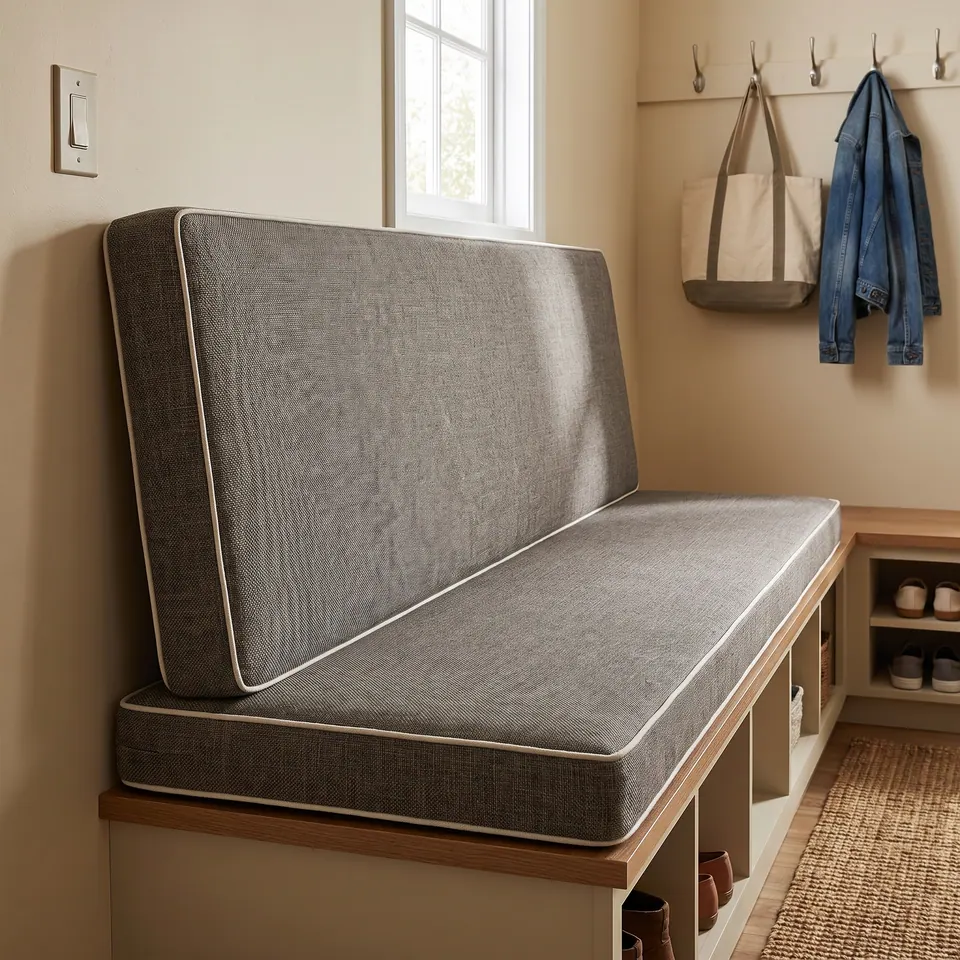
- Ivory piping on backrest
Light piping keeps a dark cushion crisp against pale walls.
- Dark taupe seat
A heathered dark weave hides scuffs from boots and bags.
- Canvas tote on hook
The tote's sand tone repeats the wall and the piping.
- Shoe cubbies
Open cubbies under the bench keep shoes within reach of the seat.
- Ivory piping on backrestLight piping keeps a dark cushion crisp against pale walls.
- Dark taupe seatA heathered dark weave hides scuffs from boots and bags.
- Canvas tote on hookThe tote's sand tone repeats the wall and the piping.
- Shoe cubbiesOpen cubbies under the bench keep shoes within reach of the seat.
Reading the seat, then measuring it
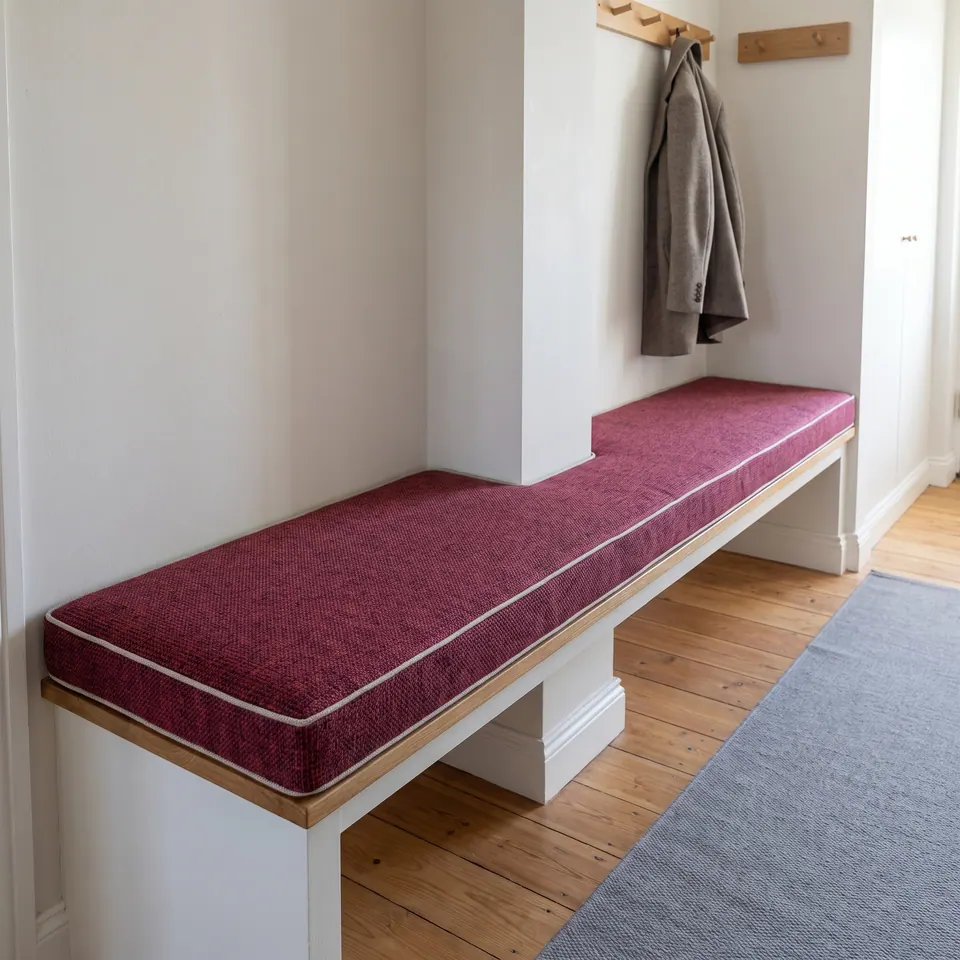
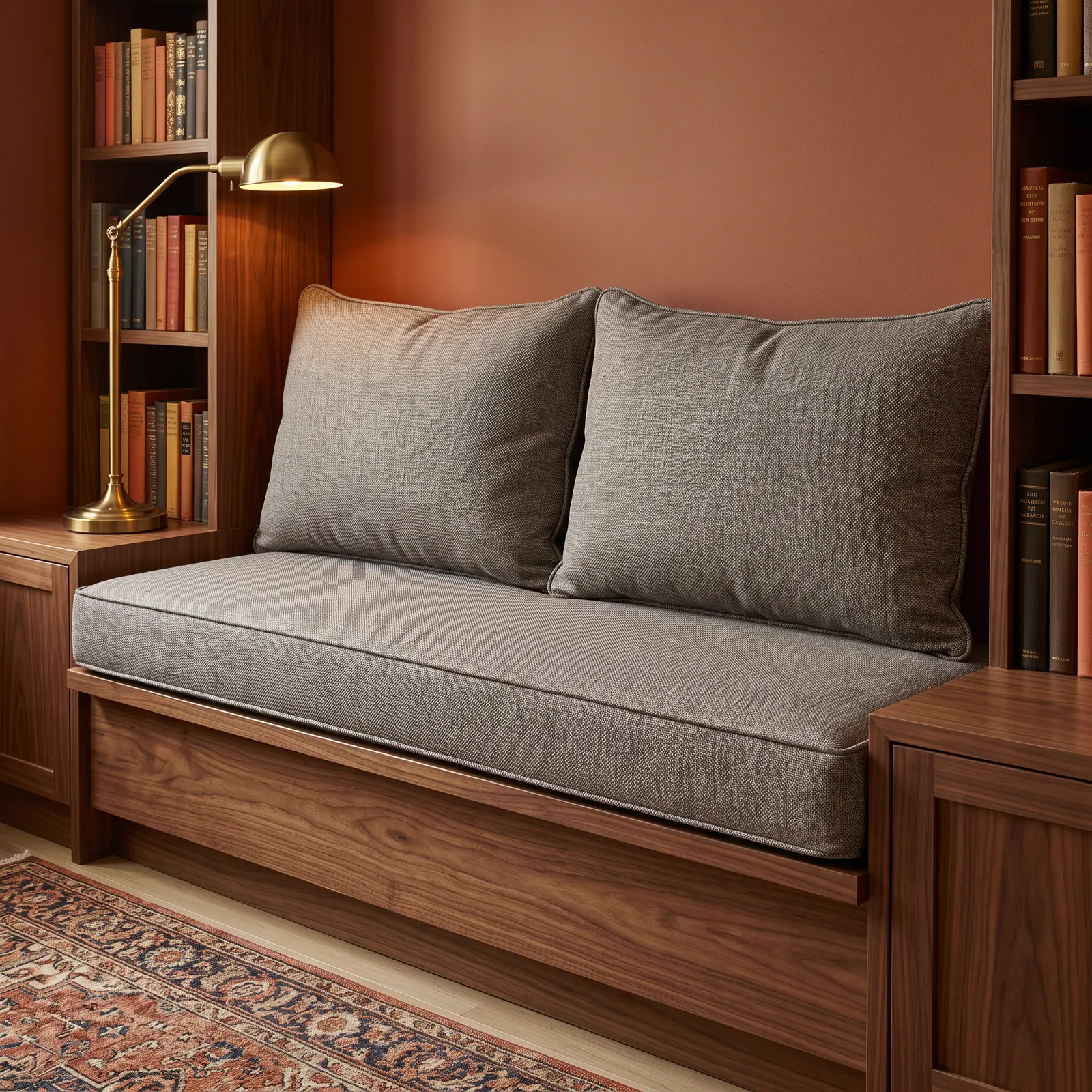
The eye sits down first, and in this entry it sits on dark taupe. That is not gloom; it is strategy. A mudroom cushion meets boots, wet bags and coats, and a heathered dark weave forgives all of it. Ivory piping outlines both pieces, so against cream walls the seat still reads as tailored, not heavy.
The backrest is the part to study. It is a tall, deep box that leans on the wall and stops below the window sill: a real back for pulling on boots, without blocking the light. Measuring a seat like this is four numbers and two habits.
- Seat length, wall to wall. Measure where the cushion will actually sit, between the cubby sides or walls, at the bench top.
- Seat depth. From the wall to the front edge of the bench top. A backrest leaning on the wall takes its own thickness out of that depth, about 4 in (10 cm) for a standard back.
- Backrest height. Measure from the top of the seat cushion, not the bench. Here the sill sets the limit.
- Backrest length. Standard backs are made the same length as the seat.
The two habits: send true measurements without subtracting anything, because the workshop adds its own allowances; and write the length as the long side, the width as the short one. The bench cushion builder and the guide to measuring a bench walk the same steps, and more entry seats live under mudroom and entryway bench cushions. What does your bench measure between the cubby walls?
A 12 x 36 3/4 inch cushion in two fabrics
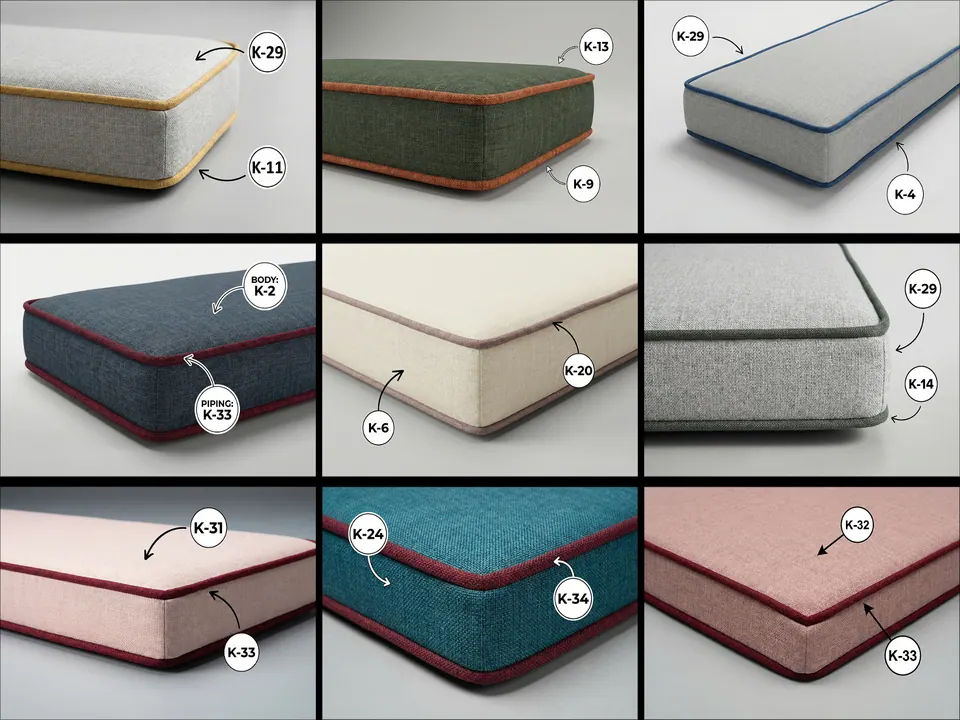
A buyer wrote to the workshop with a narrow bench and an idea I still admire. The cushion was small, 12 x 36 3/4 in (30.5 x 93.5 cm), but it was to wear two fabrics: a plain weave on the top and bottom, a stripe on the side bands, and a contrast piping between them.
Two fabrics mean a little more cutting and sewing, so a small extra cost. The workshop's advice was practical: order under the next size up, 15 3/4 x 39 3/8 in (40 x 100 cm), and write the real size and the fabric plan in the personalization box. The cushion is made to the written size; the menu size only sets the price.
A striped side band is a quiet way to put color at boot height. It is also proof that the smallest cushions need the most exact numbers.
Ties, thickness and back cushions:
- A common question
Can you add ties to the bottom so the cushion stays on the bench and doesn't slide off?
The workshop's answerYes. Ties can be added on request; say in your order where you want them.
- A common question
I want a bench cushion that's comfortable but looks structured. What thickness do most people choose?
The workshop's answerMost buyers choose 3 in (7.5 cm), which the workshop considers the most suitable thickness for bench cushions. For a firm, structured look on a long 84 1/2 x 23 5/8 in (214.5 x 60 cm) velvet bench, it suggested a box edge, same-fabric piping, high-density foam with a fiber wrap and a hidden zipper.
- A common question
Do you make the back cushions as well, not just the seat?
The workshop's answerYes. Back cushions and backrests are made to size too. Share the size and the specifications you want, and they are made to order.
On the cutting table
| Cushions in the photo | Box-edge seat and a tall box backrest on a built-in mudroom bench |
|---|---|
| Fabric | Dark taupe heathered linen-look weave |
| Piping | Contrast ivory on both pieces |
| Seat measurements | Length wall to wall at the bench top; depth from wall to front edge |
| Backrest height | From the top of the seat cushion; standard backs are about 16 in (40 cm) tall |
| Backrest thickness | About 4 in (10 cm) standard, taken from the usable seat depth |
| Seat thickness | 3 in (7.5 cm) is the most chosen for benches; 2 to 5 in available |
| Grip | Ties on request; optional non-slip base |
| Care | Zippered covers: 86°F (30°C), gentle cycle, air dry |

Have it made
Have this made — ask Élodie’s workshop
Color is easier to settle in a conversation than on a screen. Tell the workshop about the room and the light it gets, and the fabric choice follows. — Élodie
Leave your details and the workshop will call you to confirm measurements, fabric, foam and piping. No prices, dates or payment on this page: it is a request, not an order.
Measure a bench backrest from the top of the seat cushion, not the bench: a 3 in seat cushion lifts every backrest measurement by 3 in.
Élodie
Questions buyers ask next
Should a mudroom bench cushion be dark or light?
Darker, heathered weaves hide scuffs from boots and bags better than pale solids. Add a lighter piping if you want the edges to stay crisp against pale walls; piping is included in either color.
How tall is a standard backrest for an entry bench?
About 16 in (40 cm) tall and 4 in (10 cm) thick, measured from the top of the seat cushion, and made the same length as the seat. If a window sill sits above the bench, measure the space up to it before you order.
Can a bench cushion have a different fabric on its side bands?
Yes. A contrasting side band, such as a stripe around a plain top, is possible for a small extra cost in cutting and sewing. Order under the nearest size and write the fabric plan in the personalization box.
With color and care — Élodie
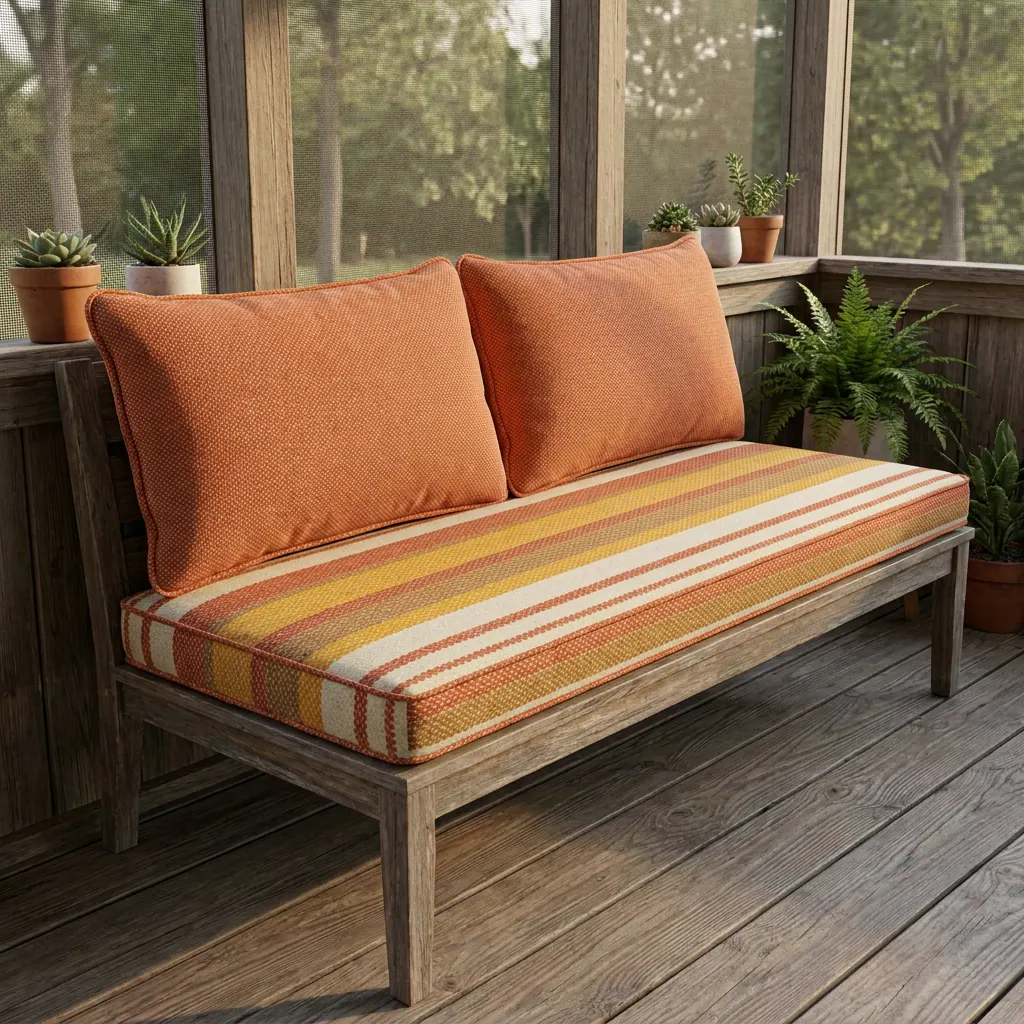
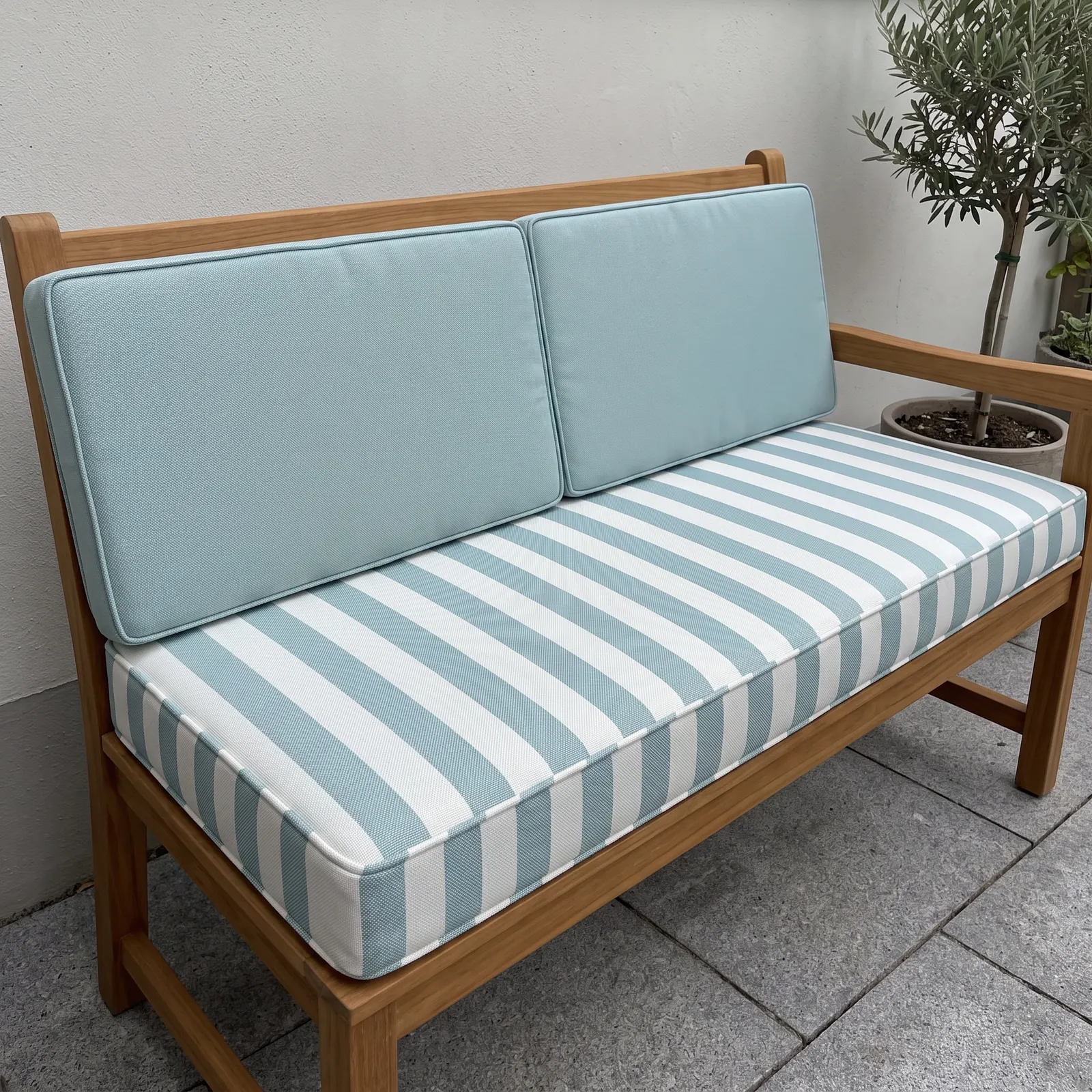
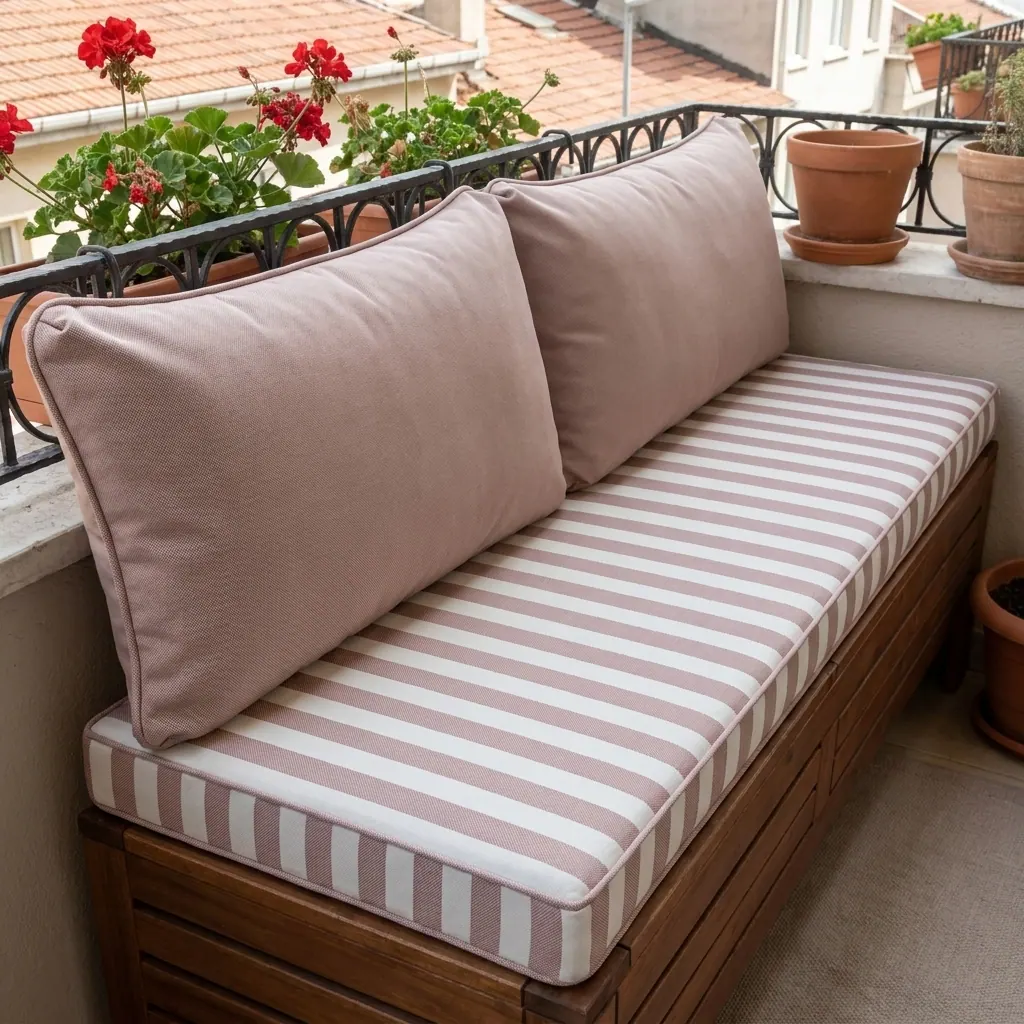
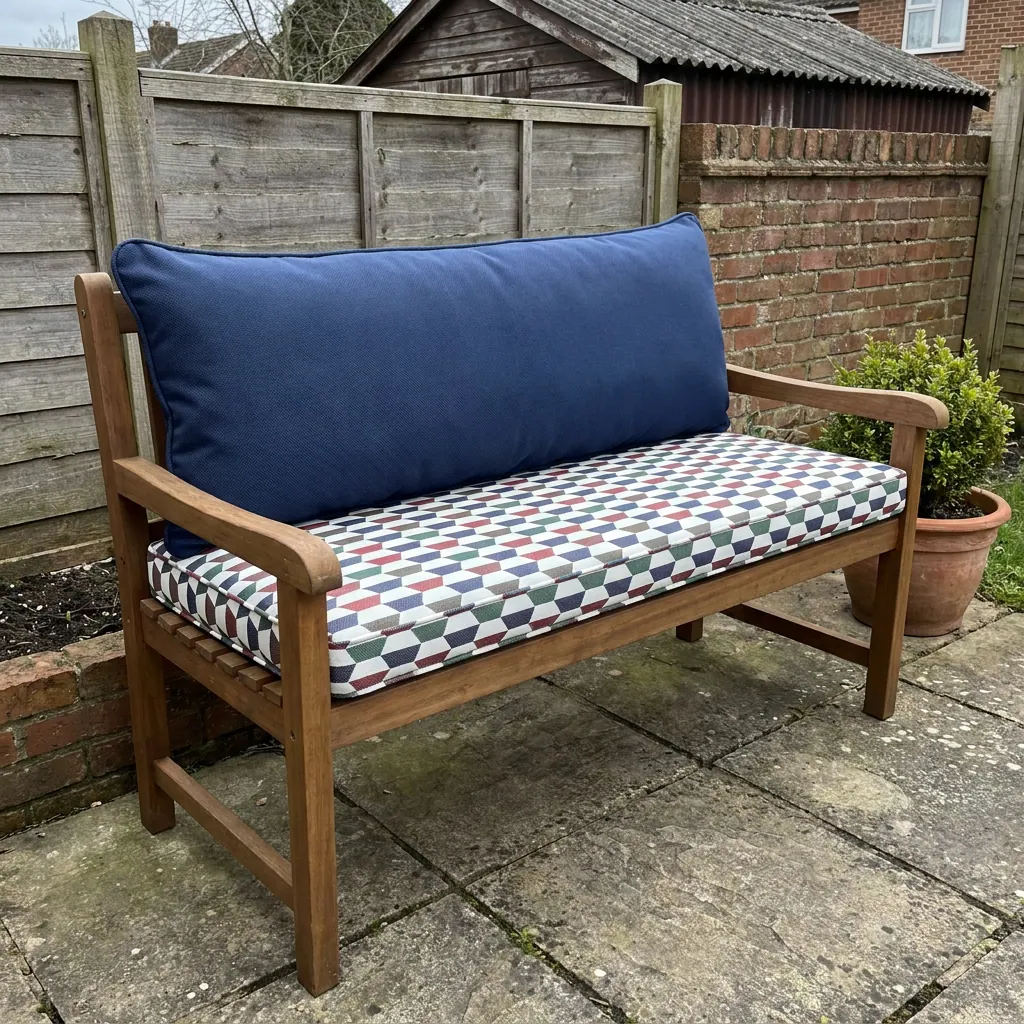
Bench cushions with backs, from screened porch to library nook
 Save
 Save
 Save
 Save
 Save
 Save