A Reading by HarlanCorner Floor Cushions & Poufs
A beige gingham corner floor cushion, and where the money should go
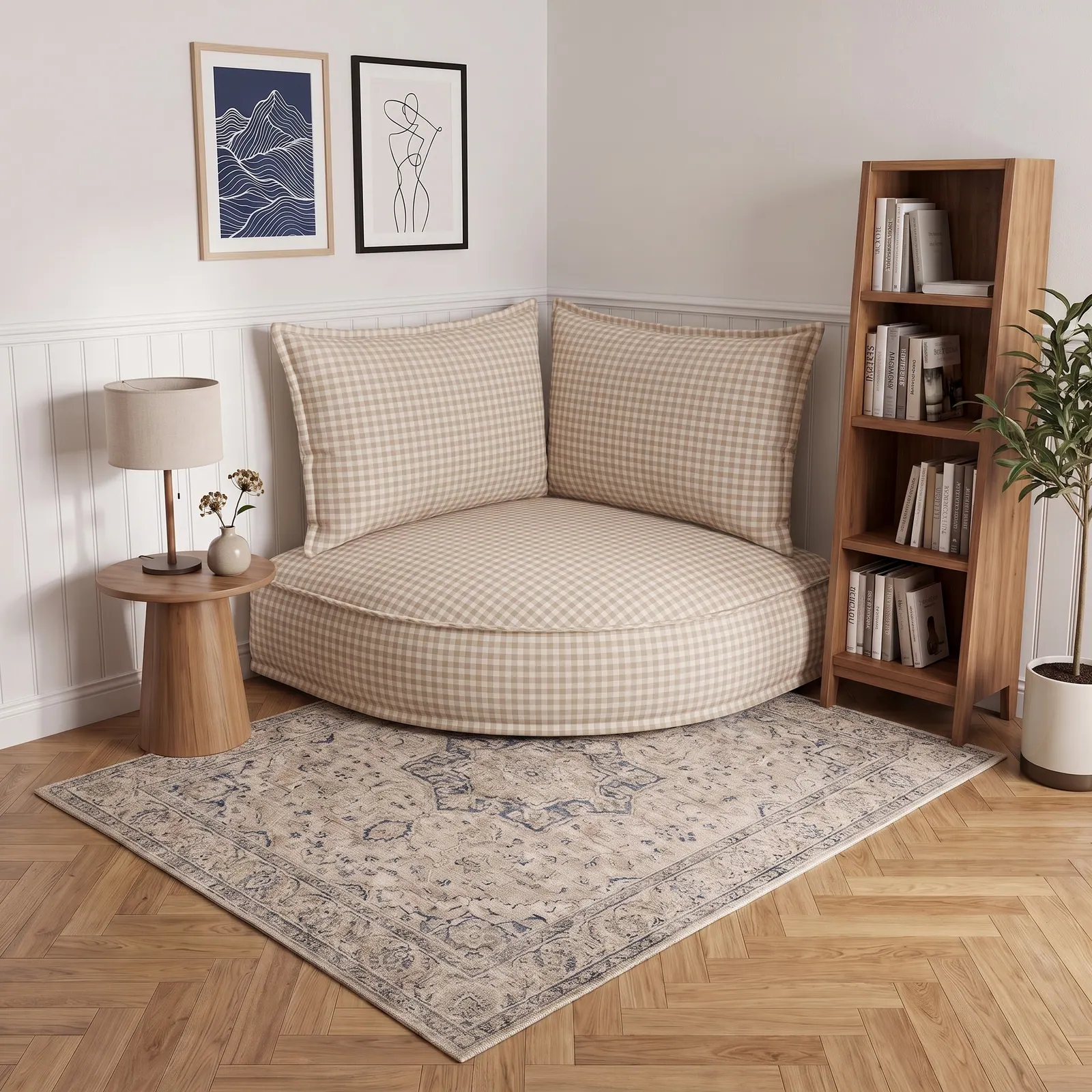
An empty corner, a quarter-round seat, two gingham pillows leaning on the walls. I read it the way I read a quote: where the money earns its keep, and where it only shows off.
The quick answer
For a corner floor cushion, spend on the right size and a well-made box edge, and save on the extras: a quiet small check, two simple backrest pillows and props you already own. Measure along each wall out from the corner, plus the depth at the exact center if the corner is angled, because odd corners take special cutting.
 Save
 Save
 Save
 Save
 Save
 Save
 Save
The cheapest new seat is a corner nobody uses
The cheapest new seat in any house is the corner nobody uses. This one had wainscoting, a herringbone oak floor and nothing else, and now it has a reading chair.
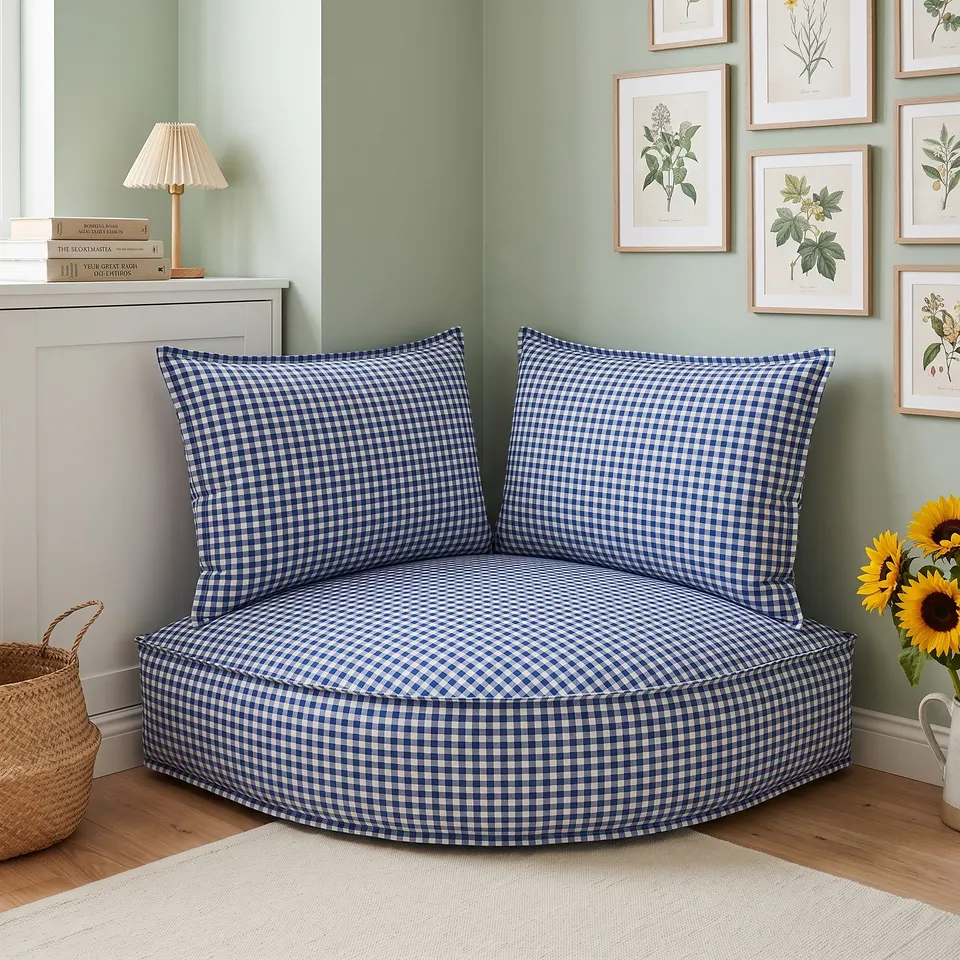
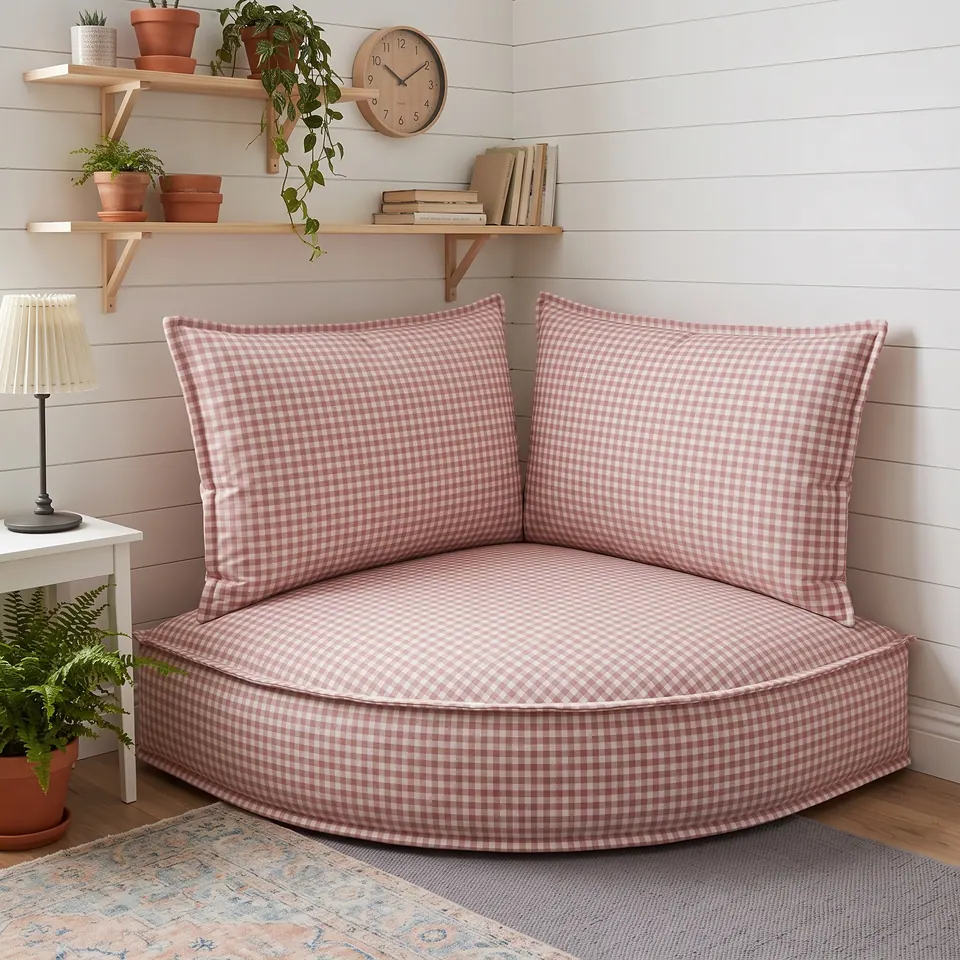
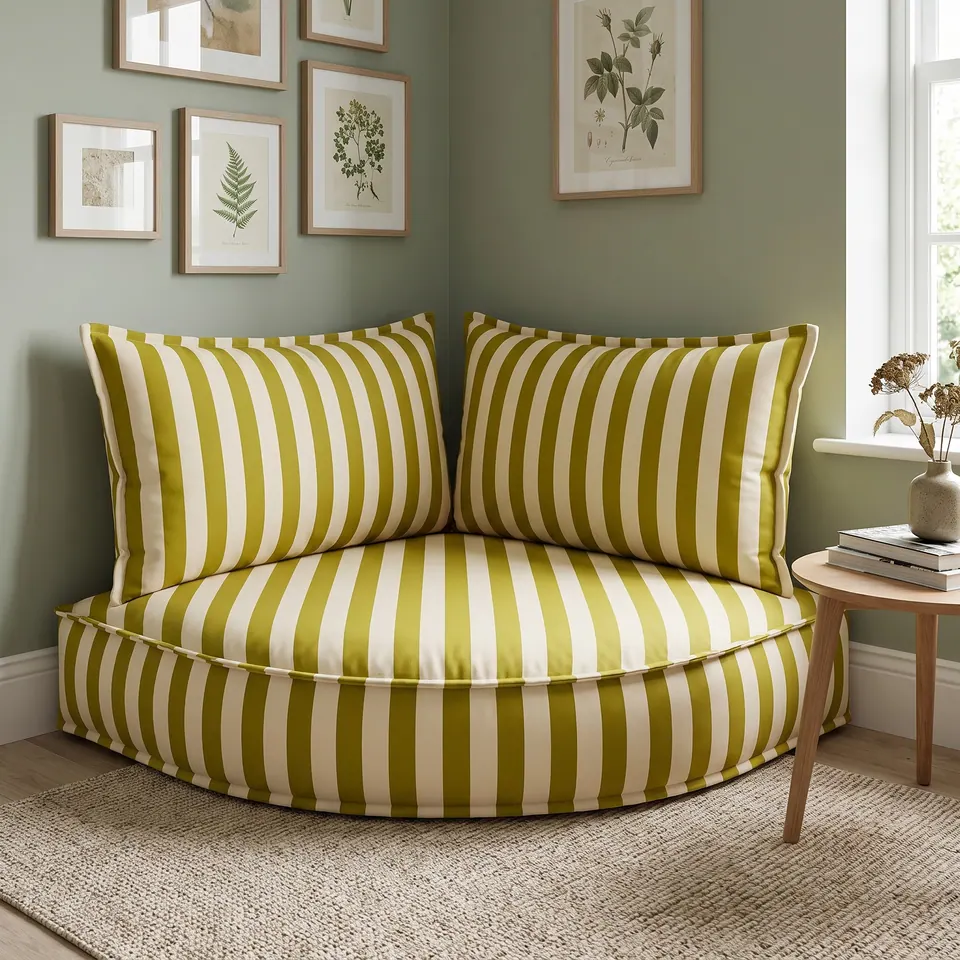
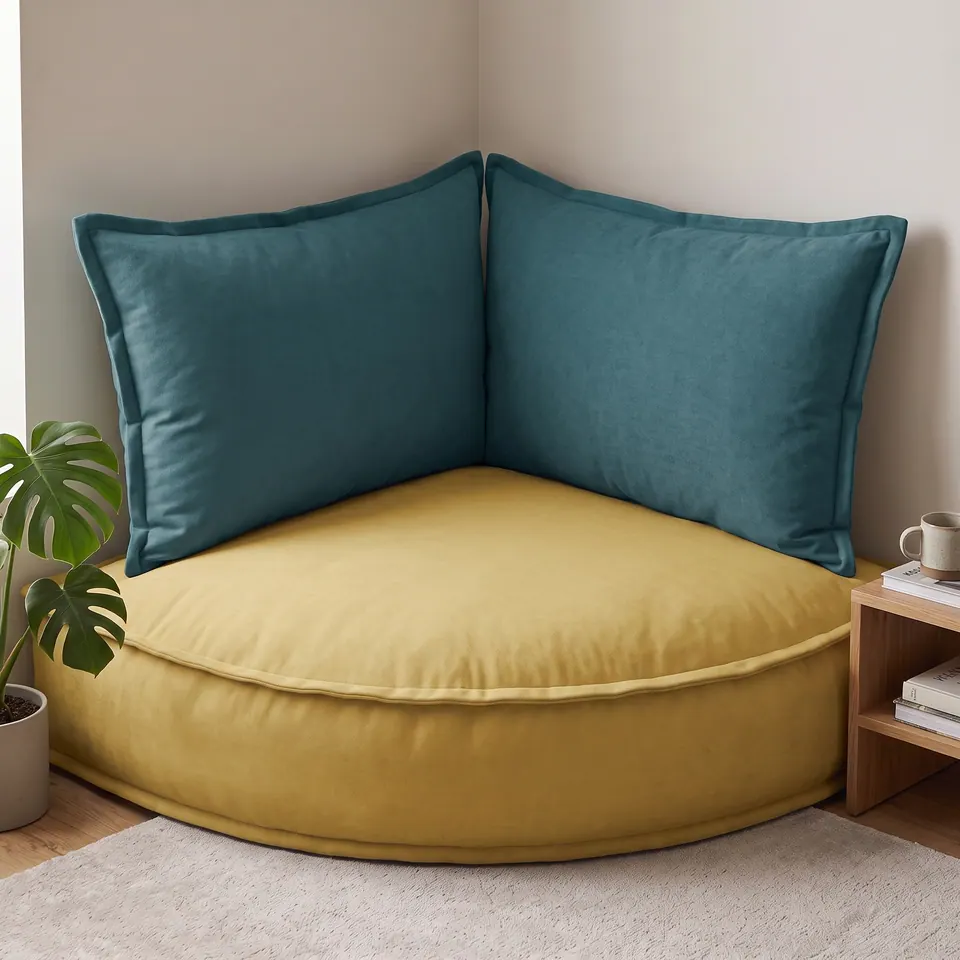
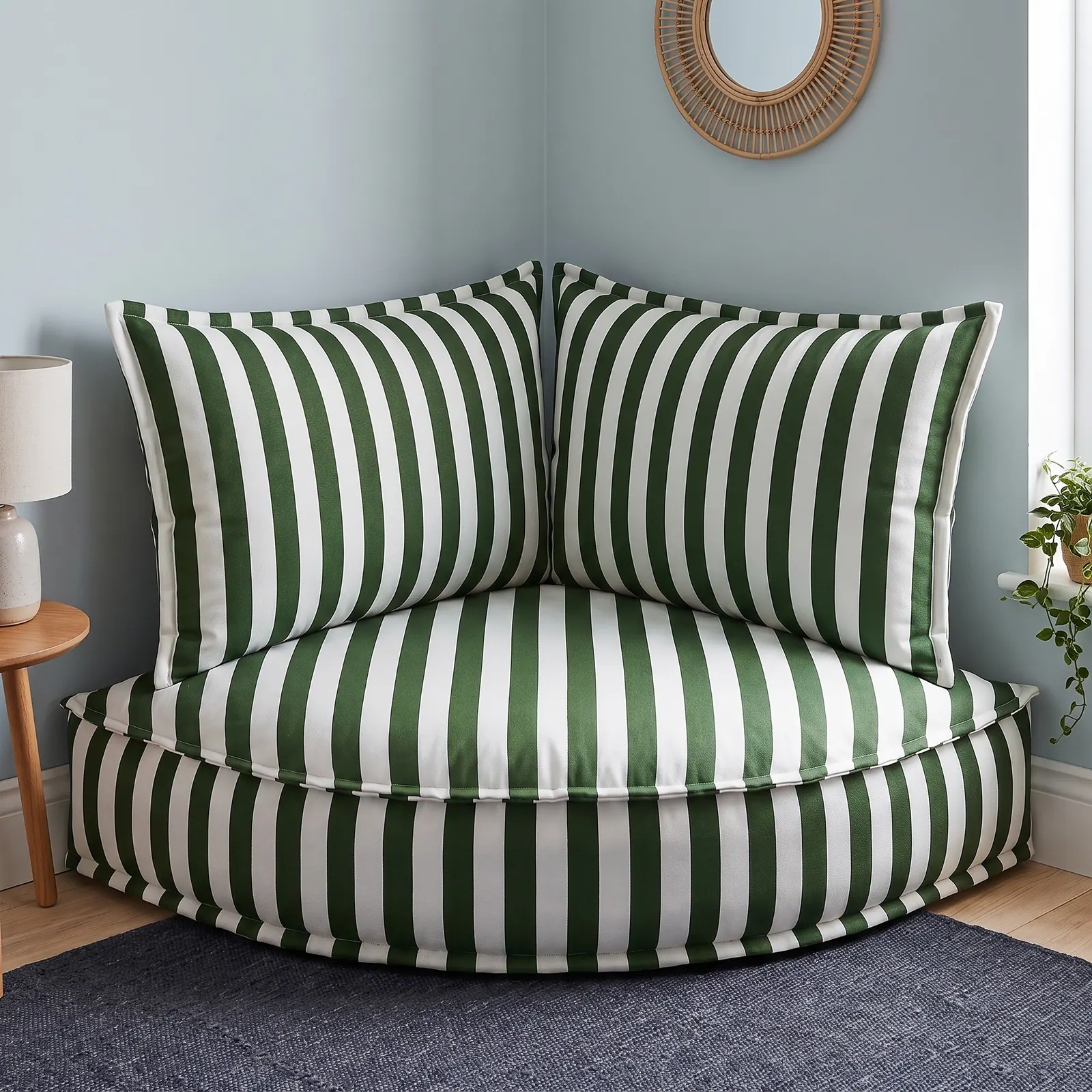
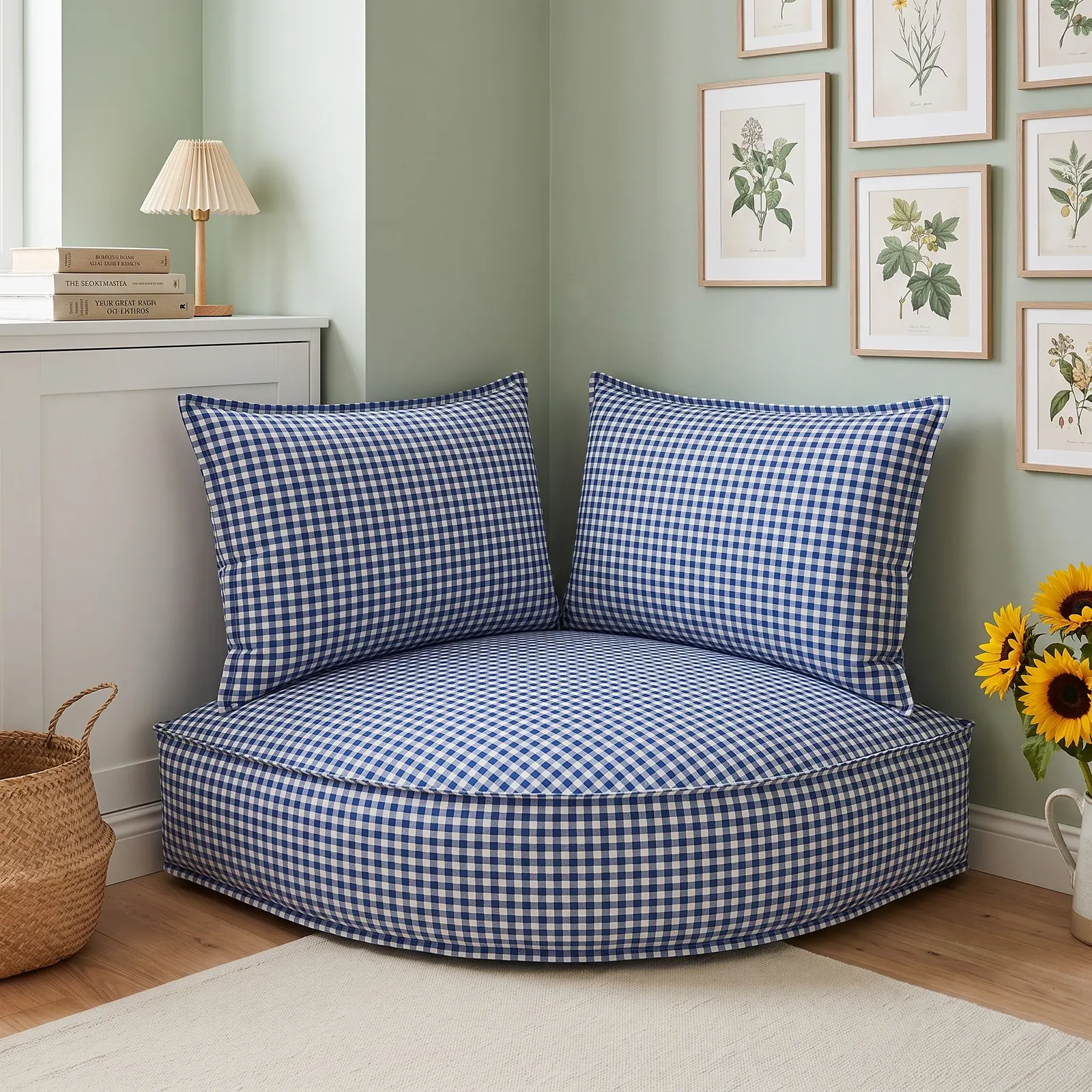
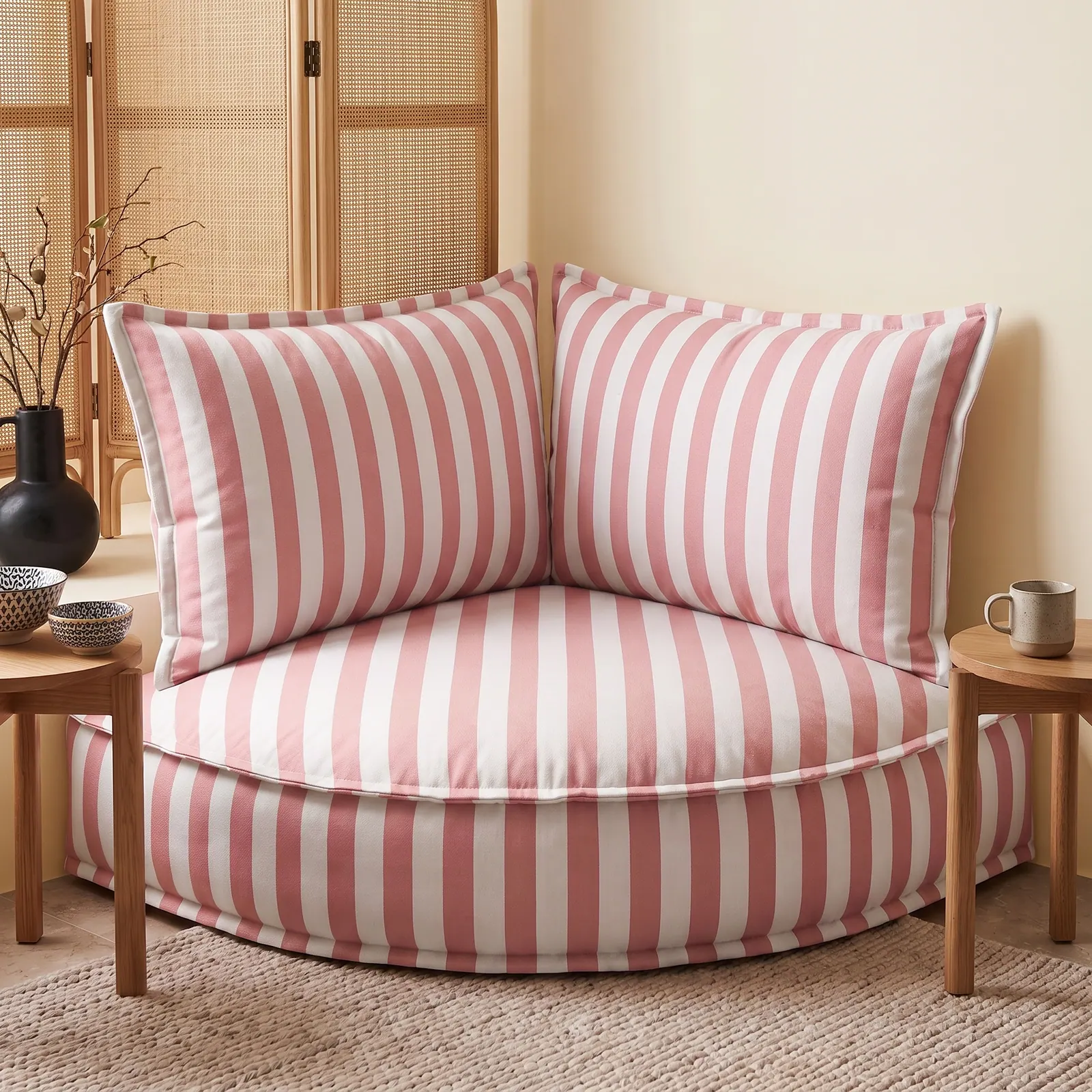
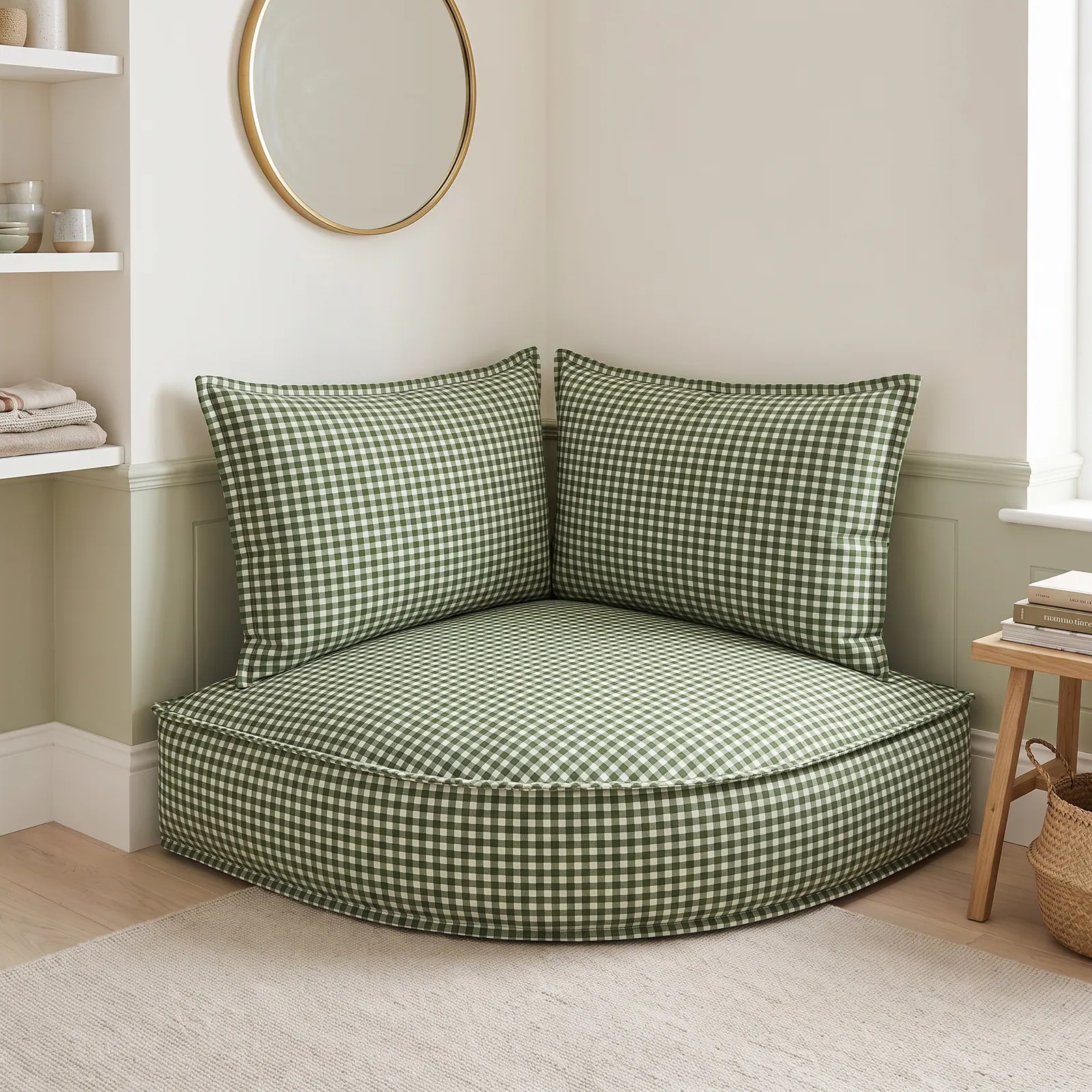
Look at the shape before the fabric. The corner floor cushion is a quarter circle. Its curved front faces the room, and its two straight sides press flat into the walls, so the walls do the work an armchair frame would do. Two flanged backrest pillows lean on each wall and meet in the corner. That is a floor-level armchair without a stick of wood in it.
The edge is a box with self piping, the same beige as the check. It gives the seat a firm, square front and a line that doesn't shout. I would spend money right there, on the cut and the seams, before anything else. Seams take the wear; fabric only takes the looks.
Pinned by Harlan
Five pins, from the quarter-round front to the faded rug that holds the zone together.
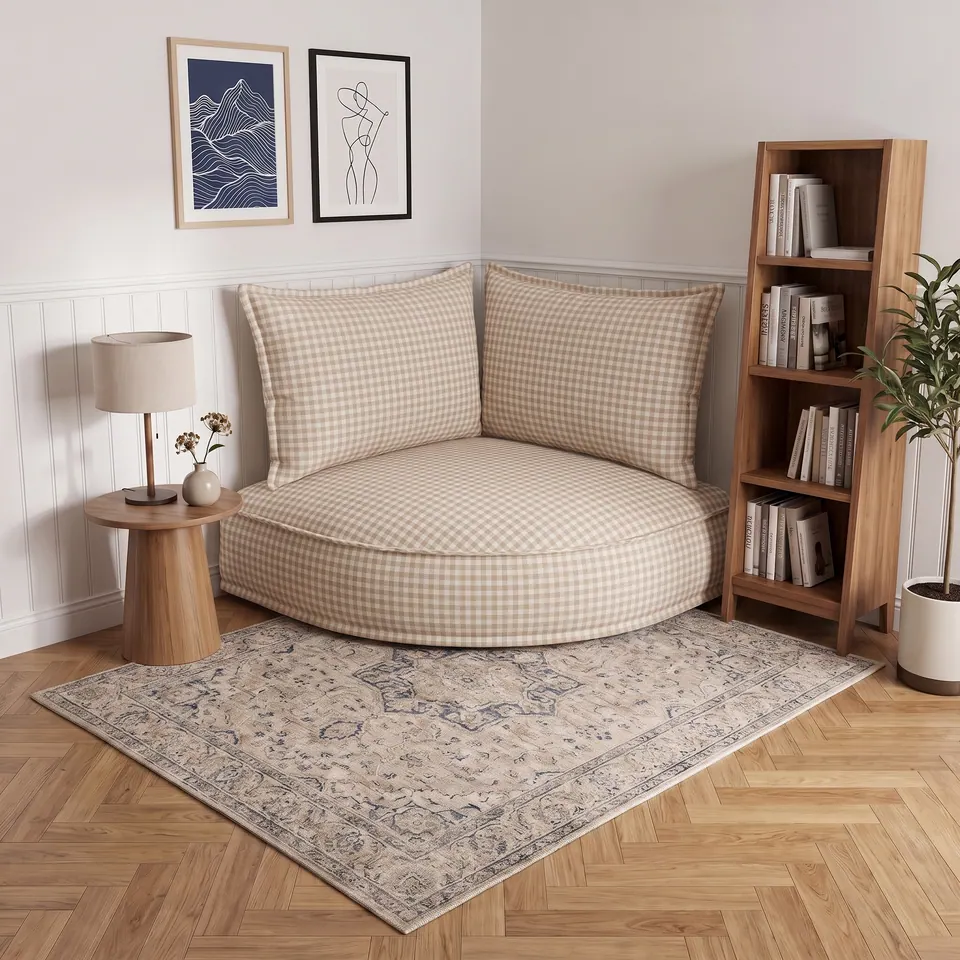
- Quarter-round seat front
The curved front faces the room while the two straight sides press into the corner walls.
- Flanged backrest pillow
Each pillow leans on one wall, so together they make a floor-level armchair back.
- Pedestal table and lamp
A lamp at shoulder height on the left turns the corner into a reading spot.
- Walnut bookshelf
Warm walnut balances the pale check and frames the right side.
- Vintage-style rug
A faded medallion rug defines the zone without adding a second strong pattern.
- Quarter-round seat frontThe curved front faces the room while the two straight sides press into the corner walls.
- Flanged backrest pillowEach pillow leans on one wall, so together they make a floor-level armchair back.
- Pedestal table and lampA lamp at shoulder height on the left turns the corner into a reading spot.
- Walnut bookshelfWarm walnut balances the pale check and frames the right side.
- Vintage-style rugA faded medallion rug defines the zone without adding a second strong pattern.
Have it made
Have this made — ask Harlan’s workshop
The best cushions I have known began with somebody asking one more question. Ask yours here. — Harlan
Leave your details and the workshop will call you to confirm measurements, fabric, foam and piping. No prices, dates or payment on this page: it is a request, not an order.
Why a quiet check, a walnut shelf and a lamp on the left
Small beige gingham is a patient fabric. It sits beside the walnut bookshelf, the pale pedestal table and the faded blue-gray rug without quarreling with any of them, and it forgives a crumb far better than plain cream would. Bold checks have their place. Not in a room that already has a patterned rug.
Walnut on the right warms the pale check and frames that side. The linen-shade lamp on the pedestal table, at shoulder height on the left, is what turns a seat into a reading spot. The dried flowers stay straw-colored so nothing competes. Above hang a navy mountain in line art and a line-drawn figure, and that navy answers the blue in the rug. The olive tree in its white pot stands at the far edge, and with the lamp it bookends the pouf. The vintage medallion rug marks out the zone without adding a second loud pattern.
None of those props needs buying new, my friend. Most houses already own a lamp, a small table and a rug. That is where you save.
More shapes like this live in the corner floor cushion atlas and among our reading nook cushions. The check belongs to the checked linen and gingham family. Which corner in your house has been waiting longest for somebody to sit in it?
Sit well. — Harlan