A Reading by HarlanBolster Pillows
Anatomy of a pair of brick red bolster pillows on a daybed
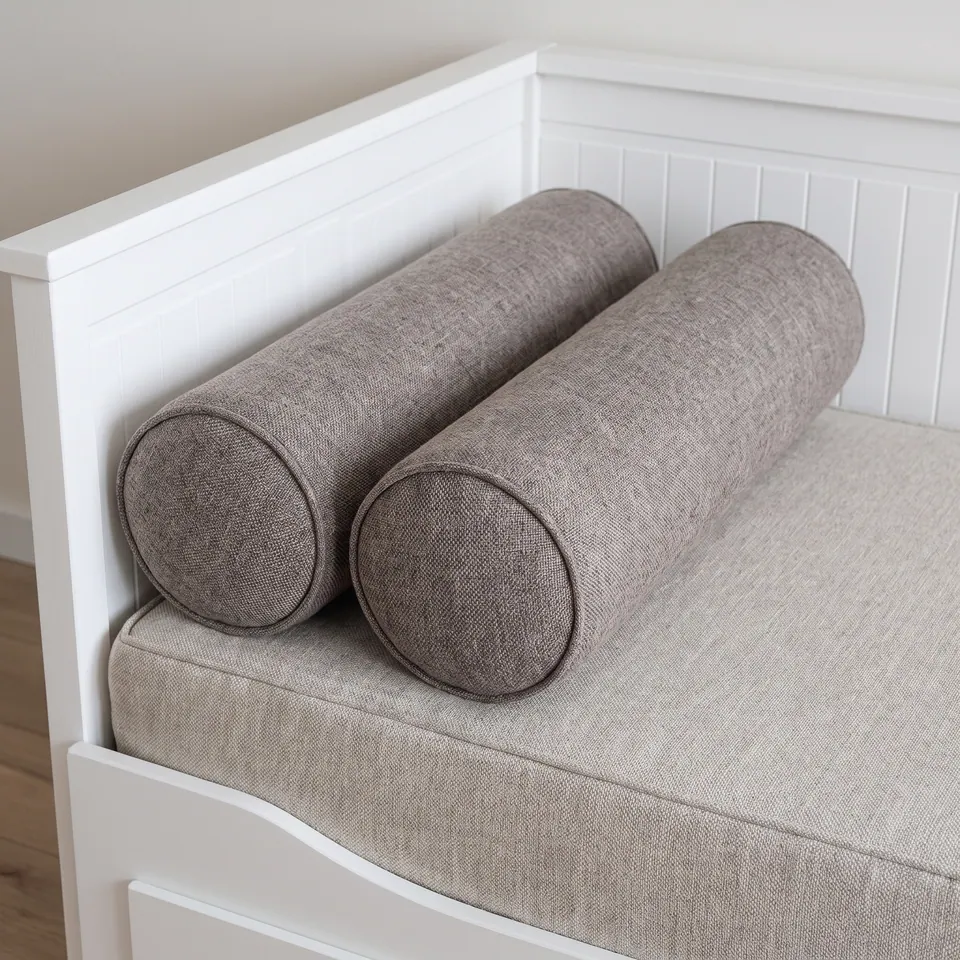
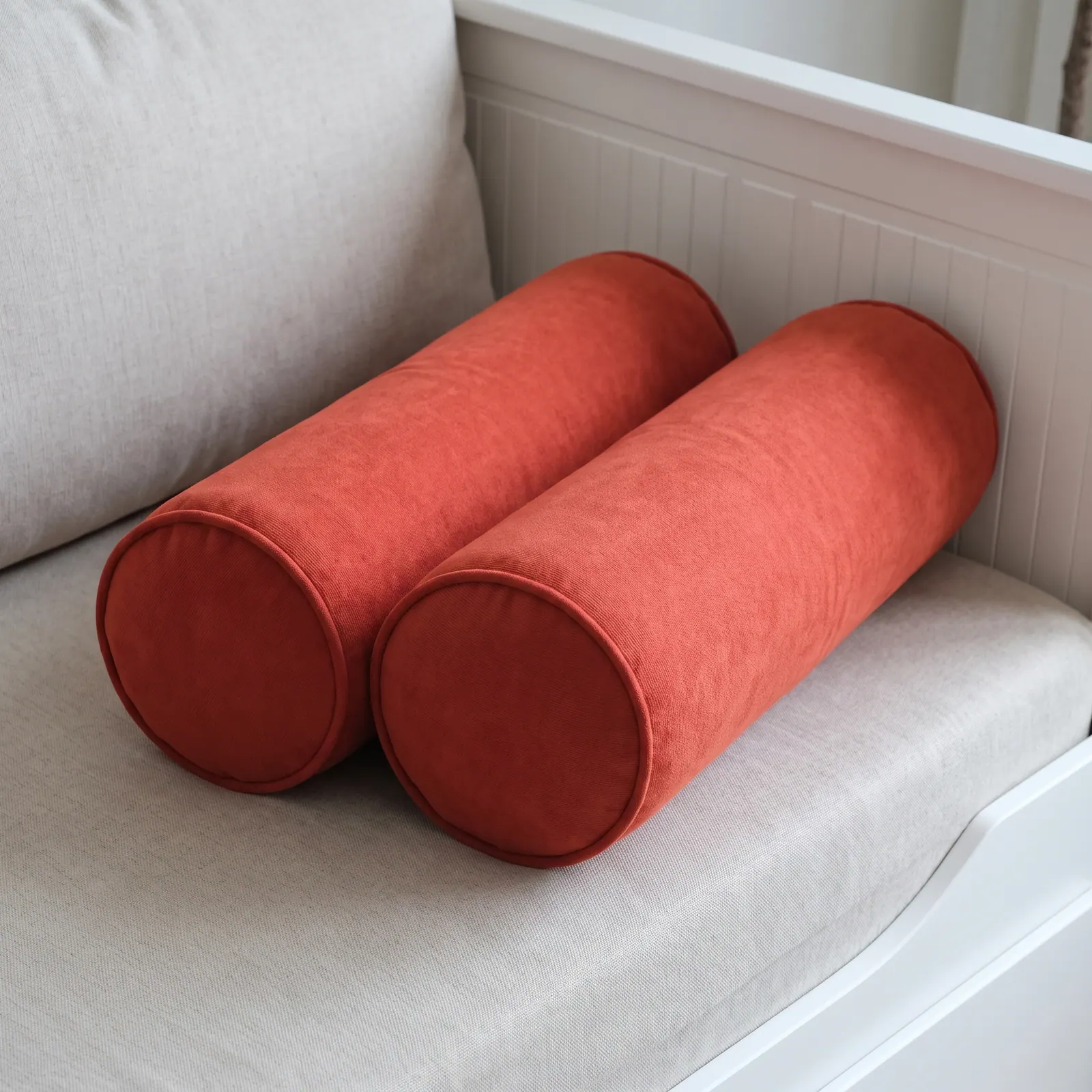
Two rolls laid side by side, their piped ends lined up like wheels. Harlan reads the finishing that tells you who made them.

 Save
The quick answer
A good bolster pillow is judged at its ends: each round end cap should sit flat, with piping that runs even all the way around and meets cleanly. Rolls in one order were 9 7/8 in (25 cm) across, and a backrest near 79 in (200 cm) long was split into two 39 3/8 in (100 cm) pieces for easier handling and shipping.
The cushion, cut open
Cover fabric. A removable, zippered cover. Machine wash at 86°F (30°C) on a gentle cycle and air dry.
Piping. A fabric-covered cord sewn into the seams. It sits on the seam line, so it does not change the size.
Fiber wrap. Polyester fiber (Dacron) batting around the foam: it fills the cover out and softens the edges.
Foam core. About 2.0 lb/ft³ (32 kg/m³) high-resilience foam, firm to medium-firm, cut to the ordered size.
Zipper. Along the back band, as hidden as possible. The zipper side faces down or toward the wall.
Base panel. The underside of the cover. A non-slip fabric backing can cover the whole of it instead.
A bolster pillow: three pieces of cloth and a lot of patience
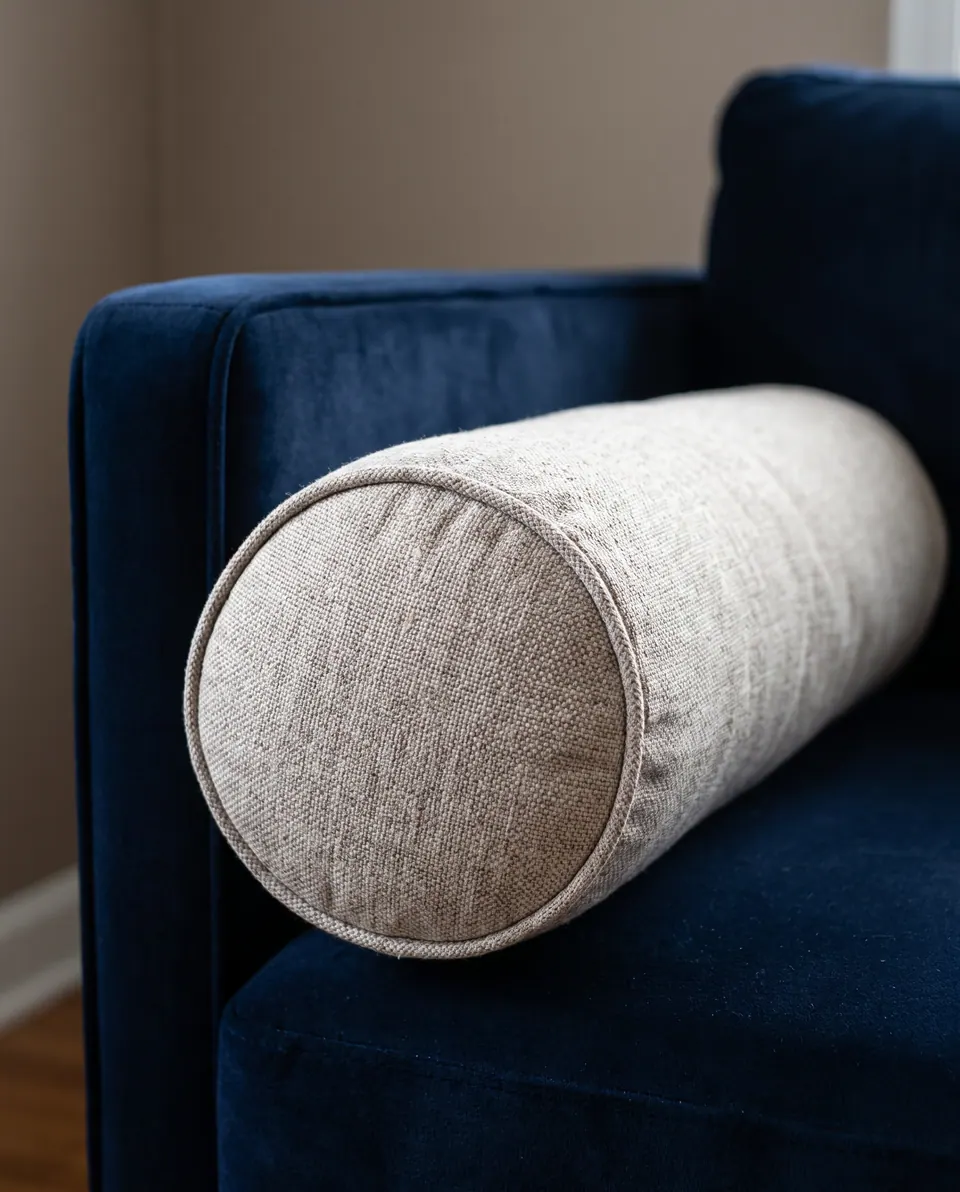
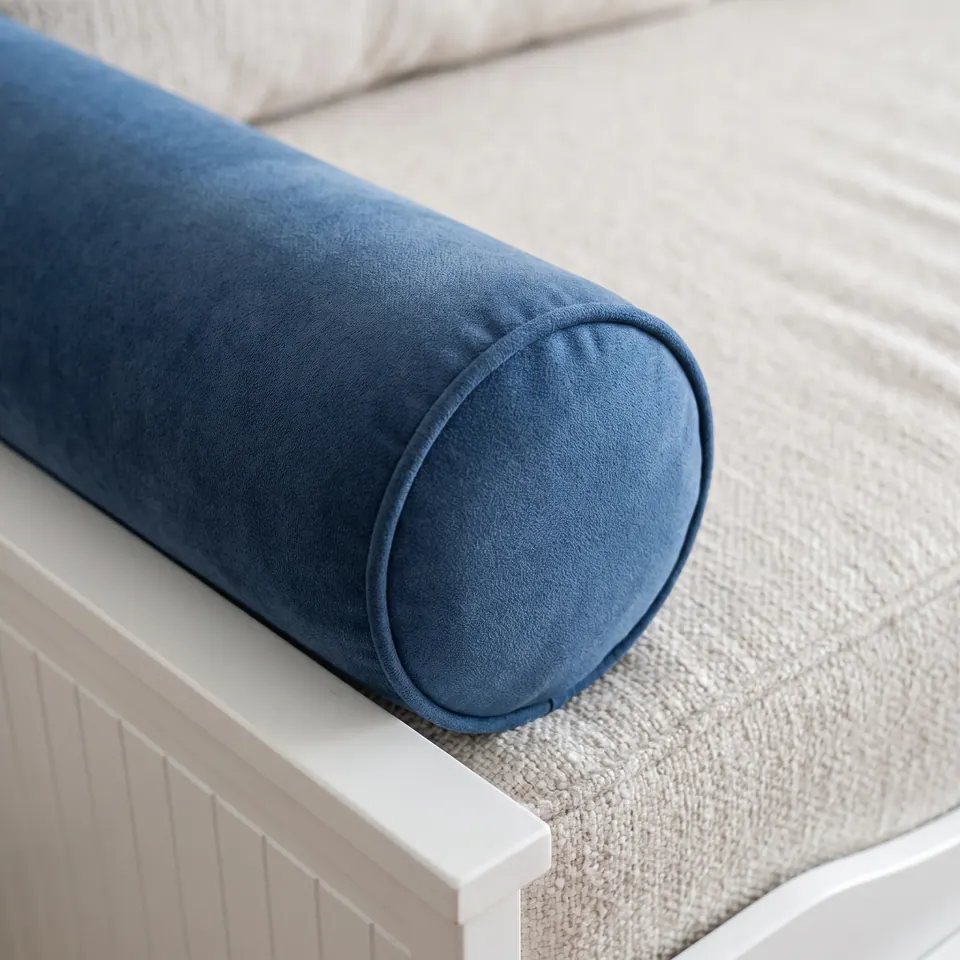
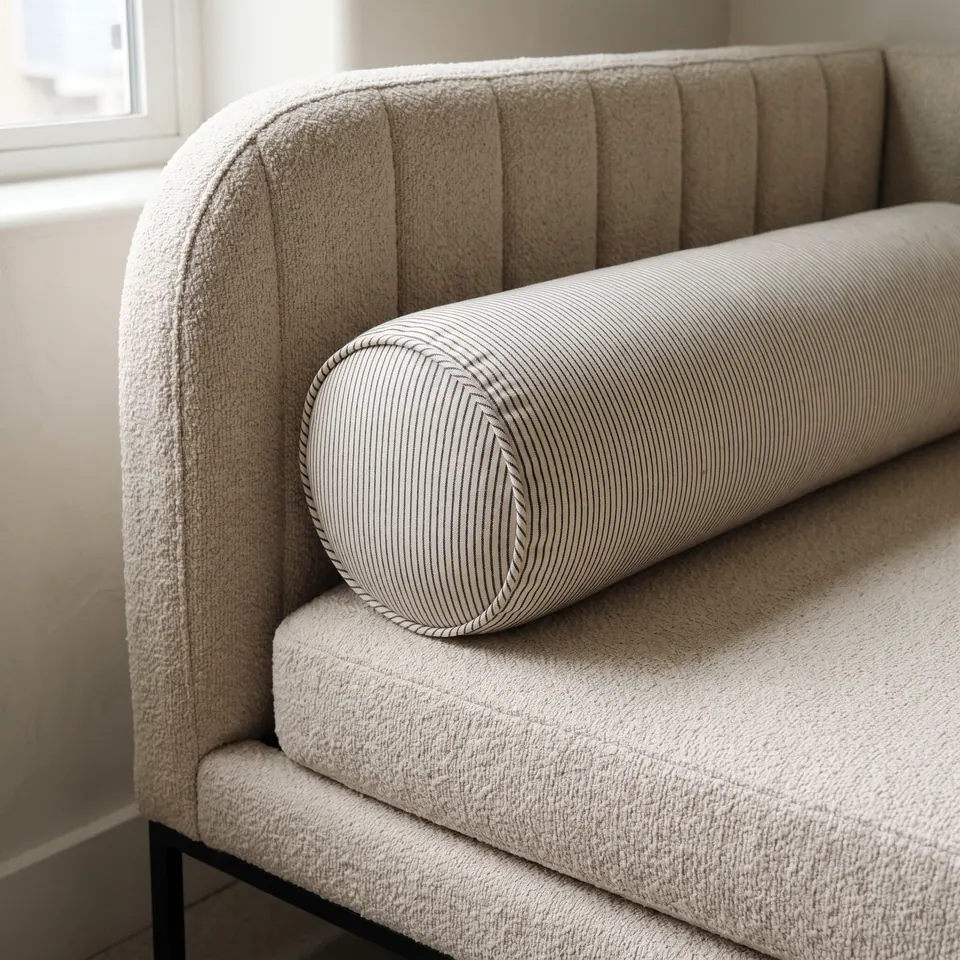
A bolster pillow is three pieces of cloth: one long barrel and two round ends. Any machine can sew the barrel. The ends are where you find out who made it.
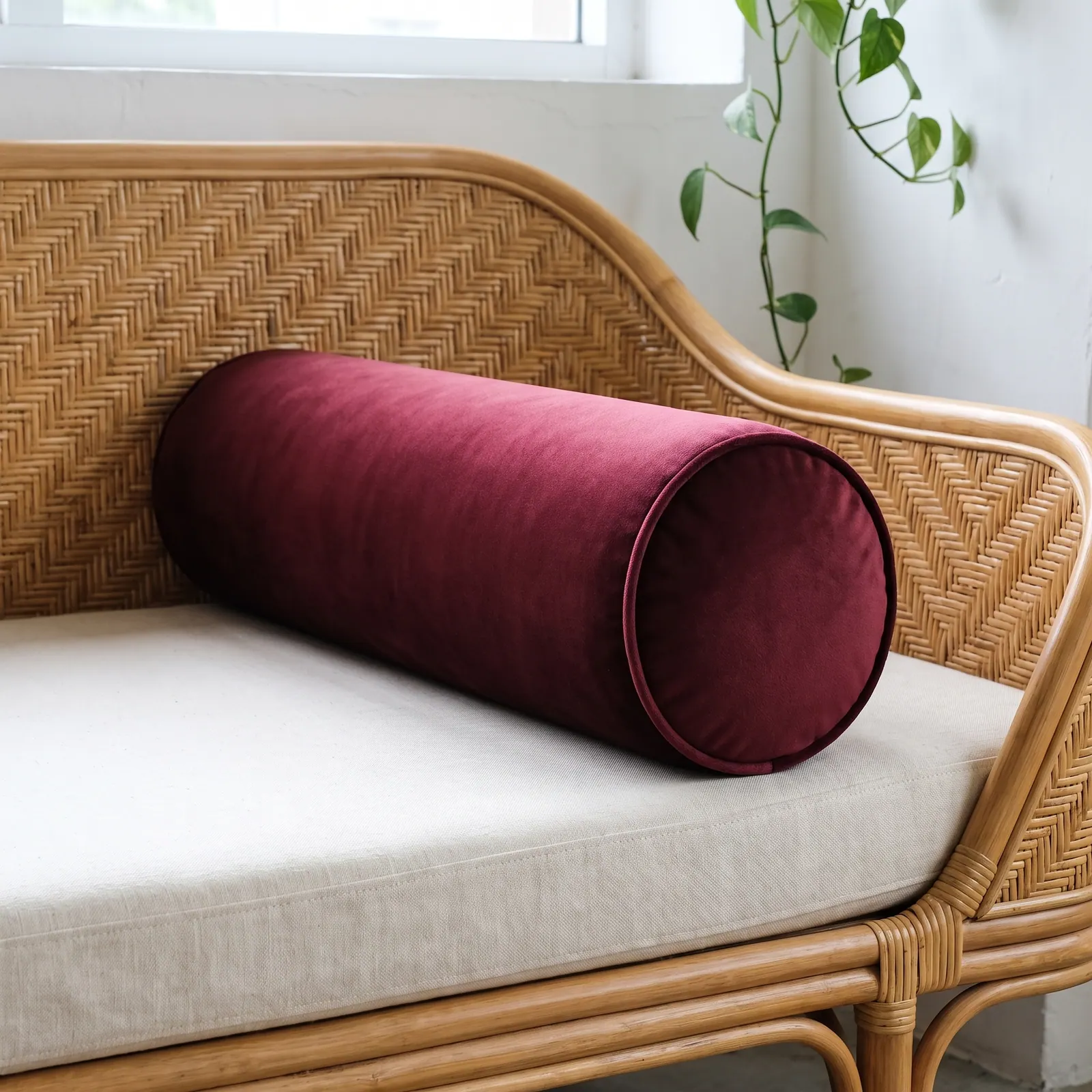
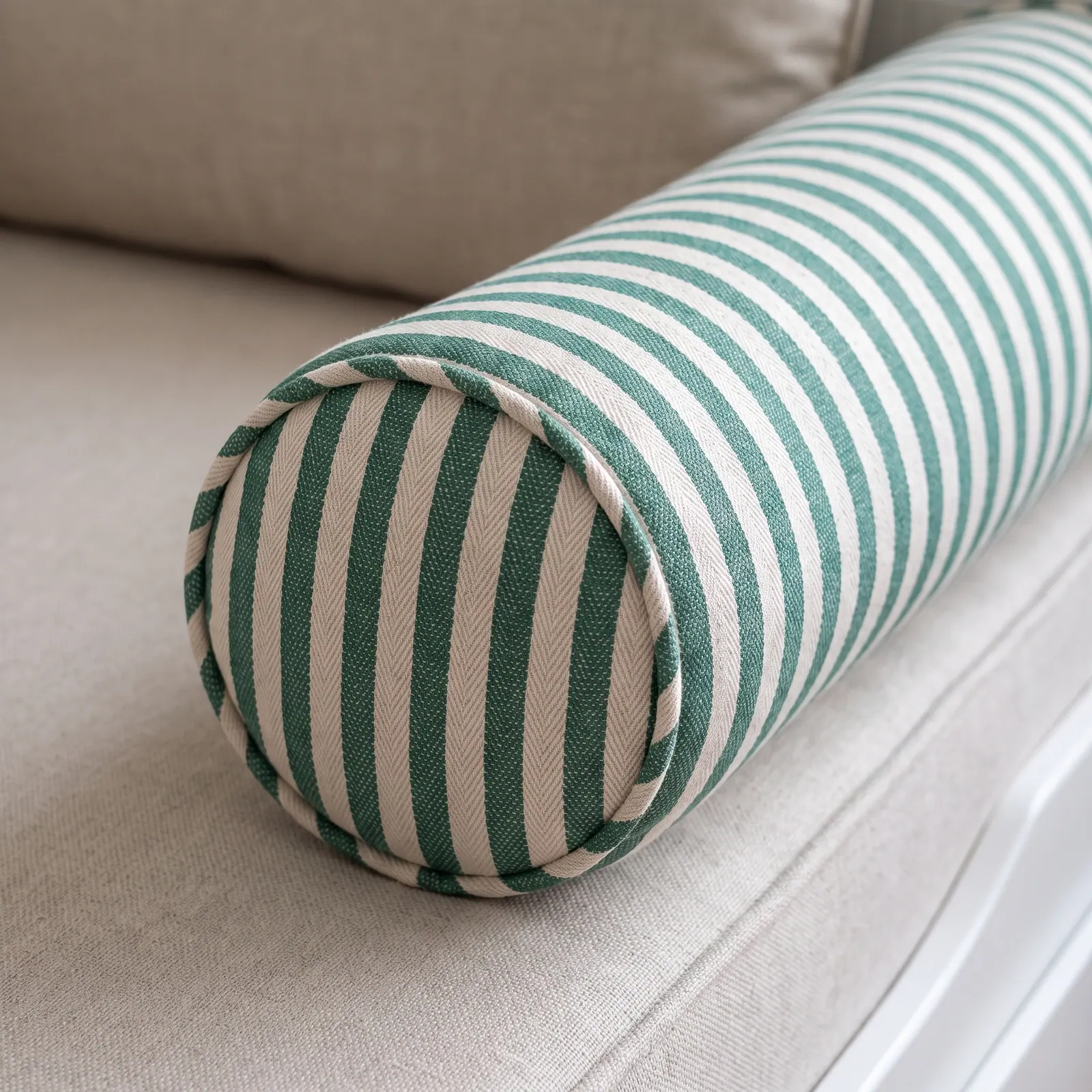
Here are two of them in brick red, lying side by side on an oatmeal daybed seat against white beadboard. Look at the front end cap first. The circle sits flat, not domed or puckered, and the self piping runs even all the way round in the same brick red, outlining the end without shouting. When a round cap is eased in carelessly, it gathers into little tucks at the rim. I cannot find one here.
Then look along the barrel. The fabric is a soft, brushed linen-look weave, and it carries faint pressure marks where a hand has rested. Those marks do not bother me. They tell me the hand of the cloth is soft, which is what you want under a neck or an arm.
Buy the cushion once, cry once. On a bolster that means looking hard at the ends before you look at the price. The bolster pillow atlas and bolster size and diameter cover the rest.
On the cutting table: the brick red bolster pillows
| Piece | Pair of round bolster pillows |
|---|---|
| Construction | One barrel, two round end caps |
| Fabric | Brick red soft-brushed linen-look weave |
| Piping | Self piping on both end caps |
| What to check | Flat caps, even piping, a clean join |
| Placement | Parallel to the daybed arm, slightly offset |
| Length | Sized to the seat depth |
| Long backrest rolls | Near 79 in (200 cm), split into two 39 3/8 in (100 cm) pieces |
| Roll diameter in that order | 9 7/8 in (25 cm) |

Have it made
Have this made — ask Harlan’s workshop
Fabric has a temper and foam has a memory. Better to settle both in a conversation than to guess at them alone. — Harlan
Leave your details and the workshop will call you to confirm measurements, fabric, foam and piping. No prices, dates or payment on this page: it is a request, not an order.
Pinned by Harlan: two bolsters on an oatmeal daybed
Five pins, from the offset rear end cap to the beadboard arm the rolls run beside.
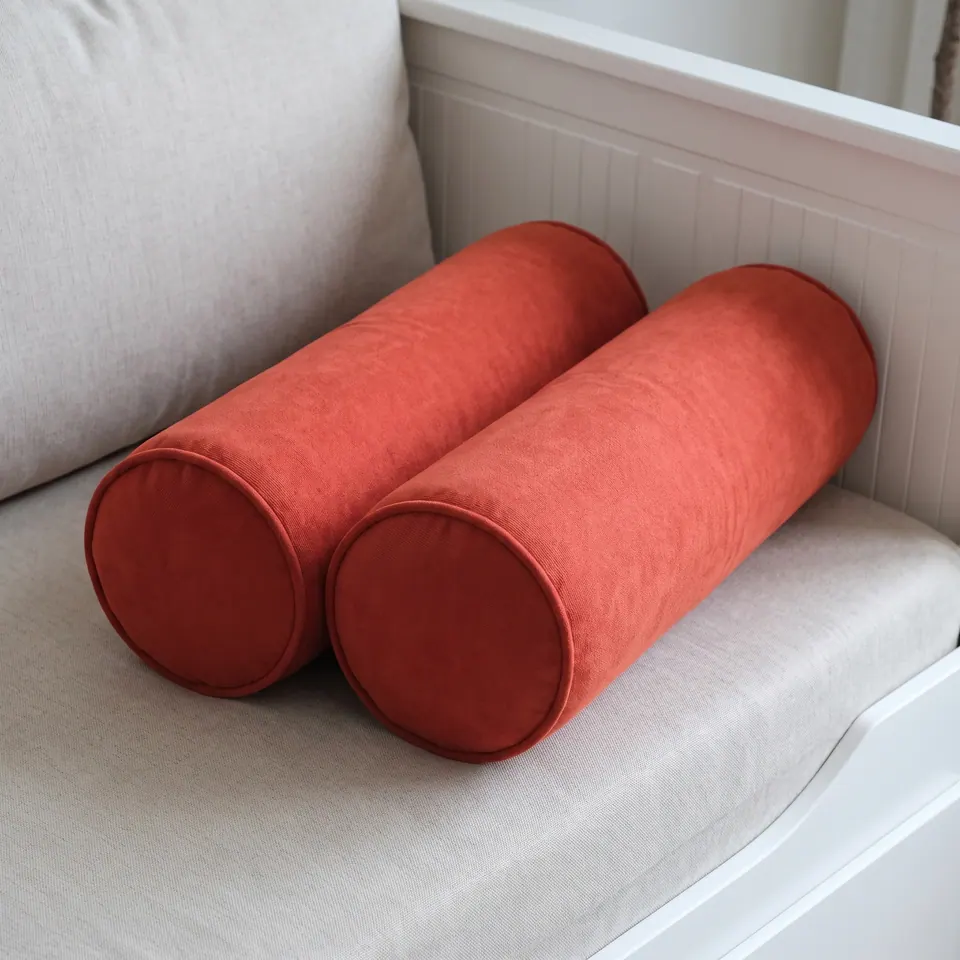
- Rear bolster end
The pair is offset slightly so both piped end caps stay visible.
- Front piped end cap
Self piping in brick red outlines the circle without shouting.
- Soft brushed surface
Faint pressure marks show a soft hand that is comfortable under the neck.
- Oatmeal back cushion
Earthy red sits naturally on oatmeal without the shock of a true scarlet.
- Beadboard arm panel
Both rolls run parallel to the arm, sized to the seat depth.
- Rear bolster endThe pair is offset slightly so both piped end caps stay visible.
- Front piped end capSelf piping in brick red outlines the circle without shouting.
- Soft brushed surfaceFaint pressure marks show a soft hand that is comfortable under the neck.
- Oatmeal back cushionEarthy red sits naturally on oatmeal without the shock of a true scarlet.
- Beadboard arm panelBoth rolls run parallel to the arm, sized to the seat depth.
Why a pair, why offset, why brick red
The pair lies parallel to the beadboard arm, with its length sized to the depth of the seat. It is slightly offset, the rear roll set back from the front one, so both piped end caps stay in view. Lined up flush, you would see one circle and a shadow. Offset, they read like two wheels on an axle.
Brick red is warm but earthy. On oatmeal it looks at home, where a fire-engine red would jump off the seat. The oatmeal back cushion and seat cushion are the quiet ground, and the beadboard is the white frame around it all.
A matched pair belongs at one end of a daybed, the lounging end. To keep them from looking stranded, repeat the red once at the far end in a smaller throw pillow. One echo is plenty.
Do you lie on your daybed, or only sit on it? If you lie, put the pair where your head goes. More in daybed back cushions for a sofa look and living room cushions.
A backrest almost seven feet long, made as two
One buyer wrote in needing a sofa backrest almost 79 in (2 m) long, at least 9 7/8 in (25 cm) deep, with rolls 9 7/8 in (25 cm) across. They suggested splitting it, and the shop agreed: two backrests, each 39 3/8 x 9 7/8 x 9 7/8 in (100 x 25 x 25 cm).
That is the right instinct, my friend. Past about 39 in (1 m), a single roll gets awkward to handle and to ship. Two rolls butted end to end still sit as one line, and you can lift one without wrestling the other. The seam where they meet is honest, and nobody minds it.
Buyer questions: spare covers, a washable protector, matching pillows
- A common question
Can I buy a second set of covers in another color for my teddy floor sofa?
The workshop's answerYes. Full extra cover sets are quoted on request, a single long mattress cover can be bought on its own, and a covers-only listing exists. Just check that you are buying the covers and not the whole sofa.
- A common question
Can the pet sofa protector go in the washing machine on a gentle cycle?
The workshop's answerYes. The sofa pad covers made as couch protectors for dogs and cats are machine washable.
- A common question
Can you make throw pillows in the same fabric as my bench cushion?
The workshop's answerYes, often, including mixed pairs such as one pillow in deep olive with beige piping and a smaller one in the bench fabric with olive piping. Send the sizes, how many, piping or not and the fabric codes in one message, and the shop replies with the exact price and a payment link. Zippered square covers, such as 18 x 18 in (46 x 46 cm), are made too.
Judge a bolster pillow at its ends: a flat end cap with piping that runs even all the way around says more than the fabric label.
Harlan
Questions buyers ask next
What size bolster pillow fits a daybed?
When the roll lies parallel to the arm, as here, size its length to the seat depth. For a long backrest, split anything near 79 in (200 cm) into two rolls; one order used two at 39 3/8 in (100 cm), each 9 7/8 in (25 cm) across.
Why does my bolster show faint marks after use?
A soft brushed surface shows light pressure marks where an arm or neck has rested. It is a sign of a soft hand rather than a fault. Turn the roll now and then so the wear spreads evenly.
Should bolsters match the daybed cushions?
Not necessarily. An earthy contrast like brick red on oatmeal gives a daybed a focal point without shouting. Repeat the color once more, in a smaller throw pillow at the other end, so the pair does not look stranded.
How is a bolster pillow put together?
It is a barrel of fabric closed along its length plus two round end caps, often piped. Check the ends before anything else: they should sit flat, and the piping should meet cleanly where it joins.
Sit well. — Harlan
More photographs to read
 Save
 Save
 Save
 Save
 Save
 Save