A Reading by HarlanBolster Pillows
A denim blue bolster pillow on a daybed, and how to order one right the first time
A letter about one small blue roll, and the few plain lines of a message that keep a bolster from being made twice.
 Save
The quick answer
To order a bolster pillow right the first time, send the fabric code, the piping code, the length and the diameter, and say whether you want the insert or covers only. This denim blue linen-look bolster is sized to sit inside a daybed’s arm rail. Any backrest roll longer than about 39 in (1 m) is better made in two pieces.
High Point ·
My friend,
A blue roll that knows its place
A bolster pillow is two numbers and two codes. Get those four right and it only has to be made once.
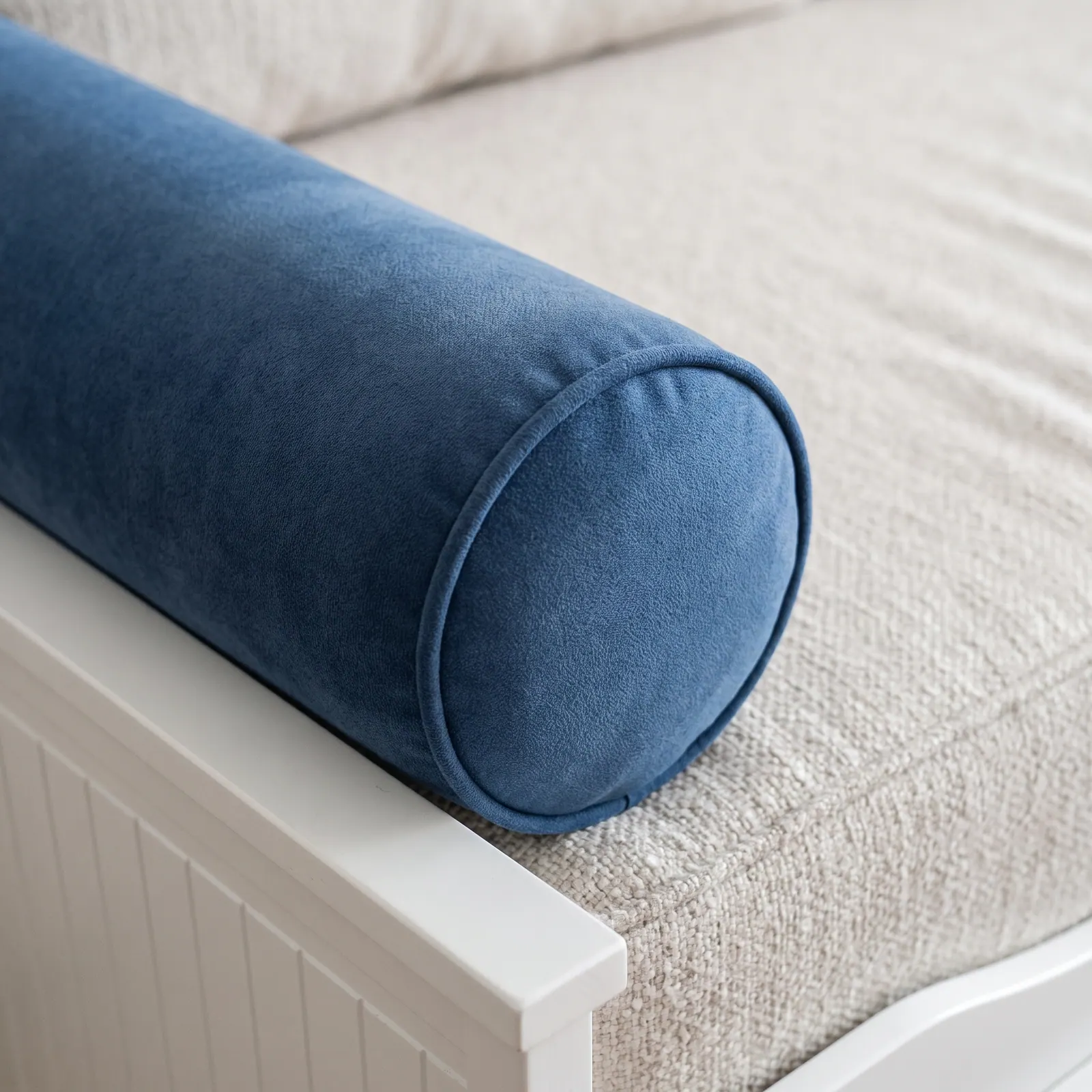
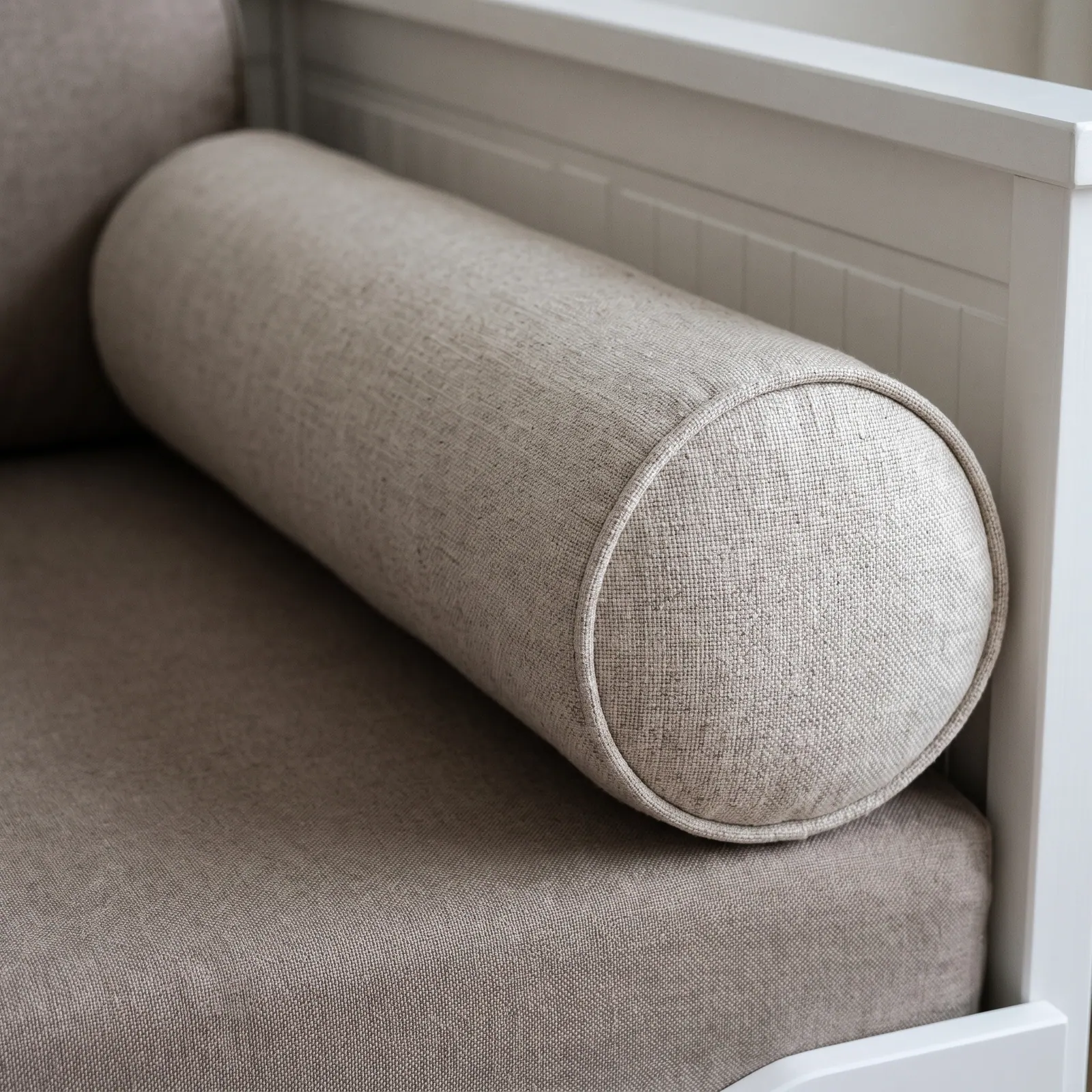
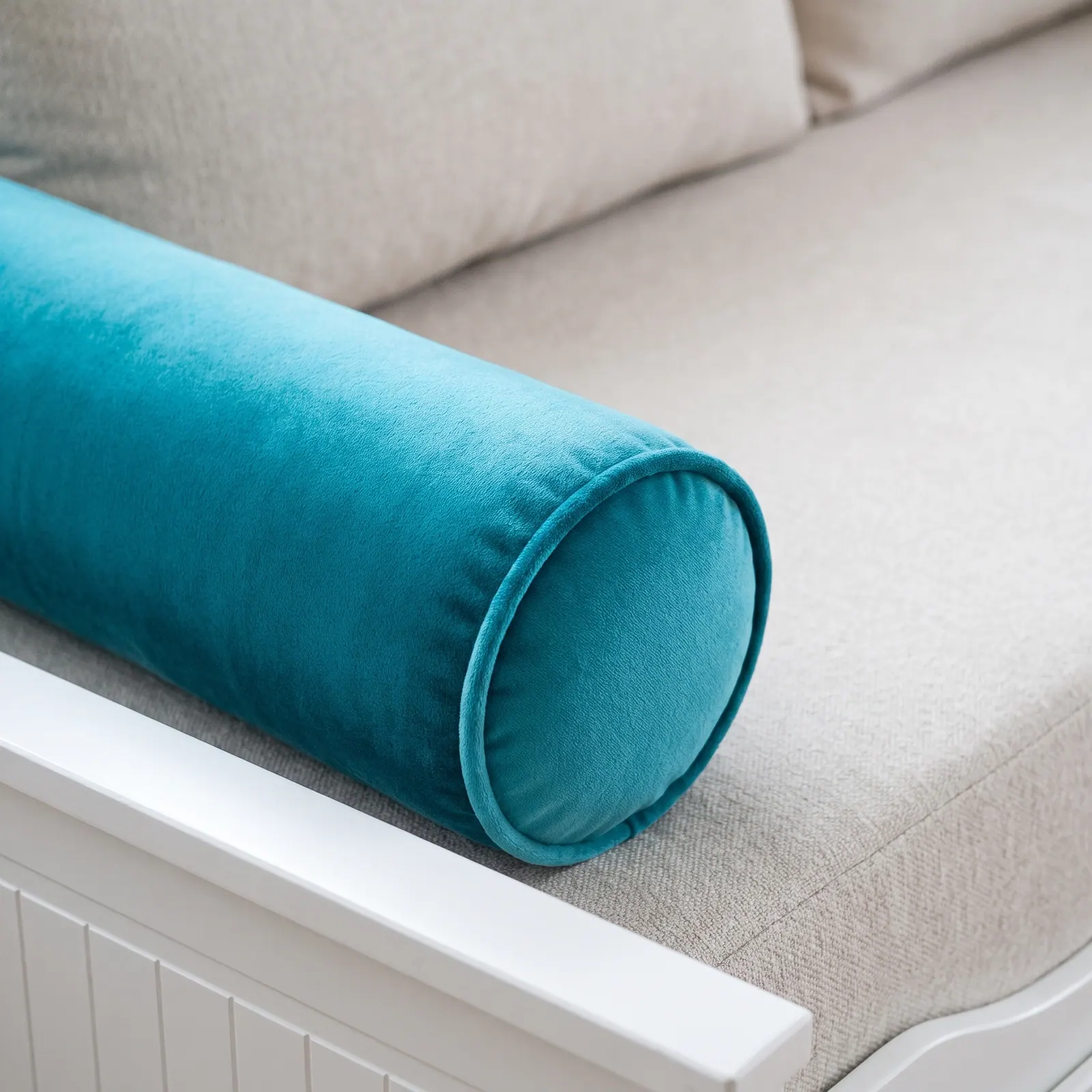
This one is a denim blue roll in a linen-look fabric, code 907 on the chart, laid inside the white beadboard arm of a daybed. Mid-blue, not navy. Beside the nubby oatmeal seat it looks like a work shirt after a hundred washes, and I mean that as praise.
The face is brushed, so the window light finds lighter and darker patches in it. Cloth that shows where a hand has passed looks lived in, and a brushed weave keeps a little memory of every hand. The seat cushion is all texture, so the bolster stays smooth. Two busy surfaces side by side only argue.
Now the end. The piping is cut from the same blue and runs round the circle like a hoop on a barrel. Self piping keeps that outline sharp against the weave behind it without calling in a second color. The roll sits just inside the rail, so when you stretch out it becomes a headrest. The back cushions stay oatmeal, which leaves blue the only color at this end of the room.
The same thinking holds for an IKEA Hemnes daybed cushion or any daybed with an arm rail: measure inside the rail, where the roll will live. What does yours measure there?
Pinned by Harlan: five things at the daybed’s end
Five spots at the end of the daybed, and what each one does for the blue.
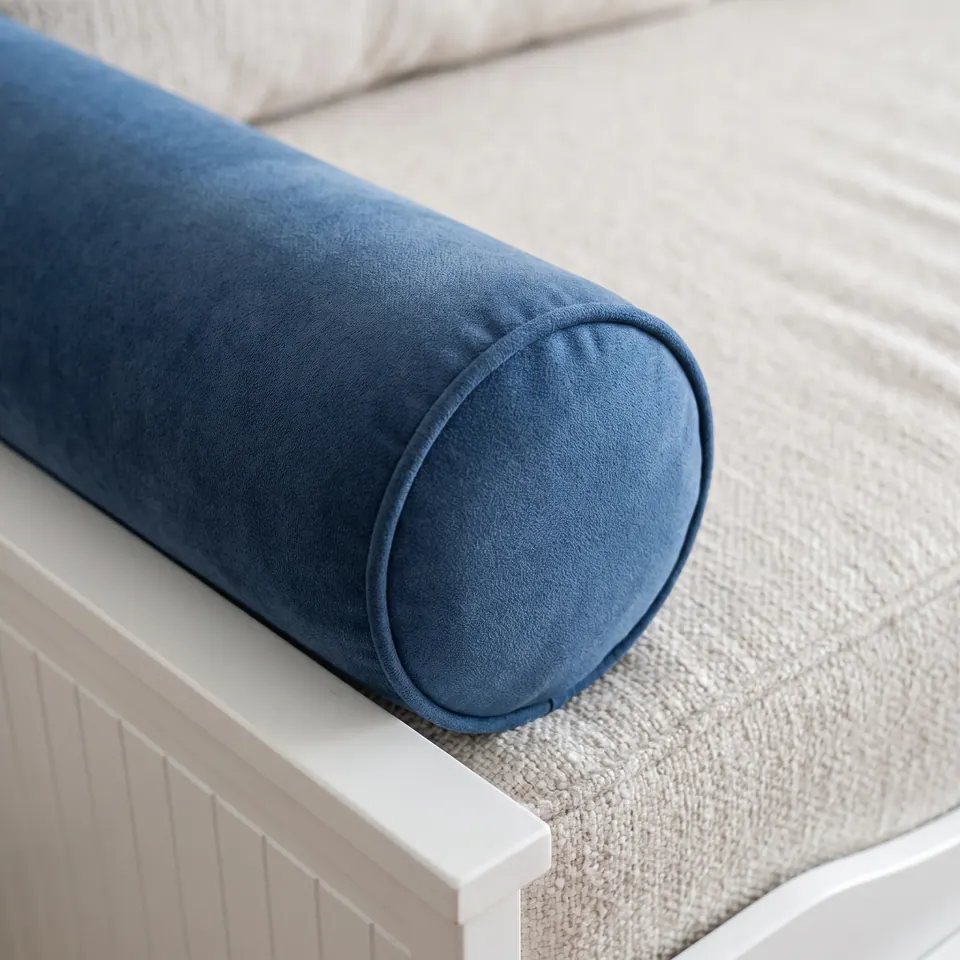
- Piped end circle
Self piping holds the round outline even against the busy nubby weave behind it.
- Brushed blue face
The soft brushed surface shows light and dark mottling, which gives a lived-in rather than showroom look.
- White arm rail
The roll sits just inside the rail so it works as a headrest when lying down.
- Nubby oatmeal weave
A heavily textured seat pairs best with a smoother bolster face so the two surfaces contrast.
- Back cushion edge
Neutral back cushions keep the blue as the only color at this end of the daybed.
- Piped end circleSelf piping holds the round outline even against the busy nubby weave behind it.
- Brushed blue faceThe soft brushed surface shows light and dark mottling, which gives a lived-in rather than showroom look.
- White arm railThe roll sits just inside the rail so it works as a headrest when lying down.
- Nubby oatmeal weaveA heavily textured seat pairs best with a smoother bolster face so the two surfaces contrast.
- Back cushion edgeNeutral back cushions keep the blue as the only color at this end of the daybed.
Five lines for the message
- The fabric code, not the color name. “Denim blue” means something different to everybody who reads it; 907 means one bolt of cloth.
- The piping code on a line of its own, even when it matches. Write “self piping” and there is nothing left to guess.
- Length × diameter, measured inside the arm rail. A bolster sized over the rail sits on top of it like a log on a fence.
- “With insert” or “covers only,” in plain words, then a photo of the daybed from the front and one from the end.
- If the shade matters, ask for a swatch and hold it against the daybed at the hour you sit there most. Buy the cushion once, cry once.
Seventy-nine inches of backrest, cut in two
A buyer wrote in about a long sofa that wanted a backrest almost 79 in (2 m) long, at least 9.8 in (25 cm) deep, with rolls 9.8 in (25 cm) across. Before we could suggest it, the buyer did: make it in two. The workshop agreed, and cut two linen backrests of 39.4 × 9.8 × 9.8 in (100 × 25 × 25 cm) each.
I hold that message up as a model. Every number was in it, the shape was named, and the buyer had already pictured carrying the thing through a doorway. A 79 in roll is awkward to ship, awkward to wash and awkward to set in place. Two halves butt together, and whoever leans back never knows the difference.
- Sizes
- Two backrests, each 39.4 × 9.8 × 9.8 in (100 × 25 × 25 cm)
- Fabric
- Linen
The lesson: Split a backrest longer than about 39 in (1 m) into two pieces; it handles, ships and fits more easily.
Buyer questions
- A common question
Can I order just the covers and keep the foam inserts I already have?
The workshop's answerYes. Covers-only orders are made the same way, with piping and ties if you want them. One buyer ordered a 67 × 15 × 2 in bench cover and six 18.5 × 16 × 2 in chair covers, all piped and tied. A 79 × 21 in (200 × 54 cm) window seat cover on its own came to about two-thirds of the price with foam.
- A common question
What kind of foam goes inside, and do I get a choice?
The workshop's answerEvery custom cushion gets the same standard insert: high-resilience comfort foam at about 2 lb/ft³ (32 kg/m³). That is firmer and longer-lasting than the 1.75 lb/ft³ (28 kg/m³) foam often specified.
- A common question
Could you make a bolster and some pillows in the same fabric as my bench cushion?
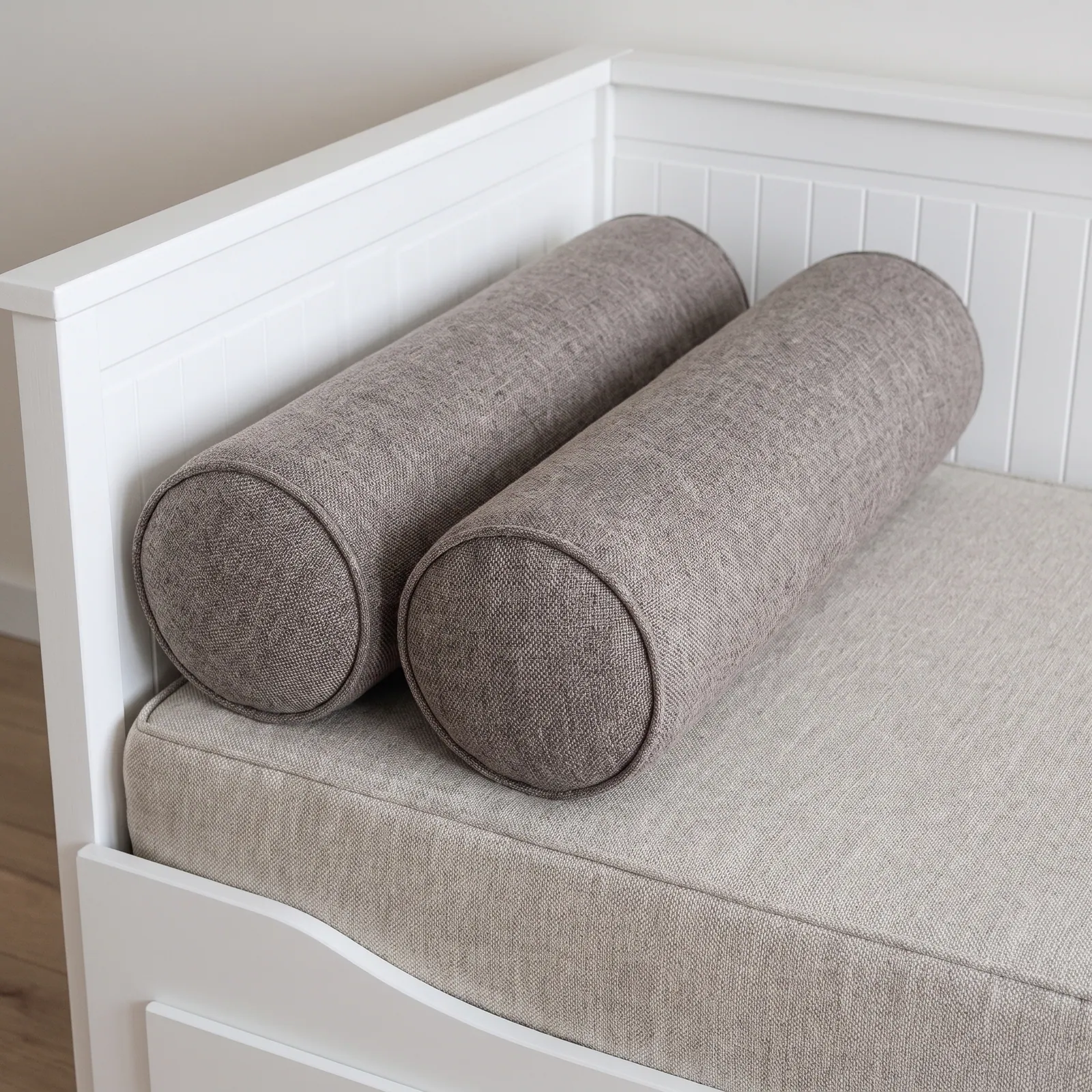
The workshop's answerYes, in any size. One buyer paired a 101.5 × 19 × 3 in bench cushion with a matching bolster in mushroom taupe velvet, piped in the same color. Matching square pillows and bolsters are added to bench orders all the time.
A bolster pillow is ordered with two numbers, length and diameter. Measure the length inside the daybed’s arm rail, not over it.
Harlan
On the cutting table: the daybed bolster
| Cushion | Round bolster pillow with flat round ends |
|---|---|
| Fabric | Denim blue linen-look, brushed face (code 907) |
| Piping | Self piping around both end circles |
| Sized by | Length × diameter, measured inside the arm rail |
| Insert | With filling, or covers only on request |
| Pairs with | Nubby oatmeal seat and back cushions |
| Order note | Fabric code, piping code, size, and “with insert” or “covers only” |
| Best for | Daybed arms, headrest rolls, long backrests made in two halves |
Have it made
Have this made — ask Harlan’s workshop
The best cushions I have known began with somebody asking one more question. Ask yours here. — Harlan
Leave your details and the workshop will call you to confirm measurements, fabric, foam and piping. No prices, dates or payment on this page: it is a request, not an order.
Questions buyers ask next
How do I measure a bolster pillow for a daybed?
Measure the length inside the arm rail, where the roll will actually sit, and choose the diameter by how high you want your head or back to rest. Send both as length × diameter.
Why does a brushed linen-look bolster look lighter in some spots?
A brushed face has a soft surface that catches light at different angles, so it shows gentle light and dark mottling. That comes from the finish, and it gives the cushion a lived-in look.
Should a bolster match the daybed cushion fabric?
It doesn’t have to. Against a heavily textured seat, a smoother bolster fabric reads better because the two surfaces contrast. If you do match, self piping keeps the round ends crisp.
Is a long backrest better in one piece or two?
Past about 39 in (1 m), two pieces are easier to handle, ship, wash and fit. One buyer’s 79 in (2 m) backrest was made as two rolls of 39.4 × 9.8 × 9.8 in (100 × 25 × 25 cm).
Sit well. — Harlan
P.S. A roll that sits inside the rail becomes a headrest. A roll that sits on top of it becomes a nuisance.
More bolsters and daybeds to read
 Save
 Save
 Save
 Save
 Save
 Save