 Save
A Reading by MaggieBench Cushions
A mustard and gray tweed bench cushion, and the five mistakes it quietly avoids
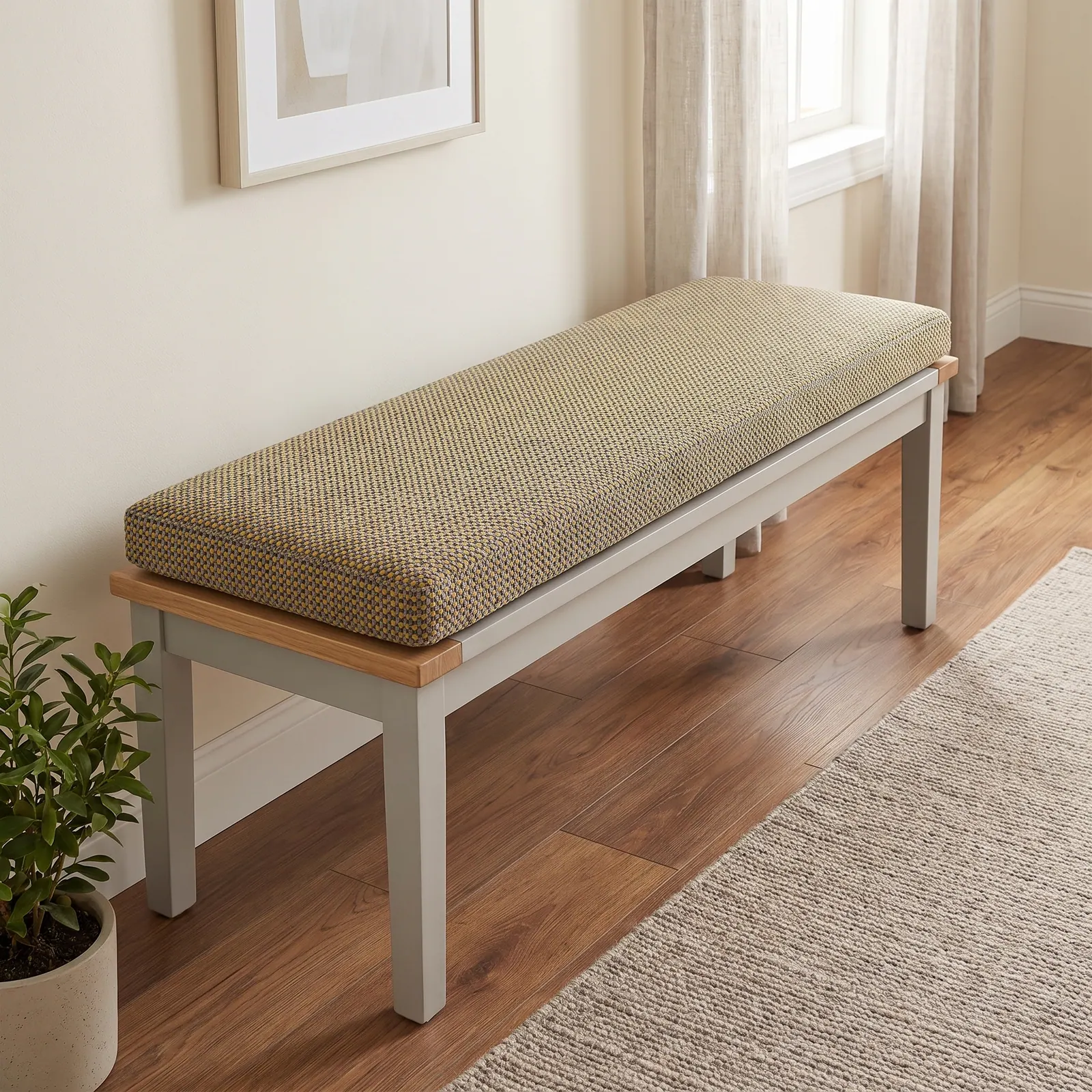
Gray paint below, oak on top, and a flecked weave that speaks to both. I read the palette first, then the mistakes this bench sidestepped.

Swatch strip measured from the photograph
- chestnut#6c4e3725%
- sand#baa99625%
- taupe#9f8a7623%
- oatmeal#d5cdc317%
- linen#e4dfd810%
The quick answer
The common bench cushion mistakes are covering a good wood rim, choosing a color that matches only the paint or only the wood, and adding piping a flecked weave does not need. Here a mustard and gray tweed stops a finger's width short of the oak edge and carries both finishes in one cloth.
Swatch strip: two yarns, two finishes
- Mustard yarn#C9A23FAnswers the honey tone of the oak top.
- Slate gray yarn#7F8386Answers the painted base.
- Khaki blend#A59B74What the two yarns become from across the room.
- Oak top#B98B57Left showing as a frame around the seat.
- Gray paint#9A9D9EThe bench's cool half.
Pinned by Maggie
Five pins, from the pale print on the wall down to the line of oak left showing.
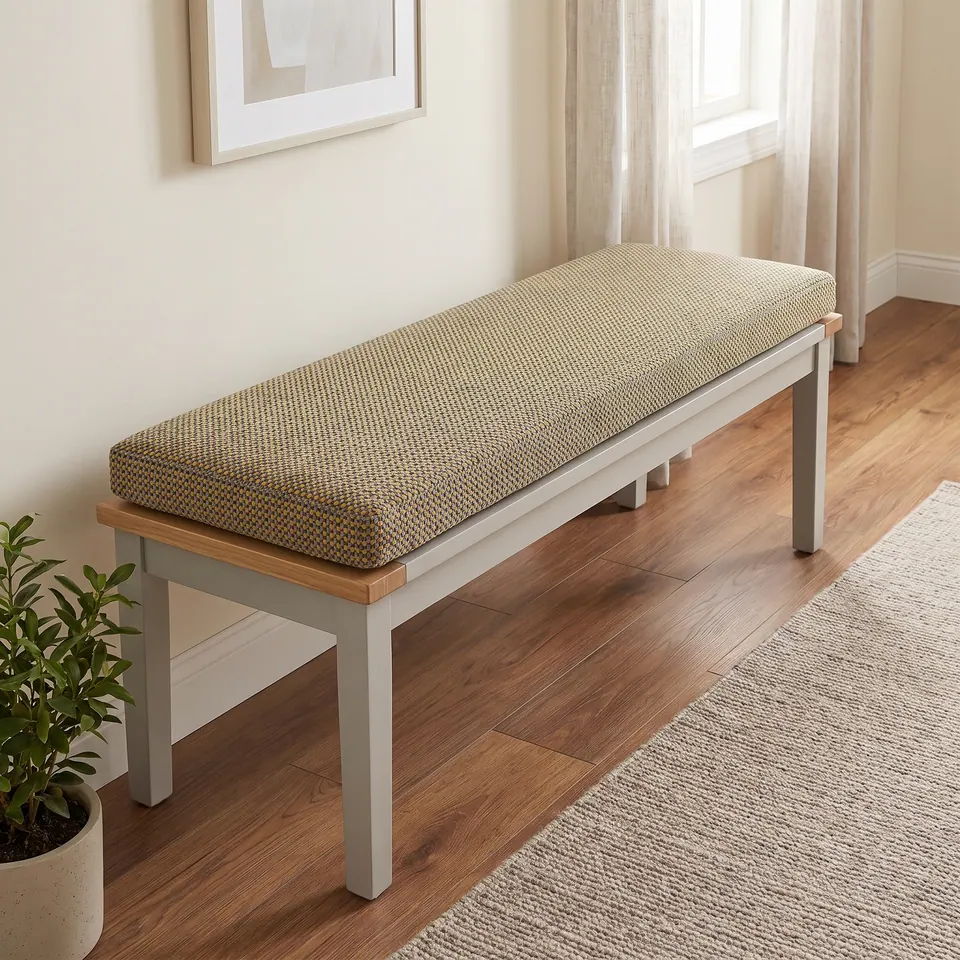
- Framed print
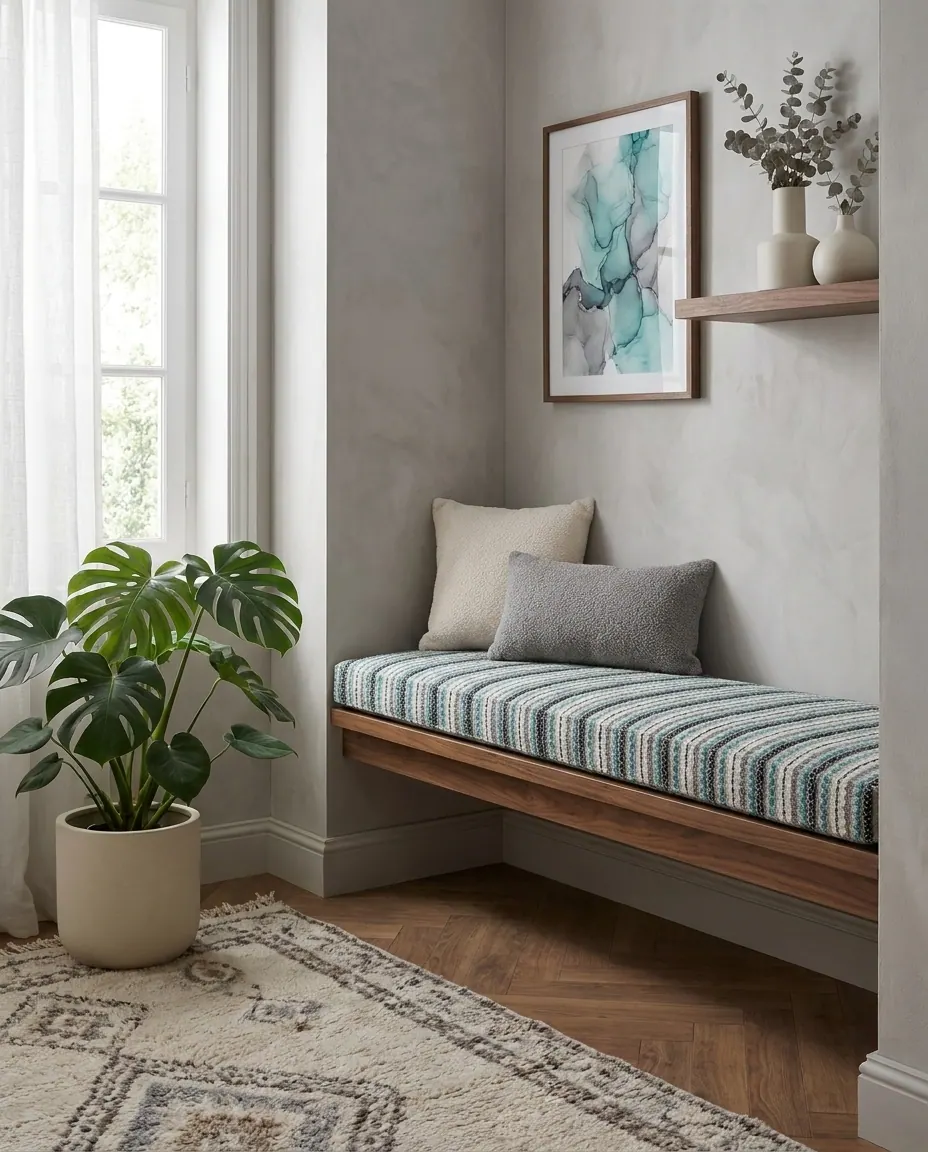
A pale print above keeps the wall calm, so the cushion carries the color.
- Sheer curtains
Filtered side light lets you pick out the mustard and gray yarns separately.
- Potted plant
A bit of green at the end of the bench balances the khaki tone.
- Oak top rim
The cushion stops just short of the oak edge, so a line of wood shows all round.
- Mustard-gray weave
Mustard and gray yarns blend into a soft khaki that suits both oak and gray paint.
- Framed printA pale print above keeps the wall calm, so the cushion carries the color.
- Sheer curtainsFiltered side light lets you pick out the mustard and gray yarns separately.
- Potted plantA bit of green at the end of the bench balances the khaki tone.
- Oak top rimThe cushion stops just short of the oak edge, so a line of wood shows all round.
- Mustard-gray weaveMustard and gray yarns blend into a soft khaki that suits both oak and gray paint.
Five mistakes this bench sidesteps
Right, then. I have made most of these mistakes myself over the years, which is how I spot them from the doorway.
One: covering the frame. The cushion stops about a finger's width short of the oak rim on every side, so a line of wood frames the seat. Cut it to the full top and the oak disappears.
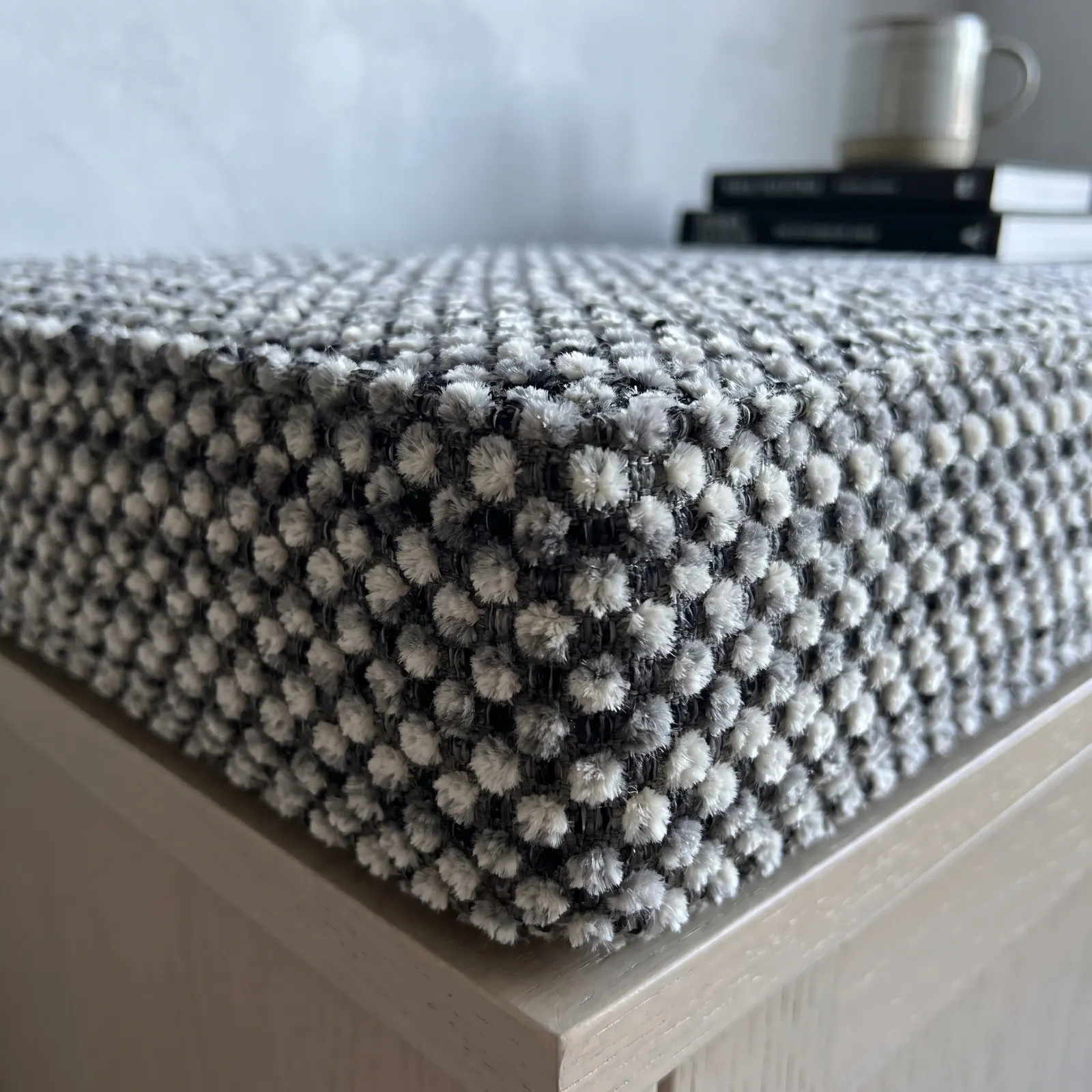
Two: matching only one finish. The bench is gray paint below and oak above. A plain gray cushion would disown the oak; a plain mustard one would quarrel with the paint. Mustard and gray yarns woven together blend into a soft khaki that belongs to both.
Three: piping for the sake of it. A flecked weave already has plenty going on at the edge. No welt here, just a clean box edge, and it still looks tailored rather than bought.
Four: styling the seat. A pale framed print keeps the wall calm, sheer linen curtains filter the side light so you can pick out each yarn, and one leafy plant in a stone pot balances the khaki. All three stay at the edges of the shot. The textured cream rug and warm oak floor do the rest.
Five: guessing the size. Not in the photo, but it is in the questions below.
What two finishes does your bench have, dear? If they are paint and wood, look for a two-color weave that holds both. The notes on matching a cushion to paint and wood and on piping, contrast or none help, and multi-yarn cloths sit with the jacquard and damask weaves.
The bench that was 5/8 inch narrower at one end
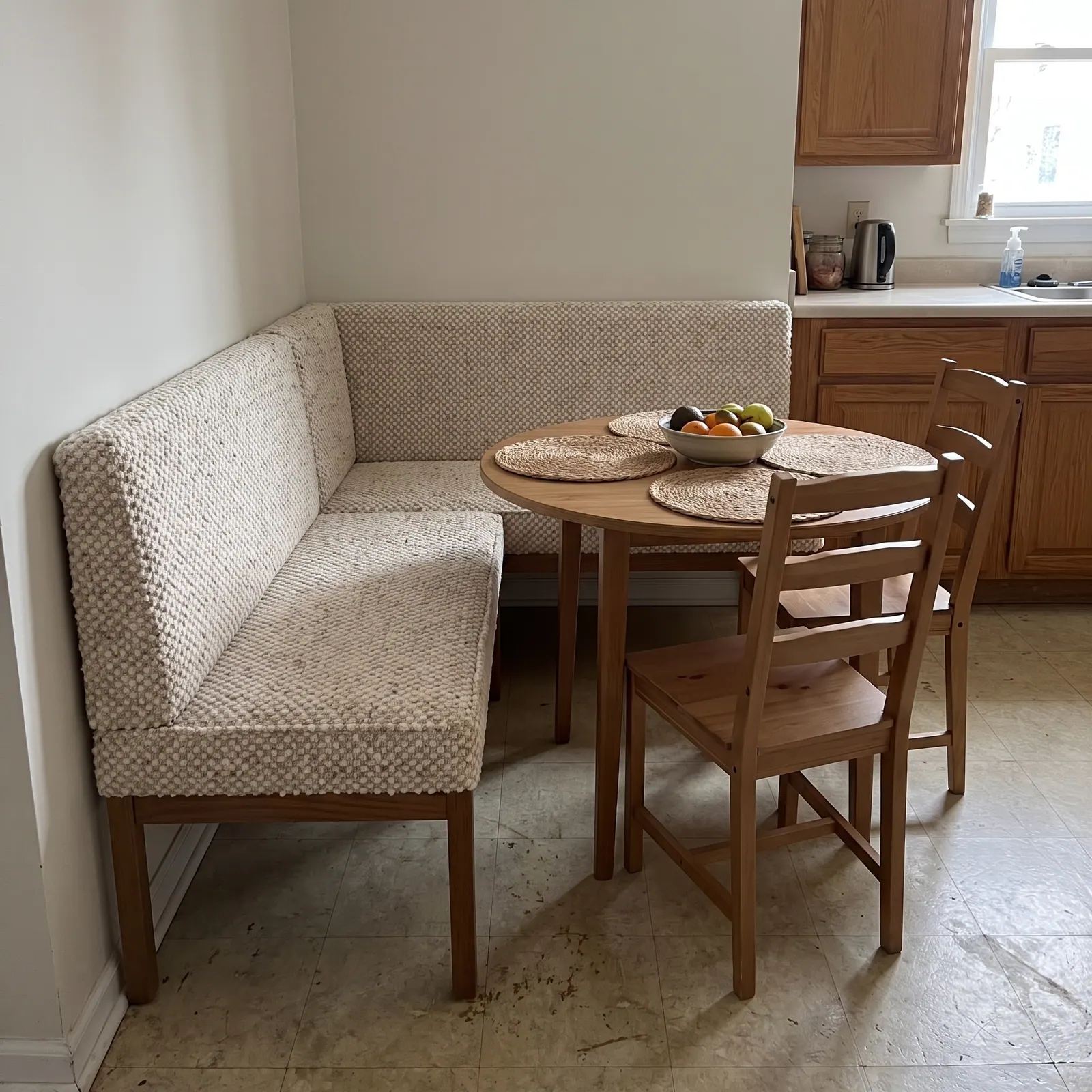
A buyer messaged the workshop to correct two sizes after ordering. The smaller cushion became 19 x 17 in (48 x 43 cm). The larger bench measured 16 3/8 in (41.5 cm) deep at one end and 17 in (43 cm) at the other.
The workshop explained the catch. With ends like that, both 41 in (104 cm) long sides can't be kept true, so it made a simple 41 x 16.5 in (104 x 42 cm) rectangle instead of a trapezoid. The buyer agreed.
For under 3/4 in (2 cm) of taper, average it to a rectangle. The bench measuring guide shows where to take each number, and more indoor bench cushions for the living room are in the Atlas.
On the cutting table
| Piece | Rectangular box bench cushion |
|---|---|
| Fabric | Mustard and gray flecked chenille weave |
| Piping | None; clean box edge |
| Fit | About a finger's width short of the oak rim on each side |
| Bench | Gray-painted base with an oak top |
| Taper rule | Under 3/4 in (2 cm) end to end, average to a rectangle |
| Styling | Print, sheer curtains and one plant, kept to the edges |
| Best for | Living room and entry benches with two finishes |

Have it made
Have this made — ask Maggie’s workshop
Numbers first, fabric second, piping last. Jot down what you have, and the workshop will go down the list with you, item by item. — Maggie
Leave your details and the workshop will call you to confirm measurements, fabric, foam and piping. No prices, dates or payment on this page: it is a request, not an order.
Buyer questions: straps, loops and a size that wasn't listed
- A common question
Could you add straps to the back of a large backrest so it's easier to lift?
The workshop's answerYes. The workshop has sewn ties onto the back near the top, where they can't be seen.
- A common question
Can back cushions have fabric loops so they hang from a rod above the bench?
The workshop's answerYes: back cushions with two sewn-on fabric loops each, in the seat fabric or a matching neutral. It is a non-standard make, so it is priced as a custom set; send the cushion sizes, roughly how big you want the loops and how many cushions.
- A common question
Your listing has no 12 x 47 in (30 x 120 cm) option. Can you make that size?
The workshop's answerYes. The workshop added an 11¾ x 47¼ in (30 x 120 cm) option to the listing so the buyer could choose it and order directly.
When a bench mixes gray paint and an oak top, choose a two-color weave that holds both: mustard yarn for the wood, gray yarn for the paint.
Maggie
Questions buyers ask next
Should a bench cushion cover the whole bench top?
Not when the top is worth seeing. Here the cushion stops about a finger's width short of the oak rim on each side, so the wood reads as a frame around the seat instead of vanishing under it.
Does a flecked tweed cushion need piping?
Rarely. A multi-yarn weave already has texture at the edge, and a welt can compete with it. This cushion uses a clean box edge with no piping and still looks tailored.
My bench is slightly narrower at one end. Do I need a trapezoid cushion?
Not if the difference is small. For under 3/4 in (2 cm) of taper, average the depth and make a simple rectangle, as the workshop did for one bench that measured 16 3/8 in at one end and 17 in at the other.
Stitch straight — Maggie
More photographs to read
 Save
 Save
 Save
 Save
 Save
 Save