A Reading by NateBench Cushions
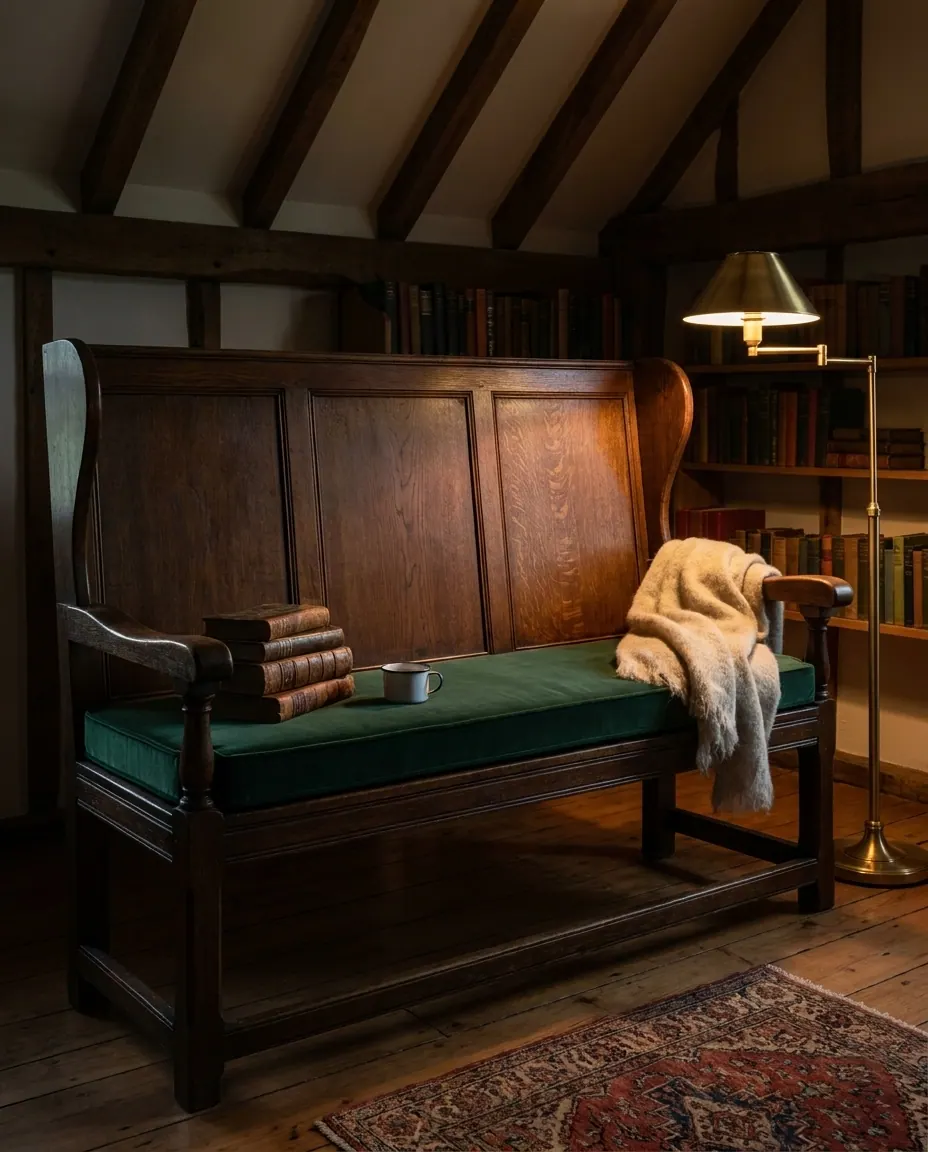
A forest green velvet cushion on an antique oak settle, fitted for every season
An antique settle is a chair with opinions. Its arms lean, its back stands upright and its oak moves with the weather. The cushion has to agree with all three.

 Save
The quick answer
A cushion for an antique oak settle should be slim, fitted between the arms from a paper template and cut to about ± 1/4 in (6 mm), because old arms are rarely parallel and the wood moves between seasons. Forest green velvet with self piping suits dark oak and brass, and it looks richest under winter lamplight.
The 4 in bench build, cut open
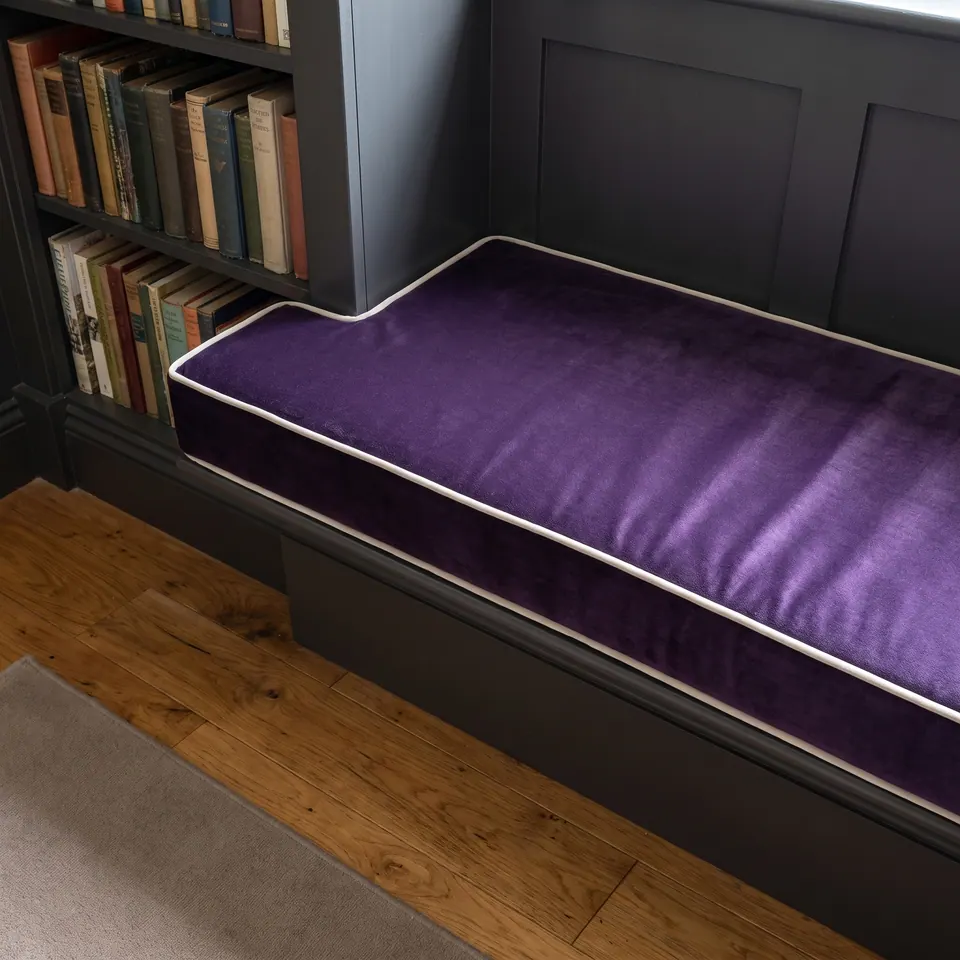
Velvet cover. Forest green velvet with a soft pile. Brush it one way so the color reads even.
Self piping. Cord covered in the same velvet, sewn into the top and bottom seams.
Fiber wrap. A thin layer that rounds the corners, so the velvet never shows a hard foam edge.
Seat foam. High-density foam at 4 in (10 cm), enough for a bench.
Zipper. Hidden in the back seam, against the paneled back.
Base panel. Cut to your paper template, so it follows arms that aren't parallel.
A seat built for sitting up straight
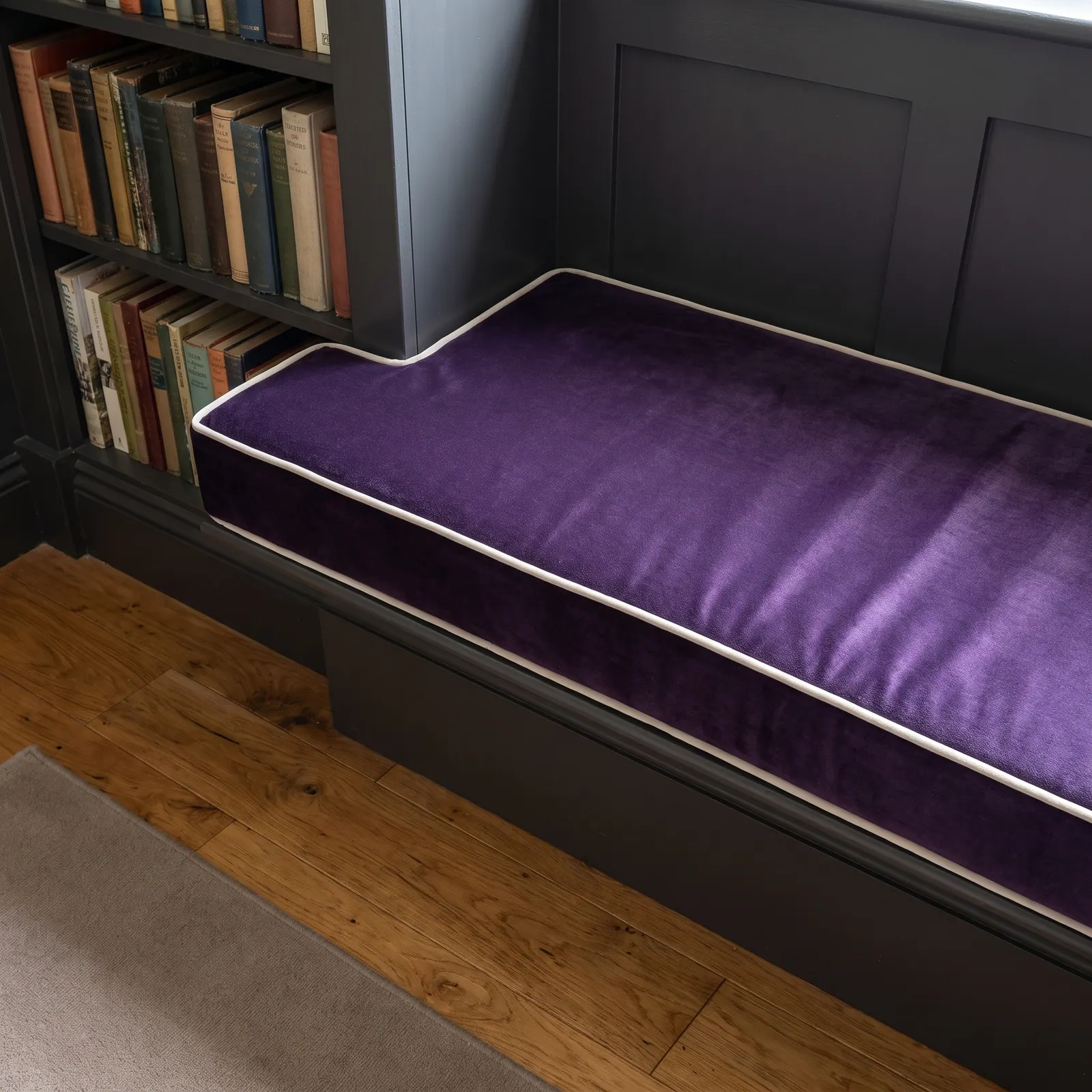
Antique settles were built for upright sitting, partner, so this cushion stays slim and fits between the winged arms. The paneled back is left bare. Put a thick seat in and you raise the sitter while the back stays put, and the whole thing starts to feel like a church pew with a mattress on it. The seat height calculator does that arithmetic for any frame.
Forest green velvet is the traditional match for dark oak and antique brass. In daylight it could look heavy; under the brass floor lamp it turns rich. Self piping in the same velvet keeps the box edge neat without a second color.
Every prop is old or natural. Leather-bound books pick up the brown of the oak and warm the green. A white enamel mug is the one bright point in a dark scene. Cream mohair on the arm softens the settle's square lines. Beams, bookshelves, a patterned rug and wide oak boards finish the library.
The seasons change this corner more than you'd think. In January the velvet is the warmest thing to put a hand on. By August an attic runs warm, and velvet under bare legs knows it. Keep the pile brushed one way, as in velvet bench cushion care.
Pinned by Nate: five callouts
Five callouts, from the brass lamp down to the velvet seat.
- Forest green seat
A slim cushion suits a high-backed settle, which is built for upright sitting.
- Leather-bound books
Old leather spines pick up the brown of the oak and warm the green.
- Enamel mug
A single white mug is a bright point in a dark scene.
- Mohair throw
Cream mohair on the arm softens the hard, square lines of the settle.
- Brass floor lamp
The lamp makes the settle a proper reading seat after dark.
- Forest green seatA slim cushion suits a high-backed settle, which is built for upright sitting.
- Leather-bound booksOld leather spines pick up the brown of the oak and warm the green.
- Enamel mugA single white mug is a bright point in a dark scene.
- Mohair throwCream mohair on the arm softens the hard, square lines of the settle.
- Brass floor lampThe lamp makes the settle a proper reading seat after dark.
Fitting a settle cushion that works in all four seasons
Trace the seat in paper
Lay kraft paper on the seat and crease it into the corners where the arms meet it. Old settle arms are rarely parallel, so a rectangle guessed from two tape readings gaps on one side. See making a paper template.
Measure three widths
Front, middle and back, between the arms, inches first. If they differ by more than 1/4 in (6 mm), send the template, not just the numbers.
Allow for the oak
Old oak moves a little across the grain between a humid summer and a heated winter. Tolerance is kindness to your future self: a cushion cut to ± 1/4 in of the template sits well in both.
Keep it slim
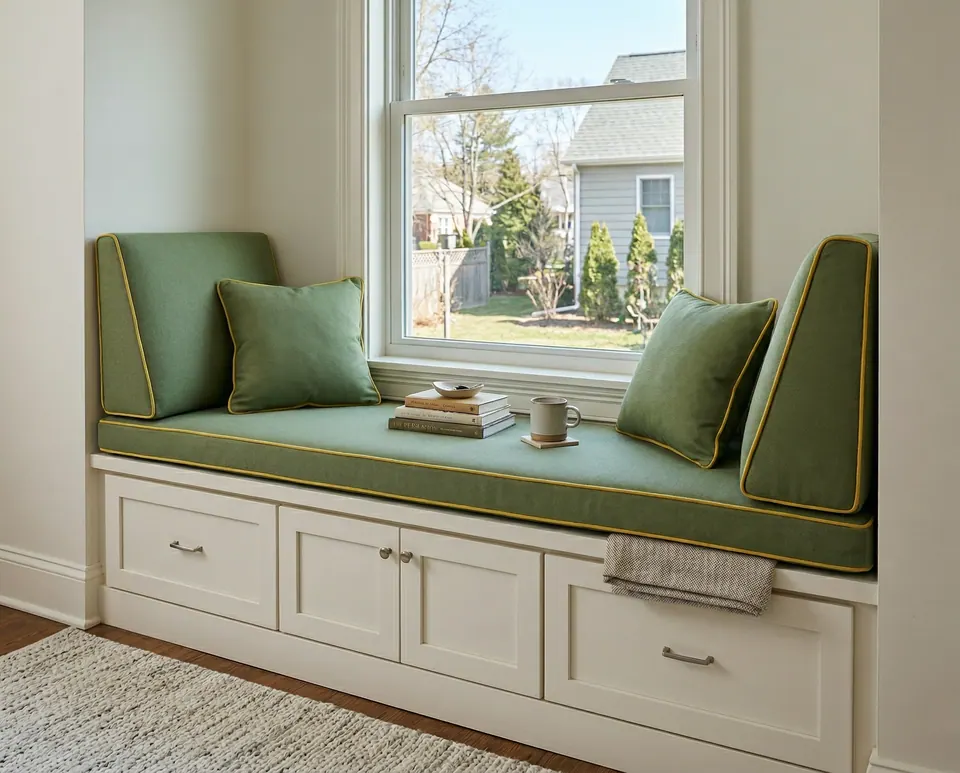
The back is fixed and upright. On benches, 4 in (10 cm) is usually enough; save thicker builds for floor seating.
Change the throw, not the cushion
Mohair on the arm in winter, folded away in summer. The velvet stays; only the layer on top follows the weather.
Three thicknesses on the table, and the one that won
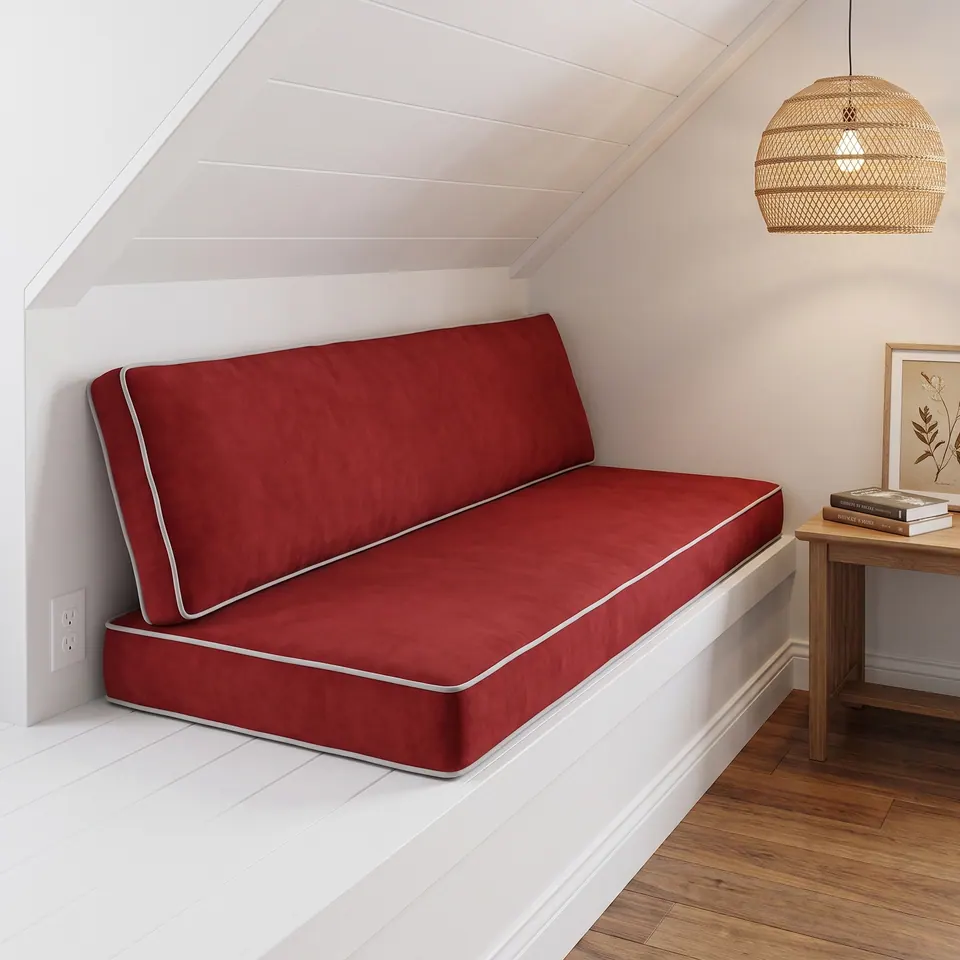
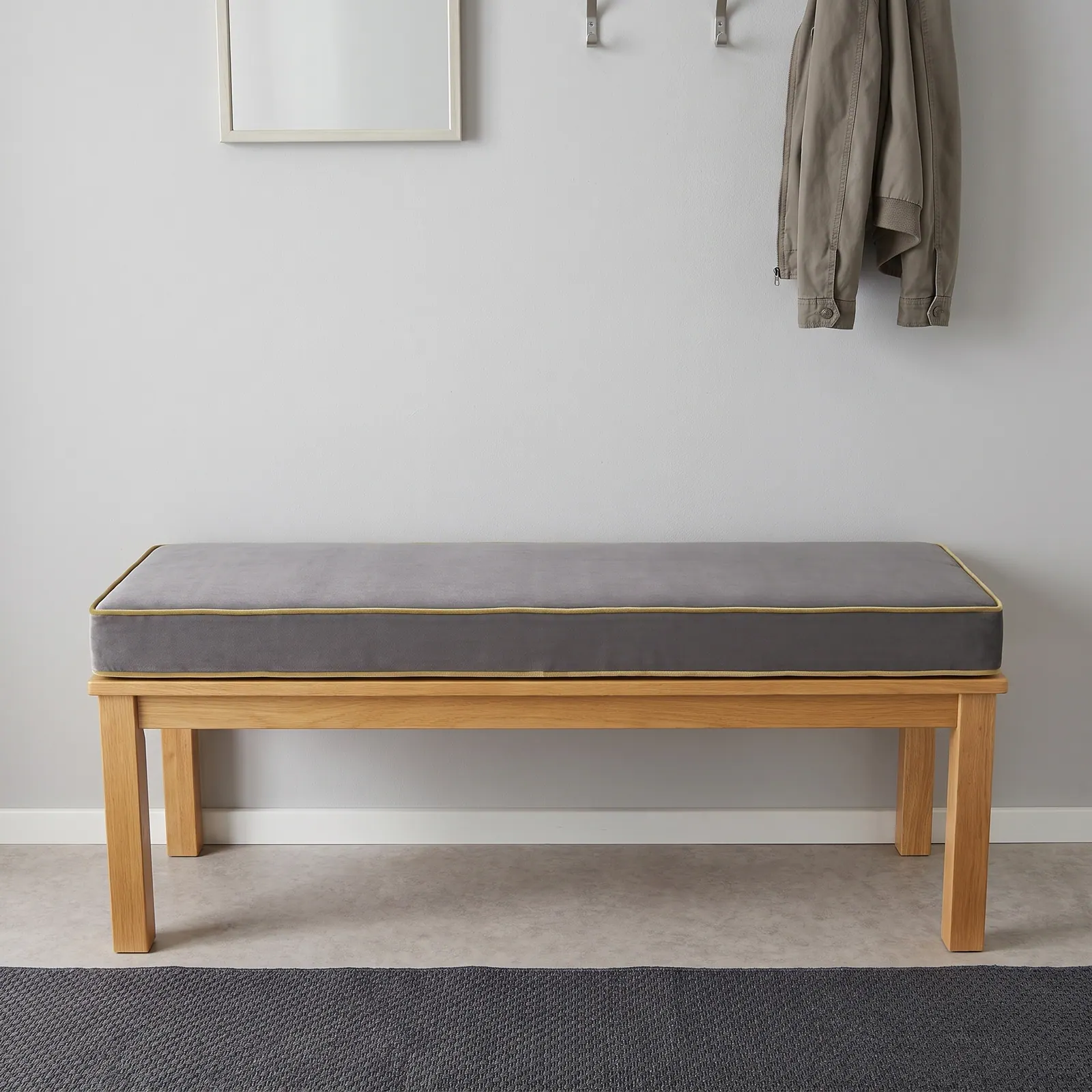
A buyer messaged the workshop about a dining bench that had to match gray chairs she already owned. Her first measurement was 44 1/8 x 19 3/4 in (112 x 50 cm), in tufted velvet. The workshop quoted three thicknesses: 4, 8 and 11 3/4 in (10, 20 and 30 cm). She picked 4 in as plenty for a bench.
Then she re-measured, which I always applaud, and settled on a 43 1/4 x 18 7/8 x 4 in (110 x 48 x 10 cm) seat plus a 43 1/4 x 19 3/4 x 2 in (110 x 50 x 5 cm) backrest. The first gray looked almost black, so the workshop pointed her to velvet color 4 to match the chairs.
Two lessons in one order: the second measurement is the one that counts, and a dark velvet should be judged against the real furniture.
- Sizes
- Seat 43 1/4 x 18 7/8 x 4 in (110 x 48 x 10 cm) + backrest 43 1/4 x 19 3/4 x 2 in (110 x 50 x 5 cm)
- Fabric
- Velvet, color 4 gray
The lesson: For benches, 4 in (10 cm) is usually enough; save thicker builds for floor seating.
Three cushion questions: a raspberry stripe, creases and cost
- A common question
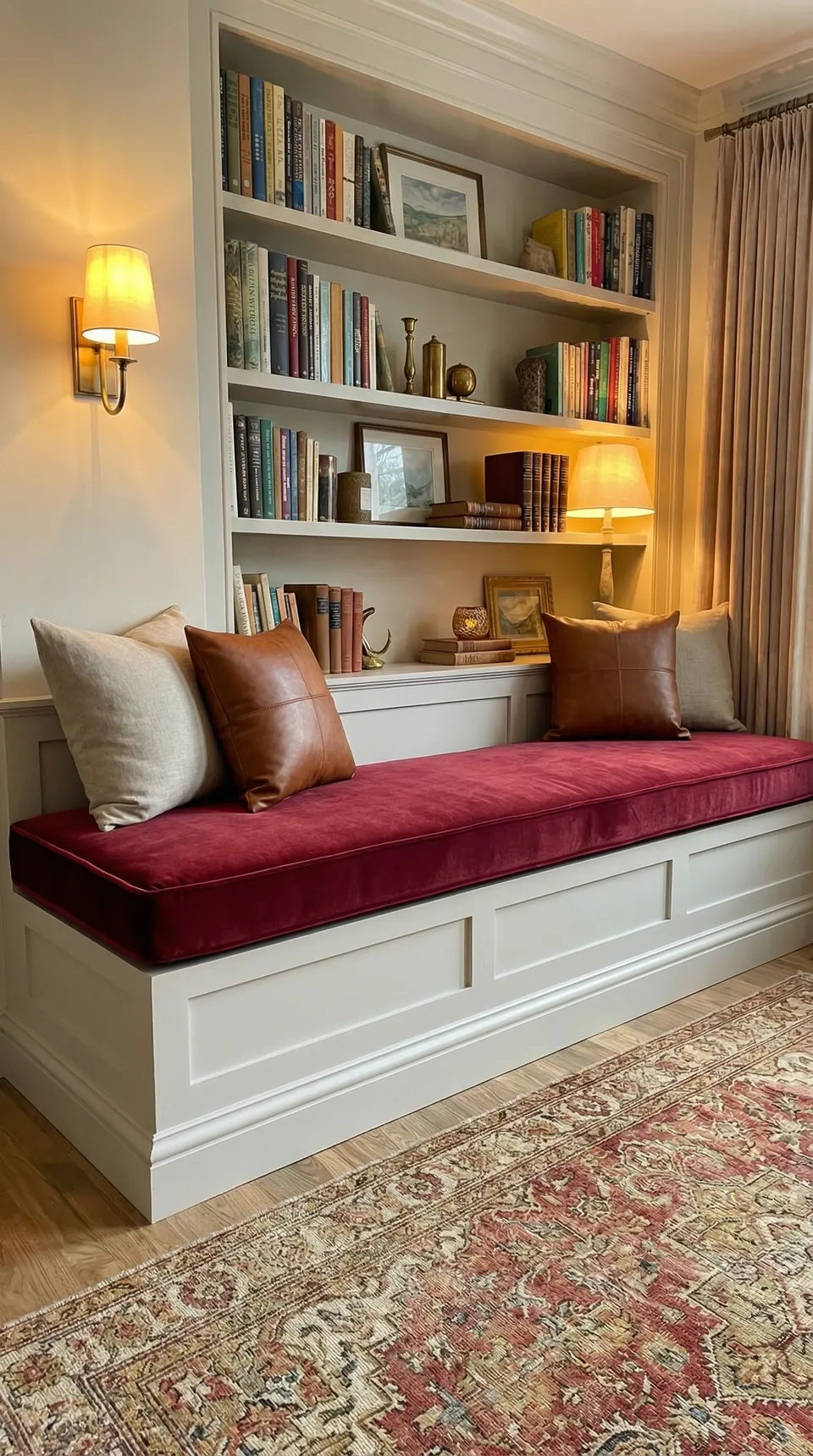
Which of your striped fabrics comes closest to raspberry?
The workshop's answerN17 is the closest: a vivid pinkish red with a berry feel. N18 is a muted, dustier version of a similar tone, and N15 reads as a classic true red rather than raspberry.
- A common question
My cushion came with creases and ripples, and it's a little short. Did I get a faulty one?
The workshop's answerUsually not. Vacuum compression causes creases, ripples and a short first reading. The foam needs about 3 to 5 days to regain its full shape, and it can arrive about 3/4 in (2 cm) short and keep expanding. If it still doesn't fit after that, send the workshop tape-measure photos or one continuous video with the numbers readable.
- A common question
How do you work out the cost of a custom bench cushion?
The workshop's answerFrom the exact size, thickness and fabric, so every quote starts with your numbers. Past quotes have ranged from a narrow 13 x 70 in pad and a 20 x 48 in (50 x 120 cm) bench to 4 in thick pallet cushions of 55 1/8 x 31 1/2 in (140 x 80 cm). Send length, depth, thickness and fabric code for yours.
Antique settle arms are rarely parallel, so a velvet seat cushion should be cut from a paper template with ± 1/4 in of tolerance, not from two tape readings.
Nate
On the cutting table
| Cushion | Settle seat cushion, fitted between the arms |
|---|---|
| Fabric | Forest green velvet |
| Edge | Box edge, kept slim |
| Piping | Self piping in the velvet |
| Back | Paneled oak back, left bare |
| Fit | From a paper template, ± 1/4 in (6 mm) |
| Light | Brass floor lamp for evening reading |
| Best for | Reading nooks and old hall benches |

Have it made
Have this made — ask Nate’s workshop
Every edge and both diagonals, to the nearest 1/4 in. If the numbers do not close, the workshop will say so on the call. — Nate
Leave your details and the workshop will call you to confirm measurements, fabric, foam and piping. No prices, dates or payment on this page: it is a request, not an order.
Questions buyers ask next
How thick should a cushion for an antique settle be?
Slim. A settle has a fixed, upright back, so a thick cushion lifts you away from it. For benches in general, 4 in (10 cm) is usually enough, and many high-backed settles look better with less.
Why make a paper template for an old settle or hall bench?
Because the arms are rarely parallel. A template captures the real seat, including any taper from front to back, so the cushion fills the space without a gap on one side or a bulge on the other.
Does a velvet seat suit a reading nook used all year?
Yes, with one adjustment. Velvet feels warm in winter and looks richest under lamplight. In summer, keep a light cotton or linen throw nearby for bare legs, and brush the pile one way after heavy use.
± 1/4 in — Nate
More velvet, more seasons
 Save
 Save
 Save
 Save
 Save
 Save