A Reading by NateBench Cushions
Notebook: a forest green bouclé bench cushion and the props around it
I keep a notebook for rooms like this one. Every prop gets a line, a position and a reason. Styling is layout with softer materials.

 Save
The quick answer
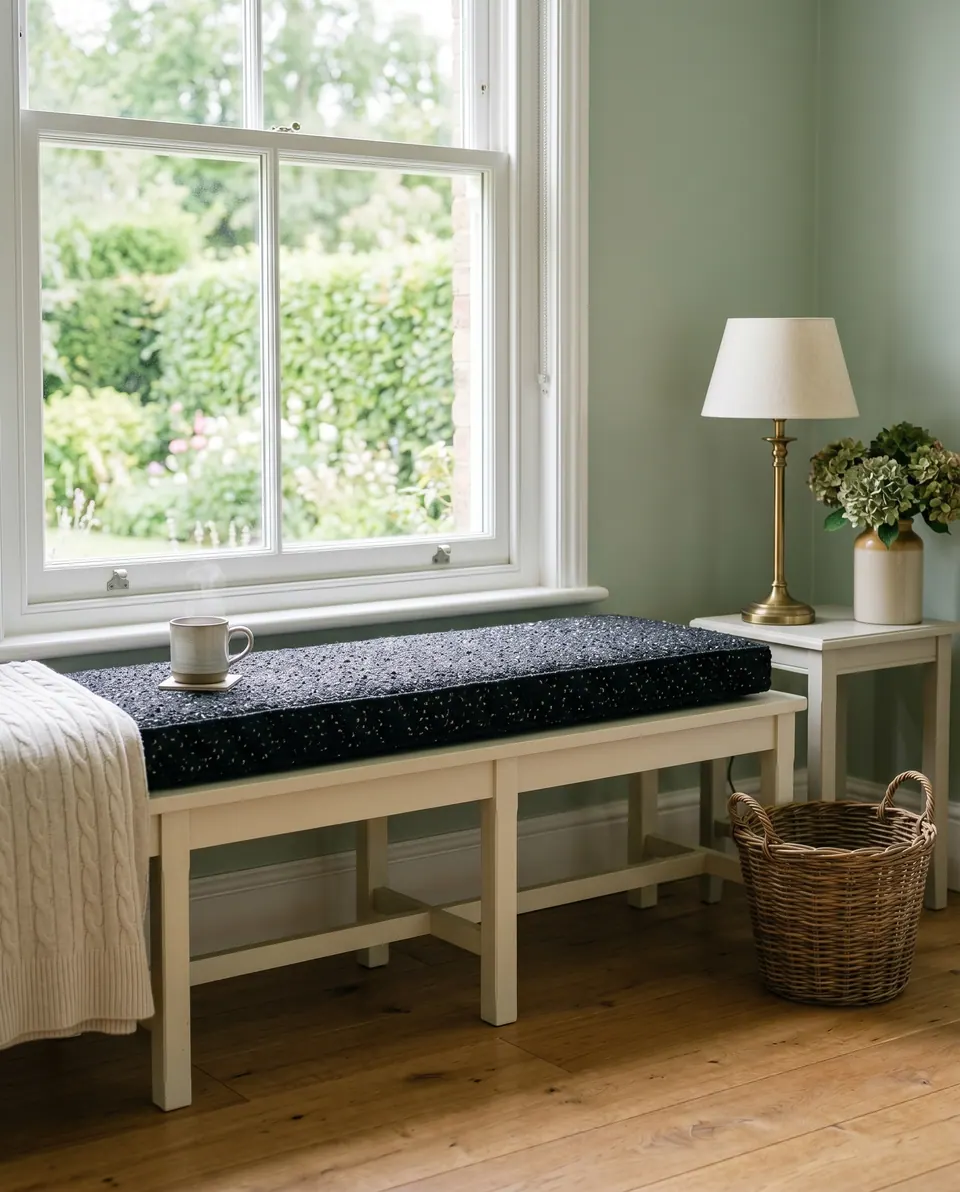
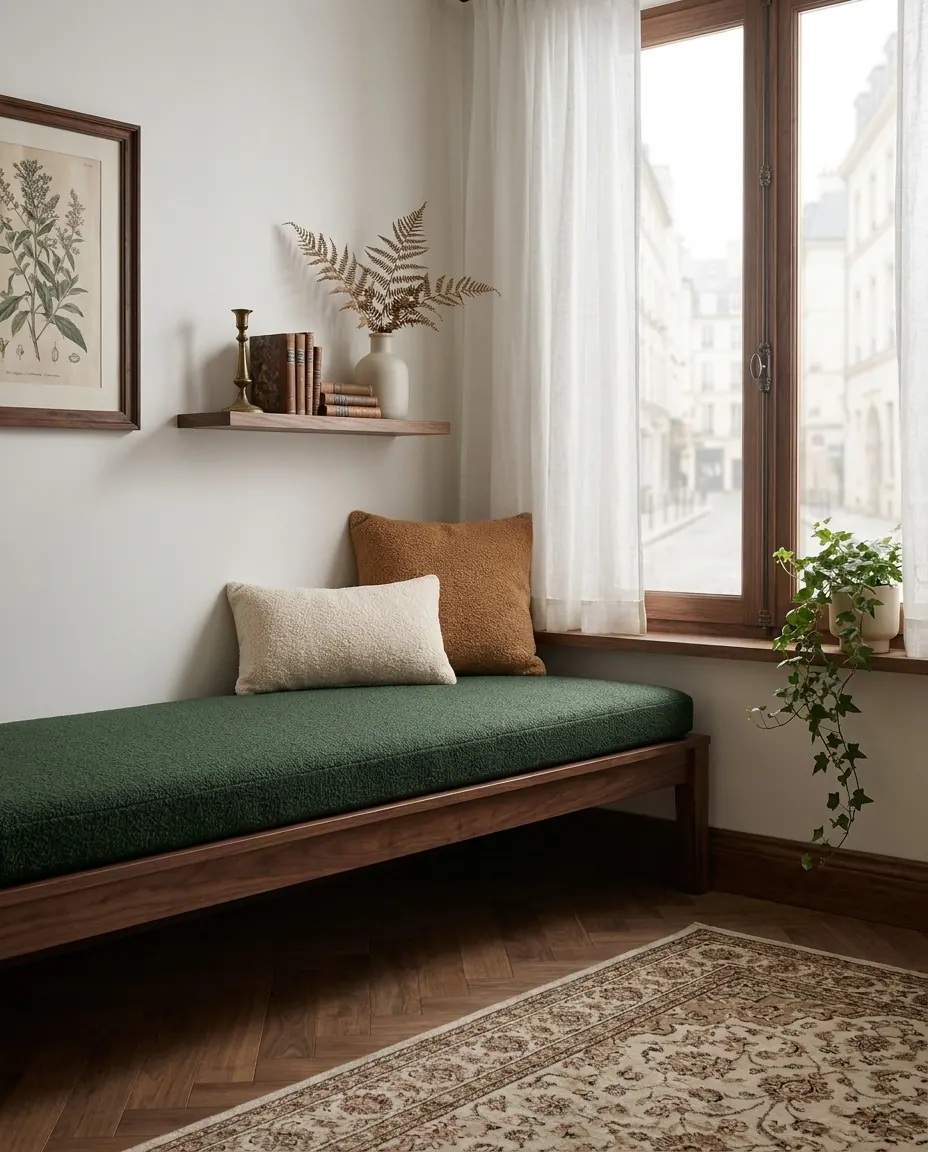
A forest green bouclé bench cushion works on a freestanding walnut bench when it is cut flush to the inside of the frame and styled front to back: a cream lumbar in front, a cognac square behind. Ivy on the sill and a botanical print on the wall repeat the green at two more heights, so the cushion isn't the only dark block.
Page one: frame first, then the cushion
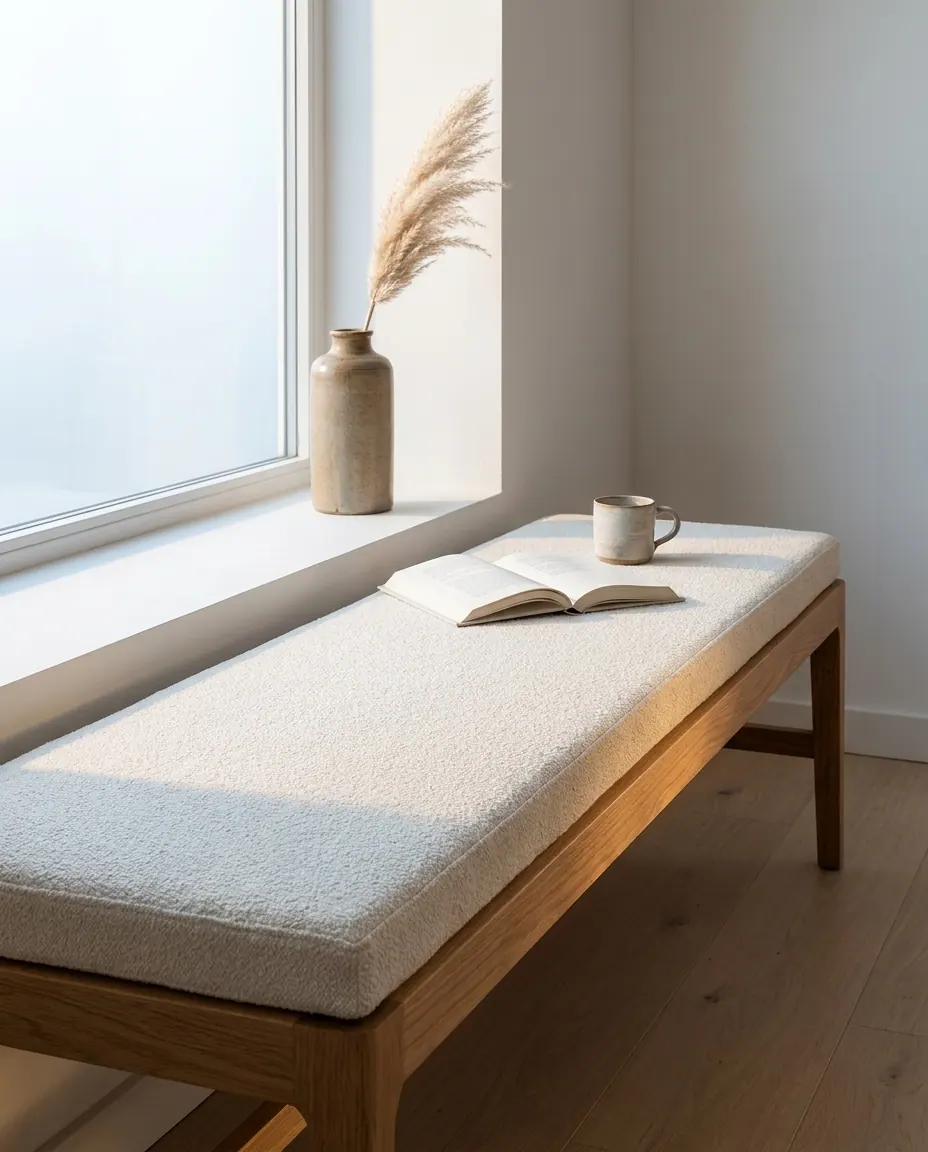
Start with the frame, because the frame sets the cut. This is a freestanding walnut bench, not a built-in, and the cushion stops flush with it on every side. Zero overhang. The walnut rail stays visible all the way round, and that thin line of wood is half the look.
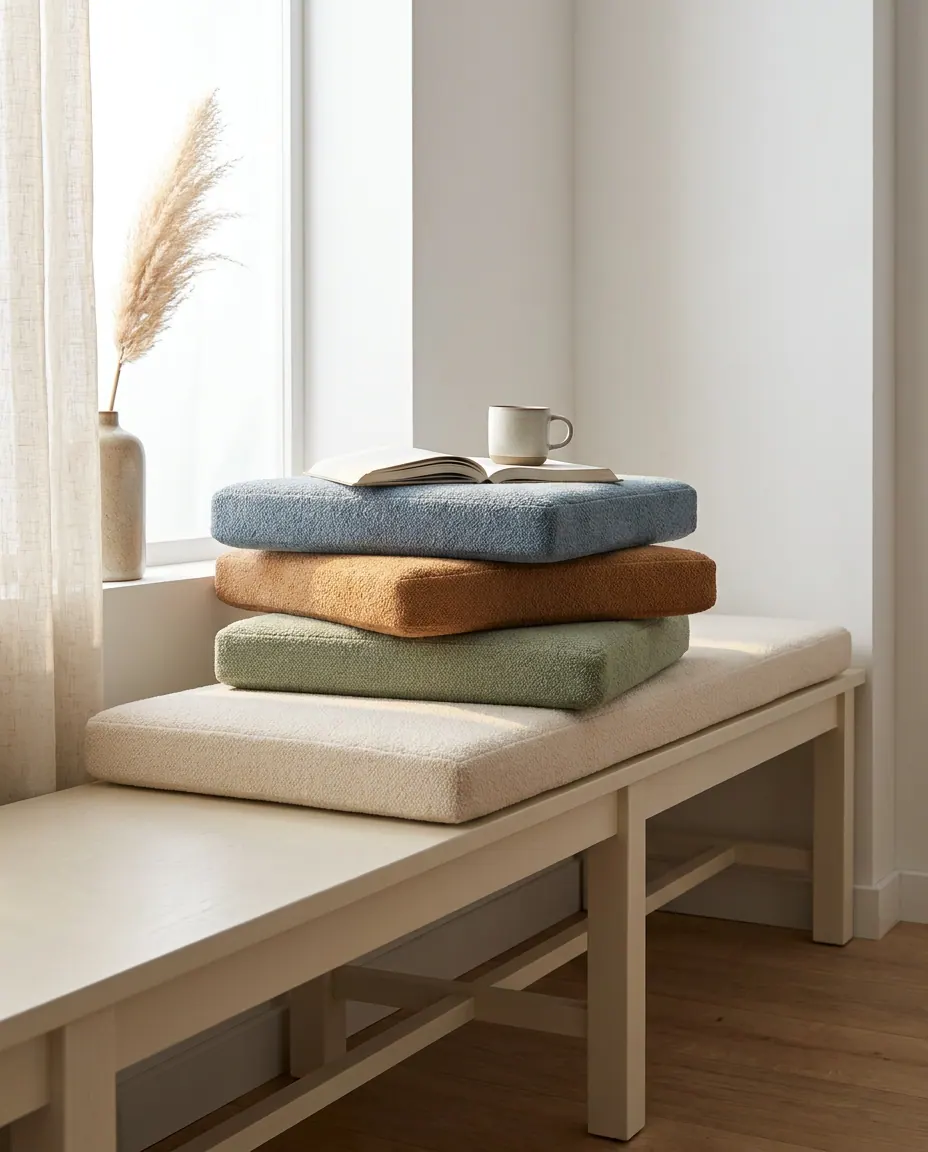
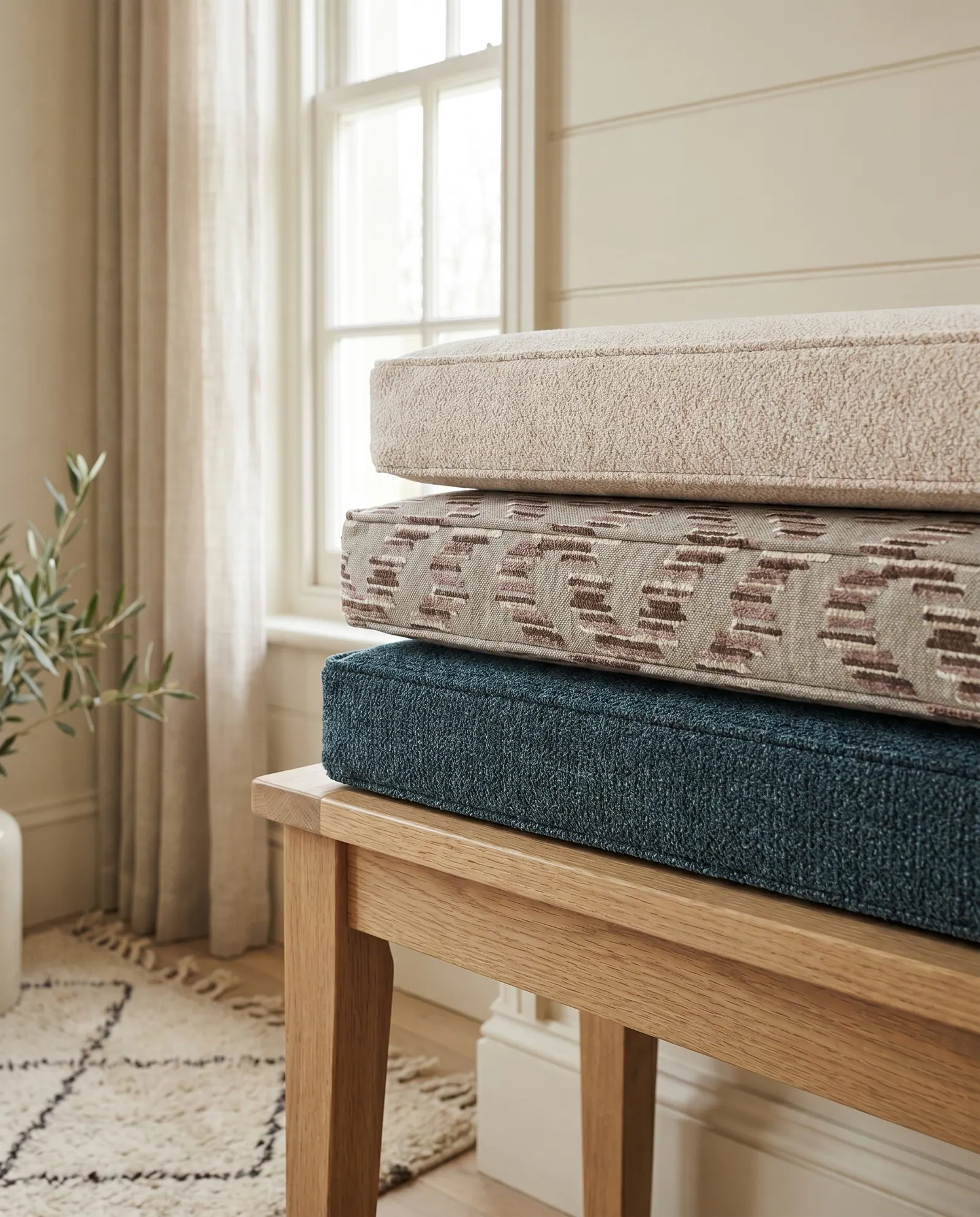
The cushion is a box edge with self piping in forest green bouclé. In gray street-window daylight the loops catch light unevenly, which gives a solid color some movement without a pattern. Deep green on dark walnut could sink into one heavy block. Three things stop that: pale pillows in front, green repeated elsewhere, a cream rug below. The cloth is in the bouclé and teddy family.
Measure twice; the fabric remembers. For a bench like this, the number that matters is the inside of the frame, length and depth between the rails, not the outside. Give the maker the inside and the cushion drops in snugly. The full method is in how to measure a bench, the bench cushion builder will draw it, and more frames are in the bench cushion atlas.
What does your bench measure inside the rails, partner?
Pinned by Nate: five coordinates on the bench
Five pins: the cushion, the cream lumbar, the cognac square, the trailing ivy and the shelf of books and brass.
- Forest green bench cushion
A deep solid on a freestanding frame turns a simple bench into a daybed-style seat.
- Cream lumbar
The pale lumbar sits in front, so the cognac square behind reads as depth.
- Cognac square pillow
Cognac bridges the green fabric and the walnut frame.
- Trailing ivy
Ivy spilling off the sill repeats the green in living form.
- Shelf of books and brass
Old books and brass set the study mood without crowding the seat.
- Forest green bench cushionA deep solid on a freestanding frame turns a simple bench into a daybed-style seat.
- Cream lumbarThe pale lumbar sits in front, so the cognac square behind reads as depth.
- Cognac square pillowCognac bridges the green fabric and the walnut frame.
- Trailing ivyIvy spilling off the sill repeats the green in living form.
- Shelf of books and brassOld books and brass set the study mood without crowding the seat.
The prop table: every piece around the bouclé bench, and its job
| Prop | Where it sits | Its job |
|---|---|---|
| Cream bouclé lumbar | Front of the seat | Pale piece in front, so the square behind reads as depth |
| Cognac bouclé square | Behind the lumbar | Bridges the green cloth and the walnut frame |
| Antique herbarium print | Wall, above the bench | Green at eye level, the second of three heights |
| Trailing ivy | Window sill | Green at the third height, and a living one |
| Walnut shelf, leather books, brass candlestick | Above the print line | Study mood, kept off the seat |
| Dried fern in a vase | On the shelf | Texture without adding a new color |
| Cream Persian rug, sheer curtain | Floor and window | A pale frame so the dark bench doesn't sink |
Three cushions and a worry about stripes
A buyer needed three cushions: 39 3/8 x 27 1/8 in (100 x 69 cm), 36 1/4 x 27 1/2 in (92 x 70 cm) and 60 5/8 x 13 3/8 in (154 x 34 cm). They liked a stripe but couldn't picture which way it would run on pieces so different in shape.
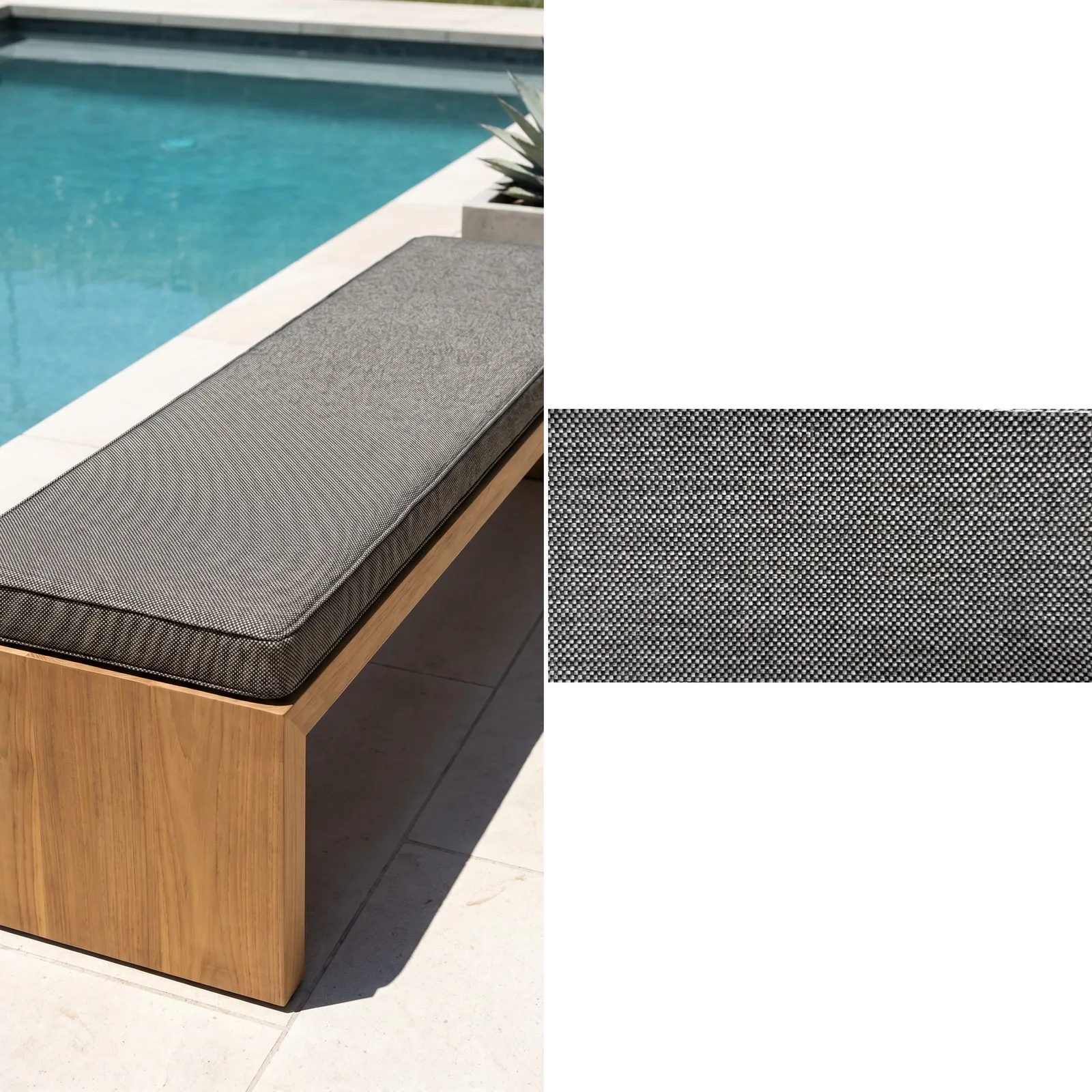
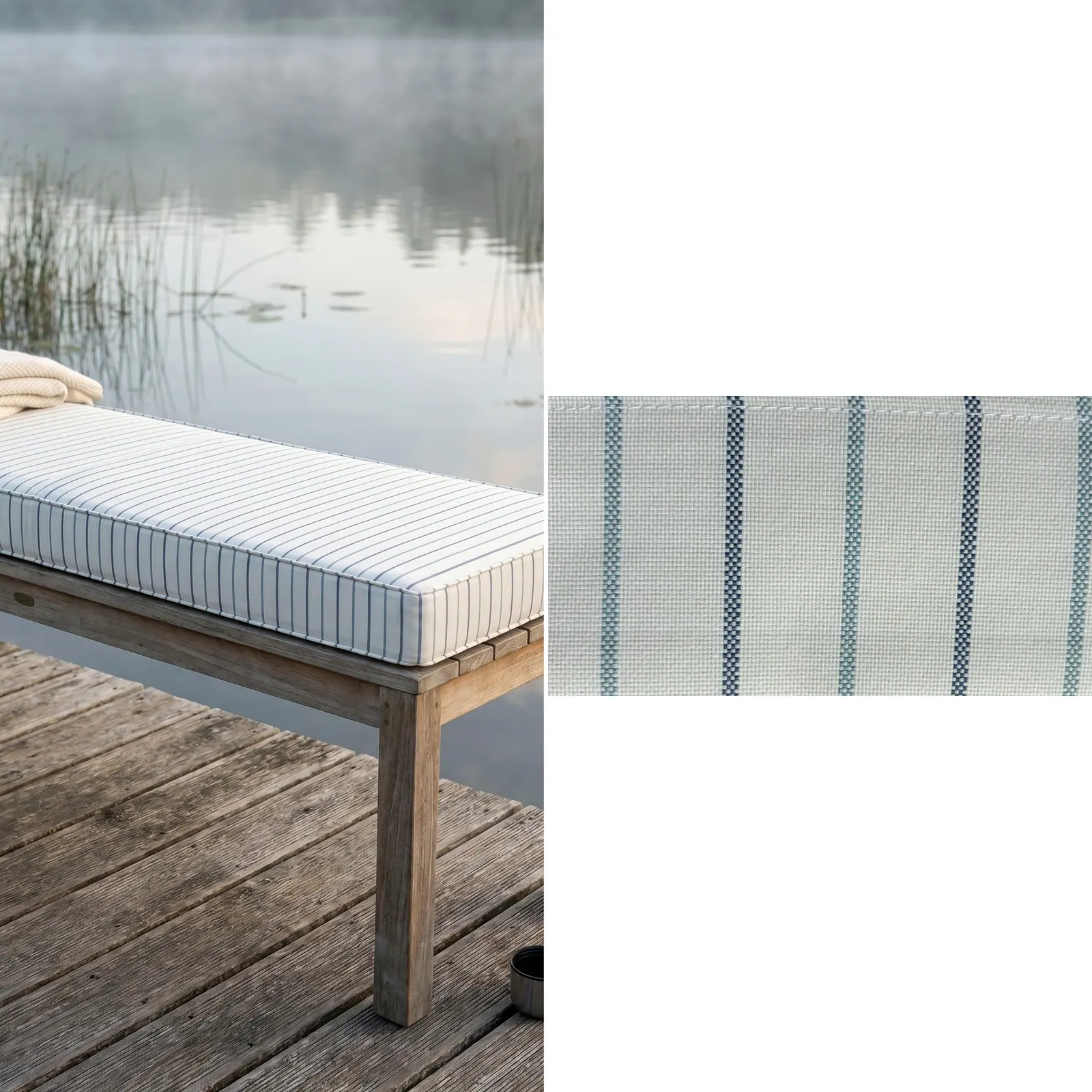
The workshop sent a photo of a finished striped cushion showing the standard direction, stripes running front to back, and offered to turn them lengthwise if preferred. With the real thing in view, the buyer confirmed a black and white fabric.
The lesson travels to texture. A photo of a finished cushion tells you more than a chart swatch or a screen, whether the question is stripe direction or how bouclé loops sit on a box edge. Direction rules are in stripe direction; living with loops is in bouclé and teddy cushions; more seating ideas are in living room cushions.
Buyer questions: wedges, codes and an odd size
- A common question
Can you make back cushions in a wedge shape, thinner at the top and thicker at the bottom?
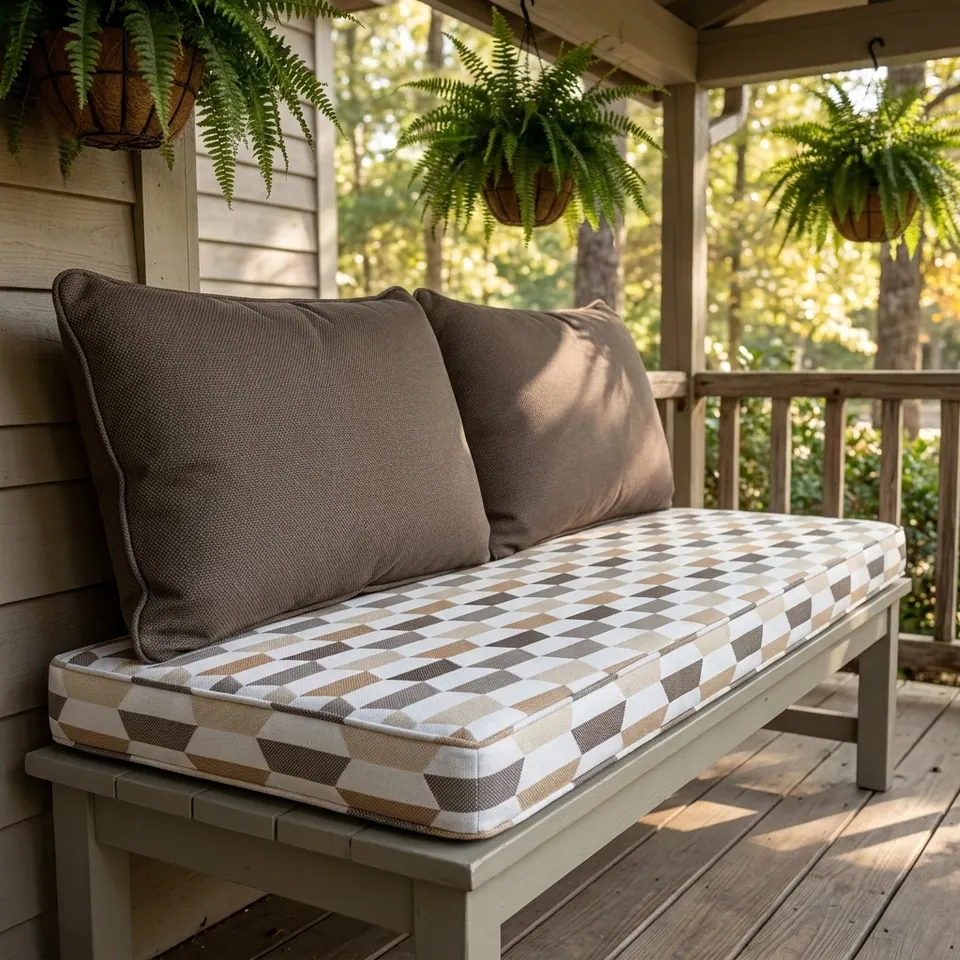
The workshop's answerYes. One patio sofa set paired two 39 3/8 x 27 1/2 x 5 7/8 in (100 x 70 x 15 cm) seat cushions with piping and two 39 3/8 x 15 3/4 in (100 x 40 cm) wedge backrests without piping, all in outdoor fabric. A lounge bed had its wedge backrests split into four pieces. To replace old wedges, send their measurements.
- A common question
Which fabric and piping codes are on the cushion in your listing photo, or the one in that review?
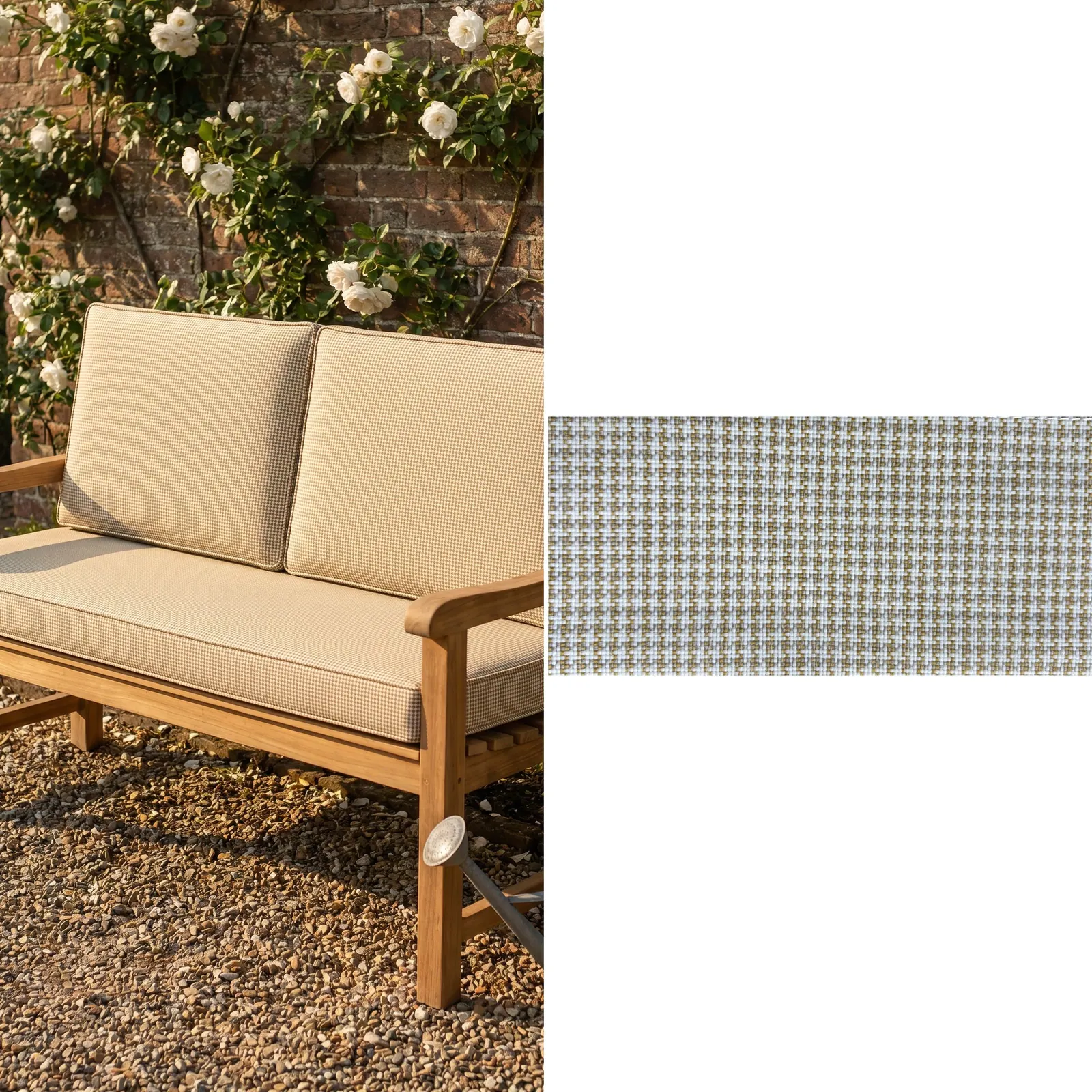
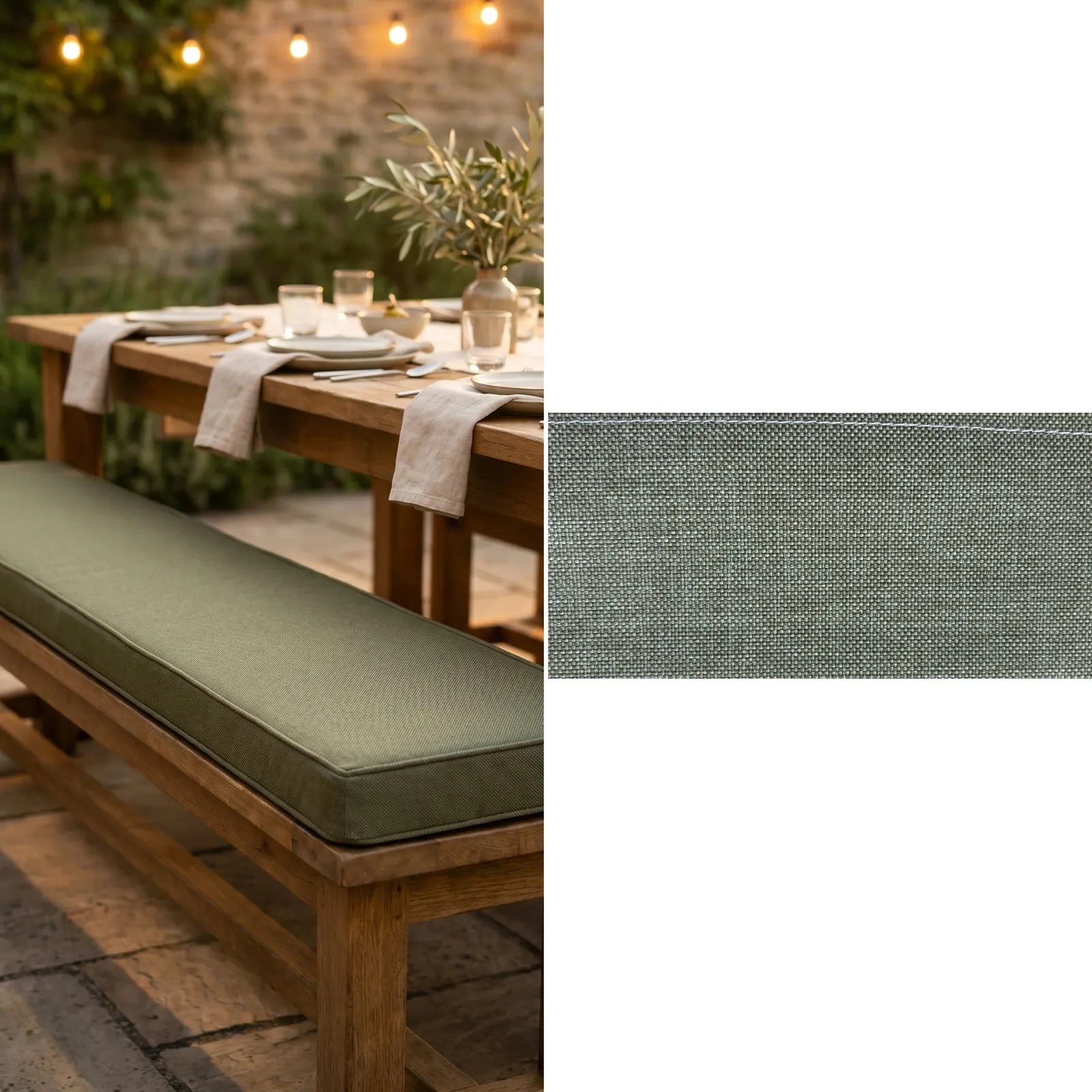
The workshop's answerSend a screenshot and the workshop checks its records. One listing photo turned out to be P-59 with P-58 piping; a striped cushion in a review was N03 with matching N03 piping. When several beige linens are too close to call, nobody guesses a code; close-ups of the candidates come back instead.
- A common question
My window seat is 54 3/4 x 26 in (139 x 66 cm). Can I have a cushion made to exactly that instead of the standard 55 1/8 x 23 5/8 in (140 x 60 cm)?
The workshop's answerYes. A tufted linen cushion was quoted at 54 3/4 x 26 in, then adjusted to 54 3/4 x 25 5/8 in (139 x 65 cm). Send the link to the listing you like and your color number, and the workshop builds a custom purchase link at your size.
On the cutting table: the walnut bench
| Frame | Freestanding walnut bench with a visible rail |
|---|---|
| Fit | Flush to the inside of the frame, no overhang |
| Measure | Inside length and inside depth between the rails |
| Cushion | Box edge, self piping |
| Fabric | Forest green bouclé |
| Pillows | Cream bouclé lumbar in front, cognac bouclé square behind |
| Color recipe | Forest green, cream, cognac, walnut |
| Care | Vacuum the loops, spot-clean; keep rings and hook-and-loop tape away |
| Best for | Study corners and entries with a freestanding bench |

Have it made
Have this made — ask Nate’s workshop
Precision starts on the phone. Give the workshop your measurements and they will read them back to you, edge by edge. — Nate
Leave your details and the workshop will call you to confirm measurements, fabric, foam and piping. No prices, dates or payment on this page: it is a request, not an order.
On a freestanding bench, give the maker the inside measurement of the frame, not the outside. The cushion drops in snugly and the wood rail stays visible.
Nate
Questions buyers ask next
Should a cushion overhang a freestanding bench frame?
Not when the frame has a visible rail. Cut it flush to the inside of the frame so the wood shows all round and the cushion can't shift sideways. Overhang is a choice for a plain slab top, not for a framed bench like this one.
Is bouclé practical on an everyday bench?
It hides marks and feels warm, but the loops catch claws, rings and hook-and-loop fasteners, and they hold pet hair. Vacuum it and spot-clean spills. On a busy family bench, consider bouclé for the pillows and a flatter weave for the seat.
What colors go with a forest green bench cushion?
Cream and cognac, as in this photo. Cream sits in front and lightens the stack; cognac bridges the green and a walnut frame. Repeat the green at two other heights, such as a plant on the sill and a botanical print, so the cushion isn't the only dark block.
Can I see a finished cushion before choosing a stripe or a texture?
Ask for one. A photo of a finished cushion is the most accurate reference, better than a chart swatch or a screen. One buyer unsure about stripe direction received a finished-stripe photo and then confirmed their fabric.
± 1/4 in — Nate
More photographs to read
 Save
 Save
 Save
 Save
 Save
 Save