A Reading by NateBench Cushions
A slim bouclé bench pad, and the six mistakes it avoids
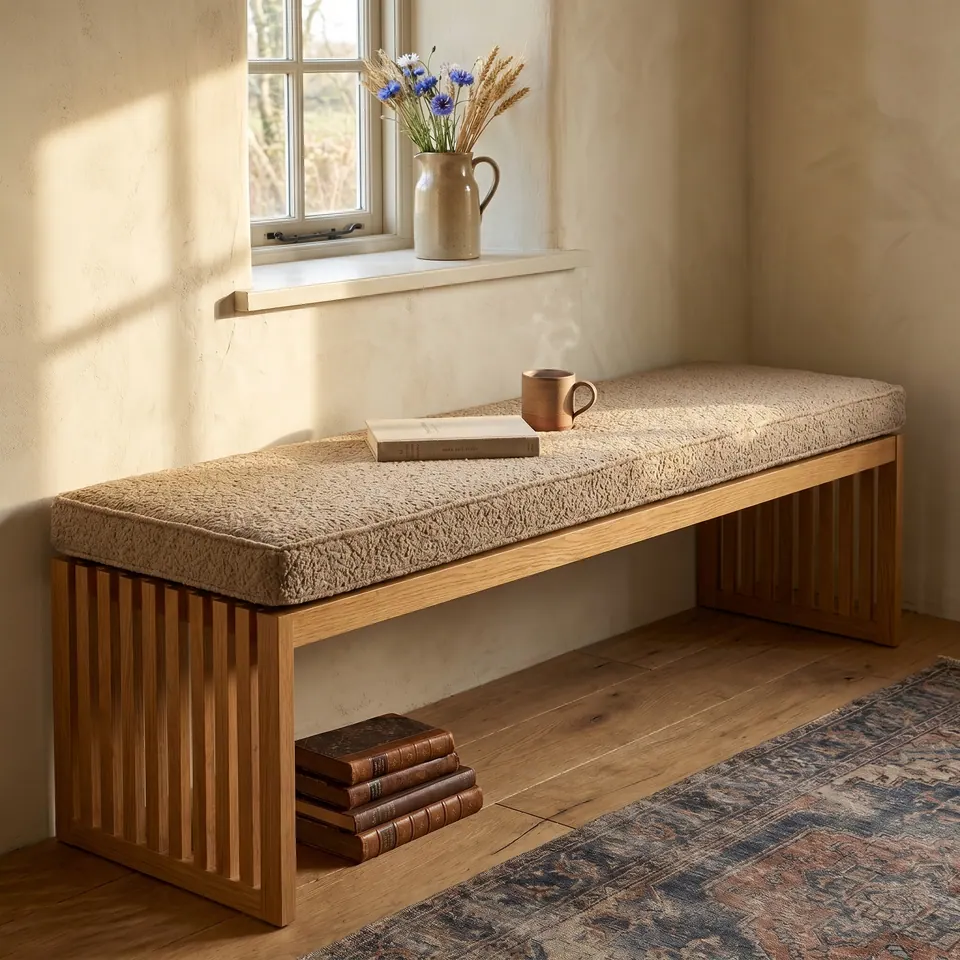
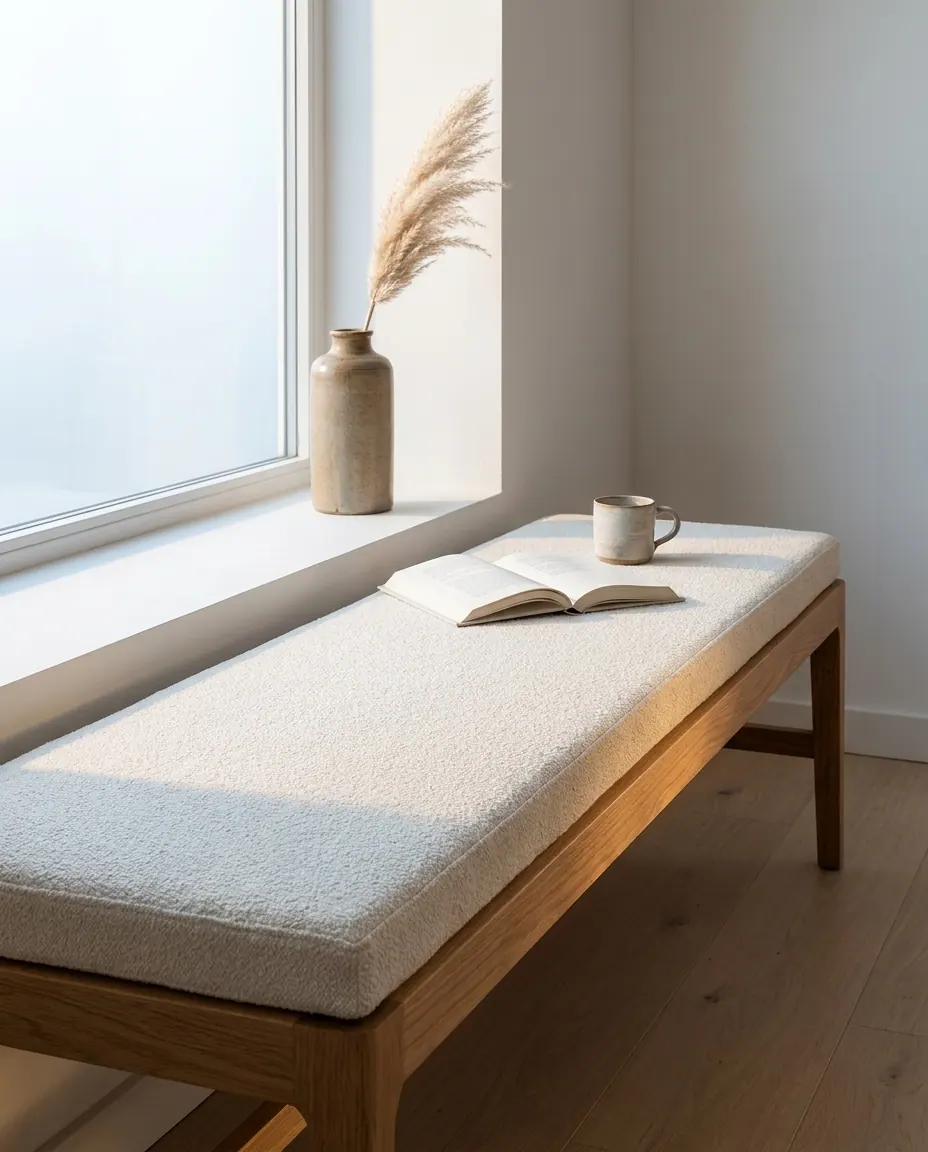
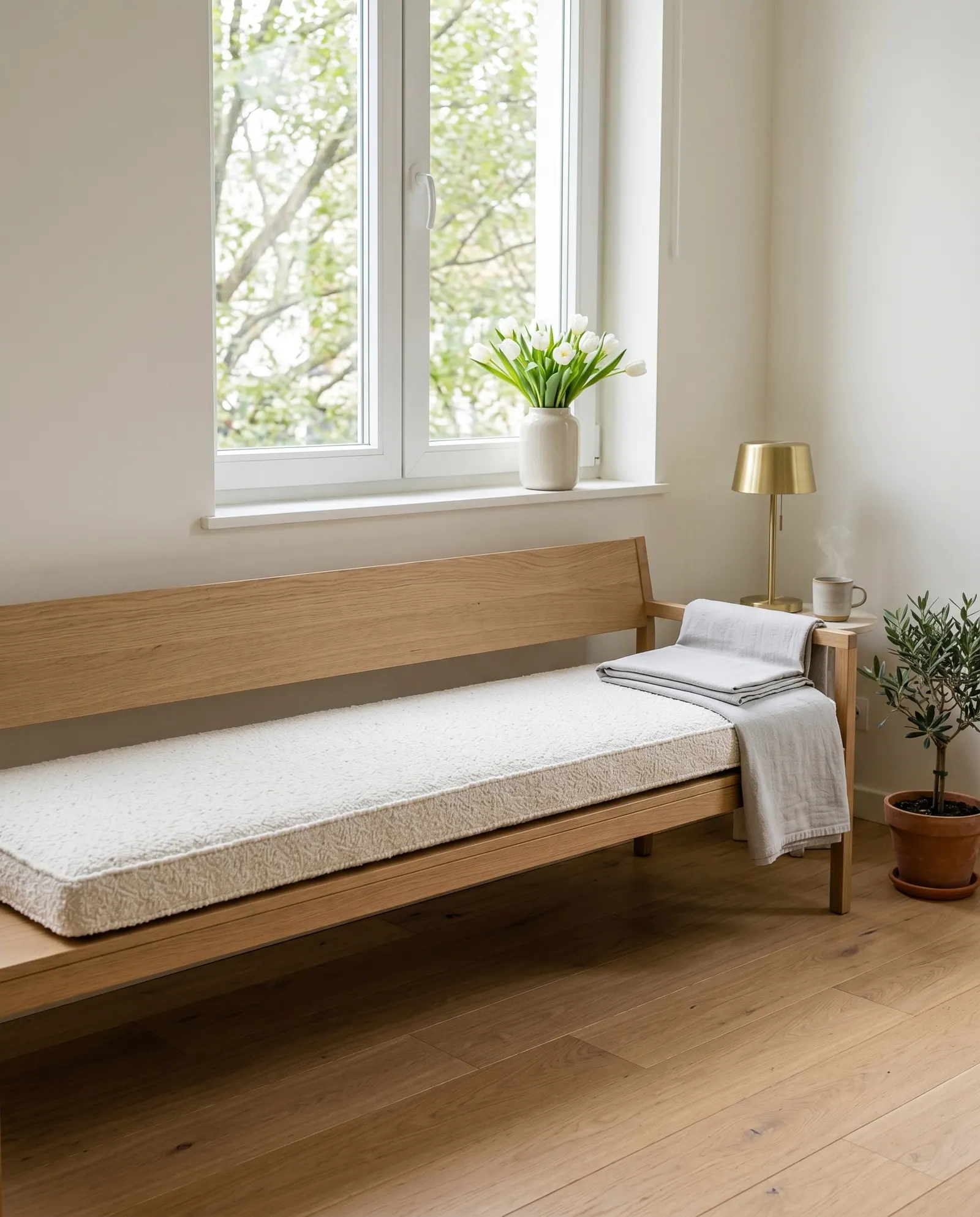
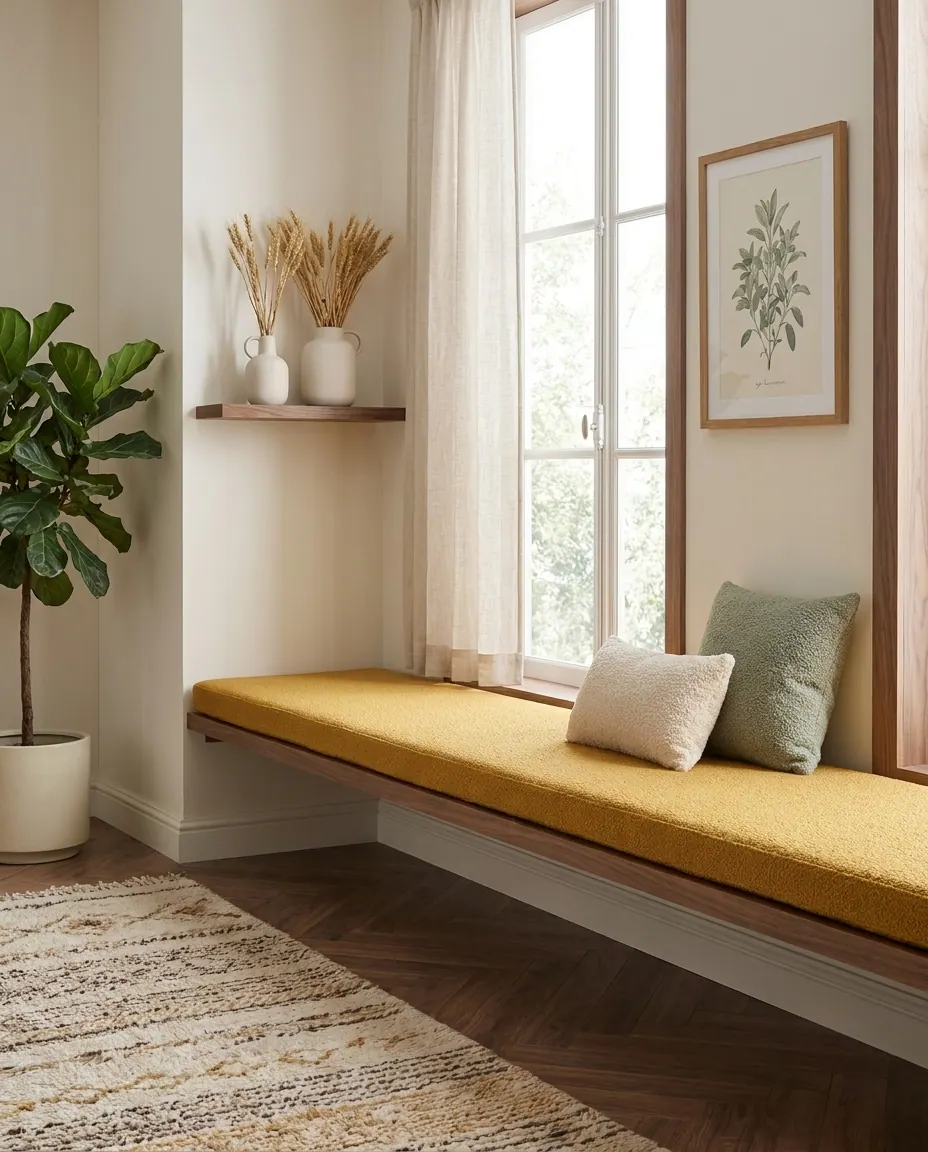
One oak bench, one wide window, one thin cream pad. My notebook page lists what this photo gets right, which happens to be mostly what buyers get wrong.

 Save
The quick answer
A custom bench cushion should be ordered at the exact end-to-end size of the bench top, because the workshop makes it to the number you give and deducts nothing. On a light bench, a 2 to 3 in pad keeps the frame's proportions, and firm 32-density foam keeps it supportive. Corner benches get two cushions meeting flush.
What the photo gets right
This bench pad is the thinnest thing in the room, and that is the point. A long oak bench with tapered legs, a wide window, a deep white sill. The pad runs the full length of the top and stops exactly at the frame, so the legs stay in view and the bench keeps its lines. No piping. Cream bouclé in hard side light, which shows every loop.
Three props, each placed for a reason. An open book mid-seat says the pad gets sat on. A speckled mug echoes the flecks in the bouclé. Pampas in a stoneware bottle carries the cream-to-oak range up onto the sill. Nothing on the floor, nothing hanging over the edge, and the oak floorboards run the same direction as the bench.
I read photos like this one backward: what could have gone wrong here, and didn't. The table in my margin is that list, six lines long.
Six mistakes this bench didn't make
| Mistake | What you'd see | Fix |
|---|---|---|
| Shaving the size "to be safe" | A gap at each end, a pad that shifts | Give the exact end-to-end number; nothing is deducted |
| Measuring the old cushion | Last decade's sag, copied faithfully | Measure the bench top itself |
| Too thick for the frame | A slim bench wearing a mattress | 2 to 3 in on a light frame; 4 in is the standard |
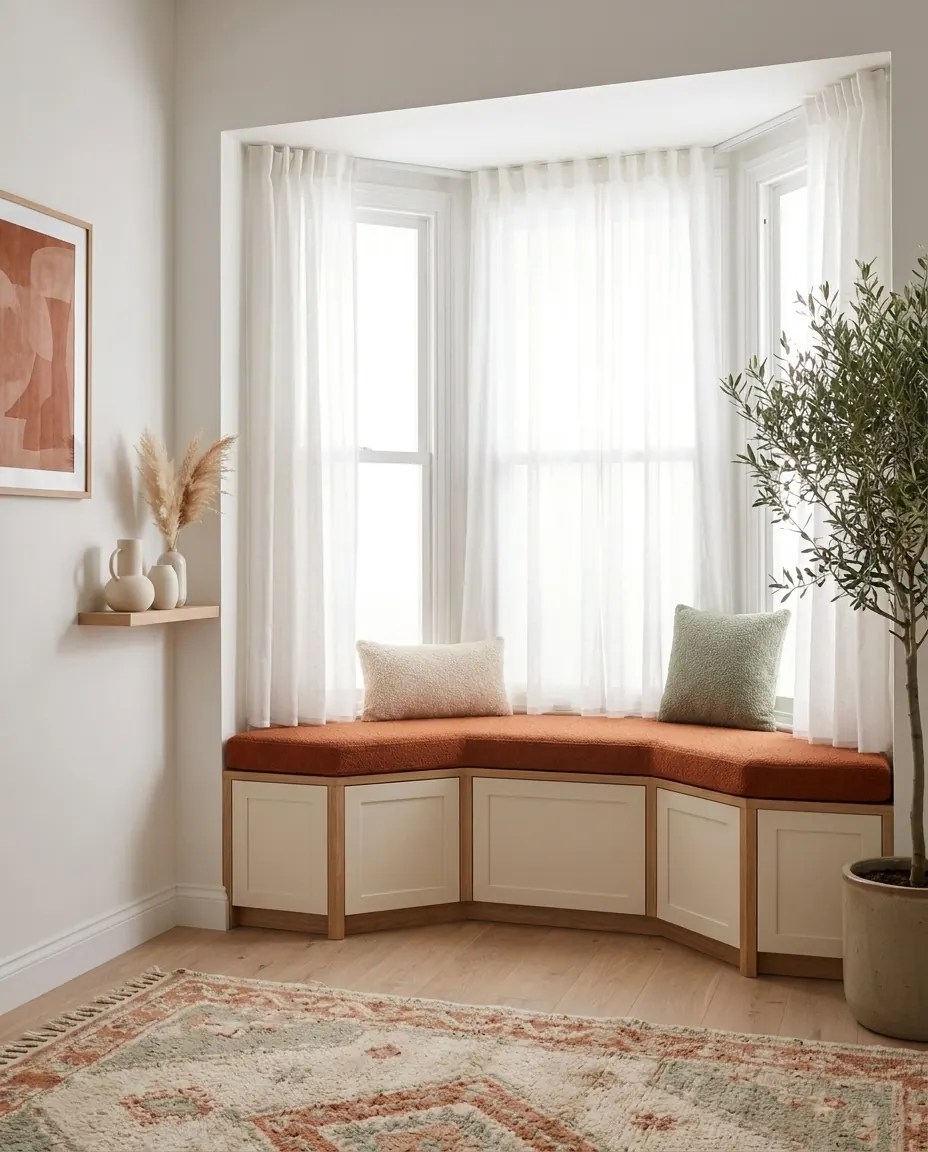
| One L-shaped piece on a corner | Covers that fight you on and off | Two cushions meeting flush at the corner |
| Ordering color from memory | The wrong cream on arrival | Ask which fabric code is in the photo |
| Picking the wrong option | A backrest arrives without its sofa | Read the confirmation; single-backrest orders get a message first |
Read left to right: the mistake, what you would see in the room, and the fix. Every fix comes from a real order or answer.
Pencil marks on the photo
Five marks, each one a mistake this bench quietly avoided.
- Pampas in stoneware
A beige stoneware bottle repeats the cream-to-oak range on the sill.
- Open book
A book placed mid-seat shows the pad is meant to be sat on, not just looked at.
- Speckled mug
The speckled glaze echoes the flecks in the bouclé.
- Slim cream pad
A thin, full-length pad keeps the bench's elegant proportions intact.
- Oak bench leg
Tapered oak legs stay visible because the cushion stops exactly at the frame.
- Pampas in stonewareA beige stoneware bottle repeats the cream-to-oak range on the sill.
- Open bookA book placed mid-seat shows the pad is meant to be sat on, not just looked at.
- Speckled mugThe speckled glaze echoes the flecks in the bouclé.
- Slim cream padA thin, full-length pad keeps the bench's elegant proportions intact.
- Oak bench legTapered oak legs stay visible because the cushion stops exactly at the frame.
101 1/2 inches and a bolster
A buyer in the US sent three numbers: 101 1/2 in long, 19 in deep, 3 in thick. Plus a bolster, in mushroom-taupe velvet with piping to match. They had another quote in hand and asked what made this one different. The answer was the 32-density foam and the fabric, and the two sides met in the middle with the bolster included.
Then the useful part. The workshop added that exact size to the order page, so the buyer could order it directly instead of rounding to the nearest menu size. Rounding a 101 1/2 in bench to 100 in leaves a gap you can drop a phone into.
- Sizes
- 101 1/2 × 19 × 3 in (258 × 48 × 7.5 cm), plus a bolster
- Fabric
- Mushroom-taupe velvet, matching piping
The lesson: A long bench and its bolster are one project; quote and order them together.
Three cushion questions: corners, photo colors, a wrong order
- A common question
My bench turns a corner. Is that one L-shaped cushion or two pieces?
The workshop's answerTwo. Corner seats are made as two separate cushions that meet neatly at the corner, flush edge to edge. The covers come on and off more easily, and the fit is cleaner.
- A common question
I love the color in one of your photos. Which code do I order to get exactly that?
The workshop's answerAsk, and the workshop gives you the code. In past answers, one photo turned out to be fabric 916 with piping 918, a burnt orange bench cushion was color 17, and a daybed cover photo showed soft fabric 913.
- A common question
I ordered only the L-shaped backrest by mistake. I wanted the whole sofa. Can I cancel?
The workshop's answerYes. When an order contains only a backrest, the workshop messages the buyer to confirm before making it. If it was a mistake, the order is canceled and refunded, and a discount coupon toward the full sofa or loveseat may be offered. The full sofa, with an open or closed corner, is chosen in the same options.
Thin pads, honest numbers
A slim pad is not a cheap pad. The standard bench cushion is 4 in (10 cm) thick, and on a heavy built-in that looks right. On a light oak bench with tapered legs, 4 in starts to look like a mattress. For a frame like this I would sketch 2 or 3 in, and the firm 32-density foam keeps a thin pad from bottoming out.
Tolerance is kindness to your future self, partner. Measure the top at both ends and in the middle, write all three numbers down, and note it if they differ. Bouclé forgives a lot, but it won't hide a pad that is 1 in short. Try the proportions first in the bench cushion builder, then follow how to measure a bench. For the loops themselves, see bouclé and teddy fabrics, and for more frames, the bench cushions collection.
A bench pad for a light oak bench looks right at 2 to 3 in thick; at the 4 in standard, a slim frame starts to look like it is carrying a mattress.
Nate
On the cutting table
| Cushion | Slim full-length bench pad |
|---|---|
| Fabric | Cream bouclé, loops left to show |
| Piping | None; the box edge stays soft |
| Thickness | 2–3 in (5–7.5 cm) on a light frame; 4 in (10 cm) standard |
| Foam | 32-density high-density foam |
| Length | Exact end to end, stopping at the frame |
| Corners | Two cushions meeting flush, not one L |
| Best for | Slim oak benches, reading nooks, entry benches in bright rooms |

Have it made
Have this made — ask Nate’s workshop
Every edge and both diagonals, to the nearest 1/4 in. If the numbers do not close, the workshop will say so on the call. — Nate
Leave your details and the workshop will call you to confirm measurements, fabric, foam and piping. No prices, dates or payment on this page: it is a request, not an order.
Questions buyers ask next
Is bouclé a sensible fabric for a bench pad?
For a bench with gentle everyday use, yes: the loops hide small marks and read beautifully in side light. Loops can catch on claws, though, so where cats jump up, the tighter weaves on the pet-friendly chart resist claws better.
How thin can a bench cushion go and still be comfortable?
2 in is the slimmest option and still supportive, because the 32-density foam is firm. 3 in is a comfortable middle ground for most benches, and 4 in is the standard thickness.
Can I order a bench size that isn't on the menu?
Yes. A buyer with a 101 1/2 in bench had the exact size added so it could be ordered directly. You can also pick the closest size and type the exact numbers in the personalization note.
± 1/4 in — Nate
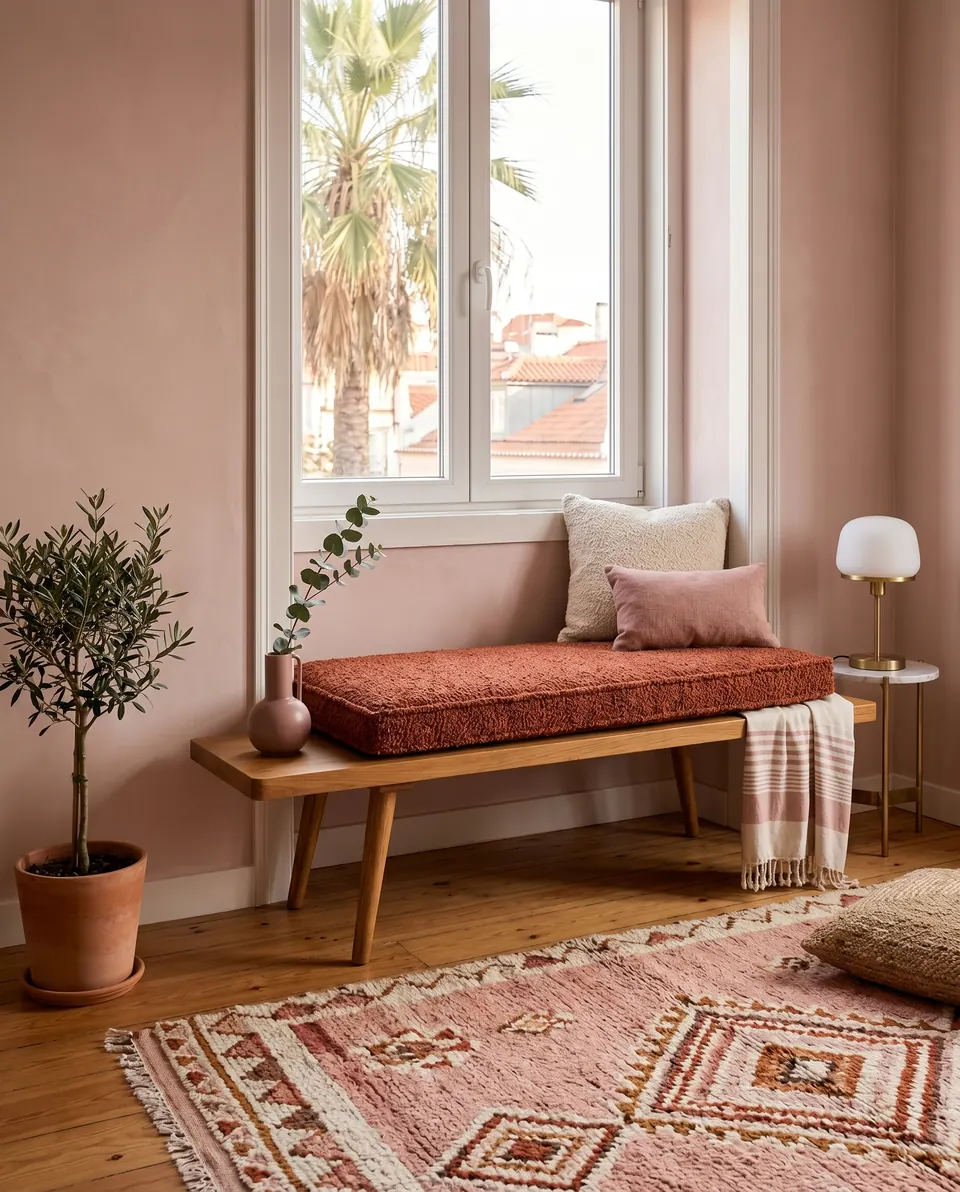
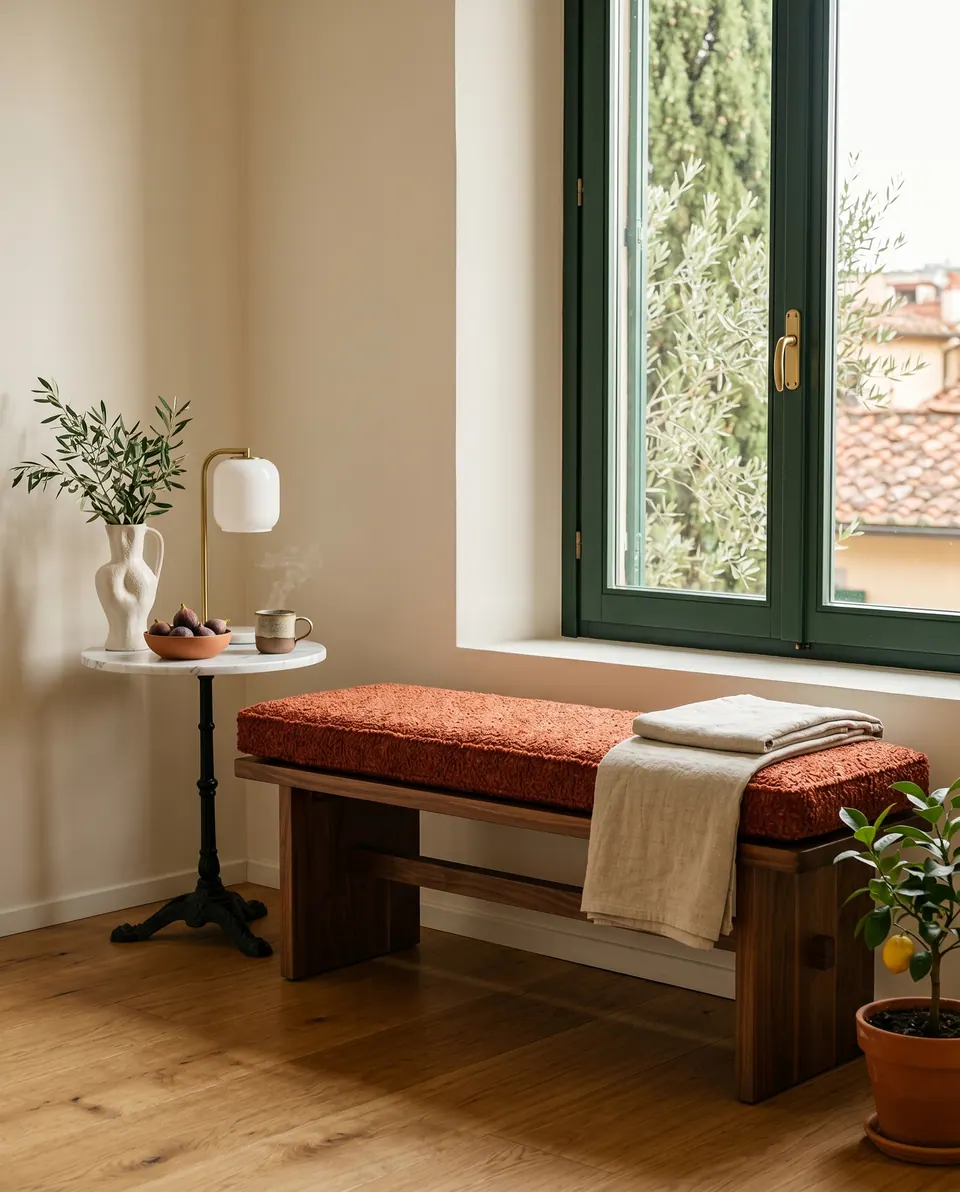
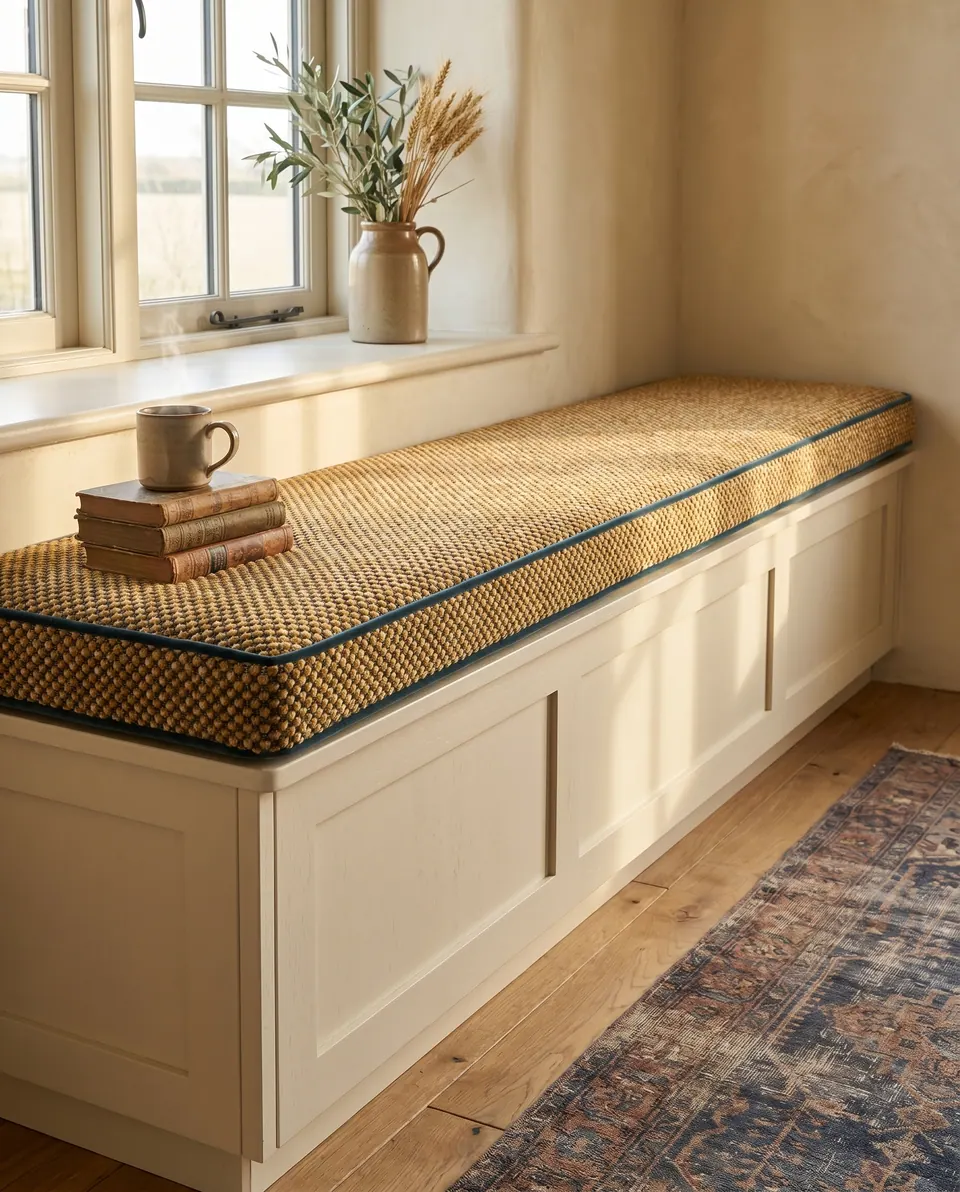
Bouclé on other benches, thick and thin
 Save
 Save
 Save
 Save
 Save
 Save