A Reading by NateBench Cushions
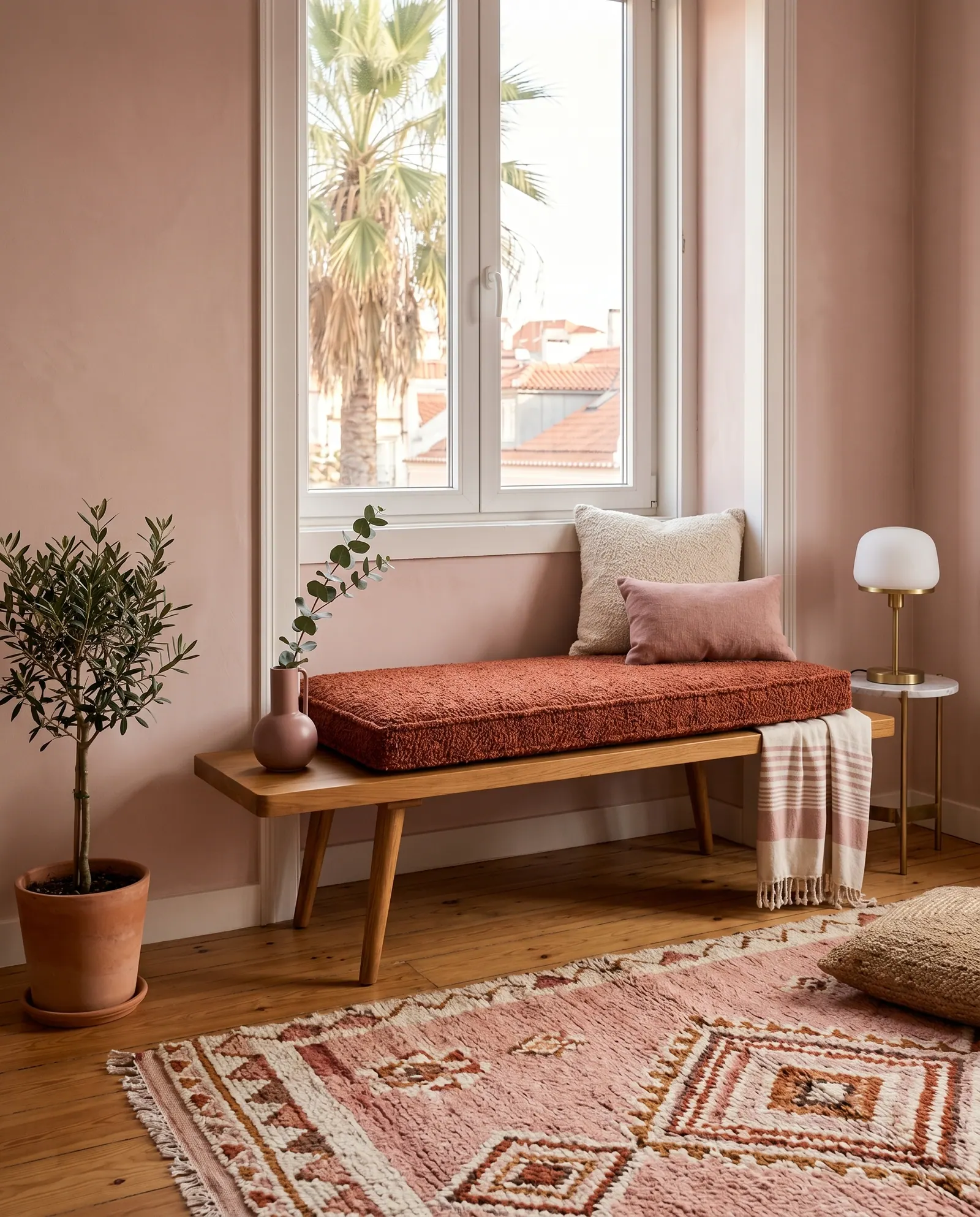
A rust bouclé custom bench cushion in a blush pink room, and the mistakes it steps around
The photograph is pretty. It is also a checklist, if you read it the way an engineer reads a drawing.

 Save
The quick answer
When a custom bench cushion comes up short, don't remake it: matching end pieces on both sides fill the gap and keep the main cushion centered. Avoid the problem in the first place by measuring the bench itself, asking for larger fabric photos than the tiny swatches, and splitting very long seats, such as 92 in, into two equal pieces.
A 20 in deep bench cushion, cut open
Bouclé cover. Looped rust bouclé on a removable, zippered cover. Every listing fabric machine washes at 86°F (30°C) on a gentle cycle.
Self piping. Cut from the same bouclé, so the edge reads as texture rather than as a drawn line.
Fiber wrap. Polyester fiber (Dacron) batting around the foam: it fills the cover out and softens the edges.
Foam core. About 2.0 lb/ft³ (32 kg/m³) high-resilience foam, firm to medium-firm, cut to the ordered size.
Zipper. Along the back band, as hidden as possible. The zipper side faces down or toward the wall.
Base panel. The underside of the cover. A non-slip fabric backing can cover the whole of it instead.
Read it like a drawing: one deep note in a pink room
Start with the values, partner, not the colors. Everything in this room sits in one warm family: blush walls, a pink rug with a Moroccan pattern, a pink and cream striped throw. The rust bouclé cushion on the splayed-leg oak bench is the darkest value in the frame, so it anchors the whole scheme.
Then count the steps. A cream bouclé pillow drops the value from rust toward the pale walls. A dusty pink velvet lumbar repeats the wall color in a different texture, which makes the seat look built for the room. The fringed throw adds pattern without leaving the family. A woven jute pouf and an olive tree in terracotta bring natural fiber and green, so the pinks don't turn to candy. A globe lamp on a brass and marble side table and a pink bud vase with one eucalyptus stem finish the corner. Through the window: a palm and terracotta rooftops.
The box edge is self-piped, so the outline reads as texture. Nothing about the seat argues with the room.
More seats like it sit under bench cushions and living room cushions; the loops have their own notes under bouclé and teddy, and the bench cushion builder takes your numbers. What does your bench measure between its end walls?
Five pins, darkest value first
Five pins, from the rust anchor outward to the jute on the floor.
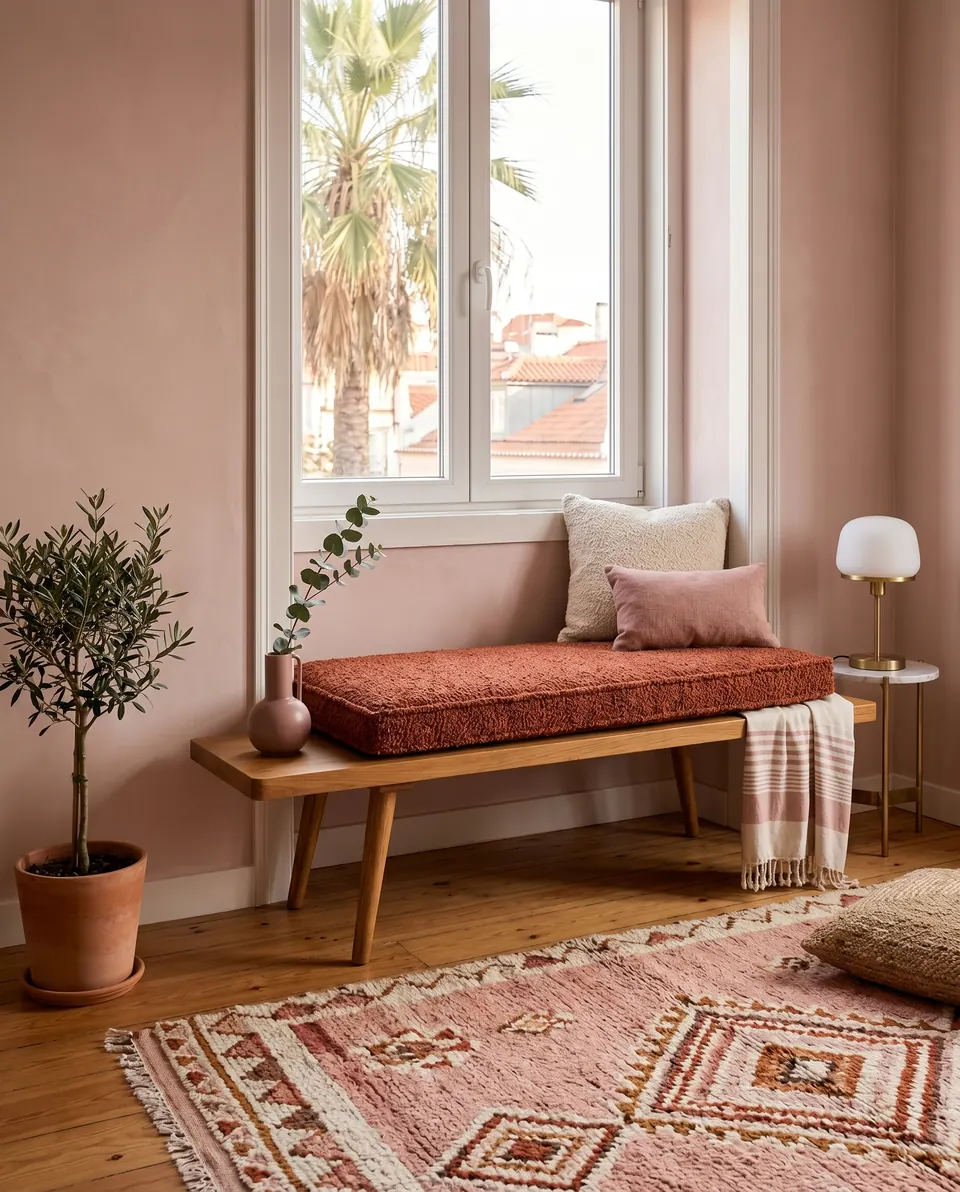
- Rust bouclé cushion
The darkest tone in a blush scheme gives the room its anchor.
- Cream bouclé pillow
Steps the palette down from rust toward the pale walls.
- Dusty pink lumbar
Wall color in velvet makes the seat feel made for the room.
- Striped fringed throw
Pink and cream stripes add pattern while staying tonal.
- Jute pouf
Natural fiber grounds all the pinks with texture.
- Rust bouclé cushionThe darkest tone in a blush scheme gives the room its anchor.
- Cream bouclé pillowSteps the palette down from rust toward the pale walls.
- Dusty pink lumbarWall color in velvet makes the seat feel made for the room.
- Striped fringed throwPink and cream stripes add pattern while staying tonal.
- Jute poufNatural fiber grounds all the pinks with texture.
Mistakes this photo avoids, with the fix for each
- A cushion shorter than its bench: this one runs end to end. If yours doesn't, add matching end pieces rather than remaking.
- A color chosen from a thumbnail: bouclé loops change how a color reads, so ask for large photos of the exact fabric codes, or physical samples.
- A cushion the same shade as the walls: here it sits two or three shades deeper in the same hue, so it anchors instead of vanishing.
- One very long piece: at 92 in (234 cm), two equal 46 in (117 cm) pieces are easier to handle, ship and fit.
- A new color for every accessory: the pillows step from rust to blush, so four textures read as one family.
Fifteen inches short, fixed with four small cushions
A buyer in the US measured wrong. The cushion arrived gorgeous and about 15 in (38 cm) short of a 70 in (178 cm) built-in bench with a backrest; the space needed 69.5 x 20 in (176.5 x 51 cm). Sending it back would have cost more than it saved.
So the workshop did the arithmetic instead. Fifteen inches split two ways is 7.5 in (19 cm) a side. It made two 7.5 in seat pieces and two 7.5 in back pieces in the matching tufted fabric, to sit either side of the main cushion and keep it centered.
Measure twice; the fabric remembers. When it remembers anyway, fill the gap symmetrically.
- Sizes
- Needed 69.5 x 20 in (176.5 x 51 cm); 15 in (38 cm) gap filled by four 7.5 in (19 cm) pieces
- Fabric
- Tufted, matching the original cushion
The lesson: Don't remake a cushion that's too short. Add matching end pieces on both sides to fill the gap symmetrically.
Buyer questions: length, swatches and wipe-clean cloth
- A common question
Can you make a single bench cushion 92 in long?
The workshop's answerYes, though at 92 in (234 cm) the workshop suggests two equal 46 in (117 cm) pieces. Two pieces are easier to handle, ship and fit.
- A common question
The swatches on the listing are tiny. Can I see the fabrics bigger?
The workshop's answerYes. Name the fabric codes you are weighing and the workshop photographs larger pieces. To see and feel them in person, physical samples can be posted if you cover the shipping. A drawing of your bench with its sizes helps the quote.
- A common question
Do you have faux leather, or anything that wipes clean?
The workshop's answerVelvet wipes clean easily, and every fabric on the listing machine washes at 86°F (30°C) on a gentle cycle. Faux leather is available for a bit more; ask to see those fabrics.
If a bench cushion comes up 15 in short, split the gap: two 7.5 in end pieces, one on each side, keep the main cushion centered.
Nate
Parts and numbers
| Cushion | Box bench cushion on a splayed-leg oak bench |
|---|---|
| Fabric | Rust bouclé, self piping |
| Color rule | Two or three shades deeper than the walls, same hue |
| Supporting pillows | Cream bouclé square, dusty pink velvet lumbar |
| Very long seats | Two equal pieces: 92 in becomes 2 x 46 in (2 x 117 cm) |
| Too-short fix | Matching end pieces, split evenly on both sides |
| Fabric check | Large photos of named codes; posted samples if you cover shipping |
| Care | Removable cover, 86°F (30°C) gentle cycle |

Have it made
Have this made — ask Nate’s workshop
Precision starts on the phone. Give the workshop your measurements and they will read them back to you, edge by edge. — Nate
Leave your details and the workshop will call you to confirm measurements, fabric, foam and piping. No prices, dates or payment on this page: it is a request, not an order.
Questions buyers ask next
What can I do if my custom cushion is a few inches too short?
Before paying for a remake, ask about matching end pieces. Splitting the gap evenly, with one piece on each side, keeps the main cushion centered and the bench symmetrical. Send exact measurements of the space and of the gap.
How dark should a bench cushion be in a pink room?
Two or three shades deeper than the walls, in the same hue family. Rust on blush works because the cushion becomes the room's darkest note, while pillows in cream and dusty pink step back up toward the wall color.
Why pair a bouclé seat with a velvet pillow?
Two textures in one color family keep a tonal room from going flat. The rust bouclé seat reads matte and nubby; a dusty pink velvet lumbar catches the light. The surface changes without adding a new color.
± 1/4 in — Nate
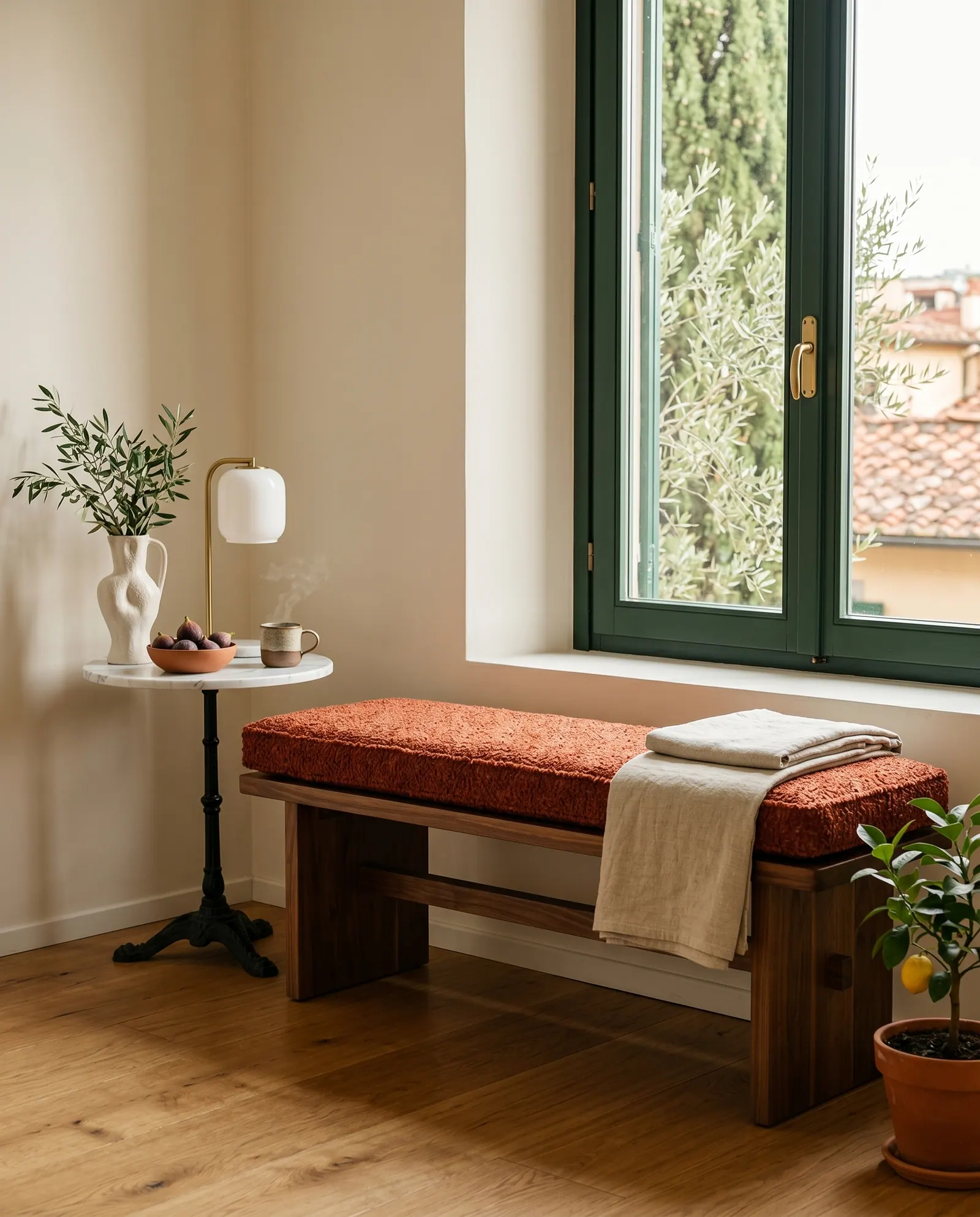
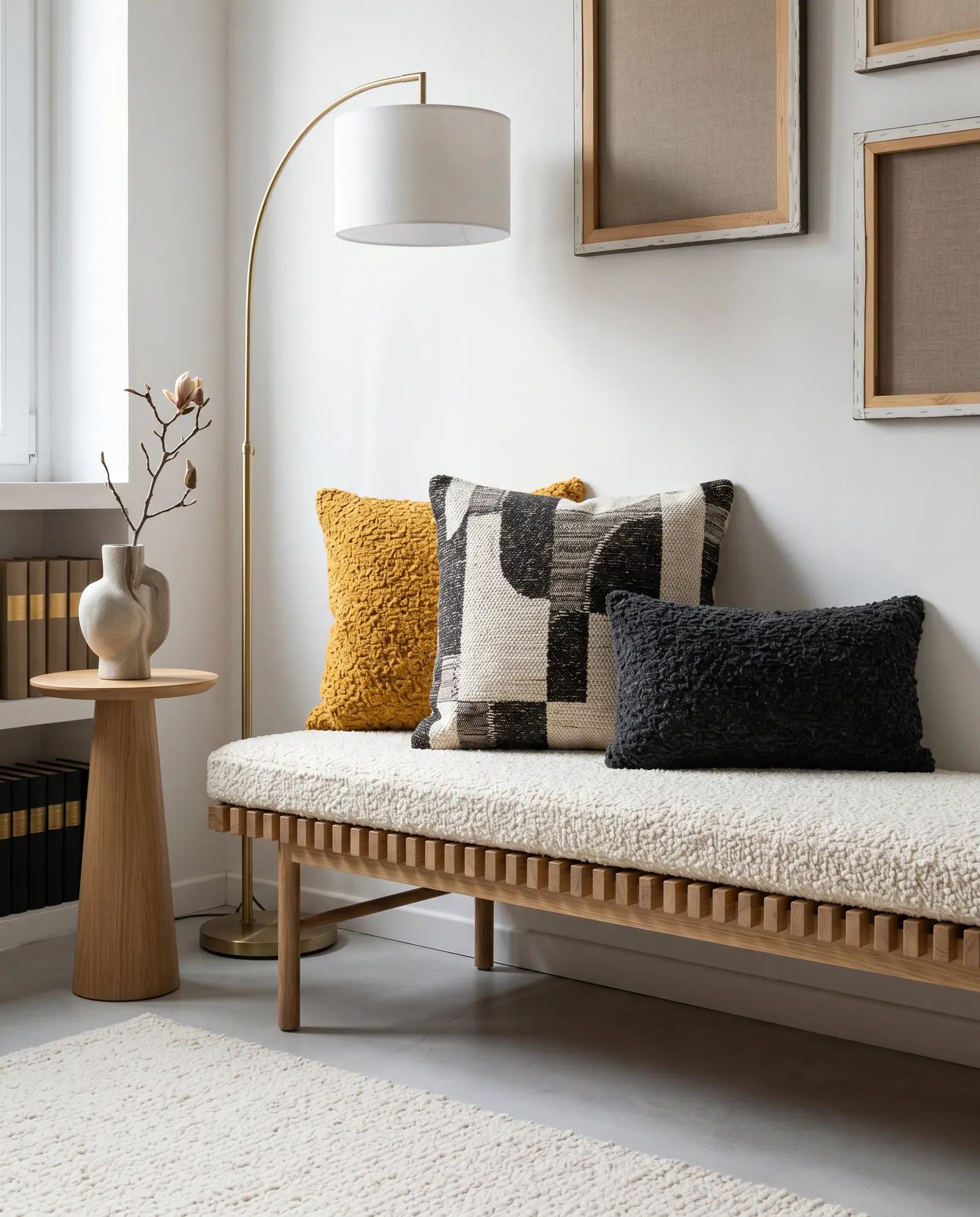
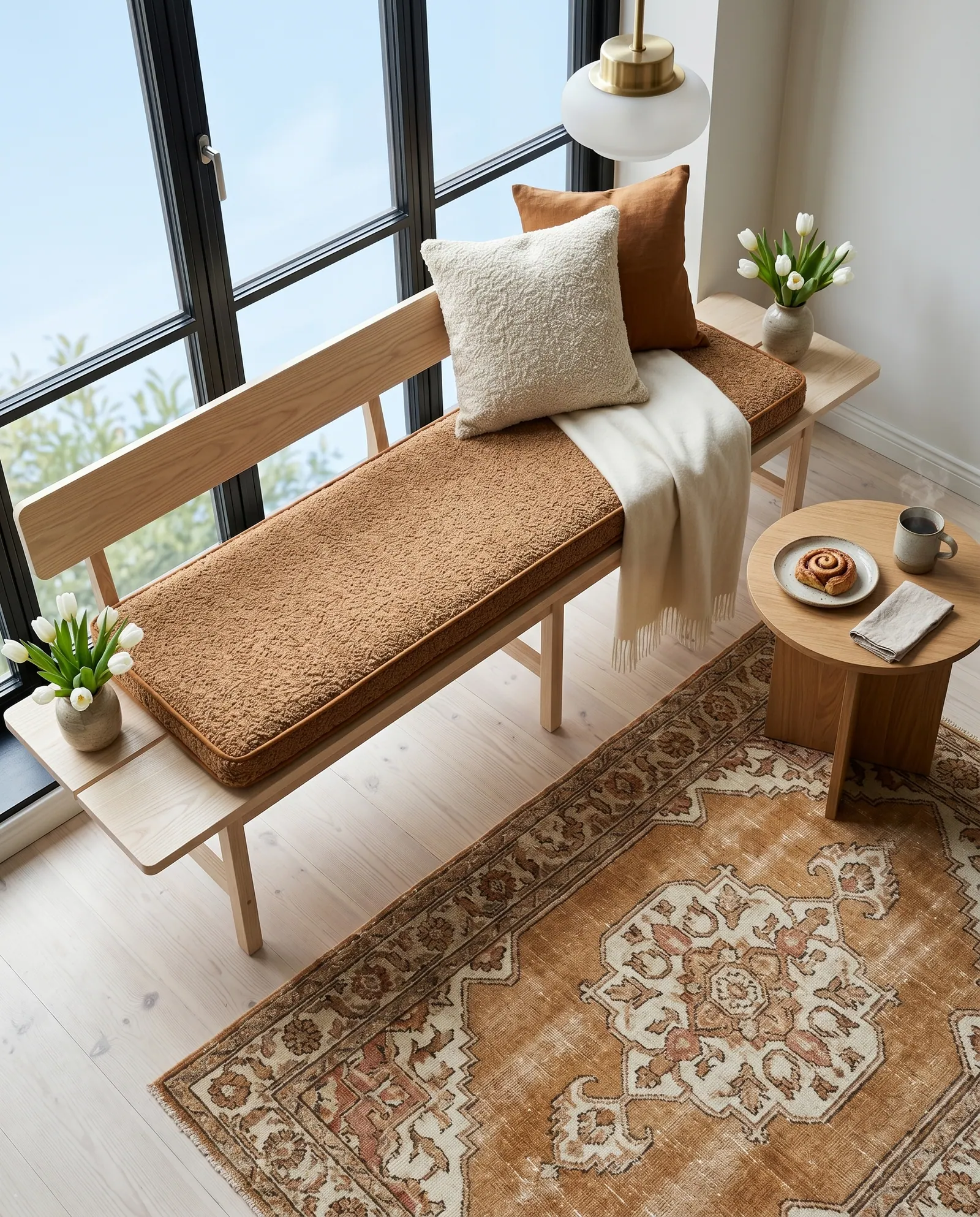
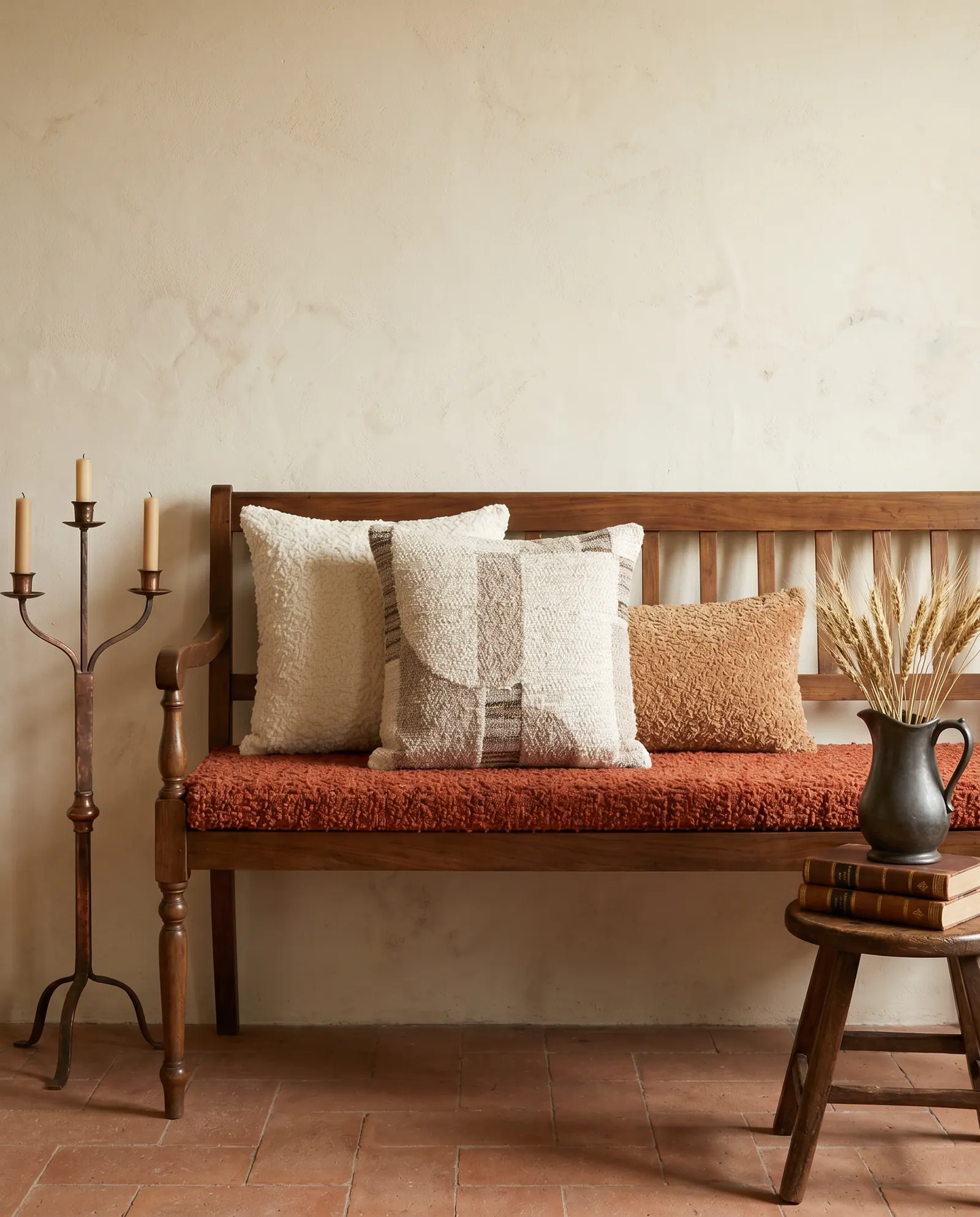
Bouclé bench cushions in six rooms, rust to ivory
 Save
 Save
 Save
 Save
 Save
 Save