A Reading by HarlanBolster Pillows
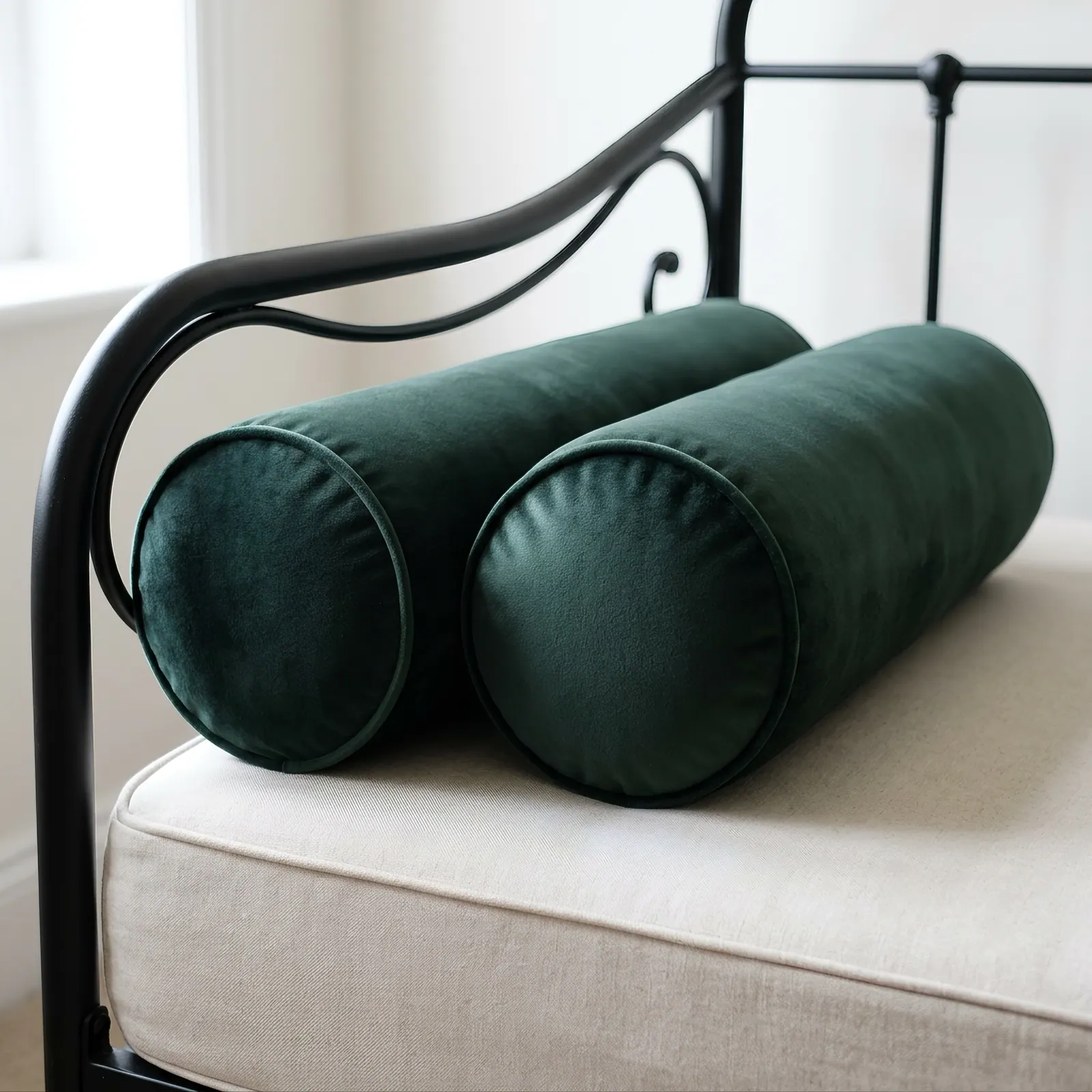
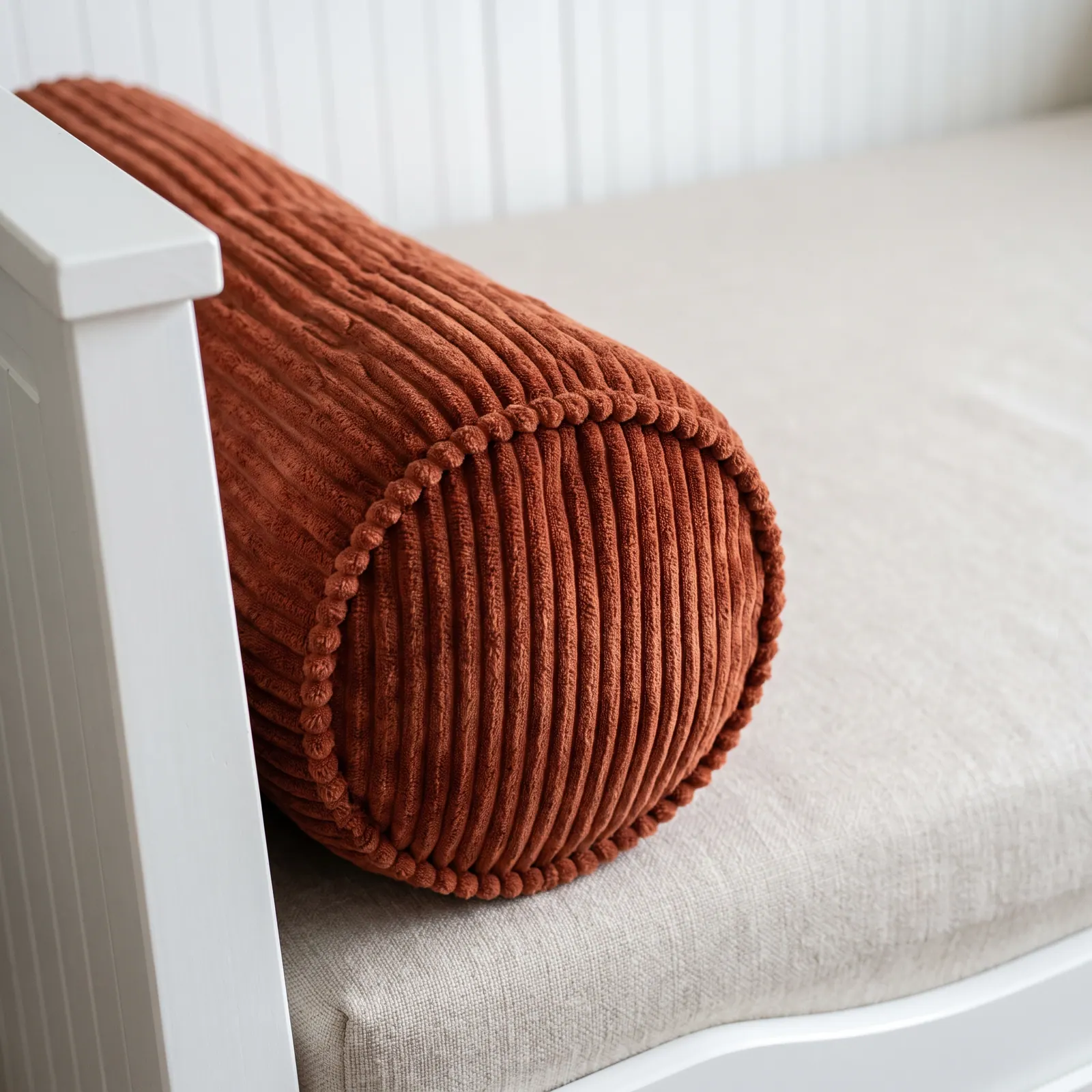
Eggplant velvet bolster pillows in a daybed corner, and how their color moves with the light
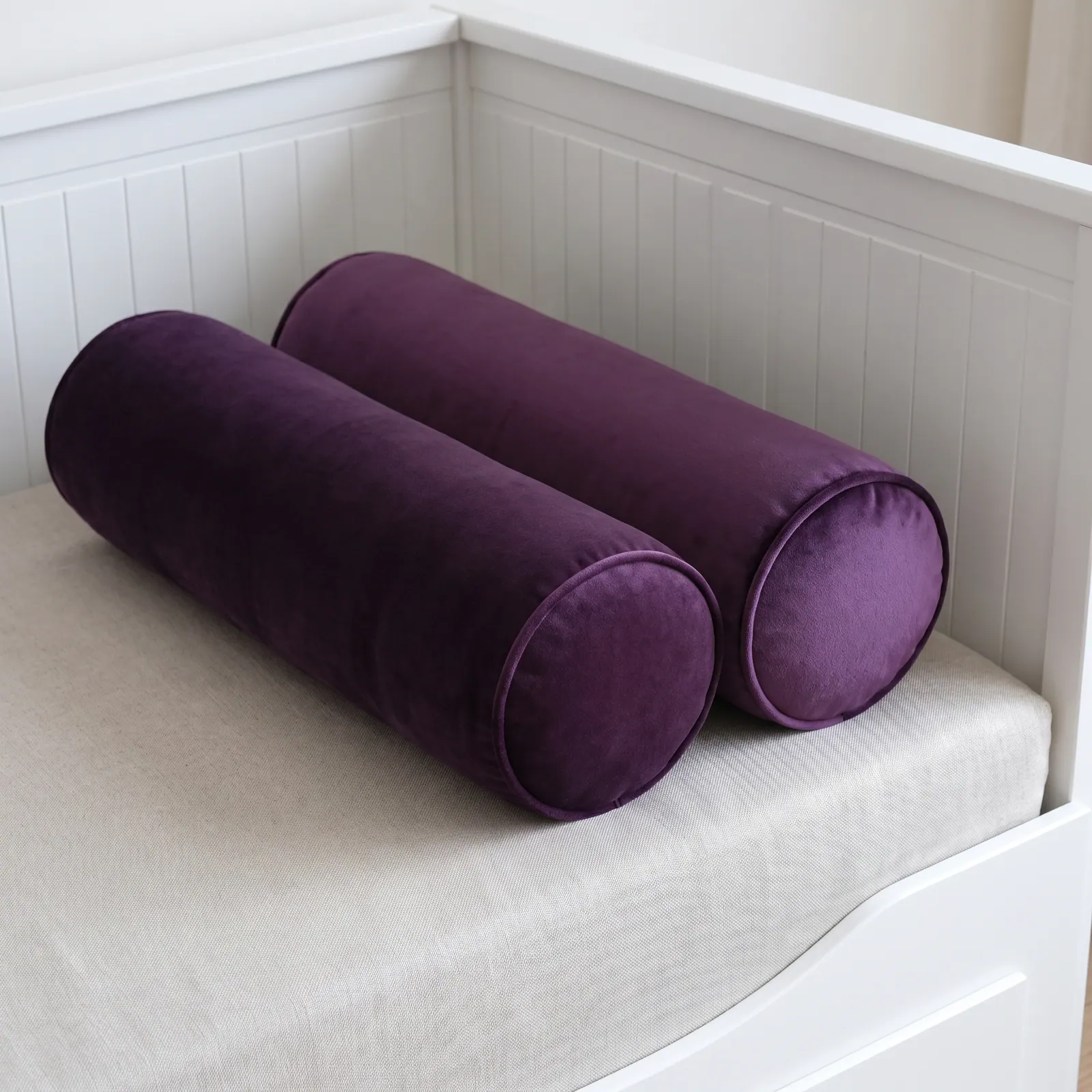
Two rolls of aubergine pushed into a corner, and a color that changes its mind three times a day. Let's read it slow.

 Save
The quick answer
Eggplant velvet bolster pillows change color with the light: gray daylight shows the true tone and a darker shadow line along each roll, warm lamplight pulls the red forward, and screens often show them darker than they are. Judge a swatch by a window beside white paper, then under your own lamps. A standard bolster is about 8 in (20 cm) across.
A daybed bolster like these, cut open
Velvet cover. Eggplant velvet with a short, tight pile. It unzips and washes at 86°F (30°C) on a gentle cycle; air-dry it.
Self piping. A cord covered in the same eggplant, ringing each end, so the pair stays one color.
Inner cover. The filling sits in its own inner casing, so only the velvet goes in the machine.
Filling. Bolsters come filled. Shredded foam is softer than solid foam but not very soft, so a roll you lean on stays round.
Zipper. Along the length, on the underside, so it lies against the seat.
Round end. Cut to the diameter: about 8 in (20 cm) as standard, 10 in (25 cm) for a bigger seat.
Velvet remembers the window
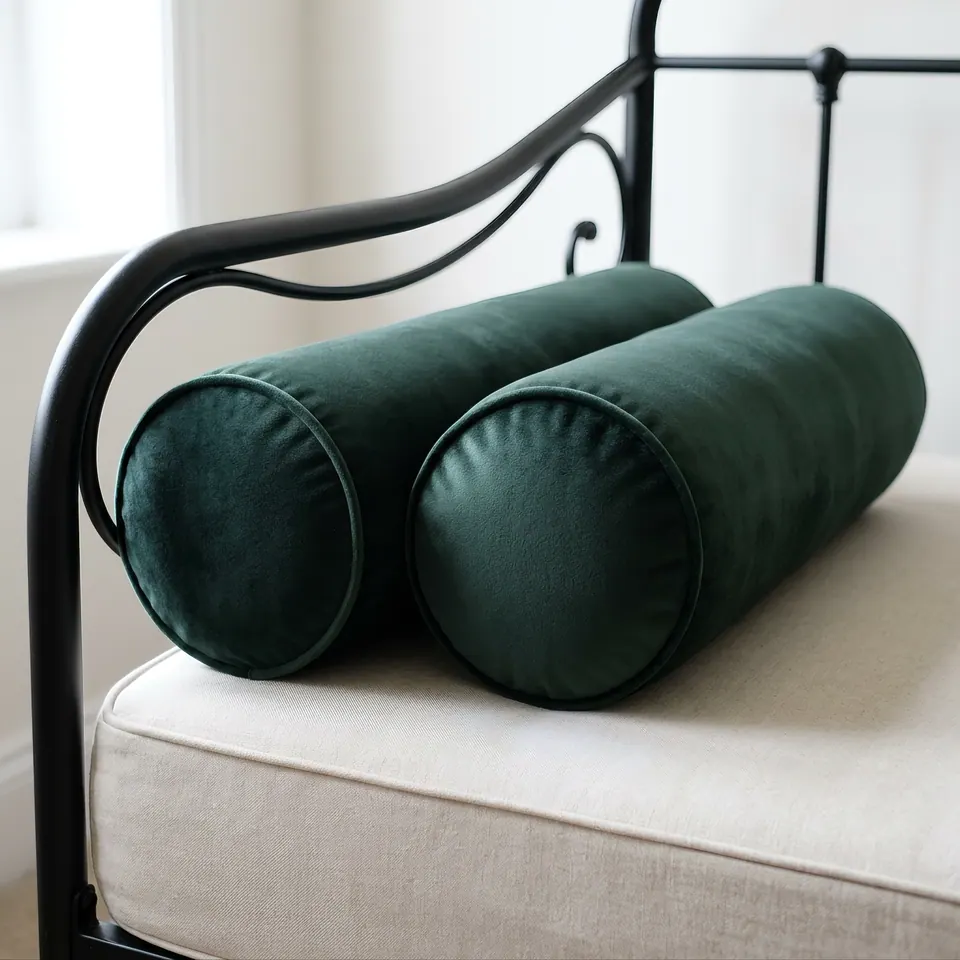
Two rolls of eggplant velvet, pushed into the corner where the daybed's back meets its arm. That's how a daybed really gets used, my friend. One bolster holds your back, the other takes your elbow, and you read till the light goes.
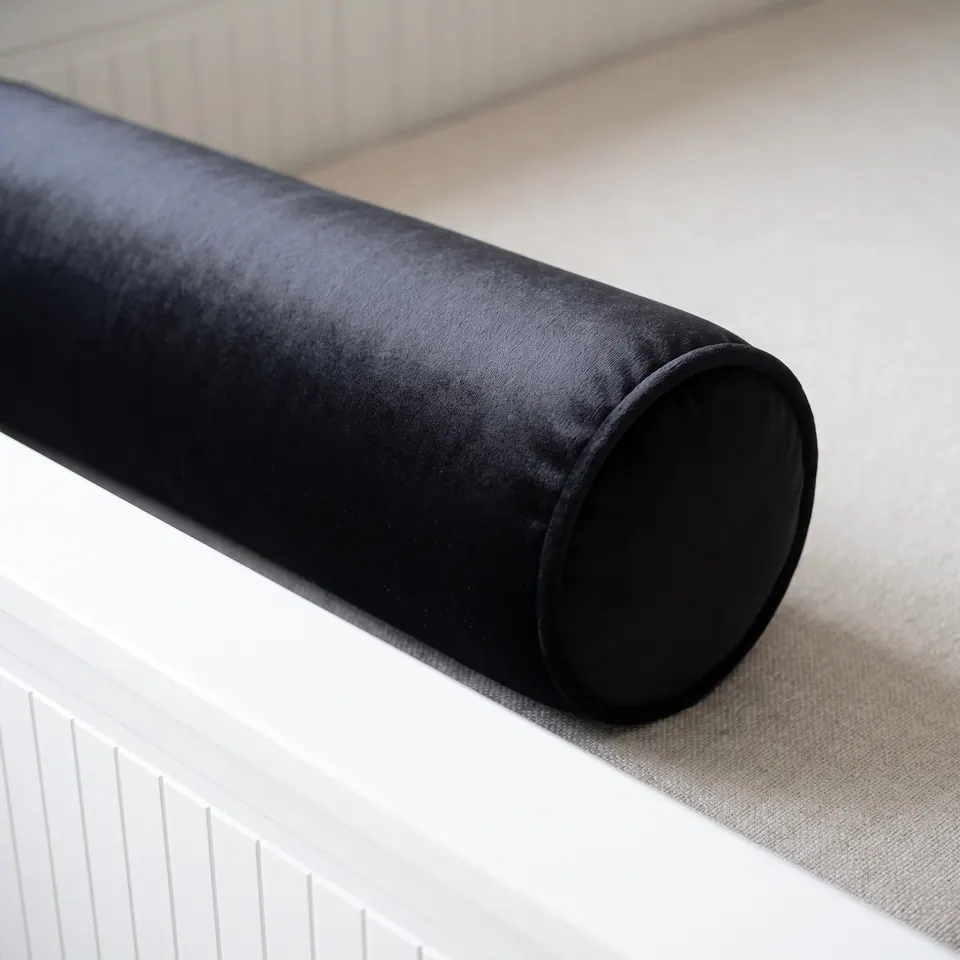
Eggplant is a clever color for the job. It's dark enough to anchor a white beadboard frame, yet it carries enough red to stay warm. The beadboard plays its part too: next to all that white, the shadowed side of each roll reads close to black.
Look along the top of each bolster and you'll see a darker line running its length. That's the pile turning away from the window. Velvet remembers which way it was brushed, and it tells you in light and shade. The ends are self-piped, a cord covered in the same eggplant, so the pair stays one thing instead of two.
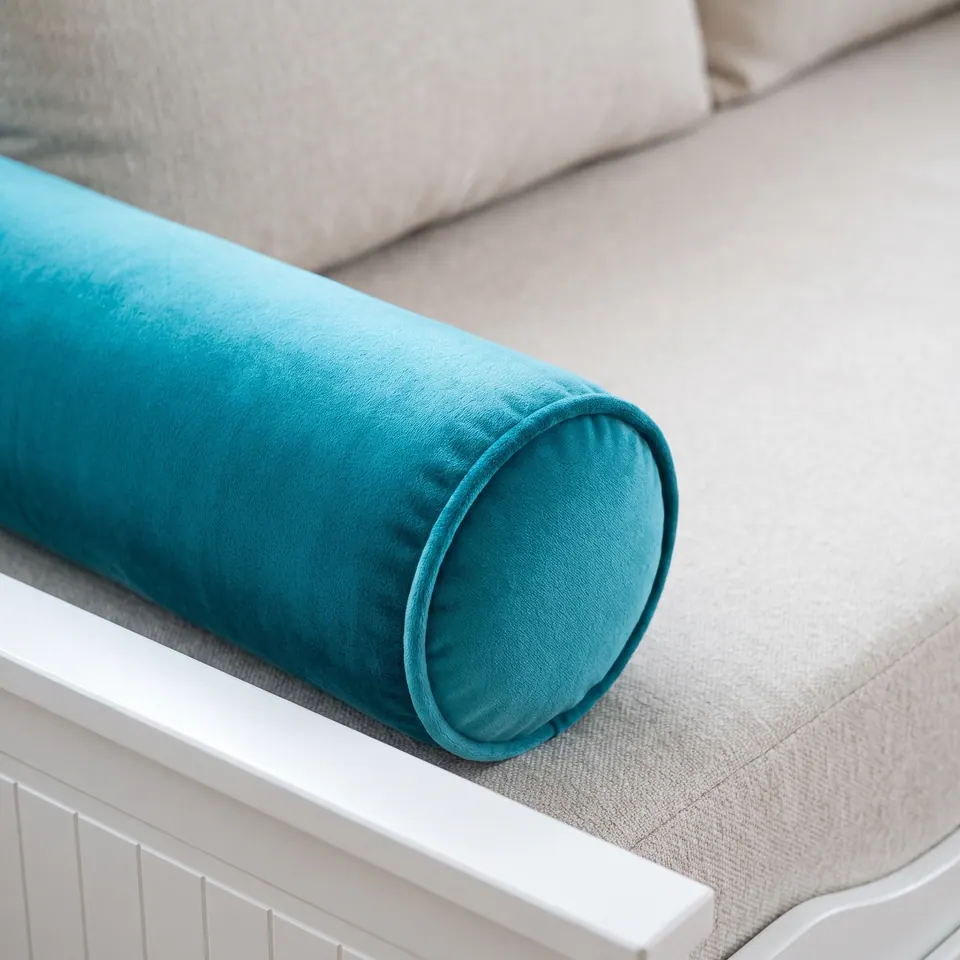
Underneath, a pale linen mattress cushion keeps the purple from sitting heavy. Nothing else is in the frame, and nothing else is needed. For sizes, start with bolster pillows; for the cloth, the velvet shelf. Which light do you do most of your sitting in?
Five pins on the pair
Five places where the light shows you what the velvet is doing.
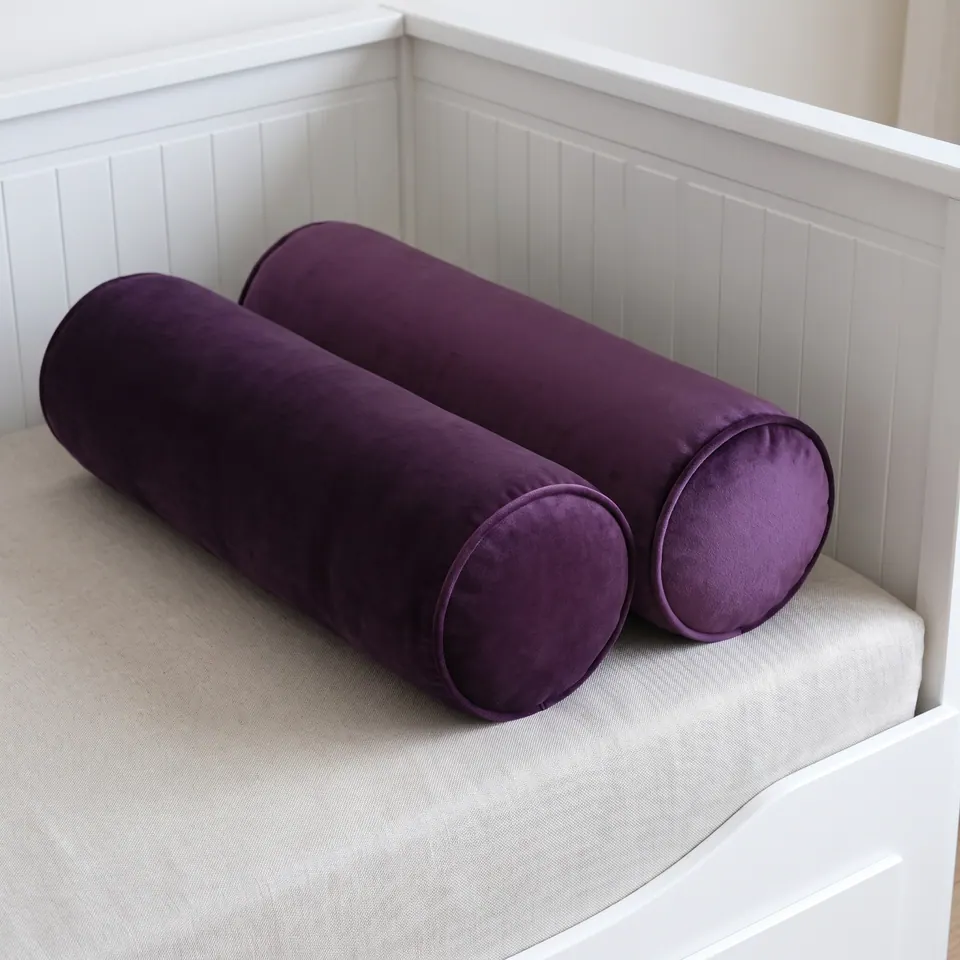
- Front velvet end cap
Self piping keeps the pair unified; a contrast cord would split them visually.
- Rear end cap
The second roll tucks into the corner where back and arm meet.
- Pile shadow line
Velvet shows a darker line along each roll where the pile turns away from the light.
- Linen mattress cushion
A pale linen base keeps the dark purple from feeling heavy.
- Beadboard back
White boards behind make the aubergine read almost black in the shadows.
- Front velvet end capSelf piping keeps the pair unified; a contrast cord would split them visually.
- Rear end capThe second roll tucks into the corner where back and arm meet.
- Pile shadow lineVelvet shows a darker line along each roll where the pile turns away from the light.
- Linen mattress cushionA pale linen base keeps the dark purple from feeling heavy.
- Beadboard backWhite boards behind make the aubergine read almost black in the shadows.
One eggplant, three lights
Gray daylight
The light in this photograph. It shows the truest tone and the pile's shadow line at its clearest. Hold your swatch by a window, next to a sheet of white paper.
Evening lamps
Warm bulbs pull the red in eggplant forward, and the rolls lean toward plum. Check the swatch again under the lamps you actually read by.
Your screen
A screen gives off light; cloth only reflects it, and phones correct color on their own. Chart swatches and close-ups can look darker than the fabric, so ask for daylight photos of a finished piece in your code. As Élodie says, "Daylight never lies; your screen sometimes does."
Bolsters cut from the piping stripe
One buyer wrote in about bench seating: two seat cushions, about 19.75 x 35 in (50 x 89 cm) and 19.75 x 66.5 in (50 x 169 cm), 3 in (7.5 cm) thick, in a solid red with black-and-white stripe piping. With them came two long bolsters, 7 x 65 in (18 x 165 cm) and 7 x 47.25 in (18 x 120 cm).
Then a second thought, and a good one: could the bolsters be made entirely in the stripe? The workshop said yes. The stripe that outlined the seats rolled up into the bolsters, and the whole set spoke in one voice without getting loud. If you want bolsters to belong, cut them from the piping, not the body.
- Sizes
- Seats 19.75 x 35 in (50 x 89 cm) and 19.75 x 66.5 in (50 x 169 cm), 3 in thick; bolsters 7 x 65 in (18 x 165 cm) and 7 x 47.25 in (18 x 120 cm)
The lesson: Making bolsters fully in the piping stripe links them to the seat cushions without looking busy.
Spare covers, a torn seam and matching bolsters
- A common question
Can I buy a spare set of slipcovers, to change the color or swap in while the others are in the wash?
The workshop's answerYes. Covers are sold separately, either with the sofa or later through a custom link, and two or three sets ordered together were quoted for less per set. Spare covers are made in the standard sizes, so they fit the foam you already have.
- A common question
A cover arrived torn. Will you replace it, and is there a warranty?
The workshop's answerOften, yes: in past cases a torn or open seam was put right with a new cover or a remake, and any warranty question is the workshop's to answer. Photograph the tear the day the box opens, my friend, and the packaging too, because the carrier asks for proof that the damage happened in transit. Message the workshop with those photos and keep its reply.
- A common question
Do you make bolster pillows to match a bench cushion, and in what sizes?
The workshop's answerYes. Bolsters are long cylinder pillows made in the same fabric as the cushion. Two examples: a pair 8 in (20 cm) across and 26 in (66 cm) long in corduroy, and a single bolster 18 in (46 cm) across and 50 in (127 cm) long in linen with matching piping. There's also a dedicated bolster listing.
Make a pair of bolsters entirely in the piping fabric of the seat cushions, and the set ties together without adding one more color.
Harlan
The bolsters, by the numbers
| Pillows | Two round bolsters in the daybed's back corner |
|---|---|
| Fabric | Eggplant velvet, short tight pile |
| Piping | Self piping ringing each end |
| Standard diameter | About 8 in (20 cm); 10 in (25 cm) for a bigger seat |
| Length | The seat depth, or about 4 in (10 cm) shorter |
| Filling | Filled insert in its own inner cover |
| Care | Zippered velvet cover; 86°F (30°C) gentle wash, air-dry |
| Best for | Daybeds, window seats and reading corners against a wall |

Have it made
Have this made — ask Harlan’s workshop
Fabric has a temper and foam has a memory. Better to settle both in a conversation than to guess at them alone. — Harlan
Leave your details and the workshop will call you to confirm measurements, fabric, foam and piping. No prices, dates or payment on this page: it is a request, not an order.
Questions buyers ask next
What size bolster fits a daybed corner?
The standard round bolster is about 8 in (20 cm) across, or 10 in (25 cm) for a bigger seat. Its length usually matches the seat depth or runs about 4 in (10 cm) shorter, and any diameter or length can be ordered. See bolster sizes.
Why does a velvet bolster look two-toned?
Velvet has a directional pile. Where the pile faces the light it looks lighter, and where it turns away it looks darker, so a single roll can show a shadow line along its length. That's how the cloth behaves, not a flaw.
Can a bolster ordered later match my daybed cushion exactly?
An exact match isn't guaranteed. Dye batches can differ slightly between separate orders, and velvet sheen shifts the tone further. Order matching pieces together when you can; the screen versus daylight Pattern explains how to judge color.
Sit well. — Harlan
More bolsters and daybed corners
 Save
 Save
 Save
 Save
 Save
 Save