A Reading by HarlanBolster Pillows
A black velvet bolster pillow, and how the cloth feels, wears and keeps
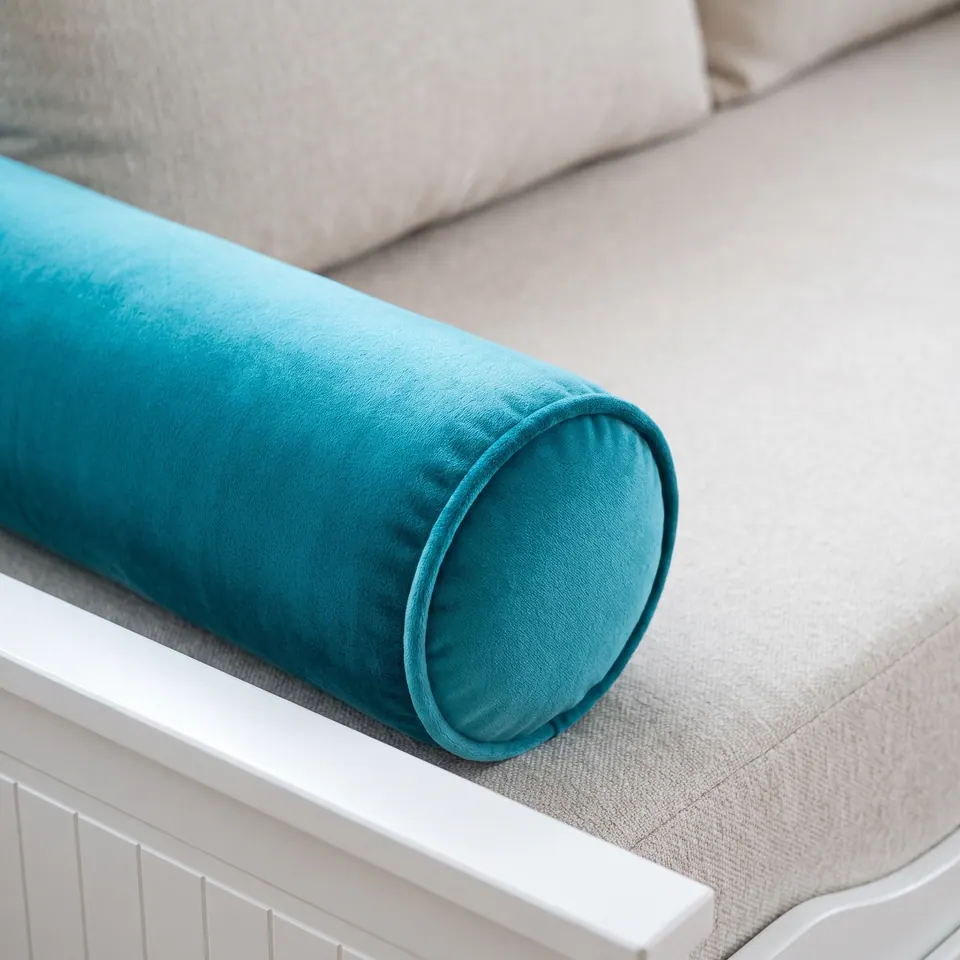
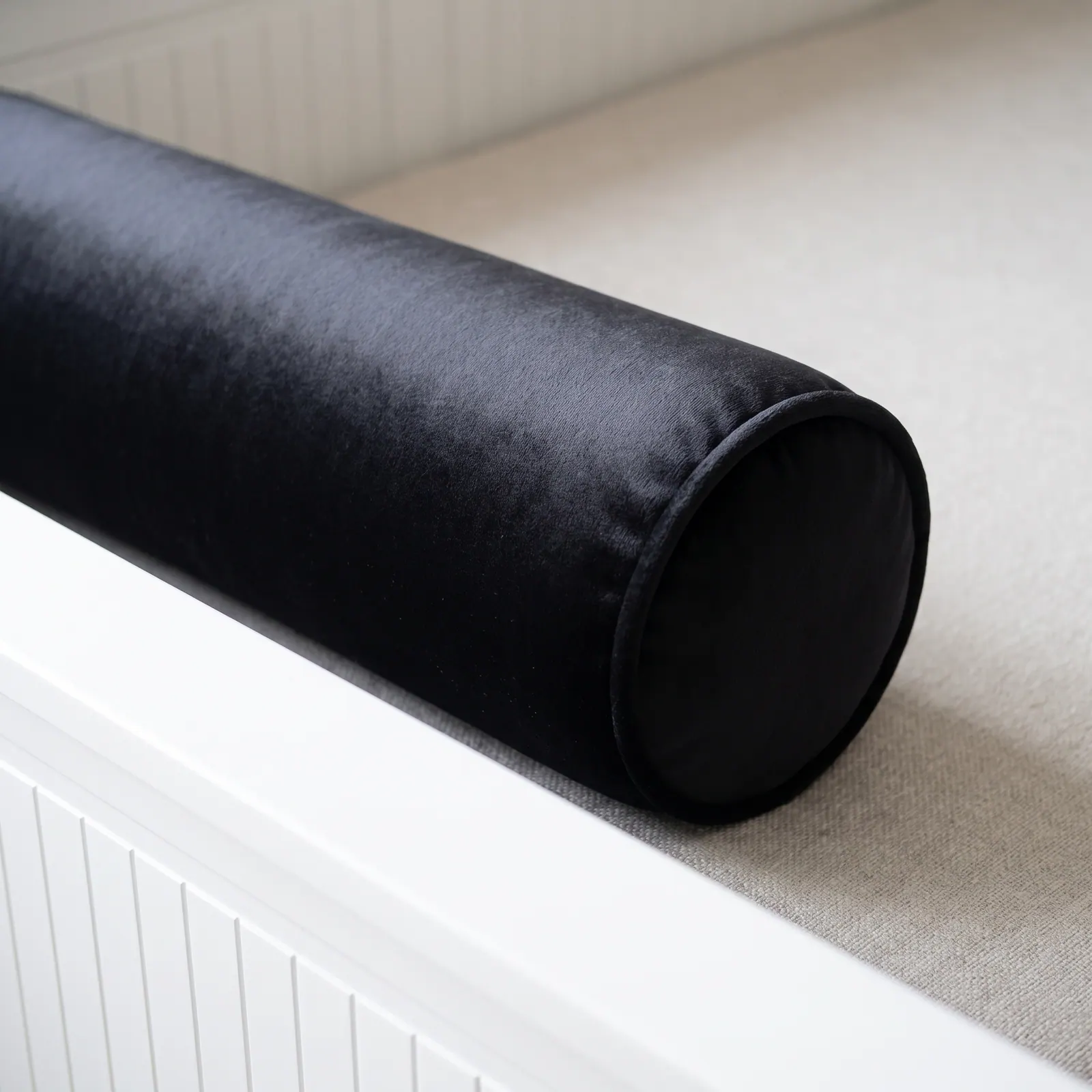
One dark roll on a white painted arm. The shape is drawn by sheen, not color, and that tells you most of what you need to know about velvet.
 Save
The quick answer
A black velvet bolster pillow gets its shape from sheen: the pile swallows light in the middle and catches it only along the crown. Black self piping keeps the end crisp without adding a color. Laid along a daybed arm, the bolster should be as long as the seat is deep. Velvet is an indoor fabric.
The cushion, cut open
Cover fabric. A removable, zippered cover. Machine wash at 86°F (30°C) on a gentle cycle and air dry.
Piping. A fabric-covered cord sewn into the seams. It sits on the seam line, so it does not change the size.
Fiber wrap. Polyester fiber (Dacron) batting around the foam: it fills the cover out and softens the edges.
Foam core. About 2.0 lb/ft³ (32 kg/m³) high-resilience foam, firm to medium-firm, cut to the ordered size.
Zipper. Along the back band, as hidden as possible. The zipper side faces down or toward the wall.
Base panel. The underside of the cover. A non-slip fabric backing can cover the whole of it instead.
Pinned by Harlan: circle against line
Five pins from the piped end cap to the grooves of the beadboard.
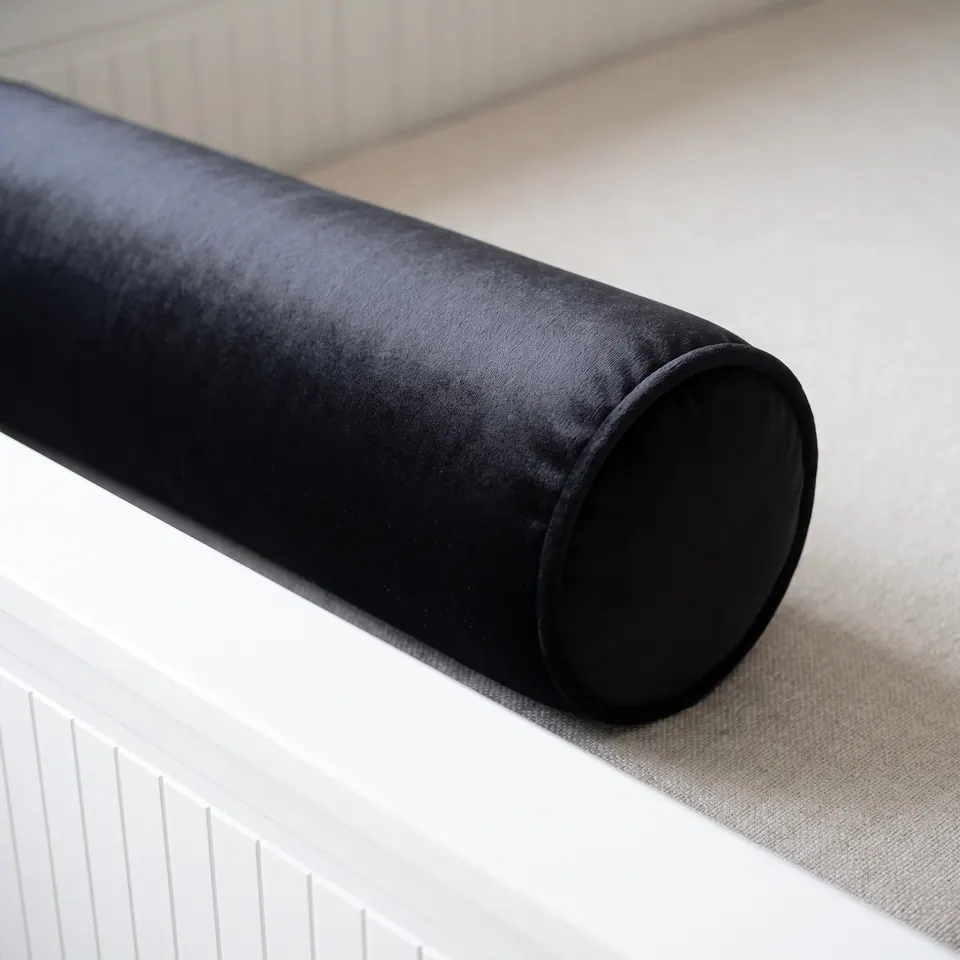
- Piped velvet end cap
Black self piping gives the circle a crisp edge without introducing a second color.
- Sheen along the crown
Velvet pile only catches light on the top curve, which is what makes black look rich rather than flat.
- White painted arm rail
The bolster runs parallel to the arm, so its length should match the seat depth, not the daybed length.
- Oatmeal woven seat
A plain pale seat cushion lets the dark roll be the only statement at this end.
- Beadboard end panel
The vertical grooves keep the black velvet from feeling too formal for a cottage-style frame.
- Piped velvet end capBlack self piping gives the circle a crisp edge without introducing a second color.
- Sheen along the crownVelvet pile only catches light on the top curve, which is what makes black look rich rather than flat.
- White painted arm railThe bolster runs parallel to the arm, so its length should match the seat depth, not the daybed length.
- Oatmeal woven seatA plain pale seat cushion lets the dark roll be the only statement at this end.
- Beadboard end panelThe vertical grooves keep the black velvet from feeling too formal for a cottage-style frame.
Sheen, not color: reading the dark roll
The camera looks down along the daybed arm and finds a circle laid against a line: the round end of the bolster pillow square to the white painted rail.
Flat black looks like a hole in a room. This one doesn't, because velvet pile swallows light in the middle of the roll and gives it back only along the crown. The shape is drawn in highlights. Velvet remembers, too: stroke it one way and it lightens, the other way and it deepens. That's the pile lying down and standing up, not a flaw, and the velvet care Pattern covers crushing and cleaning.
The piping is black, cut from the same cloth. A white cord would have turned the end cap into a target. Self piping gives the circle a clean edge and keeps the whole thing tailored rather than theatrical.
The oatmeal woven seat stays plain so the dark roll is the only statement at this end. The beadboard's vertical grooves keep a formal cloth from feeling stiff on a cottage frame. And the roll runs parallel to the arm, which tells you how to size it: to the seat depth, not the daybed's length.
One black bolster per arm is contrast enough on a white daybed, my friend. What color is your daybed frame?
The bolster, taken apart
- End cap: a flat circle of black velvet, the face you see first.
- Self piping: black cord from the same velvet, seated on each end seam.
- Crown: the top curve, the only place the pile catches daylight.
- Body: one rolled panel, as long as the seat is deep.
- Insert: the maker's own filling, needed for tufting.
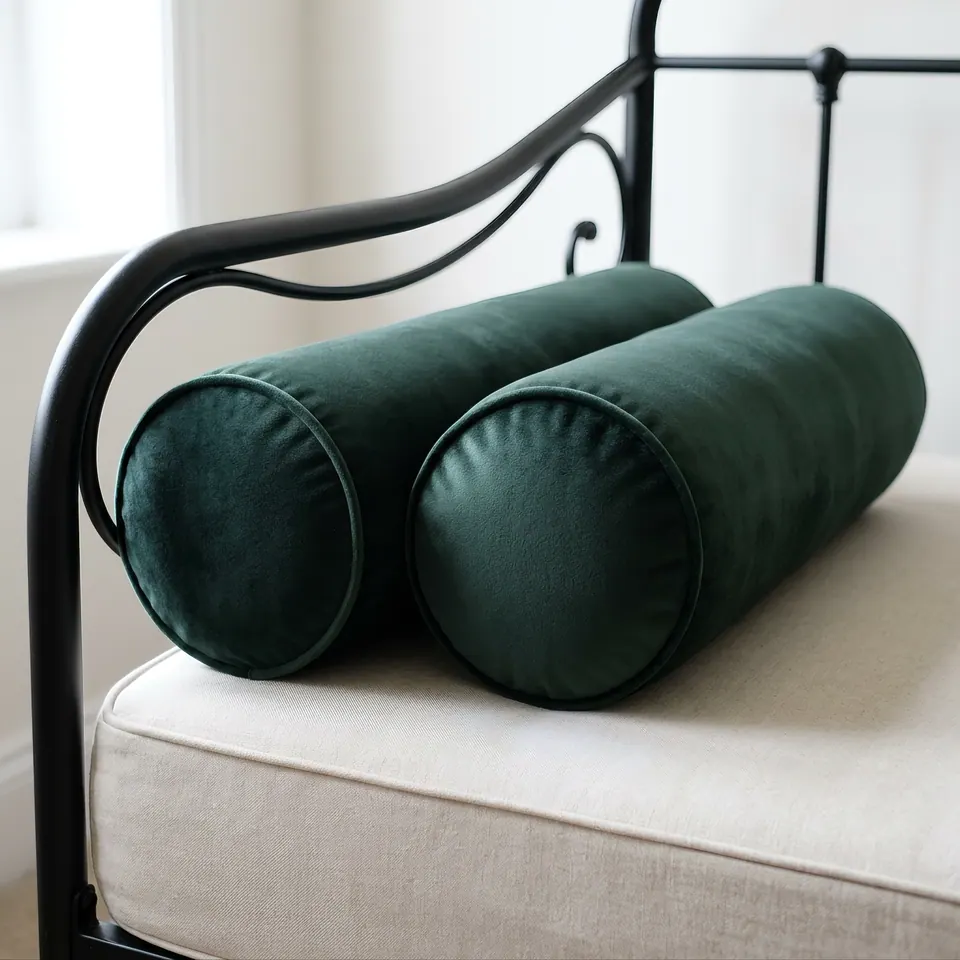
A green velvet cover, filled by someone else
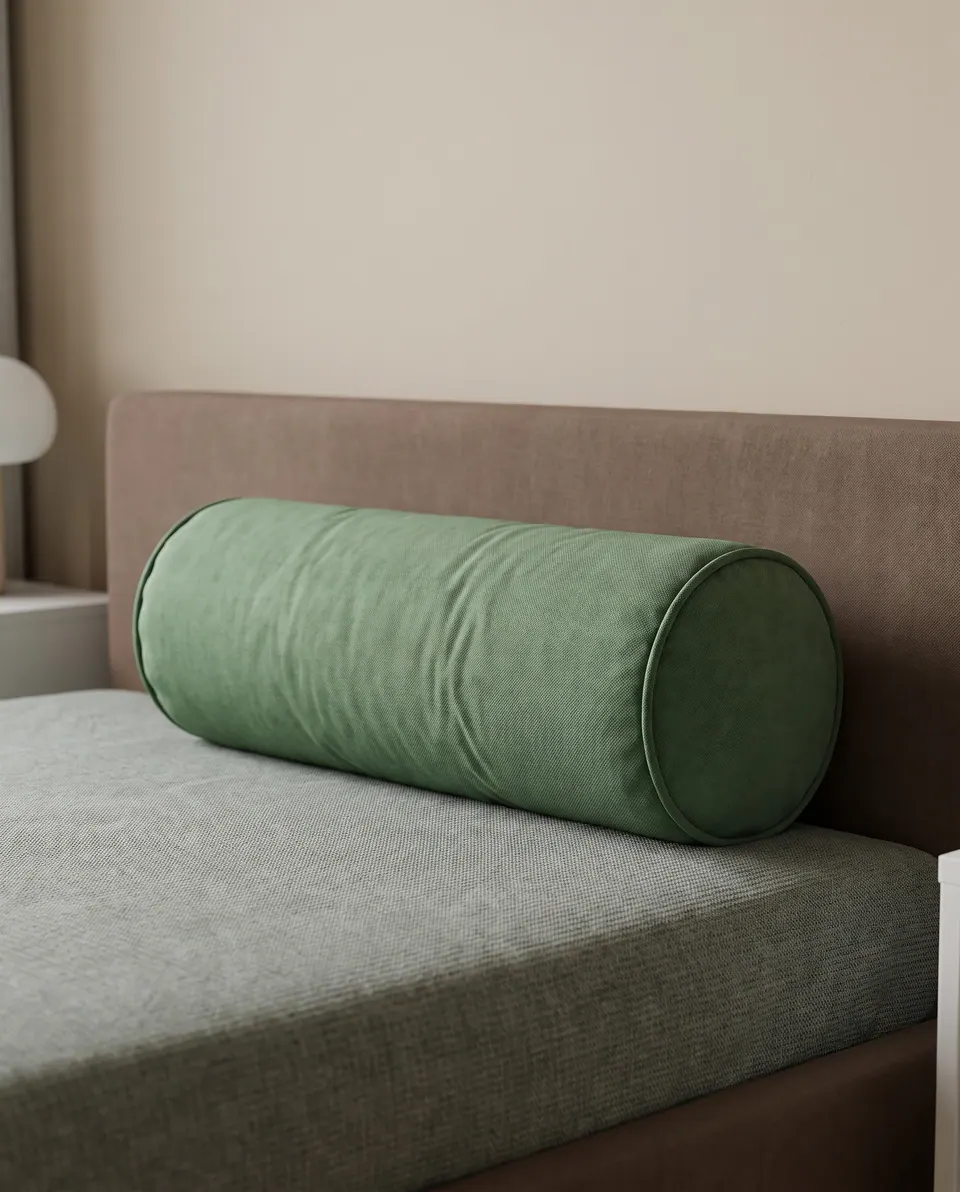
A buyer got in touch wanting a green velvet bolster, but local rules called for a fire-retardant filling, which the workshop does not make. So it made a cover only, 13 in (33 cm) across and 32 in (81 cm) long, matched to pea-green velvet #35 from a photo of their other cushions.
Tufting needs the maker's own filling, so the cover was plain with piping. It arrived baggy in the middle until a local upholsterer filled it. The buyer came back later for a zippered square cover about 23 1/2 in (60 cm).
Bring your own insert, and give its exact size and firmness.
- Sizes
- Bolster cover 13 in diameter x 32 in; square cover about 23 1/2 in
- Fabric
- Pea-green velvet #35
The lesson: Supplying your own insert means a plain piped cover; give the insert's exact size and firmness.
Buyer questions: covers, gifts and matching rolls
- A common question
Can I buy just a replacement cover for a cushion I already have?
The workshop's answerYes. Covers are made without foam, to any size. Pick the nearest size and write the exact length, width, thickness and fabric code in the personalization note.
- A common question
The pillowcases that came with my sofa are a different color. Is that a mistake?
The workshop's answerNo. The pillowcases are a free gift, not part of the sofa order, and their colors can differ from the sofa. Matching covers can be ordered as extras.
- A common question
Do you make cylinder bolsters that match my seat cushion's fabric and piping?
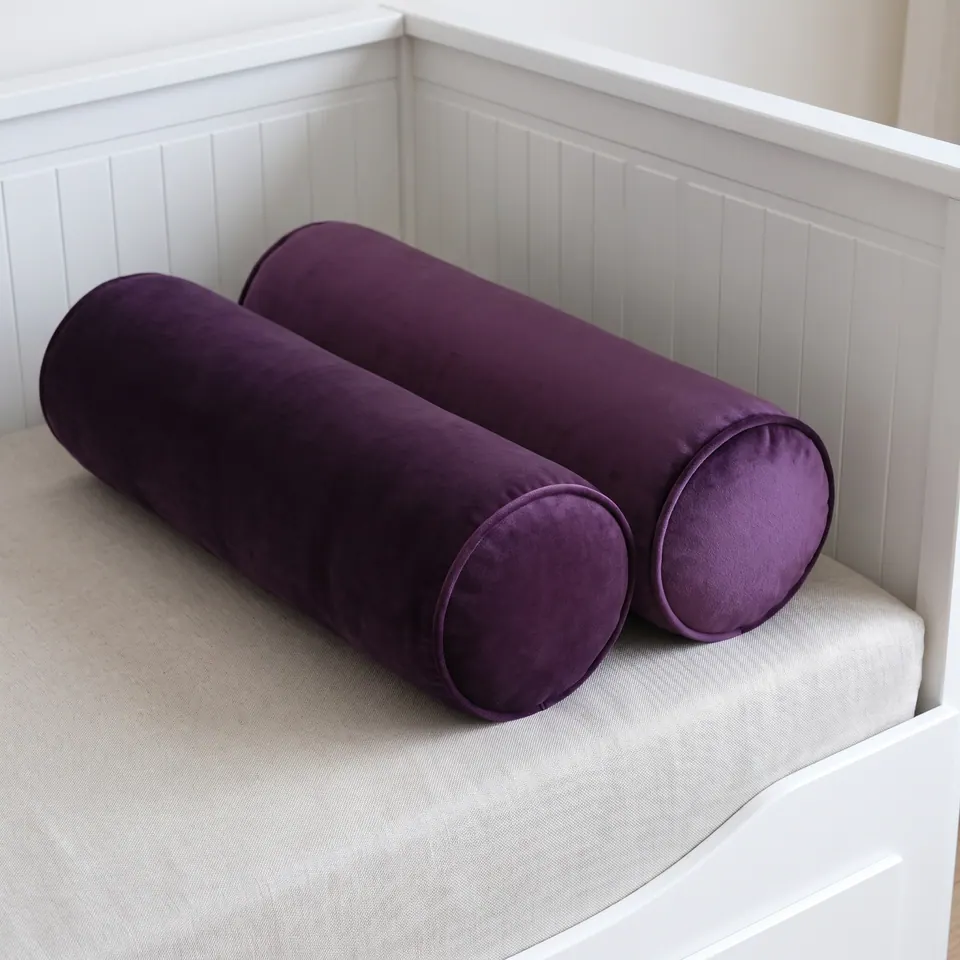
The workshop's answerYes, for instance as armrests at each end of a bench; one pair was 17.7 in (45 cm) long and 6 in (15 cm) across. Place the main order first, then ask for a custom payment link for the bolsters. For a daybed, send measurements and a reference photo.
On the cutting table: the black roll
| Pillow | Round bolster pillow |
|---|---|
| Fabric | Black velvet, indoor use |
| Piping | Self piping in the same black velvet |
| Edge | Rolled body, flat piped end caps |
| Length | Equal to the seat depth when laid along the arm |
| Example size | 17.7 in (45 cm) long, 6 in (15 cm) across |
| Covers | Sold alone; plain with piping over your own insert |
| Best for | White or painted daybeds that need one strong accent |
Have it made
Have this made — ask Harlan’s workshop
Old upholsterers will tell you the real cutting happens in the conversation, long before the shears come out. Tell the workshop what you sit on, and they will talk it through with you. — Harlan
Leave your details and the workshop will call you to confirm measurements, fabric, foam and piping. No prices, dates or payment on this page: it is a request, not an order.
Black velvet looks rich rather than flat because the pile catches light only along the crown of a bolster; black self piping keeps the end crisp.
Harlan
Questions buyers ask next
Why does black velvet look lighter in some spots?
That's the pile. Where the fibers lean one way they reflect light; where they lean the other they look deeper. On a bolster the crown catches light first, which is why black reads rich rather than flat.
Can a velvet bolster go on a porch daybed?
Better not. Velvet is an indoor fabric, so keep velvet bolsters for living rooms and bedrooms and choose an outdoor fabric for a porch daybed.
Can a bolster cover be tufted over my own insert?
No. Tufting needs the maker's own filling, so a cover made for your insert comes plain with piping. Give the insert's exact size and firmness so the cover doesn't sag in the middle.
Sit well. — Harlan
More photographs to read
 Save
 Save
 Save
 Save
 Save
 Save