 Save
A Reading by ÉlodieBench Cushions
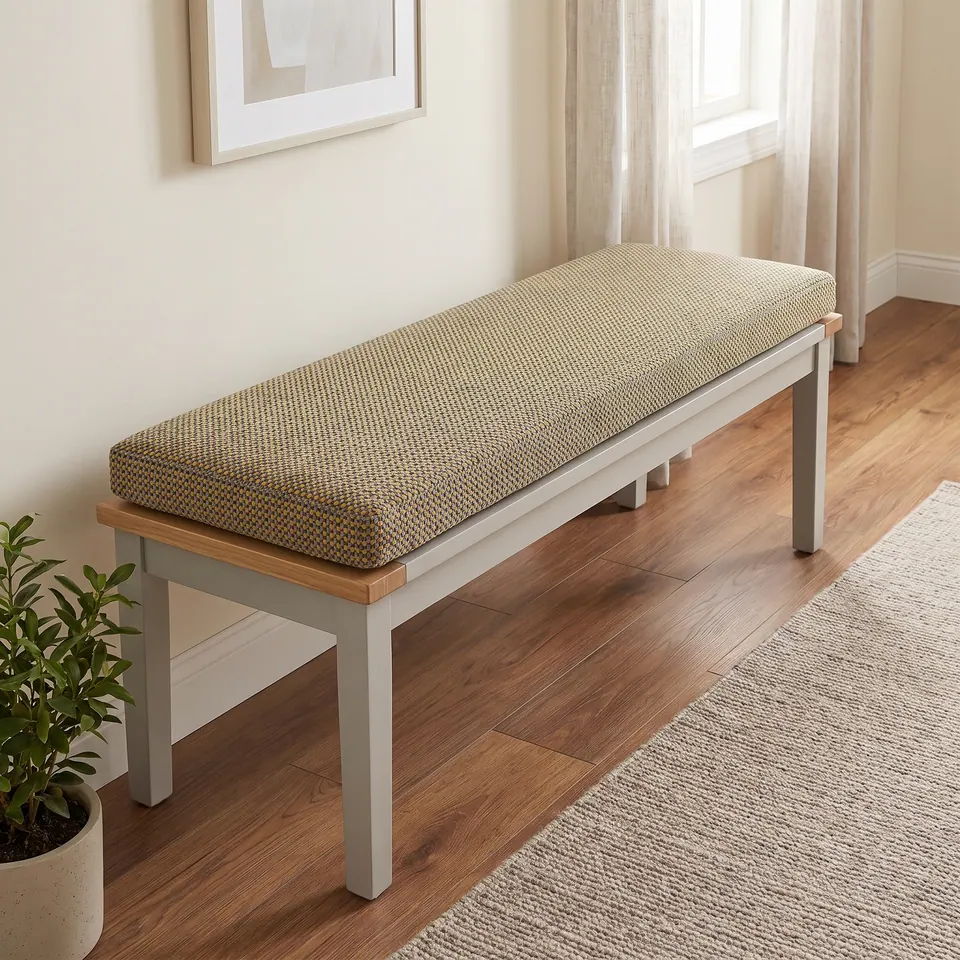
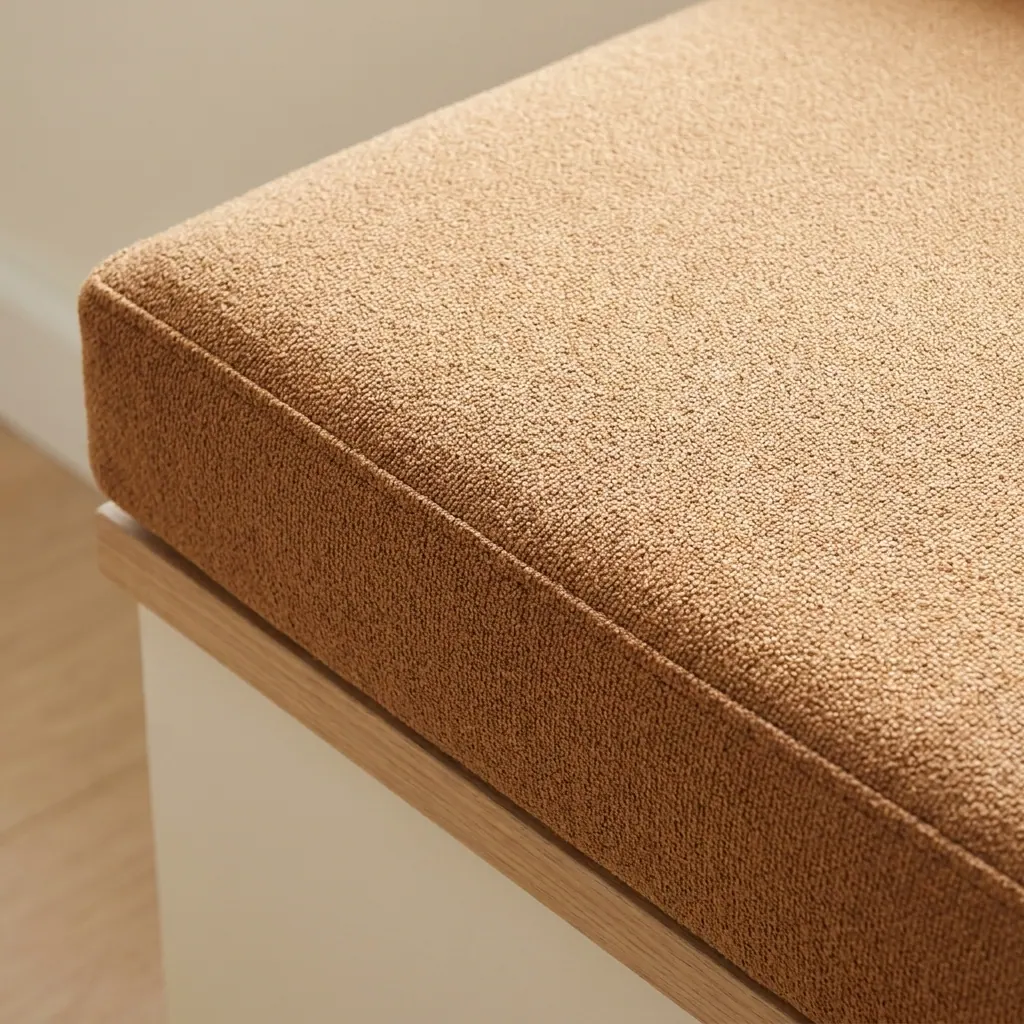
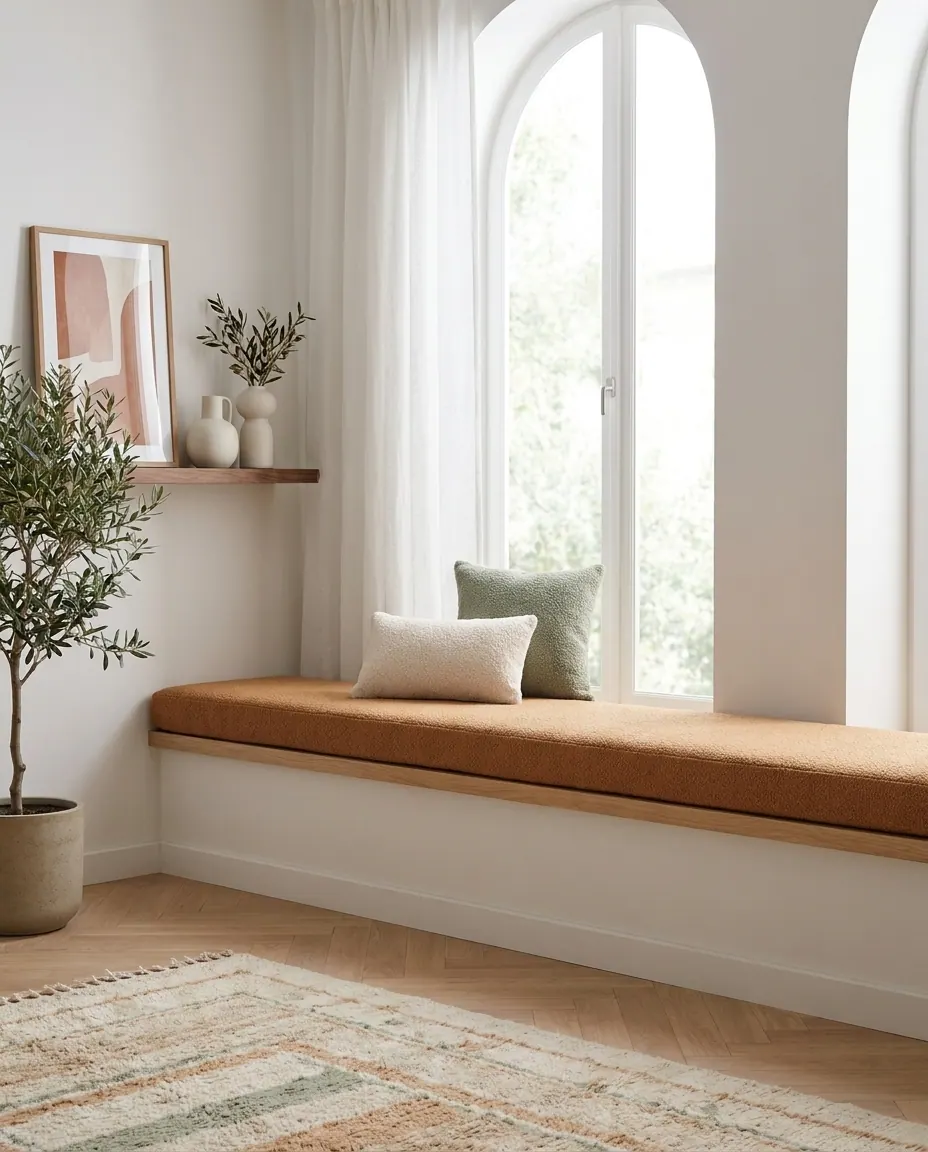
Caramel bouclé on a white bench, read in three kinds of light
No piping, no pattern, a single color. Everything this cushion says, it says through light, so I read it at midmorning, at dusk and on a phone screen.

Swatch strip measured from the photograph
- sand#c5ac8d29%
- dark terracotta#6f402025%
- camel#ad8a6617%
- soft rust#ddbb9515%
- soft rust#e8c8a314%
The quick answer
An unpiped caramel bouclé bench cushion shows its truest color in soft indirect daylight, so judge it at a window rather than on a screen. Under warm evening lamps caramel leans toward amber, and in cool gray light it steps back toward sand. Without piping, the seam alone forms the box corner, a soft finish that suits white cabinetry and a thin oak lip.
Swatch strip: five tones from one corner
- Seam-fold caramel#6F4020The deepest tone in the photograph, where the unpiped seam turns the corner and the loops close up.
- Midday caramel#AD8A66The top face in soft daylight: the truest reading of the fabric.
- Lit loop#C5AC8DWhere light catches the tight bouclé loops and lifts them half a shade.
- Oak lip#DDBB95The thin wood edge, a step lighter than the cushion, so two warm tones stay apart.
- Warmed white#E8C8A3White paint and a pale floor as the camera saw them, warmed by the caramel above.
Pinned by Élodie: four points on one corner
Four pins, all close together: the unpiped corner, the caramel loop, the level side seam and the oak lip below.
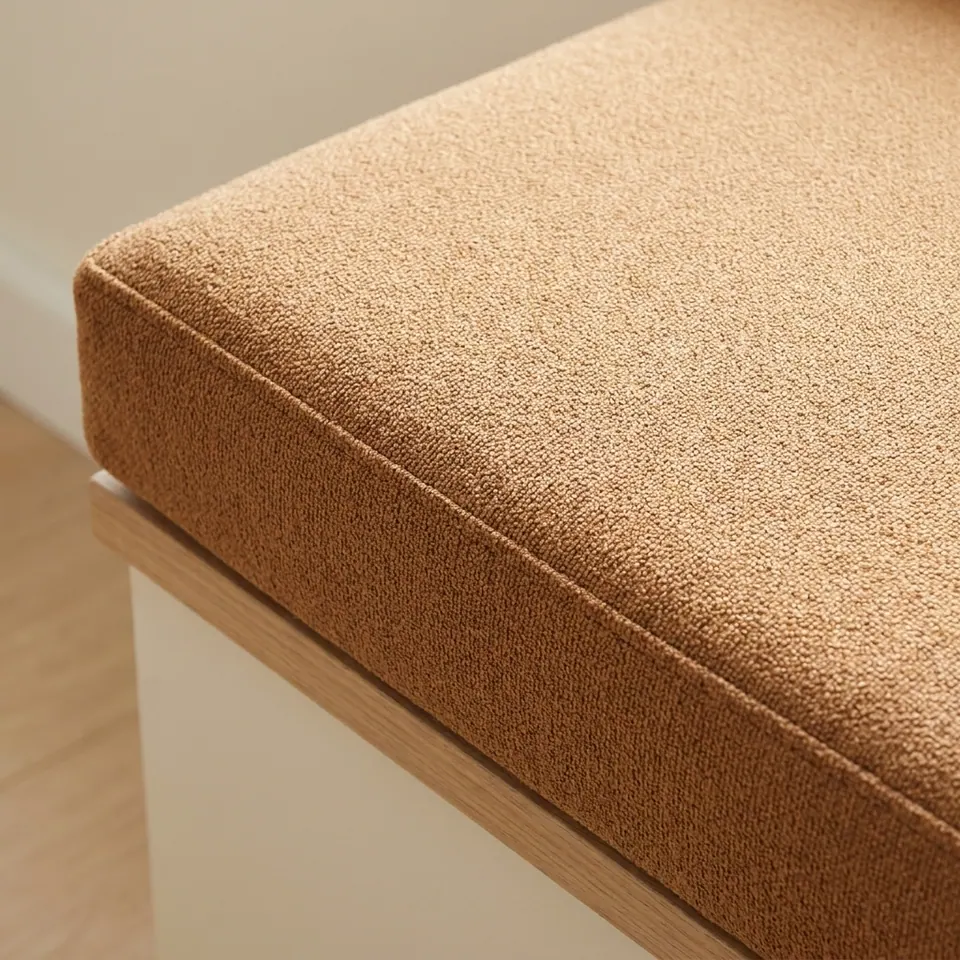
- Unpiped box corner
Without piping, the corner is formed by the seam alone, giving a softer, more modern outline.
- Fine caramel texture
This tighter caramel loop reads almost like felt from a distance, calm on a plain white base.
- Straight side seam
A seam running dead level along the boxing shows the foam fills the cover fully.
- Oak lip below
A thin oak lip between cushion and white paint adds warmth without a second fabric.
- Unpiped box cornerWithout piping, the corner is formed by the seam alone, giving a softer, more modern outline.
- Fine caramel textureThis tighter caramel loop reads almost like felt from a distance, calm on a plain white base.
- Straight side seamA seam running dead level along the boxing shows the foam fills the cover fully.
- Oak lip belowA thin oak lip between cushion and white paint adds warmth without a second fabric.
Morning, lamplight, and the screen in your hand
Caramel changes clothes during the day.
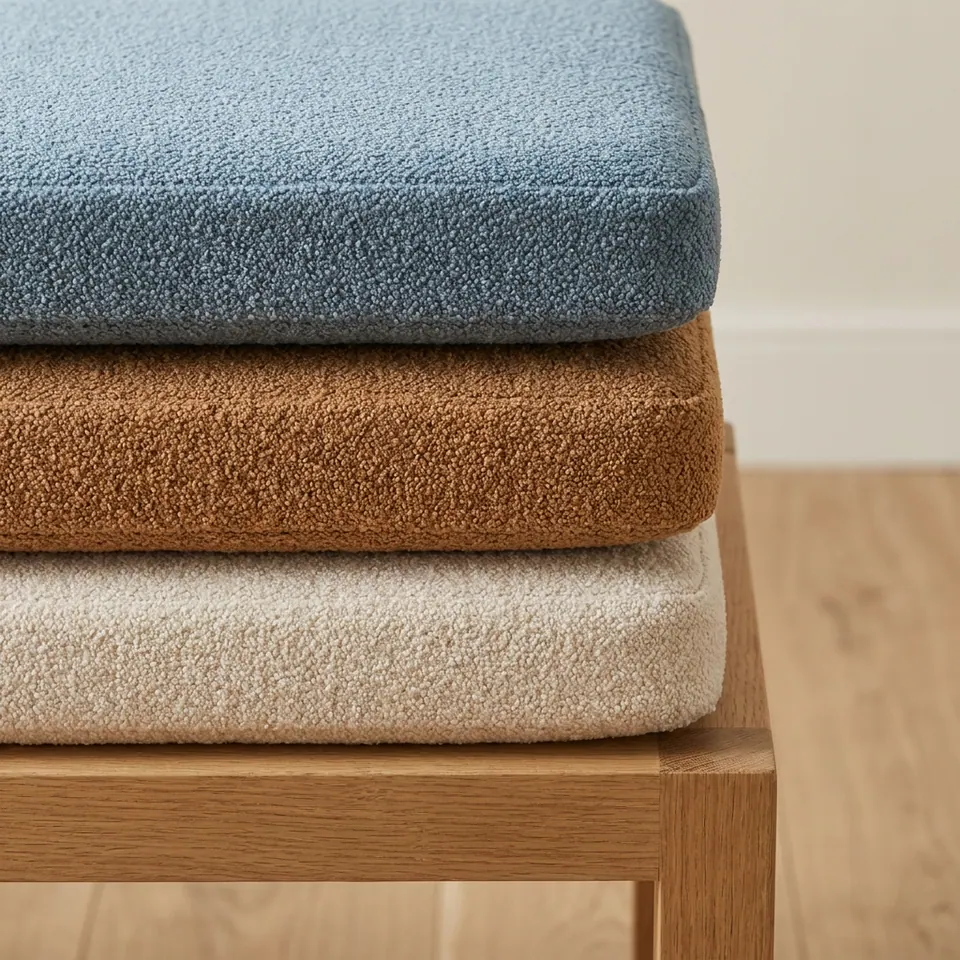
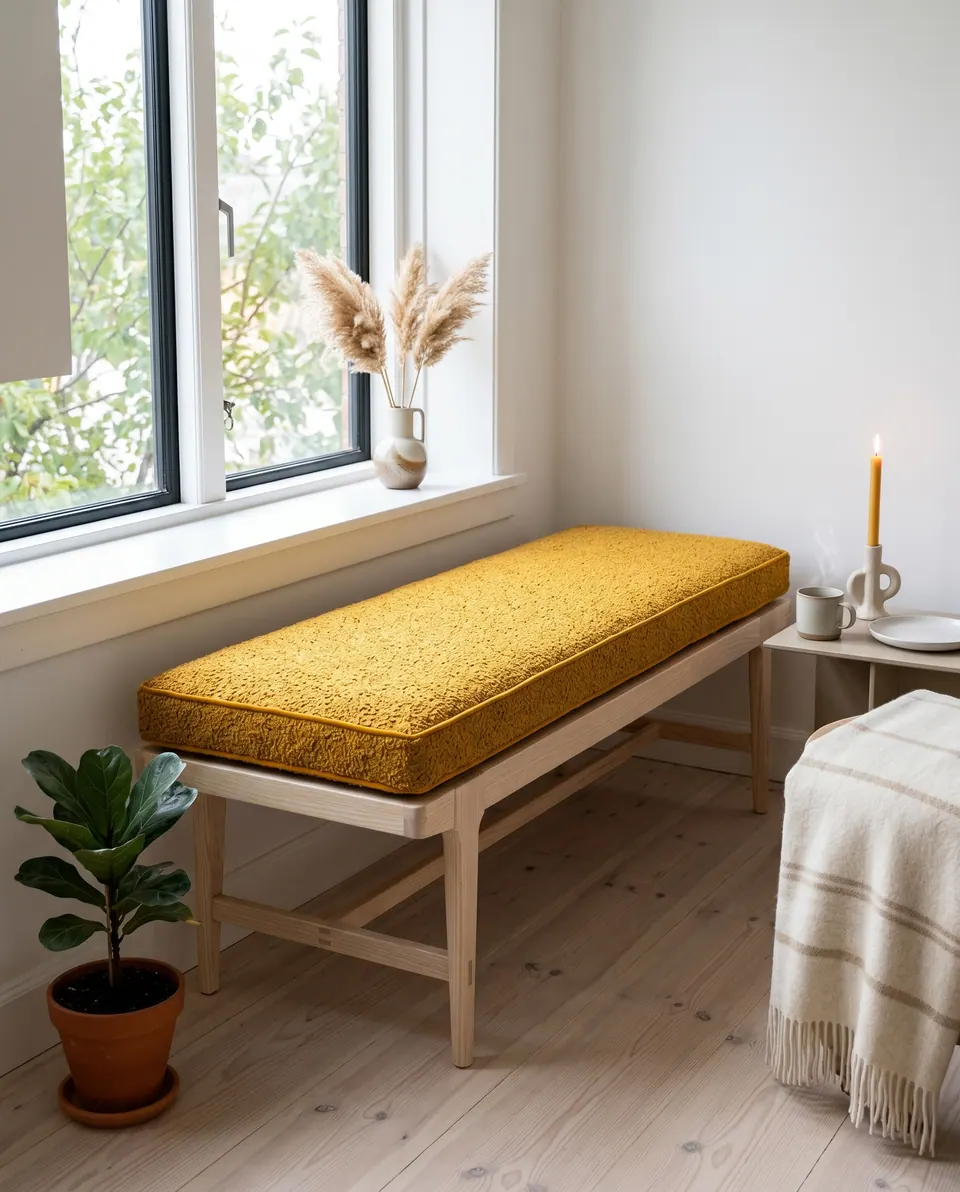
In cool north light or on a gray morning, it steps back toward sand, and the loops throw tiny shadows, so you notice texture before color. In soft indirect daylight, the light of this photograph, you see the true caramel: warm, even, brown sugar at the edge of melting. After dark, under warm bulbs, it turns amber, and the white cabinet goes to cream around it.
Then comes the screen. Daylight never lies; your screen sometimes does. A phone lifts brightness and contrast, so bouclé either flattens into plain tan or glows orange. The loops that make it soft under the hand are the first thing a camera loses.
That is why, my friends, a bouclé or teddy swatch belongs at the window you will actually sit by, once at noon and once after dark. Our Pattern on screen color versus daylight goes further.
Now the corner itself. Leave the welt off a box cushion and the corner becomes a soft, pillowed fold instead of a drawn line. On plain white joinery that softness is the point; a caramel welt would repeat what the seam already says, and a cream one would frame the cushion like a picture.
What keeps the shape crisp is the side seam, running dead level along the boxing, which tells you the foam fills the cover to its edges. The oak lip below does the work a second fabric might, laying one warm line between caramel and white paint. The choices sit side by side in matching, contrast or no piping.
Which window will your bench sit under?
A 111-inch built-in, made in two halves
A buyer wrote in about a built-in seat 111 in (2.83 m) long and 17 in (43 cm) deep, with back cushions for a backrest about 15 3/4 in (40 cm) high.
The workshop recommended making the seat in two pieces, for durability and for easier handling, and the buyer agreed. One cushion that long is heavy to lift and awkward to turn, and a stain at one end would mean replacing the whole length.
The rule we took from it: seats longer than about 79 in (2 m) are easier to handle, ship and replace in sections. For a color as light-sensitive as caramel, order both halves together so they are cut from the same fabric at the same time. The long-seat question has its own Pattern, one piece or two, and our bench cushions show more built-ins.
Buyer questions: quotes, piping colors and curves
- A common question
The price at checkout doesn't match the quote I was given. Why?
The workshop's answerUsually one of two things. The listing may be showing the price before the discount, or the marketplace's currency converter is showing a different figure in your currency. The shop sticks to its quote and can set up a private listing at the agreed price in US dollars.
- A common question
Can the piping be a different color from the cushion fabric?
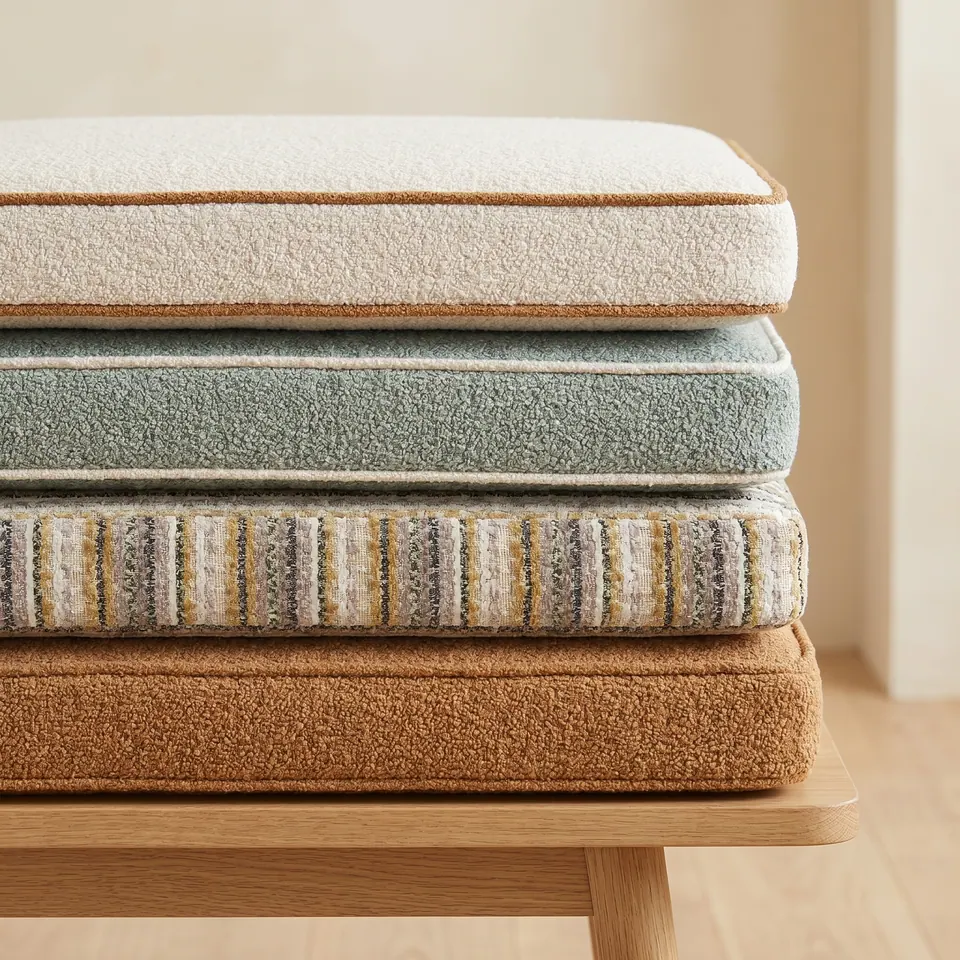
The workshop's answerYes. Write both in the Personalization section, for example linen L-06 with 929 piping, a blue soft fabric with emerald piping, or linen with velvet 113 piping. Matching piping is available too.
- A common question
My seat has curves. Can you make the cushion from a plan?
The workshop's answerYes, from a drawing that marks where each curve starts and ends along the edges and how deep each curve is. For several cushions, send one drawing per cushion. Shapes with a great many curves may be declined if a precise fit can't be guaranteed.
On the cutting table: caramel, unpiped
| Cushion | Box-edge bench cushion, rectangle |
|---|---|
| Fabric | Caramel bouclé with a fine, tight loop |
| Piping | None; the corner is formed by the seam alone |
| Side seam | Runs level along the boxing, foam filling the cover to the edge |
| Base | White cabinet bench with a thin oak top lip |
| Palette | Caramel, white, oak and a pale floor: warm and low in contrast |
| Where to judge the color | Indirect daylight at the window you will sit by |
| Best for | Minimal built-ins and Japandi rooms |

Have it made
Have this made — ask Élodie’s workshop
Color is easier to settle in a conversation than on a screen. Tell the workshop about the room and the light it gets, and the fabric choice follows. — Élodie
Leave your details and the workshop will call you to confirm measurements, fabric, foam and piping. No prices, dates or payment on this page: it is a request, not an order.
An unpiped box cushion lets the seam form the corner. On clean white built-ins, that soft fold looks calmer than any contrast welt.
Élodie
Questions buyers ask next
Does caramel bouclé look different at night than in daylight?
Yes. Under warm lamps caramel leans toward amber and nearby white paint reads cream. In soft indirect daylight you see its true color, and in cool gray light it steps back toward sand. Check a swatch in both before you decide.
When is no piping the better finish on a bench cushion?
When the furniture has clean lines and you want the fabric's texture noticed rather than the tailoring. Without a welt, the box corner is a soft fold formed by the seam, which suits white cabinetry, plain oak and minimal rooms.
Why does bouclé look flat in product photos?
Cameras and screens raise contrast and smooth fine texture, so the small loops that give bouclé its softness disappear first. A phone can also push the color warmer or cooler. A physical swatch in daylight is the reliable test.
With color and care — Élodie
More photographs to read
 Save
 Save
 Save
 Save
 Save
 Save