 Save
A Reading by ÉlodieBench Cushions
Four bouclé bench cushions in a stack, read by hand and by eye
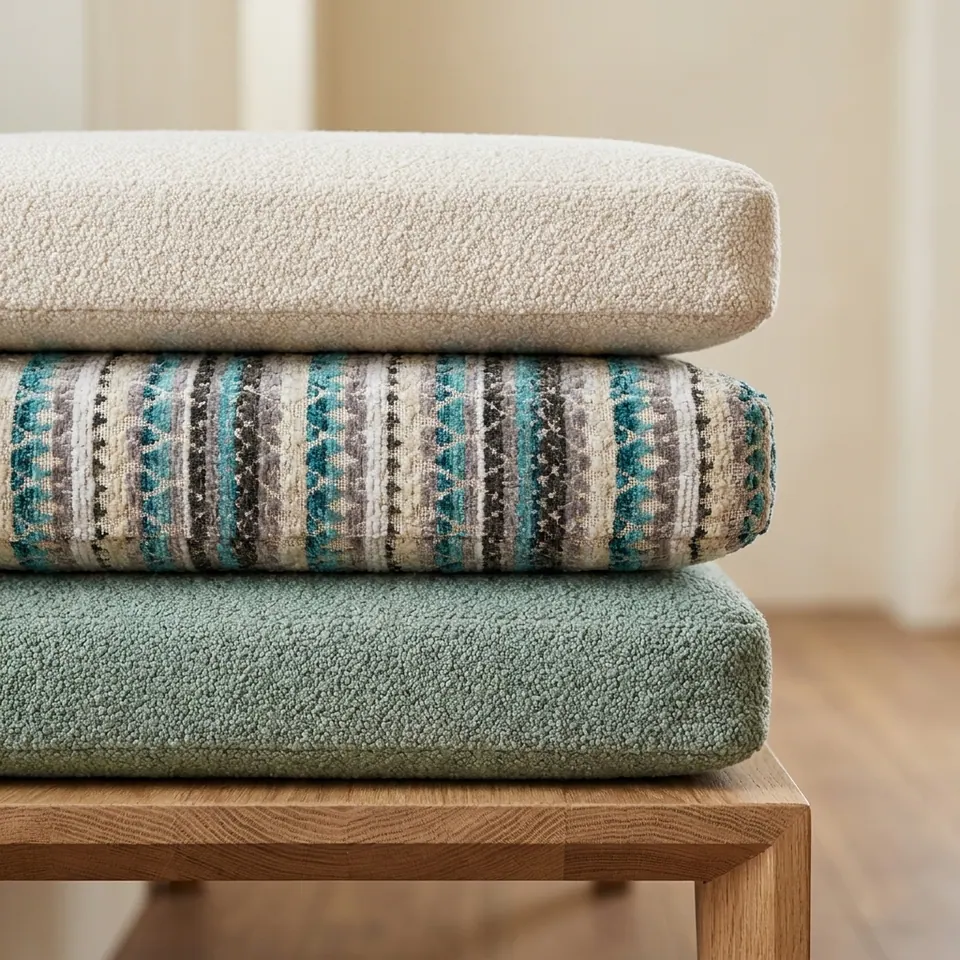
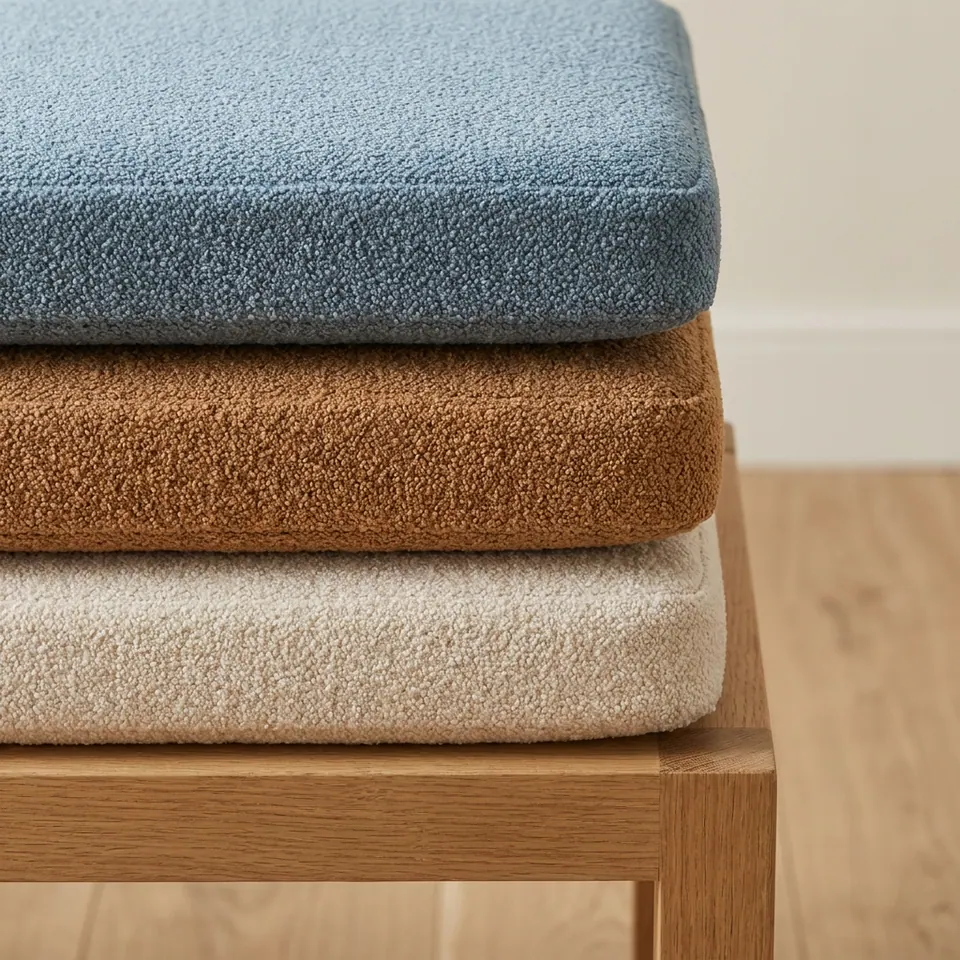
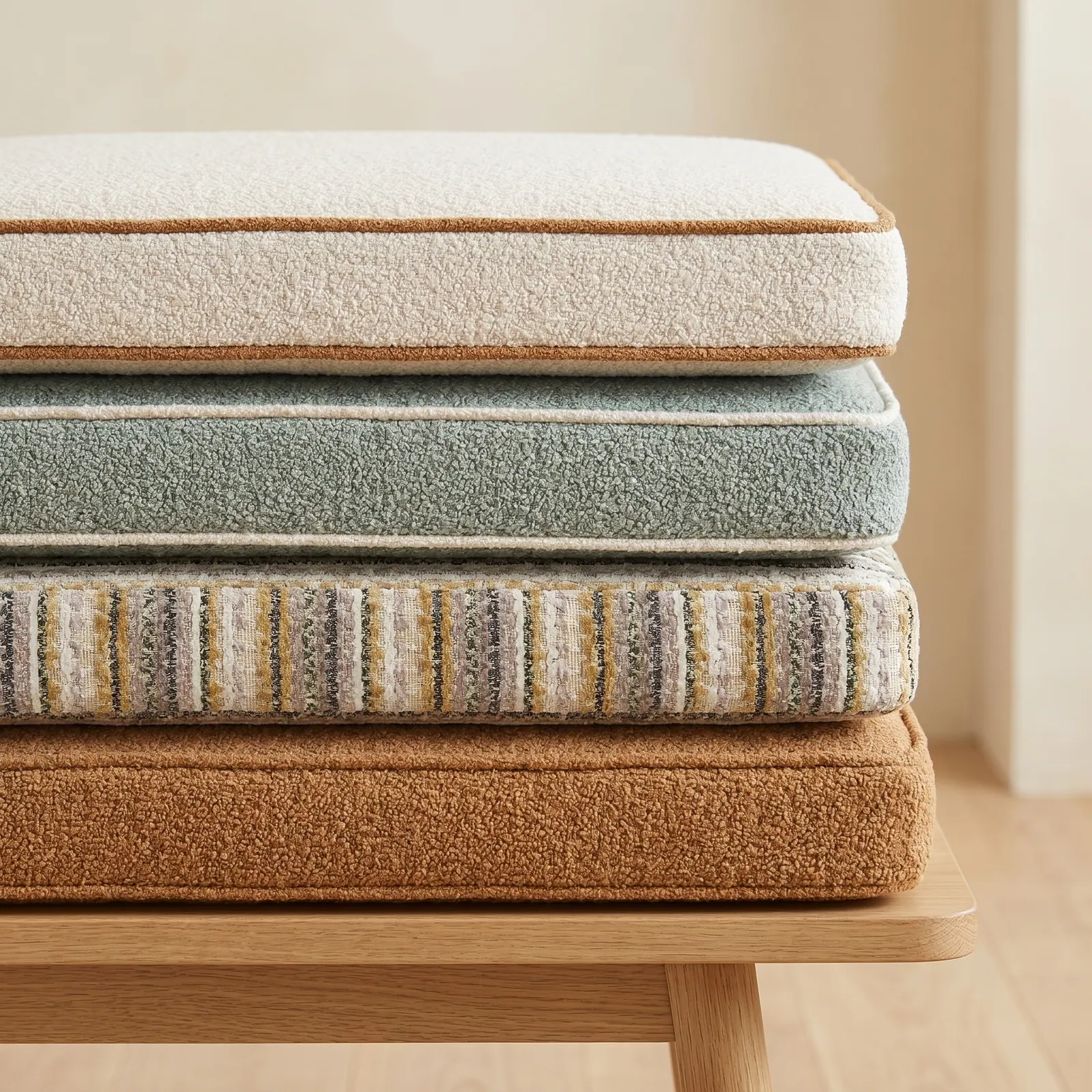
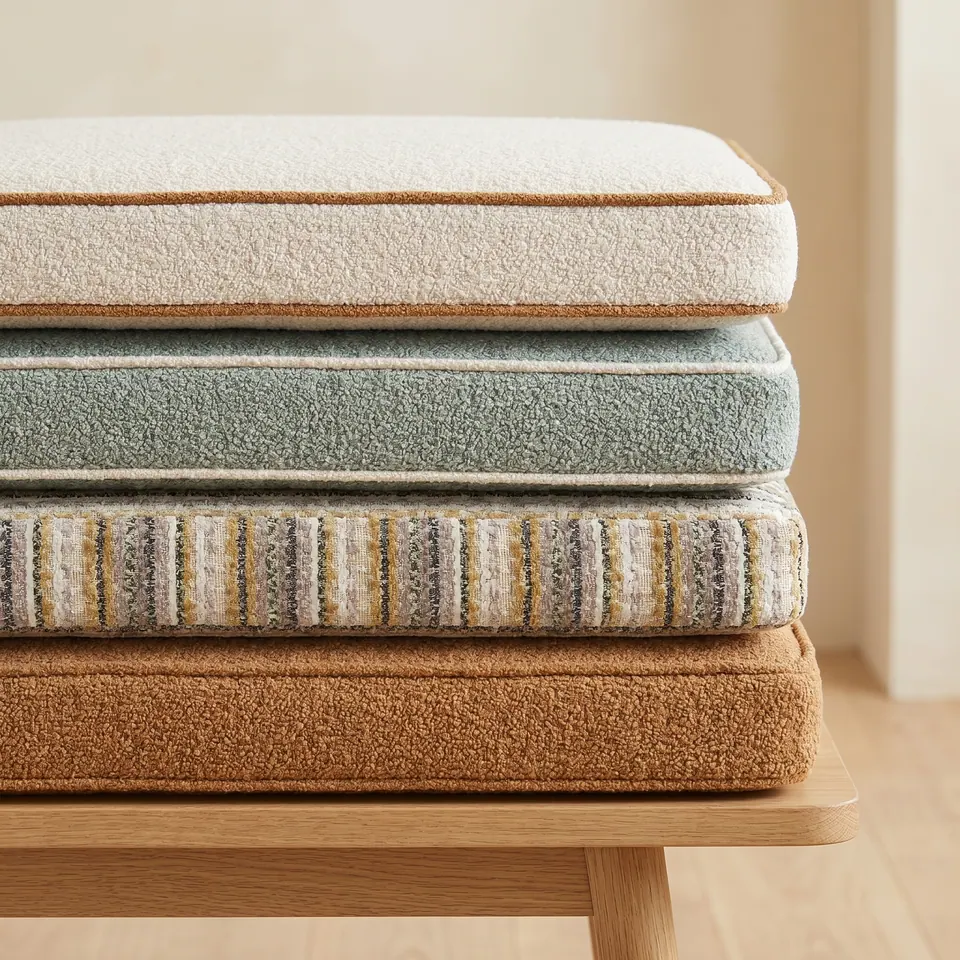
Cream, sage, a woven stripe and caramel, piled on pale oak like letters waiting to be answered. Each is finished a different way, and each finish changes how the cloth feels under the hand.
Cream with caramel piping, sage with a cream welt, a woven stripe and a plain caramel base: four ways to finish the same box cushion.

The quick answer
A bouclé bench cushion can be finished three ways: with a contrast welt borrowed from a neighboring color, with a welt in a paler shade, or with no piping at all, letting the loops carry the edge. Choose the bench fabric first, then take the piping color from the cushion or pillow that will sit closest to it.
Loops, light and a stack of four
Bouclé is all loops. Under the palm it feels nubby and warm, like the cuff of a good sweater, and in soft daylight every loop throws a tiny shadow, so the surface never reads flat. That's why a bouclé bench cushion looks richer in the room than on a screen. Daylight never lies; your screen sometimes does.
The stack runs light to dark from the top: ivory cream, then sage, then a lilac-gray flat-woven stripe, then burnt caramel at the base. The eye sits on plain bouclé first, pauses at the stripe, and lands on the heavy caramel. One patterned piece among plain loops is enough.
The stripe is also the only smooth hand in the pile, flat where the others are pebbled. Lay your palm on it after the sage and you feel the pause as clearly as you see it.
Pinned by Élodie
Five pins, from the caramel welt at the top down to the oak.
- Caramel piping on cream
The caramel welt on the cream top is borrowed from the caramel base cushion, so the whole stack reads as one palette.
- Sage with cream welt
The sage cushion takes a cream welt instead; piping pulled from a neighboring fabric keeps a mixed stack from looking random.
- Woven stripe layer
The flat-woven stripe is the only pattern in the pile, and one patterned piece among plain bouclés is enough.
- Unpiped caramel base
The bottom caramel cushion has no welt at all; its loops carry the edge on their own.
- Oak bench top
Cushions cut to the bench footprint sit flush like this, so measure the seat surface rather than the outer frame.
- Caramel piping on creamThe caramel welt on the cream top is borrowed from the caramel base cushion, so the whole stack reads as one palette.
- Sage with cream weltThe sage cushion takes a cream welt instead; piping pulled from a neighboring fabric keeps a mixed stack from looking random.
- Woven stripe layerThe flat-woven stripe is the only pattern in the pile, and one patterned piece among plain bouclés is enough.
- Unpiped caramel baseThe bottom caramel cushion has no welt at all; its loops carry the edge on their own.
- Oak bench topCushions cut to the bench footprint sit flush like this, so measure the seat surface rather than the outer frame.
Why each welt borrows from a neighbor
Now the piping. The cream cushion wears a caramel welt, borrowed from the caramel base. The sage takes a cream welt from the cushion above it. Four fabrics, and they still look like one order.
The caramel base has no welt at all. On bouclé and teddy the loops can carry a box edge on their own, softly, the way a knit carries its own hem. A welt there would only stiffen it. For snags and everyday life with loops, the bouclé care Pattern is honest.
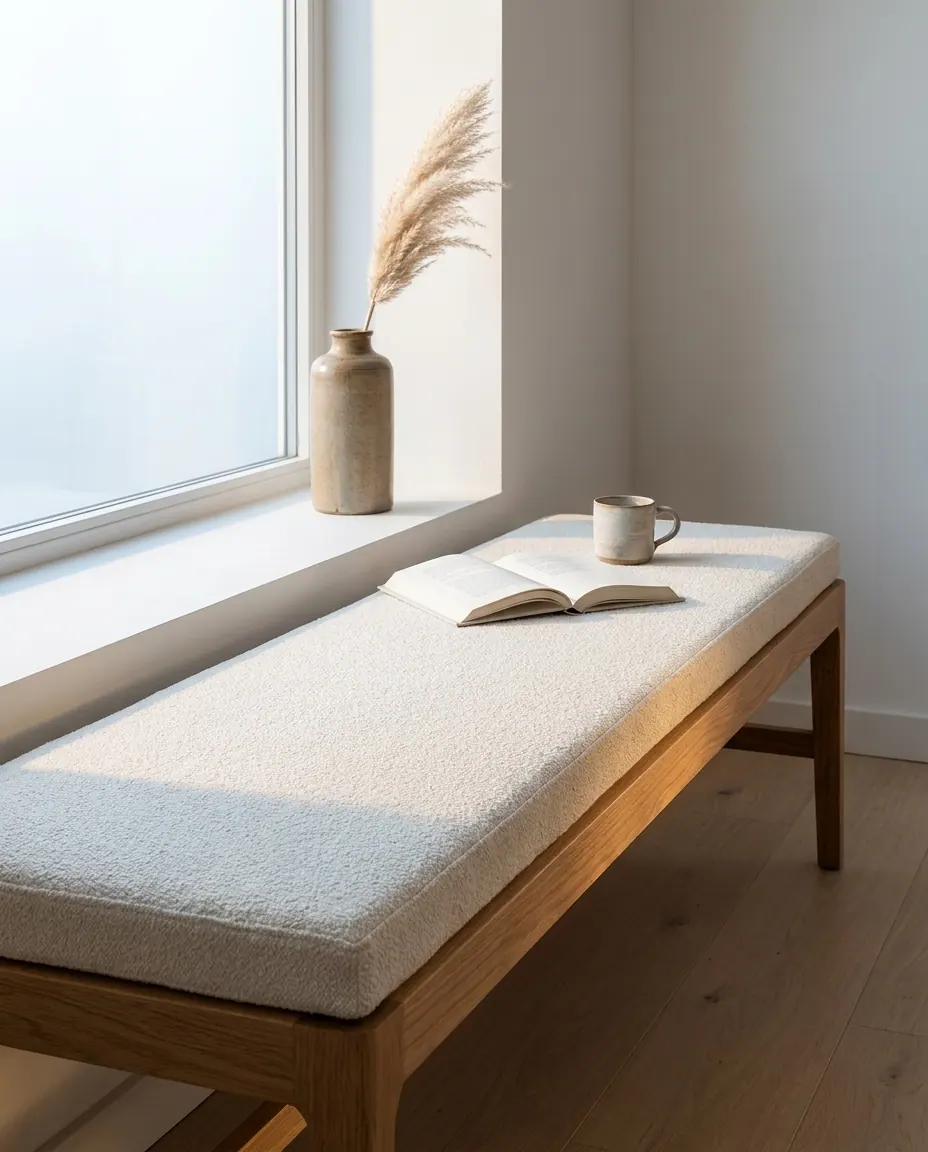
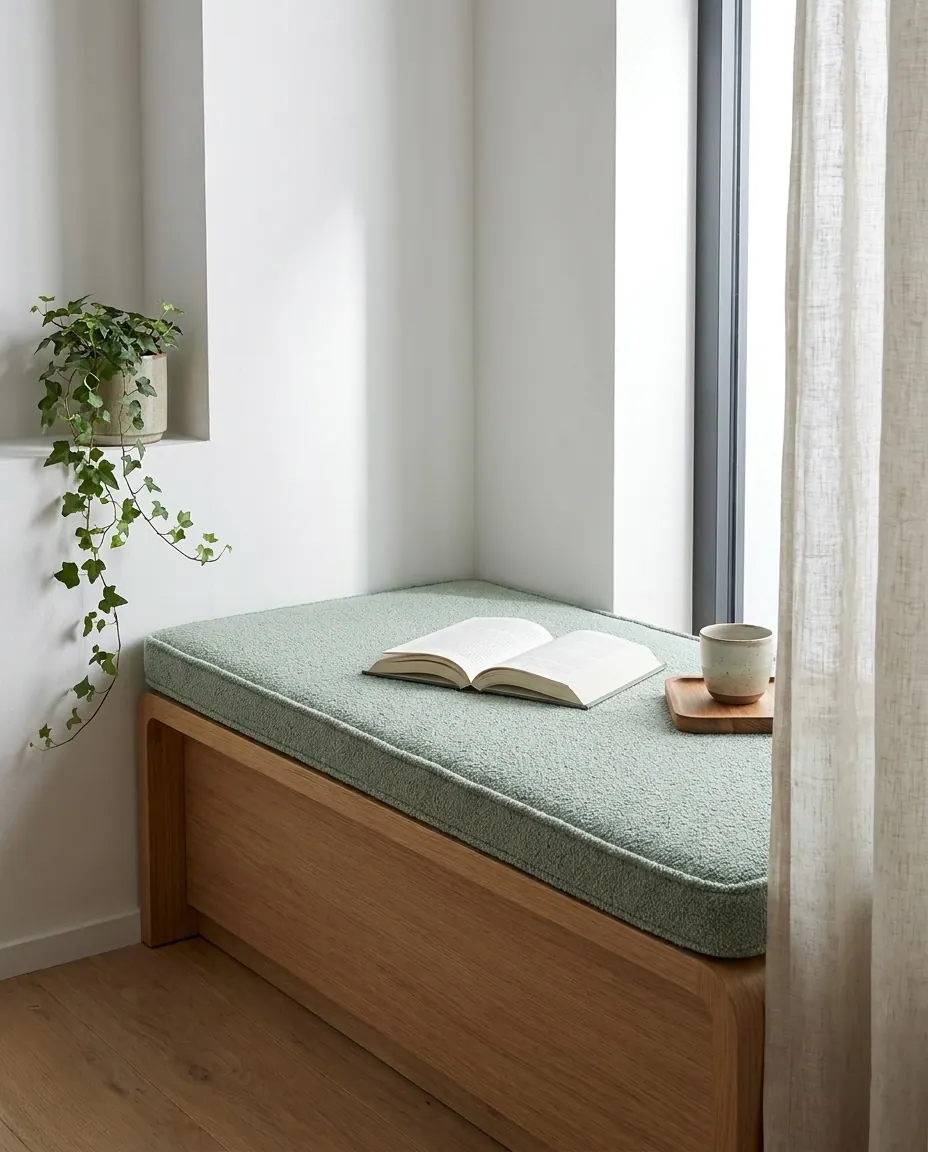
The cushions are cut to the bench footprint and sit flush on the oak, so measure the seat surface rather than the outer frame. Pale plaster and light oak stay out of the way and let the texture speak.
So tell me, my friends: what color will sit closest to your bench?
The stripe that couldn't turn
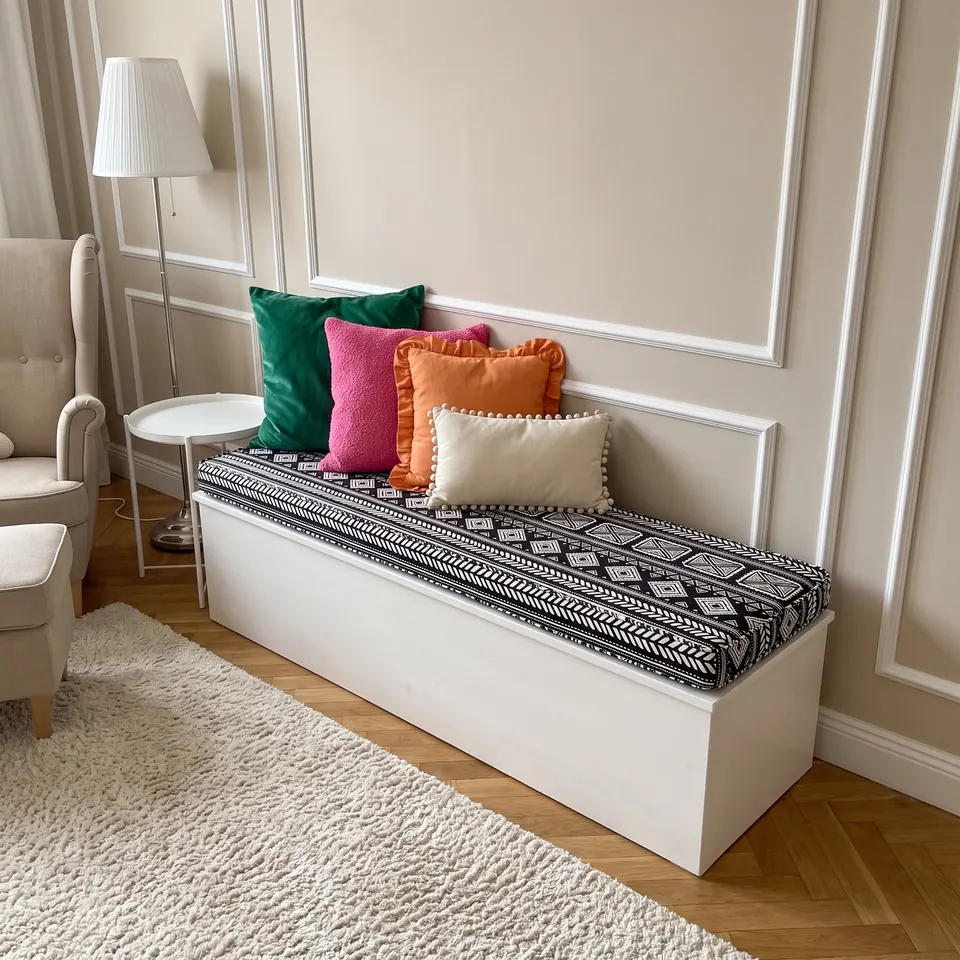
The order was a striped linen bench cushion, 20 × 92 in (51 × 234 cm), made in that exact size. It arrived well made, with the stripes running end to end, while the listing photo had shown them running front to back.
The reason was the roll. The fabric is 55 in (140 cm) wide, and front-to-back stripes on a 92 in cushion would need a single piece wider than the roll. The workshop offered a two-piece version with the cost shared, and suggested a bolster laid over the join.
If you love a stripe on a long bench, ask about its direction before you order.
- Sizes
- 20 × 92 in (51 × 234 cm)
- Fabric
- Striped linen on a 55 in (140 cm) roll
The lesson: Fabric width limits stripe direction on long cushions; ask before ordering a patterned fabric.
Buyer questions: timing, trade work and two-tone
- A common question
Our built-in isn't installed yet. Can you wait for the final measurements before making the cushion?
The workshop's answerYes. Even once an order has gone into production, the workshop can hold it until you send final measurements after installation, then update the size, for example to 25 1/4 × 39 3/8 in (64 × 100 cm), and carry on.
- A common question
I'm an interior designer. Do you take custom banquette cushions and lumbar pillows for client projects?
The workshop's answerYes. Send drawings with every dimension and your fabric codes; the workshop checks them for mismatches, like two 50 in (127 cm) cushions on a 103 in (262 cm) run, before quoting. Matching lumbar pillows, such as 12 in (30 cm) tall at custom lengths, can be made, larger orders can be discounted, and the workshop confirms making and delivery times with the quote.
- A common question
Can the top of the cushion be one color and the bottom another?
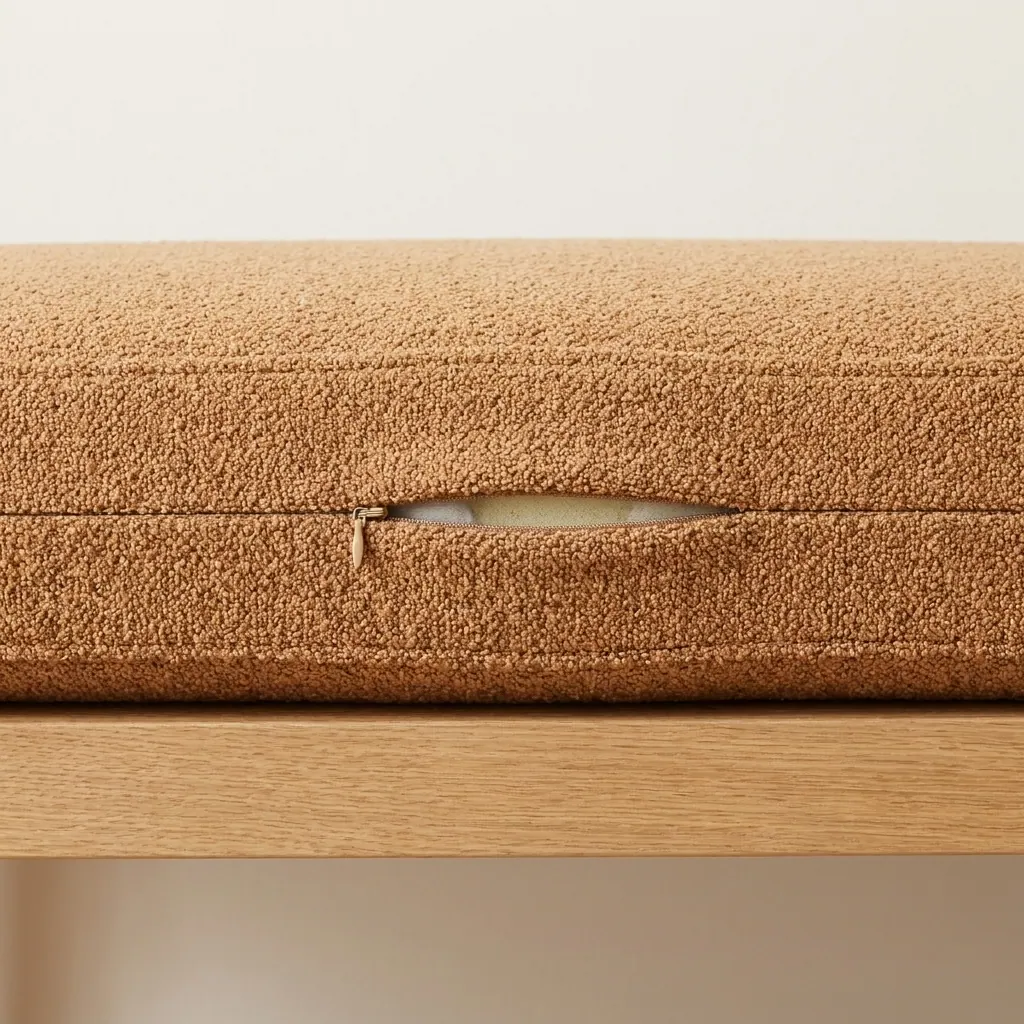
The workshop's answerThe workshop advises against it: the zipper runs along one edge, and on a two-tone cushion it shows. What works well is one fabric for the top and bottom and the other for the side band, the boxing. Write both fabric codes with the order.
On the cutting table
| Cushions | Four box-edge bench cushions, cut to the bench footprint |
|---|---|
| Fabrics | Ivory cream, sage and burnt caramel bouclé; a lilac-gray woven stripe |
| Hand | Nubby loops; the stripe is flat and smooth |
| Piping | Caramel on cream, cream on sage, none on the caramel base |
| Two colors on one cushion | A contrast side band, not a two-tone top and bottom |
| Stripe limit | A 55 in (140 cm) roll sets stripe direction on long pieces |
| Best for | Living-room benches in warm, pale rooms |

Have it made
Have this made — ask Élodie’s workshop
Describe the room at four in the afternoon: the floor, the wall, the one color you love. That is where a good fabric choice begins. — Élodie
Leave your details and the workshop will call you to confirm measurements, fabric, foam and piping. No prices, dates or payment on this page: it is a request, not an order.
On a bouclé bench cushion, piping is optional: the loops can carry a box edge on their own, and a welt would only stiffen them.
Élodie, hand on the loops
Questions buyers ask next
Does a bouclé cushion need piping?
No. Bouclé loops can hold a box edge on their own, and the cushion often looks softer without a welt. If you do want piping, take its color from a neighboring cushion or pillow so the finish looks planned.
How do I mix several fabrics on one bench without it looking random?
Keep to one pattern among plain textures, run the colors from light to dark, and let each piped cushion borrow its welt color from a neighbor. Those repeats tie different fabrics into one palette.
Should I measure the bench top or the outer frame?
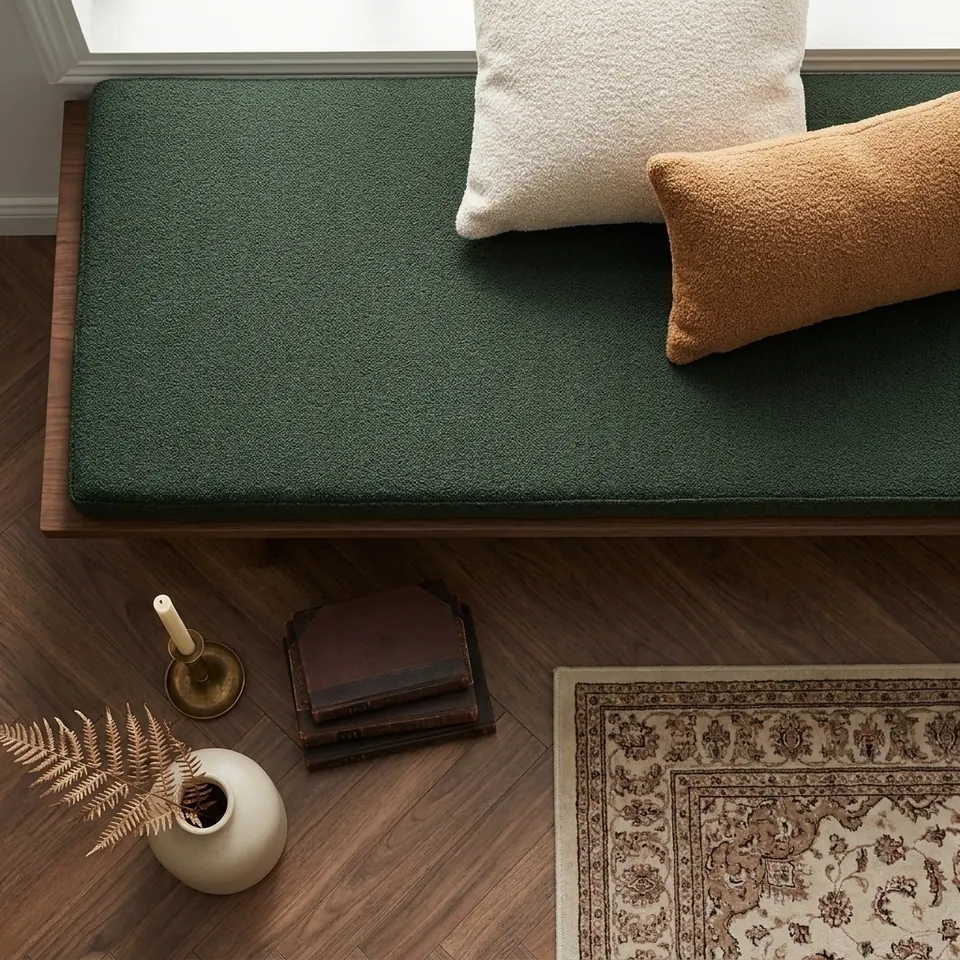
Measure the seat surface you actually sit on. Cushions cut to the bench footprint sit flush with the edge, as these do on light oak, while a cushion sized to the outer frame can hang over.
With color and care — Élodie
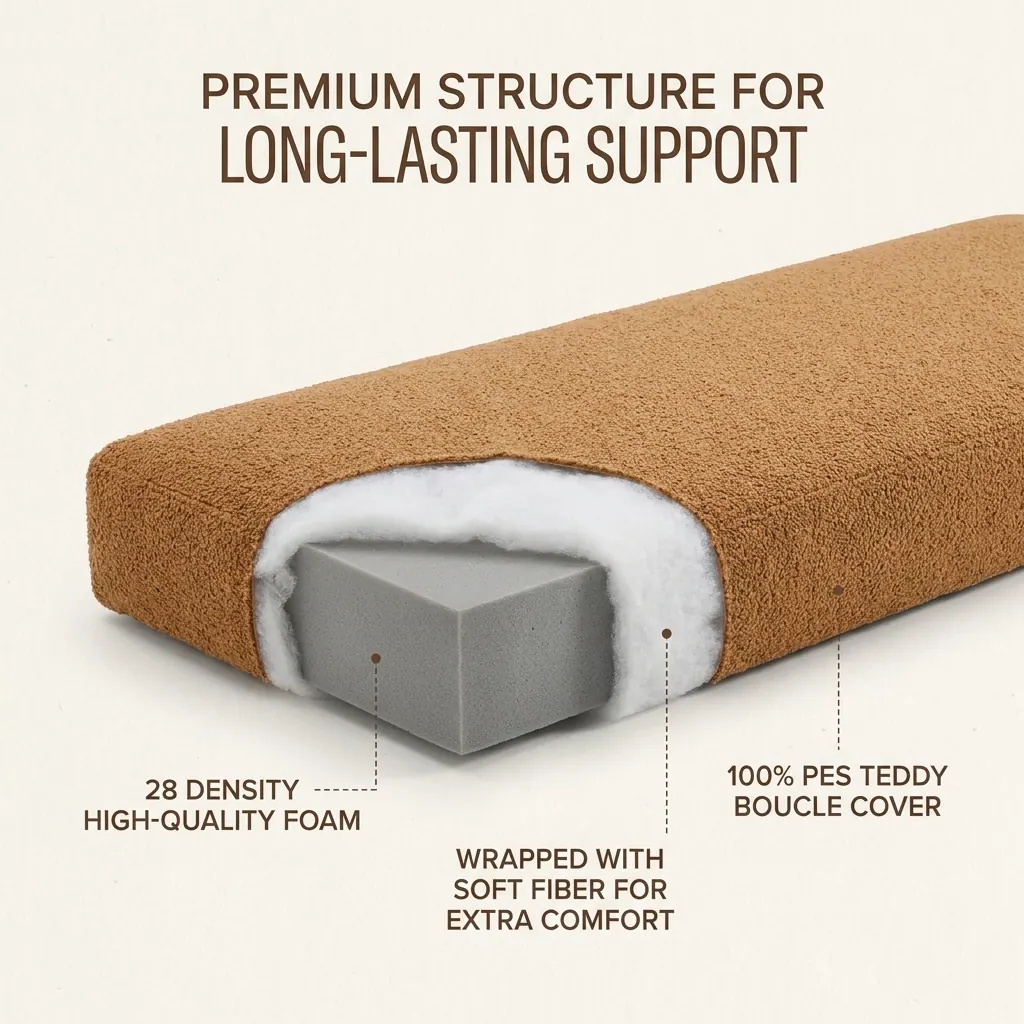
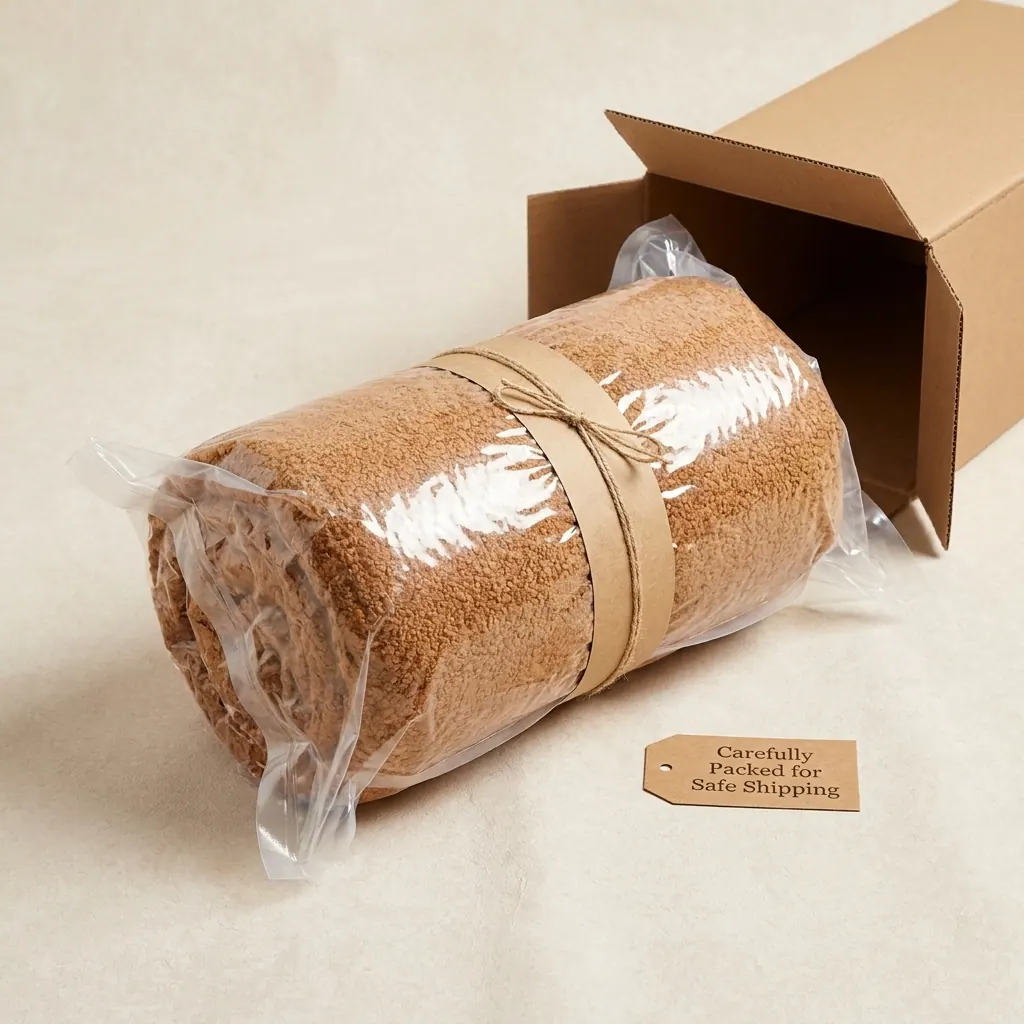
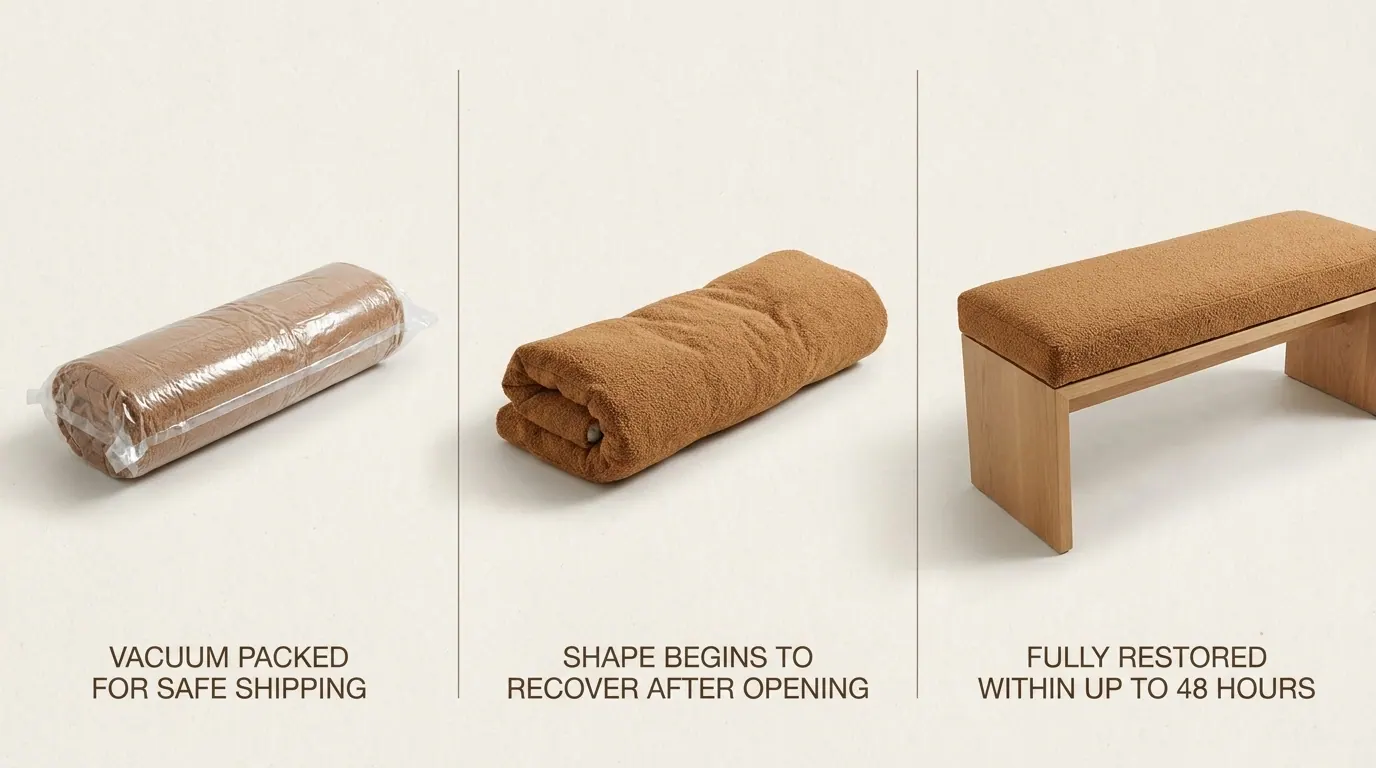
Inside a bouclé cushion, from cutaway to window seat
 Save
 Save
 Save
 Save
 Save
 Save