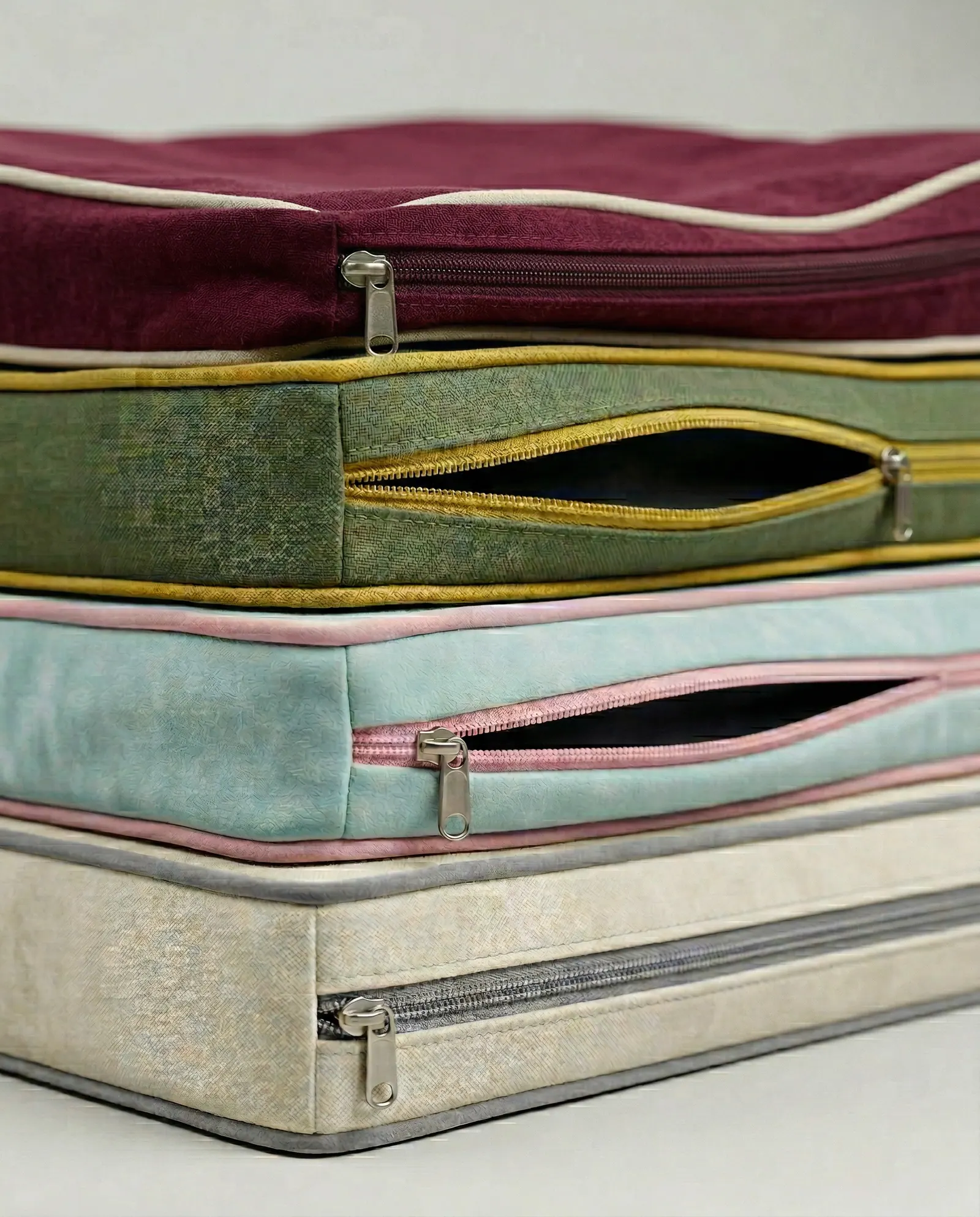
The Pattern Room · a side-by-side pattern
Slipcover, new covers or new cushions: pick the right fix
A tired couch rarely needs everything at once. Read it by the window, press the seats, look hard at the arms, and the right fix usually names itself.

 Save
The quick answer
Whether a couch needs a slipcover or new cushion covers depends on what is worn. Stained or faded fabric over foam that still springs back needs only zippered covers cut to the bare insert. Flat foam needs new cushions. Pets and kids on a good sofa call for a washable quilted topper. Worn arms and back need a slipcover or reupholstery, which the workshop doesn't make.
Most slipcover shoppers are looking at the wrong part of the sofa
Most people who go looking for a slipcover are looking at the wrong part of the sofa. The arms and back are usually fine. It's the cushions that sag, stain and fade.
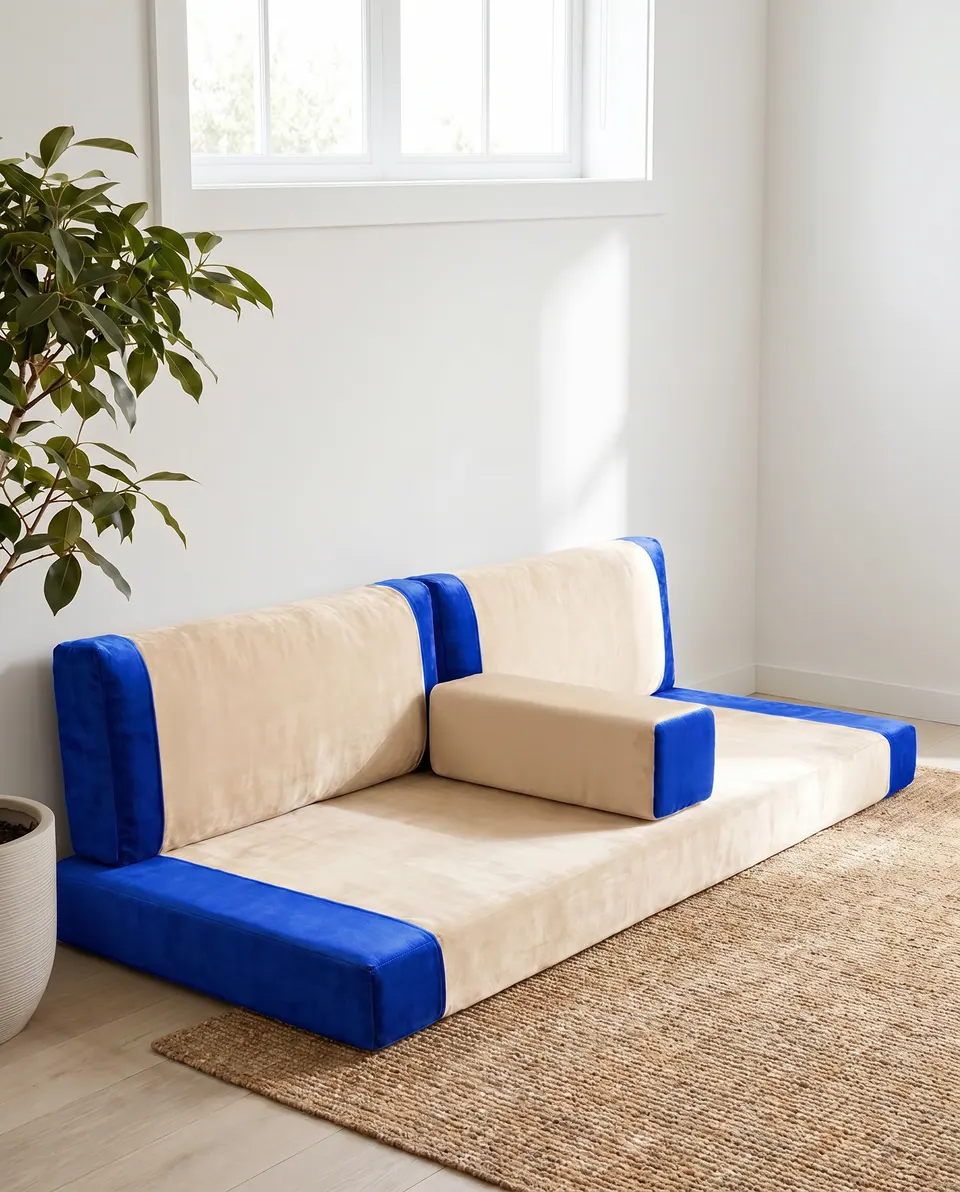
That is the heart of slipcover vs cushion covers, my friends. A slipcover dresses the whole frame: arms, back, skirt. New cushion covers dress only the loose seats and backs, and new cushions replace what's inside them as well. Each one fixes a different kind of tired.
The question arrives in many shapes: a stain on one seat, a color the room has outgrown, a cat who has claimed the left cushion for good. The cushion covers and sofa and couch cushions pages hold the full range. This Pattern is the decision.
So look before you shop. What is actually worn on yours: the fabric, the foam or the frame?
Four kinds of tired, four fixes
Find your row, then read across. The last column is the good news: what you get to keep.
| What's worn | The fix | What you send | What stays |
|---|---|---|---|
| Fabric stained or faded; foam still springs back | Zippered covers only | Each bare insert's length, width and thickness, plus a fabric code | Your foam and your frame |
| Foam flat, dented or slouchy | New cushions: foam and covers together | The seat deck or a well-fitting old cushion, measured, with photos | Your frame |
| A good sofa living with pets and kids | A washable quilted topper made to size | The seat size and a color, or a photo to match | Everything underneath |
| Arms, back and skirt worn | A drape-over slipcover or reupholstery | Not made here; the loose cushions still can be | The frame, once someone dresses it |
Key facts
- Zippered covers only are sewn to each bare insert's exact length, width and thickness, with no foam included.
- A new cover over soft, slouchy filling keeps the slouchy look; flat foam needs a new cushion.
- In real quotes a cover alone came in well under the same cushion with foam, with the biggest saving on large, thick pieces.
- The quilted sofa topper is slim, reversible, made to size and machine washable at 86°F (30°C).
- Fitted slipcovers for a whole sofa, with arms, back and skirt, aren't made; loose cushions and their covers are.
The decision, one test at a time
Unzip one seat and look at the insert
If the foam springs back and holds its edges, keep it. If it's dented or slouchy, a new cover won't hide that: a cover over soft, slouchy filling keeps the slouchy look. The workshop's cushions look crisp because they are cut from high-density foam. How long foam lasts helps you judge yours.
Read the fabric by a window
Carry one cushion to a window in the morning. A faded top face, a sheen gone dull, a stain that has set: those are cover problems, and only those. Daylight never lies; your screen sometimes does. Darker fabrics tend to fade faster, and turning cushions now and then evens the wear.
Look hard at the arms and back
If the frame fabric is worn, new cushion covers alone won't bring the sofa back. Fitted slipcovers for a whole sofa, with arms, back and skirt, aren't made here, and neither are custom-fit covers for another maker's multi-piece sofa. That job belongs to a slipcover maker or an upholsterer; slipcovers for an existing sofa gives the short answer.
Measure the bare insert, seam to seam
For covers only, take each insert out and measure its length, width and thickness while it lies relaxed. Measure the foam, not the old cover; fiber-filled inserts need about 1 in (2.5 cm) more than the cover. Going the other way, new foam into old covers, you measure the old cover with the foam inside. The covers for your own foam Pattern has the details.
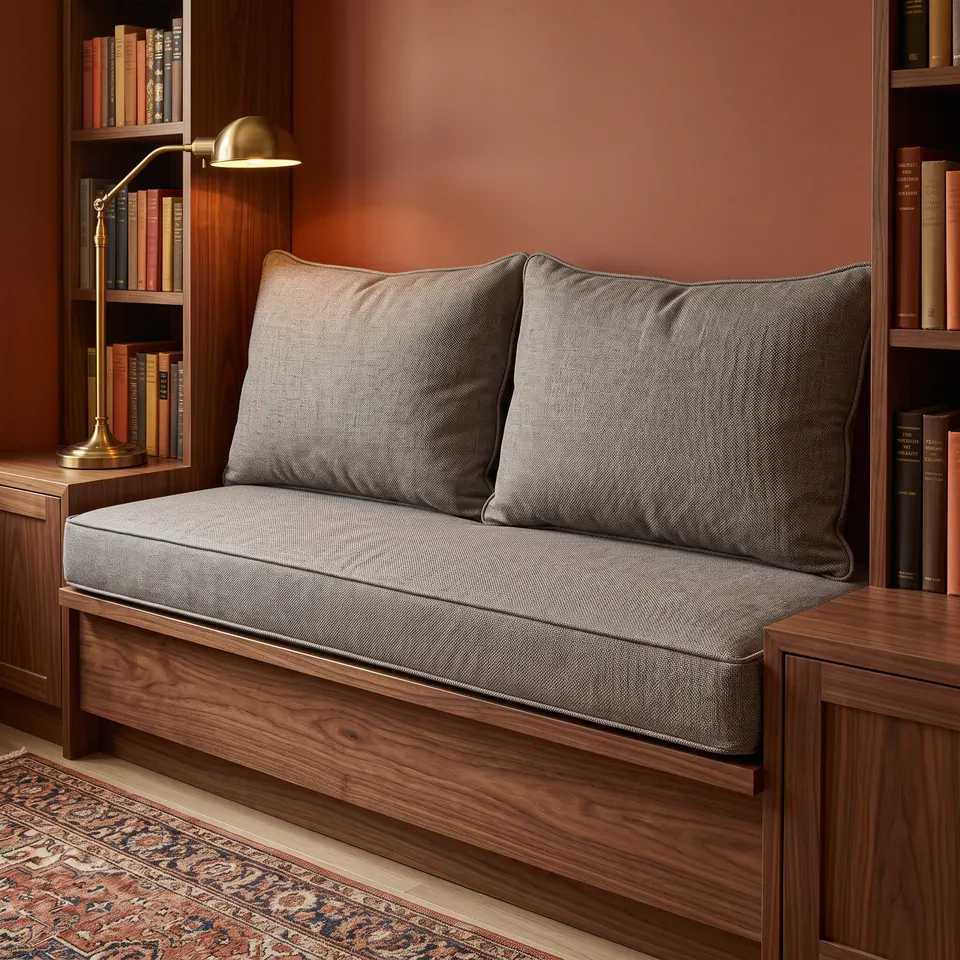
Pattern sheet Plan: the cushion fills the inside of the frame, 46 by 16.5 in, measured wood to wood. Front view: 3 in thick. Give shaped cushions both widths
Tapered seats need a front and a back measurement, and T-cushions need a paper template. The sage T-cushion in the gallery follows its armchair's arms exactly; the T-cushion Pattern shows how to trace one.
Choose the new color from a swatch, in daylight
A new cover is a new color. Hold swatches against the sofa frame, the rug and the wall at two times of day before you decide; one buyer re-covering another maker's sofa weighed a stripe against a mid-brown velvet, ordered a batch of swatches, and chose a dark brown soft linen instead. Matching cushions to sofa, paint and wallpaper walks through it.
Write "covers only" or "with foam" on every request
The two are quoted very differently. List every piece as length x depth x thickness with a quantity, say which you want, and keep the first written quote.

Have it made
Measured it? Have Élodie’s workshop make it
Color is easier to settle in a conversation than on a screen. Tell the workshop about the room and the light it gets, and the fabric choice follows. — Élodie
Leave your details and the workshop will call you to confirm measurements, fabric, foam and piping. No prices, dates or payment on this page: it is a request, not an order.
Eleven covers over foam that was still good
One buyer wrote in with a whole outdoor room on good foam: a couch, dining armchairs, stools, button-tufted high backs and slanted footstools. Eleven covers in all, and they wanted a fabric that would shut water out entirely, with sealed seams and mesh vents.
The workshop was plain with them. Sealed seams and mesh vents aren't offered. What it could send was its water-repellent outdoor canvas in a quiet run of neutrals, cream, beige, taupe and oatmeal, with a sample pack first so they could judge them in their own light.
They settled happily on the canvas. Those cushions go into storage every winter anyway, so water-repellent fabric and a dry shed did the work that marine sealing would have charged for. Eleven cushions kept their foam; only the dress changed.
When the foam is the real problem, and when it isn't
If the insert is flat, the honest fix is a new cushion. New seats are cut from firm, about 2.0 lb/ft³ (32 kg/m³) foam in a polyester fiber wrap, with a softer option, and every one comes with a zippered, removable cover at no extra cost.
When the foam is fine, the saving runs the other way. In real quotes a cover alone came in well under the same cushion with foam, and the biggest saving was on large, thick pieces. A buyer in the US chose a brown velvet for six sofa cushions, three at 23 x 24 x 4.5 in (58 x 61 x 11 cm) and three at 23 x 20 x 3.5 in (58 x 51 x 9 cm), zippers on the 23 in side. With new foam the set came to about double the budget. They already had inserts, so the order became six covers only, and it fit both the sofa and the budget.
Pets, kids and the topper in between
Some sofas are fine in every way except their company. For a good couch that lives with a dog, a cat or a toddler, a quilted sofa topper is the gentle fix: a slim, washable layer that lies on the cushions without adding height and goes in the machine at 86°F (30°C) on a gentle cycle.
It's made to size and reversible, in a soft linen look or velvet. Choose a darker color on top and a lighter one underneath, add tassels at the corners, or send a photo and have the couch color matched. Order it slightly larger than the seat; sofa topper size has the rule, and performance and pet-friendly fabrics is where tougher weaves live.
Spare sets, single covers and a second tape measure
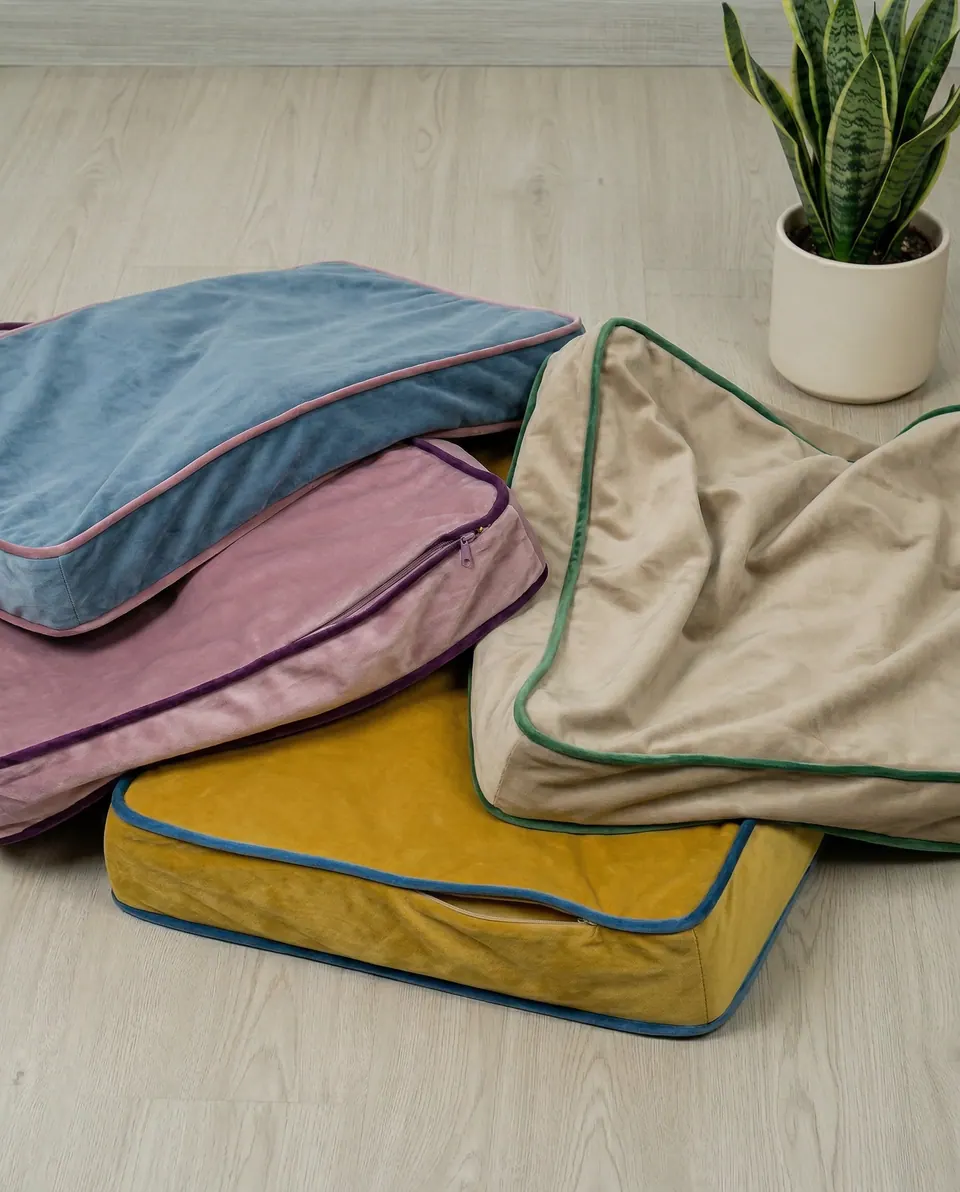
Covers come off, so a spare set earns its keep. A family ordering a kids' corner cushion in pink added a spare cover in blue to the same order; when the blue one was missing from the first box, it was made and sent on its own. Order the spare with the first set and it comes from the same batch of dye.
Single covers are sold too, for the day one tears or a zipper gives. Zippers mostly fail when a freshly washed cover is forced back on, so refit it while slightly damp and ease the pull.
And measure twice before a shaped cover. A buyer in the US had a tapered cushion, 17 in (43 cm) at the back, 19 in (48 cm) at the front, 19 in deep and 3.5 in (9 cm) thick. They re-measured and sent a photo before the quote, because on a tapered cover half an inch at the front changes the fit.
A slipcover dresses the frame, a cover dresses the cushion, and new foam changes how the sofa sits; choose by what is actually worn.
Élodie Marchand
Buyer questions: covers for foam you already own
- A common question
Can I buy just the cushion cover, without the foam?
The workshop's answerYes. Zippered covers only, with no foam or filling, are ordered through the custom cover listing: pick the nearest size range and write your foam's exact length, width, thickness and fabric code in the personalization box, and the cover is sewn to fit snugly. Because some buyers think they're ordering a full cushion, the workshop double-checks that you really want covers only.
- A common question
What measurements do you need to make a cover for my own foam?
The workshop's answerThe exact length, width and thickness of each piece; the thickness, the fillable depth, is what makes the fit snug. Choose the closest size range, write the exact sizes and your fabric code in the personalization box, and place one order per size. Odd thicknesses are fine for covers: 5.5 in (14 cm) isn't used for full cushions, but it works for a cover.
- A common question
How are covers priced when I need several?
The workshop's answerPer piece, by size and fabric, so a mixed job of backs, seats and a long couch cover is priced cover by cover, and multi-cover orders have often been quoted a bulk discount. Piping and ties can be included. Six zippered, machine-washable corduroy covers took one to two weeks for production and delivery.
- A common question
Can I replace just one cover instead of the whole set?
The workshop's answerYes. Single covers are sold when only one is damaged, for instance when a zipper breaks after a washed cover is stretched back on, or a base cover starts to tear. The piece is set up in the color of your original set, and partial sets, such as just two backrest covers, can be ordered too.
- A common question
Can you make a washable topper to protect my couch from pets and kids?
The workshop's answerYes. The quilted sofa topper is a slim, reversible layer that sits on your cushions without adding height, machine washable at 86°F (30°C), in a linen look or velvet. It's made to custom size, with light quilting and a bound edge available; in-between sizes are ordered on the nearest listed option, such as a 20 x 65 in topper on the 20 x 67 in option.
Cover questions, answered in good light
Can a new cover go over my old cushion cover?
Yes, as long as the measurements match. The new covers are fully zippered, so they go on and off easily. Measure each cushion with its current cover on, then write those sizes in the personalization box so the new cover is cut to the layered size.
Can a covers-only order be tufted?
No. Tufted cushions are filled, buttoned and hand-stitched closed over filling the workshop makes itself, so their covers don't come off. Covers only, or empty zippered covers, are always made without tufting; a zippered version of a tufted design is simply made plain.
Where does the zipper go on a replacement cover?
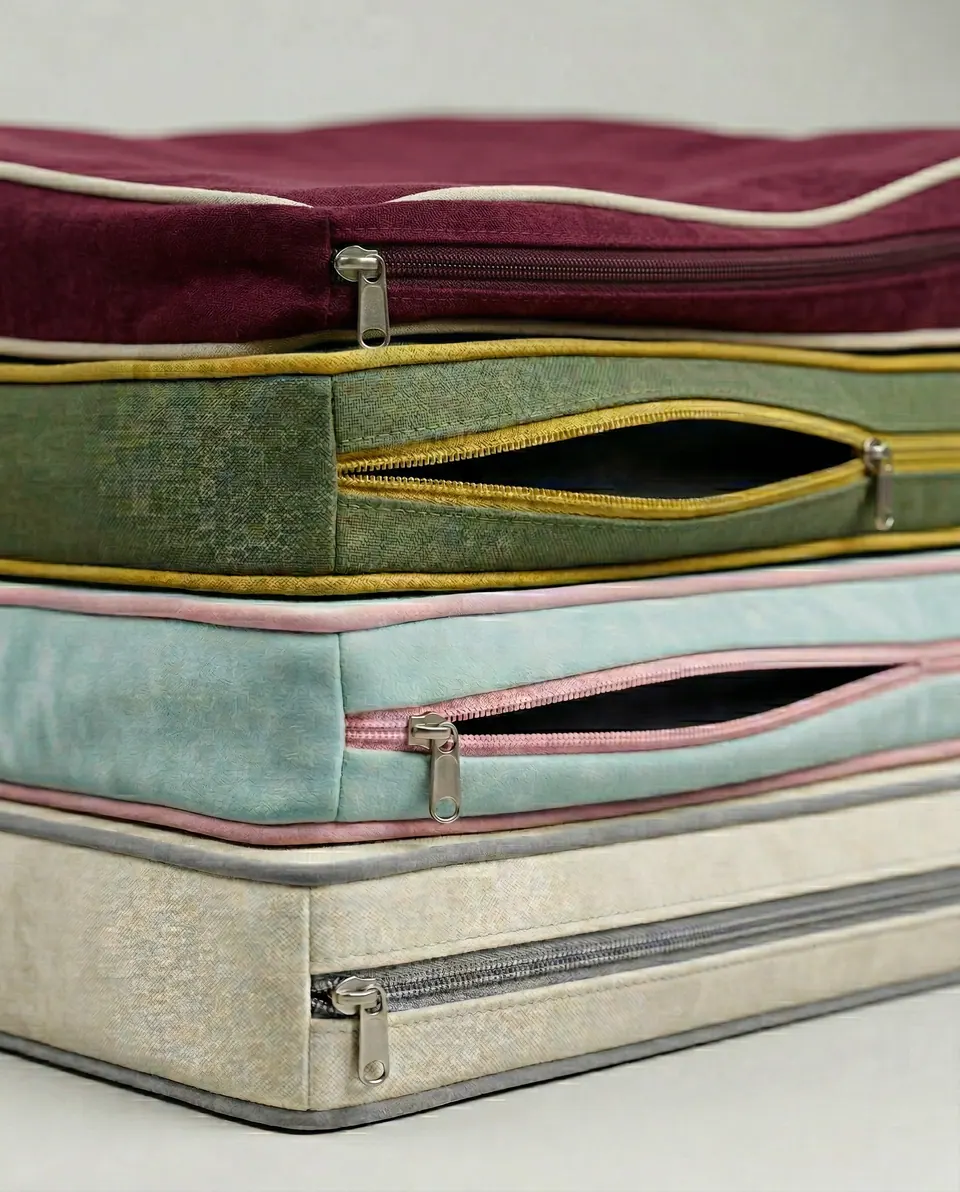
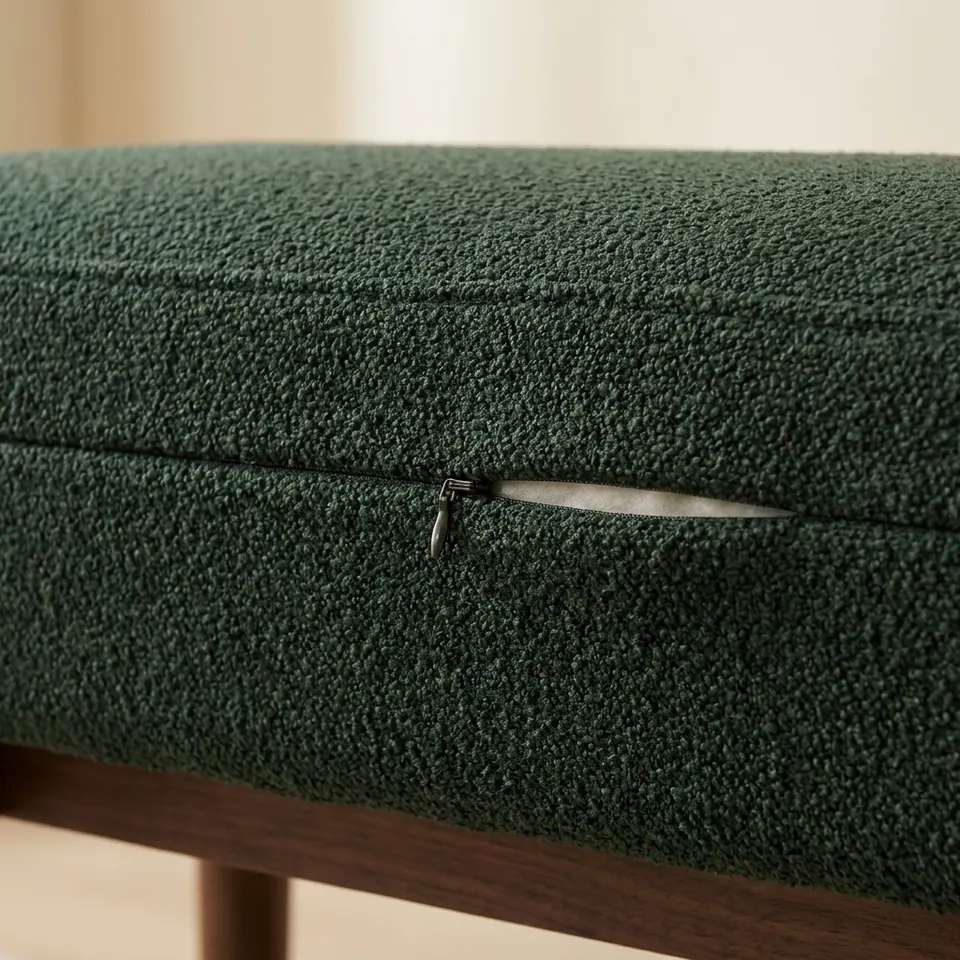
Hidden on the back edge, facing the wall, or on the underside; you choose the side. On bench and mattress covers it often wraps two corners in an L so the insert slides out. The green bouclé cover in the gallery shows a side zipper half open.
How should I wash replacement covers?
Machine wash at 86°F (30°C) on a delicate cycle with the zipper closed, so the cover doesn't tangle or stretch. Refit it while slightly damp and ease the zipper shut; forcing a pull over a dry, tight cover is how zippers break.