The Cutting Table · a question, worked through
Can you pick the cushion color or piping for me?
The eye sits down first, my friends, and it is your eye. But nobody has to choose alone.

Pinned by Élodie
The quick answer
The workshop prefers that you choose your cushion color, because it depends on your taste and your room, but it will suggest a code if you ask, send close-ups of the codes you're weighing, and even mock up piping combinations. Narrow a long list to 2 or 3 codes, and switch codes any time before production.
Get a quote for a cushion covers
Key facts
- The workshop prefers that you choose your own colors.
- The color choice stays the buyer's responsibility.
- L-02 is a light cream; L-01 is lighter and whiter.
- Tones that echo the sofa or the furniture wood blend in most naturally.
- Close-ups and finished-cushion photos are sent for the codes you name.
- Narrow a long list to 2 or 3 codes, or order samples.
- Codes can be switched before production.
- Soft fabric codes run from 901 to 946, about 46 colors, and the outdoor range has about 150 to 200 colors of its own.
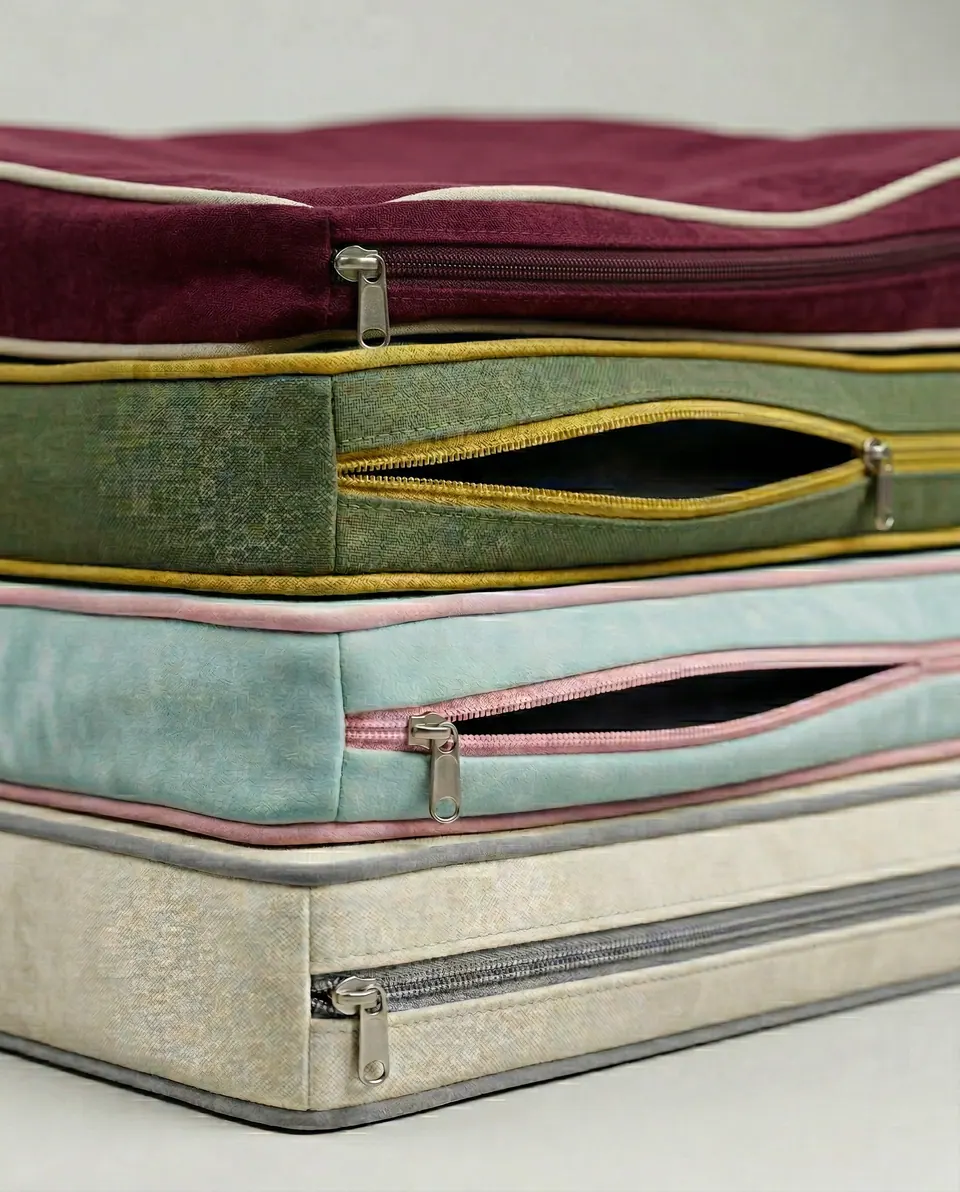
- Cushions only 1 in (2 cm) thick are made without piping.

Have it made
Have Élodie’s workshop cut this for you
Describe the room at four in the afternoon: the floor, the wall, the one color you love. That is where a good fabric choice begins. — Élodie
Leave your details and the workshop will call you to confirm measurements, fabric, foam and piping. No prices, dates or payment on this page: it is a request, not an order.
“Can you just choose for me?”
The workshop would rather you did, and I agree. Color depends on your taste and your room, which nobody at the cutting table can see, so the final choice stays yours.
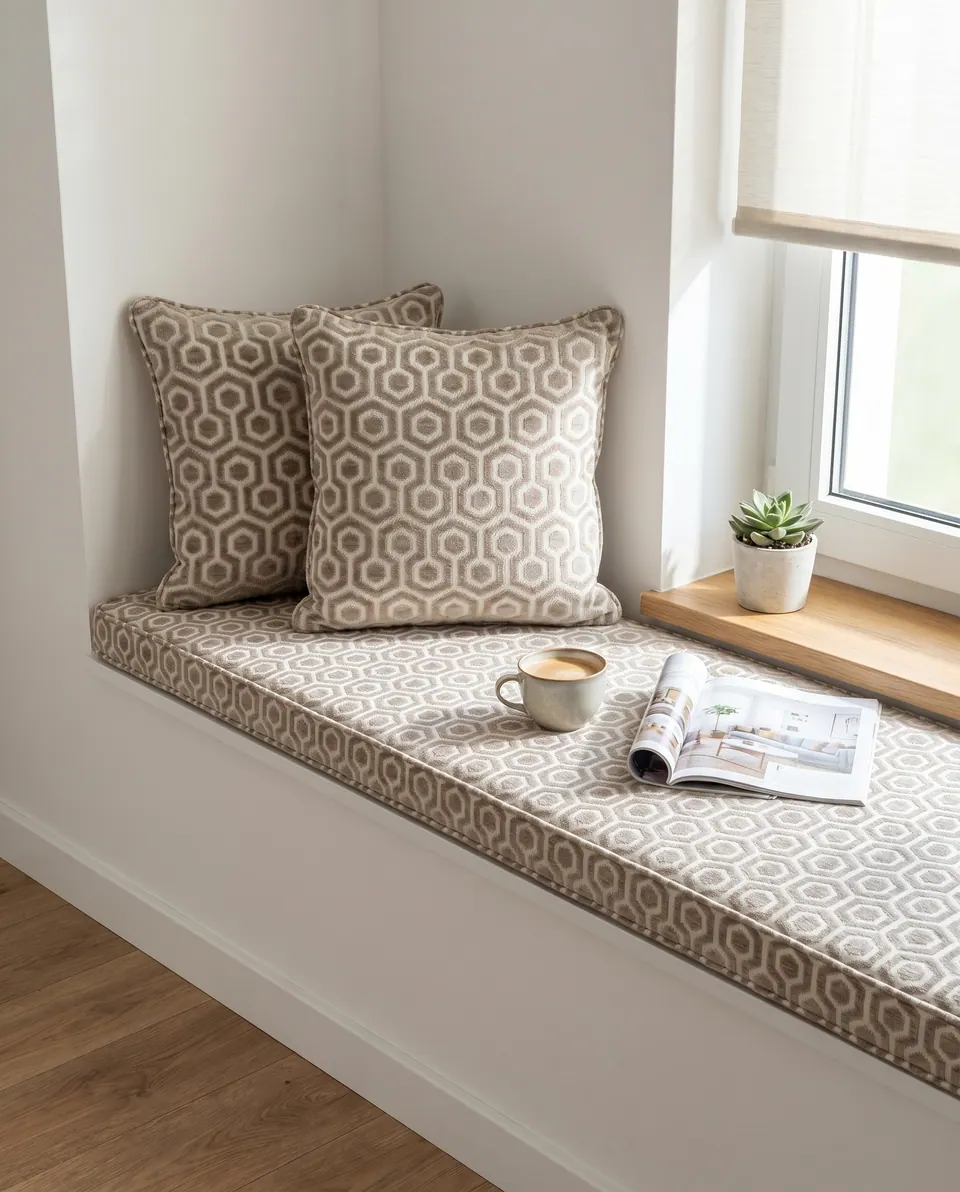
Ask anyway, though, and you'll get an answer. For piping on a patterned cover, one buyer was steered to L-02, a cream that melts into the pattern's light tone, with L-01 as the lighter, whiter option. A suggestion is a starting point, not a promise of a 100% identical match, so switch codes before production if your eye disagrees.
“I want it to blend in, not pop.”
Then borrow from what is already there. Tones that pick up the sofa or the wood of the furniture blend in most naturally, because the room has already approved them.
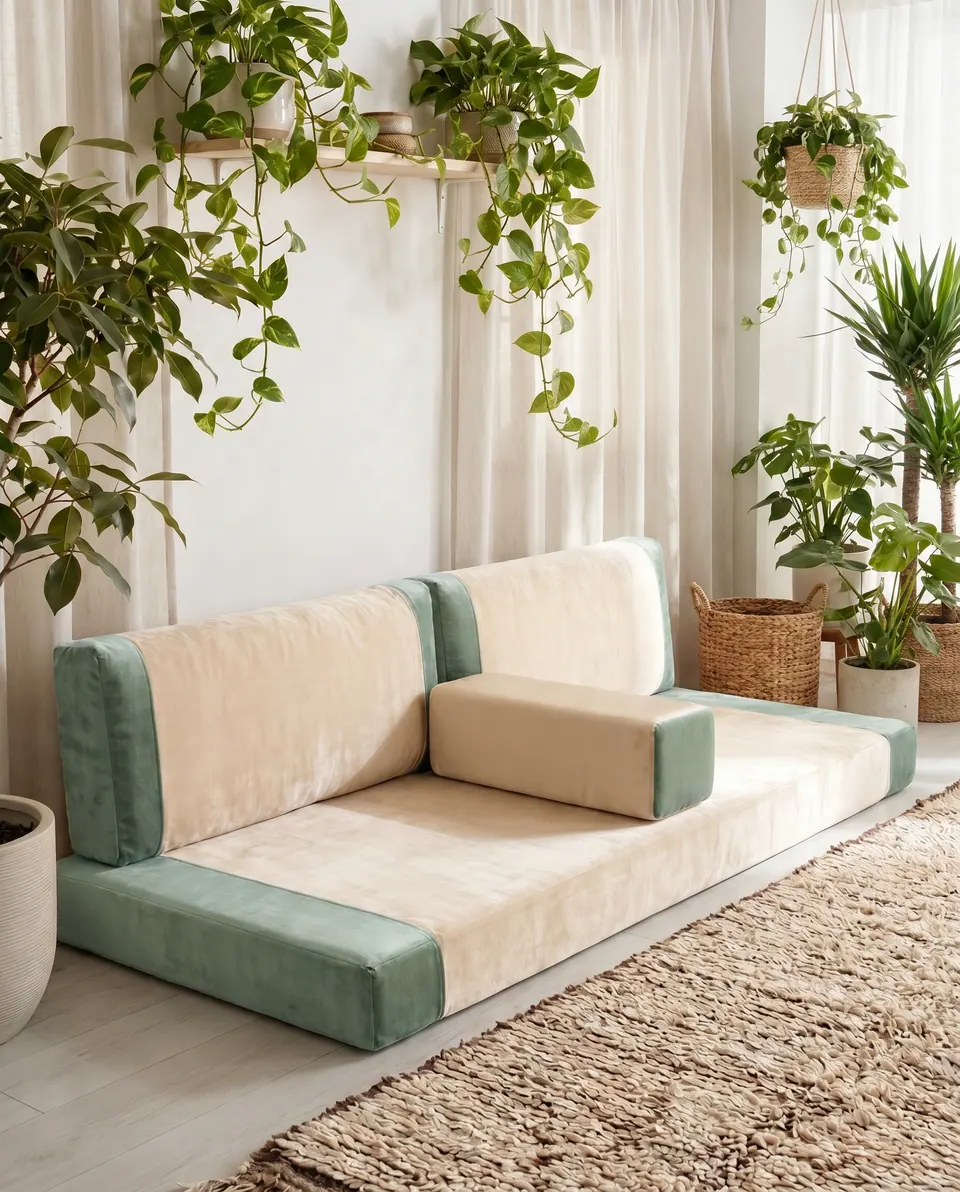
For one buyer the workshop mocked up two piping combinations, L20 with L53 piping and the reverse, so the choice could be made by looking rather than guessing. The piping Pattern weighs matching against contrast piping, and matching a cushion to your sofa goes further. What is the one color in your room you would never change?
How to get a useful suggestion
Shortlist 2 or 3 codes
A very long list comes back with a polite request to narrow it.
Name them and ask for close-ups
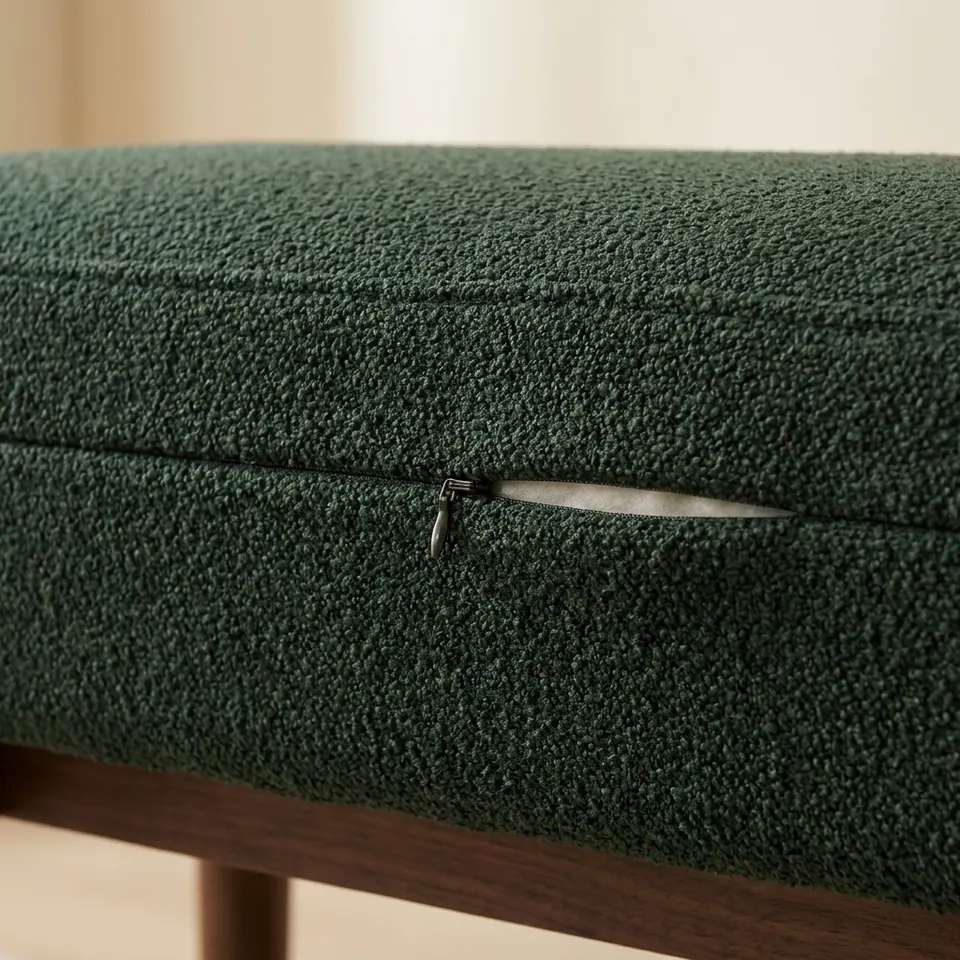
Ask for photos of finished cushions too; they say more than a flat swatch.
Show the room
A photo of the sofa or the wood the cushion will sit beside gives the suggestion something to hold on to.
Order samples if you're still torn
The fabric swatches Pattern explains how.
Switch before production
A new code is fine until production starts.
A cushion color that echoes something already in the room, like the sofa or the wood of the furniture, blends in most naturally.
Élodie
Buyer questions
- A common question
Can you pick the piping color for me?
The workshop's answerThe workshop prefers you choose, since color is personal, but will suggest one if asked, for example L-02, a cream that blends with the light tone of a pattern, with L-01 as a lighter, whiter option. A suggestion may not be a 100% identical match, so switch codes before production if you prefer another.
- A common question
What color should I pick so the cushion looks nice but doesn't stand out?
The workshop's answerTones that pick up what's already in the room, such as the sofa or the wood of the furniture, blend in most naturally. Shortlist one or two codes and the workshop sends close-ups; it once mocked up L20 with L53 piping and the reverse.
- A common question
Can you recommend a color, or send close-ups of several codes?
The workshop's answerThe workshop prefers not to pick for you, but it sends close-ups of the codes you name and photos of finished cushions, which say more than swatches. With a very long list, it asks you to narrow down to 2 or 3 codes or order samples.
- A common question
What color is number X on your chart? I can't tell from the swatches.
The workshop's answerAsk. The workshop names the color behind any number, sends its full chart and close-ups, and confirms the number with you before production. If chart and listing numbering differ, the color you picked on the chart wins.
Questions buyers ask next
Can I change my mind after the workshop suggests a color?
Yes, until production starts. A suggested code is only a suggestion and may not match what you pictured exactly, so if you prefer another after seeing close-ups, switch the code before the cushion is cut.
Is a room photo enough for a color suggestion?
It helps a great deal. Codes have been suggested from room photos, and tones that echo the sofa or the furniture wood blend in most naturally. Take the photo by daylight so the colors on screen stay close to the real ones.
Why does the color decision stay with the buyer?
Because color depends on taste, light and the room around it, which only you see every day. The workshop's part is information: close-ups, finished-cushion photos, piping mock-ups and samples, so you can decide with your own eyes.